



Industrial Edge Market Size 2025-2029
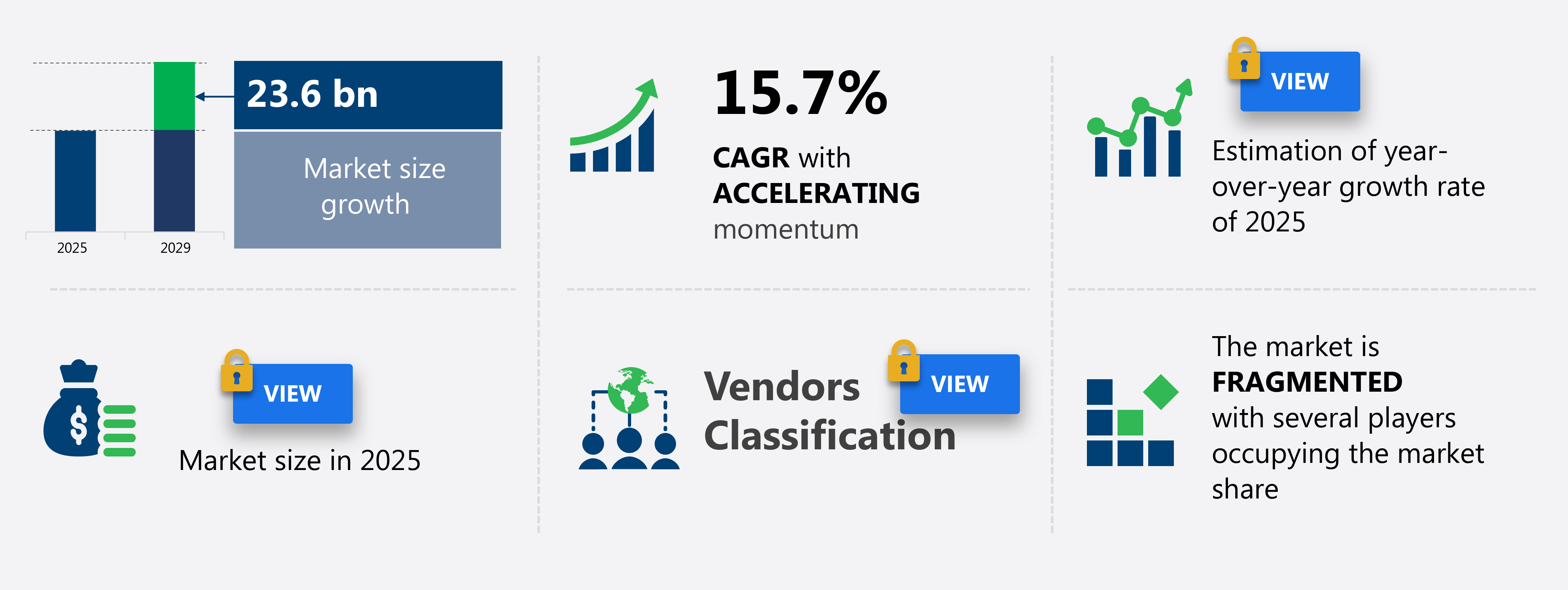
The industrial edge market is projected to experience substantial growth, driven by the increasing need for real-time data processing and improved operational efficiency. Detailed market values are available In the full report.
The industrial edge market is propelled by the surging demand for real-time decision-making across process industries, coupled with the growing adoption of automation and Industry 4.0 initiatives. The need for low-latency data processing and enhanced operational efficiency is fostering the deployment of edge computing solutions in manufacturing, energy, and other sectors. A key trend is the integration of Artificial Intelligence (AI) at the edge, enabling predictive maintenance, real-time monitoring, and autonomous operations. These advancements drive greater efficiency, reduce downtime, and support smarter resource management, solidifying the industrial edge's role in modern industrial automation and control systems.
To access the full market forecast and comprehensive analysis, Buy Now
How is this market segmented?
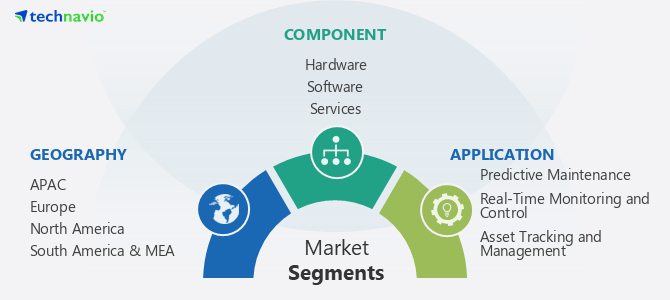
The market research report provides comprehensive data (region-wise segment analysis), with forecasts and estimates in USD bn for the period 2026-2029, as well as historical data from 2019-2024 for the following segments:
- Component
- Hardware
- Software
- Services
- Application
- Predictive Maintenance
- Real-Time Monitoring and Control
- Asset Tracking and Management
- Industry
- Automotive
- Semiconductor & Electronics
- Energy & Power
- APAC
- China
- India
- Japan
- Australia
- Rest of APAC
- Germany
- Spain
- Italy
- UK
- Rest of Europe
- US
- Canada
- Brazil
- UAE
- South Africa
- Others
- Industry
- Automotive: Enhancing manufacturing processes and supply chain management through edge solutions.
- Energy & Power: Facilitating real-time monitoring and predictive maintenance of energy infrastructure.
- Semiconductor & Electronics: Optimizing production and quality control with real-time data analysis.
- Component
- Hardware: Includes edge devices, edge compute devices, edge servers, and edge networking equipment.
- Services: Covers professional and managed services to support deployment and maintenance.
- Software: Comprises edge applications and edge platforms facilitating data processing and management.
- Application
- Predictive Maintenance: Utilizing edge computing for real-time monitoring and analysis to predict equipment failures.
- Asset Tracking and Management: Improving operational efficiency through real-time tracking of industrial assets.
- Real-Time Monitoring and Control: Enabling immediate responses to changing conditions in industrial processes.
Regional Analysis
- APAC: The Asia Pacific region is expected to experience the highest CAGR during the forecast period, driven by rapid industrialization and increasing adoption of smart manufacturing practices. Government initiatives and investments in digital transformation, particularly in China and India, are fueling the demand for industrial edge solutions. The regionu0027s strong manufacturing sector and development of smart cities contribute to market growth.
- Europe: Europe is a significant market for industrial edge solutions, with Germany and the UK being key contributors. The regionu0027s focus on automation, Industry 4.0, and stringent regulatory standards for data security are driving the adoption of edge computing. The presence of major industrial players and technological advancements further support market growth.
- North America: North America is a dominant market for industrial edge, with the US and Canada leading the way. The regionu0027s advanced technological infrastructure, high adoption of cloud computing, and strong focus on operational efficiency are driving market growth. The increasing demand for real-time analytics and predictive maintenance further boosts the adoption of industrial edge solutions.
- South America & MEA: The South America and MEA regions present emerging opportunities for the industrial edge market. Brazil is witnessing significant growth in its industrial sector, driven by increasing automation and digitalization initiatives. The UAE is also emerging as a key hub, attracting investments in smart infrastructure and industrial IoT solutions.
Market Dynamics
Our industrial edge market researchers analyzed the data with 2025 as the base year, along with the key drivers, trends, and challenges. A holistic analysis of drivers will help companies refine their marketing strategies to gain a competitive advantage.
What are the key market drivers leading to the rise in adoption of the industrial edge market?
Demand for real-time decision-making in process industries is a key driver of the market. Process industries such as oil & gas, chemicals, and pharmaceuticals require real-time information processing to optimize operations, efficiency, and safety. Industrial edge solutions enable the processing and analysis of critical information at its source, facilitating fast decision-making without relying solely on centralized cloud infrastructure. This capability is essential for process optimization, anomaly detection, and predictive maintenance.
What are the market trends shaping the industrial edge market?
Growth of autonomous systems is the upcoming market trend. The increasing adoption of autonomous systems, such as autonomous vehicles and robotic process automation, presents a significant opportunity for the industrial edge market. Autonomous systems rely on real-time processing of edge data for optimal performance. Integrating AI and machine learning into edge systems further enhances their capabilities, enabling adaptive operations and predictive maintenance. This trend drives the demand for industrial edge solutions as industries aim for greater efficiency, safety, and scalability.
What challenges does the industrial edge market face?
Cybersecurity concerns is a key challenge affecting the industry growth. The distributed nature of edge computing increases the attack surface for cyber threats. Ensuring data security and compliance across numerous edge locations requires robust security measures, continuous monitoring, and skilled personnel. Cybersecurity concerns may slow down industrial edge adoption without adequate protection, limiting its ability to drive operational efficiency and digital transformation.
Key Companies & Market Insights
Leading companies are implementing strategies such as product innovations, acquisitions, and geographic expansions to enhance their market position. Key players In the industrial edge marketinclude:
- Amazon Web Services, Inc.
- IBM
- Cisco Systems, Inc.
- Dell Technologies
- Hewlett Packard Enterprise Development LP
These companies are strategically focused on product development, market expansion, and partnerships to maintaIn their competitive edge In the growing industrial edge market.
|
Market Scope |
|
|
Report Coverage |
Details |
| Base year | 2024 |
| Page number | 198 |
| Key countries | US, China, Germany, Japan, India |
| Forecast period | 2025-2029 |
| Historic period | 2019-2023 |
| Report coverage | Market size, forecasts, segmentation |
| Regional Analysis | APAC
|
| Growth momentum and CAGR | 15.7% |
| Performing market contribution | Europe, APAC, North America |
 RIA -
RIA - 
