
Enjoy complimentary customisation on priority with our Enterprise License!
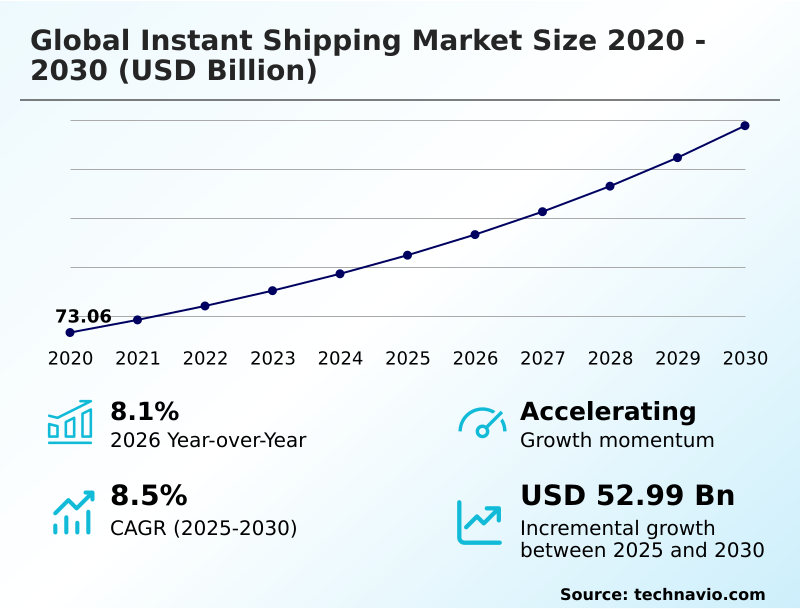
The instant shipping market size is forecast to increase by USD 43.14 billion at a CAGR of 8.13% between 2023 and 2028. The market, specifically in the realm of grocery delivery and perishable commodities, is experiencing significant growth due to escalating consumer demand for effective services and the growth in online purchasing. This trend is driven by the global increase in trade activities and the adoption of advanced freight transportation methods, such as drone technology. The adoption of drones, or unmanned aerial vehicles (UAVs), is a promising solution for addressing the challenge of last-mile deliveries, especially in areas with difficult terrain or congested urban spaces. However, the market faces challenges, including ensuring customer satisfaction and managing the complexities of perishable commodity logistics. Effective temperature control and timely delivery are crucial factors in maintaining customer loyalty and trust. As the market continues to evolve, addressing these challenges will be key to success.
The market is a significant aspect of business growth in the B2C e-commerce sector. With the increasing adoption of online retail shopping, customer expectations for swift and convenient delivery services have become a priority. Long delivery times are no longer acceptable, as e-shoppers seek a seamless customer experience. Delivery infrastructure plays a crucial role in ensuring quick product delivery. E-commerce platforms must invest in advanced logistics operations to meet the demands of their customers. Internet penetration and the availability of reliable delivery services have made it possible for e-commerce businesses to expand their reach through cross-border sales.
Consequently, customer satisfaction is a critical factor in the success of e-commerce businesses. Quick product delivery is a key component of a positive customer experience. Inventory management and warehouse management systems are essential for ensuring that products are readily available for shipping. Cold Chain logistics is a growing area of focus in the market. This mode of transportation is necessary for maintaining the quality and integrity of temperature-sensitive goods. Strategic alliances with delivery services and mode of transportation providers are essential for ensuring efficient and cost-effective operations. The market presents numerous opportunities for business growth. E-commerce businesses that can offer quick and reliable delivery services will gain a competitive advantage.
Also, last mile deliveries are a significant challenge, and a multi-modal system can help streamline the delivery process and reduce shipping costs. In conclusion, the market is a vital component of the e-commerce landscape. Meeting customer demands for quick product delivery requires a logistics infrastructure and strategic partnerships. E-commerce businesses that prioritize delivery operations and invest in advanced technologies will be well-positioned to capitalize on the opportunities presented by the growing e-commerce market.
The market research report provides comprehensive data (region-wise segment analysis), with forecasts and estimates in "USD billion" for the period 2024-2028, as well as historical data from 2018-2022 for the following segments.
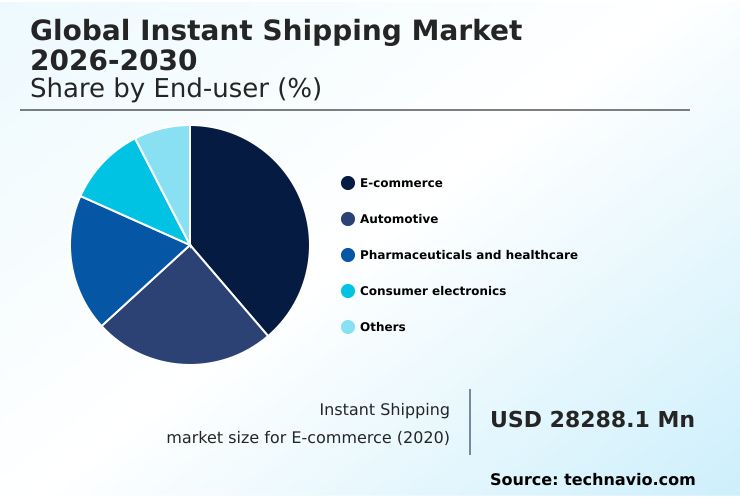
The e-commerce segment is estimated to witness significant growth during the forecast period. The market in the United States caters to businesses and consumers seeking quick product delivery, prioritizing convenience and efficiency in today's digital marketplace. As online shopping continues to grow, consumer expectations have evolved, demanding faster delivery times, often same-day or next-day. In 2023, retail e-commerce sales in the US reached an estimated USD 1.1 trillion. Projections indicate a 22% increase by 2027, surpassing USD 1.3 trillion. This growth is fueled by expanding internet access, the rise of mobile commerce, and the growing preference for swift, hassle-free shopping experiences across all sectors. To meet the increasing demand for fast deliveries, businesses are adopting multi-modal transportation systems, combining various modes of transportation to optimize shipping times and costs.
Effective inventory management is also crucial in ensuring timely deliveries and maintaining customer satisfaction. Last-mile deliveries, the final leg of the shipping process, are receiving significant attention, with companies investing in innovative solutions to streamline this critical stage. Overall, the market presents substantial business opportunities for logistics providers, e-commerce companies, and retailers, as they adapt to the evolving consumer landscape and the growing importance of quick, reliable deliveries.
Get a glance at the market share of various segments Request Free Sample
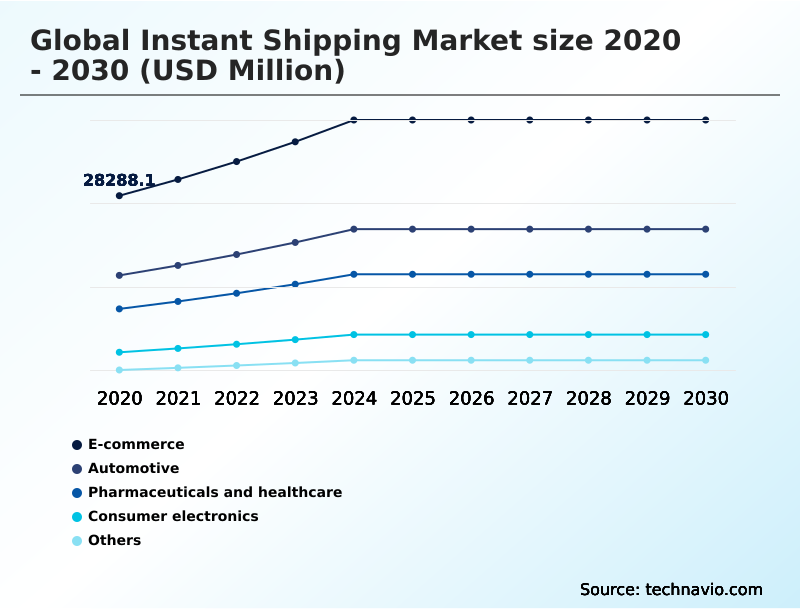
The E-commerce segment accounted for USD 27.29 billion in 2018 and showed a gradual increase during the forecast period.
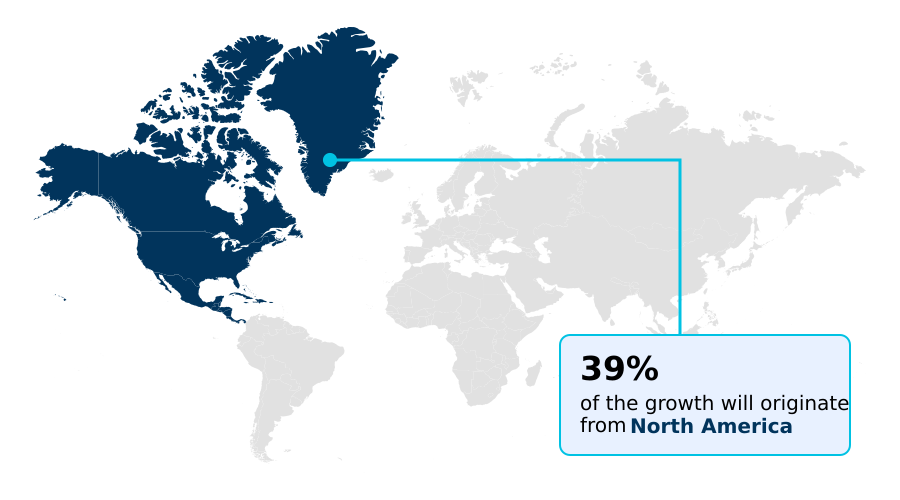
North America is estimated to contribute 40% to the growth of the global market during the forecast period. Technavio’s analysts have elaborately explained the regional trends and drivers that shape the market during the forecast period.
For more insights on the market share of various regions Request Free Sample
In North America, the market is witnessing significant growth due to the increasing adoption of e-commerce and the rising customer demand for swift delivery services. The United States and Canada are leading the charge in this trend. The US market is fueled by an advanced logistics infrastructure, including a vast network of distribution centers and innovative technology that facilitates rapid order processing and shipping. The Bipartisan Infrastructure Law, signed into law by President Biden in November 2021, allocates USD1 trillion for infrastructure improvements, which is expected to further bolster the region's shipping capabilities.
With online retail shopping becoming increasingly convenient, the expectation for quick delivery times is at an all-time high. Companies that can meet these demands will undoubtedly gain a competitive edge in the market.
Our researchers analyzed the data with 2023 as the base year, along with the key drivers, trends, and challenges. A holistic analysis of drivers will help companies refine their marketing strategies to gain a competitive advantage.
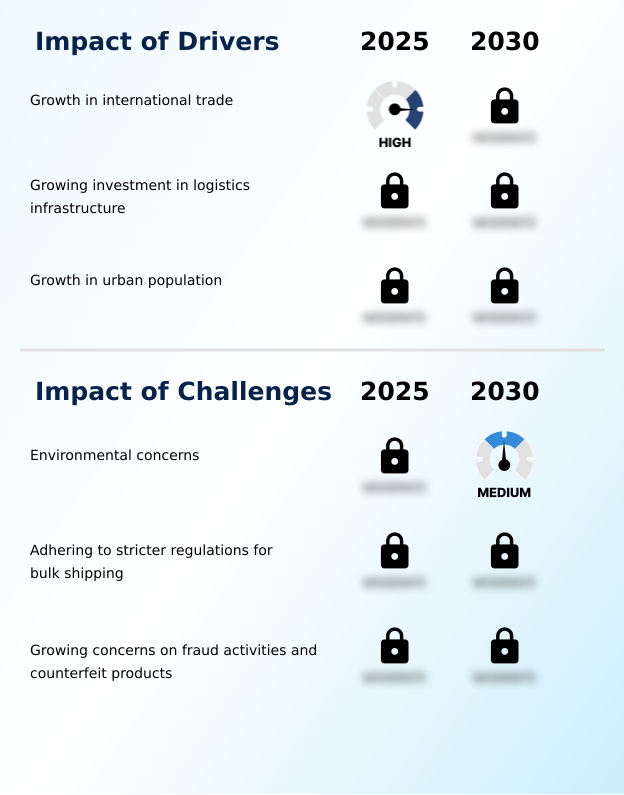
Growth in international trade is the key driver of the market. As e-commerce continues to thrive and internet penetration increases, the demand for swift and dependable delivery services is becoming a crucial factor in meeting consumer expectations in the global marketplace. According to reports from the International Monetary Fund (IMF), the Organization for Economic Co-operation and Development (OECD), and the World Trade Organization (WTO), international trade is projected to experience substantial growth in 2024. The OECD anticipates a 2.3% increase in trade in goods and services this year, with growth reaching 3.3% in 2025. This represents a significant improvement from the 1% growth rate observed in 2023. The OECD's Economic Outlook published in April 2024 suggests that declining inflation will enable central banks to reduce interest rates, although these rates are expected to remain above neutral levels.
E-shoppers, particularly those engaged in cross-border commerce, are increasingly relying on efficient delivery infrastructure and logistics operations to ensure timely receipt of their purchases. Smartphone adoption has further fueled the growth of e-commerce, enabling consumers to shop from anywhere at any time. In the US market, businesses must prioritize delivery services to remain competitive and meet the evolving demands of e-commerce consumers.
The adoption of drone technology is the upcoming trend in the market. The use of drone technology in freight transportation has gained significant traction in response to the increasing consumer demand for instant grocery delivery and the shipping of perishable commodities. Companies are investing heavily in this innovative method to enhance their online purchasing services and provide effective solutions for trade activities. In March 2023, the Federal Aviation Administration (FAA) granted approval for Amazon to operate its Prime Air drone service in select regions of the United States.
By August of the same year, Amazon expanded drone trials in rural Texas, focusing on delivering essential items such as medical supplies. In a major breakthrough on April 22, 2024, Amazon announced the deployment of drones from its same-day delivery site in Tolleson, marking a significant stride in the implementation of drone-based delivery systems for e-commerce and essential goods. This development underscores the growing importance of drone technology in meeting the needs of modern trade activities and ensuring customer satisfaction.
Global supply chain disruption is a key challenge affecting the market growth. The market has faced substantial hurdles due to disruptions in global supply chain. These challenges have led to increased production costs, decreased purchasing power, and strained resource availability. For example, from late December 2023, numerous shipping companies, clients, and charterers have avoided the high-risk Gulf of Aden and Bab al-Mandeb Strait, a crucial passage connecting the Red Sea and the Suez Canal. This trend has persisted, with approximately 220 fewer vessels using this route during the first week of January 2024 compared to the same period in the previous year, representing a 41% decline. The data indicates that the rerouting of ships is on the rise.
Prominent players in the same day delivery sector, such as Supermercato24, are addressing these challenges through logistics automation and infrastructure improvements. Logistics costs, a significant concern for e-commerce businesses, are being addressed by optimizing transportation networks and implementing advanced technologies. Despite these efforts, the ongoing supply chain disruptions continue to impact the industry. To stay competitive in the market, companies must adapt to the changing landscape. By focusing on logistics cost reduction, transportation optimization, and infrastructure development, they can mitigate the effects of global supply chain disruptions and provide reliable, efficient shipping services to their customers.
The market forecasting report includes the adoption lifecycle of the market, covering from the innovator’s stage to the laggard’s stage. It focuses on adoption rates in different regions based on penetration. Furthermore, the report also includes key purchase criteria and drivers of price sensitivity to help companies evaluate and develop their market growth analysis strategies.
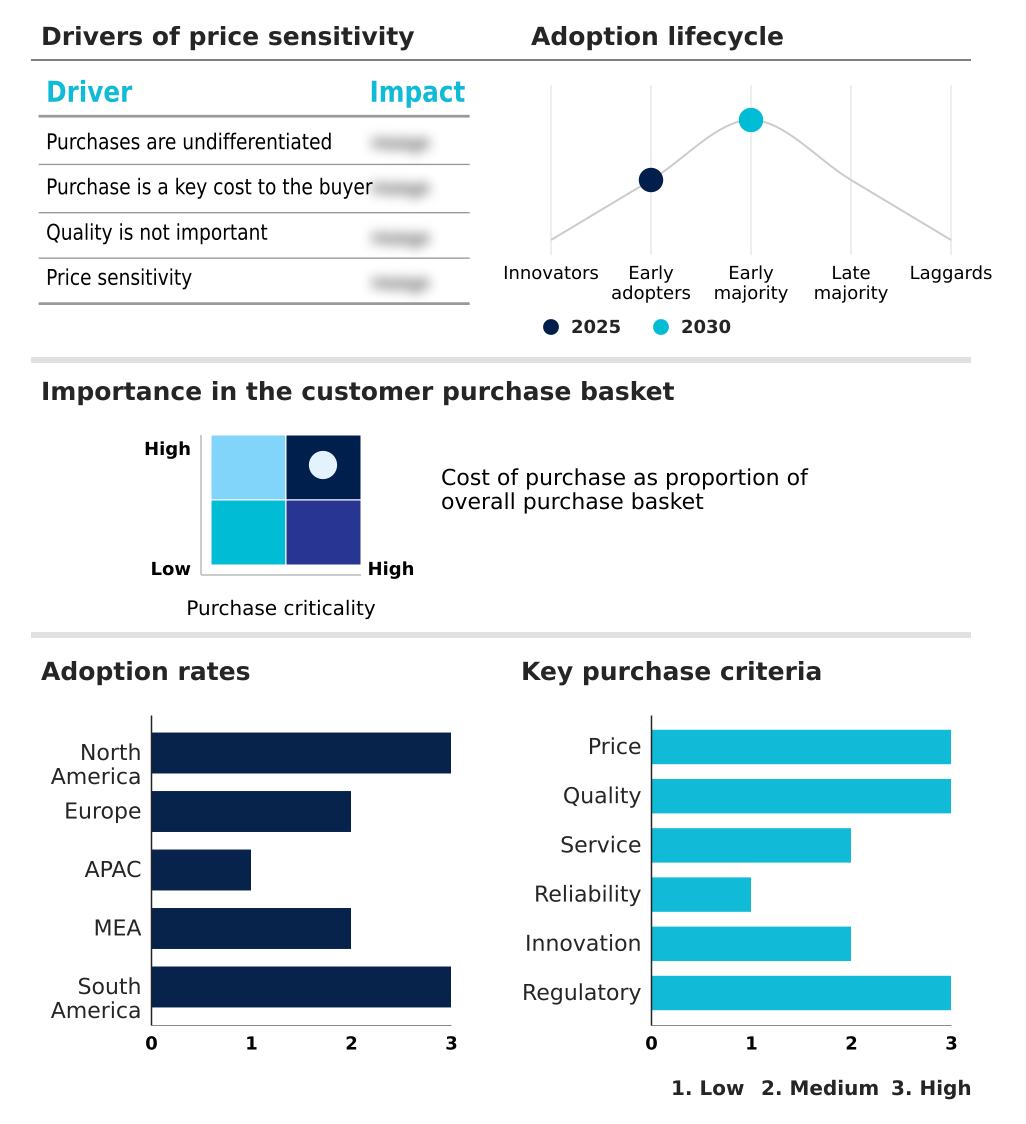
Customer Landscape
Companies are implementing various strategies, such as strategic alliances, partnerships, mergers and acquisitions, geographical expansion, and product/service launches, to enhance their presence in the market.
Amazon.com Inc. - The company offers instant shipping services such as Same-Day and Two-Day Delivery, Prime FREE Same-Day Delivery and others.
The market research and growth report includes detailed analyses of the competitive landscape of the market and information about key companies, including:
Qualitative and quantitative analysis of companies has been conducted to help clients understand the wider business environment as well as the strengths and weaknesses of key market players. Data is qualitatively analyzed to categorize companies as pure play, category-focused, industry-focused, and diversified; it is quantitatively analyzed to categorize companies as dominant, leading, strong, tentative, and weak.
The market is experiencing significant growth due to the increasing adoption of e-commerce and online retail shopping. With customer expectations for quick product delivery at an all-time high, delivery services have become a crucial aspect of business operations for e-commerce platforms. Long delivery times can negatively impact customer satisfaction and hinder business growth. Delivery infrastructure and logistics automation are key areas of focus for e-commerce players to provide effective services and meet customer demands. Internet penetration and smartphone adoption have facilitated cross-border e-commerce, leading to an increase in B2C shipments. Logistics costs, including transportation and freight, are a significant concern for e-commerce businesses.
To address this challenge, prominent players are investing in logistics operations and infrastructure to improve efficiency and reduce shipping costs. Same day delivery and last mile deliveries are becoming increasingly popular, driven by consumer demand for convenience. The use of a multi-modal system, incorporating various modes of transportation, is gaining traction to ensure quick product delivery. Perishable commodities, such as grocery items, require specialized logistics operations, including cold chain logistics and inventory management, to maintain quality and freshness. Artificial Intelligence and Machine Learning are being leveraged to optimize logistics operations and improve customer experience. Urbanization and population density are driving the need for efficient logistics solutions, with urban areas requiring more frequent and reliable delivery services. The retail segment, particularly grocery delivery, is a prominent area of growth in the market. Autonomous delivery and robotic delivery are emerging trends that are expected to revolutionize the industry.
|
Market Scope |
|
|
Report Coverage |
Details |
|
Page number |
217 |
|
Base year |
2023 |
|
Historic period |
2018-2022 |
|
Forecast period |
2024-2028 |
|
Growth momentum & CAGR |
Accelerate at a CAGR of 8.13% |
|
Market growth 2024-2028 |
USD 43.14 billion |
|
Market structure |
Fragmented |
|
YoY growth 2023-2024(%) |
7.65 |
|
Regional analysis |
North America, Europe, APAC, Middle East and Africa, and South America |
|
Performing market contribution |
North America at 40% |
|
Key countries |
US, China, Germany, UK, and Japan |
|
Competitive landscape |
Leading Companies, Market Positioning of Companies, Competitive Strategies, and Industry Risks |
|
Key companies profiled |
Amazon.com Inc., AP Moller Maersk AS, Aramex International LLC, CMA CGM SA Group, COSCO Shipping Ports Ltd, DB Schenker, Deutsche Post AG, DPD Deutschland GmbH, FedEx Corp., Hapag Lloyd AG, Japan Post Holdings Co. Ltd., JD.com Inc., Kuehne Nagel Management AG, Nippon Express Holdings Inc., Royal Mail Group Ltd., SEKO Logistics, SF Express Co. Ltd., Swissport International AG, United Parcel Service Inc., United States Postal Service, XPO Inc., and Yamato Holdings Co. Ltd. |
|
Market dynamics |
Parent market analysis, market growth inducers and obstacles, market forecast, fast-growing and slow-growing segment analysis, COVID-19 impact and recovery analysis and future consumer dynamics, market condition analysis for the forecast period |
|
Customization purview |
If our market report has not included the data that you are looking for, you can reach out to our analysts and get segments customized. |
We can help! Our analysts can customize this market research report to meet your requirements. Get in touch
1 Executive Summary
2 Technavio Analysis
3 Market Landscape
4 Market Sizing
5 Historic Market Size
6 Qualitative Analysis
7 Five Forces Analysis
8 Market Segmentation by Application
9 Market Segmentation by Customer Type
10 Customer Landscape
11 Geographic Landscape
12 Drivers, Challenges, and Opportunity/Restraints
13 Competitive Landscape
14 Competitive Analysis
15 Appendix
Research Framework
Technavio presents a detailed picture of the market by way of study, synthesis, and summation of data from multiple sources. The analysts have presented the various facets of the market with a particular focus on identifying the key industry influencers. The data thus presented is comprehensive, reliable, and the result of extensive research, both primary and secondary.
INFORMATION SOURCES
Primary sources
Secondary sources
DATA ANALYSIS
Data Synthesis
Data Validation
REPORT WRITING
Qualitative
Quantitative
Get the report (PDF) sent to your email within minutes.
Complimentary full Excel data with your report purchase.
Get lifetime access to our
Technavio Insights
Quick Report Overview:
Cookie Policy
The Site uses cookies to record users' preferences in relation to the functionality of accessibility. We, our Affiliates, and our Vendors may store and access cookies on a device, and process personal data including unique identifiers sent by a device, to personalise content, tailor, and report on advertising and to analyse our traffic. By clicking “I’m fine with this”, you are allowing the use of these cookies. Please refer to the help guide of your browser for further information on cookies, including how to disable them. Review our Privacy & Cookie Notice.