



Multimodal Imaging Market Size 2024-2028
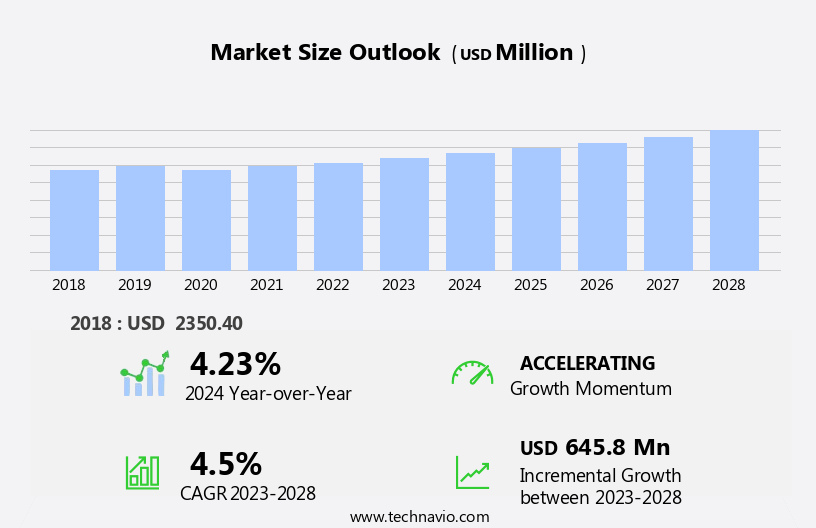
The multimodal imaging market size is forecast to increase by USD 645.8 million at a CAGR of 4.5% between 2023 and 2028.
- The market is experiencing significant growth due to the increasing prevalence of chronic diseases and technological advancements in diagnostic imaging equipment. The rising burden of chronic diseases, such as cancer and cardiovascular diseases, necessitates the use of advanced diagnostic tools to improve early detection and treatment. Multimodal imaging systems, which combine multiple imaging modalities, offer enhanced diagnostic capabilities and improved patient outcomes. Technological advancements, including the integration of artificial intelligence and machine learning algorithms, are revolutionizing the diagnostic imaging industry. These technologies enable faster and more accurate diagnoses, reducing the need for invasive procedures and improving patient care.
- However, the high cost of multimodal imaging equipment remains a significant challenge for market growth. Despite this, the market presents numerous opportunities for companies seeking to capitalize on the growing demand for advanced diagnostic tools and navigate the challenges effectively. Strategic partnerships, collaborations, and mergers and acquisitions are key strategies being adopted by market players to expand their product portfolios and gain a competitive edge. Companies should also focus on developing cost-effective solutions to address the affordability issue and cater to the evolving needs of healthcare providers and patients.
What will be the Size of the Multimodal Imaging Market during the forecast period?
- The market in the US is experiencing significant growth due to the increasing prevalence of chronic diseases, such as cardiac disorders and cancer, and the rising geriatric population. This market encompasses various imaging modalities, including CT scans, optoacoustic imaging, and magnetic resonance imaging, among others. The integration of computer-aided programs and artificial intelligence (AI) is revolutionizing diagnostic accuracy and efficiency. The market's size is substantial, driven by escalating healthcare expenditure and the demand for precision medicine and point-of-care imaging solutions. The use of contrast agents and chemical dyes in imaging techniques enhances diagnostic capabilities, particularly in brain illnesses and cancer.
- Innovations in detectors and imaging technologies are enabling remote area access and emergency department applications. Developing regions are expected to witness substantial growth due to the increasing focus on improving healthcare infrastructure and accessibility. The market is also influenced by the ongoing research on pathogenic targets and treatment strategies, which may lead to new applications and modalities.
How is this Multimodal Imaging Industry segmented?
The multimodal imaging industry research report provides comprehensive data (region-wise segment analysis), with forecasts and estimates in "USD million" for the period 2024-2028, as well as historical data from 2018-2022 for the following segments.
- Application
- Hospitals
- Diagnostic centers
- Others
- Geography
- North America
- US
- Europe
- France
- Germany
- UK
- Asia
- Japan
- Rest of World (ROW)
- North America
By Application Insights
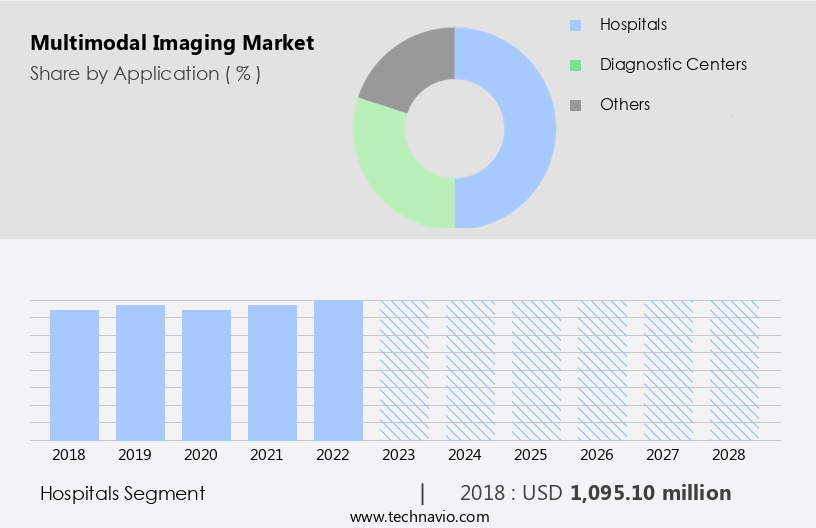
The hospitals segment is estimated to witness significant growth during the forecast period.
The market is driven by the increasing prevalence of chronic diseases such as diabetes, cancers, chronic respiratory diseases, and cardiovascular diseases. These conditions necessitate early diagnosis and treatment, leading to a significant demand for advanced diagnostic imaging modalities in hospitals. The ageing population is another factor fueling market growth, as older adults are more susceptible to various health issues. Miniaturization technologies, such as point-of-care imaging solutions, are gaining popularity in ambulatory care settings, enabling clinicians to diagnose and monitor conditions more efficiently. Medical device market trends include the development of variable spectrum imaging technologies, hybrid contrast agents, and AI algorithms for tumour characterization, malignancies, neurological problems, and cardiac disorders.
Furthermore, radiopharmaceutical development, optoacoustic imaging, and CT systems are essential diagnostic tools for detecting blood flow, organs, and tissues, and for evaluating patient outcomes. Healthcare resource utilization and patient care are also crucial considerations in the market, with precision medicine and treatment strategies playing a vital role in improving patient outcomes. The use of nanoparticles, chemical dyes, and advanced imaging modalities in cancer diagnosis and treatment is a significant area of research, particularly in developing regions. The market is also witnessing the integration of computer-aided programmes and AI algorithms to enhance diagnostic capabilities and reduce healthcare expenditure. In summary, the market is expected to continue growing due to the increasing burden of chronic diseases, the ageing population, and the ongoing development of advanced diagnostic technologies.
Get a glance at the market report of share of various segments Request Free Sample
The Hospitals segment was valued at USD 1095.10 million in 2018 and showed a gradual increase during the forecast period.
Regional Analysis
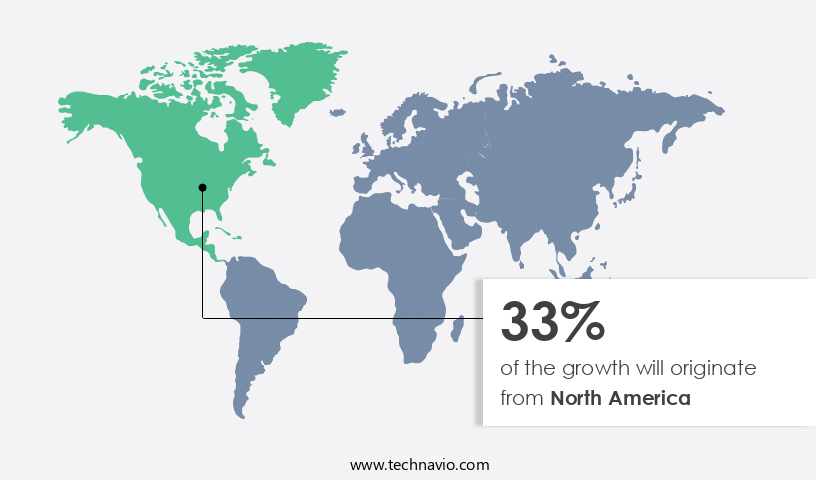
North America is estimated to contribute 33% to the growth of the global market during the forecast period.Technavio’s analysts have elaborately explained the regional trends and drivers that shape the market during the forecast period.
For more insights on the market size of various regions, Request Free Sample
The market in North America is a significant contributor to the global market, driven by several key factors. The aging population and rising prevalence of chronic diseases, such as cancer and cardiovascular disorders, have led to a high demand for advanced diagnostic imaging modalities. Technological advancements, including miniaturization technologies and artificial intelligence algorithms, have enabled the development of point-of-care imaging solutions and hybrid contrast agents. These innovations have improved diagnostic capabilities, patient outcomes, and treatment strategies, particularly in ambulatory care settings and emergency departments. Additionally, the increasing healthcare resource utilization and health expenditure have fueled the market growth. In the medical device market, multimodal imaging modalities, such as magnetic resonance imaging, CT scans, and PET scans, have become essential tools for clinicians to assess organs and tissues, detect malignancies, and characterize tumors.
Furthermore, the development of nanoparticles and chemical dyes as contrast agents, as well as optoacoustic imaging, have expanded the applications of multimodal imaging in neurological problems, cardiology, and other clinical areas. Overall, the market is expected to continue growing due to the increasing focus on precision medicine and molecular imaging techniques, which offer improved diagnostic capabilities and treatment strategies for various diseases.
Market Dynamics
Our researchers analyzed the data with 2023 as the base year, along with the key drivers, trends, and challenges. A holistic analysis of drivers will help companies refine their marketing strategies to gain a competitive advantage.
What are the key market drivers leading to the rise in the adoption of Multimodal Imaging Industry?
- Growing prevalence of chronic diseases is the key driver of the market.
- The global market for multimodal imaging equipment is experiencing significant growth due to the increasing prevalence of chronic diseases, such as cancers, cardiovascular diseases, and neurological conditions. With an aging population, the number of individuals diagnosed with these conditions is expected to rise. In the United States, for instance, approximately 16.9% of the population was 65 years or older in 2020, and this figure is projected to reach 22% by 2050. Similarly, in Canada, researchers anticipate a 40% increase in new cancer cases and an 85,100-strong rise in cancer-related deaths by 2030.
- These trends underscore the importance of advanced medical equipment, including multimodal imaging systems, in diagnosing and managing these conditions. Consequently, The market is poised for substantial growth during the forecast period.
What are the market trends shaping the Multimodal Imaging Industry?
- Technological advancements in diagnostic imaging equipment is the upcoming market trend.
- The market is experiencing significant advancements driven by technological innovations. companies are focusing on improving image quality, reducing diagnostic procedure costs, and ensuring accurate diagnoses with better patient care. Extensive research and development activities are underway to create advanced multimodal imaging solutions. These advancements include portable and handheld equipment, 5D ultrasound technology, and digital X-rays with wireless DR detectors. Leading companies, such as GE Healthcare, are investing in upgrading their multimodal imaging equipment with advanced software solutions.
- The emergence of three-dimensional (3D), four-dimensional (4D), and five-dimensional (5D) technologies is enabling physicians to perform more accurate diagnoses. These technological advancements are revolutionizing the diagnostic industry and improving patient outcomes.
What challenges does the Multimodal Imaging Industry face during its growth?
- High cost of multimodal imaging equipment is a key challenge affecting the industry growth.
- The market faces a significant challenge due to the high cost of equipment and related procedures. The expense of multimodal imaging equipment, such as PET/CT scans ranging from USD75,000 to USD500,000, and gamma cameras costing between USD400,000 and USD600,000, poses a significant financial burden on healthcare facilities and patients. This high cost structure makes it challenging for developing nations to adopt the latest multimodal imaging technologies.
- Consequently, the preference for refurbished products is on the rise, which may hinder the market's growth. Furthermore, the need for annual service maintenance for multimodal imaging equipment adds to the overall cost, making it a considerable investment for healthcare providers.
Exclusive Customer Landscape
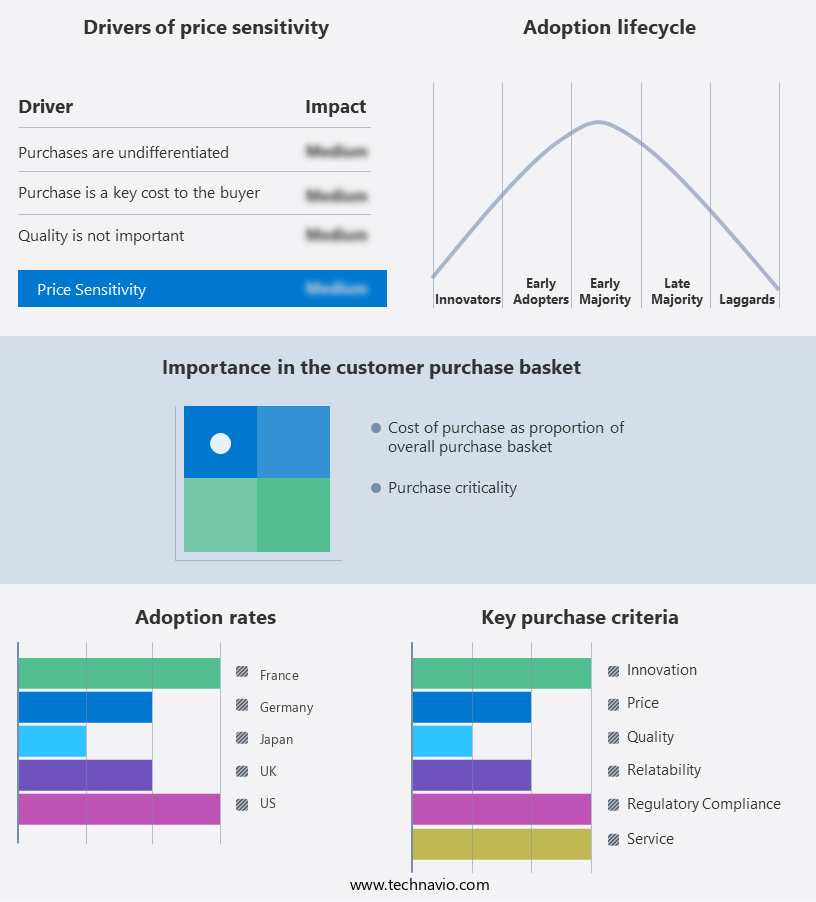
The multimodal imaging market forecasting report includes the adoption lifecycle of the market, covering from the innovator’s stage to the laggard’s stage. It focuses on adoption rates in different regions based on penetration. Furthermore, the multimodal imaging market report also includes key purchase criteria and drivers of price sensitivity to help companies evaluate and develop their market growth analysis strategies.
Customer Landscape
Key Companies & Market Insights
Companies are implementing various strategies, such as strategic alliances, multimodal imaging market forecast, partnerships, mergers and acquisitions, geographical expansion, and product/service launches, to enhance their presence in the industry.
Bruker Corp. - The company specializes in advanced multimodal imaging solutions, including the OCT-S1 from Xephilio. These innovative products utilize cutting-edge technology to deliver high-resolution, cross-sectional images for various applications. By combining multiple imaging modalities, our offerings enable enhanced diagnostic accuracy and improved clinical workflows.
The industry research and growth report includes detailed analyses of the competitive landscape of the market and information about key companies, including:
- Bruker Corp.
- Canon Inc.
- Carl Zeiss AG
- General Electric Co.
- Heidelberg Engineering GmbH
- Koninklijke Philips N.V.
- Mediso Ltd.
- MILabs BV
- MR Solutions Ltd.
- Neusoft Medical Systems Co. Ltd.
- Nipro Corp.
- Perkin Elmer Inc.
- Shanghai United Imaging Healthcare Co. Ltd.
- Siemens AG
- Spectrum Dynamics Medical Inc.
- Topcon Corp.
- TriFoil Imaging
Qualitative and quantitative analysis of companies has been conducted to help clients understand the wider business environment as well as the strengths and weaknesses of key industry players. Data is qualitatively analyzed to categorize companies as pure play, category-focused, industry-focused, and diversified; it is quantitatively analyzed to categorize companies as dominant, leading, strong, tentative, and weak.
Research Analyst Overview
The medical device market for multimodal imaging solutions is experiencing significant growth due to the increasing demand for advanced diagnostic tools in various clinical applications. The aging population and rising healthcare costs are key drivers fueling this trend, as clinicians seek to improve patient outcomes and reduce healthcare resource utilization. In ambulatory care settings, miniaturization technologies are enabling the development of point-of-care imaging solutions that offer variable spectrum capabilities, allowing for more comprehensive diagnostic assessments. These solutions are particularly valuable in neurological problems and cardiology, where early and accurate diagnosis is crucial. Radiopharmaceutical development is also playing a crucial role in the advancement of multimodal imaging.
PET scans, for instance, have shown great promise in detecting malignancies and metabolic disorders, such as Alzheimer's disease. The integration of hybrid contrast agents with advanced imaging modalities, such as magnetic resonance imaging (MRI) and CT scans, is further expanding the diagnostic capabilities of these technologies. Artificial intelligence (AI) algorithms are also making a significant impact on the field of diagnostic imaging. By analyzing large datasets and identifying patterns, AI can help clinicians make more accurate diagnoses and develop more effective treatment strategies. This is particularly important in remote areas, where access to specialized expertise may be limited.
The healthcare resource utilization benefits of multimodal imaging are also noteworthy. By providing more accurate and timely diagnoses, these technologies can help reduce the need for invasive procedures and costly hospitalizations. Additionally, the use of nanoparticles and chemical dyes as contrast agents is improving the sensitivity and specificity of imaging modalities, allowing for more precise diagnosis and treatment. The development of advanced imaging modalities, such as optoacoustic imaging and CVDs, is also contributing to the growth of the market. These technologies offer unique advantages, such as high resolution and real-time imaging, making them valuable tools for tumour characterization and the assessment of organs and tissues.
The diagnostic imaging landscape is continually evolving, with a focus on precision medicine and molecular imaging techniques. The fluorescence properties of these techniques are particularly valuable in the detection and monitoring of various diseases, including cancer and heart disease. In , the market is experiencing significant growth due to the increasing demand for advanced diagnostic tools in various clinical applications. The aging population, rising healthcare costs, and technological advancements are key drivers fueling this trend. The integration of AI, nanoparticles, and other advanced technologies is expanding the diagnostic capabilities of imaging modalities, while also improving patient outcomes and reducing healthcare resource utilization.
|
Market Scope |
|
|
Report Coverage |
Details |
|
Page number |
137 |
|
Base year |
2023 |
|
Historic period |
2018-2022 |
|
Forecast period |
2024-2028 |
|
Growth momentum & CAGR |
Accelerate at a CAGR of 4.5% |
|
Market growth 2024-2028 |
USD 645.8 million |
|
Market structure |
Fragmented |
|
YoY growth 2023-2024(%) |
4.23 |
|
Key countries |
US, Germany, France, Japan, and UK |
|
Competitive landscape |
Leading Companies, Market Positioning of Companies, Competitive Strategies, and Industry Risks |
What are the Key Data Covered in this Multimodal Imaging Market Research and Growth Report?
- CAGR of the Multimodal Imaging industry during the forecast period
- Detailed information on factors that will drive the growth and forecasting between 2024 and 2028
- Precise estimation of the size of the market and its contribution of the industry in focus to the parent market
- Accurate predictions about upcoming growth and trends and changes in consumer behaviour
- Growth of the market across North America, Europe, Asia, and Rest of World (ROW)
- Thorough analysis of the market’s competitive landscape and detailed information about companies
- Comprehensive analysis of factors that will challenge the multimodal imaging market growth of industry companies
We can help! Our analysts can customize this multimodal imaging market research report to meet your requirements.
 RIA -
RIA - 
