
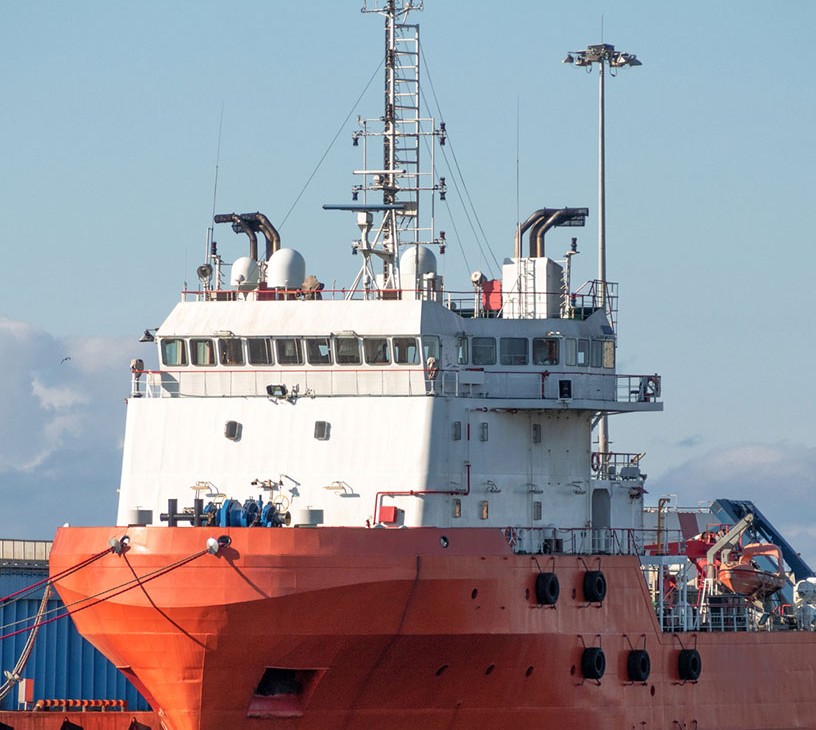


Offshore Support Vessel Market Size 2026-2030
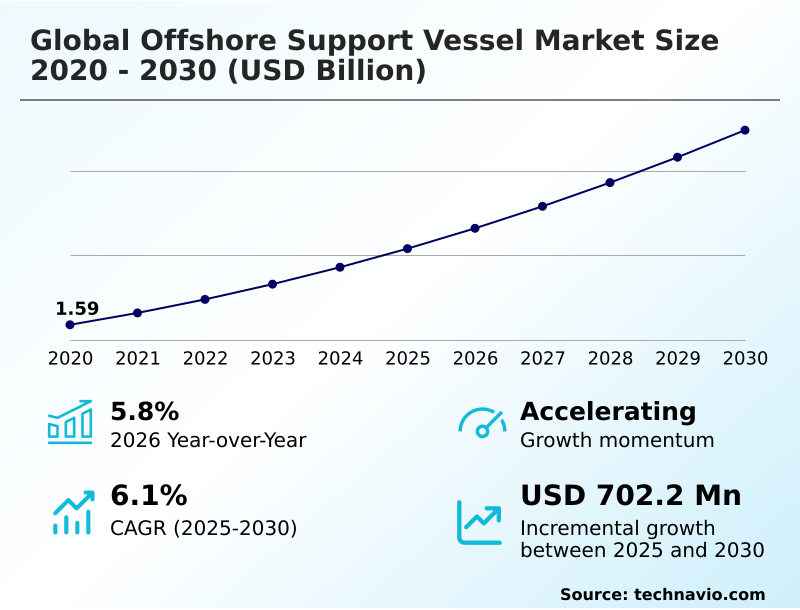
The offshore support vessel market size is valued to increase by USD 702.2 million, at a CAGR of 6.1% from 2025 to 2030. Heightened deepwater exploration and production activity will drive the offshore support vessel market.
Major Market Trends & Insights
- North America dominated the market and accounted for a 48.2% growth during the forecast period.
- By Product - AHTS segment was valued at USD 1.05 billion in 2024
- By Application - Oil and gas segment accounted for the largest market revenue share in 2024
Market Size & Forecast
- Market Opportunities: USD 1.16 billion
- Market Future Opportunities: USD 702.2 million
- CAGR from 2025 to 2030 : 6.1%
Market Summary
- The offshore support vessel market is undergoing a significant transformation, propelled by dual demand streams from heightened deepwater exploration and production and the rapid expansion of the offshore renewable energy sector. Core to this market are specialized vessels such as the anchor handling tug supply and the platform supply vessel, which are fundamental for offshore logistics and subsea construction.
- A pivotal trend is the strategic diversification into offshore wind farm construction, which necessitates a new generation of assets like the wind turbine installation vessel and service operation vessel. This shift introduces opportunities for operators to secure long-term contracts outside the cyclical oil and gas industry.
- For instance, a fleet operator might pivot from supporting traditional floating production units to deploying a specialized commissioning service operation vessel for a new wind farm, a decision impacting capital allocation for methanol-ready vessel designs and advanced hybrid propulsion systems.
- Concurrently, the industry is navigating challenges from stringent decarbonization mandates and a shortage of qualified maritime professionals, pushing operators toward greater adoption of digital automation and predictive maintenance to enhance efficiency and de-risk operations.
What will be the Size of the Offshore Support Vessel Market during the forecast period?
Get Key Insights on Market Forecast (PDF) Get Free Sample
How is the Offshore Support Vessel Market Segmented?
The offshore support vessel industry research report provides comprehensive data (region-wise segment analysis), with forecasts and estimates in "USD million" for the period 2026-2030, as well as historical data from 2020-2024 for the following segments.
- Product
- AHTS
- PSV
- MPSV
- FSIV
- Others
- Application
- Oil and gas
- Offshore applications
- Fuel type
- Diesel powered
- Gas powered
- Geography
- North America
- US
- Canada
- Mexico
- Europe
- UK
- The Netherlands
- Germany
- APAC
- China
- Australia
- India
- Middle East and Africa
- Saudi Arabia
- UAE
- Turkey
- South America
- Brazil
- Argentina
- Rest of World (ROW)
- North America
By Product Insights
The ahts segment is estimated to witness significant growth during the forecast period.
The anchor handling tug supply (AHTS) segment represents a critical component of the offshore support vessel market, defined by its role in deepwater drilling operations.
These vessels are essential for mooring floating production units and supporting heavy-lift operations in challenging environments like pre-salt basins.
Demand for high-capacity AHTS vessels, including advanced dual-fuel vessel models, is directly tied to complex offshore projects that require sophisticated marine transportation services.
The market for these deepwater applications is also seeing a push toward more capable vessels for subsea construction vessel support.
A key performance indicator shows leading-edge term contract day rates for high-specification AHTS vessels have improved by 13%, reflecting tight supply and sustained demand for advanced anchor handling tug supply capabilities.
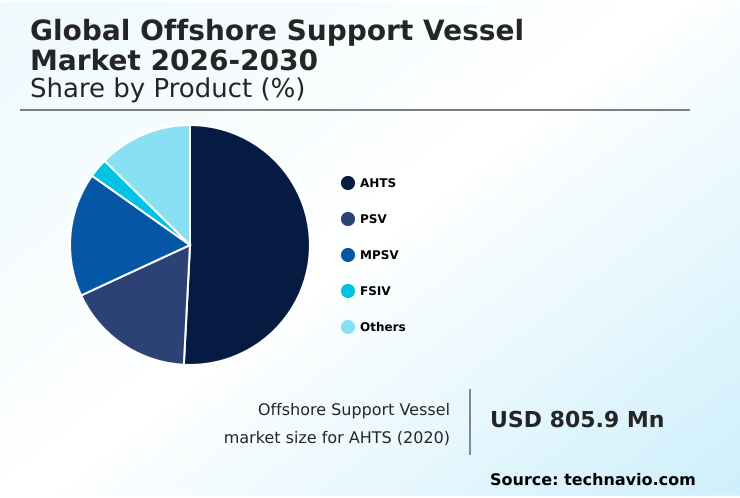
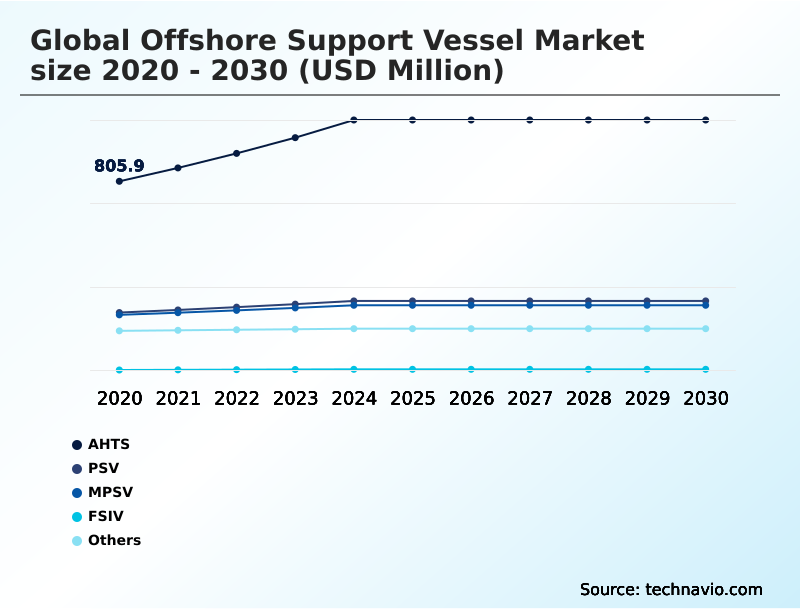
The AHTS segment was valued at USD 1.05 billion in 2024 and showed a gradual increase during the forecast period.
Regional Analysis
North America is estimated to contribute 48.2% to the growth of the global market during the forecast period.Technavio’s analysts have elaborately explained the regional trends and drivers that shape the market during the forecast period.
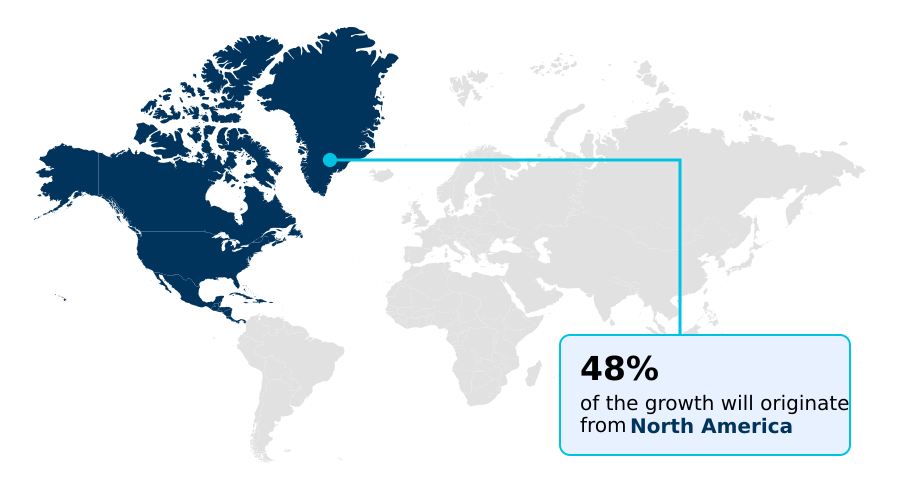
See How Offshore Support Vessel Market Demand is Rising in North America Get Free Sample
The geographic landscape of the market is diversifying, driven by distinct regional activities.
In North America, growth is fueled by both traditional energy and a burgeoning renewables sector, with new fields in the Gulf of Mexico expected to add significant production, while the East Coast focuses on offshore wind.
Europe is a leader in offshore renewable energy, with one nation targeting 50 gigawatts of offshore wind capacity by 2030, which requires extensive offshore logistics.
The APAC region is experiencing a surge in activity, with exploration and production vessel spending projected to increase by 17%. The Middle East is characterized by major sour gas development projects.
This global activity supports demand for the multipurpose support vessel, fast support intervention vessel, and vessels with advanced dynamic positioning systems to service both shallow water applications and deepwater operations.
Market Dynamics
Our researchers analyzed the data with 2025 as the base year, along with the key drivers, trends, and challenges. A holistic analysis of drivers will help companies refine their marketing strategies to gain a competitive advantage.
- Strategic fleet management in the OSV market is becoming increasingly complex as operators navigate the dual demands of traditional energy and renewables. Success depends on mastering digitalization in offshore vessel operations and investing in autonomous offshore support vessel technology to improve efficiency and safety.
- The push for low-emission hybrid offshore support vessels is driven by stringent regulatory compliance for offshore vessels and client demand for sustainability. Advanced subsea construction support vessels are critical for developing deepwater fields and the infrastructure for offshore hydrogen production.
- Specialized vessels for offshore wind projects, including next-generation wind turbine installation vessels and support vessels for floating wind farms, represent a significant growth vector. Optimizing OSV logistics for deepwater fields through technologies like advanced anchor handling for floating production units can yield uptime improvements of over 15% compared to conventional methods.
- However, operators must balance the high cost of OSV fleet modernization and OSV inspection and maintenance technologies against geopolitical risks and a persistent shortage of skilled crews. This environment favors operators who can effectively manage OSV demand for oil and gas decommissioning while simultaneously capturing opportunities in emerging sectors like OSV for sour gas field development.
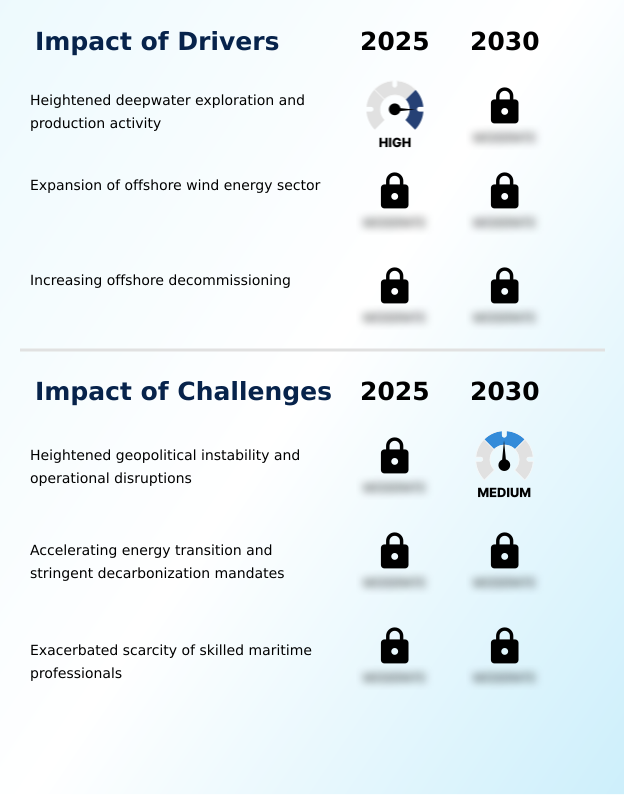
What are the key market drivers leading to the rise in the adoption of Offshore Support Vessel Industry?
- Heightened deepwater exploration and production activity, driven by global energy demand, is a key driver for the offshore support vessel market.
- Market growth is propelled by robust activity in both traditional and renewable energy sectors. Sustained offshore exploration and production, particularly high-pressure projects in deepwater basins, drive demand for a range of support vessels.
- Simultaneously, the global expansion of offshore wind farm construction creates a long-term need for specialized assets like the commissioning service operation vessel and cable laying vessel.
- For instance, one major European auction recently awarded capacity for 10.5 GW of new offshore wind development.
- Another significant driver is the increasing pace of offshore decommissioning, with one key region forecasting the need for well plugging and abandonment for over 2,000 wells.
- This regulatory-driven work, along with subsea infrastructure removal, ensures a stable demand for vessels capable of supporting the entire lifecycle of offshore energy infrastructure.
What are the market trends shaping the Offshore Support Vessel Industry?
- A key market trend involves the strategic diversification of offshore support vessel operators. This transition is driven by increasing integration with the burgeoning offshore renewable energy sector, particularly offshore wind.
- Key market trends reflect a strategic pivot towards the offshore renewable energy sector and accelerated digital automation. The demand for specialized assets such as the wind turbine installation vessel and service operation vessel is surging, with day rates in mature markets increasing by over 25% year-over-year.
- This has spurred innovation in vessel design, including the development of a methanol-ready vessel design to meet sustainability goals tied to the energy transition. Simultaneously, the adoption of the uncrewed surface vessel and remotely operated vehicle for remote operations is transforming subsea work. Industry leaders are making significant investments in their autonomous fleets, with plans to release specialized survey vessels.
- This move toward remote operations centers and digital technologies is a response to the need for greater efficiency and safety, while fleet consolidation remains a key strategy for financial stability.
What challenges does the Offshore Support Vessel Industry face during its growth?
- Heightened geopolitical instability and resulting operational disruptions present a key challenge affecting industry growth.
- The market faces significant operational and financial challenges, primarily from stringent decarbonization mandates and a shortage of qualified maritime professionals. The implementation of new environmental regulations, such as a 2% greenhouse gas intensity reduction starting in 2025, forces operators to invest in costly hybrid propulsion systems and LNG-powered vessels.
- This is compounded by a shortage of specialized assets required to meet ambitious renewable energy targets, such as the deployment of 30 gigawatts of offshore wind in the US. The need for advanced crew transfer vessel fleets with features like walk-to-walk gangways further strains the limited pool of skilled seafarers.
- Moreover, geopolitical instability elevates operational risks and insurance costs, impacting profitability and complicating the adoption of technologies like predictive maintenance and autonomous systems needed for long-term efficiency.
Exclusive Technavio Analysis on Customer Landscape
The offshore support vessel market forecasting report includes the adoption lifecycle of the market, covering from the innovator’s stage to the laggard’s stage. It focuses on adoption rates in different regions based on penetration. Furthermore, the offshore support vessel market report also includes key purchase criteria and drivers of price sensitivity to help companies evaluate and develop their market growth analysis strategies.
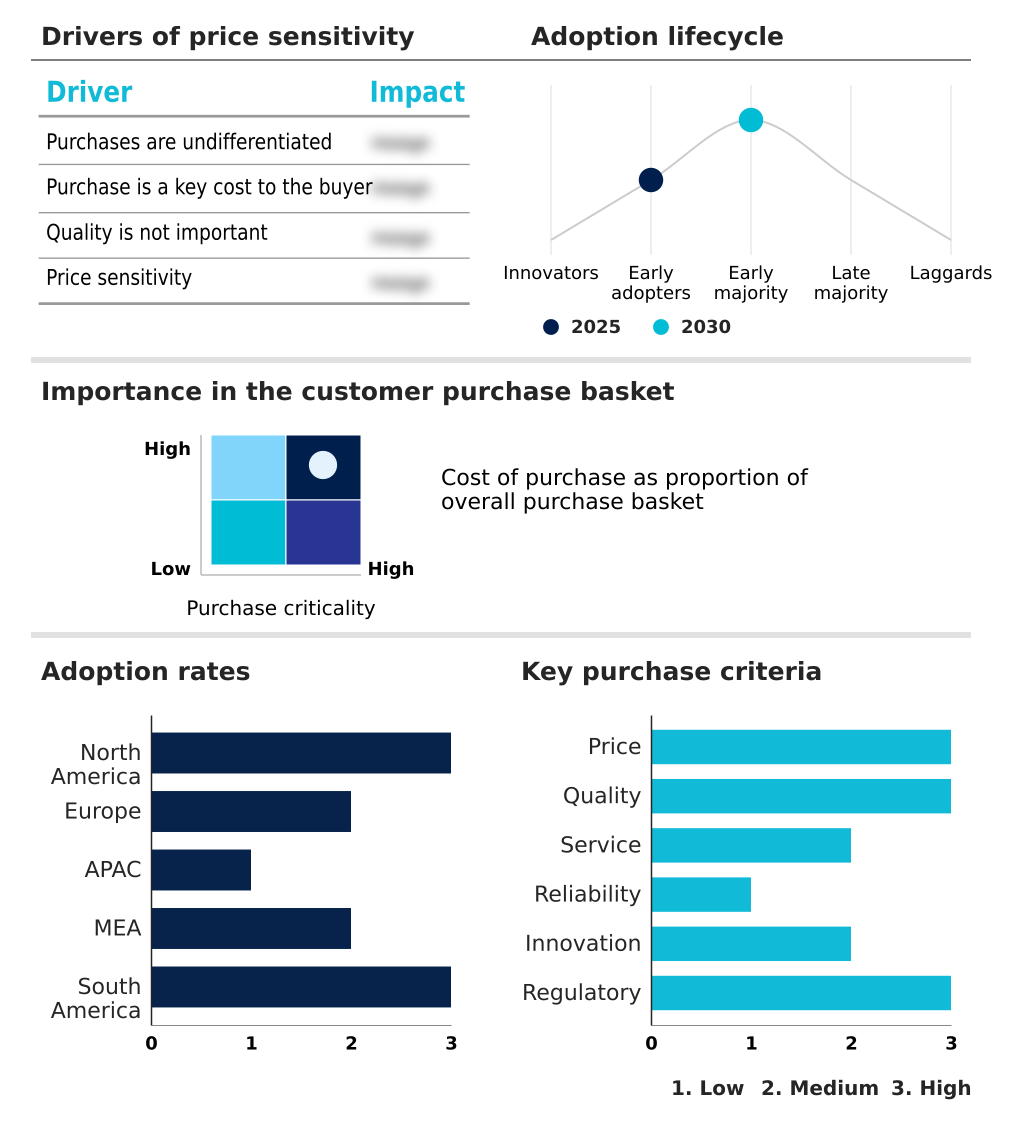
Customer Landscape of Offshore Support Vessel Industry
Competitive Landscape
Companies are implementing various strategies, such as strategic alliances, offshore support vessel market forecast, partnerships, mergers and acquisitions, geographical expansion, and product/service launches, to enhance their presence in the industry.
BOURBON Maritime - Delivers specialized maritime services for deepwater oil, gas, and wind farm operations, supporting complex subsea, transport, and anchor handling tasks.
The industry research and growth report includes detailed analyses of the competitive landscape of the market and information about key companies, including:
- BOURBON Maritime
- CNOOC Ltd.
- Damen Shipyards Group
- DP World
- Eastern Shipbuilding Inc.
- Edison Chouest Offshore Co.
- Fincantieri Spa
- Harvey Gulf Intl. Marine LLC
- Hornbeck Offshore Services
- Maersk Supply Service
- New DOF ASA
- Sea1 Offshore
- SEACOR Marine Holdings Inc.
- ST Engineering Ltd.
- Tidewater Inc.
- Zamil Offshore Services Co.
Qualitative and quantitative analysis of companies has been conducted to help clients understand the wider business environment as well as the strengths and weaknesses of key industry players. Data is qualitatively analyzed to categorize companies as pure play, category-focused, industry-focused, and diversified; it is quantitatively analyzed to categorize companies as dominant, leading, strong, tentative, and weak.
Recent Development and News in Offshore support vessel market
- In October, 2024, Atlantic Shores, a joint venture between Shell New Energies and EDF Renewables, received its final construction and operational planning approval for a 2,800 MW offshore wind development off the coast of New Jersey.
- In December, 2024, Petrobras announced contracts for the construction and chartering of 12 new hybrid-propulsion platform supply vessels with Brazilian firms Bram Offshore and Starnav Servicos Maritimos.
- In January, 2025, Equinor awarded pre-front-end engineering and design contracts to BW Offshore and Altera Infrastructure for the floating production, storage, and offloading unit for its Bay du Nord deepwater project in Canada.
- In May, 2025, Turkey announced a major natural gas discovery at the Goktepe-3 well in the Black Sea, made by its advanced drilling vessel, the Abdulhamid Han, significantly increasing the nation's domestic energy reserves.
Dive into Technavio’s robust research methodology, blending expert interviews, extensive data synthesis, and validated models for unparalleled Offshore Support Vessel Market insights. See full methodology.
| Market Scope | |
|---|---|
| Page number | 298 |
| Base year | 2025 |
| Historic period | 2020-2024 |
| Forecast period | 2026-2030 |
| Growth momentum & CAGR | Accelerate at a CAGR of 6.1% |
| Market growth 2026-2030 | USD 702.2 million |
| Market structure | Fragmented |
| YoY growth 2025-2026(%) | 5.8% |
| Key countries | US, Canada, Mexico, UK, The Netherlands, Germany, France, Italy, Spain, China, Australia, India, Indonesia, South Korea, Japan, Saudi Arabia, UAE, Turkey, Israel, South Africa, Brazil, Argentina and Chile |
| Competitive landscape | Leading Companies, Market Positioning of Companies, Competitive Strategies, and Industry Risks |
Research Analyst Overview
- The offshore support vessel market is characterized by a significant structural shift as operators adapt to the global energy transition. This evolution requires substantial capital for fleet modernization, including investment in assets like the accommodation work barge, dual-fuel vessel, and specialized subsea construction vessel.
- Demand is robust for both traditional oil and gas projects, involving well plugging and abandonment, and the rapidly expanding renewables sector, which requires the wind turbine installation vessel and service operation vessel. A key boardroom focus is balancing investment in a methanol-ready vessel design against retrofitting existing fleets with hybrid propulsion systems.
- The market's tight supply is evident, with day rates for some specialized vessels increasing by 25% to 35%, reflecting the high demand for advanced capabilities.
- Operators are increasingly utilizing the uncrewed surface vessel and remotely operated vehicle for subsea inspection maintenance repair and other offshore logistics, driving a need for new skill sets and operational models to manage these assets effectively. This dynamic environment places a premium on versatile, technologically advanced fleets capable of serving diverse energy segments.
What are the Key Data Covered in this Offshore Support Vessel Market Research and Growth Report?
-
What is the expected growth of the Offshore Support Vessel Market between 2026 and 2030?
-
USD 702.2 million, at a CAGR of 6.1%
-
-
What segmentation does the market report cover?
-
The report is segmented by Product (AHTS, PSV, MPSV, FSIV, and Others), Application (Oil and gas, and Offshore applications), Fuel Type (Diesel powered, and Gas powered) and Geography (North America, Europe, APAC, Middle East and Africa, South America)
-
-
Which regions are analyzed in the report?
-
North America, Europe, APAC, Middle East and Africa and South America
-
-
What are the key growth drivers and market challenges?
-
Heightened deepwater exploration and production activity, Heightened geopolitical instability and operational disruptions
-
-
Who are the major players in the Offshore Support Vessel Market?
-
BOURBON Maritime, CNOOC Ltd., Damen Shipyards Group, DP World, Eastern Shipbuilding Inc., Edison Chouest Offshore Co., Fincantieri Spa, Harvey Gulf Intl. Marine LLC, Hornbeck Offshore Services, Maersk Supply Service, New DOF ASA, Sea1 Offshore, SEACOR Marine Holdings Inc., ST Engineering Ltd., Tidewater Inc. and Zamil Offshore Services Co.
-
Market Research Insights
- Market dynamics are shaped by a dual focus on offshore exploration and production and the expanding offshore renewable energy sector. This has intensified demand for specialized marine transportation services, with day rates for certain high-specification vessels increasing by as much as 35% year-over-year.
- As operators engage in deepwater drilling operations and subsea tie-back projects, the need for a modern, Jones Act compliant fleet becomes more critical, particularly in burgeoning offshore wind markets. The industry is also seeing a strategic push toward fleet consolidation to optimize assets and improve financial stability.
- This evolving landscape requires significant investment in advanced technologies to support complex offshore energy infrastructure and capitalize on long-term contracts in both traditional and renewable segments.
We can help! Our analysts can customize this offshore support vessel market research report to meet your requirements.
 RIA -
RIA - 
