


Pork Meat Market Size 2026-2030
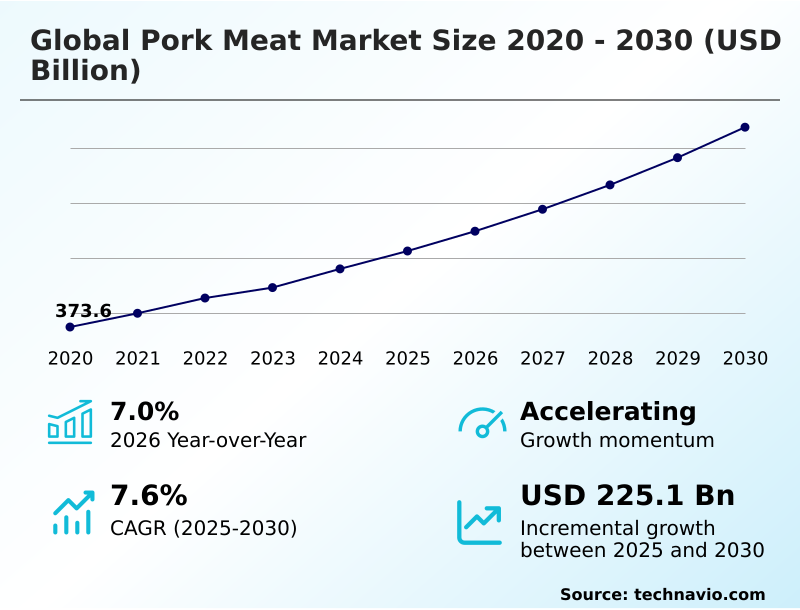
The pork meat market size is valued to increase by USD 225.1 billion, at a CAGR of 7.6% from 2025 to 2030. Increasing demand for grass-fed and organic pork will drive the pork meat market.
Major Market Trends & Insights
- APAC dominated the market and accounted for a 51.3% growth during the forecast period.
- By Product - Fresh pork meat segment was valued at USD 383.9 billion in 2024
- By Distribution Channel - Offline segment accounted for the largest market revenue share in 2024
Market Size & Forecast
- Market Opportunities: USD 363.3 billion
- Market Future Opportunities: USD 225.1 billion
- CAGR from 2025 to 2030 : 7.6%
Market Summary
- The Pork Meat Market is a dynamic sector shaped by the interplay of consumer demand, technological innovation, and regulatory pressures. Key drivers include a growing appetite for value-added pork products and the rising popularity of organic pork production, which addresses consumer health consciousness.
- However, the industry grapples with significant challenges, including the management of livestock disease outbreaks like african swine fever and the vegan population impact, which fuels meat substitute development. In response, producers are adopting advanced technologies such as precision livestock farming and ai-driven predictive analytics to improve feed efficiency optimization and supply chain resilience.
- For example, a major processing firm might implement a blockchain for supply chain system to meet stringent food safety regulations. This not only enhances supply chain transparency but also builds consumer trust enhancement, which is crucial for navigating global trade dynamics and competing with alternative protein sources. The push towards sustainable farming practices and clean-label products further redefines operational standards.
What will be the Size of the Pork Meat Market during the forecast period?
Get Key Insights on Market Forecast (PDF) Get Free Sample
How is the Pork Meat Market Segmented?
The pork meat industry research report provides comprehensive data (region-wise segment analysis), with forecasts and estimates in "USD billion" for the period 2026-2030, as well as historical data from 2020-2024 for the following segments.
- Product
- Fresh pork meat
- Processed pork meat
- Distribution channel
- Offline
- Online
- End-user
- Household
- Food service industry
- Food processing industry
- Geography
- APAC
- China
- Japan
- India
- Europe
- Germany
- UK
- France
- North America
- US
- Canada
- Mexico
- South America
- Brazil
- Argentina
- Colombia
- Middle East and Africa
- Israel
- South Africa
- Rest of World (ROW)
- APAC
By Product Insights
The fresh pork meat segment is estimated to witness significant growth during the forecast period.
The fresh pork meat segment is shaped by evolving culinary preference shifts and global trade dynamics that influence pork consumption rates globally.
Producers are increasingly adopting sustainable farming practices and advanced genetic engineering to improve herd health and mitigate environmental concerns like greenhouse gas emissions reduction. The integrity of cold chain infrastructure is crucial for maintaining product quality from farm to table.
To enhance supply chain resilience, many are integrating food traceability systems and digital procurement platforms. As product diversification strategies become more important, some producers are even exploring plant-based protein blends.
Adopting such innovations reduces feed costs by up to 10%, highlighting the economic and operational advantages of modernization, which is vital as the market adapts to e-commerce distribution channels.
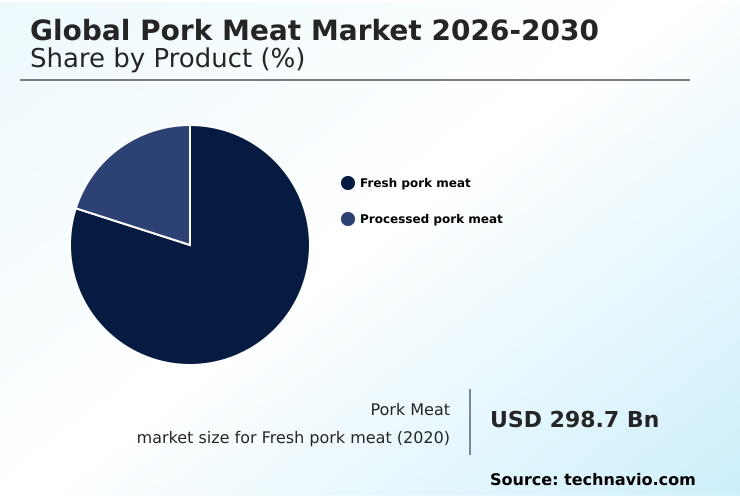
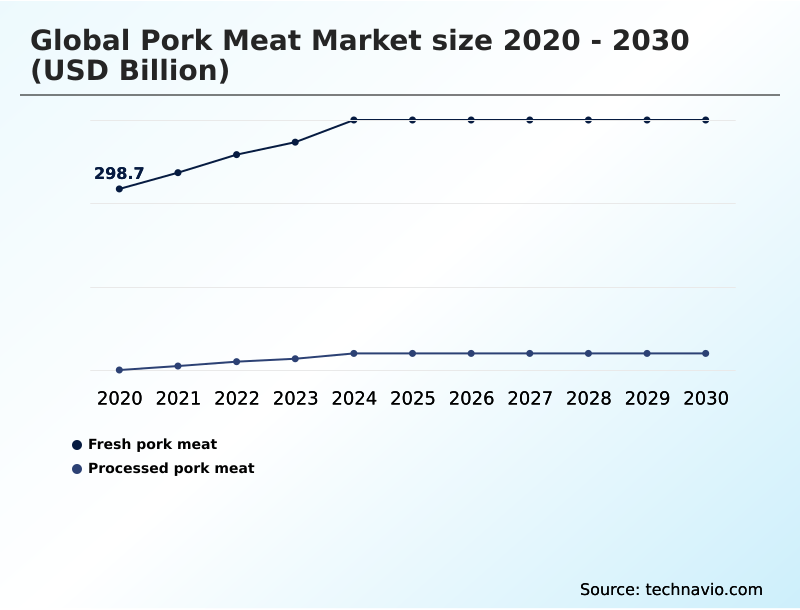
The Fresh pork meat segment was valued at USD 383.9 billion in 2024 and showed a gradual increase during the forecast period.
Regional Analysis
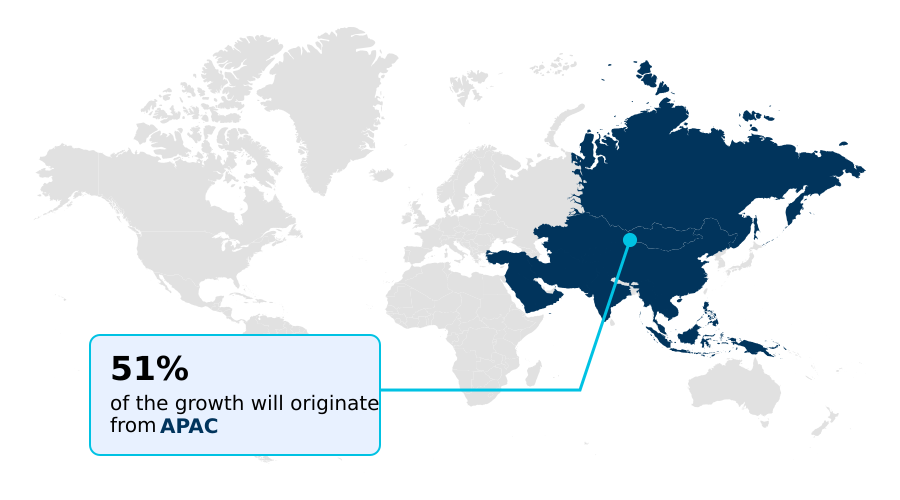
APAC is estimated to contribute 51.3% to the growth of the global market during the forecast period.Technavio’s analysts have elaborately explained the regional trends and drivers that shape the market during the forecast period.
See How Pork Meat Market Demand is Rising in APAC Get Free Sample
The geographic landscape is dominated by the APAC region, which accounts for 51.27% of the market's incremental growth, driven by high demand and modernizing production.
However, navigating this market requires a detailed value chain analysis due to varying regional food safety regulations and animal welfare standards.
The rising vegan population impact and plant-based diet shift are creating pressure for meat substitute development, especially in Europe and North America.
Concerns over livestock disease outbreaks like foot-and-mouth disease and porcine respiratory syndrome make supply chain transparency essential for consumer trust enhancement.
In some areas, the adoption of new technologies has boosted production by 15%, showing how innovation can address challenges from consumer health consciousness and demand for cruelty-free food choices.
Market Dynamics
Our researchers analyzed the data with 2025 as the base year, along with the key drivers, trends, and challenges. A holistic analysis of drivers will help companies refine their marketing strategies to gain a competitive advantage.
- The pork meat market is undergoing a significant transformation, driven by technological adoption and shifting consumer expectations. The precision livestock farming impact on pork production is substantial, allowing for real-time monitoring of animal health and welfare, which directly correlates with higher-quality outputs.
- Simultaneously, the implementation of blockchain traceability for pork safety is becoming a critical differentiator, providing immutable records that enhance consumer trust and simplify compliance. In processing facilities, the integration of robotic butchering systems in processing is addressing labor shortages and improving consistency, with some operations reporting higher yields than manual methods.
- This automation is complemented by the use of ai analytics for swine feed optimization, which helps producers minimize costs and environmental impact by tailoring nutrition precisely. These operational advancements are occurring alongside evolving consumer trends for processed pork meat, where demand for convenience, clean labels, and novel flavors is pushing manufacturers to innovate.
- Ultimately, companies that effectively leverage these technological shifts are better positioned to meet both regulatory demands and the nuanced preferences of the modern consumer.
What are the key market drivers leading to the rise in the adoption of Pork Meat Industry?
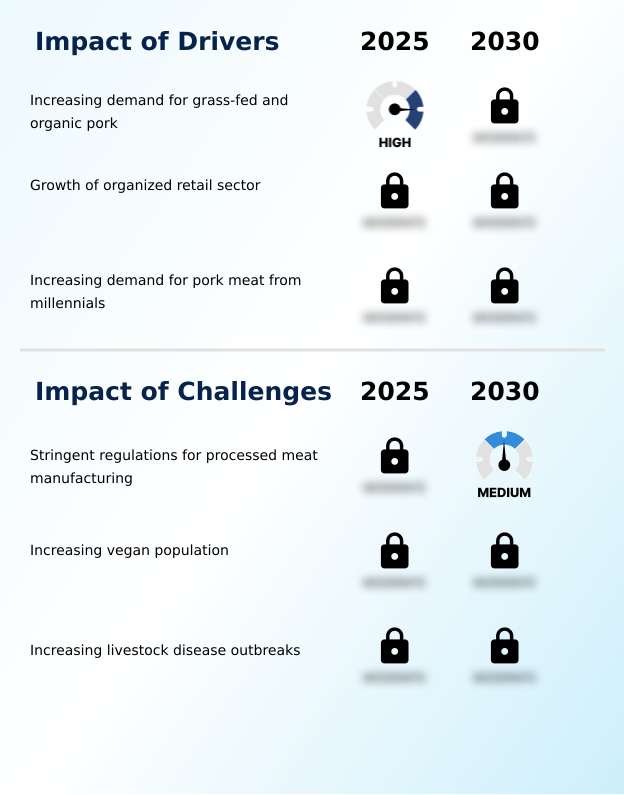
- A key market driver is the rising consumer demand for grass-fed and organic pork, spurred by a growing emphasis on health, wellness, and product origins.
- Key drivers include organized retail sector growth and the rise of online meat retailing, which has boosted production by 15%. Innovations in gene-editing technologies are improving supply chain resilience with productivity gains of 30%.
- Consumers are demanding value-added pork products with superfood ingredient inclusion, leading to the creation of hybrid meat products. Smart packaging traceability is now essential for private-label pork brands to comply with processed meat guidelines.
- Efficient cold chain logistics and automated feeding systems, managed by primary processing software, are crucial for optimizing shelf space allocation and ensuring product freshness from production to retail.
What are the market trends shaping the Pork Meat Industry?
- The adoption of new pork processing technology is an influential market trend, with advancements poised to improve operational efficiency and product quality throughout the industry.
- Market trends are driven by technology adoption and shifting millennial food preferences. Precision livestock farming and iot-enabled smart sensors are becoming standard, reducing feed costs by up to 10%. Innovations like robotic butchering systems are also cutting labor expenses by 20%. The industry is exploring disease-resistant pig breeds and blockchain for supply chain to improve safety.
- Demand for grass-fed pork meat and organic pork production is rising, leading to nitrate-free processing and other processed pork alternatives. Ai-driven predictive analytics help forecast demand for fast-food pork options and other products, highlighting value-added pork benefits.
What challenges does the Pork Meat Industry face during its growth?
- Stringent regulations governing the manufacturing of processed meat represent a significant challenge, impacting production protocols and market access for industry participants.
- The market faces significant challenges, including the threat of diseases like african swine fever, swine vesicular disease, and porcine circovirus 2, which can increase production costs by over 25%. A pronounced plant-based diet shift, fueled by consumer health consciousness, pressures the industry to focus on feed efficiency optimization and environmental monitoring systems.
- Ensuring food safety compliance and supply chain transparency is critical. In response, firms are developing clean-label products and eco-friendly packaging for items like red meat-based snacks to appeal to discerning consumers, even as the organized retail sector growth intensifies competition.
Exclusive Technavio Analysis on Customer Landscape
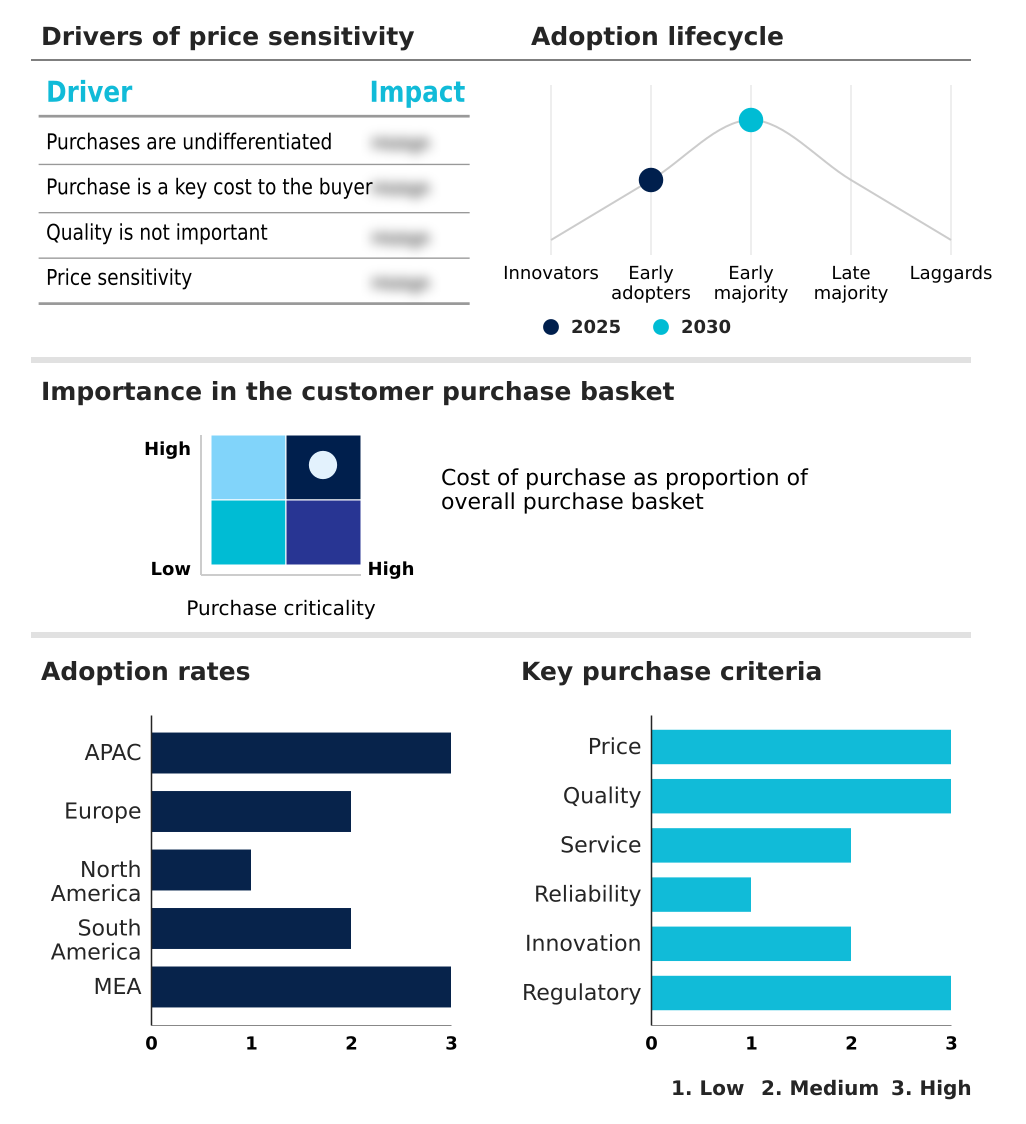
The pork meat market forecasting report includes the adoption lifecycle of the market, covering from the innovator’s stage to the laggard’s stage. It focuses on adoption rates in different regions based on penetration. Furthermore, the pork meat market report also includes key purchase criteria and drivers of price sensitivity to help companies evaluate and develop their market growth analysis strategies.
Customer Landscape of Pork Meat Industry
Competitive Landscape
Companies are implementing various strategies, such as strategic alliances, pork meat market forecast, partnerships, mergers and acquisitions, geographical expansion, and product/service launches, to enhance their presence in the industry.
Bridgford Foods Corp. - Offerings are centered on high-quality pork meat, meeting rigorous food safety standards to deliver premium protein choices that align with consumer expectations for safety and quality.
The industry research and growth report includes detailed analyses of the competitive landscape of the market and information about key companies, including:
- Bridgford Foods Corp.
- Charoen Pokphand Foods
- China Yurun Food Group
- Conagra Brands Inc.
- Cooperl
- Cranswick plc
- Danish Crown AS
- Dawn Pork and Bacon
- Gordon Food Service Inc.
- Hormel Foods Corp.
- Iowa Select Farms
- JBS SA
- New Hope Liuhe Co. Ltd.
- The Maschhoffs LLC
- Triumph Foods LLC
- Tyson Foods Inc.
- Vall Companys Group
- Vion Food Group
- WH Group Ltd.
Qualitative and quantitative analysis of companies has been conducted to help clients understand the wider business environment as well as the strengths and weaknesses of key industry players. Data is qualitatively analyzed to categorize companies as pure play, category-focused, industry-focused, and diversified; it is quantitatively analyzed to categorize companies as dominant, leading, strong, tentative, and weak.
Recent Development and News in Pork meat market
- In November 2024, Tyson Foods Inc. announced the launch of its comprehensive blockchain-powered food traceability system, aiming to provide consumers with transparent information on pork sourcing and processing, enhancing food safety across its supply chain.
- In January 2025, Danish Crown AS completed the acquisition of a leading pork processor in Vietnam, a strategic move to strengthen its presence in the rapidly growing APAC market and expand its distribution network for value-added pork products.
- In March 2025, Hormel Foods Corp. introduced its 'Natural Choice' line of certified organic and grass-fed pork products, responding to increasing consumer demand for sustainably and ethically sourced meat options in North America.
- In May 2025, WH Group Ltd. entered into an exclusive partnership with ALDI to supply a new range of private-label, nitrate-free processed pork meats, capitalizing on the rising trend of health-conscious consumerism and private-label brand growth.
Dive into Technavio’s robust research methodology, blending expert interviews, extensive data synthesis, and validated models for unparalleled Pork Meat Market insights. See full methodology.
| Market Scope | |
|---|---|
| Page number | 275 |
| Base year | 2025 |
| Historic period | 2020-2024 |
| Forecast period | 2026-2030 |
| Growth momentum & CAGR | Accelerate at a CAGR of 7.6% |
| Market growth 2026-2030 | USD 225.1 billion |
| Market structure | Fragmented |
| YoY growth 2025-2026(%) | 7.0% |
| Key countries | China, Japan, India, South Korea, Australia, Germany, UK, France, Russia, Spain, Italy, US, Canada, Mexico, Brazil, Argentina, Colombia, Israel and South Africa |
| Competitive landscape | Leading Companies, Market Positioning of Companies, Competitive Strategies, and Industry Risks |
Research Analyst Overview
- The pork meat market is navigating a complex landscape defined by technological disruption and evolving consumer ethics. Boardroom decisions now center on integrating systems like precision livestock farming and ai-driven predictive analytics to enhance feed efficiency optimization and strengthen supply chain resilience.
- The adoption of robotic butchering systems has already demonstrated a capacity to reduce labor costs by 20% in some advanced facilities. Concurrently, there is a push towards clean-label products and nitrate-free processing to meet demands for healthier options.
- Innovations in genetic engineering are creating disease-resistant pig breeds to combat threats like african swine fever, while blockchain for supply chain and smart packaging traceability are becoming standard for ensuring food safety compliance and consumer trust enhancement.
- The development of hybrid meat products that include plant-based protein blends shows a strategic response to the growing interest in cruelty-free food choices and sustainable farming practices.
What are the Key Data Covered in this Pork Meat Market Research and Growth Report?
-
What is the expected growth of the Pork Meat Market between 2026 and 2030?
-
USD 225.1 billion, at a CAGR of 7.6%
-
-
What segmentation does the market report cover?
-
The report is segmented by Product (Fresh pork meat, and Processed pork meat), Distribution Channel (Offline, and Online), End-user (Household, Food service industry, and Food processing industry) and Geography (APAC, Europe, North America, South America, Middle East and Africa)
-
-
Which regions are analyzed in the report?
-
APAC, Europe, North America, South America and Middle East and Africa
-
-
What are the key growth drivers and market challenges?
-
Increasing demand for grass-fed and organic pork, Stringent regulations for processed meat manufacturing
-
-
Who are the major players in the Pork Meat Market?
-
Bridgford Foods Corp., Charoen Pokphand Foods, China Yurun Food Group, Conagra Brands Inc., Cooperl, Cranswick plc, Danish Crown AS, Dawn Pork and Bacon, Gordon Food Service Inc., Hormel Foods Corp., Iowa Select Farms, JBS SA, New Hope Liuhe Co. Ltd., The Maschhoffs LLC, Triumph Foods LLC, Tyson Foods Inc., Vall Companys Group, Vion Food Group and WH Group Ltd.
-
Market Research Insights
- The market's dynamics are influenced by evolving millennial food preferences and the significant organized retail sector growth. This shift has accelerated online meat retailing, forcing adjustments in pork pricing strategies. Technological adoption is a key response, with meat substitute development improving productivity by up to 30%, while digital procurement platforms help manage global trade dynamics.
- Firms focusing on product diversification strategies are meeting demand for processed pork alternatives. Furthermore, sustainable farming practices have been shown to reduce labor costs by 20%, directly impacting profitability. This dual focus on innovation and efficiency is critical for navigating culinary preference shifts and maintaining competitiveness.
We can help! Our analysts can customize this pork meat market research report to meet your requirements.
 RIA -
RIA - 
