



According to our research report, the Power Tools Market in the US will witness a CAGR of 3.33% which is expected to increase by USD 1.63 billion for the forecast period 2020 to 2025.
This market research report provides valuable insights into the post-COVID-19 impact on the market, which will help companies evaluate their business approaches. Furthermore, this report extensively covers market segmentation by technology (electric, pneumatic, and others) and end-user (professional and consumer). The power tools market in the US report also offers information on several market vendors, including ANDREAS STIHL AG & Co. KG, Apex Tool Group LLC, Emerson Electric Co., Illinois Tool Works Inc., Ingersoll Rand Inc., Makita Corp., Robert Bosch GmbH, Snap-on Inc., Stanley Black & Decker Inc., and Techtronic Industries Co. Ltd. among others.
What will the Power Tools Market Size in US be During the Forecast Period?
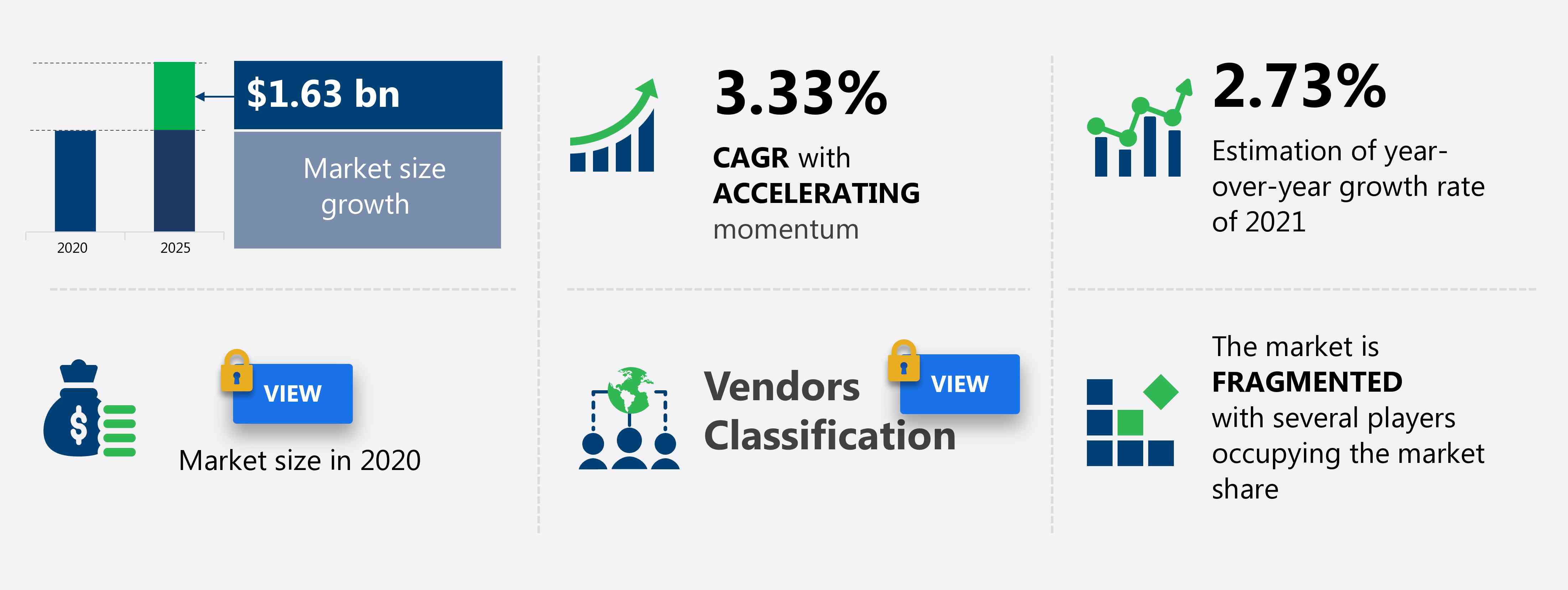
Download the Report Sample to Unlock the Power Tools Market Size in US for the Forecast Period and Other Important Statistics
Parent Market Analysis
The power tools market in US is a part of the global electrical components and equipment market. The global electrical components and equipment market was valued at USD 1,941.23 billion in 2020. Our Technavio Research categorizes the global market belonging to the Electrical Equipment industry. Our research report has extensively covered external factors influencing the parent market growth potential in the coming years, which will determine the levels of growth of the market during the forecast period.
Power Tools Market in US: Key Drivers, Trends, and Challenges
Based on our research output, there has been a negative impact on the market growth during and post-COVID-19 era. The growing demand for power tools for DIY projects in the US is notably driving the power tools market growth in the US, although factors such as may impede the market growth. Our research analysts have studied the historical data and deduced the key market drivers and the COVID-19 pandemic impact on the power tools industry in US. The holistic analysis of the drivers will help deduce end goals and refine marketing strategies to gain a competitive edge.
Key Power Tools Market Driver in US
One of the key factors driving growth in the market is the growing demand for power tools for DIY projects in US. DIY projects refer to activities in which individuals such as hobbyists, residents, amateurs, or enthusiasts engage themselves in modifying, upgrading, maintaining, and rebuilding their material possessions such as household appliances, automobiles, residences, and bicycles. DIY projects are performed using raw or semi-finished raw materials, suitable tools, and equipment with little or no assistance from professionals. Home improvement projects constitute the majority of DIY projects. Some home improvement projects include replacing a shower faucet or refinishing the basement and attic. Home improvement projects include activities such as woodworking; plumbing; landscaping; and heating, ventilation, and air-conditioning (HVAC) utility repair works. A home is usually a life-long asset, and the demand for DIY tools, including power tools, for home improvement projects is growing in the US, as the large and affluent middle class in the US increasingly demands a better home space to ensure an improved standard of living. Moreover, with the spread of social media channels, more people are getting engaged in DIY projects to demonstrate their creative skills. Also, before hiring a working professional or labour, brainstorming has become a part of life, calculating the cost of professional plumbers, electricians, and mechanics. Such factors will positively impact the growth of the power tools market.
Key Power Tools Market Challenge in US
The risk of rising interest rates will be a major challenge for the market during the forecast period. The interest rates in the US have been rising since 2015. The US Federal Reserve increased the benchmark rates by approximately eight times in September 2018. A rising interest rate discourages borrowing by businesses and individuals and encourages savings. As a result of the rising benchmark rates in the US, the 30-year fixed rate mortgage in the US has increased by 25% between October 2017 and October 2018. This may lead to a reduction in the number of new home loan applications in the US in the forecast timeframe. Apart from this, a lean inventory of existing residences and the rising cost of construction have increased the prices of the existing residences. This is leading to a decline in the sales of the existing residences. The sale of existing residences is an important demand driver for power tools in the US as new owners invest in the modification and beautification of the acquired residence. The benchmark rates in the US are expected to rise further in 2019 due to the strong economic growth of the US, rising inflation, and the higher issuance of US government bonds. This may pose a significant growth risk for the construction industry in the US.
This market analysis report also provides detailed information on other upcoming trends and challenges that will have a far-reaching effect on the market growth. The actionable insights on the trends and challenges will help companies evaluate and develop growth strategies for 2021-2025.
Who are the Major Power Tools Market Vendors in the US?
The report analyzes the market’s competitive landscape and offers information on several market vendors, including:
- ANDREAS STIHL AG & Co. KG
- Apex Tool Group LLC
- Emerson Electric Co.
- Illinois Tool Works Inc.
- Ingersoll Rand Inc.
- Makita Corp.
- Robert Bosch GmbH
- Snap-on Inc.
- Stanley Black & Decker Inc.
- Techtronic Industries Co. Ltd.
This statistical study of the market encompasses successful business strategies deployed by the key vendors. The power tools market in US is fragmented and the vendors are deploying organic and inorganic growth strategies to compete in the market.
To make the most of the opportunities and recover from the post-COVID-19 impact, market vendors should focus more on the growth prospects in the fast-growing segments, while maintaining their positions in the slow-growing segments.
The market forecast report offers in-depth insights into key vendor profiles. The profiles include information on the production, sustainability, and prospects of the leading companies.
Power Tools Market in US Value Chain Analysis
Our report provides extensive information on the value chain analysis for the market, which vendors can leverage to gain a competitive advantage during the forecast period. The end-to-end understanding of the value chain is essential in profit margin optimization and evaluation of business strategies. The data available in our value chain analysis segment can help vendors drive costs and enhance customer services during the forecast period.
What are the Revenue-generating Technology Segments in the Power Tools Market in the US?
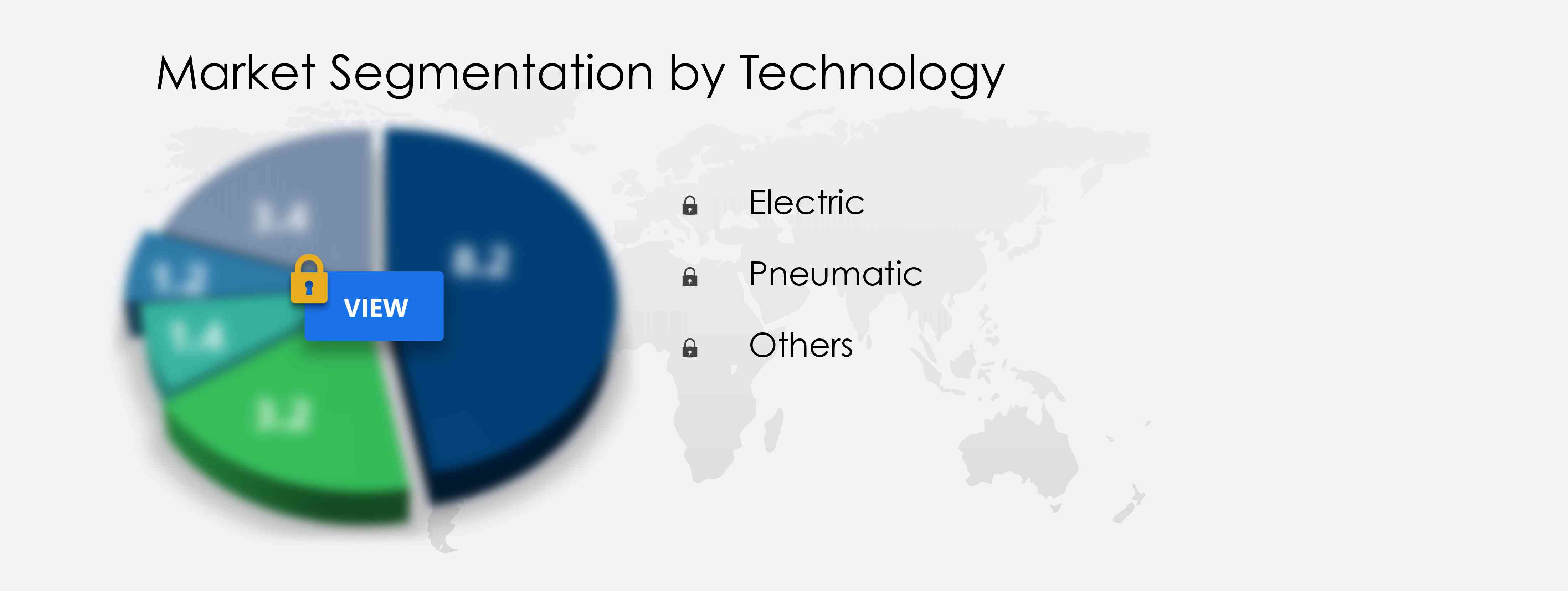
To gain further insights on the market contribution of various segments Request a PDF Sample
The power tools market share growth by the electric segment will be significant during the forecast period. A major factor that is driving the demand for cordless power tools is the developments in battery and motor technologies. For instance, Li-ion batteries have almost replaced nickel-cadmium (Ni-Cd) batteries that were traditionally used in cordless tools. Li-ion batteries have more charge storage capacity than Ni-Cd batteries. Thus, Li-ion batteries provide cordless electric power tools with more run time. Owing to the run time limitations posed by batteries, there were concerns regarding the use of cordless power tools for heavy-duty applications in the past. Thus, power tool vendors had to maintain a balance between the torque of the motor and the run time.
This report provides an accurate prediction of the contribution of all the segments to the growth of the market size and actionable market insights on the post-COVID-19 impact on each segment.
|
Power Tools Market in US Scope |
|
|
Report Coverage |
Details |
|
Page number |
120 |
|
Base year |
2020 |
|
Forecast period |
2021-2025 |
|
Growth momentum & CAGR |
Accelerate at a CAGR of 3.33% |
|
Market growth 2021-2025 |
$ 1.63 billion |
|
Market structure |
Fragmented |
|
YoY growth (%) |
2.73 |
|
Regional analysis |
US |
|
Competitive landscape |
Leading companies, Competitive Strategies, Consumer engagement scope |
|
Key companies profiled |
ANDREAS STIHL AG & Co. KG, Apex Tool Group LLC, Emerson Electric Co., Illinois Tool Works Inc., Ingersoll Rand Inc., Makita Corp., Robert Bosch GmbH, Snap-on Inc., Stanley Black & Decker Inc., and Techtronic Industries Co. Ltd. |
|
Market dynamics |
Parent market analysis, Market growth inducers and obstacles, Fast-growing and slow-growing segment analysis, COVID-19 impact and recovery analysis and future consumer dynamics, Market condition analysis for the forecast period |
|
Customization purview |
If our report has not included the data that you are looking for, you can reach out to our analysts and get segments customized. |
What are the Key Data Covered in this Power Tools Market in US Report?
- CAGR of the market during the forecast period 2021-2025
- Detailed information on factors that will drive market growth during the next five years
- Precise estimation of the market size and its contribution to the parent market
- Accurate predictions on upcoming trends and changes in consumer behaviour
- The growth of the power tools industry in the US
- A thorough analysis of the market’s competitive landscape and detailed information on vendors
- Comprehensive details of factors that will challenge the growth of market vendors
We can help! Our analysts can customize this report to meet your requirements. Get in touch
 RIA -
RIA - 
