


Renewable Energy Investment Market Analysis APAC, North America, Europe, South America, Middle East and Africa - China, US, Japan, Germany, Brazil - Size and Forecast 2024-2028

Renewable Energy Investment Market Analysis APAC, North America, Europe, South America, Middle East and Africa - China, US, Japan, Germany, Brazil - Size and Forecast 2024-2028

Published: Aug 2024 153 Pages SKU: IRTNTR72834

Market Overview at a Glance

$181.9 B
Market Opportunity
8.11%
CAGR
7.5
YoY growth 2023-2024(%)

Renewable Energy Investment Market Size 2024-2028

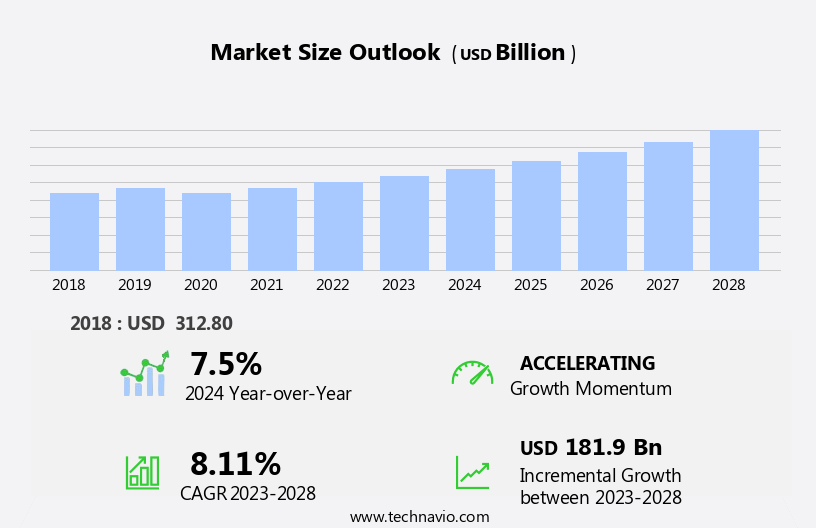
The renewable energy investment market size is forecast to increase by USD 181.9 billion at a CAGR of 8.11% between 2023 and 2028.

  • The market is experiencing significant growth, driven by supportive government policies and increased spending on utility-scale projects. According to the latest market analysis, the global renewable energy sector is anticipated to witness substantial investments due to the increasing focus on reducing carbon emissions and transitioning away from fossil fuels. Governments worldwide are implementing policies and incentives to promote renewable energy adoption, creating a favorable business environment for investors. Moreover, the trend towards large-scale renewable energy projects is gaining momentum, with utility-scale solar and wind farms attracting substantial investments. However, the market is not without challenges. Competition from traditional energy sources, particularly fossil fuels, remains a significant barrier to growth.
  • The volatility of renewable energy sources and the intermittency of solar and wind power generation are also concerns for investors. To capitalize on market opportunities and navigate challenges effectively, companies must stay informed about regulatory developments, technological advancements, and market trends. Strategic partnerships, innovation, and operational efficiency will be key differentiators for success in the market.

What will be the Size of the Renewable Energy Investment Market during the forecast period?
Renewable Energy Investment Market Size

 Request Free Sample

  • The market in the US is experiencing growth, driven by the increasing deployment of solar technology and offshore wind for electricity generation. Utility-scale solar projects are leading the charge, with capacity additions expected to continue due to grid resilience and energy affordability concerns. Federal investments and energy security considerations are also significant growth factors, as the US seeks to reduce greenhouse gas emissions in line with the Paris Agreement and various clean energy laws. Policy developments, such as renewable portfolio standards and tax-credit transfer markets, are further fueling the market's expansion. The manufacturing sector is also playing a crucial role, with advancements in solar, wind, and biofuels technology driving innovation and efficiency.
  • The renewable energy sector's growth is not limited to the US, as the EU and other regions are also making substantial investments in renewable energy. The IEA assessment indicates that renewable energy will continue to dominate new electricity capacity additions, with biofuels and generative artificial intelligence also playing a role in the energy transition. The energy crisis and decarbonization targets are further emphasizing the importance of renewable energy in the power system integration. The UN Climate Change Conference's Energy Transitions Stocktake and the Paris Agreement's policy developments are also influencing the market's direction. Overall, the renewable energy market is a dynamic and growing sector, with significant potential for continued expansion.

How is this Renewable Energy Investment Industry segmented?

The renewable energy investment industry research report provides comprehensive data (region-wise segment analysis), with forecasts and estimates in "USD billion" for the period 2024-2028, as well as historical data from 2018-2022 for the following segments.

  • Type
    • Asset finance
    • Small distributed capacity
  • Geography
    • APAC
      • China
      • Japan
    • North America
      • US
    • Europe
      • Germany
    • South America
      • Brazil
    • Middle East and Africa

    By Type Insights

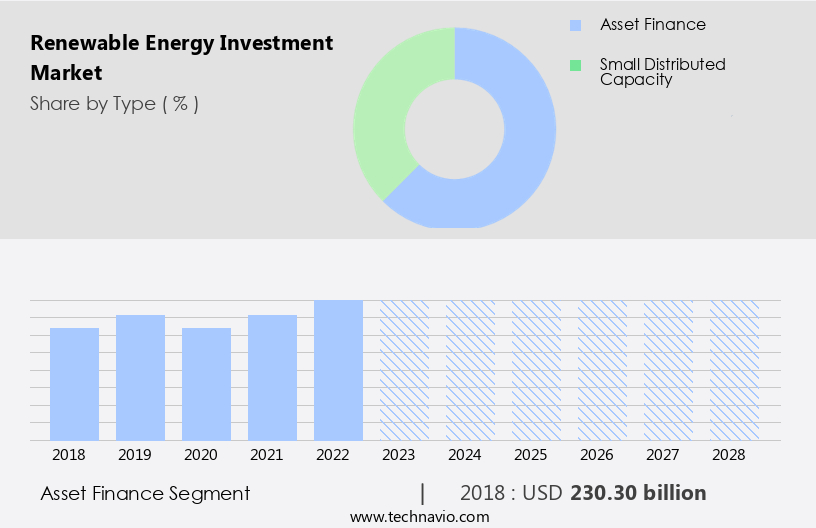
    The asset finance segment is estimated to witness significant growth during the forecast period.

    The market is experiencing significant growth as businesses seek energy affordability and decarbonization solutions amidst increasing energy crisis and regulatory boosts. companies offering financial services for renewable power projects, such as the Clean Energy Finance Corporation, are playing a crucial role in this expansion. These entities provide investments for small-scale clean energy projects, enabling businesses, manufacturers, commercial property owners, and farmers to transition to a low-emission future. However, investments in solar thermal projects, including concentrated solar power (CSP) and solar heating systems, have declined, with offshore wind now holding the third-largest share of investments at 7%.

    Hydroelectric power accounts for 4%, while other renewables account for 3%. Policy developments, such as renewable portfolio standards and clean energy laws, are driving the demand for fossil fuel alternatives, particularly wind technology and solar PV. Infrastructure investment in distributed systems, grid resilience, and power system integration is also essential for the competitiveness of renewable energy. Despite challenges, such as labor costs, transmission limitations, and permitting delays, the market is experiencing a rebound due to rising interest rates and carbon reduction targets. The growth of offshore wind, solar PV capacity, and biofuels is expected to continue, with utility-scale systems and commercial systems also seeing capacity additions.
    Renewable Energy Investment Market Size

    Get a glance at the market report of share of various segments Request Free Sample

    The Asset finance segment was valued at USD 230.30 billion in 2018 and showed a gradual increase during the forecast period.

    Regional Analysis

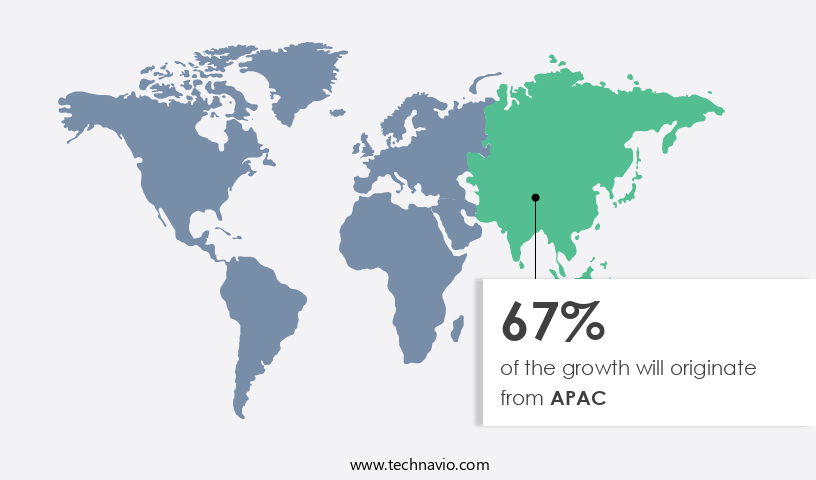
    APAC is estimated to contribute 67% to the growth of the global market during the forecast period.Technavio’s analysts have elaborately explained the regional trends and drivers that shape the market during the forecast period.
    Renewable Energy Investment Market Share by Geography

    For more insights on the market size of various regions, Request Free Sample

    The market is experiencing significant growth due to the global energy crisis and the increasing importance of energy affordability. Policy developments, such as renewable portfolio standards and clean energy laws, are providing regulatory boosts for the deployment of renewable technologies like wind and solar. Hydrogen deployment and distributed systems are also gaining traction as fossil fuel alternatives. In APAC, the integration of renewable grids with smart grid technology is on the rise, reducing greenhouse gas emissions and improving energy security. The need for energy storage systems to provide backup during intermittency or power outages is increasing alongside the growth of renewable energy production.

    Challenges in the renewable energy sector include labor costs, transmission limitations, and permitting and interconnection delays. However, federal investments, tax-credit transfer markets, and the rebound of renewable energy projects are helping to mitigate these challenges. The competitiveness of renewable energy is also being driven by decreasing capital costs and advancements in power system integration. Offshore wind growth, solar PV capacity additions, and the expansion of onshore wind capacity are all contributing to the sector's expansion. Biofuel demand and utility-scale solar and wind projects are also key drivers of the market. Workforce reskilling and grid resilience are essential considerations for the industry's future, as is the integration of generative artificial intelligence and other advanced technologies.

    Despite rising interest rates and decarbonization targets, the market for renewable energy is expected to continue its growth trajectory, with capacity additions and new projects planned in various stages of development.

    Market Dynamics

    Our researchers analyzed the data with 2023 as the base year, along with the key drivers, trends, and challenges. A holistic analysis of drivers will help companies refine their marketing strategies to gain a competitive advantage.

    What are the key market drivers leading to the rise in the adoption of Renewable Energy Investment Industry?

    • Supportive government policies is the key driver of the market. 

    • Renewable energy sources have gained significant importance in the global energy landscape due to their potential to reduce greenhouse gas (GHG) emissions. Governments worldwide are encouraging the adoption of renewable energy through incentives, subsidies, and tax benefits. One such initiative is the Investment Tax Credit (ITC) in Canada, which provides a financial incentive to power producers and consumers for installing renewable energy systems. The new legislation, passed in December 2020, offers a 26% tax credit for renewable energy installations established between 2020 and 2022 and a 22% credit for installations in 2023.
    • This policy supports the growth of the renewable energy market in Canada by making it financially attractive for businesses and individuals to invest in wind, solar, and tidal energy.

    What are the market trends shaping the Renewable Energy Investment Industry?

    • Increased spending on utility-scale renewable energy projects is the upcoming market trend. 

    • Utility-scale renewable energy projects, defined as those with a capacity exceeding 10 MW, are significantly influenced by policies and initiatives at the state and local levels worldwide. These measures aim to facilitate the implementation of renewable energy projects by addressing potential barriers through financial incentives such as tax breaks and clean energy targets. However, determining the cost-effectiveness and efficiency of renewable energy versus traditional electricity generation sources can be challenging for stakeholders. This decision-making process involves policyholders, regulatory bodies, and investors, necessitating a thorough analysis of the cost structures of various energy generation methods.
    • Despite the complexity of this assessment, the global trend towards renewable energy continues to gain momentum, driven by the increasing competitiveness of renewable energy technologies and the growing recognition of their environmental benefits.

    What challenges does the Renewable Energy Investment Industry face during its growth?

    • Competition from fossil fuels is a key challenge affecting the industry growth. 

    • Renewable energy has witnessed significant growth in global electricity consumption, yet fossil fuels remain preferred in many countries due to their abundant availability and lower costs for electricity generation. Establishing renewable energy facilities comes with a high initial investment, and the power output from renewable sources is intermittent, leading to increased costs. For instance, solar Photovoltaic (PV) installations require substantial capital expenditure, despite a decline in material costs over the past decade. The extensive area coverage needed to generate a substantial electricity volume further contributes to the investment and cost increase.
    • Despite these challenges, the renewable energy sector continues to attract investments due to its long-term benefits, including reduced carbon emissions and energy security. The intermittency issue is being addressed through advancements in energy storage technologies, making renewables a more reliable and competitive option for electricity generation.

    Exclusive Customer Landscape

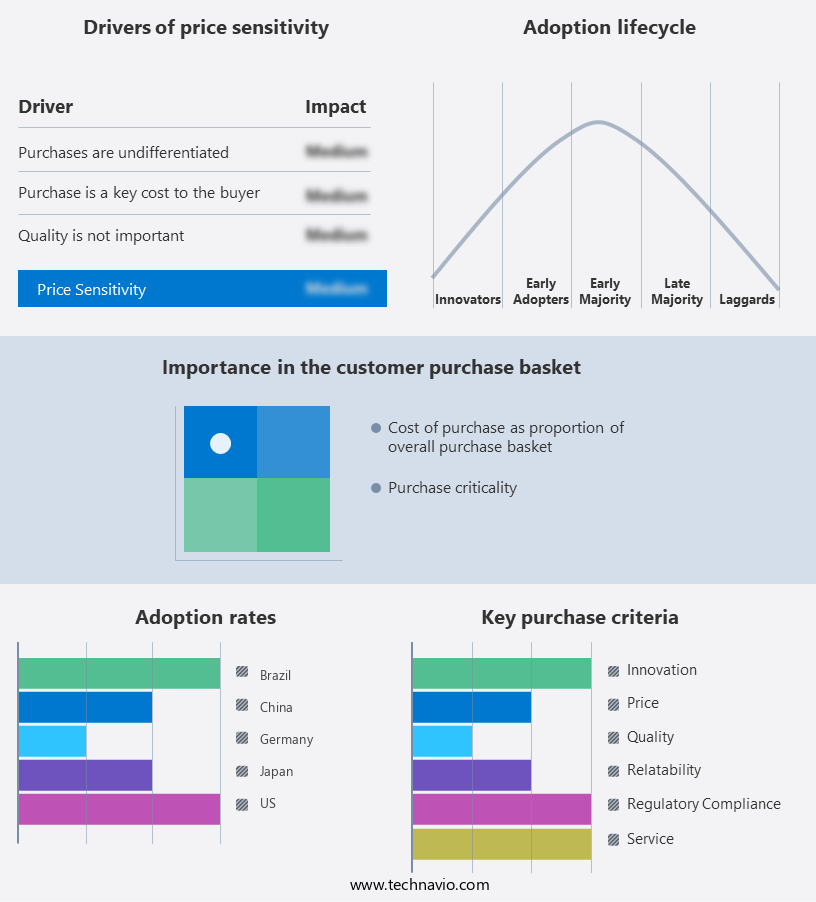
    The renewable energy investment market forecasting report includes the adoption lifecycle of the market, covering from the innovator’s stage to the laggard’s stage. It focuses on adoption rates in different regions based on penetration. Furthermore, the renewable energy investment market report also includes key purchase criteria and drivers of price sensitivity to help companies evaluate and develop their market growth analysis strategies.
    Renewable Energy Investment Market Share by Geography

     Customer Landscape

    Key Companies & Market Insights

    Companies are implementing various strategies, such as strategic alliances, renewable energy investment market forecast, partnerships, mergers and acquisitions, geographical expansion, and product/service launches, to enhance their presence in the industry.

    AZORA CAPITAL SL - The company specializes in providing comprehensive solutions for renewable energy and energy efficiency, leveraging advanced technologies to optimize energy usage and reduce carbon footprint. Our offerings span various sectors, ensuring clients' unique energy needs are met with innovative and sustainable approaches. By focusing on efficiency and sustainability, we contribute to a more sustainable future for businesses and communities worldwide.

    The industry research and growth report includes detailed analyses of the competitive landscape of the market and information about key companies, including:

    • AZORA CAPITAL SL
    • Bank of America Corp.
    • Berkeley Partners LLP
    • BlackRock Inc.
    • BNP Paribas SA
    • Capital Dynamics Holding AG
    • Centerbridge Partners LP
    • CHN ENERGY Investment Group Co. Ltd.
    • Citigroup Inc.
    • Deloitte Touche Tohmatsu Ltd.
    • EKF
    • ESFC Investment Group
    • General Electric Co.
    • KfW Bankengruppe
    • Macquarie Group Ltd.
    • Mitsubishi UFJ Financial Group Inc.
    • Nebras Power
    • Positive Energy Ltd.
    • State Power Investment Corp.
    • TerraForm Power Operating LLC
    • The Group Inc.

    Qualitative and quantitative analysis of companies has been conducted to help clients understand the wider business environment as well as the strengths and weaknesses of key industry players. Data is qualitatively analyzed to categorize companies as pure play, category-focused, industry-focused, and diversified; it is quantitatively analyzed to categorize companies as dominant, leading, strong, tentative, and weak.

    Research Analyst Overview

    Renewable energy investment continues to be a significant area of focus for businesses and governments worldwide as the world grapples with the challenges of energy affordability and the need to reduce greenhouse gas emissions. The renewable energy sector has seen considerable growth in recent years, driven by various market dynamics. One of the primary drivers of renewable energy investment is the increasing recognition of the importance of energy security and the need to diversify energy sources beyond fossil fuels. This trend is particularly evident in Europe, where there has been a push to deploy more renewable energy and reduce reliance on imported fossil fuels.

    Hydrogen deployment is another area of renewed interest, with many countries and companies exploring its potential as a clean fuel for transportation and industrial processes. Policy developments have played a crucial role in this, with regulatory boosts and renewable portfolio standards driving investment in renewable hydrogen production. Wind technology continues to be a major focus of renewable energy investment, with both onshore and offshore wind seeing significant capacity additions. However, challenges remain, including permitting delays, transmission limitations, and interconnection delays, which can impact the competitiveness of wind energy. Solar technology, particularly solar photovoltaic (PV), has also seen significant growth in recent years.

    The falling cost of solar PV has made it increasingly competitive with fossil fuels, making it an attractive option for both utility-scale and residential systems. However, there are challenges to be addressed, such as workforce reskilling, power system integration, and capacity additions. The infrastructure investment required for renewable energy deployment is significant, with large-scale projects requiring substantial capital costs. This has led to the emergence of the tax-credit transfer market, where companies can buy and sell tax credits associated with renewable energy projects. Despite the progress made in renewable energy deployment, there are still challenges to be addressed. These include rising interest rates, which can impact the competitiveness of renewable energy, and decarbonization targets that require significant reductions in greenhouse gas emissions.

    Furthermore, there are ongoing discussions around the role of biofuels in the renewable energy mix, with some arguing that they are essential for achieving energy affordability and reducing emissions in the transportation sector. However, there are also concerns around the sustainability of biofuel production and the potential impact on food prices. In , the market is a dynamic and complex landscape, driven by various market dynamics, policy developments, and technological advancements. The challenges and opportunities in this sector are significant, requiring ongoing investment and innovation to address the energy crisis, reduce greenhouse gas emissions, and ensure energy affordability for all.

    Market Scope

    Report Coverage

    Details

    Page number

    153

    Base year

    2023

    Historic period

    2018-2022

    Forecast period

    2024-2028

    Growth momentum & CAGR

    Accelerate at a CAGR of 8.11%

    Market growth 2024-2028

    USD 181.9 billion

    Market structure

    Fragmented

    YoY growth 2023-2024(%)

    7.5

    Key countries

    China, US, Japan, Germany, and Brazil

    Competitive landscape

    Leading Companies, Market Positioning of Companies, Competitive Strategies, and Industry Risks

    Request Free Sample

    What are the Key Data Covered in this Renewable Energy Investment Market Research and Growth Report?

    • CAGR of the Renewable Energy Investment industry during the forecast period
    • Detailed information on factors that will drive the growth and forecasting between 2024 and 2028
    • Precise estimation of the size of the market and its contribution of the industry in focus to the parent market
    • Accurate predictions about upcoming growth and trends and changes in consumer behaviour
    • Growth of the market across APAC, North America, Europe, South America, and Middle East and Africa
    • Thorough analysis of the market’s competitive landscape and detailed information about companies
    • Comprehensive analysis of factors that will challenge the renewable energy investment market growth of industry companies

    We can help! Our analysts can customize this renewable energy investment market research report to meet your requirements.

    Get in touch


    1 Executive Summary

    • 1.1 Market overview
      • Executive Summary - Chart on Market Overview
      • Executive Summary - Data Table on Market Overview
      • Executive Summary - Chart on Global Market Characteristics
      • Executive Summary - Chart on Market by Geography
      • Executive Summary - Chart on Market Segmentation by Type
      • Executive Summary - Chart on Incremental Growth
      • Executive Summary - Data Table on Incremental Growth
      • Executive Summary - Chart on Company Market Positioning

    2 Market Landscape

    • 2.1 Market ecosystem
      • Parent Market
      • Data Table on - Parent Market
    • 2.2 Market characteristics
      • Market characteristics analysis
    • 2.3 Value chain analysis
      • Value Chain Analysis

    3 Market Sizing

    • 3.1 Market definition
      • Offerings of companies included in the market definition
    • 3.2 Market segment analysis
      • Market segments
    • 3.3 Market size 2023
      • 3.4 Market outlook: Forecast for 2023-2028
        • Chart on Global - Market size and forecast 2023-2028 ($ billion)
        • Data Table on Global - Market size and forecast 2023-2028 ($ billion)
        • Chart on Global Market: Year-over-year growth 2023-2028 (%)
        • Data Table on Global Market: Year-over-year growth 2023-2028 (%)

      4 Historic Market Size

      • 4.1 Global Renewable Energy Investment Market 2018 - 2022
        • Historic Market Size - Data Table on Global Renewable Energy Investment Market 2018 - 2022 ($ billion)
      • 4.2 Type segment analysis 2018 - 2022
        • Historic Market Size - Type Segment 2018 - 2022 ($ billion)
      • 4.3 Geography segment analysis 2018 - 2022
        • Historic Market Size - Geography Segment 2018 - 2022 ($ billion)
      • 4.4 Country segment analysis 2018 - 2022
        • Historic Market Size - Country Segment 2018 - 2022 ($ billion)

      5 Five Forces Analysis

      • 5.1 Five forces summary
        • Five forces analysis - Comparison between 2023 and 2028
      • 5.2 Bargaining power of buyers
        • Bargaining power of buyers - Impact of key factors 2023 and 2028
      • 5.3 Bargaining power of suppliers
        • Bargaining power of suppliers - Impact of key factors in 2023 and 2028
      • 5.4 Threat of new entrants
        • Threat of new entrants - Impact of key factors in 2023 and 2028
      • 5.5 Threat of substitutes
        • Threat of substitutes - Impact of key factors in 2023 and 2028
      • 5.6 Threat of rivalry
        • Threat of rivalry - Impact of key factors in 2023 and 2028
      • 5.7 Market condition
        • Chart on Market condition - Five forces 2023 and 2028

      6 Market Segmentation by Type

      • 6.1 Market segments
        • Chart on Type - Market share 2023-2028 (%)
        • Data Table on Type - Market share 2023-2028 (%)
      • 6.2 Comparison by Type
        • Chart on Comparison by Type
        • Data Table on Comparison by Type
      • 6.3 Asset finance - Market size and forecast 2023-2028
        • Chart on Asset finance - Market size and forecast 2023-2028 ($ billion)
        • Data Table on Asset finance - Market size and forecast 2023-2028 ($ billion)
        • Chart on Asset finance - Year-over-year growth 2023-2028 (%)
        • Data Table on Asset finance - Year-over-year growth 2023-2028 (%)
      • 6.4 Small distributed capacity - Market size and forecast 2023-2028
        • Chart on Small distributed capacity - Market size and forecast 2023-2028 ($ billion)
        • Data Table on Small distributed capacity - Market size and forecast 2023-2028 ($ billion)
        • Chart on Small distributed capacity - Year-over-year growth 2023-2028 (%)
        • Data Table on Small distributed capacity - Year-over-year growth 2023-2028 (%)
      • 6.5 Market opportunity by Type
        • Market opportunity by Type ($ billion)
        • Data Table on Market opportunity by Type ($ billion)

      7 Customer Landscape

      • 7.1 Customer landscape overview
        • Analysis of price sensitivity, lifecycle, customer purchase basket, adoption rates, and purchase criteria

      8 Geographic Landscape

      • 8.1 Geographic segmentation
        • Chart on Market share by geography 2023-2028 (%)
        • Data Table on Market share by geography 2023-2028 (%)
      • 8.2 Geographic comparison
        • Chart on Geographic comparison
        • Data Table on Geographic comparison
      • 8.3 APAC - Market size and forecast 2023-2028
        • Chart on APAC - Market size and forecast 2023-2028 ($ billion)
        • Data Table on APAC - Market size and forecast 2023-2028 ($ billion)
        • Chart on APAC - Year-over-year growth 2023-2028 (%)
        • Data Table on APAC - Year-over-year growth 2023-2028 (%)
      • 8.4 North America - Market size and forecast 2023-2028
        • Chart on North America - Market size and forecast 2023-2028 ($ billion)
        • Data Table on North America - Market size and forecast 2023-2028 ($ billion)
        • Chart on North America - Year-over-year growth 2023-2028 (%)
        • Data Table on North America - Year-over-year growth 2023-2028 (%)
      • 8.5 Europe - Market size and forecast 2023-2028
        • Chart on Europe - Market size and forecast 2023-2028 ($ billion)
        • Data Table on Europe - Market size and forecast 2023-2028 ($ billion)
        • Chart on Europe - Year-over-year growth 2023-2028 (%)
        • Data Table on Europe - Year-over-year growth 2023-2028 (%)
      • 8.6 South America - Market size and forecast 2023-2028
        • Chart on South America - Market size and forecast 2023-2028 ($ billion)
        • Data Table on South America - Market size and forecast 2023-2028 ($ billion)
        • Chart on South America - Year-over-year growth 2023-2028 (%)
        • Data Table on South America - Year-over-year growth 2023-2028 (%)
      • 8.7 Middle East and Africa - Market size and forecast 2023-2028
        • Chart on Middle East and Africa - Market size and forecast 2023-2028 ($ billion)
        • Data Table on Middle East and Africa - Market size and forecast 2023-2028 ($ billion)
        • Chart on Middle East and Africa - Year-over-year growth 2023-2028 (%)
        • Data Table on Middle East and Africa - Year-over-year growth 2023-2028 (%)
      • 8.8 China - Market size and forecast 2023-2028
        • Chart on China - Market size and forecast 2023-2028 ($ billion)
        • Data Table on China - Market size and forecast 2023-2028 ($ billion)
        • Chart on China - Year-over-year growth 2023-2028 (%)
        • Data Table on China - Year-over-year growth 2023-2028 (%)
      • 8.9 US - Market size and forecast 2023-2028
        • Chart on US - Market size and forecast 2023-2028 ($ billion)
        • Data Table on US - Market size and forecast 2023-2028 ($ billion)
        • Chart on US - Year-over-year growth 2023-2028 (%)
        • Data Table on US - Year-over-year growth 2023-2028 (%)
      • 8.10 Japan - Market size and forecast 2023-2028
        • Chart on Japan - Market size and forecast 2023-2028 ($ billion)
        • Data Table on Japan - Market size and forecast 2023-2028 ($ billion)
        • Chart on Japan - Year-over-year growth 2023-2028 (%)
        • Data Table on Japan - Year-over-year growth 2023-2028 (%)
      • 8.11 Germany - Market size and forecast 2023-2028
        • Chart on Germany - Market size and forecast 2023-2028 ($ billion)
        • Data Table on Germany - Market size and forecast 2023-2028 ($ billion)
        • Chart on Germany - Year-over-year growth 2023-2028 (%)
        • Data Table on Germany - Year-over-year growth 2023-2028 (%)
      • 8.12 Brazil - Market size and forecast 2023-2028
        • Chart on Brazil - Market size and forecast 2023-2028 ($ billion)
        • Data Table on Brazil - Market size and forecast 2023-2028 ($ billion)
        • Chart on Brazil - Year-over-year growth 2023-2028 (%)
        • Data Table on Brazil - Year-over-year growth 2023-2028 (%)
      • 8.13 Market opportunity by geography
        • Market opportunity by geography ($ billion)
        • Data Tables on Market opportunity by geography ($ billion)

      9 Drivers, Challenges, and Opportunity/Restraints

      • 9.1 Market drivers
        • 9.2 Market challenges
          • 9.3 Impact of drivers and challenges
            • Impact of drivers and challenges in 2023 and 2028
          • 9.4 Market opportunities/restraints

            10 Competitive Landscape

            • 10.1 Overview
              • 10.2 Competitive Landscape
                • Overview on criticality of inputs and factors of differentiation
              • 10.3 Landscape disruption
                • Overview on factors of disruption
              • 10.4 Industry risks
                • Impact of key risks on business

              11 Competitive Analysis

              • 11.1 Companies profiled
                • Companies covered
              • 11.2 Market positioning of companies
                • Matrix on companies position and classification
              • 11.3 Bank of America Corp.
                • Bank of America Corp. - Overview
                • Bank of America Corp. - Business segments
                • Bank of America Corp. - Key news
                • Bank of America Corp. - Key offerings
                • Bank of America Corp. - Segment focus
              • 11.4 BNP Paribas SA
                • BNP Paribas SA - Overview
                • BNP Paribas SA - Business segments
                • BNP Paribas SA - Key news
                • BNP Paribas SA - Key offerings
                • BNP Paribas SA - Segment focus
              • 11.5 Centerbridge Partners LP
                • Centerbridge Partners LP - Overview
                • Centerbridge Partners LP - Product / Service
                • Centerbridge Partners LP - Key offerings
              • 11.6 Citigroup Inc.
                • Citigroup Inc. - Overview
                • Citigroup Inc. - Business segments
                • Citigroup Inc. - Key news
                • Citigroup Inc. - Key offerings
                • Citigroup Inc. - Segment focus
              • 11.7 Deloitte Touche Tohmatsu Ltd.
                • Deloitte Touche Tohmatsu Ltd. - Overview
                • Deloitte Touche Tohmatsu Ltd. - Product / Service
                • Deloitte Touche Tohmatsu Ltd. - Key news
                • Deloitte Touche Tohmatsu Ltd. - Key offerings
              • 11.8 EKF
                • EKF - Overview
                • EKF - Product / Service
                • EKF - Key offerings
              • 11.9 General Electric Co.
                • General Electric Co. - Overview
                • General Electric Co. - Business segments
                • General Electric Co. - Key news
                • General Electric Co. - Key offerings
                • General Electric Co. - Segment focus
              • 11.10 KfW Bankengruppe
                • KfW Bankengruppe - Overview
                • KfW Bankengruppe - Business segments
                • KfW Bankengruppe - Key offerings
                • KfW Bankengruppe - Segment focus
              • 11.11 Macquarie Group Ltd.
                • Macquarie Group Ltd. - Overview
                • Macquarie Group Ltd. - Business segments
                • Macquarie Group Ltd. - Key news
                • Macquarie Group Ltd. - Key offerings
                • Macquarie Group Ltd. - Segment focus
              • 11.12 Mitsubishi UFJ Financial Group Inc.
                • Mitsubishi UFJ Financial Group Inc. - Overview
                • Mitsubishi UFJ Financial Group Inc. - Business segments
                • Mitsubishi UFJ Financial Group Inc. - Key offerings
                • Mitsubishi UFJ Financial Group Inc. - Segment focus

              12 Appendix

              • 12.1 Scope of the report
                • 12.2 Inclusions and exclusions checklist
                  • Inclusions checklist
                  • Exclusions checklist
                • 12.3 Currency conversion rates for US$
                  • Currency conversion rates for US$
                • 12.4 Research methodology
                  • Research methodology
                • 12.5 Data procurement
                  • Information sources
                • 12.6 Data validation
                  • Data validation
                • 12.7 Validation techniques employed for market sizing
                  • Validation techniques employed for market sizing
                • 12.8 Data synthesis
                  • Data synthesis
                • 12.9 360 degree market analysis
                  • 360 degree market analysis
                • 12.10 List of abbreviations
                  • List of abbreviations

                Research Methodology

                Technavio presents a detailed picture of the market by way of study, synthesis, and summation of data from multiple sources. The analysts have presented the various facets of the market with a particular focus on identifying the key industry influencers. The data thus presented is comprehensive, reliable, and the result of extensive research, both primary and secondary.

                INFORMATION SOURCES

                Primary sources

                • Manufacturers and suppliers
                • Channel partners
                • Industry experts
                • Strategic decision makers

                Secondary sources

                • Industry journals and periodicals
                • Government data
                • Financial reports of key industry players
                • Historical data
                • Press releases

                DATA ANALYSIS

                Data Synthesis

                • Collation of data
                • Estimation of key figures
                • Analysis of derived insights

                Data Validation

                • Triangulation with data models
                • Reference against proprietary databases
                • Corroboration with industry experts

                REPORT WRITING

                Qualitative

                • Market drivers
                • Market challenges
                • Market trends
                • Five forces analysis

                Quantitative

                • Market size and forecast
                • Market segmentation
                • Geographical insights
                • Competitive landscape

                Interested in this report?

                Get your sample now to see our research methodology and insights!

                Download Now

                Frequently Asked Questions

                Renewable Energy Investment market growth will increase by $ 181.9 bn during 2024-2028.

                The Renewable Energy Investment market is expected to grow at a CAGR of 8.11% during 2024-2028.

                Renewable Energy Investment market is segmented by Type( Asset finance, Small distributed capacity)

                AZORA CAPITAL SL, Bank of America Corp., Berkeley Partners LLP, BlackRock Inc., BNP Paribas SA, Capital Dynamics Holding AG, Centerbridge Partners LP, CHN ENERGY Investment Group Co. Ltd., Citigroup Inc., Deloitte Touche Tohmatsu Ltd., EKF, ESFC Investment Group, General Electric Co., KfW Bankengruppe, Macquarie Group Ltd., Mitsubishi UFJ Financial Group Inc., Nebras Power, Positive Energy Ltd., State Power Investment Corp., TerraForm Power Operating LLC, The Goldman Sachs Group Inc. are a few of the key vendors in the Renewable Energy Investment market.

                APAC will register the highest growth rate of 67% among the other regions. Therefore, the Renewable Energy Investment market in APAC is expected to garner significant business opportunities for the vendors during the forecast period.

                China, US, Japan, Germany, Brazil

                • Supportive government policiesAlternative energy sources have become highly critical to reducing greenhouse gas (GHG) emissions. Governments across the world are supporting the adoption of renewable energies such as wind energy is the driving factor this market.
                • solar energy and tidal energy by providing incentives is the driving factor this market.
                • subsidies is the driving factor this market.
                • and tax benefits to power producers and consumers. In Canada is the driving factor this market.
                • the investment tax credit (ITC) is an important federal policy that has been developed to support the adoption of renewable energy in the country. According to the new legislation passed in December 2020 is the driving factor this market.
                • the ITC provides a 26% tax credit for renewable energy installations that are established during 2020-2022 and 22% for systems that will be installed in 2023. The continuation of the ITC policy will encourage more companies to invest in R and D activities in developing less costly and more reliable solar PVs is the driving factor this market.
                • thereby propelling the growth of the global renewable energy investment market during the forecast period. Governments across different countries are encouraging the development of renewable energy sources is the driving factor this market.
                • such as geothermal energy is the driving factor this market.
                • to bring about a transformation in the power generation sector. For instance is the driving factor this market.
                • in India is the driving factor this market.
                • the Ministry of New and Renewable Energy (MNRE) is promoting major initiatives in R and D for geothermal technology to harness the low-enthalpy geothermal potential available in the country. Therefore is the driving factor this market.
                • due to the growing government initiatives and rising investment activities in the development of geothermal resources is the driving factor this market.
                • the global renewable energy investment market is expected to grow significantly during the forecast period. Governments in different regions have put in place a robust regulatory framework to facilitate the increased adoption of renewable energy resources for power generation. Government start-up programs are some of the best sources of funding is the driving factor this market.
                • which act as a powerful catalyst is the driving factor this market.
                • especially when delivered in partnership with the private sector. Government-sponsored funding helps improve a company ability to access debt and other types of financing is the driving factor this market.
                • creating a multiplier effect. Many governments provide sponsored venture capital funds that enable companies to make direct investments in new enterprises that are engaged in renewable energy. In the current market scenario is the driving factor this market.
                • the most innovative companies in the US are funded by public programs is the driving factor this market.
                • such as the small business innovation research (SBIR) program. Therefore is the driving factor this market.
                • governments is the driving factor this market.
                • especially in countries like Germany is the driving factor this market.
                • Indonesia is the driving factor this market.
                • and Brazil is the driving factor this market.
                • are supporting venture capital activities. Many countries are formulating policies to promote the development and adoption of solar power technologies. One notable example is the feed-in tariff (FiT) policy is the driving factor this market.
                • formulated to encourage investments in renewable energy technologies. This policy covers various aspects of the solar PV energy industry is the driving factor this market.
                • including the eligibility criteria is the driving factor this market.
                • bonuses is the driving factor this market.
                • and various other grants. Governments are also introducing different policies for various types of solar PV installations is the driving factor this market.
                • such as ground-mounted installations is the driving factor this market.
                • roof-mounted installations is the driving factor this market.
                • and the installation of free-standing facilities. Such factors are expected to drive the growth of the global renewable energy investment market during the forecast period. is the driving factor this market.

                The Renewable Energy Investment market vendors should focus on grabbing business opportunities from the Asset finance segment as it accounted for the largest market share in the base year.
