



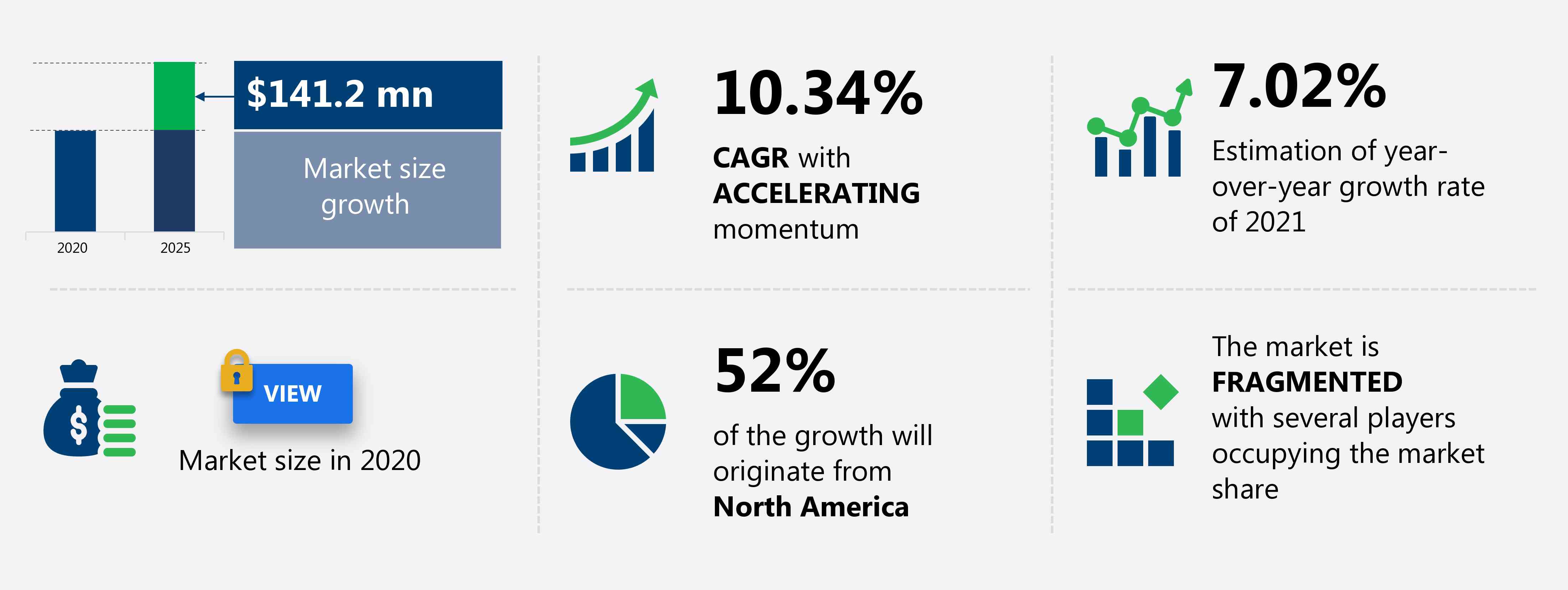
The residential smart smoke detectors market share is expected to increase by USD 141.2 mllion from 2020 to 2025, and the market’s growth momentum will accelerate at a CAGR of 10.34%.
This residential smart smoke detectors market research report provides valuable insights on the post COVID-19 impact on the market, which will help companies evaluate their business approaches. Furthermore, this report extensively covers the residential smart smoke detectors market segmentation by type (photoelectric sensors, dual-sensors, Ionization sensors, and others) and geography (North America, Europe, APAC, South America, and MEA). The residential smart smoke detectors market report also offers information on several market vendors, including AMP Security, Everspring Industry Co. Ltd., HOCHIKI Corp., Honeywell International Inc., Huawei Investment & Holding Co. Ltd., Johnson Controls International Plc, Newell Brands Inc., Robert Bosch GmbH, Schneider Electric SE, and Siemens AG among others.
What will the Residential Smart Smoke Detectors Market Size be During the Forecast Period?
Download the Free Report Sample to Unlock the Residential Smart Smoke Detectors Market Size for the Forecast Period and Other Important Statistics
Residential Smart Smoke Detectors Market: Key Drivers, Trends, and Challenges
Based on our research output, there has been a positive impact on the market growth during and post COVID-19 era. The connected feature offering premium feature advantage to product offerings thereby enabling premium pricing is notably driving the residential smart smoke detectors market growth, although factors such as the emergence of alternative devices may impede the market growth. Our research analysts have studied the historical data and deduced the key market drivers and the COVID-19 pandemic impact on the residential smart smoke detectors industry. The holistic analysis of the drivers will help in deducing end goals and refining marketing strategies to gain a competitive edge.
Key Residential Smart Smoke Detectors Market Driver
The growing preference for connected premium features in smoke detectors is one of the key factors driving the growth prospects for the global residential smart smoke detectors market. Smart smoke detectors are highly-priced when compared to the normal traditional smoke detectors because of an additionally connected feature to the app that is offered by the smart smoke detectors. Smart smoke detectors providers such as OneLink, Halo, and Birdi monitor homes for smoke, fire, and carbon monoxide. Some of the smart smoke detectors also warn about the oncoming natural disasters and storms. Smart smoke detectors can be connected to the phone through Wi-Fi or Bluetooth. It sends alerts directly to the mobile when the smoke or CO rises in the home. Additionally, the user can cut down on annoying false alarms that are caused by cooking or steam. For instance, Halo Smart Labs offers Halo and Halo+ smart smoke detectors that can be connected to the smartphone through Bluetooth or Wi-Fi. The premium version of Halo Smart Labs smoke detectors has weather alert features. It also alerts about oncoming floods, hurricanes, and tornadoes. Such connected features of smart smoke detectors have a competitive advantage over traditional smoke detectors.
Key Residential Smart Smoke Detectors Market Trend
The availability of hard-wired power options for battery-operated smart smoke detectors or hard-wired smoke detectors is one of the key residential smart smoke detectors market trends, which is also contributing to the market share growth. Hard-wired smoke detectors come with cables that hook into the customer's home electrical systems. The battery backup prevents smoke detectors from becoming inactive. Hard-wired smoke detector products are an extremely reliable option as the losing power is low. For instance, in 2016, The Birdi Smart Detector and Halo Smart Smoke Alarm launched smart smoke detectors that provide additional connected fire safety options. The Birdi Smart Detector includes Bluetooth and Wi-Fi interface with future HomeKit compatibility. The major players in the market such as Nest Labs (Alphabet Inc.) and First Alert (Newell Brands Inc.) offer Wi-Fi-capable smoke detectors that include Nest Protect 2nd Gen Alarm and the First Alert OneLink HomeKit Enabled Alarm that supports remote CO and smoke alarm monitoring through Wi-Fi network. Both these products also support hard-wired power installations.
Key Residential Smart Smoke Detectors Market Challenge
The emergence of alternative devices is a major hindrance to the residential smart smoke detectors market growth. Another challenge in the market is the emergence of alternative devices that can be notified on a smartphone through the app if it hears the fire or carbon monoxide alarm siren. For instance, Roost offers Roost Smart Battery that transforms the existing smoke and CO alarms into Wi-Fi-connected devices, and that can be monitored from an Android or iOS smartphone. Additionally, it also sends a notification when its battery power is running low. When the user opens the app, it is directed to an alarm status page that displays the installed Roost battery by location. If everything is well, then it shows a green circle with a checkmark next to the location. The green circle turns red if the alarm is sounding, and it displays a ringing bell icon. The location icon in the app takes to an activity page that provides battery life and last activity information. Battery life is displayed as either good or critical, and the meter shows how much battery life is remaining. These features of the smart battery can have a competitive advantage over smart smoke detectors.
This residential smart smoke detectors market analysis report also provides detailed information on other upcoming trends and challenges that will have a far-reaching effect on the market growth. The actionable insights on the trends and challenges will help companies evaluate and develop growth strategies for 2021-2025.
Parent Market Analysis
Technavio categorizes the residential smart smoke detectors market as a part of global electrical components and equipment. Our research report has extensively covered external factors influencing the parent market growth potential in the coming years, which will determine the levels of growth of the residential smart smoke detectors market during the forecast period.
Who are the Major Residential Smart Smoke Detectors Market Vendors?
The report analyzes the market’s competitive landscape and offers information on several market vendors, including:
- AMP Security
- Everspring Industry Co. Ltd.
- HOCHIKI Corp.
- Honeywell International Inc.
- Huawei Investment & Holding Co. Ltd.
- Johnson Controls International Plc
- Newell Brands Inc.
- Robert Bosch GmbH
- Schneider Electric SE
- Siemens AG
This statistical study of the residential smart smoke detectors market encompasses successful business strategies deployed by the key vendors. The residential smart smoke detectors market is fragmented and the vendors are deploying growth strategies such as making product offerings with additional and enhanced features to compete in the market.
To make the most of the opportunities and recover from post COVID-19 impact, market vendors should focus more on the growth prospects in the fast-growing segments, while maintaining their positions in the slow-growing segments.
The residential smart smoke detectors market forecast report offers in-depth insights into key vendor profiles. The profiles include information on the production, sustainability, and prospects of the leading companies.
Residential Smart Smoke Detectors Market Value Chain Analysis
Our report provides extensive information on the value chain analysis for the residential smart smoke detectors market, which vendors can leverage to gain a competitive advantage during the forecast period. The end-to-end understanding of the value chain is essential in profit margin optimization and evaluation of business strategies. The data available in our value chain analysis segment can help vendors drive costs and enhance customer services during the forecast period.
The value chain of electrical components and equipment includes the following core components:
- Inputs
- Inbound logistics
- Operations
- Outbound logistics
- Marketing and sales
- Service
- Support activities
- Innovation
The report has further elucidated on other innovative approaches being followed by manufacturers to ensure a sustainable market presence.
Which are the Key Regions for Residential Smart Smoke Detectors Market?
For more insights on the market share of various regions Request for a FREE sample now!
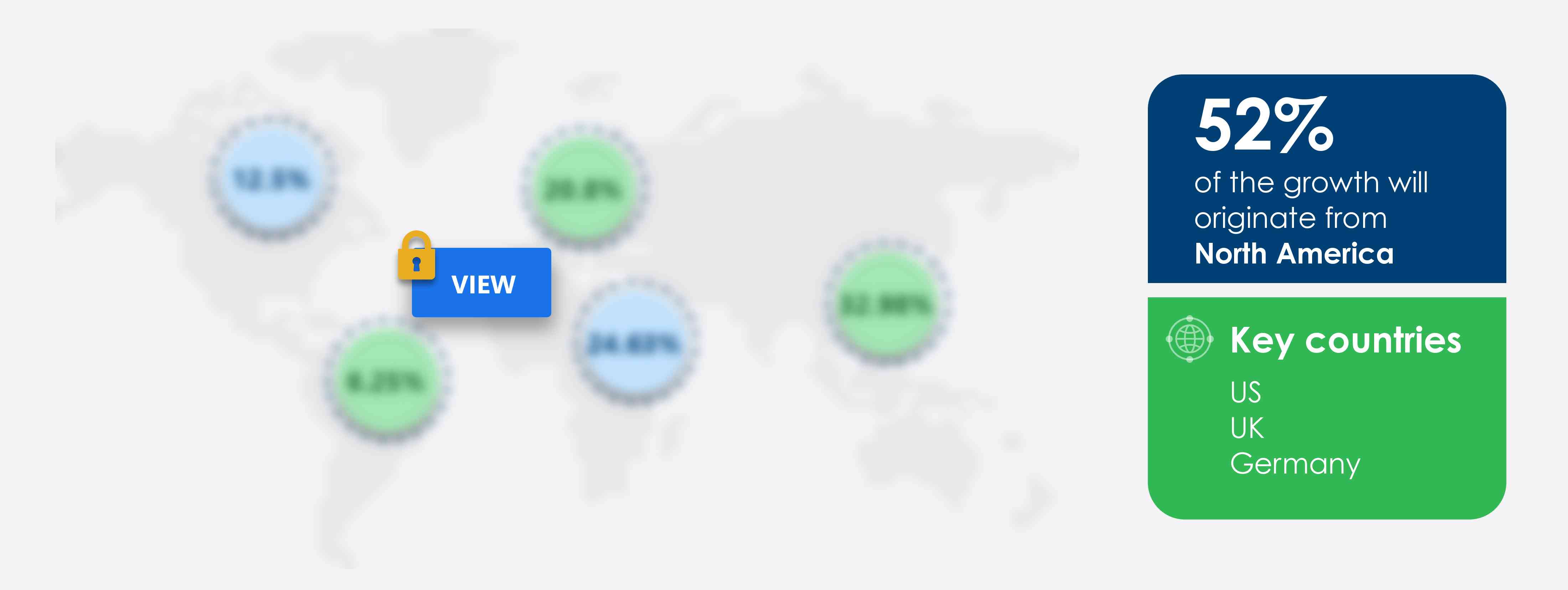
52% of the market’s growth will originate from North America during the forecast period. The US and Canada are the key markets for residential smart smoke detectors in North America. Market growth in this region will be slower than the growth of the market in other regions.
The introduction of regulations on using smoke detectors in all buildings by NFPA and other regulatory authorities is one of the prime factors that will facilitate the residential smart smoke detectors market growth in North America over the forecast period. This market research report entails detailed information on the competitive intelligence, marketing gaps, and regional opportunities in store for vendors, which will assist in creating efficient business plans.
What are the Revenue-generating Type Segments in the Residential Smart Smoke Detectors Market?
To gain further insights on the market contribution of various segments Request for a FREE sample
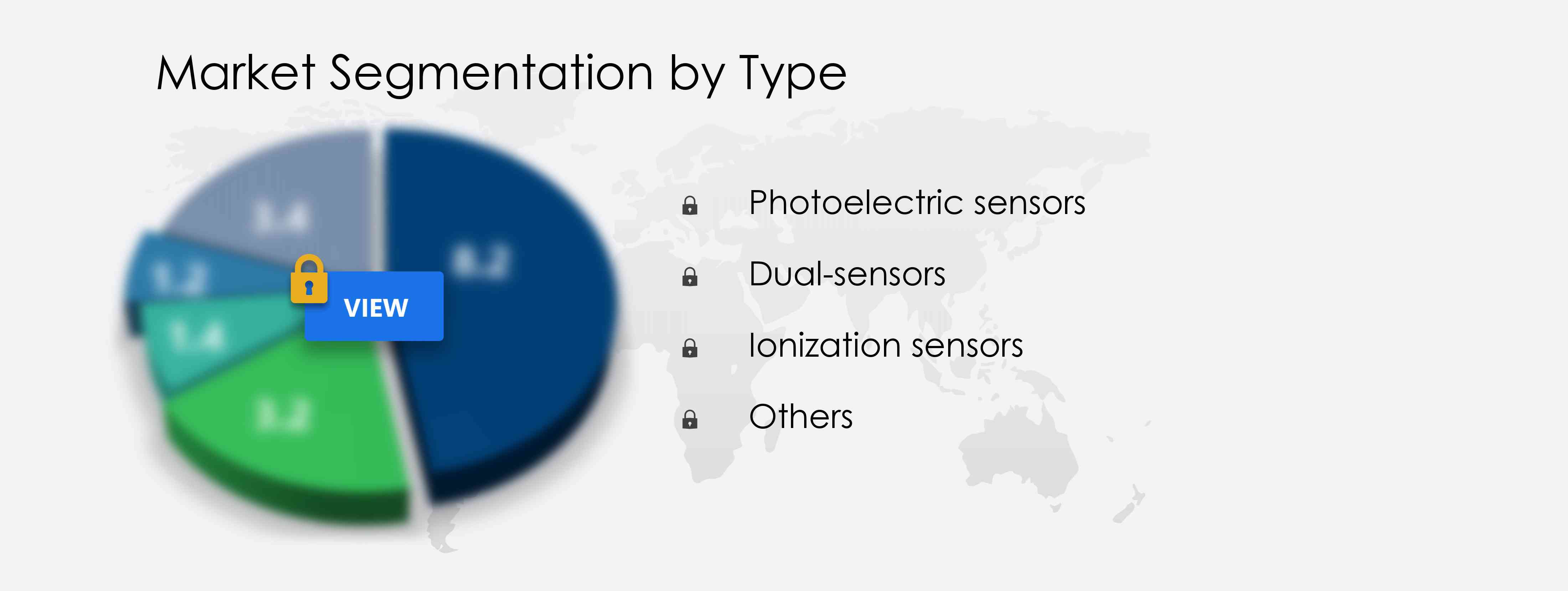
The photoelectric smart smoke detectors segment will grow at a rapid rate during the forecast period. Growth in this segment may be spurred by the reducing number of ionization smart smoke detectors in the coming years. Photoelectric smart smoke detectors offer a fast response to smoldering fires (which are responsible for a large number of fatal fires), and this is another major reason spurring demand for such devices.
This report provides an accurate prediction of the contribution of all the segments to the growth of the residential smart smoke detectors market size and actionable market insights on post COVID-19 impact on each segment.
|
Residential Smart Smoke Detectors Market Scope |
|
|
Report Coverage |
Details |
|
Page number |
120 |
|
Base year |
2020 |
|
Forecast period |
2021-2025 |
|
Growth momentum & CAGR |
Accelerate at a CAGR of 10.34% |
|
Market growth 2021-2025 |
$ 141.2 million |
|
Market structure |
Fragmented |
|
YoY growth (%) |
7.02 |
|
Regional analysis |
North America, Europe, APAC, South America, and MEA |
|
Performing market contribution |
North America at 52% |
|
Key consumer countries |
US, UK, Germany, Canada, and China |
|
Competitive landscape |
Leading companies, Competitive strategies, Consumer engagement scope |
|
Key companies profiled |
AMP Security, Everspring Industry Co. Ltd., HOCHIKI Corp., Honeywell International Inc., Huawei Investment & Holding Co. Ltd., Johnson Controls International Plc, Newell Brands Inc., Robert Bosch GmbH, Schneider Electric SE, and Siemens AG |
|
Market dynamics |
Parent market analysis, Market growth inducers and obstacles, Fast-growing and slow-growing segment analysis, COVID 19 impact and recovery analysis and future consumer dynamics, Market condition analysis for forecast period |
|
Customization purview |
If our report has not included the data that you are looking for, you can reach out to our analysts and get segments customized. |
What are the Key Data Covered in this Residential Smart Smoke Detectors Market Report?
- CAGR of the market during the forecast period 2021-2025
- Detailed information on factors that will drive residential smart smoke detectors market growth during the next five years
- Precise estimation of the residential smart smoke detectors market size and its contribution to the parent market
- Accurate predictions on upcoming trends and changes in consumer behavior
- The growth of the residential smart smoke detectors industry across North America, Europe, APAC, South America, and MEA
- A thorough analysis of the market’s competitive landscape and detailed information on vendors
- Comprehensive details of factors that will challenge the growth of residential smart smoke detectors market vendors
We can help! Our analysts can customize this report to meet your requirements. Get in touch
 RIA -
RIA - 
