
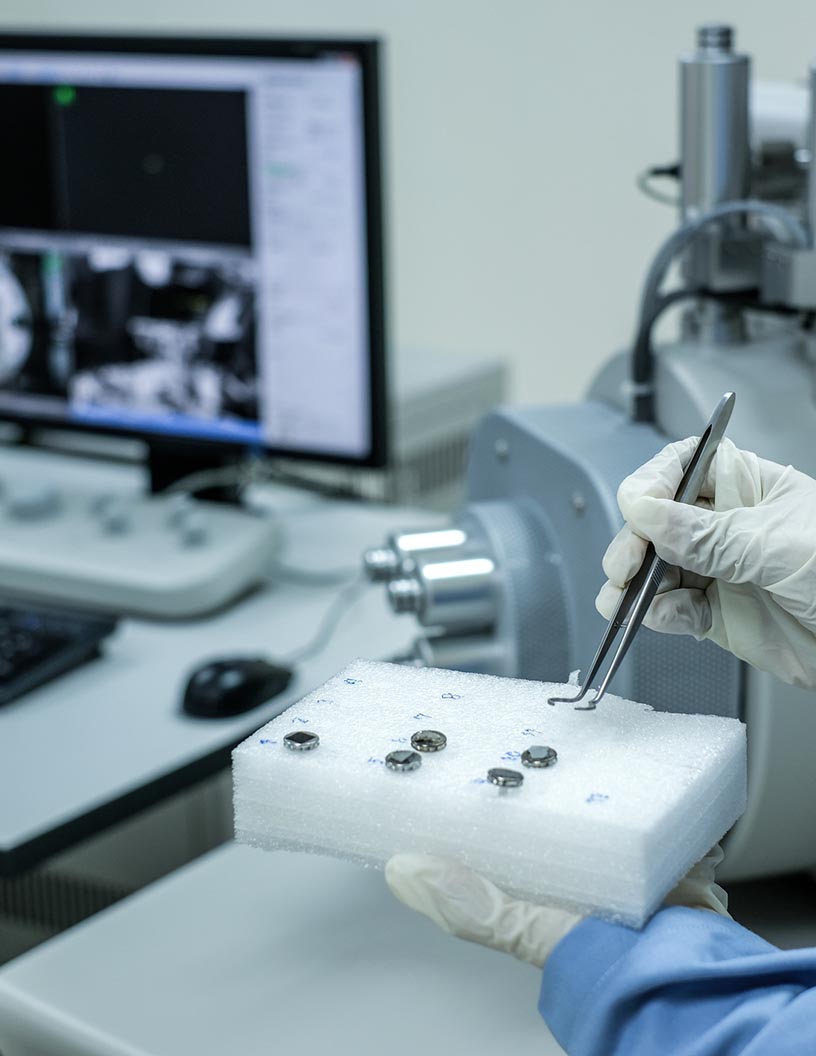


Scanning Electrochemical Microscopy (Secm) Market Size 2024-2028
The scanning electrochemical microscopy (secm) market size is forecast to increase by USD 55.8 million, at a CAGR of 8.09% between 2023 and 2028.
- The market is experiencing significant growth due to the miniaturization trend in electronic devices, which increases the demand for high-resolution and precise analysis techniques. SECM's ability to provide real-time, three-dimensional imaging and quantitative analysis of electrochemical processes makes it an attractive solution for various industries, including semiconductor manufacturing and biomedical research. However, the market faces challenges from the high cost of associated instrumentation, which may limit its adoption, particularly in smaller organizations or research institutions. Furthermore, the growing application in neuroscience, a field that requires high sensitivity and specificity, adds to the complexity and cost of SECM systems.
- To capitalize on market opportunities and navigate challenges effectively, companies should focus on developing cost-effective solutions while maintaining the necessary precision and sensitivity. Additionally, collaborations and partnerships with research institutions and industry players can help expand the market reach and foster innovation.
What will be the Size of the Scanning Electrochemical Microscopy (Secm) Market during the forecast period?
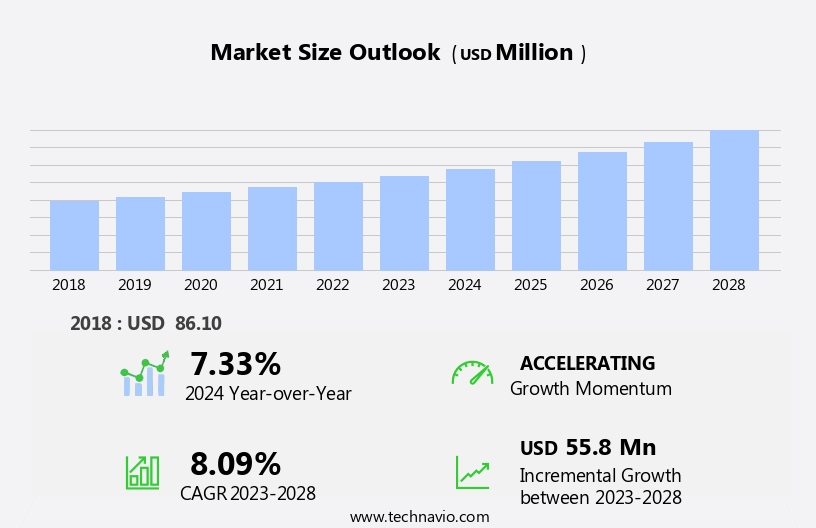
Explore in-depth regional segment analysis with market size data - historical 2018-2022 and forecasts 2024-2028 - in the full report.
Request Free Sample
The electrochemical microscopy (ECM) market continues to evolve, driven by the ongoing advancements in electrochemical techniques and their applications across various sectors. This dynamic market encompasses a range of technologies, including electrochemical conductivity, electrochemical actuators, tip-based microscopy, and electrochemical potentiometry, among others. Electrochemical mass transfer plays a crucial role in the efficient functioning of electrochemical cells, while biocompatible materials ensure the compatibility of these technologies with biological systems. The integration of electrochemical noise reduction techniques enhances the accuracy and reliability of electrochemical measurements. Electrochemical techniques have found extensive applications in environmental monitoring, biomedical research, and materials science.
For instance, electrochemical sensors enable the detection of pollutants and DNA sensing, while electrochemical fuel cells offer a sustainable energy solution. The ongoing research and development efforts in electrochemical catalysis, electrochemical kinetics, and electrochemical energy storage continue to unfold new possibilities for this market. The integration of electrochemical techniques with scanning probe microscopy expands the capabilities of surface characterization. Moreover, electrochemical techniques have significant implications in corrosion science, electrochemical etching, drug delivery, and electrochemical biosensors. The ongoing advancements in electrochemical redox reactions, electrochemical impedance spectroscopy, and electrochemical imaging further broaden the scope of this market.
The electrochemical market's continuous evolution reflects the ongoing research and development efforts in electrochemical reactions, electrochemical migration, and electrochemical analysis. The potential applications of electrochemical techniques in pharmaceutical analysis, water quality analysis, and electrochemical power sources offer significant growth opportunities. In conclusion, the electrochemical microscopy market's dynamism stems from the ongoing advancements in electrochemical techniques and their applications across various sectors. The integration of electrochemical techniques with other technologies, such as scanning probe microscopy and electrochemical impedance spectroscopy, expands their capabilities and opens up new possibilities for research and development. The potential applications of electrochemical techniques in various industries, including environmental monitoring, biomedical research, and materials science, further fuel the market's growth.
How is this Scanning Electrochemical Microscopy (Secm) Industry segmented?
The scanning electrochemical microscopy (secm) industry research report provides comprehensive data (region-wise segment analysis), with forecasts and estimates in "USD million" for the period 2024-2028, as well as historical data from 2018-2022 for the following segments.
- Type
- AFM-SECM
- ECSTM-SECM
- Others
- Application
- Semiconductors and nano-electrochemistry
- Life sciences
- Corrosion and catalyst sciences
- Geography
- North America
- US
- Europe
- France
- Germany
- UK
- APAC
- China
- Rest of World (ROW)
- North America
By Type Insights
The afm-secm segment is estimated to witness significant growth during the forecast period.
The intersection of atomic force microscopy (AFM) and scanning electrochemical microscopy (SECM) has yielded a powerful tool for concurrently examining the topographical and electrochemical attributes of diverse material interfaces with exceptional spatial resolution. This capability is indispensable for elucidating surface structures and activity relationships in a multitude of applications, encompassing chemical processes, materials science, and life sciences. A notable advancement in this field is the integration of miniaturized amperometric biosensors with AFM-SECM probes, enabling the acquisition of laterally resolved data on biologically and biomedically relevant processes. By merging the conventional AFM and SECM techniques, AFM-SECM offers a unified approach for generating high-resolution electrochemical images and topographical information in a single scan.
This innovative technology is instrumental in various domains, including electrochemical analysis, environmental monitoring, biomedical applications, drug delivery, and corrosion science, among others. Electrochemical techniques, such as potentiometry, mass transfer, and redox reactions, play a crucial role in these applications, as does the use of biocompatible materials and electrochemical cells. The potential of AFM-SECM extends to electrochemical catalysis, deposition, etching, and energy storage systems, as well as surface characterization and electrochemical sensors. Furthermore, this technology is pivotal in fields like pollution detection, DNA sensing, protein analysis, and water quality analysis, among others. The synergy between AFM and SECM offers a unique perspective on the electrochemical behavior of materials and interfaces, contributing significantly to the advancement of materials science, electrochemical engineering, and related fields.
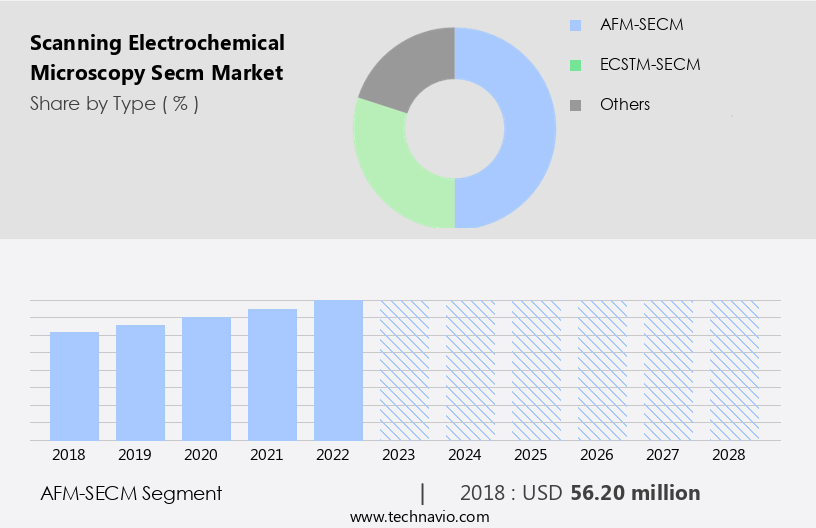
The AFM-SECM segment was valued at USD 56.20 million in 2018 and showed a gradual increase during the forecast period.
Regional Analysis
North America is estimated to contribute 45% to the growth of the global market during the forecast period.Technavio’s analysts have elaborately explained the regional trends and drivers that shape the market during the forecast period.
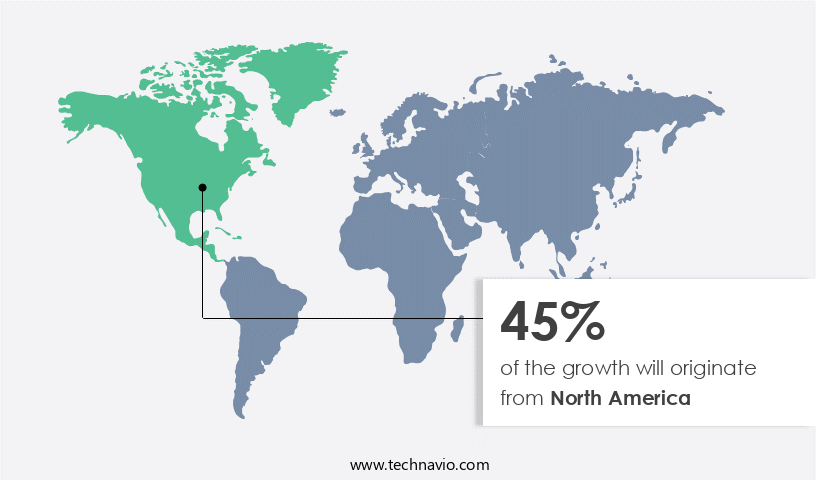
The market in North America is primarily driven by the US, which is the largest revenue contributor due to the presence of numerous technology companies utilizing miniaturized semiconductors in electronic products and renowned research institutions. In the US, the top seven contributors to life sciences research are Harvard University, the US National Institutes of Health (NIH), Stanford University, Massachusetts Institute of Technology, the University of California, Yale University, and the University of Pennsylvania. Harvard University alone dedicates approximately two-thirds of its research output to life sciences. The US NIH, as the world's largest public funder of biomedical research, encompasses 27 separate institutes and centers, fostering research in various biomedical disciplines.
SECM plays a crucial role in electrochemical surface characterization, analysis, and imaging across diverse applications, including environmental monitoring, biomedical research, corrosion science, and materials science. Electrochemical techniques, such as potentiometry, coulometry, impedance spectroscopy, and voltammetry, are integral to SECM, enabling the detection of electrochemical reactions, mass transfer, and redox processes. Biocompatible materials, electrochemical cells, and biosensors are essential components in these applications, while electrochemical catalysis, deposition, and etching contribute to material synthesis and modification. The integration of SECM with other advanced technologies, such as scanning probe microscopy, has expanded its capabilities, leading to innovations in drug delivery, protein analysis, and pollution detection.
SECM's applications extend to electrochemical energy storage, electrochemical synthesis, and electrochemical power sources, further broadening its impact across various industries.
Market Dynamics
Our researchers analyzed the data with 2023 as the base year, along with the key drivers, trends, and challenges. A holistic analysis of drivers will help companies refine their marketing strategies to gain a competitive advantage.
What are the key market drivers leading to the rise in the adoption of Scanning Electrochemical Microscopy (Secm) Industry?
- The miniaturization of electronic devices serves as a primary catalyst for market growth, driving advancements and innovations within the industry.
- Scanning Electrochemical Microscopy (SECM) is an advanced analytical technique used for water quality analysis, electrochemical power sources, and electrochemical synthesis, particularly in protein analysis and electrochemical diffusion studies. This method offers insights into interface processes, electrochemical energy storage, and electrochemical batteries through cyclic voltammetry and scanning probe microscopy. SECM's ability to detect and map electrochemical reactions at the nanoscale makes it a valuable tool for various industries. The miniaturization of electronic devices has led to significant advancements in SECM technology. Semiconductor foundries integrate various features, reduce the size of semiconductor wafers, and lower power consumption in ICs to cater to the growing market for miniaturized personal electronic products.
- Innovations in silicon wafer technology have resulted in wafers as small as 13.5 nm and 6 nm in size. Furthermore, the application of miniaturization technology in manufacturing paper batteries is a promising development in the field. To enhance the capabilities of SECM, there is a growing focus on miniaturizing sensor structures and developing multi-functional biological SECM devices with novel tip designs. These advancements are essential for cell inspections and expanding the applications of this technique in various industries. Overall, the market for SECM is driven by the increasing demand for miniaturized electronic devices and the need for advanced analytical techniques for water quality analysis and electrochemical studies.
What are the market trends shaping the Scanning Electrochemical Microscopy (Secm) Industry?
- Neuroscience is experiencing significant growth, emerging as the latest market trend in this field. Your professional assistance is required to maintain a formal tone and ensure grammatical correctness.
- Scanning Electrochemical Microscopy (SECM) is an advanced electrochemical imaging technique that utilizes small tips of amperometric ultramicroelectrodes as electrochemical scanning probes. This technology has gained significant attention in the research and development (R&D) community, particularly in neuroscience, due to its high-resolution capabilities. SECM enables the local amperometric detection of chemical secretions from single secretory cells, providing valuable insights into neural activity. SECM-based bioelectroanalysis has emerged as a powerful method for imaging chemical gradients in the diffusion layer surrounding neural cells and tissue. Researchers have proposed using potentiometric SECM with ion-selective microelectrodes as scanning probes to determine the local activity of various ions, including potassium, protons, sodium, calcium, and chloride.
- The electrochemical nature of SECM offers numerous advantages, such as high sensitivity, selectivity, and spatial resolution. Furthermore, the use of biocompatible materials in the fabrication of electrochemical cells and actuators ensures minimal interference with biological systems. Despite these benefits, challenges remain, including electrochemical noise and polarization, which can affect the accuracy and reliability of SECM measurements. The potential applications of SECM extend beyond neuroscience, with promising developments in the areas of electrochemical etching, drug delivery, and electrochemical biosensors. As research in these fields continues to advance, SECM is expected to play a significant role in the development of new technologies and solutions.
What challenges does the Scanning Electrochemical Microscopy (Secm) Industry face during its growth?
- The escalating costs of necessary instrumentation represent a significant obstacle to the expansion and growth of the industry.
- Scanning Electrochemical Microscopy (SECM) is an advanced analytical technique that provides three-dimensional topographical and electrochemical information at the nanoscale. This method is based on electrochemical redox reactions and is used for various applications, including environmental monitoring, biomedical research, electrochemical deposition, electrochemical catalysis, and electrochemical kinetics. SECM is also utilized in the fields of electrochemical capacitors, corrosion science, electrochemical fuel cells, and electrochemical sensors for electrochemical analysis. The core component of an SECM setup is a potentiostat, which is used to apply a working potential at the SECM probe, acting as the working electrode. However, the high cost of SECM instrumentation, particularly the potentiostats, is a significant barrier to its widespread adoption.
- Commercially available standard potentiostats with low-current measurement capabilities typically cost between USD2,000 and USD20,000. Consequently, many organizations cannot afford the high capital expenditure required for the purchase of these instruments, thereby limiting the use of SECM in various industries. Despite ongoing efforts to reduce costs, the high price point remains a challenge for potential users.
Exclusive Customer Landscape
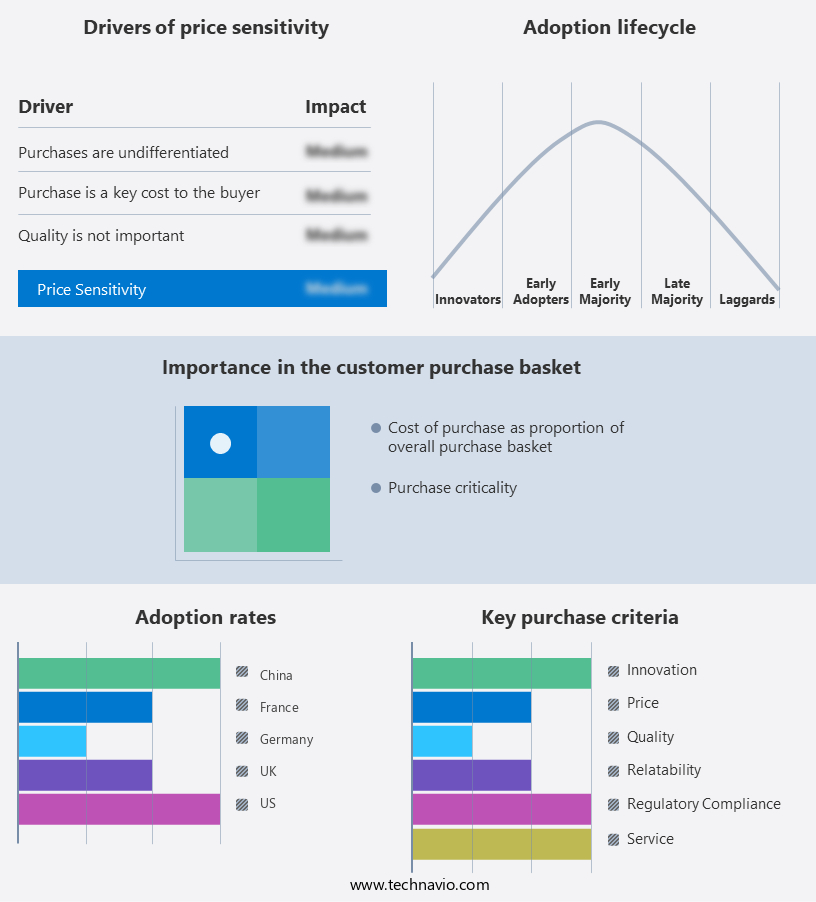
The scanning electrochemical microscopy (secm) market forecasting report includes the adoption lifecycle of the market, covering from the innovator’s stage to the laggard’s stage. It focuses on adoption rates in different regions based on penetration. Furthermore, the scanning electrochemical microscopy (secm) market report also includes key purchase criteria and drivers of price sensitivity to help companies evaluate and develop their market growth analysis strategies.
Customer Landscape
Key Companies & Market Insights
Companies are implementing various strategies, such as strategic alliances, scanning electrochemical microscopy (secm) market forecast, partnerships, mergers and acquisitions, geographical expansion, and product/service launches, to enhance their presence in the industry.
AMETEK Inc. - Scanning Electrochemical Microscopy (SECM) is a versatile analytical technique used to image and quantitatively analyze chemical and electrochemical processes at the nanoscale. Our product offerings include the VS SECM DC and AC Scanning Electrochemical Microscope. These instruments enable high-resolution imaging and quantitative analysis of electrochemical processes, providing valuable insights into material properties and reaction kinetics. SECM is an essential tool for researchers in various fields, including materials science, chemistry, biology, and electronics, to study and optimize electrochemical processes at the nanoscale. With its unique capabilities, SECM offers a distinct advantage in understanding complex systems and developing innovative solutions.
The industry research and growth report includes detailed analyses of the competitive landscape of the market and information about key companies, including:
- AMETEK Inc.
- BioLogic Sciences Instruments SA
- Bruker Corp.
- CH Instruments Inc.
- Creative Proteomics
- Gamry Instruments
- Harvard Bioscience Inc.
- Metrohm AG
- Nanonics Imaging Ltd.
- Park Systems Corp.
- ProDigitek
- S.T. Instruments BV
- Scuba Probe Technologies
- Sensolytics GmbH
- SnowHouse
Qualitative and quantitative analysis of companies has been conducted to help clients understand the wider business environment as well as the strengths and weaknesses of key industry players. Data is qualitatively analyzed to categorize companies as pure play, category-focused, industry-focused, and diversified; it is quantitatively analyzed to categorize companies as dominant, leading, strong, tentative, and weak.
Recent Development and News in Scanning Electrochemical Microscopy (Secm) Market
- In February 2023, Bruker Corporation, a leading provider of scientific instruments, announced the launch of their new SENIS LabProbe Six product line for Scanning Electrochemical Microscopy (SECM). This innovative offering promises enhanced imaging capabilities and improved sensitivity, making it a significant advancement in the field of SECM technology (Bruker Corporation Press Release, 2023).
- In June 2024, Nanosens, a UK-based sensing technology company, entered into a strategic partnership with Agilent Technologies to integrate Nanosens' SECM probes with Agilent's potentiostats. This collaboration aims to provide customers with a more comprehensive and integrated solution for their electrochemical analysis needs (Agilent Technologies Press Release, 2024).
- In October 2024, Teledyne DALSA, a global leader in digital imaging and semiconductor technologies, completed the acquisition of Crest Optics, a specialist in optical and laser systems for SECM applications. This strategic move strengthens Teledyne DALSA's position in the SECM market and expands their product offerings (Teledyne DALSA Press Release, 2024).
- In March 2025, the European Union announced a â¬10 million grant to fund the development of a new SECM-based biosensor platform. This initiative, part of the EU's Horizon 2020 research and innovation program, aims to advance the application of SECM in the fields of healthcare and environmental monitoring (European Commission Press Release, 2025).
Research Analyst Overview
- Scanning Electrochemical Microscopy (SECM) is a powerful tool in the realm of physical chemistry and surface science, offering electrochemical applications with unparalleled sensitivity. The market for SECM is witnessing significant trends, with a focus on optimization of sensitivity through advanced electrochemical workstations and tip fabrication techniques. Analytical chemistry and materials characterization sectors are increasingly adopting SECM for nano-scale characterization and data analysis. Biosensing technologies have emerged as a key application area, driving the demand for SECM in imaging software and computational electrochemistry. Numerical simulation and theoretical modeling are essential components of SECM, enabling resolution enhancement and microfluidics fabrication.
- Electrochemical catalysis research and electrochemical engineering are also benefiting from the advancements in SECM technology. Signal processing plays a crucial role in enhancing the performance of SECM, while electrochemical theory and electrochemical corrosion control are gaining importance in various industries. The development of electrochemical sensors and electrochemical actuators design is another significant trend in the SECM market. In the field of electrochemistry, SECM is revolutionizing the way we understand and manipulate electrochemical systems, offering insights into complex phenomena at the nanoscale. The future of SECM lies in its ability to provide accurate and reliable data, enabling advancements in various sectors, from materials science to biotechnology.
Dive into Technavio’s robust research methodology, blending expert interviews, extensive data synthesis, and validated models for unparalleled Scanning Electrochemical Microscopy (Secm) Market insights. See full methodology.
|
Market Scope |
|
|
Report Coverage |
Details |
|
Page number |
166 |
|
Base year |
2023 |
|
Historic period |
2018-2022 |
|
Forecast period |
2024-2028 |
|
Growth momentum & CAGR |
Accelerate at a CAGR of 8.09% |
|
Market growth 2024-2028 |
USD 55.8 million |
|
Market structure |
Concentrated |
|
YoY growth 2023-2024(%) |
7.33 |
|
Key countries |
US, UK, Germany, China, and France |
|
Competitive landscape |
Leading Companies, Market Positioning of Companies, Competitive Strategies, and Industry Risks |
What are the Key Data Covered in this Scanning Electrochemical Microscopy (Secm) Market Research and Growth Report?
- CAGR of the Scanning Electrochemical Microscopy (Secm) industry during the forecast period
- Detailed information on factors that will drive the growth and forecasting between 2024 and 2028
- Precise estimation of the size of the market and its contribution of the industry in focus to the parent market
- Accurate predictions about upcoming growth and trends and changes in consumer behaviour
- Growth of the market across North America, Europe, APAC, South America, and Middle East and Africa
- Thorough analysis of the market’s competitive landscape and detailed information about companies
- Comprehensive analysis of factors that will challenge the scanning electrochemical microscopy (secm) market growth of industry companies
We can help! Our analysts can customize this scanning electrochemical microscopy (secm) market research report to meet your requirements.
 RIA -
RIA - 
