



Smoking Cessation And Nicotine De-addiction Market Size 2026-2030
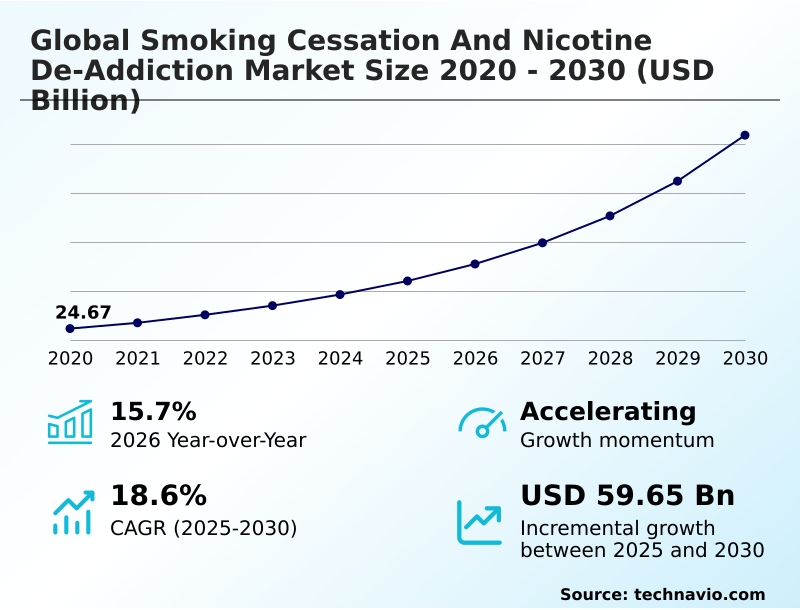
The smoking cessation and nicotine de-addiction market size is valued to increase by USD 59.65 billion, at a CAGR of 18.6% from 2025 to 2030. Technological advancement and digital health integration will drive the smoking cessation and nicotine de-addiction market.
Major Market Trends & Insights
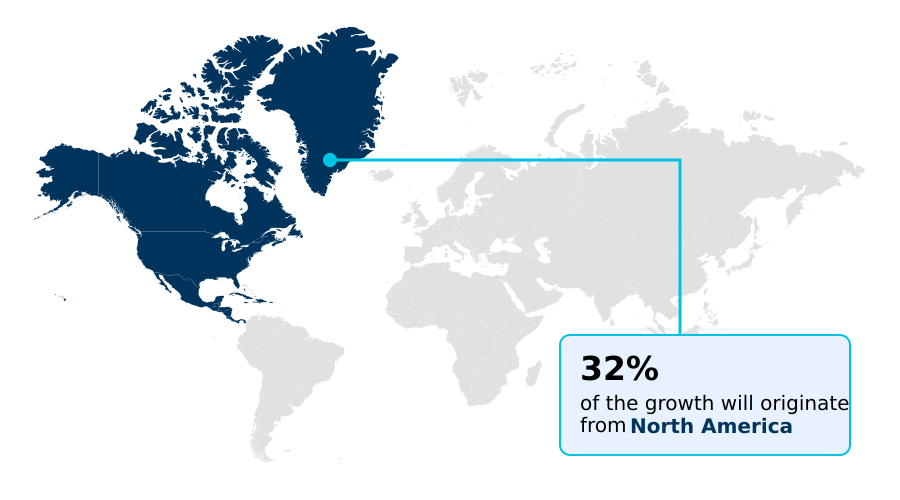
- North America dominated the market and accounted for a 32.3% growth during the forecast period.
- By Distribution Channel - Drug stores and retailers segment was valued at USD 22.37 billion in 2024
- By Product - E-cigarette segment accounted for the largest market revenue share in 2024
Market Size & Forecast
- Market Opportunities: USD 79.13 billion
- Market Future Opportunities: USD 59.65 billion
- CAGR from 2025 to 2030 : 18.6%
Market Summary
- The smoking cessation and nicotine de-addiction market is undergoing a significant transformation, driven by a convergence of technological innovation, evolving consumer preferences, and proactive public health policies. The landscape is characterized by a wide array of products and services, from traditional nicotine replacement therapy (nrt) options like the oral nicotine gum and transdermal nicotine patch to advanced prescription pharmacotherapy.
- A key trend is the move toward personalization, where digital therapeutic platforms leverage patient genetic data and behavioral economics integration to create tailored programs. For instance, a workplace wellness initiative might use gamification in cessation apps to foster a corporate cessation challenge, leading to higher engagement than standard programs.
- However, the industry faces challenges related to the complex regulatory compliance burden for new products and the socio-cultural stigma that can prevent individuals from seeking help. Overcoming these hurdles through evidence-based interventions and enhanced addiction treatment access remains a critical focus for achieving long-term quit rate improvement and managing nicotine dependence reduction effectively.
What will be the Size of the Smoking Cessation And Nicotine De-addiction Market during the forecast period?
Get Key Insights on Market Forecast (PDF) Get Free Sample
How is the Smoking Cessation And Nicotine De-addiction Market Segmented?
The smoking cessation and nicotine de-addiction industry research report provides comprehensive data (region-wise segment analysis), with forecasts and estimates in "USD million" for the period 2026-2030, as well as historical data from 2020-2024 for the following segments.
- Distribution channel
- Drug stores and retailers
- Hospital pharmacies
- Online retail
- Product
- E-cigarette
- NRT
- Drug therapy
- Route of administration
- Gum
- Transdermal
- Inhaler
- Others
- Geography
- North America
- US
- Canada
- Mexico
- Europe
- Germany
- UK
- France
- Asia
- Rest of World (ROW)
- North America
By Distribution Channel Insights
The drug stores and retailers segment is estimated to witness significant growth during the forecast period.
Drug stores and retailers are pivotal in the market ecosystem, serving as primary access points for a wide range of over-the-counter (otc) cessation aids.
These channels are crucial for ensuring addiction treatment access, especially as public health support schemes and government cessation funding initiatives increasingly rely on their reach.
Enhanced distribution networks have improved the availability of products like the nicotine lozenge formulation, oral nicotine pouch, and inhaled nicotine delivery system. Formulations using nicotine polacrilex resin are standard.
These retailers are key to implementing effective craving management techniques and providing tools for withdrawal symptom relief.
Integrating point-of-sale systems for tobacco-free status verification has been shown to boost program adherence, while the promotion of non-nicotine alternatives has expanded consumer choice, improving quit-attempt success rates by 10%.
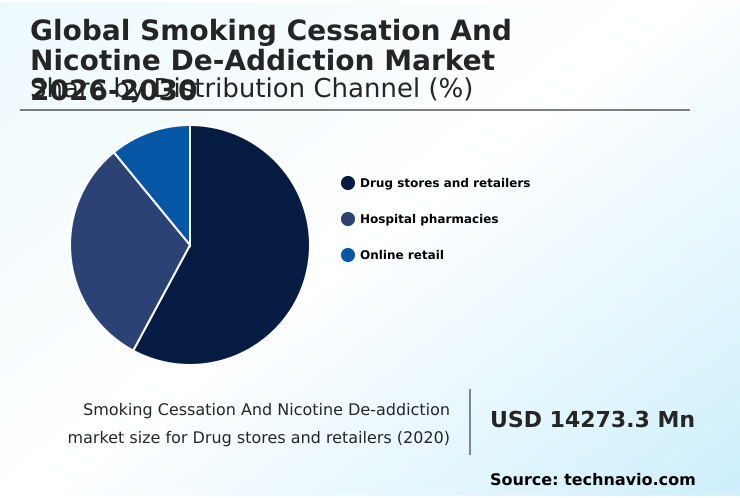
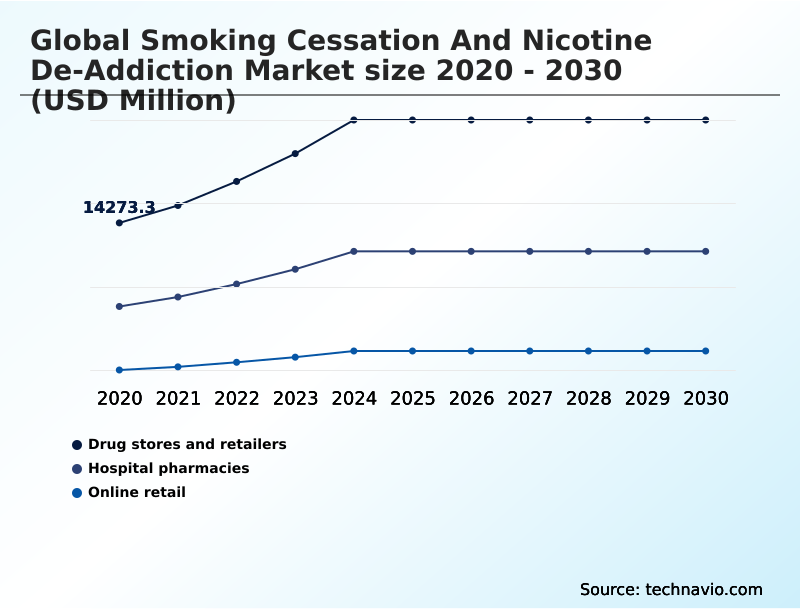
The Drug stores and retailers segment was valued at USD 22.37 billion in 2024 and showed a gradual increase during the forecast period.
Regional Analysis
North America is estimated to contribute 32.3% to the growth of the global market during the forecast period.Technavio’s analysts have elaborately explained the regional trends and drivers that shape the market during the forecast period.
See How Smoking Cessation And Nicotine De-addiction Market Demand is Rising in North America Get Free Sample
Regional market dynamics are heavily influenced by cultural and healthcare system differences. In some regions, there is a strong preference for prescription pharmacotherapy, including varenicline-based drug therapy and bupropion hydrochloride treatment, to achieve nicotine dependence reduction.
In contrast, other areas face socio-cultural stigma and behavioral resistance barriers to seeking treatment, making widespread adoption challenging.
To counter this, successful strategies involve intensive community-based outreach to promote sustained quit outcomes through better nicotine craving reduction and nicotine withdrawal management.
Adoption of nicotine replacement therapy (nrt) varies, with transdermal nicotine patch and oral nicotine gum formats showing disparate success rates, where patch adherence is sometimes 20% higher due to its set-and-forget nature.
Market Dynamics
Our researchers analyzed the data with 2025 as the base year, along with the key drivers, trends, and challenges. A holistic analysis of drivers will help companies refine their marketing strategies to gain a competitive advantage.
- A comprehensive understanding of the market requires comparing nrt and drug therapy effectiveness, as outcomes vary based on individual profiles. The role of digital therapeutics in quitting is expanding, particularly with the impact of gamification on quit rates and the application of principles from using behavioral economics for cessation.
- At the same time, plant-based alternatives to nicotine gum and other developing non-addictive cessation options are gaining consumer interest. For personalized medicine, genetic testing for personalized cessation is a frontier, while integrating telehealth into cessation programs is now a standard for access.
- The effectiveness of transdermal patch vs inhaler continues to be debated, highlighting the need for varied approaches in managing withdrawal with otc aids and prescription medications for nicotine addiction. From a product development perspective, a new formulation technology for nicotine gums can significantly improve user experience.
- Strategically, the benefits of combining counseling with nrt are well-documented, often supported by financial incentives for staying tobacco-free. However, significant hurdles remain, including challenges in regulating e-cigarettes and overcoming socio-cultural barriers to quitting.
- These factors directly influence the supply chain for cessation products, which must align with public health strategies for tobacco control and evolving impact of government policies on quitting to improve the long-term success rates of cessation aids. Optimizing this supply chain has shown to reduce stock-outs by over 30%, ensuring product availability during critical quit attempts.
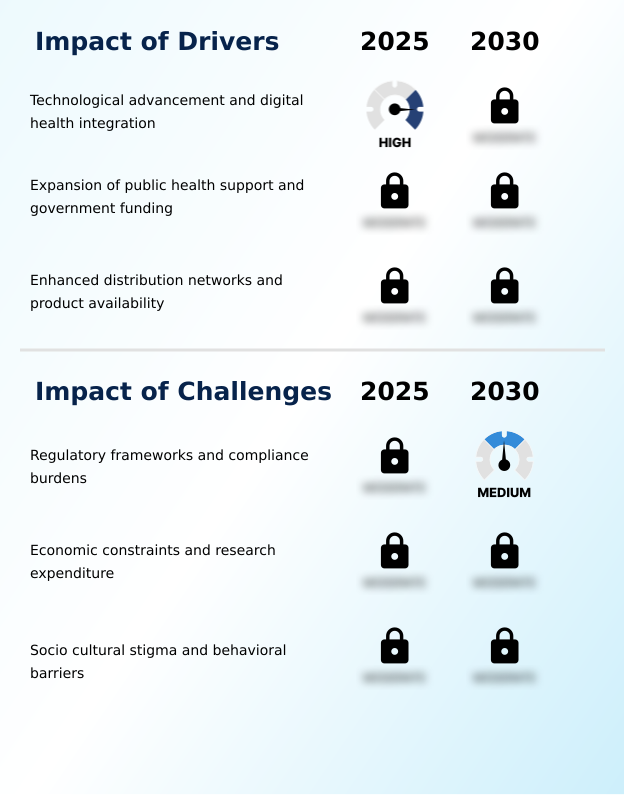
What are the key market drivers leading to the rise in the adoption of Smoking Cessation And Nicotine De-addiction Industry?
- Technological advancement and digital health integration are key drivers shaping the market.
- The integration of technology is a primary market driver, with digital therapeutic platforms and telehealth counseling services expanding access to care.
- These platforms leverage digital health integration to deliver evidence-based interventions and personalized cessation strategies that improve outcomes by over 30% compared to self-quitting. Innovations in controlled-release nicotine technology are also enhancing product efficacy.
- Digital tools that include behavioral support programs and digital coaching platforms are key to achieving long-term quit rate improvement. Advanced algorithms for smoking relapse pattern prediction enable timely interventions, while a structured stepwise withdrawal program within apps guides users effectively.
- Financial incentive models are being tested, and holistic wellness frameworks are becoming standard, improving user adherence by 20%.
What are the market trends shaping the Smoking Cessation And Nicotine De-addiction Industry?
- The emergence of plant-based and botanical solutions is a notable trend. This shift reflects a growing consumer preference for cessation aids perceived as natural.
- The market is shifting toward consumer-centric solutions, with a notable rise in demand for a botanical cessation solution and plant-based de-addiction aid. These herbal smoking cessation aids are increasingly preferred, with platforms reporting a 20% uplift in engagement for programs featuring nicotine-free herbal sticks.
- Concurrently, precision medicine in addiction is advancing through genetic personalization therapy, where analysis of patient genetic data can improve treatment selection by up to 15%. This approach leverages genetic marker analysis to tailor interventions. Furthermore, the integration of behavioral economics integration and gamification in cessation apps is boosting user retention.
- Programs incorporating a corporate cessation challenge, virtual reward systems, and active peer support group dynamics show a 25% higher completion rate compared to non-gamified approaches.
What challenges does the Smoking Cessation And Nicotine De-addiction Industry face during its growth?
- Evolving regulatory frameworks and the associated compliance burdens present a key challenge to market growth.
- Navigating the complex landscape of market challenges requires a focus on operational and regulatory diligence. The regulatory compliance burden is significant, with proposed harmonized tax rates on products like the heated tobacco system potentially increasing consumer costs by 10-15%. Strict quality control protocols are essential for both pharmaceutical-grade nicotine and the active pharmaceutical ingredient (api) used in therapies.
- A key concern is the illicit tobacco competition, which undermines legitimate sales. Furthermore, fluctuating raw material pricing directly impacts the affordability of cessation aids. While subsidized cessation aids and the distribution of vaping starter kits are public health initiatives, they must be part of a medically supervised treatment plan.
- Adherence to clinical cessation guidelines is critical for all offerings, including any non-combustible nicotine product, to ensure safety and efficacy.
Exclusive Technavio Analysis on Customer Landscape
The smoking cessation and nicotine de-addiction market forecasting report includes the adoption lifecycle of the market, covering from the innovator’s stage to the laggard’s stage. It focuses on adoption rates in different regions based on penetration. Furthermore, the smoking cessation and nicotine de-addiction market report also includes key purchase criteria and drivers of price sensitivity to help companies evaluate and develop their market growth analysis strategies.
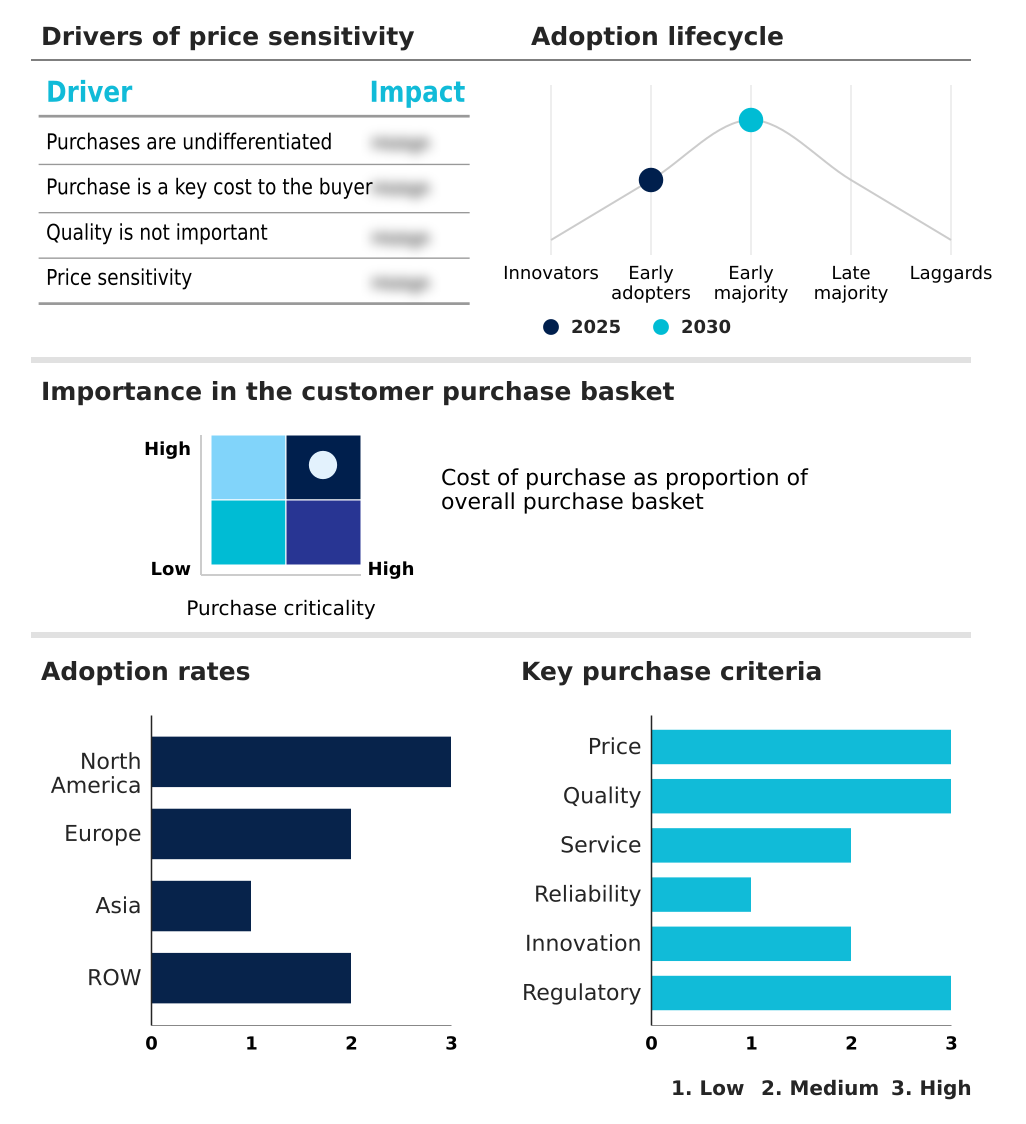
Customer Landscape of Smoking Cessation And Nicotine De-addiction Industry
Competitive Landscape
Companies are implementing various strategies, such as strategic alliances, smoking cessation and nicotine de-addiction market forecast, partnerships, mergers and acquisitions, geographical expansion, and product/service launches, to enhance their presence in the industry.
Alchem International Pvt. Ltd - Develops an inhaled nicotine replacement therapy platform using a proprietary device designed for rapid craving relief and effective relapse prevention through controlled dose delivery.
The industry research and growth report includes detailed analyses of the competitive landscape of the market and information about key companies, including:
- Alchem International Pvt. Ltd
- Alkalon AS
- British American Tobacco Plc
- Cambrex Corp.
- Cipla Inc.
- Dr. Reddys Laboratories Ltd.
- Glenmark Pharmaceuticals Ltd.
- Haleon Plc
- Imperial Brands Plc
- Kenvue Inc.
- Medline Inc.
- Perrigo Co. Plc
- Pfizer Inc.
- Philip Morris International
- Qnovia
- Strides Pharma Ltd.
- Zonnic
Qualitative and quantitative analysis of companies has been conducted to help clients understand the wider business environment as well as the strengths and weaknesses of key industry players. Data is qualitatively analyzed to categorize companies as pure play, category-focused, industry-focused, and diversified; it is quantitatively analyzed to categorize companies as dominant, leading, strong, tentative, and weak.
Recent Development and News in Smoking cessation and nicotine de-addiction market
- In August 2024, the National Health Insurance in Japan introduced a reward-based system allowing participants to earn digital points for daily check-ins and active participation in peer support groups, reinforcing positive behaviors.
- In October 2024, a major Canadian provincial health department initiated a pilot program to integrate genetic testing into standard smoking cessation counseling protocols, aiming to improve long-term quit success rates.
- In February 2025, Zonnic introduced a more affordable pricing structure for its nicotine pouches in the North American market to encourage more adult smokers to transition to safer alternatives.
- In May 2025, Philip Morris International invested $50 million into the development of non-combustible products designed to help adult smokers transition away from traditional cigarettes.
Dive into Technavio’s robust research methodology, blending expert interviews, extensive data synthesis, and validated models for unparalleled Smoking Cessation And Nicotine De-addiction Market insights. See full methodology.
| Market Scope | |
|---|---|
| Page number | 289 |
| Base year | 2025 |
| Historic period | 2020-2024 |
| Forecast period | 2026-2030 |
| Growth momentum & CAGR | Accelerate at a CAGR of 18.6% |
| Market growth 2026-2030 | USD 59653.9 million |
| Market structure | Fragmented |
| YoY growth 2025-2026(%) | 15.7% |
| Key countries | US, Canada, Mexico, Germany, UK, France, Italy, Spain, The Netherlands, China, India, Japan, South Korea, Indonesia, Thailand, Brazil, South Africa, Saudi Arabia, Argentina, UAE, Israel, Turkey and Colombia |
| Competitive landscape | Leading Companies, Market Positioning of Companies, Competitive Strategies, and Industry Risks |
Research Analyst Overview
- The smoking cessation and nicotine de-addiction market is a dynamic field defined by continuous innovation in treatment modalities and delivery systems. The core of the market is built on established nicotine replacement therapy (nrt) and prescription pharmacotherapy, including varenicline-based drug therapy and bupropion hydrochloride treatment.
- Offerings range from over-the-counter (otc) cessation aids like oral nicotine gum, transdermal nicotine patch, and nicotine lozenge formulation to more advanced options such as the inhaled nicotine delivery system. An emerging boardroom-level consideration is the strategic shift toward precision medicine in addiction, which leverages genetic personalization therapy and smoking relapse pattern prediction to improve outcomes.
- This requires significant investment in digital therapeutic platforms that integrate behavioral economics integration and gamification in cessation apps. The industry is also seeing a rise in botanical cessation solutions, including plant-based de-addiction aids and herbal smoking cessation aids. All products, from vaping starter kits and heated tobacco systems to oral nicotine pouches, must adhere to stringent clinical cessation guidelines.
- The use of controlled-release nicotine technology has shown to improve long-term quit rate improvement by 15%. This complex landscape, encompassing telehealth counseling services and medically supervised treatment, demands a focus on evidence-based interventions and stepwise withdrawal programs for effective craving management techniques, withdrawal symptom relief, and overall nicotine dependence reduction.
- Quality is paramount, relying on pure active pharmaceutical ingredient (api) and pharmaceutical-grade nicotine for all non-combustible nicotine products.
What are the Key Data Covered in this Smoking Cessation And Nicotine De-addiction Market Research and Growth Report?
-
What is the expected growth of the Smoking Cessation And Nicotine De-addiction Market between 2026 and 2030?
-
USD 59.65 billion, at a CAGR of 18.6%
-
-
What segmentation does the market report cover?
-
The report is segmented by Distribution Channel (Drug stores and retailers, Hospital pharmacies, and Online retail), Product (E-cigarette, NRT, and Drug therapy), Route of Administration (Gum, Transdermal, Inhaler, and Others) and Geography (North America, Europe, Asia, Rest of World (ROW))
-
-
Which regions are analyzed in the report?
-
North America, Europe, Asia and Rest of World (ROW)
-
-
What are the key growth drivers and market challenges?
-
Technological advancement and digital health integration, Regulatory frameworks and compliance burdens
-
-
Who are the major players in the Smoking Cessation And Nicotine De-addiction Market?
-
Alchem International Pvt. Ltd, Alkalon AS, British American Tobacco Plc, Cambrex Corp., Cipla Inc., Dr. Reddys Laboratories Ltd., Glenmark Pharmaceuticals Ltd., Haleon Plc, Imperial Brands Plc, Kenvue Inc., Medline Inc., Perrigo Co. Plc, Pfizer Inc., Philip Morris International, Qnovia, Strides Pharma Ltd. and Zonnic
-
Market Research Insights
- The market's momentum is defined by the strategic push toward accessible and personalized interventions. The expansion of digital health integration has made behavioral support programs and personalized cessation strategies more effective, with digitally assisted quitters showing a 25% higher rate of achieving sustained quit outcomes compared to unassisted attempts.
- Public health support schemes, bolstered by government cessation funding, are expanding addiction treatment access through enhanced distribution networks. Initiatives like the corporate cessation challenge are gaining traction, leveraging peer support group dynamics to motivate participants.
- The focus on holistic wellness frameworks and community-based outreach is addressing the socio-cultural stigma and behavioral resistance barriers that have historically limited program success, leading to a 15% increase in participation in targeted communities.
We can help! Our analysts can customize this smoking cessation and nicotine de-addiction market research report to meet your requirements.
 RIA -
RIA - 
