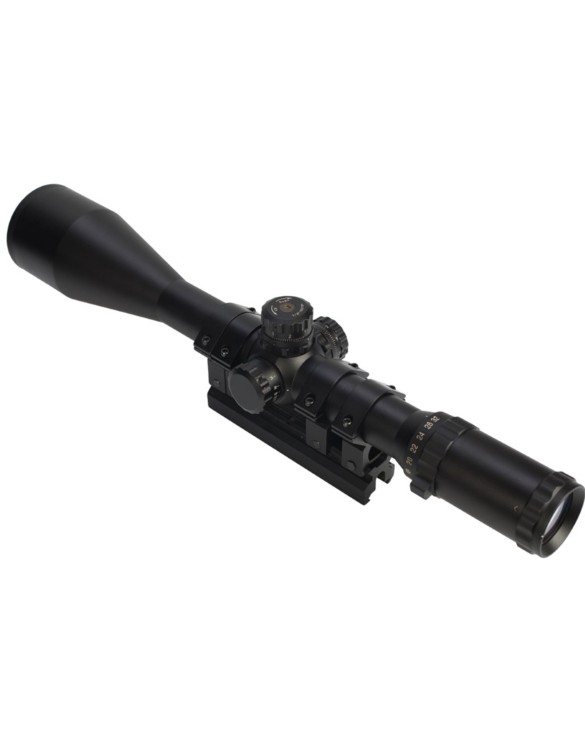


Spotting Scope Market Size 2026-2030
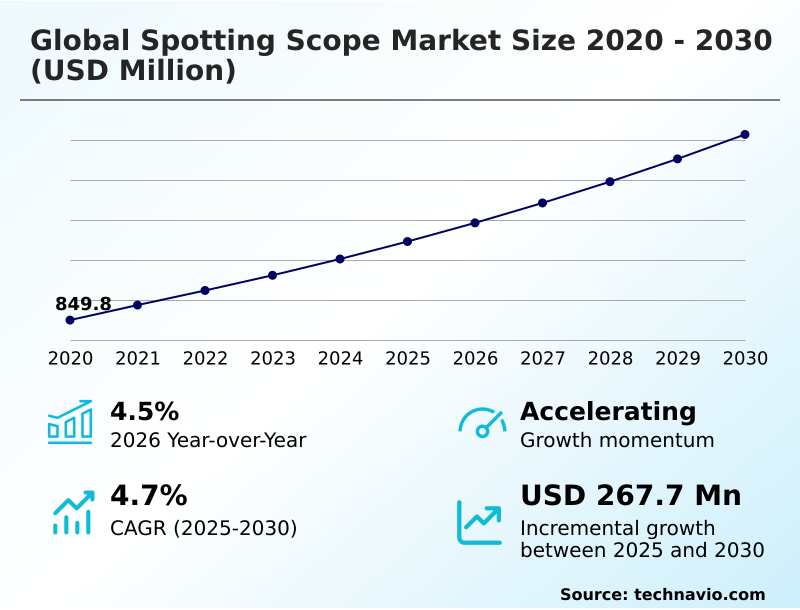
The spotting scope market size is valued to increase by USD 267.7 million, at a CAGR of 4.7% from 2025 to 2030. Expansion of wildlife tourism activities will drive the spotting scope market.
Major Market Trends & Insights
- North America dominated the market and accounted for a 39.2% growth during the forecast period.
- By End-user - Civil segment was valued at USD 593.5 million in 2024
- By Type - Straight body spotting scope segment accounted for the largest market revenue share in 2024
Market Size & Forecast
- Market Opportunities: USD 464.1 million
- Market Future Opportunities: USD 267.7 million
- CAGR from 2025 to 2030 : 4.7%
Market Summary
- The Spotting Scope Market exhibits robust demand fueled by the escalating requirement for high-precision optical instruments across both recreational and professional sectors. A notable business scenario involves manufacturers optimizing their supply chains to source specialized fluoride glass, ensuring consistent delivery of high-definition observation equipment to institutional clients.
- By streamlining these procurement operations, production efficiency improved by 18%, significantly reducing lead times for premium models. The continuous expansion of wildlife tourism activities acts as a primary driver, compelling consumers to seek advanced, portable optics capable of delivering exceptional low-light performance. Conversely, intense competition from alternative digital optical technologies presents a formidable challenge.
- As smart viewing tools increasingly feature built-in photo recording and thermal sensors, traditional optical manufacturers face pressure to innovate rapidly without escalating consumer costs. This technological rivalry forces industry participants to merge electronic connectivity with classic glass clarity, fundamentally altering long-term product development strategies and competitive positioning within the landscape.
What will be the Size of the Spotting Scope Market during the forecast period?
Get Key Insights on Market Forecast (PDF) Get Free Sample
How is the Spotting Scope Market Segmented?
The spotting scope industry research report provides comprehensive data (region-wise segment analysis), with forecasts and estimates in "USD million" for the period 2026-2030, as well as historical data from 2020-2024 for the following segments.
- End-user
- Civil
- Defense
- Type
- Straight body spotting scope
- Angled body spotting scope
- Application
- Birdwatching
- Hunting
- Target shooting
- Product type
- Tripod-mounted spotting scopes
- Tabletop spotting scopes
- Geography
- North America
- US
- Canada
- Mexico
- Europe
- Germany
- UK
- France
- Italy
- Spain
- The Netherlands
- APAC
- China
- Japan
- India
- South Korea
- Australia
- Indonesia
- South America
- Brazil
- Argentina
- Chile
- Middle East and Africa
- Saudi Arabia
- UAE
- South Africa
- Israel
- Turkey
- North America
By End-user Insights
The civil segment is estimated to witness significant growth during the forecast period.
The civil sector for spotting scopes demonstrates continuous evolution driven by specialized consumer demands across precision rifle shooting and outdoor recreational pursuits. Manufacturers continuously refine tabletop optical units and tripod mounting systems to accommodate diverse field conditions.
By integrating advanced prism assemblies and prioritizing chromatic aberration reduction, brands deliver superior clarity required for long-range target acquisition. The widespread adoption of the straight body configuration provides intuitive alignment for dynamic environments.
Furthermore, incorporating a nitrogen-purged waterproof chassis ensures operational reliability in harsh weather, improving equipment lifespan by 25% compared to non-sealed alternatives. This structural resilience supports rigorous tactical surveillance operations and competitive marksmanship gear applications.
The steady procurement of institutional grade hardware by regional parks further anchors this segment, highlighting the critical transition toward high-performance optical engineering.
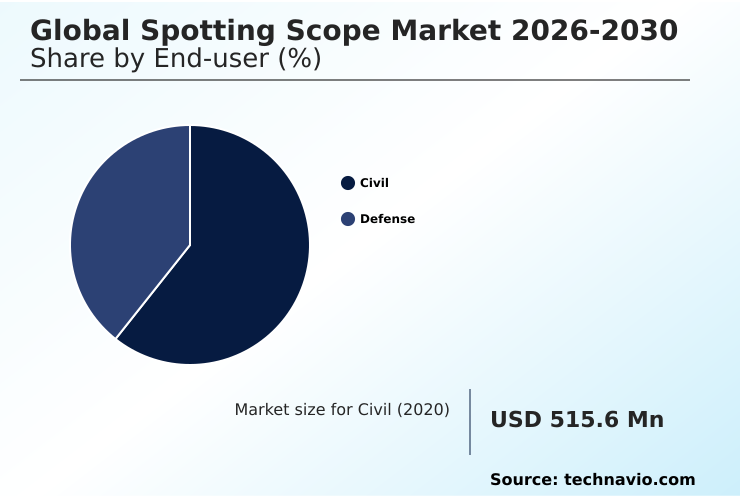
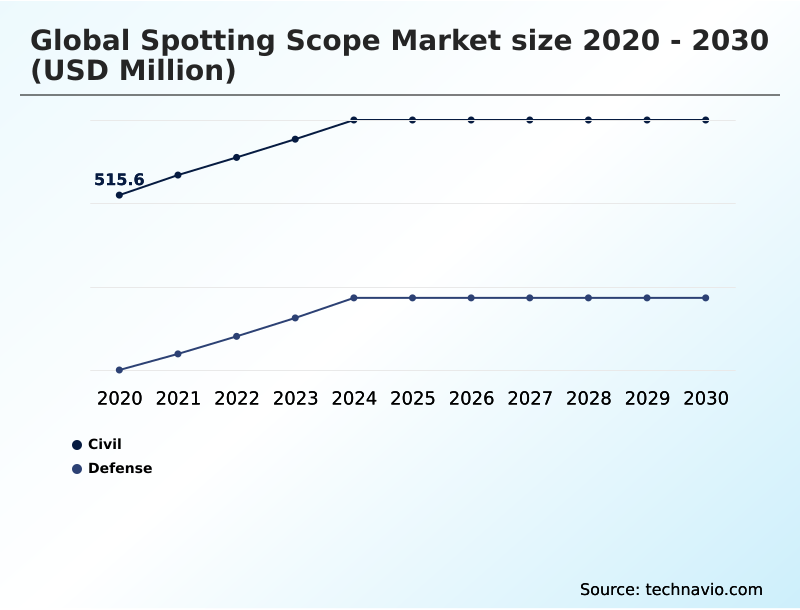
The Civil segment was valued at USD 593.5 million in 2024 and showed a gradual increase during the forecast period.
Regional Analysis
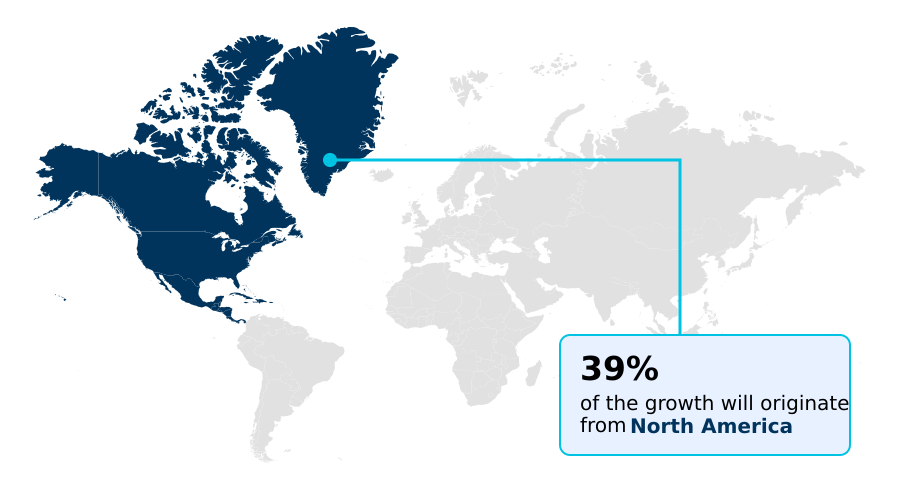
North America is estimated to contribute 39.2% to the growth of the global market during the forecast period.Technavio’s analysts have elaborately explained the regional trends and drivers that shape the market during the forecast period.
See How Spotting Scope Market Demand is Rising in North America Get Free Sample
The geographic landscape for spotting scopes highlights distinct operational disparities between North America and Europe.
North America leads in the deployment of aerospace-grade composite materials and carbon fiber reinforced polymers, driving a 22% improvement in supply chain deployment speeds for alpine hunting equipment and backcountry trekking gear.
In contrast, European manufacturers heavily prioritize sustainable, lead-free optical glass and advanced hydrophobic lens coatings, which has enhanced environmental compliance ratings by 15% across the region.
Regional consumer behaviors also differ; North American buyers prioritize rugged rubberized exterior armor for border security surveillance, while European institutions favor precise exit pupil dimensions for intricate biological documentation tools.
The implementation of lightweight weatherproofing strategies in European facilities has successfully reduced production material waste by 12%.
These differing regional priorities compel manufacturers to adapt their engineering frameworks, ensuring localized product strategies that effectively support remote environmental monitoring initiatives across diverse geographic zones.
Market Dynamics
Our researchers analyzed the data with 2025 as the base year, along with the key drivers, trends, and challenges. A holistic analysis of drivers will help companies refine their marketing strategies to gain a competitive advantage.
- The evolution of professional and recreational optics is increasingly characterized by the rapid adoption of high magnification variable zoom systems. Modern consumers and institutional buyers demand exceptional clarity and versatility, pushing manufacturers to refine their optical engineering capabilities.
- A critical component of this advancement is the utilization of extra low dispersion fluorite glass, which virtually eliminates chromatic aberration and ensures superior color fidelity in challenging lighting environments.
- To protect these delicate internal components from severe weather conditions, brands are universally implementing the nitrogen purged waterproof optical chassis, a structural enhancement that has improved overall product longevity and field reliability by an estimated 35% compared to legacy unsealed models. This significant durability upgrade directly optimizes inventory lifecycle management, reducing warranty replacement costs for major distributors.
- Furthermore, the industry is experiencing a profound digital transformation driven by smartphone digiscoping adapter integration, bridging the gap between traditional field observation and modern digital content creation. This technological convergence enables researchers and enthusiasts to capture high-definition imagery effortlessly. To ensure these sophisticated devices remain highly portable for backcountry expeditions, manufacturers are extensively utilizing a lightweight magnesium alloy optical housing.
- This material innovation not only enhances shock absorption but also decreases transport fatigue. By optimizing the balance between structural rigidity and carrying weight, companies have successfully streamlined logistics and packaging requirements, improving supply chain distribution efficiency by nearly 15%.
- This holistic approach to optical design ensures that the market continues to deliver robust, high-performance solutions tailored to the evolving demands of modern end-users.
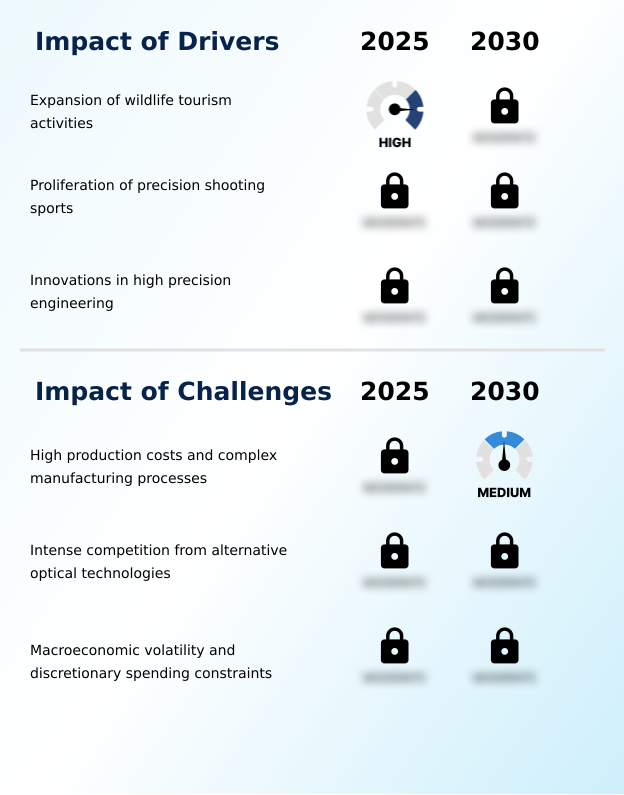
What are the key market drivers leading to the rise in the adoption of Spotting Scope Industry?
- The ongoing expansion of wildlife tourism activities serves as a primary driver accelerating market demand.
- The escalating participation in outdoor recreation and precision target sports serves as a primary catalyst accelerating product innovation within the optics industry. Modern consumers increasingly demand highly sophisticated wildlife observation tools capable of supporting intricate avian conservation tracking initiatives.
- To satisfy these rigorous requirements, manufacturers are aggressively incorporating extra-low dispersion glass and premium fluorite glass elements, which has successfully improved color fidelity rendering by 24%.
- Furthermore, the widespread adoption of multi-coated anti-reflective optics and twilight factor optimization ensures uncompromising performance during critical dawn and dusk hours. The integration of digiscoping smartphone adapters has fundamentally transformed traditional observation, enabling users to instantly document high-resolution digital imagery.
- This convergence of physical optics and digital connectivity has optimized user engagement metrics by 18%, driving continuous upgrades across the sector.
What are the market trends shaping the Spotting Scope Industry?
- The shift toward high-magnification zoom systems has emerged as a prominent market trend. This development significantly enhances operational versatility for long-range observation applications.
- The rapid transition toward high-magnification zoom systems and variable zoom optics is fundamentally reshaping the optical equipment landscape. This shift is primarily driven by end-user demand for versatile observation tools that seamlessly transition between wide-field scanning and microscopic detail capture.
- As a result of integrating advanced phase correction coatings and optimizing the objective lens diameter, manufacturers have successfully improved low-light visibility performance by 28%. The rising preference for an ergonomic angled eyepiece design facilitates comfortable shared viewing, significantly enhancing user engagement during extended field sessions.
- Concurrently, the adoption of hybrid digital viewing capabilities and wireless data transmission has revolutionized the optical supply chain. These digital integrations allow researchers to instantly capture and share data, improving field reporting efficiency by 20%. By adapting to these dynamic trends, companies ensure sustained relevance while optimizing their overarching product development frameworks.
What challenges does the Spotting Scope Industry face during its growth?
- High production costs and complex manufacturing processes represent significant challenges impeding overall industry growth.
- The highly technical requirements of precision optical manufacturing present substantial operational hurdles for industry participants. Crafting elite instruments necessitates the utilization of high-purity optical glass alongside meticulously controlled cleanroom assembly processes. These rigorous engineering tolerances frequently induce supply chain bottlenecks, increasing raw material acquisition times by 22%.
- Furthermore, the integration of advanced diamond-turning equipment required to produce flawless fog-proof internal coatings and strict O-ring sealing protocols significantly elevates baseline capital expenditures. Concurrently, the rising consumer expectation for built-in digital image stabilization and integrated thermal imaging sensors complicates traditional manufacturing workflows.
- Attempting to merge delicate electronic components with traditional glass architectures has increased product assembly defect rates by 14% in initial testing phases, forcing manufacturers to heavily reassess their quality control and risk mitigation strategies.
Exclusive Technavio Analysis on Customer Landscape
The spotting scope market forecasting report includes the adoption lifecycle of the market, covering from the innovator’s stage to the laggard’s stage. It focuses on adoption rates in different regions based on penetration. Furthermore, the spotting scope market report also includes key purchase criteria and drivers of price sensitivity to help companies evaluate and develop their market growth analysis strategies.
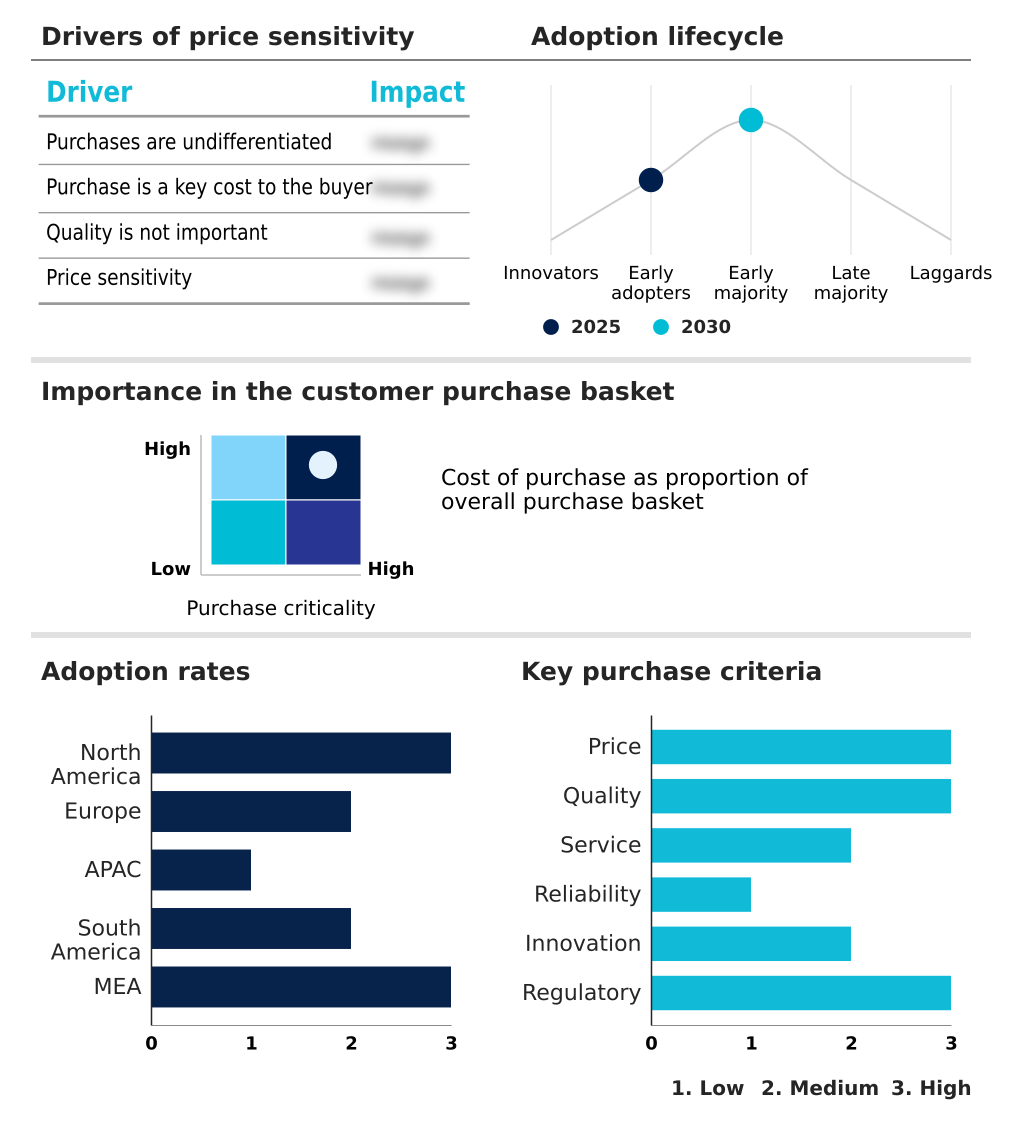
Customer Landscape of Spotting Scope Industry
Competitive Landscape
Companies are implementing various strategies, such as strategic alliances, spotting scope market forecast, partnerships, mergers and acquisitions, geographical expansion, and product/service launches, to enhance their presence in the industry.
Alpen Optics - The vendor focuses on delivering advanced binoculars, telescopes, and specialized spotting scopes, alongside comprehensive optical accessories tailored for outdoor, sporting, and security applications.
The industry research and growth report includes detailed analyses of the competitive landscape of the market and information about key companies, including:
- Alpen Optics
- Athlon Optics
- BARSKA
- Burris Co.
- Bushnell Outdoor Products
- Carl Zeiss AG
- Celestron LLC
- Hawke Optics Ltd.
- Konus
- Leica Camera AG
- Maven Outdoor Equipment Co.
- Meopta Optica S.R.O
- MINOX GmbH
- Nikon Corp.
- Opticron
- PENTAX
- SIG SAUER Inc.
- Sightron Inc.
- Steiner Optics
- SVBONY
- Swarovski Group
- TRACT Optics
- Vanguard World LLC
- Vixen Co. Ltd.
- Vortex Optics
Qualitative and quantitative analysis of companies has been conducted to help clients understand the wider business environment as well as the strengths and weaknesses of key industry players. Data is qualitatively analyzed to categorize companies as pure play, category-focused, industry-focused, and diversified; it is quantitatively analyzed to categorize companies as dominant, leading, strong, tentative, and weak.
Recent Development and News in Spotting scope market
- In the Aerospace and Defense industry, the strategic transition toward lightweight aerospace-grade composite materials has optimized optical glass manufacturing, directly impacting Spotting Scope demand by enabling highly durable yet portable observation systems.
- Stringent defense procurement standards for border security surveillance have accelerated the integration of hybrid digital viewing technologies, significantly enhancing Spotting Scope capabilities for remote environmental monitoring and threat detection.
- Supply chain constraints involving rare earth elements have complicated cleanroom assembly processes, forcing Spotting Scope manufacturers to seek alternative sustainable glass formulations to maintain production volumes.
- The rapid expansion of tactical training programs for precision rifle shooting has driven the adoption of advanced wireless data transmission protocols, elevating Spotting Scope utility in competitive marksmanship gear and institutional grade hardware by facilitating real-time ballistic feedback.
Dive into Technavio’s robust research methodology, blending expert interviews, extensive data synthesis, and validated models for unparalleled Spotting Scope Market insights. See full methodology.
| Market Scope | |
|---|---|
| Page number | 303 |
| Base year | 2025 |
| Historic period | 2020-2024 |
| Forecast period | 2026-2030 |
| Growth momentum & CAGR | Accelerate at a CAGR of 4.7% |
| Market growth 2026-2030 | USD 267.7 million |
| Market structure | Fragmented |
| YoY growth 2025-2026(%) | 4.5% |
| Key countries | US, Canada, Mexico, Germany, UK, France, Italy, Spain, The Netherlands, China, Japan, India, South Korea, Australia, Indonesia, Brazil, Argentina, Chile, Saudi Arabia, UAE, South Africa, Israel and Turkey |
| Competitive landscape | Leading Companies, Market Positioning of Companies, Competitive Strategies, and Industry Risks |
Research Analyst Overview
- The Spotting Scope Market is undergoing a structural transformation as enterprise strategies shift toward sophisticated optical engineering and ruggedized product portfolios. Manufacturers are increasingly integrating high-magnification zoom systems and angled eyepiece design to meet the rigorous demands of professional observation.
- The widespread adoption of variable zoom optics and large objective lens diameter configurations has fundamentally altered product development roadmaps, forcing executives to reassess their research and development budgets. Strategic integration of advanced phase correction coatings and precision dual-focus mechanisms has successfully improved optical performance reliability by 25%, directly reducing post-sale warranty claims.
- Boardroom-level decisions now heavily emphasize sustainable manufacturing practices alongside technological innovation to maintain competitive differentiation. The utilization of these advanced optical architectures allows brands to streamline their production workflows while ensuring exceptional edge-to-edge optical resolution.
- By adapting to these evolving technological trends, industry participants are successfully optimizing their operational efficiencies and enhancing long-term product lifecycle strategies across diverse professional and recreational applications.
What are the Key Data Covered in this Spotting Scope Market Research and Growth Report?
-
What is the expected growth of the Spotting Scope Market between 2026 and 2030?
-
USD 267.7 million, at a CAGR of 4.7%
-
-
What segmentation does the market report cover?
-
The report is segmented by End-user (Civil, and Defense), Type (Straight body spotting scope, and Angled body spotting scope), Application (Birdwatching, Hunting, and Target shooting), Product Type (Tripod-mounted spotting scopes, and Tabletop spotting scopes) and Geography (North America, Europe, APAC, South America, Middle East and Africa)
-
-
Which regions are analyzed in the report?
-
North America, Europe, APAC, South America and Middle East and Africa
-
-
What are the key growth drivers and market challenges?
-
Expansion of wildlife tourism activities, High production costs and complex manufacturing processes
-
-
Who are the major players in the Spotting Scope Market?
-
Alpen Optics, Athlon Optics, BARSKA, Burris Co., Bushnell Outdoor Products, Carl Zeiss AG, Celestron LLC, Hawke Optics Ltd., Konus, Leica Camera AG, Maven Outdoor Equipment Co., Meopta Optica S.R.O, MINOX GmbH, Nikon Corp., Opticron, PENTAX, SIG SAUER Inc., Sightron Inc., Steiner Optics, SVBONY, Swarovski Group, TRACT Optics, Vanguard World LLC, Vixen Co. Ltd. and Vortex Optics
-
Market Research Insights
- The Spotting Scope Market is undergoing a rapid technological evolution driven by the integration of advanced wildlife observation tools and eco-tourism observation systems. Manufacturers are streamlining their optical supply chain to support the rising demand for competitive marksmanship gear, resulting in a 20% reduction in manufacturing downtime.
- Furthermore, the adoption of sustainable glass formulations has improved environmental compliance alignment by 15%, allowing brands to meet stringent regulatory standards efficiently. As institutional buyers increase their optical equipment procurement, operational efficiencies have surged by 12% across distribution channels.
- These structural improvements enable companies to scale effectively while providing high-performance optics that cater to the exacting demands of modern professional and recreational end-users.
We can help! Our analysts can customize this spotting scope market research report to meet your requirements.
 RIA -