
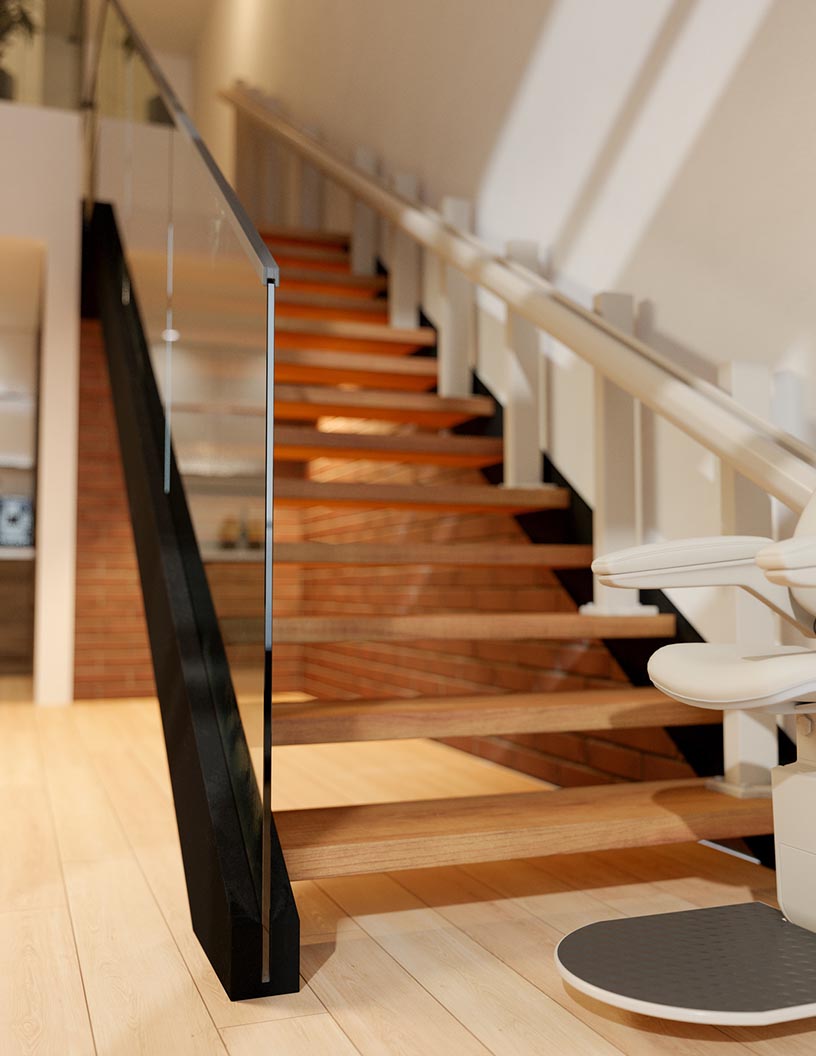


Stair Lift Market Size 2026-2030
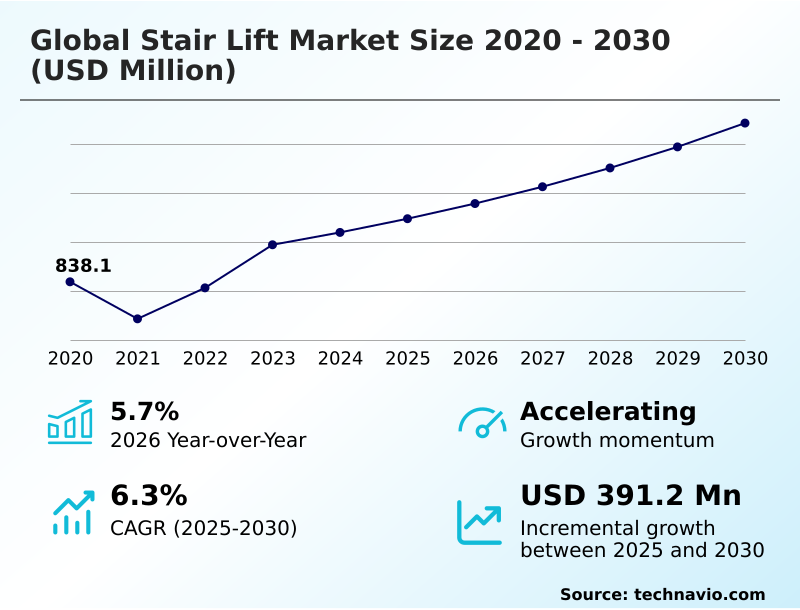
The stair lift market size is valued to increase by USD 391.2 million, at a CAGR of 6.3% from 2025 to 2030. Growth in aging population globally will drive the stair lift market.
Major Market Trends & Insights
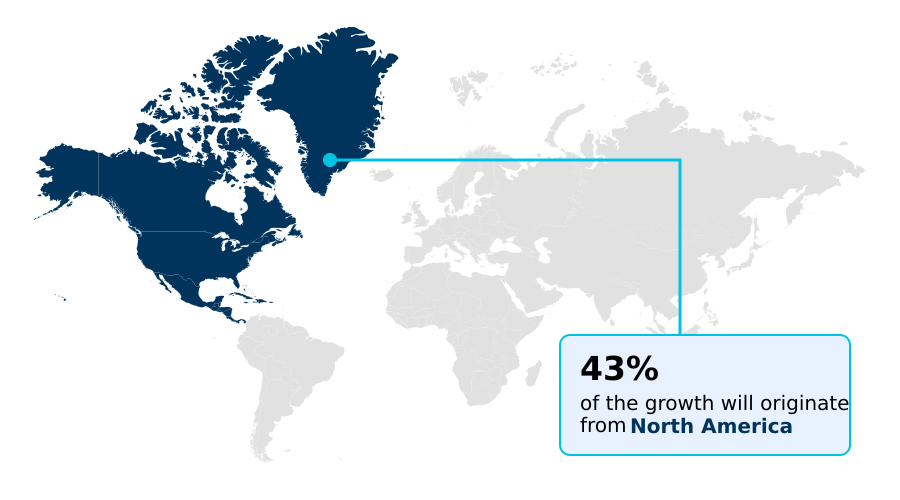
- North America dominated the market and accounted for a 42.9% growth during the forecast period.
- By Type - Straight segment was valued at USD 678.2 million in 2024
- By End-user - Residential segment accounted for the largest market revenue share in 2024
Market Size & Forecast
- Market Opportunities: USD 649.3 million
- Market Future Opportunities: USD 391.2 million
- CAGR from 2025 to 2030 : 6.3%
Market Summary
- The stair lift market is evolving beyond simple mechanical aids into sophisticated systems integral to modern healthcare and residential planning. A key driver is the global demographic shift, which necessitates effective age-in-place strategies to help seniors remain in multi-level residences. In response, manufacturers are innovating with features like AI-powered analysis for predictive maintenance and advanced safety features.
- This technological push is complemented by a trend toward universal design, where a bespoke home equipment approach with customizable upholstery materials and compact design helps overcome user reluctance. However, challenges such as high costs and the need for seamless smart home integration persist.
- For instance, a progressive healthcare network could deploy lifts with remote monitoring capabilities, enabling proactive caregiver support and reducing hospital readmissions from falls. This business case demonstrates how modern stair lifts function not just as durable medical equipment but as a key enabler of efficient, decentralized home-based care models, supporting both patient mobility and broader public health goals.
What will be the Size of the Stair Lift Market during the forecast period?
Get Key Insights on Market Forecast (PDF) Get Free Sample
How is the Stair Lift Market Segmented?
The stair lift industry research report provides comprehensive data (region-wise segment analysis), with forecasts and estimates in "USD million" for the period 2026-2030, as well as historical data from 2020-2024 for the following segments.
- Type
- Straight
- Curved
- End-user
- Residential
- Healthcare
- Others
- Installation type
- Indoor
- Outdoor
- Geography
- North America
- US
- Canada
- Mexico
- Europe
- Germany
- UK
- France
- APAC
- China
- Japan
- India
- Middle East and Africa
- Saudi Arabia
- UAE
- South Africa
- South America
- Brazil
- Argentina
- Rest of World (ROW)
- North America
By Type Insights
The straight segment is estimated to witness significant growth during the forecast period.
The straight stair lift segment is foundational to the market, driven by its cost-effectiveness in standard residential settings and its role in supporting age-in-place strategies.
Current developments focus on enhancing this motorized device with a slim rail profile and foldable components to maximize space. Manufacturers are increasingly incorporating smart home integration, moving beyond basic functionality to include features like remote monitoring and diagnostic alerts.
Innovations in soft start and stop technology are improving user comfort, while a standardized battery backup system ensures operability during power outages, a critical preventative safety measure.
The inclusion of voice command operation, which improves accessibility by over 40% for users with dexterity issues, is becoming a key differentiator, reflecting a shift toward more intuitive and responsive assistive technology and providing crucial caregiver support.
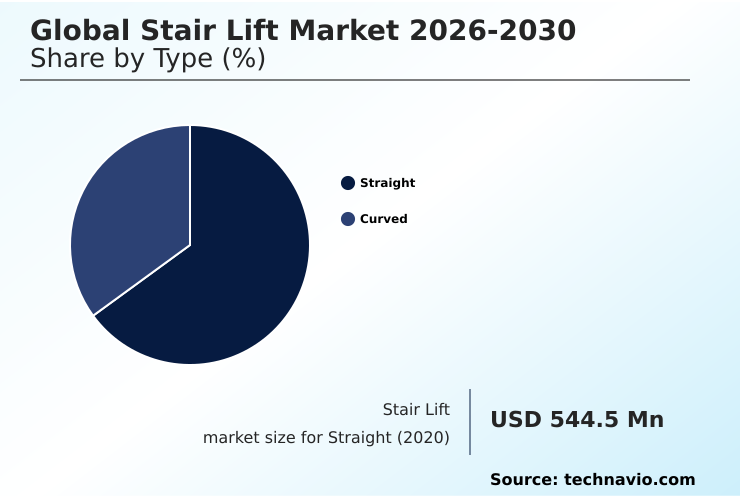
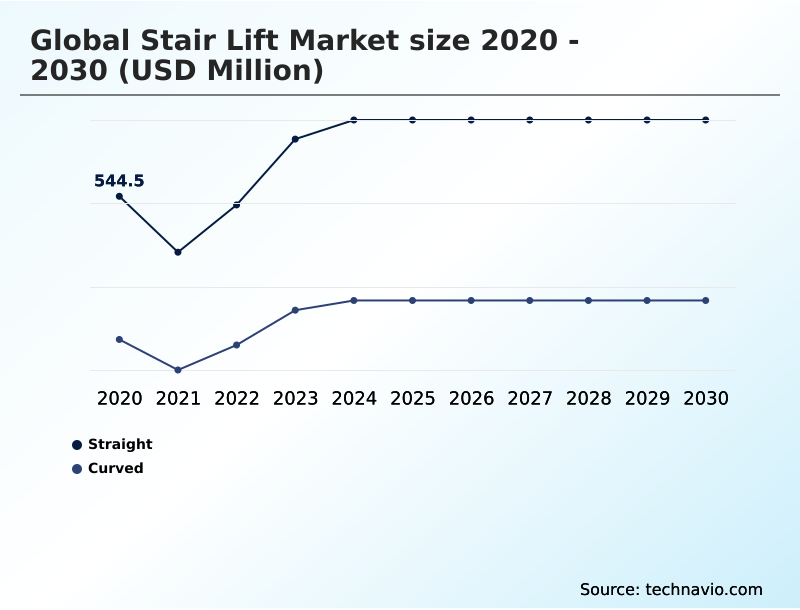
The Straight segment was valued at USD 678.2 million in 2024 and showed a gradual increase during the forecast period.
Regional Analysis
North America is estimated to contribute 42.9% to the growth of the global market during the forecast period.Technavio’s analysts have elaborately explained the regional trends and drivers that shape the market during the forecast period.
See How Stair Lift Market Demand is Rising in North America Get Free Sample
The market's geographic landscape is characterized by varied maturity and growth trajectories. North America and Europe represent established markets, driven by high consumer awareness and supportive healthcare policies promoting independent living.
North America is projected to see steady expansion, while the APAC region is forecast to experience the fastest growth, with a CAGR 9% higher than Europe's.
This surge in APAC is fueled by rapidly aging populations, rising disposable incomes, and government initiatives focused on elder care technology. Countries like China and Japan are becoming key centers for innovation in home accessibility.
This regional dynamic is creating a shift, with North America's share of incremental growth, currently at 42.9%, facing increasing competition from emerging Asian markets that are rapidly adopting advanced accessibility solutions and assistive devices for in-home mobility.
Market Dynamics
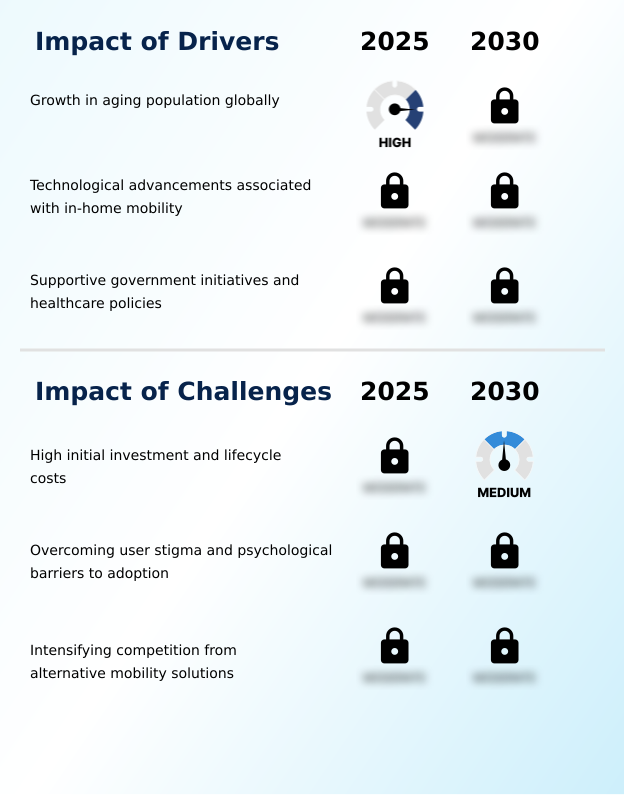
Our researchers analyzed the data with 2025 as the base year, along with the key drivers, trends, and challenges. A holistic analysis of drivers will help companies refine their marketing strategies to gain a competitive advantage.
- The decision-making process for acquiring a stair lift is multifaceted, requiring careful evaluation of user needs and home architecture. A primary question for consumers is how to choose a residential stair lift that balances functionality with aesthetics. This often leads to a direct straight vs curved stair lift cost analysis, as curved models involve custom fabrication.
- For those with budget constraints or short-term needs, exploring stair lift rental vs purchase options is a critical step. Technical capabilities are also a major consideration, with growing interest in a stair lift with voice command integration and the ability for integrating stair lift with alexa.
- Prospective buyers also investigate the battery life of modern stair lifts and inquire about the quietest stair lift models available. Long-term ownership costs are assessed through stair lift service and maintenance contracts, where the value of predictive maintenance for stair lifts becomes apparent; systems with this feature report service disruptions that are five times less frequent than reactive models.
- For specific installations, understanding outdoor stair lift installation requirements, weatherproofing an outdoor stair lift, and finding the best stair lift for narrow stairs or a stair lift for spiral staircase design are essential.
- Finally, financing, available tax credits for home mobility aids, comparing used vs new stair lift value, and understanding the benefits of a power swivel seat and stair lift weight capacity comparison round out the key considerations.
What are the key market drivers leading to the rise in the adoption of Stair Lift Industry?
- The accelerating growth of the global aging population is the primary driver creating sustained demand for mobility and accessibility solutions.
- The primary market driver is the global aging population, with the core demographic expanding by 8% annually in certain developed regions, creating sustained demand for age-in-place strategies.
- Technological advancement acts as a powerful secondary driver; innovations like predictive maintenance and advanced safety features make modern systems a more compelling preventative safety measure.
- This is particularly true in markets with high smart home integration, where connected devices see a 35% higher satisfaction rating.
- Supportive government policies are also crucial, with initiatives in several countries offering subsidies that can offset the purchase price by as much as 30%.
- These financial incentives, combined with a growing cultural emphasis on independent living and home-based care, are significantly broadening the market's accessibility and appeal.
What are the market trends shaping the Stair Lift Industry?
- The integration of smart technology and Internet of Things (IoT) connectivity is an emerging, transformative market trend, repositioning stair lifts as integral components within connected smart home ecosystems.
- A key trend is the sophisticated integration of smart home technology, transforming lifts into connected assistive devices. This includes remote monitoring and AI-powered analysis, which can preemptively identify up to 70% of potential mechanical issues through diagnostic alerts, significantly enhancing reliability.
- Another major trend is the focus on universal design, with manufacturers offering extensive customization of upholstery materials and finishes to create bespoke home equipment. This design-centric approach has been shown to increase adoption rates by 20% among pre-retirement consumers planning for future needs.
- Furthermore, market expansion into emerging economies is driven by the introduction of more affordable models featuring a compact design, making age-in-place strategies more accessible globally. These interconnected trends are reshaping the market from a needs-based medical purchase to an integrated lifestyle and home improvement investment.
What challenges does the Stair Lift Industry face during its growth?
- The high initial investment and subsequent lifecycle costs present a significant challenge, potentially impeding broader market adoption and growth.
- A significant challenge remains the high upfront cost, which can represent up to 15% of a retiree's annual fixed income and serves as a major barrier to adoption. This financial hurdle is compounded by psychological resistance, with industry data indicating that nearly 40% of potential users delay purchase due to the stigma associated with assistive devices.
- This reluctance often means the product is only considered after a fall, rather than as a preventative safety measure. Furthermore, the market faces intensifying competition from alternative accessibility solutions, particularly compact residential elevators.
- Innovations in elevator design have reduced their spatial footprint by 25% in recent years, making them an increasingly viable option for new constructions and major renovations, challenging the traditional value proposition of stair lifts.
Exclusive Technavio Analysis on Customer Landscape
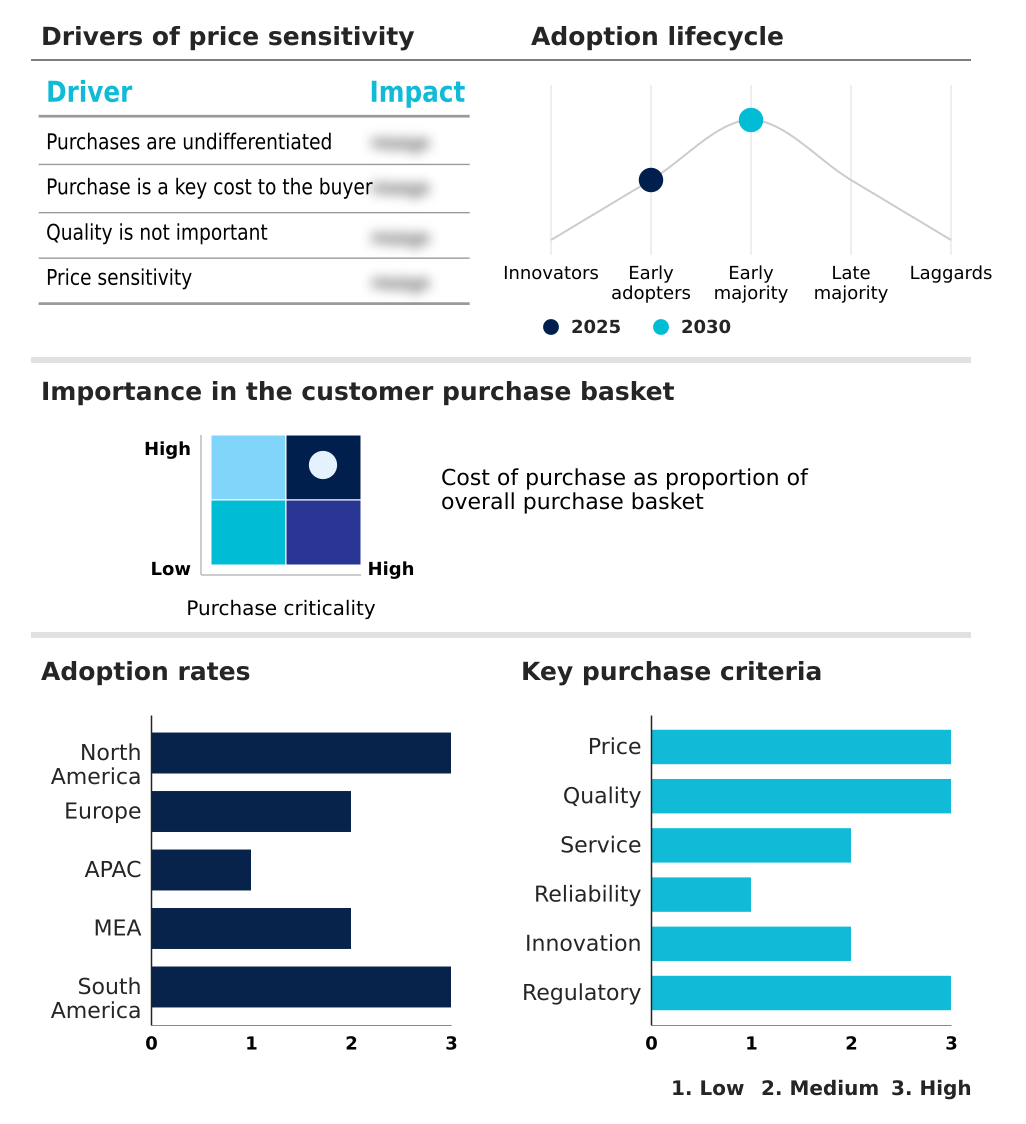
The stair lift market forecasting report includes the adoption lifecycle of the market, covering from the innovator’s stage to the laggard’s stage. It focuses on adoption rates in different regions based on penetration. Furthermore, the stair lift market report also includes key purchase criteria and drivers of price sensitivity to help companies evaluate and develop their market growth analysis strategies.
Customer Landscape of Stair Lift Industry
Competitive Landscape
Companies are implementing various strategies, such as strategic alliances, stair lift market forecast, partnerships, mergers and acquisitions, geographical expansion, and product/service launches, to enhance their presence in the industry.
Acorn Stairlifts Inc. - Offers a portfolio of straight, curved, and outdoor stair lifts designed to enhance home accessibility and support diverse independent living requirements.
The industry research and growth report includes detailed analyses of the competitive landscape of the market and information about key companies, including:
- Acorn Stairlifts Inc.
- Bruno Independent Living Aids Inc.
- Electra Taamal
- Harmar Mobility LLC
- Lehner Lifttechnik GmbH
- Lifeway Mobility
- Millepiani S.p.a
- Millers Akron Inc.
- Otolift Stairlifts Ltd.
- Platinum Stairlifts Ltd.
- Prism UK Medical Ltd.
- Qingdao Sinofirst Machinery Co. Ltd.
- Savaria Corp.
- Stannah Lifts Holdings Ltd.
- SUGIYASU Co. Ltd.
- Symax Lift Holding Co. Ltd.
- TK Elevator GmbH
Qualitative and quantitative analysis of companies has been conducted to help clients understand the wider business environment as well as the strengths and weaknesses of key industry players. Data is qualitatively analyzed to categorize companies as pure play, category-focused, industry-focused, and diversified; it is quantitatively analyzed to categorize companies as dominant, leading, strong, tentative, and weak.
Recent Development and News in Stair lift market
- In September 2024, Savaria Corp. launched its AI-driven predictive maintenance platform, 'Smart Ascent', which uses real-time operational data to anticipate service needs, reducing downtime by up to 30% for its residential stair lifts.
- In January 2025, Stannah Lifts Holdings Ltd. announced a strategic partnership with a leading European interior design firm to launch a bespoke line of stair lifts featuring sustainable materials and fully customizable aesthetics for the luxury residential market.
- In March 2025, Acorn Stairlifts Inc. opened a new manufacturing and assembly facility in Southeast Asia, aimed at producing a cost-effective modular stair lift model designed to reduce shipping times and costs for the APAC market by 40%.
- In May 2025, The US Department of Health and Human Services announced a new $500 million grant program under the 'Aging in Place Initiative' to subsidize home modifications, specifically earmarking funds for assistive technologies like stair lifts for low-income seniors.
Dive into Technavio’s robust research methodology, blending expert interviews, extensive data synthesis, and validated models for unparalleled Stair Lift Market insights. See full methodology.
| Market Scope | |
|---|---|
| Page number | 284 |
| Base year | 2025 |
| Historic period | 2020-2024 |
| Forecast period | 2026-2030 |
| Growth momentum & CAGR | Accelerate at a CAGR of 6.3% |
| Market growth 2026-2030 | USD 391.2 million |
| Market structure | Fragmented |
| YoY growth 2025-2026(%) | 5.7% |
| Key countries | US, Canada, Mexico, Germany, UK, France, Italy, Spain, The Netherlands, China, Japan, India, South Korea, Australia, Indonesia, Saudi Arabia, UAE, South Africa, Israel, Turkey, Brazil, Argentina and Chile |
| Competitive landscape | Leading Companies, Market Positioning of Companies, Competitive Strategies, and Industry Risks |
Research Analyst Overview
- The stair lift market is undergoing a significant technological transformation, moving from a simple motorized device to a sophisticated component of the connected home. This evolution is defined by the integration of a complex rail system with advanced safety features, including obstruction sensors and an emergency stop mechanism, all powered by reliable low-voltage operation and a rack and pinion drive.
- Innovations such as a digital diagnostic display, wireless communication modules, and AI-powered analysis enable predictive maintenance, a key boardroom consideration for companies shifting from a reactive to a proactive service model. Product strategy is increasingly focused on customization and aesthetics, utilizing 3D scanning technology and CAD technology to create custom-built rails and bespoke home equipment with varied upholstery materials.
- The adoption of a modular design and slim rail profile with foldable components has been shown to reduce installation times by over 50% compared to traditional methods. Features like a power swivel seat, power footrest, soft start and stop, voice command operation, and a standard battery backup system enhance user experience, while energy-efficient motors and ergonomic controls address performance demands.
- In outdoor applications, the use of weather-resistant materials like marine-grade vinyl and zinc-plated components ensures durability.
What are the Key Data Covered in this Stair Lift Market Research and Growth Report?
-
What is the expected growth of the Stair Lift Market between 2026 and 2030?
-
USD 391.2 million, at a CAGR of 6.3%
-
-
What segmentation does the market report cover?
-
The report is segmented by Type (Straight, and Curved), End-user (Residential, Healthcare, and Others), Installation Type (Indoor, and Outdoor) and Geography (North America, Europe, APAC, Middle East and Africa, South America)
-
-
Which regions are analyzed in the report?
-
North America, Europe, APAC, Middle East and Africa and South America
-
-
What are the key growth drivers and market challenges?
-
Growth in aging population globally, High initial investment and lifecycle costs
-
-
Who are the major players in the Stair Lift Market?
-
Acorn Stairlifts Inc., Bruno Independent Living Aids Inc., Electra Taamal, Harmar Mobility LLC, Lehner Lifttechnik GmbH, Lifeway Mobility, Millepiani S.p.a, Millers Akron Inc., Otolift Stairlifts Ltd., Platinum Stairlifts Ltd., Prism UK Medical Ltd., Qingdao Sinofirst Machinery Co. Ltd., Savaria Corp., Stannah Lifts Holdings Ltd., SUGIYASU Co. Ltd., Symax Lift Holding Co. Ltd. and TK Elevator GmbH
-
Market Research Insights
- Market dynamics are shaped by a confluence of demographic needs and technological advancements. A strong focus on aging in place and independent living is the primary force, creating demand for effective mobility solutions and assistive technology. These age-in-place strategies are bolstered by the rise of elder care technology and smart home integration, making assistive devices more intuitive.
- As a preventative safety measure, modern systems improve residential mobility and reduce caregiver burden, with integrated units showing a 25% faster response time in alerting support networks. The push for deinstitutionalization and community-based care further drives home modification. This creates a fertile ground for accessibility solutions that support an active lifestyle, address age-related conditions, and enable home-based care.
- The adoption of universal design and inclusive design principles in housing has increased product appeal by 15%, ensuring barrier-free access in multi-level residences and enhancing patient mobility.
We can help! Our analysts can customize this stair lift market research report to meet your requirements.
 RIA -
RIA - 
