



Surgical Smoke Evacuation Systems Market Size 2026-2030
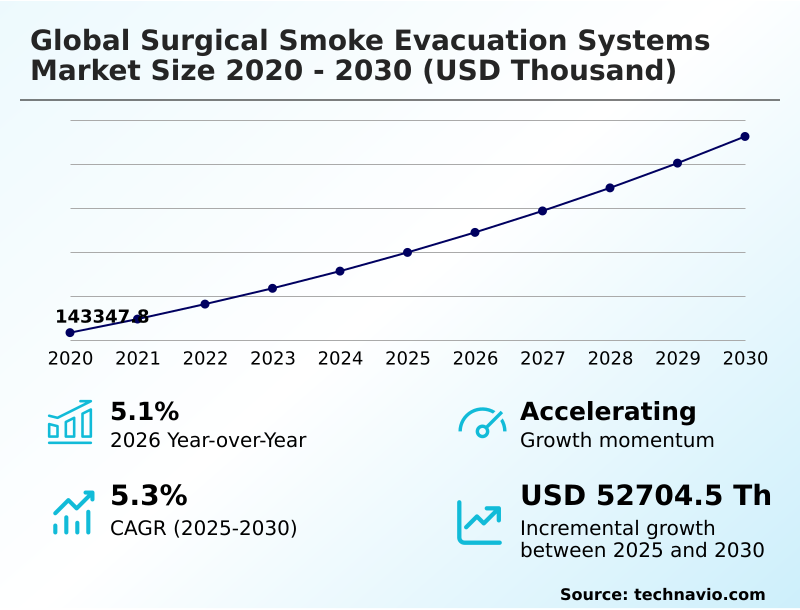
The surgical smoke evacuation systems market size is valued to increase by USD 52.70 million, at a CAGR of 5.3% from 2025 to 2030. Rapid acceleration of legislative mandates and regulatory enforcement actions will drive the surgical smoke evacuation systems market.
Major Market Trends & Insights
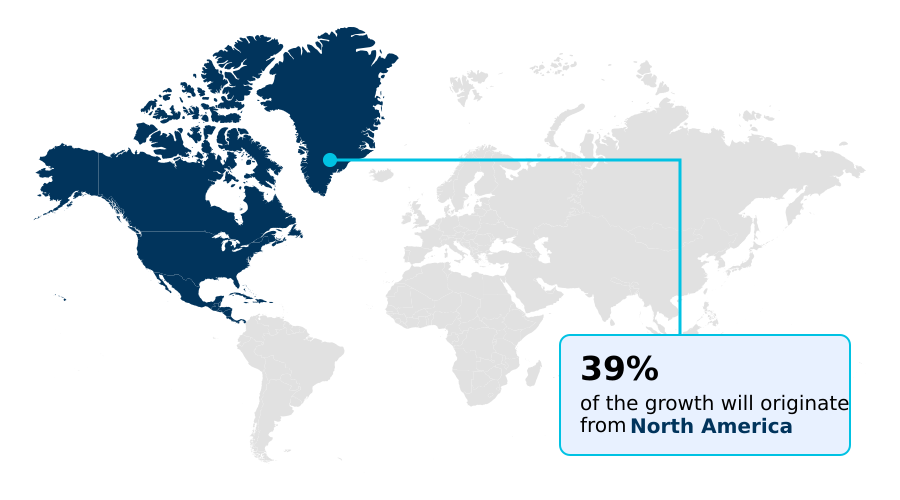
- North America dominated the market and accounted for a 39.3% growth during the forecast period.
- By Product - Smoke evacuation pencils segment was valued at USD 53.88 million in 2024
- By End-user - Hospitals segment accounted for the largest market revenue share in 2024
Market Size & Forecast
- Market Opportunities:
- Market Future Opportunities: USD 52.70 million
- CAGR from 2025 to 2030 : 5.3%
Market Summary
- The surgical smoke evacuation systems market is undergoing a significant transformation, driven by the convergence of stringent occupational safety regulations and technological advancements in filtration and system design. Growing recognition of surgical plume as a critical occupational hazard is compelling healthcare facilities to move beyond basic protective measures and adopt active engineering controls.
- This shift is most prominent in high-acuity surgical environments where the use of energy-based devices is frequent. For instance, a hospital system implementing fleet-wide upgrades must balance capital expenditure with the need for systems that offer both high-efficiency particulate capture and user-friendly ergonomics to ensure staff compliance.
- The market is responding with innovations like quieter motors, automated activation systems that synchronize with electrosurgical generators, and specialized consumables for minimally invasive procedures. These developments address historical barriers to adoption, such as workflow disruption and noise, thereby increasing the utilization rates of both hardware and disposables.
- As regulatory bodies continue to tighten standards, the demand for verifiable, data-driven compliance solutions is expected to shape procurement strategies and drive sustained market expansion.
What will be the Size of the Surgical Smoke Evacuation Systems Market during the forecast period?
Get Key Insights on Market Forecast (PDF) Request Free Sample
How is the Surgical Smoke Evacuation Systems Market Segmented?
The surgical smoke evacuation systems industry research report provides comprehensive data (region-wise segment analysis), with forecasts and estimates in "USD thousand" for the period 2026-2030, as well as historical data from 2020-2024 for the following segments.
- Product
- Smoke evacuation pencils
- Smoke evacuation filters
- Smoke evacuation tubing
- Smoke evacuation accessories
- End-user
- Hospitals
- Ambulatory surgery centers
- Cosmetic surgery centers
- Dental clinics
- Modality
- Centralized evacuation systems
- Portable evacuation systems
- Geography
- North America
- US
- Canada
- Mexico
- Europe
- Germany
- UK
- France
- Asia
- Rest of World (ROW)
- North America
By Product Insights
The smoke evacuation pencils segment is estimated to witness significant growth during the forecast period.
The market is segmented by product, end-user, and geography, reflecting a diverse application landscape. Key product segments include smoke evacuation pencils, filters, tubing, and accessories.
The smoke evacuation pencils segment is evolving toward fully integrated, ergonomic designs that improve capture efficiency without impeding surgical dexterity.
These devices are critical for point-of-source capture, with innovations focusing on ultra-fine particulate removal and integrated activated carbon filter layers for odor neutralization.
Advanced systems demonstrate a ULPA filtration efficiency of over 99%, ensuring effective laparoscopic smoke management and closed-cavity smoke evacuation.
This focus on advanced filtration media addresses the need for comprehensive medical aerosol management, especially in non-acute care settings where surgical plume analysis indicates significant risks.
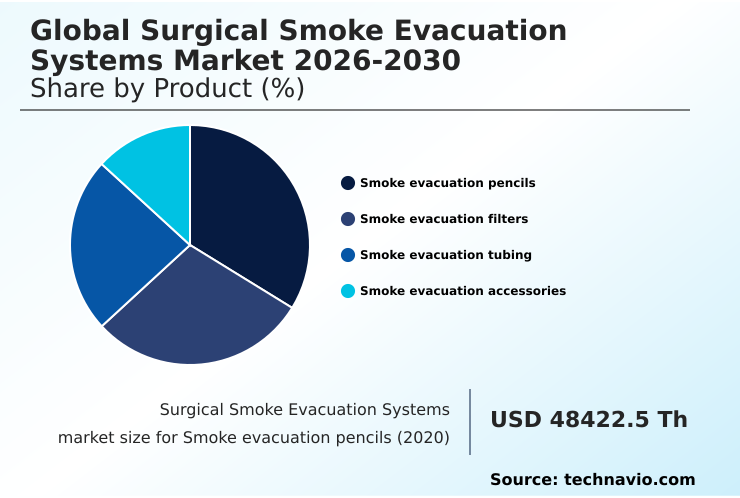
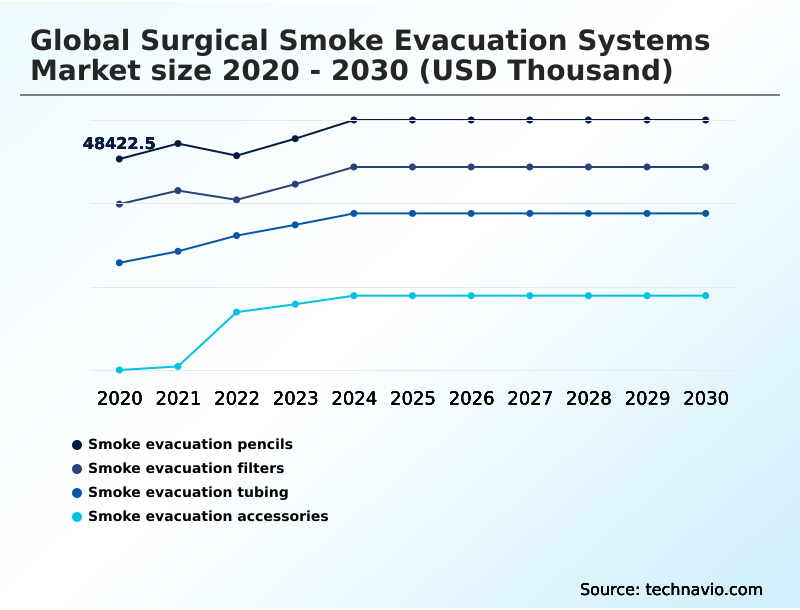
The Smoke evacuation pencils segment was valued at USD 53.88 million in 2024 and showed a gradual increase during the forecast period.
Regional Analysis
North America is estimated to contribute 39.3% to the growth of the global market during the forecast period.Technavio’s analysts have elaborately explained the regional trends and drivers that shape the market during the forecast period.
See How Surgical Smoke Evacuation Systems Market Demand is Rising in North America Request Free Sample
The geographic landscape of the surgical smoke evacuation systems market is characterized by varied adoption rates, with North America contributing over 39% of the incremental growth, driven by stringent regulatory compliance technology.
The region's focus on surgical team respiratory safety and hospital infection control makes it a mature market for both centralized vacuum systems and portable units.
In contrast, Asia is the fastest-growing region, with its market expanding nearly 6% annually, fueled by infrastructure modernization and rising standards for outpatient surgery safety protocols.
This growth is supported by demand for procedure-specific consumables and sterile tubing connectors for electrosurgical plume capture. European markets are driven by a strong emphasis on mitigating aerosolized particle containment.
The diverse global demand highlights the need for a varied product portfolio to meet differing regional requirements and compliance levels.
Market Dynamics
Our researchers analyzed the data with 2025 as the base year, along with the key drivers, trends, and challenges. A holistic analysis of drivers will help companies refine their marketing strategies to gain a competitive advantage.
- Strategic decision-making in the surgical smoke evacuation systems market is increasingly focused on total cost of ownership and verifiable compliance. When evaluating centralized vs portable system ROI, facilities must consider not just the initial purchase price but also the ongoing cost of smoke evacuation consumables.
- A key factor is the debate over ULPA vs HEPA filter performance, where systems with ULPA filtration can offer superior particle capture, directly impacting long-term staff health and reducing facility liability. Integrating smoke evacuation with robotics presents another layer of complexity, requiring seamless communication between platforms to maintain surgical precision and safety.
- For instance, facilities that have adopted systems designed for automation report a significant reduction in workflow disruption with automation, often seeing procedure setup times decrease compared to manual systems. The benefits of ergonomic electrosurgical pencil benefits extend beyond user comfort to include improved surgical accuracy.
- Furthermore, modern compliance tracking with RFID systems automates filter replacement schedules and usage logs, a critical feature for audits. Noise levels in portable evacuators remain a concern, though newer models are significantly quieter. This technology is also expanding into new verticals, such as smoke evacuation for dental lasers, where managing aerosolized hazards in smaller settings is paramount.
- In laparoscopic procedures, ensuring insufflation pressure stability is crucial, and specialized systems are engineered to manage smoke without compromising the surgical field.
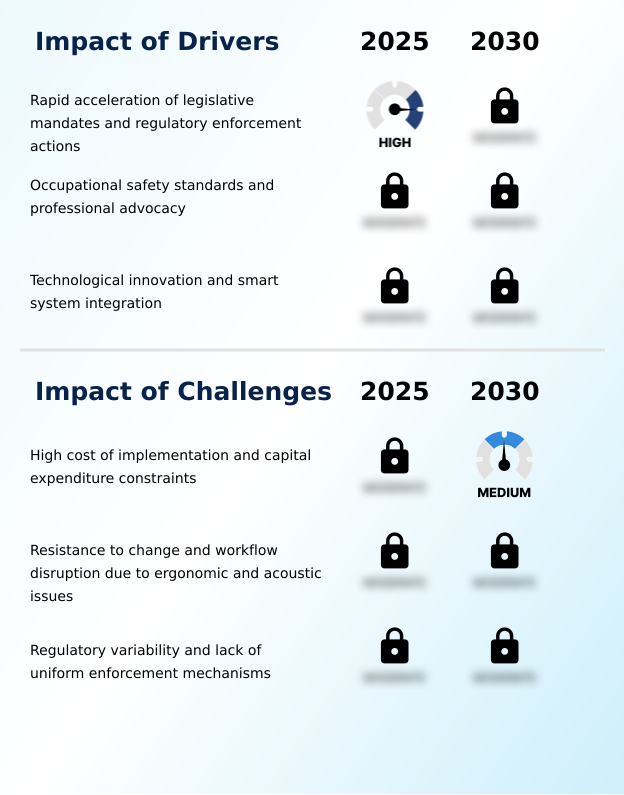
What are the key market drivers leading to the rise in the adoption of Surgical Smoke Evacuation Systems Industry?
- The rapid acceleration of legislative mandates and regulatory enforcement actions serves as the primary driver transforming smoke management into a non-negotiable legal requirement.
- Legislative mandates are the principal market driver, transforming occupational hazard mitigation from a recommendation into a legal necessity. With new surgical smoke legislation adherence required, healthcare worker protection is now a top priority, supported by standards demanding high-efficiency filtration.
- This regulatory pressure forces facilities to adopt point-of-source capture technologies that meet stringent HEPA filter standards for effective viral DNA filtration.
- The focus on electrosurgical generator synchronization ensures that systems activate precisely when surgical plume toxicity is highest, maximizing capture efficiency.
- The shift toward enforceable standards for perioperative air quality has led to a measurable decrease in staff-reported respiratory issues in compliant facilities, reinforcing the value of these investments and driving consistent market demand.
What are the market trends shaping the Surgical Smoke Evacuation Systems Industry?
- The integration of smart sensor technology and automated activation mechanisms is a dominant trend reshaping the market. This shift moves from manual intervention toward intelligent ecosystems for enhanced compliance.
- A key trend is the integration of smart technologies to enhance safety and compliance. The use of radio-frequency identification tracking for real-time filter monitoring provides a digital audit trail generation, which can streamline compliance checks by over 30%. This, combined with automated suction activation, significantly improves operating room workflow integration and reduces ambient noise.
- In minimally invasive surgery integration, these advancements are critical for maintaining surgical site visibility enhancement, with some systems improving clarity by as much as 25%.
- As robotic surgery compatibility becomes more prevalent, the need for synchronized, intelligent systems that do not interfere with delicate procedures is paramount, driving innovation in both hardware and software to create a safer, more efficient surgical environment.
What challenges does the Surgical Smoke Evacuation Systems Industry face during its growth?
- The high cost of implementation and significant capital expenditure constraints present a key challenge affecting widespread industry adoption.
- Persistent challenges in the market revolve around ergonomics and cost, which can hinder adoption despite regulatory pressures. The bulkiness associated with electrosurgical pencil ergonomics can increase surgeon fatigue and reduce dexterity, with some studies indicating a potential 5% increase in procedure time during initial adoption phases. This is compounded by issues like kink-resistant tubing that, while necessary, can add drag.
- Furthermore, operating room noise reduction remains a critical issue, as the noise from low-noise motor technology in portable smoke evacuators can still interfere with critical communication. For ambulatory surgery center equipment, the capital expenditure justification is a significant hurdle, as the cost of implementing a comprehensive system can represent a substantial portion of a smaller facility's annual budget.
Exclusive Technavio Analysis on Customer Landscape
The surgical smoke evacuation systems market forecasting report includes the adoption lifecycle of the market, covering from the innovator’s stage to the laggard’s stage. It focuses on adoption rates in different regions based on penetration. Furthermore, the surgical smoke evacuation systems market report also includes key purchase criteria and drivers of price sensitivity to help companies evaluate and develop their market growth analysis strategies.

Customer Landscape of Surgical Smoke Evacuation Systems Industry
Competitive Landscape
Companies are implementing various strategies, such as strategic alliances, surgical smoke evacuation systems market forecast, partnerships, mergers and acquisitions, geographical expansion, and product/service launches, to enhance their presence in the industry.
Acuderm Inc. - Develops and sells advanced surgical devices and equipment for minimally invasive procedures, including integrated systems and consumables for effective surgical smoke and plume removal.
The industry research and growth report includes detailed analyses of the competitive landscape of the market and information about key companies, including:
- Acuderm Inc.
- Aspen Surgical Products Inc.
- CONMED Corp
- Danaher Corp.
- DeRoyal Industries Inc.
- Erbe Elektromedizin GmbH
- Gebruder Martin GmbH and Co.
- I.C. Medical Inc.
- Johnson and Johnson Services
- McKesson Corp.
- Medline Industries LP
- Medtronic Plc
- Olympus Corp.
- STERIS plc
- Stryker Corp.
- Surgiform Technologies Ltd.
- Surgimedics Inc.
- Tekno Medical Optik GmbH
- Utah Medical Products Inc.
- Zimmer Biomet Holdings Inc.
Qualitative and quantitative analysis of companies has been conducted to help clients understand the wider business environment as well as the strengths and weaknesses of key industry players. Data is qualitatively analyzed to categorize companies as pure play, category-focused, industry-focused, and diversified; it is quantitatively analyzed to categorize companies as dominant, leading, strong, tentative, and weak.
Recent Development and News in Surgical smoke evacuation systems market
- In August 2024, CONMED Corp. received 510(k) clearance from the U.S. Food and Drug Administration for its PlumeSafe X5 Smoke Management System, an advanced portable unit featuring RFID technology for automated filter life tracking.
- In April 2024, Ethicon, a Johnson and Johnson Services company, launched the MEGADome, a specialized smoke management device engineered to remove surgical plume during laparoscopic procedures while maintaining pneumoperitoneum stability.
- In March 2024, Zimmer Biomet Holdings Inc. introduced the CleanAir Pro system, a compact smoke evacuation solution tailored for the spatial and operational constraints of dental clinics and other small, non-acute care settings.
- In March 2025, the California Division of Occupational Safety and Health (Cal/OSHA) initiated a review of plume scavenging standards in outpatient settings, proposing new inspection protocols requiring digital logs of system usage.
Dive into Technavio’s robust research methodology, blending expert interviews, extensive data synthesis, and validated models for unparalleled Surgical Smoke Evacuation Systems Market insights. See full methodology.
| Market Scope | |
|---|---|
| Page number | 306 |
| Base year | 2025 |
| Historic period | 2020-2024 |
| Forecast period | 2026-2030 |
| Growth momentum & CAGR | Accelerate at a CAGR of 5.3% |
| Market growth 2026-2030 | USD 52704.5 thousand |
| Market structure | Fragmented |
| YoY growth 2025-2026(%) | 5.1% |
| Key countries | US, Canada, Mexico, Germany, UK, France, Italy, Spain, The Netherlands, China, Japan, India, South Korea, Taiwan, Singapore, Brazil, South Africa, Saudi Arabia, Turkey, Argentina, UAE, Chile and Israel |
| Competitive landscape | Leading Companies, Market Positioning of Companies, Competitive Strategies, and Industry Risks |
Research Analyst Overview
- The surgical smoke evacuation systems market is defined by a critical shift toward mandatory, verifiable safety protocols. The emphasis is on technologies that provide effective point-of-source capture, utilizing advanced ULPA filtration efficiency and activated carbon filter layers to mitigate surgical plume toxicity and achieve ultra-fine particulate removal.
- Innovations in electrosurgical generator synchronization and automated suction activation are addressing user resistance by improving workflow. For boardroom consideration, the adoption of the NFPA 99 code, mandating dedicated filtration, directly impacts capital budgeting, forcing a transition from discretionary spending to essential infrastructure investment. This move makes real-time filter monitoring and radio-frequency identification tracking crucial for demonstrating compliance.
- As procedures evolve, so does the technology, with a focus on laparoscopic smoke management, robotic surgery compatibility, and specialized procedure-specific consumables. Devices are engineered for both large-scale centralized vacuum systems and versatile portable smoke evacuators, ensuring solutions are available for diverse clinical settings. The market's trajectory is toward smarter, more integrated systems that ensure safety without compromising surgical performance.
What are the Key Data Covered in this Surgical Smoke Evacuation Systems Market Research and Growth Report?
-
What is the expected growth of the Surgical Smoke Evacuation Systems Market between 2026 and 2030?
-
USD 52.70 million, at a CAGR of 5.3%
-
-
What segmentation does the market report cover?
-
The report is segmented by Product (Smoke evacuation pencils, Smoke evacuation filters, Smoke evacuation tubing, and Smoke evacuation accessories), End-user (Hospitals, Ambulatory surgery centers, Cosmetic surgery centers, and Dental clinics), Modality (Centralized evacuation systems, and Portable evacuation systems) and Geography (North America, Europe, Asia, Rest of World (ROW))
-
-
Which regions are analyzed in the report?
-
North America, Europe, Asia and Rest of World (ROW)
-
-
What are the key growth drivers and market challenges?
-
Rapid acceleration of legislative mandates and regulatory enforcement actions, High cost of implementation and capital expenditure constraints
-
-
Who are the major players in the Surgical Smoke Evacuation Systems Market?
-
Acuderm Inc., Aspen Surgical Products Inc., CONMED Corp, Danaher Corp., DeRoyal Industries Inc., Erbe Elektromedizin GmbH, Gebruder Martin GmbH and Co., I.C. Medical Inc., Johnson and Johnson Services, McKesson Corp., Medline Industries LP, Medtronic Plc, Olympus Corp., STERIS plc, Stryker Corp., Surgiform Technologies Ltd., Surgimedics Inc., Tekno Medical Optik GmbH, Utah Medical Products Inc. and Zimmer Biomet Holdings Inc.
-
Market Research Insights
- The market dynamics are increasingly shaped by a focus on verifiable safety and operational efficiency, moving beyond basic hardware to intelligent platforms. Adherence to new surgical smoke legislation is a primary motivator, compelling facilities to adopt technology that offers more than just suction.
- For instance, systems providing a digital audit trail generation can reduce compliance reporting efforts by up to 40%. This emphasis on healthcare worker protection and perioperative air quality is leading to greater capital expenditure justification. In ambulatory surgery center equipment procurement, systems that improve surgical site visibility enhancement by over 25% are prioritized.
- Furthermore, innovations in operating room noise reduction and electrosurgical pencil ergonomics are crucial for improving operating room workflow integration. These advancements in medical aerosol management are becoming standard in both hospital infection control and outpatient surgery safety protocols.
We can help! Our analysts can customize this surgical smoke evacuation systems market research report to meet your requirements.