



Sustainable Tourism Market Size 2026-2030
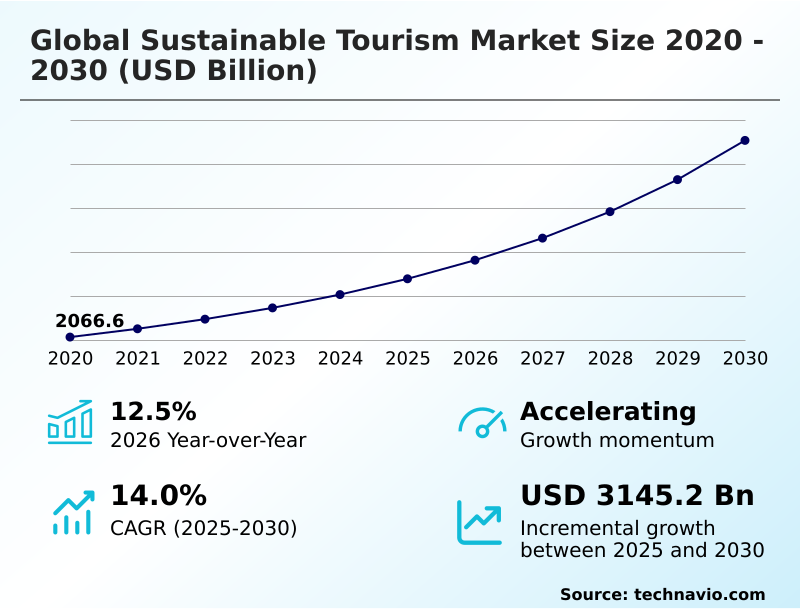
The sustainable tourism market size is valued to increase by USD 3145.2 billion, at a CAGR of 14% from 2025 to 2030. Rising consumer demand for authentic and eco conscious travel experiences will drive the sustainable tourism market.
Major Market Trends & Insights
- Europe dominated the market and accounted for a 38.9% growth during the forecast period.
- By Type - Domestic segment was valued at USD 2209.5 billion in 2024
- By Channel - Phone booking segment accounted for the largest market revenue share in 2024
Market Size & Forecast
- Market Opportunities: USD 4469.7 billion
- Market Future Opportunities: USD 3145.2 billion
- CAGR from 2025 to 2030 : 14%
Market Summary
- The sustainable tourism market is undergoing a significant transformation, driven by a fundamental shift in consumer values toward environmental and social responsibility. This evolution is compelling operators to move beyond superficial eco-friendly claims and embed genuine sustainability into their core strategies, focusing on measurable outcomes like biodiversity conservation and carbon footprint minimization.
- The industry is witnessing a pivot from high-volume, low-margin models to curated, high-value experiences that prioritize low-impact travel and authentic local community engagement. For example, a tour operator focusing on wildlife conservation initiatives must now navigate complex supply chain decarbonization challenges, ensuring that everything from transport to eco-friendly accommodations aligns with nature-positive strategies.
- This requires significant investment in technology for transparent reporting and verification to avoid greenwashing allegations. As a result, the market's competitive landscape is being redefined, favoring businesses that can successfully integrate ethical principles, such as community benefit sharing and cultural heritage preservation, into a profitable and resilient operational framework that includes robust environmental stewardship programs.
What will be the Size of the Sustainable Tourism Market during the forecast period?
Get Key Insights on Market Forecast (PDF) Get Free Sample
How is the Sustainable Tourism Market Segmented?
The sustainable tourism industry research report provides comprehensive data (region-wise segment analysis), with forecasts and estimates in "USD billion" for the period 2026-2030, as well as historical data from 2020-2024 for the following segments.
- Type
- Domestic
- International
- Channel
- Phone booking
- Online booking
- In-person booking
- Age group
- 26 to 35 years
- 36 to 45 years
- 15 to 25 years
- 46 to 55 years
- 66 to 75 years
- Geography
- Europe
- Italy
- Spain
- Germany
- North America
- US
- Canada
- Mexico
- APAC
- China
- Japan
- India
- South America
- Brazil
- Argentina
- Middle East and Africa
- South Africa
- UAE
- Saudi Arabia
- Rest of World (ROW)
- Europe
By Type Insights
The domestic segment is estimated to witness significant growth during the forecast period.
The domestic segment is gaining significant traction as travelers prioritize reducing their carbon footprint by avoiding long-haul flights.
This shift supports local community engagement through agritourism development and other community-based tourism models, which are essential for the economic stability of rural areas.
Operators are increasingly focusing on low-carbon transportation, with some reporting a 15% rise in bookings for itineraries using rail and electric vehicles. This trend helps mitigate overtourism management challenges in global hotspots by dispersing visitor traffic.
Domestic environmental stewardship programs also foster a deeper sense of national conservation, aligning with the demand for responsible travel practices and strengthening the appeal of local cultural heritage preservation efforts.
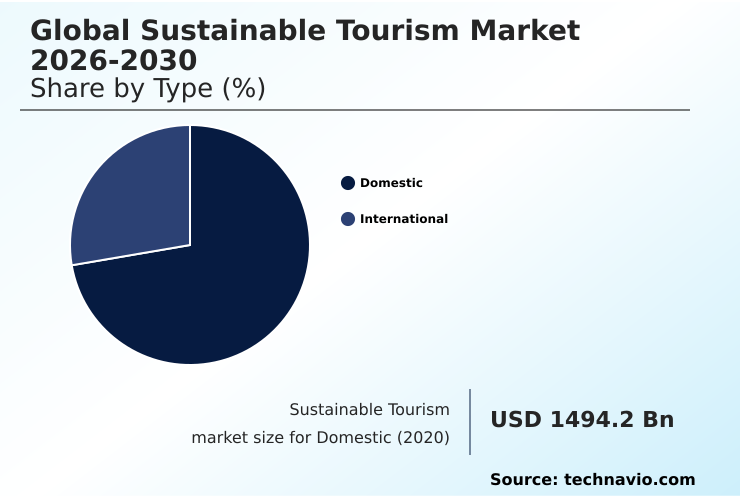
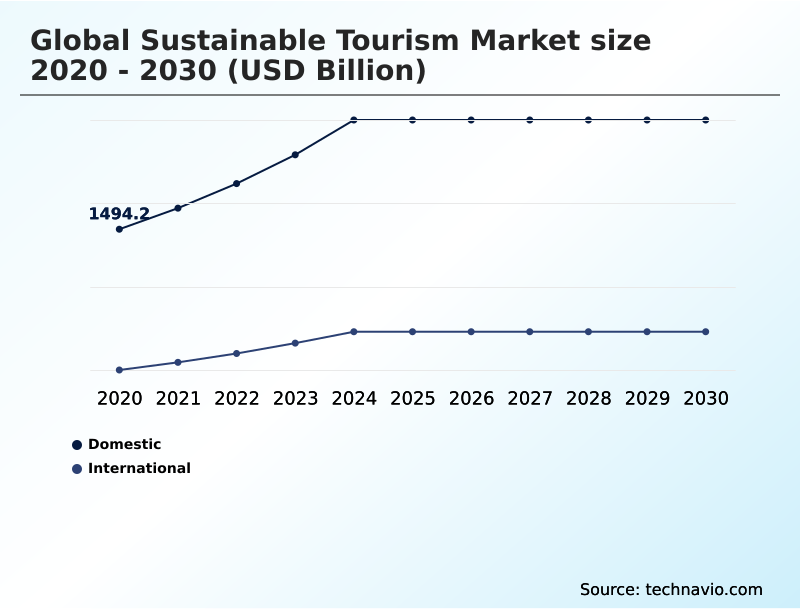
The Domestic segment was valued at USD 2209.5 billion in 2024 and showed a gradual increase during the forecast period.
Regional Analysis
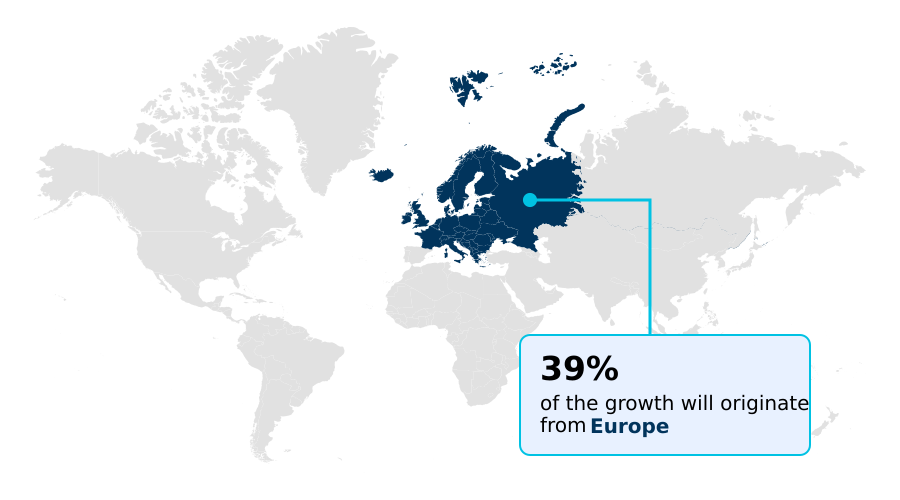
Europe is estimated to contribute 38.9% to the growth of the global market during the forecast period.Technavio’s analysts have elaborately explained the regional trends and drivers that shape the market during the forecast period.
See How Sustainable Tourism Market Demand is Rising in Europe Get Free Sample
The global sustainable tourism market exhibits distinct regional dynamics, with Europe leading in regulatory maturity and North America in consumer-driven demand.
In Europe, government mandates have been pivotal, with policies promoting rail travel over short-haul flights contributing to a 10% reduction in transport-related emissions for some operators.
This region accounts for 38.9% of the market's incremental growth, driven by strong eco-certified hotel networks and circular economy principles.
Meanwhile, APAC is the fastest-growing region, with a projected CAGR of 15.4%, as a rising middle class demands more green infrastructure investment. This growth is supported by a focus on sustainable food sourcing and marine biodiversity protection.
In North America, the emphasis is on indigenous tourism empowerment, with a focus on visitor impact assessment to protect natural habitats and ensure effective destination capacity management.
Market Dynamics
Our researchers analyzed the data with 2025 as the base year, along with the key drivers, trends, and challenges. A holistic analysis of drivers will help companies refine their marketing strategies to gain a competitive advantage.
- Understanding the future of the sustainable tourism market requires a deep dive into several interconnected factors. The consumer demand for eco-conscious travel is fundamentally reshaping industry priorities, forcing a clear distinction between regenerative tourism vs sustainable tourism, with the former aiming to actively improve ecosystems.
- This shift intensifies scrutiny on greenwashing in the global tourism industry and elevates the importance of knowing how to choose eco-friendly accommodations. A primary operational hurdle remains the challenges of decarbonizing tourism supply chains, where the push for sustainable aviation fuel in air travel is critical but slow.
- The role of technology in sustainable tourism, particularly the impact of AI on sustainable travel, is becoming a key enabler for measuring the carbon footprint of travel with greater accuracy. Firms using data analytics for resource planning report up to a twofold improvement in efficiency compared to those with manual systems.
- Socially, the benefits of community-led tourism models are undeniable, yet they require a nuanced approach for integrating indigenous culture in tourism respectfully to avoid exploitation. Ultimately, balancing tourism growth with environmental protection is essential to mitigate the negative impact of overtourism on local communities.
- Corporate commitments to sustainable business travel and strategic investing in green infrastructure for tourism are crucial steps toward a resilient and ethical future for the industry.
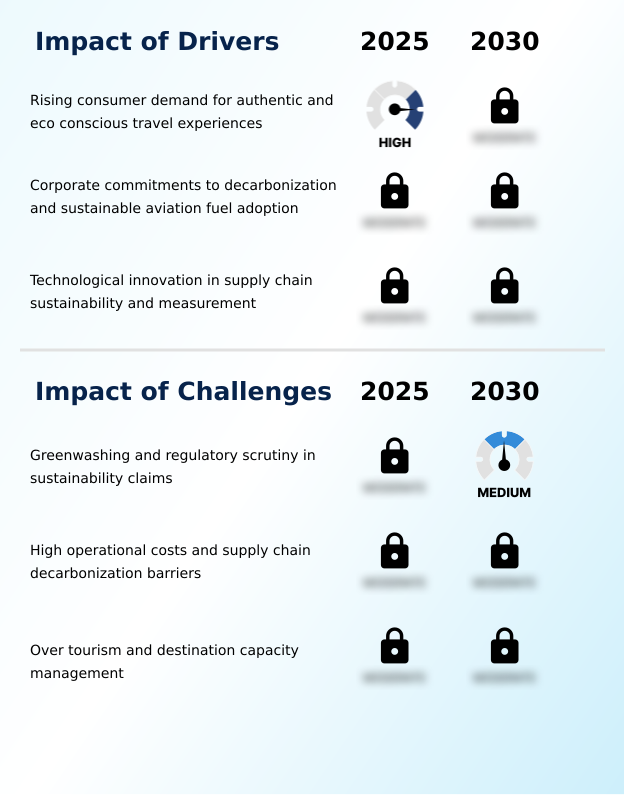
What are the key market drivers leading to the rise in the adoption of Sustainable Tourism Industry?
- A rising consumer demand for authentic and eco-conscious travel experiences is the key driver of market growth.
- Market growth is significantly influenced by a profound shift in consumer values toward eco-conscious travel and robust corporate commitments to decarbonization.
- The rising demand for authentic experiences is compelling companies to adopt transparent sustainable hospitality management practices; destinations with certified environmental stewardship programs are attracting 20% more high-value travelers.
- On the corporate side, strategic partnerships for sustainable aviation fuel adoption are accelerating the transition to net-zero, with new agreements boosting production commitments by over 30%.
- Furthermore, advancements in technology, including platforms for sustainable supply chain auditing, enable companies to manage and report on their environmental impact with greater precision, fostering a competitive landscape where water stewardship in tourism and plastic-free travel initiatives are becoming key differentiators.
What are the market trends shaping the Sustainable Tourism Industry?
- The market is witnessing a significant trend toward integrating indigenous culture and community-led tourism models. This approach prioritizes authentic experiences and equitable economic benefits for local populations.
- Key trends are reshaping the sustainable tourism market, with a strong emphasis on technology and community-centric models. The adoption of AI and data analytics for sustainable travel management is a significant development, as AI-powered booking platforms have increased conversions for sustainable tour operator services by 15%.
- This technology enables the creation of personalized, socially responsible itineraries that align with user values. Concurrently, the rise of regenerative tourism and corporate policy advocacy reflects a move toward more impactful environmental action, with leading firms' restoration projects showing a 25% higher rate of local community employment.
- This trend is complemented by the integration of indigenous culture and community-led tourism models, which prioritize authentic cultural immersion programs and heritage site conservation, setting new standards for ethical engagement and sustainable destination development.
What challenges does the Sustainable Tourism Industry face during its growth?
- The prevalence of greenwashing and subsequent increases in regulatory scrutiny over sustainability claims present a key challenge affecting industry growth.
- Navigating the sustainable tourism market involves overcoming significant operational and regulatory hurdles. The prevalence of greenwashing and the resulting increase in regulatory scrutiny are creating a complex compliance environment, where the cost of third-party sustainable travel certifications can increase operational expenses by up to 15% in the short term.
- Furthermore, high operational costs and barriers to supply chain decarbonization present a major challenge, as the premium for sustainable aviation partnerships can be substantial. The lack of standardized greenwashing regulation across regions leads to a 50% variance in compliance-related costs.
- Additionally, the challenge of overtourism and destination capacity management forces operators to constantly adapt, with new restrictions on visitor numbers disrupting established business models and increasing logistical complexity, particularly for eco-adventure tourism providers.
Exclusive Technavio Analysis on Customer Landscape
The sustainable tourism market forecasting report includes the adoption lifecycle of the market, covering from the innovator’s stage to the laggard’s stage. It focuses on adoption rates in different regions based on penetration. Furthermore, the sustainable tourism market report also includes key purchase criteria and drivers of price sensitivity to help companies evaluate and develop their market growth analysis strategies.
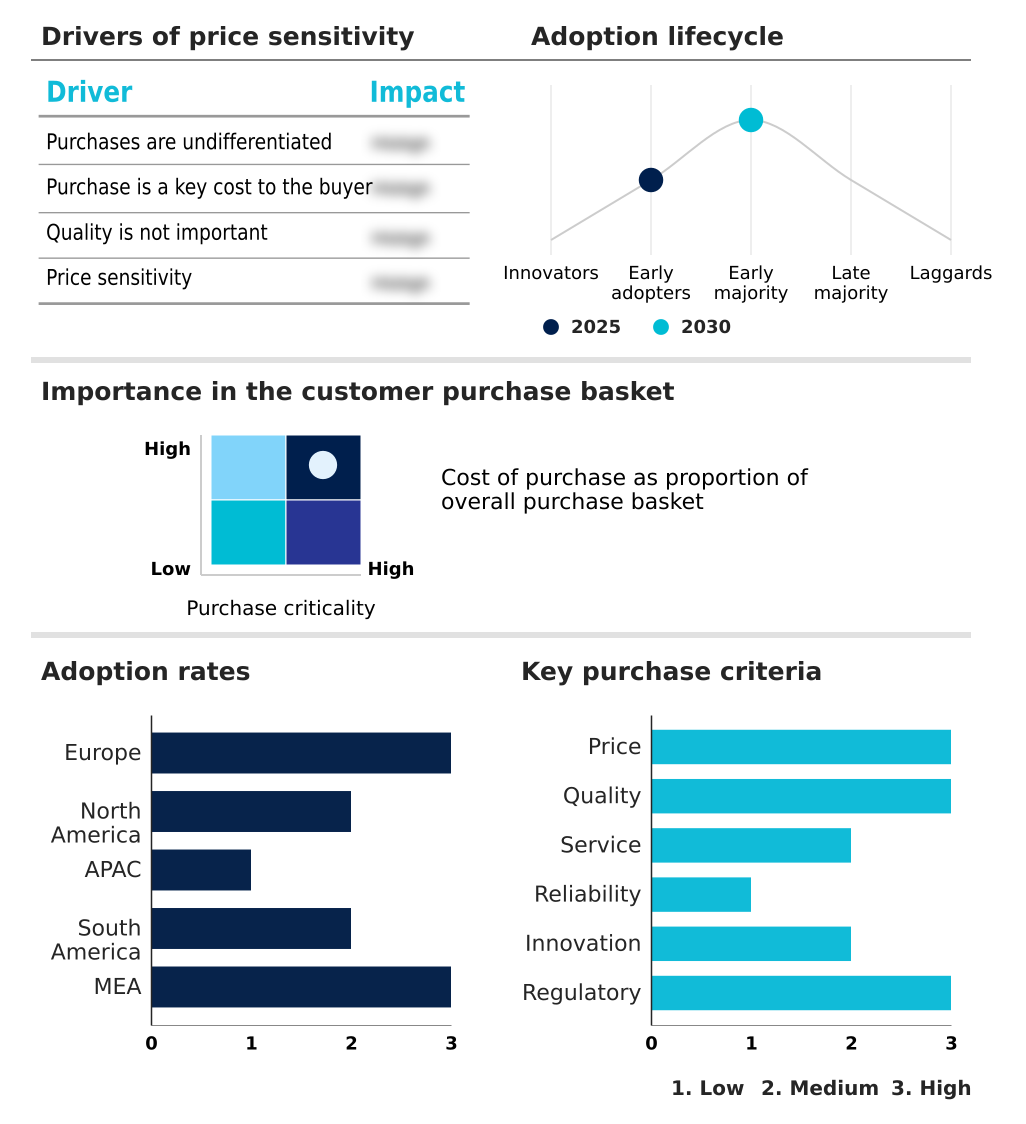
Customer Landscape of Sustainable Tourism Industry
Competitive Landscape
Companies are implementing various strategies, such as strategic alliances, sustainable tourism market forecast, partnerships, mergers and acquisitions, geographical expansion, and product/service launches, to enhance their presence in the industry.
Adventure Alternative Ltd. - The portfolio includes responsible adventure travel and community-based tourism, delivering curated, sustainable itineraries for environmentally and socially conscious travelers.
The industry research and growth report includes detailed analyses of the competitive landscape of the market and information about key companies, including:
- Adventure Alternative Ltd.
- andBeyond
- Aracari Travel
- Bouteco Ltd.
- Byway
- Earth Changers
- Ecoventura
- Exodus Travels Ltd.
- G Adventures Inc.
- Intrepid Group Pty Ltd.
- Kind Traveler PBC
- Kynder LLC
- Mojosurf
- Responsible Travel
- Rickshaw Travel Ltd.
- Steppes Travel Ltd.
- The Blue Yonder
- Undiscovered Mountains Ltd.
- Wild Frontiers Travel Ltd.
- Wilderness Safaris
Qualitative and quantitative analysis of companies has been conducted to help clients understand the wider business environment as well as the strengths and weaknesses of key industry players. Data is qualitatively analyzed to categorize companies as pure play, category-focused, industry-focused, and diversified; it is quantitatively analyzed to categorize companies as dominant, leading, strong, tentative, and weak.
Recent Development and News in Sustainable tourism market
- In October 2024, Expedia Group released its 'Unpack 25' travel trends report, identifying a surge in traveler interest for 'Detour Destinations' and trips planned specifically to support local artisans.
- In January 2025, G Adventures launched twenty-five new active travel itineraries, including its first ventures into Pakistan, focusing on community-based tourism designed to directly benefit remote villages.
- In April 2025, Booking.com expanded its verified labeling system to prioritize properties with third-party environmental certifications, following the release of its tenth annual sustainability research report.
- In June 2025, Lufthansa Group entered a partnership with Airbus to decarbonize business travel by using sustainable aviation fuel for all domestic flights taken by Airbus employees within Germany.
Dive into Technavio’s robust research methodology, blending expert interviews, extensive data synthesis, and validated models for unparalleled Sustainable Tourism Market insights. See full methodology.
| Market Scope | |
|---|---|
| Page number | 293 |
| Base year | 2025 |
| Historic period | 2020-2024 |
| Forecast period | 2026-2030 |
| Growth momentum & CAGR | Accelerate at a CAGR of 14% |
| Market growth 2026-2030 | USD 3145.2 billion |
| Market structure | Fragmented |
| YoY growth 2025-2026(%) | 12.5% |
| Key countries | Italy, Spain, Germany, Switzerland, France, UK, US, Canada, Mexico, China, Japan, India, Australia, South Korea, Indonesia, Brazil, Argentina, Peru, South Africa, UAE, Saudi Arabia, Kenya and Egypt |
| Competitive landscape | Leading Companies, Market Positioning of Companies, Competitive Strategies, and Industry Risks |
Research Analyst Overview
- The sustainable tourism market is evolving from a niche segment into a core business imperative, driven by a profound shift in consumer ethics and regulatory pressures. The focus is now on tangible, measurable actions such as biodiversity conservation, carbon footprint minimization, and comprehensive waste reduction systems.
- Forward-thinking organizations are operationalizing nature-positive strategies, moving beyond simple claims to implement robust environmental stewardship programs and verifiable cultural heritage preservation efforts. A key boardroom consideration is the allocation of capital toward authentic community-based tourism models, which have demonstrated an ability to increase guest satisfaction scores by an average of 12% compared to conventional tours.
- This transition involves deep supply chain decarbonization and investment in renewable energy integration. Success in this landscape depends on a company's ability to prove its commitment through actions like supporting reforestation projects, ensuring ethical wildlife encounters, practicing responsible travel practices, and achieving low-impact travel across its portfolio.
What are the Key Data Covered in this Sustainable Tourism Market Research and Growth Report?
-
What is the expected growth of the Sustainable Tourism Market between 2026 and 2030?
-
USD 3145.2 billion, at a CAGR of 14%
-
-
What segmentation does the market report cover?
-
The report is segmented by Type (Domestic, and International), Channel (Phone booking, Online booking, and In-person booking), Age Group (26 to 35 years, 36 to 45 years, 15 to 25 years, 46 to 55 years, and 66 to 75 years) and Geography (Europe, North America, APAC, South America, Middle East and Africa)
-
-
Which regions are analyzed in the report?
-
Europe, North America, APAC, South America and Middle East and Africa
-
-
What are the key growth drivers and market challenges?
-
Rising consumer demand for authentic and eco conscious travel experiences, Greenwashing and regulatory scrutiny in sustainability claims
-
-
Who are the major players in the Sustainable Tourism Market?
-
Adventure Alternative Ltd., andBeyond, Aracari Travel, Bouteco Ltd., Byway, Earth Changers, Ecoventura, Exodus Travels Ltd., G Adventures Inc., Intrepid Group Pty Ltd., Kind Traveler PBC, Kynder LLC, Mojosurf, Responsible Travel, Rickshaw Travel Ltd., Steppes Travel Ltd., The Blue Yonder, Undiscovered Mountains Ltd., Wild Frontiers Travel Ltd. and Wilderness Safaris
-
Market Research Insights
- The sustainable tourism market is shaped by a dynamic interplay of consumer demand and technological enablement. The shift toward sustainable travel certifications is gaining momentum, with operators that achieve recognized green hotel standards reporting an average energy consumption reduction of over 20%.
- Concurrently, implementing rigorous sustainable supply chain auditing has improved regulatory compliance rates by nearly 40% for leading firms, reinforcing the business case for ethical tourism experiences. The adoption of sustainable travel technology allows for enhanced personalization, with platforms offering socially responsible itineraries seeing higher customer retention.
- This landscape rewards companies that effectively manage overtourism mitigation strategies and foster authentic cultural immersion programs, turning sustainability from a cost center into a competitive advantage.
We can help! Our analysts can customize this sustainable tourism market research report to meet your requirements.
 RIA -
RIA - 
