


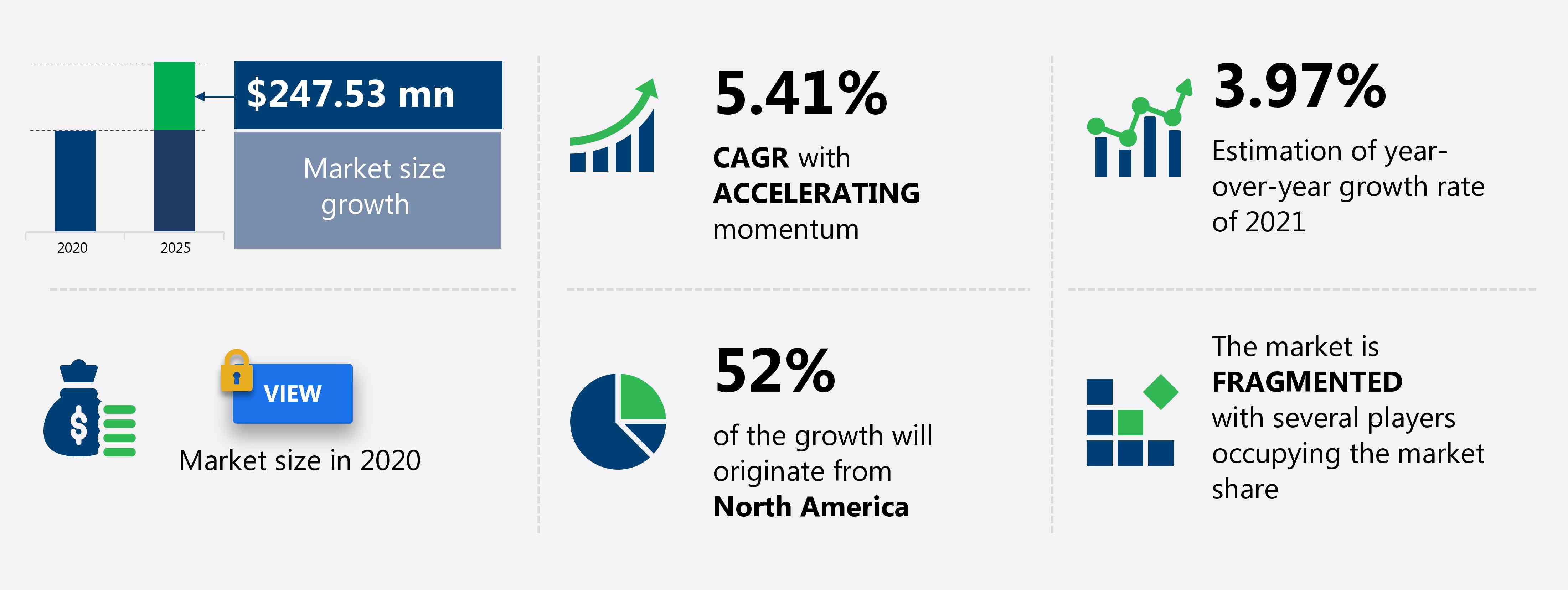
The UAV flight training and simulation market share is expected to increase by USD 247.53 million from 2020 to 2025, and the market’s growth momentum will accelerate at a CAGR of 5.41%.
This UAV flight training and simulation market research report provides valuable insights on the post-COVID-19 impact on the market, which will help companies evaluate their business approaches. Furthermore, this report extensively covers UAV flight training and simulation market segmentation by type (HALE UAVs, MALE UAVs, and SUAVs), application (defense and commercial), and geography (North America, Europe, APAC, MEA, and South America). The UAV flight training and simulation market report also offers information on several market vendors, including BAE Systems Plc, CAE Inc., HAVELSAN AS, Israel Aerospace Industries Ltd., L3Harris Technologies Inc., Leonardo Spa, Northrop Grumman Corp., Simlat Ltd., Textron Inc., and Thales Group among others.
What will the UAV Flight Training And Simulation Market Size be During the Forecast Period?
Download Report Sample to Unlock the UAV Flight Training and Simulation Market Size for the Forecast Period and Other Important Statistics
UAV Flight Training And Simulation Market: Key Drivers, Trends, and Challenges
Based on our research output, there has been a negative impact on the market growth during and post-COVID-19 era. The growing need for UAV flight simulation is notably driving the UAV flight training and simulation market growth, although factors such as growing emphasis on fully automated UAVs may impede the market growth. Our research analysts have studied the historical data and deduced the key market drivers and the COVID-19 pandemic impact on the UAV flight training and simulation industry. The holistic analysis of the drivers will help in deducing end goals and refining marketing strategies to gain a competitive edge.
Key UAV Flight Training And Simulation Market Driver
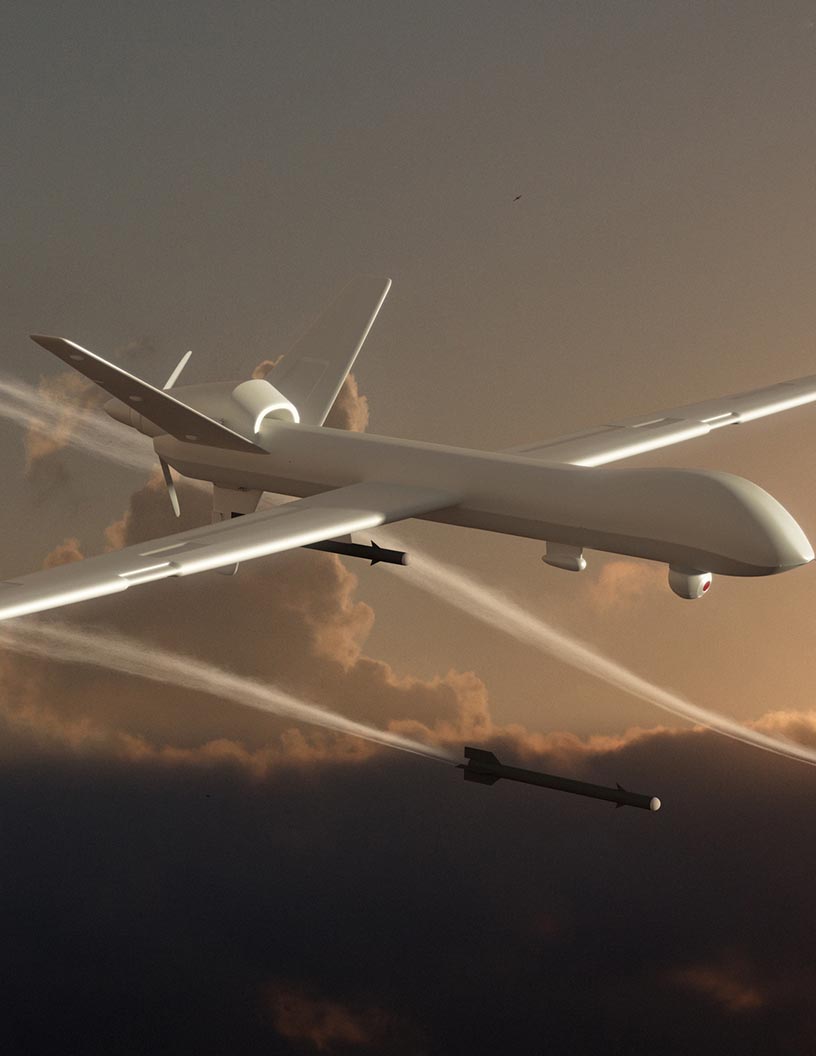
One of the key factors driving the UAV flight training and simulation market is the growing need for UAV flight simulation. The growing number of UAV and UAS procurements is one of the major factors driving the need for efficient pilot training. UAV flight simulation and training allow the operators to get trained in a real-time scenario. The trainees are provided with the opportunity to operate UAVs in a virtual environment, which is realistic and accurate without any risks and constraints. Also, UAV flight simulation provides cost-efficient training while reducing the environmental impact. Moreover, the increasing number of military UAVs is propelling the need for effective training practice for users in situations that are not possible in airborne training exercises. In addition, UAVs are also being used for attacking enemy bases or fleets. Many countries are focusing on the development of attack drones such as Predators, MQ-9 Block 5 Reaper attack drones, MQ-1C Gray Eagle attack drones, and many more. Such highly advanced attack drones need efficient UAV operators. Therefore, with the growing number of UAVs in commercial and military applications, the defense authorities and various commercial organizations are significantly investing in UAV flight simulation and training.
Key UAV Flight Training And Simulation Market Trend
The evolution of synthetic training devices is another factor supporting the UAV flight training and simulation market growth in the forecast period. Virtual environments provide several benefits to UAV operators. An enhanced sense of presence in the virtual environment occurs with the ego-centered frame of reference. Therefore, the actual environment awareness of the real-time scenario is experienced by the pilot through maximum immersion. Moreover, the cost of training in a virtual environment has become much more commercially viable than before. It is also a safer option as compared to training in a real environment. Also, a wide range of synthetic training devices is being developed for UAV training tasks. The mission training systems are integrated with simulation software and COTS hardware, which will familiarize the pilots with enemy targets in the virtual environment. These systems deliver the fidelity and realism required to precisely simulate real-life visual sensor displays, including electro-optical, synthetic aperture radar, infra-red systems, laser range finder, laser target designator, ground moving target indication, light detection and ranging, protection sensors, SIGINT, and communication intelligence. Such advancements in the UAV flight training and simulation devices will further drive the market growth during the forecast period.
Key UAV Flight Training And Simulation Market Challenge
Growing emphasis on fully automated UAVs will be a major challenge for the UAV flight training and simulation market during the forecast period. The lack of situational awareness has resulted in a significant number of UAV accidents, which have caused end-users considerable monetary losses and challenged the need for semi-automated UAVs. In order to reduce accident ratios, companies are focusing on the development of new technologies and systems, where human sources are not required in controlling UAVs. Hence, there is a growing emphasis on the development of fully autonomous UAVs, which will have a great impact on the global UAV flight training and simulation market. Moreover, the introduction of advanced automated systems (AAS) has significantly reduced the number of human powers required for the operation of UAVs. Traditional UAVs required a more dedicated workforce for monitoring and control, whereas, with AAS, a single person can monitor several UAVs at once. As technological innovations allow UAVs to operate more autonomously, human authority is only left with the function of supervision. Thereby, the need for pilot training is neglected, which has a negative impact on the global UAV flight training and simulation market.
This UAV flight training and simulation market analysis report also provides detailed information on other upcoming trends and challenges that will have a far-reaching effect on the market growth. The actionable insights on the trends and challenges will help companies evaluate and develop growth strategies for 2021-2025.
Parent Market Analysis
Technavio categorizes the global UAV flight training and simulation market as a part of the global aerospace & defense market within the global capital goods market. Our research report has extensively covered external factors influencing the parent market growth potential in the coming years, which will determine the levels of growth of the UAV flight training and simulation market during the forecast period.
Who are the Major UAV Flight Training And Simulation Market Vendors?
The report analyzes the market’s competitive landscape and offers information on several market vendors, including:
- BAE Systems Plc
- CAE Inc.
- HAVELSAN AS
- Israel Aerospace Industries Ltd.
- L3Harris Technologies Inc.
- Leonardo Spa
- Northrop Grumman Corp.
- Simlat Ltd.
- Textron Inc.
- Thales Group
This statistical study of the UAV flight training and simulation market encompasses successful business strategies deployed by the key vendors. The UAV flight training and simulation market is fragmented and the vendors are deploying growth strategies such as cost, quality, reliability, and aftermarket service to compete in the market.
Product Insights and News
- BAE Systems Plc - The company offers UAV flight training and simulation and test system support.
To make the most of the opportunities and recover from the post-COVID-19 impact, market vendors should focus more on the growth prospects in the fast-growing segments, while maintaining their positions in the slow-growing segments.
The UAV flight training and simulation market forecast report offers in-depth insights into key vendor profiles. The profiles include information on the production, sustainability, and prospects of the leading companies.
UAV Flight Training And Simulation Market Value Chain Analysis
Our report provides extensive information on the value chain analysis for the UAV flight training and simulation market, which vendors can leverage to gain a competitive advantage during the forecast period. The end-to-end understanding of the value chain is essential in profit margin optimization and evaluation of business strategies. The data available in our value chain analysis segment can help vendors drive costs and enhance customer services during the forecast period.
The value chain of the global aerospace & defense market includes the following core components:
- Inputs
- Inbound logistics
- Operations
- Outbound logistics
- Marketing and sales
- Service
- Support activities
- Innovation
The report has further elucidated other innovative approaches being followed by service providers to ensure a sustainable market presence.
Which are the Key Regions for UAV Flight Training And Simulation Market?
For more insights on the market share of various regions Request PDF Sample now!
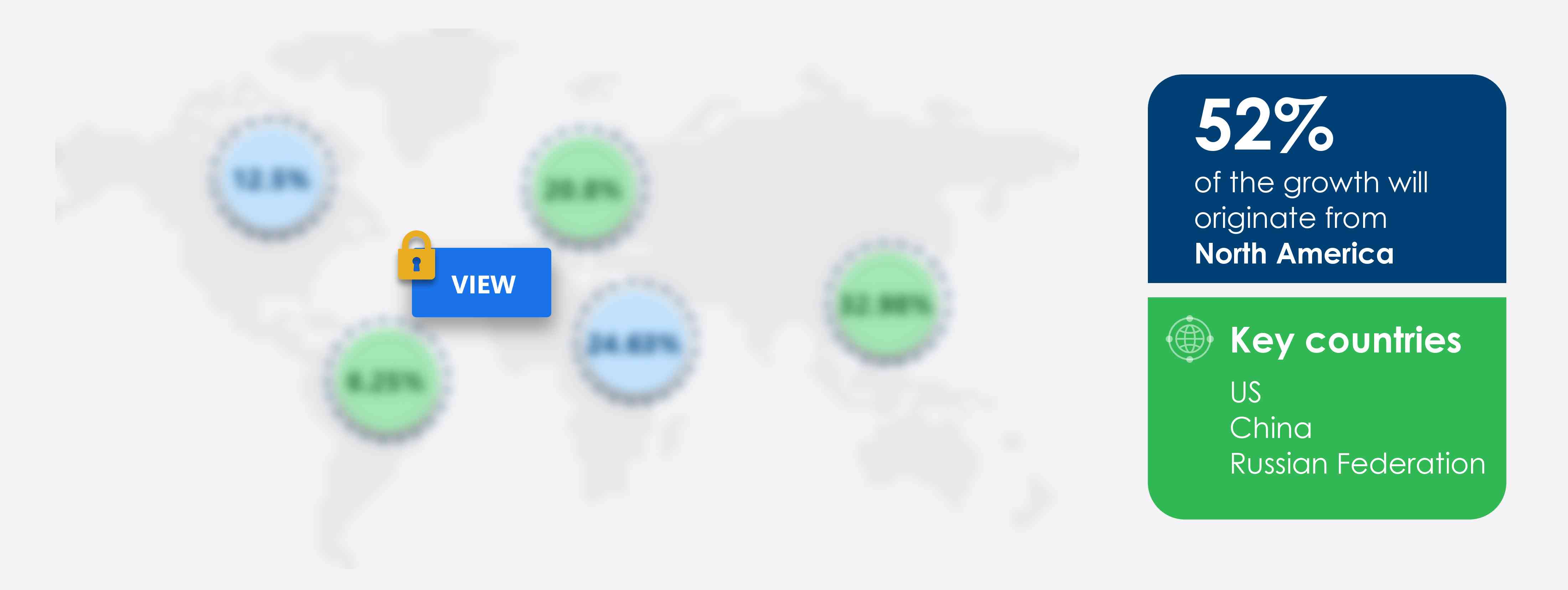
52% of the market’s growth will originate from North America during the forecast period. The US is the key market for the UAV flight training and simulation market in North America. Market growth in this region will be faster than the growth of the market in other regions.
The need to improve lethal attacks against enemies will facilitate the UAV flight training and simulation market growth in North America over the forecast period. This market research report entails detailed information on the competitive intelligence, marketing gaps, and regional opportunities in store for vendors, which will assist in creating efficient business plans.
COVID Impact and Recovery Analysis
The COVID-19 pandemic negatively impacted the growth of the regional UAV flight training and simulation market in 2020-2021. The lockdowns and restrictions on movements due to the pandemic led to the lack of personnel and hindered the adoption of UAV flight training and simulation. In addition, large-scale vaccination drives in the region in the first half of 2021 led to the relaxation of travel restrictions. Therefore, the resumption of operations in the regional aviation industry is expected to boost the demand for aerospace equipment, which, in turn, will drive the growth of the regional market in focus during the forecast period.
What are the Revenue-generating Type Segments in the UAV Flight Training And Simulation Market?

To gain further insights on the market contribution of various segments Request a PDF Sample
The UAV flight training and simulation market share growth by the segments. The HALE UAVs segment will be significant during the forecast period. Simulators for high-altitude, long-endurance (HALE) UAVs are customized according to the HALE UAV model with different topographic visuals and real-time scenarios in a virtual environment. With such simulators, the trainees learn to operate UAVs at high altitudes and in the presence of external factors such as clouds and precipitation. Also, various programs are in the pipeline, which aim at the development of various HALE UAVs, which will trigger the need for adept individuals. Such new developments and programs generate the need for an increased number of UAV operators, and consequently, for HALE UAV simulators.
This report provides an accurate prediction of the contribution of all the segments to the growth of the UAV flight training and simulation market size and actionable market insights on the post-COVID-19 impact on each segment.
|
UAV Flight Training And Simulation Market Scope |
|
|
Report Coverage |
Details |
|
Page number |
120 |
|
Base year |
2020 |
|
Forecast period |
2021-2025 |
|
Growth momentum & CAGR |
Accelerate at a CAGR of 5.41% |
|
Market growth 2021-2025 |
$ 247.53 million |
|
Market structure |
Fragmented |
|
YoY growth (%) |
3.97 |
|
Regional analysis |
North America, Europe, APAC, MEA, and South America |
|
Performing market contribution |
North America at 52% |
|
Key consumer countries |
US, China, Russian Federation, Israel, and the UK |
|
Competitive landscape |
Leading companies, Competitive strategies, Consumer engagement scope |
|
Key companies profiled |
BAE Systems Plc, CAE Inc., HAVELSAN AS, Israel Aerospace Industries Ltd., L3Harris Technologies Inc., Leonardo Spa, Northrop Grumman Corp., Simlat Ltd., Textron Inc., and Thales Group |
|
Market dynamics |
Parent market analysis, Market growth inducers and obstacles, Fast-growing and slow-growing segment analysis, COVID 19 impact and recovery analysis and future consumer dynamics, Market condition analysis for the forecast period |
|
Customization purview |
If our report has not included the data that you are looking for, you can reach out to our analysts and get segments customized. |
What are the Key Data Covered in this UAV Flight Training And Simulation Market Report?
- CAGR of the market during the forecast period 2021-2025
- Detailed information on factors that will drive UAV flight training and simulation market growth during the next five years
- Precise estimation of the UAV flight training and simulation market size and its contribution to the parent market
- Accurate predictions on upcoming trends and changes in consumer behavior
- The growth of the UAV flight training and simulation industry across North America, Europe, APAC, MEA, and South America
- A thorough analysis of the market’s competitive landscape and detailed information on vendors
- Comprehensive details of factors that will challenge the growth of UAV flight training and simulation market vendors
We can help! Our analysts can customize this report to meet your requirements. Get in touch
 RIA -
RIA - 
