

Ultraviolet (Uv) Disinfection Equipment Market Analysis North America, Europe, APAC, Middle East and Africa, South America - US, Canada, UK, China, Germany - Size and Forecast 2024-2028

Ultraviolet (Uv) Disinfection Equipment Market Analysis North America, Europe, APAC, Middle East and Africa, South America - US, Canada, UK, China, Germany - Size and Forecast 2024-2028

Published: Aug 2024 181 Pages SKU: IRTNTR43413

Market Overview at a Glance

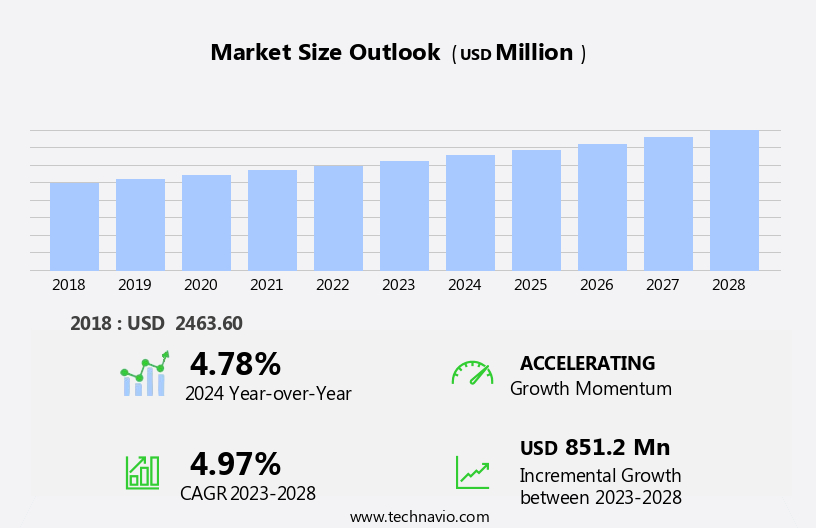
$851.2 Mn
Market Opportunity
4.97%
CAGR
4.78
YoY growth 2023-2024(%)

Ultraviolet (Uv) Disinfection Equipment Market Size 2024-2028

The ultraviolet (uv) disinfection equipment market size is forecast to increase by USD 851.2 million at a CAGR of 4.97% between 2023 and 2028.

  • The market is experiencing significant growth due to the increasing demand for ultrapure water in various industries, including pharmaceuticals, food and beverage, and water treatment. UV disinfection technology offers several advantages, such as being chemical-free, environmentally friendly, and effective against a broad spectrum of microorganisms. Moreover, the availability of refurbished UV disinfection equipment has made this technology more accessible and cost-effective for small and medium-sized enterprises. However, market growth is not without challenges. Regulatory compliance and the need for continuous maintenance and monitoring are key considerations for market participants. Additionally, the high initial investment cost and the emergence of alternative disinfection technologies may limit market penetration.
  • Companies seeking to capitalize on the opportunities presented by the UV disinfection equipment market must focus on providing cost-effective solutions, ensuring regulatory compliance, and offering reliable after-sales service and support. By addressing these challenges and leveraging the benefits of UV disinfection technology, market participants can effectively navigate the competitive landscape and drive sustainable growth.

What will be the Size of the Ultraviolet (Uv) Disinfection Equipment Market during the forecast period?
Ultraviolet (Uv) Disinfection Equipment Market Size

 Request Free Sample

  • The UV disinfection market encompasses a range of players and offerings, including manufacturers, researchers, maintenance providers, control system suppliers, and consulting firms. UV disinfection solutions are increasingly adopted across various industries to address the growing demand for effective water and air disinfection. UV disinfection development is driven by advancements in UV-C germicidal technology, which offers superior disinfection capabilities. UV disinfection monitoring and automation are key trends, enabling real-time monitoring and optimization of disinfection processes. UV disinfection services and installations are provided by professionals and experts, ensuring proper system design, integration, and maintenance. UV disinfection integrators and distributors play a crucial role in facilitating the adoption of UV disinfection systems.
  • UV lamp replacement and maintenance are essential aspects of UV disinfection systems, ensuring optimal performance and longevity. UV lamp life and cost-effectiveness are critical factors influencing the market dynamics. UV disinfection applications span water treatment, air purification, and various industrial processes. UV disinfection validation and consulting services ensure regulatory compliance and system effectiveness. Innovations in UV disinfection technology continue to emerge, offering improved efficiency, cost savings, and enhanced disinfection capabilities. UV disinfection providers and consultants are instrumental in implementing these solutions and driving market growth.

How is this Ultraviolet (Uv) Disinfection Equipment Industry segmented?

The ultraviolet (uv) disinfection equipment industry research report provides comprehensive data (region-wise segment analysis), with forecasts and estimates in "USD million" for the period 2024-2028, as well as historical data from 2018-2022 for the following segments.

  • End-user
    • Residential
    • Commercial
    • Municipal
  • Application
    • Drinking
    • Waste
    • Industrial
    • Others
  • Type
    • UV Lamps
    • Ballasts/Controller Units
    • Quartz Sleeves
    • Reactor Chambers
    • UV Lamps
    • Ballasts/Controller Units
    • Quartz Sleeves
    • Reactor Chambers
  • Geography
    • North America
      • US
      • Canada
    • Europe
      • Germany
      • UK
    • Middle East and Africa
      • APAC
        • China
      • South America
        • Rest of World (ROW)

        By End-user Insights

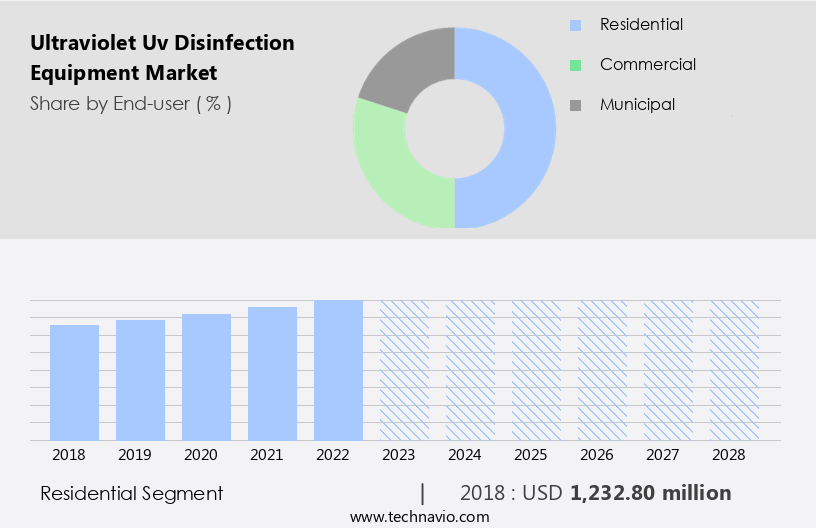
        The residential segment is estimated to witness significant growth during the forecast period.

        In various applications, ultraviolet (UV) disinfection has emerged as an effective and eco-friendly alternative to traditional disinfection methods. UV disinfection is utilized in water treatment systems for residential use, ensuring the elimination of harmful pathogens and contaminants. This process is chemical-free and does not require thermal energy, making it an attractive option for those prioritizing sustainability. Moreover, UV disinfection is increasingly used in air purification systems, particularly in HVAC systems and standalone units, to eliminate airborne pathogens and allergens. The importance of maintaining clean indoor environments has gained significance during the COVID-19 pandemic and other health crises, further boosting the demand for UV disinfection technology.

        UV disinfection is also employed in industries such as healthcare, food processing, and pharmaceuticals, where maintaining stringent hygiene standards is essential. UV-C light, a type of UV disinfection, is particularly effective in these settings due to its ability to kill bacteria, viruses, and other microorganisms. UV disinfection regulations and guidelines are established to ensure the safety and efficacy of this technology. UV disinfection costs have become more competitive due to advancements in technology, such as the development of UV-LED lamps and UV-LED disinfection systems. These innovations offer higher intensity and longer lamp life compared to traditional UV lamps, making UV disinfection a cost-effective solution for various applications.

        In summary, UV disinfection is a versatile technology that offers a chemical-free and environmentally friendly alternative to traditional disinfection methods. Its applications span from residential water and air purification to industrial processes, healthcare, and food processing, among others. The continued advancements in UV disinfection technology, coupled with the increasing awareness of its benefits, are expected to drive its adoption and growth in the market.
        Ultraviolet (Uv) Disinfection Equipment Market Size

        Get a glance at the market report of share of various segments Request Free Sample

        The Residential segment was valued at USD 1232.80 million in 2018 and showed a gradual increase during the forecast period.

        Regional Analysis

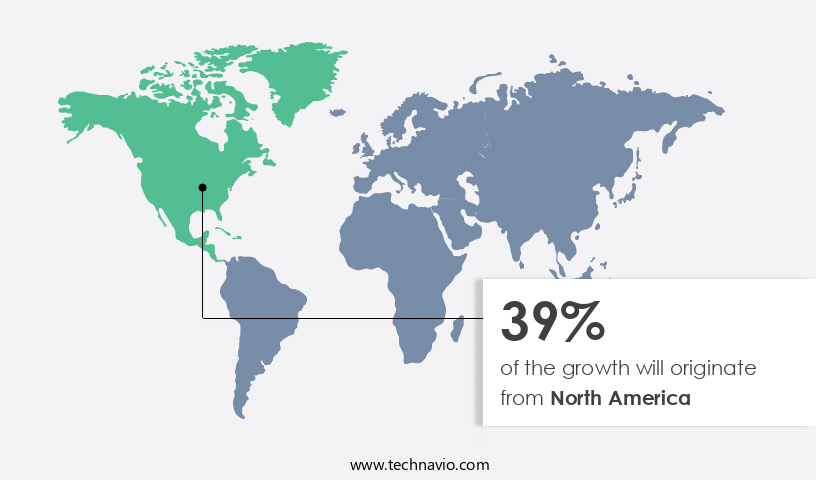
        North America is estimated to contribute 39% to the growth of the global market during the forecast period.Technavio’s analysts have elaborately explained the regional trends and drivers that shape the market during the forecast period.
        Ultraviolet (Uv) Disinfection Equipment Market Share by Geography

        For more insights on the market size of various regions, Request Free Sample

        The UV disinfection equipment market in North America is experiencing growth due to the heightened focus on indoor air quality and increasing government investments. Industries such as food and beverage, electronics, medical laboratories, and pharmaceuticals are investing in UV disinfection technology to ensure the sterilization of their facilities' airspaces. UV disinfection is crucial for these industries to maintain optimal production levels and adhere to regulatory standards. UV disinfection systems, including UV lamps, UV-LED disinfection, and UV chambers, employ UV-C light to eliminate germs and bacteria, making them essential for various applications. UV water treatment and UV healthcare disinfection are other significant areas of application for this technology.

        UV disinfection protocols and safety regulations are stringently enforced to ensure the efficacy and safety of UV disinfection systems. The UV disinfection market's growth is driven by the increasing demand for efficient and cost-effective disinfection solutions, with UV-LED disinfection emerging as a popular choice due to its energy efficiency and long lamp life. UV sterilization efficiency and disinfection guidelines are critical factors influencing the market's dynamics. UV disinfection devices, such as UV air purifiers and UV water disinfection systems, are gaining popularity due to their ability to provide continuous disinfection, ensuring a clean and safe environment.

        Market Dynamics

        Our researchers analyzed the data with 2023 as the base year, along with the key drivers, trends, and challenges. A holistic analysis of drivers will help companies refine their marketing strategies to gain a competitive advantage.

        What are the key market drivers leading to the rise in the adoption of Ultraviolet (Uv) Disinfection Equipment Industry?

        • Evolving benefits of UV disinfection equipment is the key driver of the market. 

        • Water is an essential resource for life and extensively utilized in municipal, industrial, and commercial processes. The volume of water consumption in industries can vary significantly based on the sector. However, the water sourced from natural sources often contains impurities such as minerals, solids, and microorganisms, including protozoa and bacteria, which can negatively affect equipment and contaminate products. UV disinfection equipment is increasingly preferred by certain industries for the purification of their process water due to several advantages. UV disinfection technology provides a chemical-free disinfection solution, contrasting chlorine disinfection systems. This technology uses ultraviolet light to disrupt the DNA of microorganisms, rendering them harmless.
        • UV disinfection is an effective and efficient method for water treatment, ensuring the water remains clear and free from harmful contaminants. The adoption of UV disinfection equipment is driven by its ability to maintain water quality while avoiding the use of chemicals, ensuring a safer and more sustainable water treatment process.

        What are the market trends shaping the Ultraviolet (Uv) Disinfection Equipment Industry?

        • Growing demand for ultrapure water is the upcoming market trend. 

        • Ultrapure water, a high-purity water type, is essential in various industries for applications where water needs to be as close to pure H2O as possible. This water is produced using advanced water purification technologies, such as reverse osmosis, to eliminate solid substances, salts, and dissolved gases. The electric resistivity ratio of ultrapure water ranges from 0.1 to 1.5 M ohm cm, indicating its low conductivity and high purity level. Depending on the purification methods employed, the water may be referred to as desalinated water, reverse osmosis water, or distilled water.
        • Ultrapure water's purity is crucial as the fewer impurities it contains, the higher its electric resistivity ratio. This water plays a significant role in numerous industries, including pharmaceuticals, semiconductor manufacturing, and power generation, ensuring optimal performance and product quality.

        What challenges does the Ultraviolet (Uv) Disinfection Equipment Industry face during its growth?

        • Availability of refurbished UV disinfection equipment is a key challenge affecting the industry growth. 

        • The UV disinfection equipment market can present significant financial considerations for enterprises in various industries, particularly food and beverage. Replacing outdated or malfunctioning UV disinfection systems with new equipment can be a costly investment. Consequently, some small- and medium-sized (SME) enterprises opt for re-engineering – a process that involves refurbishing and repairing existing equipment – as an alternative. Re-engineering encompasses cleaning or fixing various components, including the reactor chamber, electrical equipment, and control systems. companies offering these services ensure that the refurbished equipment is upscaled to meet current industry standards. This approach enables SMEs to save on costs while maintaining the necessary disinfection capabilities.
        • Despite the cost savings, re-engineering may not always be the most efficient solution. It is essential for enterprises to weigh the long-term benefits against the potential risks, such as reduced efficiency or increased maintenance requirements. In the end, the decision to invest in new UV disinfection equipment or opt for re-engineering depends on the specific needs and budget constraints of each organization.

        Exclusive Customer Landscape

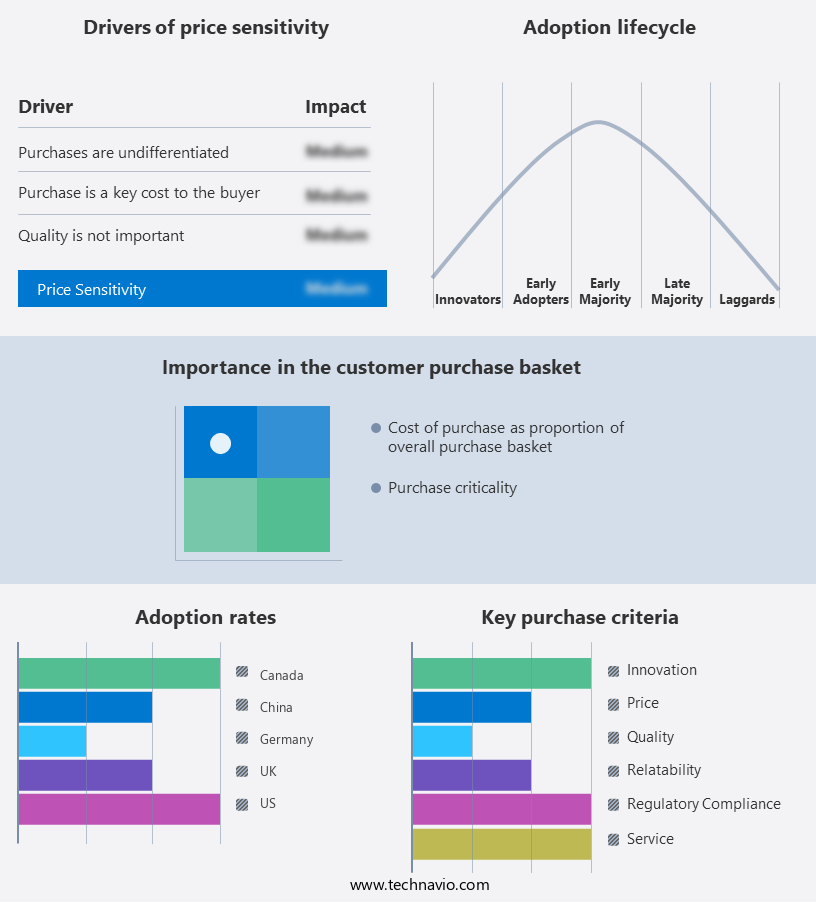
        The ultraviolet (uv) disinfection equipment market forecasting report includes the adoption lifecycle of the market, covering from the innovator’s stage to the laggard’s stage. It focuses on adoption rates in different regions based on penetration. Furthermore, the ultraviolet (uv) disinfection equipment market report also includes key purchase criteria and drivers of price sensitivity to help companies evaluate and develop their market growth analysis strategies.
        Ultraviolet (Uv) Disinfection Equipment Market Share by Geography

         Customer Landscape

        Key Companies & Market Insights

        Companies are implementing various strategies, such as strategic alliances, ultraviolet (uv) disinfection equipment market forecast, partnerships, mergers and acquisitions, geographical expansion, and product/service launches, to enhance their presence in the industry.

        Advanced UV Inc. - The company specializes in providing ultraviolet disinfection equipment, including the AUV ST series and AUV S series, to address various disinfection needs. These advanced systems utilize UV-C light technology to effectively eliminate bacteria, viruses, and other microorganisms, ensuring a cleaner and healthier environment. The AUV ST series caters to larger applications, while the AUV S series is designed for smaller spaces. Both series offer reliable, efficient, and sustainable disinfection solutions, enhancing the overall quality of air and water in various industries and applications.

        The industry research and growth report includes detailed analyses of the competitive landscape of the market and information about key companies, including:

        • Advanced UV Inc.
        • Alfa Laval AB
        • American Ultraviolet Inc.
        • Atlantic Ultraviolet Corp.
        • Australian Ultra Violet Services Pty. Ltd.
        • Clearford Water System Inc.
        • Danaher Corp.
        • Dr. Honle AG
        • Evergreen UV LLC
        • Glasco Ultraviolet LLC
        • Halma Plc
        • Hitech Ultraviolet Pvt. Ltd.
        • KURARAY Co. Ltd.
        • LIT UV Elektro GmbH
        • Pollet Group
        • SITA Srl
        • ULTRAAQUA AS
        • Veolia Environnement SA
        • Xenex Disinfection Services LLC
        • Xylem Inc.

        Qualitative and quantitative analysis of companies has been conducted to help clients understand the wider business environment as well as the strengths and weaknesses of key industry players. Data is qualitatively analyzed to categorize companies as pure play, category-focused, industry-focused, and diversified; it is quantitatively analyzed to categorize companies as dominant, leading, strong, tentative, and weak.

        Research Analyst Overview

        Ultraviolet (UV) disinfection equipment is gaining significant traction in various industries due to its effectiveness in eliminating microorganisms and ensuring hygiene and sanitation. This technology utilizes UV emitters to generate UV light, which interacts with the DNA and RNA of microbes, rendering them unable to reproduce and eventually leading to their demise. UV disinfection is widely used in healthcare settings for medical equipment sterilization and room disinfection. The implementation of stringent UV disinfection protocols has become essential to combat the spread of infections and maintain a healthy environment. In the medical field, UV disinfection is particularly valuable for reducing the risk of healthcare-associated infections (HAIs), which pose a significant challenge to patient safety.

        Beyond healthcare, UV disinfection finds applications in water treatment, food processing, and industrial settings. UV water treatment is an effective solution for disinfecting water supplies, ensuring the elimination of harmful bacteria and viruses. In food processing, UV disinfection is used to sanitize surfaces and equipment, reducing the risk of contamination and ensuring food safety. UV disinfection is also increasingly being adopted in industrial settings for air and surface disinfection. HVAC systems, for instance, can be equipped with UV disinfection devices to maintain optimal indoor air quality and prevent the growth of microorganisms. UV surface disinfection is another application that is gaining popularity, particularly in industries where maintaining a clean and hygienic environment is crucial.

        UV disinfection technology is continually evolving, with advancements in UV-LED lamps and UV-C LEDs leading to more energy-efficient and cost-effective solutions. UV-B LEDs, on the other hand, are gaining attention for their ability to disinfect and sterilize with minimal damage to biological materials. The UV disinfection market is subject to various regulations and standards to ensure safety and efficacy. These regulations cover aspects such as UV disinfection doses, intensity levels, and wavelengths. Compliance with these standards is essential to ensure the reliability and effectiveness of UV disinfection equipment. UV disinfection costs have been a concern for some industries, but the long-term benefits, including reduced contamination and improved safety, often outweigh the initial investment.

        UV disinfection systems are becoming increasingly affordable, making them an attractive option for various applications. UV disinfection is a promising technology with a wide range of applications and benefits. Its ability to eliminate microorganisms effectively and efficiently makes it an essential tool for maintaining hygiene and ensuring safety in various industries. As the technology continues to evolve, we can expect to see even more innovative applications and advancements in UV disinfection equipment.

        Market Scope

        Report Coverage

        Details

        Page number

        181

        Base year

        2023

        Historic period

        2018-2022

        Forecast period

        2024-2028

        Growth momentum & CAGR

        Accelerate at a CAGR of 4.97%

        Market growth 2024-2028

        USD 851.2 million

        Market structure

        Fragmented

        YoY growth 2023-2024(%)

        4.78

        Key countries

        US, Canada, UK, China, and Germany

        Competitive landscape

        Leading Companies, Market Positioning of Companies, Competitive Strategies, and Industry Risks

        Request Free Sample

        What are the Key Data Covered in this Ultraviolet (Uv) Disinfection Equipment Market Research and Growth Report?

        • CAGR of the Ultraviolet (Uv) Disinfection Equipment industry during the forecast period
        • Detailed information on factors that will drive the growth and forecasting between 2024 and 2028
        • Precise estimation of the size of the market and its contribution of the industry in focus to the parent market
        • Accurate predictions about upcoming growth and trends and changes in consumer behaviour
        • Growth of the market across North America, Europe, APAC, Middle East and Africa, and South America
        • Thorough analysis of the market’s competitive landscape and detailed information about companies
        • Comprehensive analysis of factors that will challenge the ultraviolet (uv) disinfection equipment market growth of industry companies

        We can help! Our analysts can customize this ultraviolet (uv) disinfection equipment market research report to meet your requirements.

        Get in touch


        1 Executive Summary

        • 1.1 Market overview
          • Executive Summary - Chart on Market Overview
          • Executive Summary - Data Table on Market Overview
          • Executive Summary - Chart on Global Market Characteristics
          • Executive Summary - Chart on Market by Geography
          • Executive Summary - Chart on Market Segmentation by End-user
          • Executive Summary - Chart on Market Segmentation by Application
          • Executive Summary - Chart on Incremental Growth
          • Executive Summary - Data Table on Incremental Growth
          • Executive Summary - Chart on Company Market Positioning

        2 Market Landscape

        • 2.1 Market ecosystem
          • Parent Market
          • Data Table on - Parent Market
        • 2.2 Market characteristics
          • Market characteristics analysis
        • 2.3 Value chain analysis
          • Value Chain Analysis

        3 Market Sizing

        • 3.1 Market definition
          • Offerings of companies included in the market definition
        • 3.2 Market segment analysis
          • Market segments
        • 3.3 Market size 2023
          • 3.4 Market outlook: Forecast for 2023-2028
            • Chart on Global - Market size and forecast 2023-2028 ($ million)
            • Data Table on Global - Market size and forecast 2023-2028 ($ million)
            • Chart on Global Market: Year-over-year growth 2023-2028 (%)
            • Data Table on Global Market: Year-over-year growth 2023-2028 (%)

          4 Historic Market Size

          • 4.1 Global Ultraviolet (UV) Disinfection Equipment Market 2018 - 2022
            • Historic Market Size - Data Table on Global Ultraviolet (UV) Disinfection Equipment Market 2018 - 2022 ($ million)
          • 4.2 End-user segment analysis 2018 - 2022
            • Historic Market Size - End-user Segment 2018 - 2022 ($ million)
          • 4.3 Application segment analysis 2018 - 2022
            • Historic Market Size - Application Segment 2018 - 2022 ($ million)
          • 4.4 Geography segment analysis 2018 - 2022
            • Historic Market Size - Geography Segment 2018 - 2022 ($ million)
          • 4.5 Country segment analysis 2018 - 2022
            • Historic Market Size - Country Segment 2018 - 2022 ($ million)

          5 Five Forces Analysis

          • 5.1 Five forces summary
            • Five forces analysis - Comparison between 2023 and 2028
          • 5.2 Bargaining power of buyers
            • Bargaining power of buyers - Impact of key factors 2023 and 2028
          • 5.3 Bargaining power of suppliers
            • Bargaining power of suppliers - Impact of key factors in 2023 and 2028
          • 5.4 Threat of new entrants
            • Threat of new entrants - Impact of key factors in 2023 and 2028
          • 5.5 Threat of substitutes
            • Threat of substitutes - Impact of key factors in 2023 and 2028
          • 5.6 Threat of rivalry
            • Threat of rivalry - Impact of key factors in 2023 and 2028
          • 5.7 Market condition
            • Chart on Market condition - Five forces 2023 and 2028

          6 Market Segmentation by End-user

          • 6.1 Market segments
            • Chart on End-user - Market share 2023-2028 (%)
            • Data Table on End-user - Market share 2023-2028 (%)
          • 6.2 Comparison by End-user
            • Chart on Comparison by End-user
            • Data Table on Comparison by End-user
          • 6.3 Residential - Market size and forecast 2023-2028
            • Chart on Residential - Market size and forecast 2023-2028 ($ million)
            • Data Table on Residential - Market size and forecast 2023-2028 ($ million)
            • Chart on Residential - Year-over-year growth 2023-2028 (%)
            • Data Table on Residential - Year-over-year growth 2023-2028 (%)
          • 6.4 Commercial - Market size and forecast 2023-2028
            • Chart on Commercial - Market size and forecast 2023-2028 ($ million)
            • Data Table on Commercial - Market size and forecast 2023-2028 ($ million)
            • Chart on Commercial - Year-over-year growth 2023-2028 (%)
            • Data Table on Commercial - Year-over-year growth 2023-2028 (%)
          • 6.5 Municipal - Market size and forecast 2023-2028
            • Chart on Municipal - Market size and forecast 2023-2028 ($ million)
            • Data Table on Municipal - Market size and forecast 2023-2028 ($ million)
            • Chart on Municipal - Year-over-year growth 2023-2028 (%)
            • Data Table on Municipal - Year-over-year growth 2023-2028 (%)
          • 6.6 Market opportunity by End-user
            • Market opportunity by End-user ($ million)
            • Data Table on Market opportunity by End-user ($ million)

          7 Market Segmentation by Application

          • 7.1 Market segments
            • Chart on Application - Market share 2023-2028 (%)
            • Data Table on Application - Market share 2023-2028 (%)
          • 7.2 Comparison by Application
            • Chart on Comparison by Application
            • Data Table on Comparison by Application
          • 7.3 Drinking - Market size and forecast 2023-2028
            • Chart on Drinking - Market size and forecast 2023-2028 ($ million)
            • Data Table on Drinking - Market size and forecast 2023-2028 ($ million)
            • Chart on Drinking - Year-over-year growth 2023-2028 (%)
            • Data Table on Drinking - Year-over-year growth 2023-2028 (%)
          • 7.4 Waste - Market size and forecast 2023-2028
            • Chart on Waste - Market size and forecast 2023-2028 ($ million)
            • Data Table on Waste - Market size and forecast 2023-2028 ($ million)
            • Chart on Waste - Year-over-year growth 2023-2028 (%)
            • Data Table on Waste - Year-over-year growth 2023-2028 (%)
          • 7.5 Industrial - Market size and forecast 2023-2028
            • Chart on Industrial - Market size and forecast 2023-2028 ($ million)
            • Data Table on Industrial - Market size and forecast 2023-2028 ($ million)
            • Chart on Industrial - Year-over-year growth 2023-2028 (%)
            • Data Table on Industrial - Year-over-year growth 2023-2028 (%)
          • 7.6 Others - Market size and forecast 2023-2028
            • Chart on Others - Market size and forecast 2023-2028 ($ million)
            • Data Table on Others - Market size and forecast 2023-2028 ($ million)
            • Chart on Others - Year-over-year growth 2023-2028 (%)
            • Data Table on Others - Year-over-year growth 2023-2028 (%)
          • 7.7 Market opportunity by Application
            • Market opportunity by Application ($ million)
            • Data Table on Market opportunity by Application ($ million)

          8 Market Segmentation by Type

          • 8.1 Market segments
            • Chart on Type - Market share (2023-2028) (%)
            • Data Table on Type - Market share (2023-2028) (%)
          • 8.2 Comparison by Type
            • Chart on Comparison by Type
            • Data Table on Comparison by Type
          • 8.3 UV Lamps - Market size and forecast (2023-2028)
            • Chart on UV Lamps - Market size and forecast (2023-2028) ($ million)
            • Data Table on UV Lamps - Market size and forecast (2023-2028) ($ million)
            • Chart on UV Lamps - Year-over-year growth (2023-2028) (%)
            • Data Table on UV Lamps - Year-over-year growth (2023-2028) (%)
          • 8.4 Ballasts/Controller Units - Market size and forecast (2023-2028)
            • Chart on Ballasts/Controller Units - Market size and forecast (2023-2028) ($ million)
            • Data Table on Ballasts/Controller Units - Market size and forecast (2023-2028) ($ million)
            • Chart on Ballasts/Controller Units - Year-over-year growth (2023-2028) (%)
            • Data Table on Ballasts/Controller Units - Year-over-year growth (2023-2028) (%)
          • 8.5 Quartz Sleeves - Market size and forecast (2023-2028)
            • Chart on Quartz Sleeves - Market size and forecast (2023-2028) ($ million)
            • Data Table on Quartz Sleeves - Market size and forecast (2023-2028) ($ million)
            • Chart on Quartz Sleeves - Year-over-year growth (2023-2028) (%)
            • Data Table on Quartz Sleeves - Year-over-year growth (2023-2028) (%)
          • 8.6 Reactor Chambers - Market size and forecast (2023-2028)
            • Chart on Reactor Chambers - Market size and forecast (2023-2028) ($ million)
            • Data Table on Reactor Chambers - Market size and forecast (2023-2028) ($ million)
            • Chart on Reactor Chambers - Year-over-year growth (2023-2028) (%)
            • Data Table on Reactor Chambers - Year-over-year growth (2023-2028) (%)
          • 8.7 Market opportunity by Type
            • Market opportunity by $segment_name ($ million)
            • Data Table on Market opportunity by $segment_name ($ million)

          9 Customer Landscape

          • 9.1 Customer landscape overview
            • Analysis of price sensitivity, lifecycle, customer purchase basket, adoption rates, and purchase criteria

          10 Geographic Landscape

          • 10.1 Geographic segmentation
            • Chart on Market share by geography 2023-2028 (%)
            • Data Table on Market share by geography 2023-2028 (%)
          • 10.2 Geographic comparison
            • Chart on Geographic comparison
            • Data Table on Geographic comparison
          • 10.3 North America - Market size and forecast 2023-2028
            • Chart on North America - Market size and forecast 2023-2028 ($ million)
            • Data Table on North America - Market size and forecast 2023-2028 ($ million)
            • Chart on North America - Year-over-year growth 2023-2028 (%)
            • Data Table on North America - Year-over-year growth 2023-2028 (%)
          • 10.4 Europe - Market size and forecast 2023-2028
            • Chart on Europe - Market size and forecast 2023-2028 ($ million)
            • Data Table on Europe - Market size and forecast 2023-2028 ($ million)
            • Chart on Europe - Year-over-year growth 2023-2028 (%)
            • Data Table on Europe - Year-over-year growth 2023-2028 (%)
          • 10.5 APAC - Market size and forecast 2023-2028
            • Chart on APAC - Market size and forecast 2023-2028 ($ million)
            • Data Table on APAC - Market size and forecast 2023-2028 ($ million)
            • Chart on APAC - Year-over-year growth 2023-2028 (%)
            • Data Table on APAC - Year-over-year growth 2023-2028 (%)
          • 10.6 Middle East and Africa - Market size and forecast 2023-2028
            • Chart on Middle East and Africa - Market size and forecast 2023-2028 ($ million)
            • Data Table on Middle East and Africa - Market size and forecast 2023-2028 ($ million)
            • Chart on Middle East and Africa - Year-over-year growth 2023-2028 (%)
            • Data Table on Middle East and Africa - Year-over-year growth 2023-2028 (%)
          • 10.7 South America - Market size and forecast 2023-2028
            • Chart on South America - Market size and forecast 2023-2028 ($ million)
            • Data Table on South America - Market size and forecast 2023-2028 ($ million)
            • Chart on South America - Year-over-year growth 2023-2028 (%)
            • Data Table on South America - Year-over-year growth 2023-2028 (%)
          • 10.8 US - Market size and forecast 2023-2028
            • Chart on US - Market size and forecast 2023-2028 ($ million)
            • Data Table on US - Market size and forecast 2023-2028 ($ million)
            • Chart on US - Year-over-year growth 2023-2028 (%)
            • Data Table on US - Year-over-year growth 2023-2028 (%)
          • 10.9 Canada - Market size and forecast 2023-2028
            • Chart on Canada - Market size and forecast 2023-2028 ($ million)
            • Data Table on Canada - Market size and forecast 2023-2028 ($ million)
            • Chart on Canada - Year-over-year growth 2023-2028 (%)
            • Data Table on Canada - Year-over-year growth 2023-2028 (%)
          • 10.10 UK - Market size and forecast 2023-2028
            • Chart on UK - Market size and forecast 2023-2028 ($ million)
            • Data Table on UK - Market size and forecast 2023-2028 ($ million)
            • Chart on UK - Year-over-year growth 2023-2028 (%)
            • Data Table on UK - Year-over-year growth 2023-2028 (%)
          • 10.11 China - Market size and forecast 2023-2028
            • Chart on China - Market size and forecast 2023-2028 ($ million)
            • Data Table on China - Market size and forecast 2023-2028 ($ million)
            • Chart on China - Year-over-year growth 2023-2028 (%)
            • Data Table on China - Year-over-year growth 2023-2028 (%)
          • 10.12 Germany - Market size and forecast 2023-2028
            • Chart on Germany - Market size and forecast 2023-2028 ($ million)
            • Data Table on Germany - Market size and forecast 2023-2028 ($ million)
            • Chart on Germany - Year-over-year growth 2023-2028 (%)
            • Data Table on Germany - Year-over-year growth 2023-2028 (%)
          • 10.13 Market opportunity by geography
            • Market opportunity by geography ($ million)
            • Data Tables on Market opportunity by geography ($ million)

          11 Drivers, Challenges, and Opportunity/Restraints

          • 11.1 Market drivers
            • 11.2 Market challenges
              • 11.3 Impact of drivers and challenges
                • Impact of drivers and challenges in 2023 and 2028
              • 11.4 Market opportunities/restraints

                12 Competitive Landscape

                • 12.1 Overview
                  • 12.2 Competitive Landscape
                    • Overview on criticality of inputs and factors of differentiation
                  • 12.3 Landscape disruption
                    • Overview on factors of disruption
                  • 12.4 Industry risks
                    • Impact of key risks on business

                  13 Competitive Analysis

                  • 13.1 Companies profiled
                    • Companies covered
                  • 13.2 Market positioning of companies
                    • Matrix on companies position and classification
                  • 13.3 Advanced UV Inc.
                    • Advanced UV Inc. - Overview
                    • Advanced UV Inc. - Product / Service
                    • Advanced UV Inc. - Key offerings
                  • 13.4 Alfa Laval AB
                    • Alfa Laval AB - Overview
                    • Alfa Laval AB - Business segments
                    • Alfa Laval AB - Key news
                    • Alfa Laval AB - Key offerings
                    • Alfa Laval AB - Segment focus
                  • 13.5 American Ultraviolet Inc.
                    • American Ultraviolet Inc. - Overview
                    • American Ultraviolet Inc. - Product / Service
                    • American Ultraviolet Inc. - Key offerings
                  • 13.6 Atlantic Ultraviolet Corp.
                    • Atlantic Ultraviolet Corp. - Overview
                    • Atlantic Ultraviolet Corp. - Product / Service
                    • Atlantic Ultraviolet Corp. - Key offerings
                  • 13.7 Australian Ultra Violet Services Pty. Ltd.
                    • Australian Ultra Violet Services Pty. Ltd. - Overview
                    • Australian Ultra Violet Services Pty. Ltd. - Product / Service
                    • Australian Ultra Violet Services Pty. Ltd. - Key offerings
                  • 13.8 Danaher Corp.
                    • Danaher Corp. - Overview
                    • Danaher Corp. - Business segments
                    • Danaher Corp. - Key news
                    • Danaher Corp. - Key offerings
                    • Danaher Corp. - Segment focus
                  • 13.9 Dr. Honle AG
                    • Dr. Honle AG - Overview
                    • Dr. Honle AG - Business segments
                    • Dr. Honle AG - Key offerings
                    • Dr. Honle AG - Segment focus
                  • 13.10 Evergreen UV LLC
                    • Evergreen UV LLC - Overview
                    • Evergreen UV LLC - Product / Service
                    • Evergreen UV LLC - Key offerings
                  • 13.11 Glasco Ultraviolet LLC
                    • Glasco Ultraviolet LLC - Overview
                    • Glasco Ultraviolet LLC - Product / Service
                    • Glasco Ultraviolet LLC - Key offerings
                  • 13.12 Halma Plc
                    • Halma Plc - Overview
                    • Halma Plc - Business segments
                    • Halma Plc - Key news
                    • Halma Plc - Key offerings
                    • Halma Plc - Segment focus
                  • 13.13 Hitech Ultraviolet Pvt. Ltd.
                    • Hitech Ultraviolet Pvt. Ltd. - Overview
                    • Hitech Ultraviolet Pvt. Ltd. - Product / Service
                    • Hitech Ultraviolet Pvt. Ltd. - Key offerings
                  • 13.14 KURARAY Co. Ltd.
                    • KURARAY Co. Ltd. - Overview
                    • KURARAY Co. Ltd. - Business segments
                    • KURARAY Co. Ltd. - Key news
                    • KURARAY Co. Ltd. - Key offerings
                    • KURARAY Co. Ltd. - Segment focus
                  • 13.15 LIT UV Elektro GmbH
                    • LIT UV Elektro GmbH - Overview
                    • LIT UV Elektro GmbH - Product / Service
                    • LIT UV Elektro GmbH - Key offerings
                  • 13.16 SITA Srl
                    • SITA Srl - Overview
                    • SITA Srl - Product / Service
                    • SITA Srl - Key offerings
                  • 13.17 Xylem Inc.
                    • Xylem Inc. - Overview
                    • Xylem Inc. - Business segments
                    • Xylem Inc. - Key news
                    • Xylem Inc. - Key offerings
                    • Xylem Inc. - Segment focus

                  14 Appendix

                  • 14.1 Scope of the report
                    • 14.2 Inclusions and exclusions checklist
                      • Inclusions checklist
                      • Exclusions checklist
                    • 14.3 Currency conversion rates for US$
                      • Currency conversion rates for US$
                    • 14.4 Research methodology
                      • Research methodology
                    • 14.5 Data procurement
                      • Information sources
                    • 14.6 Data validation
                      • Data validation
                    • 14.7 Validation techniques employed for market sizing
                      • Validation techniques employed for market sizing
                    • 14.8 Data synthesis
                      • Data synthesis
                    • 14.9 360 degree market analysis
                      • 360 degree market analysis
                    • 14.10 List of abbreviations
                      • List of abbreviations

                    Research Methodology

                    Technavio presents a detailed picture of the market by way of study, synthesis, and summation of data from multiple sources. The analysts have presented the various facets of the market with a particular focus on identifying the key industry influencers. The data thus presented is comprehensive, reliable, and the result of extensive research, both primary and secondary.

                    INFORMATION SOURCES

                    Primary sources

                    • Manufacturers and suppliers
                    • Channel partners
                    • Industry experts
                    • Strategic decision makers

                    Secondary sources

                    • Industry journals and periodicals
                    • Government data
                    • Financial reports of key industry players
                    • Historical data
                    • Press releases

                    DATA ANALYSIS

                    Data Synthesis

                    • Collation of data
                    • Estimation of key figures
                    • Analysis of derived insights

                    Data Validation

                    • Triangulation with data models
                    • Reference against proprietary databases
                    • Corroboration with industry experts

                    REPORT WRITING

                    Qualitative

                    • Market drivers
                    • Market challenges
                    • Market trends
                    • Five forces analysis

                    Quantitative

                    • Market size and forecast
                    • Market segmentation
                    • Geographical insights
                    • Competitive landscape

                    Interested in this report?

                    Get your sample now to see our research methodology and insights!

                    Download Now

                    Frequently Asked Questions

                    Ultraviolet (Uv) Disinfection Equipment market growth will increase by $ 851.2 mn during 2024-2028 .

                    The Ultraviolet (Uv) Disinfection Equipment market is expected to grow at a CAGR of 4.97% during 2024-2028 .

                    Ultraviolet (Uv) Disinfection Equipment market is segmented by End-user( Residential, Commercial, Municipal, Others) Application( Drinking, Waste, Industrial, Others, Middle East and Africa)

                    Advanced UV Inc., Alfa Laval AB, American Ultraviolet Inc., Atlantic Ultraviolet Corp., Australian Ultra Violet Services Pty. Ltd., Clearford Water System Inc., Danaher Corp., Dr. Honle AG, Evergreen UV LLC, Glasco Ultraviolet LLC, Halma Plc, Hitech Ultraviolet Pvt. Ltd., KURARAY Co. Ltd., LIT UV Elektro GmbH, Pollet Group, SITA Srl, ULTRAAQUA AS, Veolia Environnement SA, Xenex Disinfection Services LLC, Xylem Inc. are a few of the key vendors in the Ultraviolet (Uv) Disinfection Equipment market.

                    North America will register the highest growth rate of 39% among the other regions. Therefore, the Ultraviolet (Uv) Disinfection Equipment market in North America is expected to garner significant business opportunities for the vendors during the forecast period.

                    US, Canada, UK, China, Germany

                    • Evolving benefits of UV disinfection equipmentWater is a vital component for the survival of all organic life and finds widespread use in municipal is the driving factor this market.
                    • industrial is the driving factor this market.
                    • and commercial processes. The use of water in the industrial and commercial sectors can be in very high quantities is the driving factor this market.
                    • depending on the industry. This water also needs to be clear and clean to prevent any adverse impact on the equipment used and product contamination. However is the driving factor this market.
                    • water from natural sources generally contains some levels of dissolved minerals and solids is the driving factor this market.
                    • along with microbial organisms is the driving factor this market.
                    • such as protozoa or bacteria is the driving factor this market.
                    • and organic material. Some industries prefer UV disinfection equipment for the disinfection of their process water due to the benefits of using such equipment is the driving factor this market.
                    • including the following: UV disinfection technology offers a chemical-free system is the driving factor this market.
                    • unlike chlorine disinfection systems. Chlorine disinfection systems are among the most commonly used systems; however is the driving factor this market.
                    • chlorine disinfection systems contain disinfectant chemicals is the driving factor this market.
                    • which tend to lead to the production of by-products that can be hazardous to the water source. UV disinfection technology is easy to store and install than chlorine disinfection systems. The chemicals used in chlorine disinfection systems need storage and dosing equipment is the driving factor this market.
                    • which tends to increase the overall costs of disinfection. UV disinfection technology can disinfect water much faster than other technologies. Chemical disinfectants require a few minutes for them to get mixed in the water for effective cleaning is the driving factor this market.
                    • whereas UV disinfection technology is based on the properties of light radiation is the driving factor this market.
                    • which allows UV disinfection technology to kill microbial organisms in a shorter time. Hence is the driving factor this market.
                    • the increased benefits of UV disinfection equipment will lead to an increase in its demand is the driving factor this market.
                    • consequently leading to the growth of the market in focus during the forecast period. is the driving factor this market.

                    The Ultraviolet (Uv) Disinfection Equipment market vendors should focus on grabbing business opportunities from the Residential segment as it accounted for the largest market share in the base year.
