


Wall Art Market Size 2026-2030
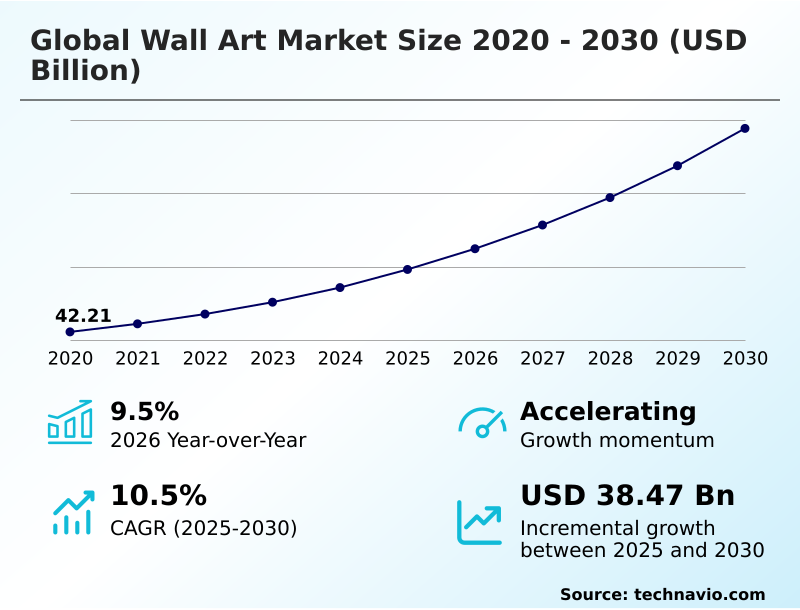
The wall art market size is valued to increase by USD 38.47 billion, at a CAGR of 10.5% from 2025 to 2030. Escalating investments in residential real estate and interior renovation projects. will drive the wall art market.
Major Market Trends & Insights
- APAC dominated the market and accounted for a 49.1% growth during the forecast period.
- By Material - Canvas segment was valued at USD 23.29 billion in 2024
- By End-user - Residential segment accounted for the largest market revenue share in 2024
Market Size & Forecast
- Market Opportunities: USD 55.50 billion
- Market Future Opportunities: USD 38.47 billion
- CAGR from 2025 to 2030 : 10.5%
Market Summary
- The wall art market is experiencing dynamic shifts driven by technological advancements and evolving consumer behaviors. The rise of e-commerce and specialized online art marketplaces has democratized access to art, allowing consumers to source everything from mass-produced prints to bespoke art commissions directly from creators worldwide.
- This digital transformation is fueled by technologies like augmented reality visualization, which allows buyers to preview art in their own space, increasing purchase confidence. A key trend is the growing demand for personalization, supported by print-on-demand services that facilitate customized photo-to-canvas creations.
- Concurrently, sustainability is a major focus, with a clear shift towards sustainable material compositions such as upcycled wood and non-toxic pigments. In the commercial sector, a hospitality firm might leverage commercial art procurement strategies, using evidence-based design principles to select biophilic design themes that enhance guest well-being, while ensuring all pieces, created using techniques like giclee printing, are ethically sourced.
- However, the industry grapples with challenges like IP protection, necessitating tools like digital watermarking to protect artists' work in a digital-first environment. The market's future will be shaped by the interplay of aesthetic trends, technological innovation, and ethical production.
What will be the Size of the Wall Art Market during the forecast period?
Get Key Insights on Market Forecast (PDF) Get Free Sample
How is the Wall Art Market Segmented?
The wall art industry research report provides comprehensive data (region-wise segment analysis), with forecasts and estimates in "USD million" for the period 2026-2030, as well as historical data from 2020-2024 for the following segments.
- Material
- Canvas
- Paper
- Wood
- Metal
- End-user
- Residential
- Commercial spaces
- Distribution channel
- Offline
- Online
- Geography
- APAC
- China
- Japan
- India
- North America
- US
- Canada
- Mexico
- Europe
- Germany
- UK
- France
- Middle East and Africa
- UAE
- Saudi Arabia
- South Africa
- South America
- Brazil
- Argentina
- Colombia
- Rest of World (ROW)
- APAC
By Material Insights
The canvas segment is estimated to witness significant growth during the forecast period.
The canvas segment maintains a significant market share, prized for its classic texture and visual depth. High-quality stretched canvas provides a durable foundation for artist-designed decor, accessible through global online art marketplaces.
Advances in giclee printing technology, utilizing high-fidelity archival inks and precise color calibration, allow for exceptional detail and longevity. This process is highly efficient, with some manufacturers reporting up to a 20% reduction in ink waste while producing premium products.
Modern presentation techniques like gallery wrapping, which creates a frameless aesthetic, are particularly popular for complementing contemporary interiors and minimalist graphic prints, ensuring the segment's continued relevance and appeal.
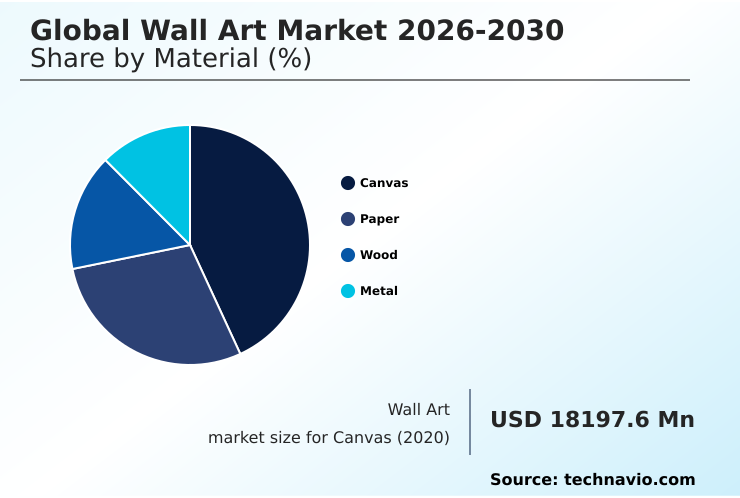
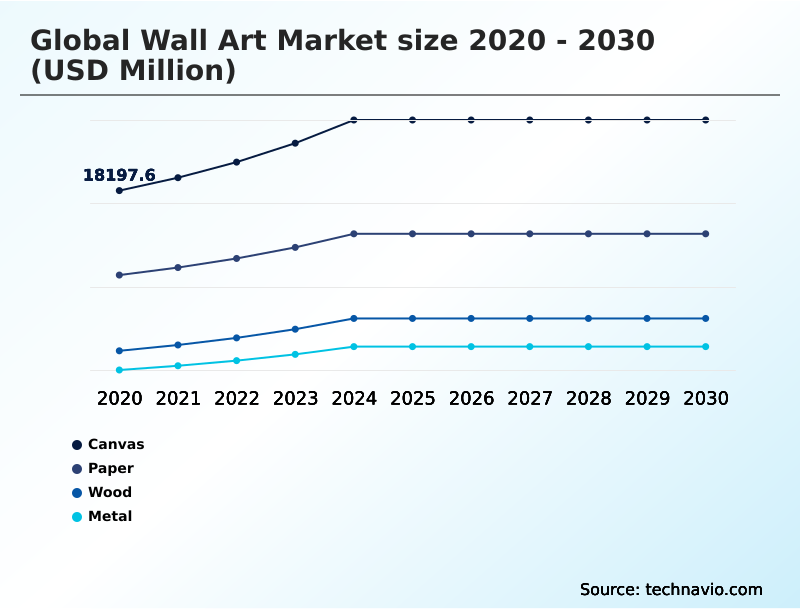
The Canvas segment was valued at USD 23.29 billion in 2024 and showed a gradual increase during the forecast period.
Regional Analysis
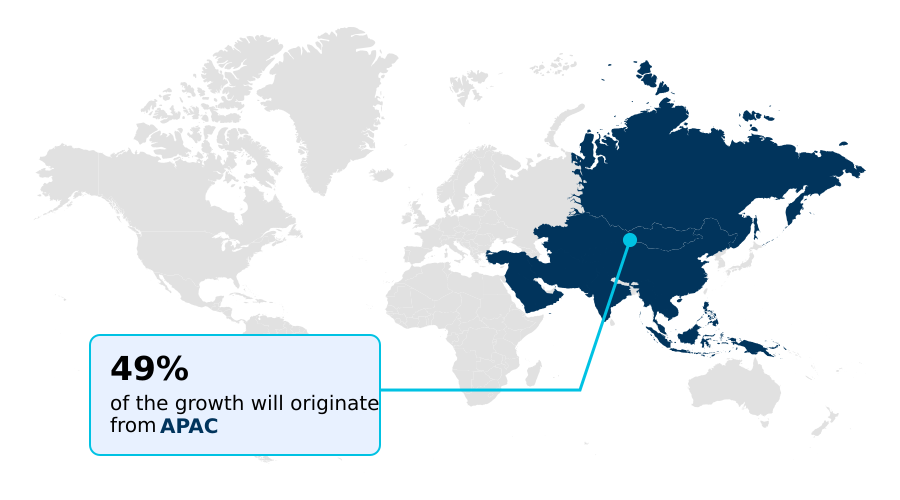
APAC is estimated to contribute 49.1% to the growth of the global market during the forecast period.Technavio’s analysts have elaborately explained the regional trends and drivers that shape the market during the forecast period.
See How Wall Art Market Demand is Rising in APAC Get Free Sample
The market's geographic landscape is led by the APAC region, which is set to contribute nearly 49.1% of the incremental growth, driven by rapid urbanization and a rising middle class.
North America follows, accounting for approximately 20.9% of growth, with a mature market focused on home interior customization and modern farmhouse decor.
In APAC, there is strong demand for artist-designed decor and cultural heritage artwork, often presented on stretched canvas with modern gallery wrapping.
Retailers offer curated art collections that include everything from traditional pieces to contemporary abstract metal sculpture and three-dimensional wall art. The demand for eco-friendly canvas is also growing globally, reflecting a universal trend toward sustainability.
Market Dynamics
Our researchers analyzed the data with 2025 as the base year, along with the key drivers, trends, and challenges. A holistic analysis of drivers will help companies refine their marketing strategies to gain a competitive advantage.
- The impact of e-commerce on global wall art sales has been transformative, fundamentally restructuring how consumers and creators connect. Digital platforms have lowered the barrier to entry, fueling the growth of customized photo-to-canvas printing services and allowing individuals to turn personal memories into decorative pieces.
- This digital-first environment has also heightened the importance of the role of augmented reality in online art purchasing, with tools that let buyers visualize art in their homes leading to significantly higher conversion rates compared to static image galleries. Simultaneously, trends in commercial design are creating new, specialized verticals.
- The push for wellness in corporate and healthcare settings has created a substantial market for biophilic wall art for corporate and healthcare environments, where nature-inspired aesthetics are used to improve occupant well-being. This aligns with a broader industry shift toward sustainable materials for wall art production, as corporate buyers demand eco-friendly options to meet their ESG mandates.
- However, the ease of digital replication brings the critical challenge of intellectual property protection for digital artists. This has spurred innovation in blockchain-based verification and advanced watermarking to ensure creators are compensated, a necessary step to sustain the creative ecosystem that the digital marketplace relies upon.
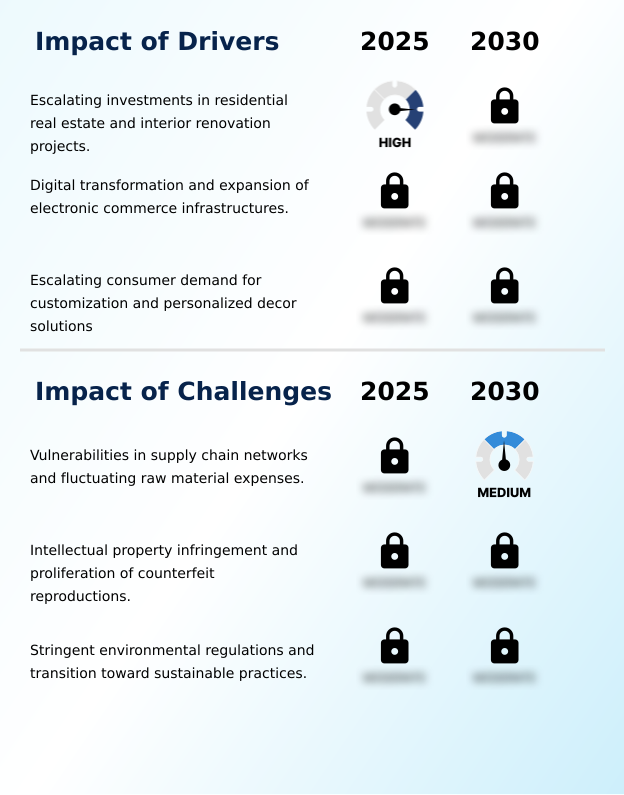
What are the key market drivers leading to the rise in the adoption of Wall Art Industry?
- Escalating investments in residential real estate and interior renovation projects are a key driver for market growth.
- The expansion of e-commerce is a primary driver, enabling direct-to-consumer sales models that facilitate home interior customization at scale. Print-on-demand services allow for a vast array of products, from personalized photo-to-canvas to Scandinavian-style posters, without inventory risk.
- Technology plays a vital role; augmented reality visualization tools are boosting consumer confidence, leading to engagement rates that are 40% higher and reduced returns. This focus on interior aesthetic enhancement is not limited to residential spaces.
- Commercial art procurement for offices and hotels increasingly demands custom framing solutions to match specific brand aesthetics, with custom orders now accounting for up to 25% of online sales for some leading vendors.
What are the market trends shaping the Wall Art Industry?
- A key market trend is the rising adoption of sustainable and environmentally responsible material compositions, reflecting growing consumer and corporate demand for eco-conscious products.
- A major trend is the focus on sustainable material compositions, with ethical art sourcing becoming a key criterion for both residential and commercial buyers. Hospitality design trends increasingly incorporate pieces made from upcycled wood and printed with non-toxic pigments. Biophilic design is prominent, with studies showing its application in workplaces can increase productivity by up to 15%.
- This is reinforced by evidence-based design principles in healthcare. The market also sees growth in functional art, such as decorative acoustic wall panels and stylistic bohemian wall tapestries, with sustainable artworks now comprising over 30% of new collections in some retail channels.
What challenges does the Wall Art Industry face during its growth?
- Vulnerabilities in supply chain networks and fluctuating raw material expenses present a key challenge to industry growth.
- Supply chain volatility presents a significant challenge, with raw material price hikes causing production costs to rise by 10-15% for items ranging from sustainable framing materials to archival paper. Concurrently, intellectual property infringement is a major concern, particularly for artists creating limited-edition prints and businesses specializing in corporate branding art.
- Companies report dedicating up to 20% more resources to IP protection measures like digital watermarking. The complexity extends to premium products such as dye-sublimation on metal pieces and frameless acrylic prints, where counterfeit goods can damage brand reputation. These issues create a difficult landscape, even for firms offering luxury art consultation for bespoke art commissions.
Exclusive Technavio Analysis on Customer Landscape
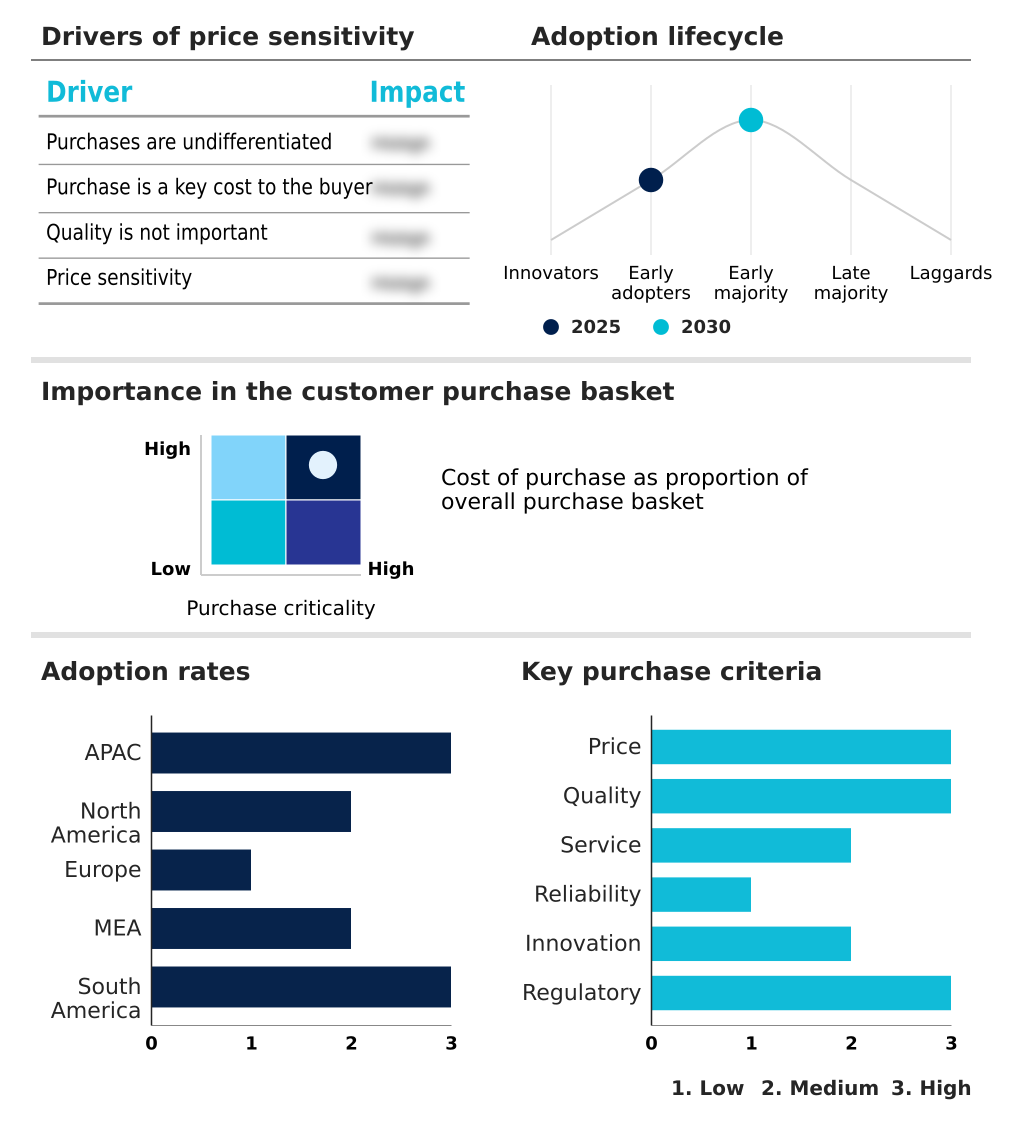
The wall art market forecasting report includes the adoption lifecycle of the market, covering from the innovator’s stage to the laggard’s stage. It focuses on adoption rates in different regions based on penetration. Furthermore, the wall art market report also includes key purchase criteria and drivers of price sensitivity to help companies evaluate and develop their market growth analysis strategies.
Customer Landscape of Wall Art Industry
Competitive Landscape
Companies are implementing various strategies, such as strategic alliances, wall art market forecast, partnerships, mergers and acquisitions, geographical expansion, and product/service launches, to enhance their presence in the industry.
Desenio Group Inc. - Offers accessible, trend-driven Scandinavian-style posters and art prints, providing affordable, curated solutions for modern interior design aesthetics.
The industry research and growth report includes detailed analyses of the competitive landscape of the market and information about key companies, including:
- Desenio Group Inc.
- Elephant Stock
- Etsy Inc.
- Great Big Canvas
- iCanvas
- Inter IKEA Holding BV
- Leftbank Art
- LUMAS
- Marmont Hill INC.
- Minted LLC
- Oliver Gal Artist Co.
- Redbubble Ltd.
- Shutterfly Inc.
- Society6 LLC
- Stupell Home decor
- Wayfair Inc.
- Wendover Art Group
- Zazzle Inc.
Qualitative and quantitative analysis of companies has been conducted to help clients understand the wider business environment as well as the strengths and weaknesses of key industry players. Data is qualitatively analyzed to categorize companies as pure play, category-focused, industry-focused, and diversified; it is quantitatively analyzed to categorize companies as dominant, leading, strong, tentative, and weak.
Recent Development and News in Wall art market
- In September 2024, Art.com announced a strategic partnership with a leading sustainable materials supplier to launch a new line of eco-friendly framed prints, utilizing recycled wood and non-toxic inks.
- In December 2024, Vistapic launched an advanced AI-powered design tool allowing users to generate unique wall art compositions from text prompts, enhancing their custom decor offerings.
- In March 2025, CanvasWorld Inc. completed its acquisition of PhotoFrame Co., a move aimed at integrating custom framing services directly into its online print-on-demand platform.
- In May 2025, The Global Art Collective opened its new North American distribution center, reducing shipping times for its curated art prints by an average of 40% for customers in the US and Canada.
Dive into Technavio’s robust research methodology, blending expert interviews, extensive data synthesis, and validated models for unparalleled Wall Art Market insights. See full methodology.
| Market Scope | |
|---|---|
| Page number | 289 |
| Base year | 2025 |
| Historic period | 2020-2024 |
| Forecast period | 2026-2030 |
| Growth momentum & CAGR | Accelerate at a CAGR of 10.5% |
| Market growth 2026-2030 | USD 38468.0 million |
| Market structure | Fragmented |
| YoY growth 2025-2026(%) | 9.5% |
| Key countries | China, Japan, India, South Korea, Australia, Indonesia, US, Canada, Mexico, Germany, UK, France, Italy, Spain, The Netherlands, UAE, Saudi Arabia, South Africa, Turkey, Israel, Brazil, Argentina and Colombia |
| Competitive landscape | Leading Companies, Market Positioning of Companies, Competitive Strategies, and Industry Risks |
Research Analyst Overview
- The wall art market is defined by a complex interplay of aesthetic innovation and technological disruption. At a strategic level, boardroom decisions are increasingly influenced by the need to balance commercial art procurement with sustainability mandates, shifting sourcing toward eco-friendly canvas and sustainable framing.
- The adoption of advanced production techniques is critical; for instance, the use of dye-sublimation on metal has increased production throughput by 20% for some manufacturers, enhancing operational efficiency. Key technologies like giclee printing with precise color calibration and archival inks are now standard for producing limited-edition prints on archival paper.
- As the market expands, so do challenges, necessitating solutions like digital watermarking to protect intellectual property. For consumers, augmented reality visualization is a crucial tool, while print-on-demand services enable mass customization. The offerings are diverse, from stretched canvas with gallery wrapping and upcycled wood pieces to three-dimensional wall art and functional acoustic wall panels, all contributing to interior aesthetic enhancement.
- This dynamic landscape requires a focus on both custom framing solutions and principles of evidence-based design, especially in specialized areas like biophilic design and cultural heritage artwork.
What are the Key Data Covered in this Wall Art Market Research and Growth Report?
-
What is the expected growth of the Wall Art Market between 2026 and 2030?
-
USD 38.47 billion, at a CAGR of 10.5%
-
-
What segmentation does the market report cover?
-
The report is segmented by Material (Canvas, Paper, Wood, and Metal), End-user (Residential, and Commercial spaces), Distribution Channel (Offline, and Online) and Geography (APAC, North America, Europe, Middle East and Africa, South America)
-
-
Which regions are analyzed in the report?
-
APAC, North America, Europe, Middle East and Africa and South America
-
-
What are the key growth drivers and market challenges?
-
Escalating investments in residential real estate and interior renovation projects. , Vulnerabilities in supply chain networks and fluctuating raw material expenses.
-
-
Who are the major players in the Wall Art Market?
-
Desenio Group Inc., Elephant Stock, Etsy Inc., Great Big Canvas, iCanvas, Inter IKEA Holding BV, Leftbank Art, LUMAS, Marmont Hill INC., Minted LLC, Oliver Gal Artist Co., Redbubble Ltd., Shutterfly Inc., Society6 LLC, Stupell Home decor, Wayfair Inc., Wendover Art Group and Zazzle Inc.
-
Market Research Insights
- The market's dynamics are reshaped by digital platforms that enable direct-to-consumer sales models and deep home interior customization. Online art marketplaces now offer vast curated art collections, empowering consumers to find unique pieces. The integration of technology yields tangible business outcomes; platforms using augmented reality for visualization report up to a 25% lower return rate on items.
- Furthermore, the shift to print-on-demand services fundamentally alters supply chain economics, allowing retailers to reduce physical inventory holding costs by over 90% compared to traditional brick-and-mortar models, thereby improving profitability and enabling a wider variety of artistic offerings.
We can help! Our analysts can customize this wall art market research report to meet your requirements.
 RIA -
RIA - 
