



Mobile Augmented Reality (AR) Market Size 2025-2029
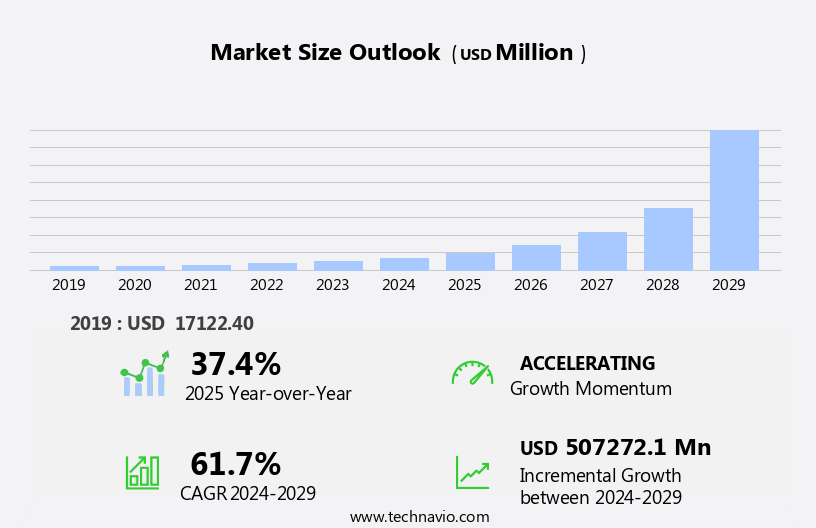
The mobile augmented reality (AR) market size is forecast to increase by USD 507.27 billion at a CAGR of 61.7% between 2024 and 2029.
- The market is experiencing significant growth, driven by the increasing dependence on apps for various activities and the emergence of depth-sensing cameras in mobile devices. AR technology offers experiences by overlaying digital information onto the real world, revolutionizing industries such as retail, education, and entertainment. The market is experiencing significant growth due to increasing dependence on mobile applications and the proliferation of AR apps for various activities. However, the market faces constraints in hardware capabilities used in mobile AR, which can limit the quality of the user experience and hinder mass adoption. Regulatory hurdles also impact adoption, particularly in industries requiring stringent compliance, such as healthcare and transportation. To capitalize on market opportunities and navigate challenges effectively, companies must focus on addressing these constraints through technological advancements and strategic partnerships.
- Investments in research and development, particularly in areas like miniaturization of sensors and power efficiency, will be crucial to overcome hardware limitations. Collaborations with regulatory bodies and industry associations can help navigate regulatory challenges and ensure compliance. Overall, the Mobile AR market presents substantial growth potential for companies that can effectively address these challenges and deliver innovative, high-quality AR experiences to consumers.
What will be the Size of the Mobile Augmented Reality (AR) Market during the forecast period?
- The market encompasses a diverse range of applications, from entertainment to industrial uses. AR for entertainment offers experiences through location-based games and interactive storytelling. AR-driven product design enables 3D object placement, allowing consumers to virtually try on items before purchase. AR in architecture and construction facilitates project visualization and planning. AR overlays enhance user experiences in healthcare, events, logistics, e-commerce, transportation, and accessibility. AR-powered product demos provide interactive and engaging ways to showcase offerings. AR in healthcare improves patient care through virtual training and diagnostic tools.
- AR for events creates unique experiences for attendees, while AR in logistics streamlines supply chain management. AR-powered e-commerce and transportation enable virtual try-on and route planning, respectively. Overall, the AR market continues to evolve, offering innovative solutions across various industries.
How is this Mobile Augmented Reality (AR) Industry segmented?
The Mobile Augmented Reality (Ar) industry research report provides comprehensive data (region-wise segment analysis), with forecasts and estimates in "USD million" for the period 2025-2029, as well as historical data from 2019-2023 for the following segments.
- Application
- M and A
- Gaming and entertainment
- Education and learning
- Travel and tourism
- Others
- End-user
- Enterprise
- Consumer
- Type
- Marker-based AR
- Markerless AR
- Anchor-based AR
- Device
- Smartphones
- Tablets
- Personal digital assistants (PDAs)
- Handheld gaming consoles
- Others
- Geography
- North America
- US
- Canada
- Europe
- France
- Germany
- Italy
- UK
- APAC
- China
- India
- Japan
- South Korea
- Rest of World (ROW)
- North America
By Application Insights
The M and A segment is estimated to witness significant growth during the forecast period. AR technology has been making waves in various industries, offering innovative solutions for marketing, education, healthcare, manufacturing, and more. AR Software Development Kits (SDKs) and processors are at the core of this technology, enabling the creation of AR experiences. AR applications, powered by these tools, bring virtual objects and content to life in real-world environments. AR headsets and sensors provide the necessary hardware for these experiences, while AR Image Recognition technology adds an extra layer of interactivity. Ethical considerations are essential in the AR market, with privacy and security being key concerns. AR is being adopted in healthcare for training and simulations, enhancing the learning experience and improving patient care.
In education, AR is used to make learning more engaging and interactive, while in manufacturing, it aids in prototyping and assembly line optimization. AR rendering and interaction technologies enable users to manipulate virtual objects in real-world environments, creating a balanced blend of digital and physical worlds. AR location-based services and object recognition capabilities add a new dimension to consumer experiences, providing valuable information and enhancing the user journey. AR content creation and Data Visualization Tools are essential for developers, enabling them to build engaging and interactive AR applications. AR platforms and frameworks provide a foundation for developers to build upon, while AR cloud services offer scalability and flexibility.
AR adoption is on the rise, with marketing and advertising being early adopters. AR offers marketers innovative ways to engage with consumers and create interactive and brand experiences. AR virtual objects and content can be placed in real-world environments, allowing consumers to interact with them in a more engaging and memorable way. AR privacy and connectivity are essential considerations for marketers, ensuring that consumer data is protected while still delivering personalized and targeted content. AR is also making strides in retail, entertainment, and tourism industries, offering new ways to enhance consumer experiences. AR gaming and wearables are becoming increasingly popular, providing and interactive experiences for users.
AR regulations and standards are evolving to keep pace with this technology, ensuring that it is used ethically and responsibly. The AR market is dynamic and evolving, with various industries adopting this technology to enhance consumer experiences and drive innovation. AR offers a unique blend of digital and physical worlds, providing valuable insights and creating engaging and interactive experiences. AR's potential is vast, and its impact on various industries is only just beginning to be realized.
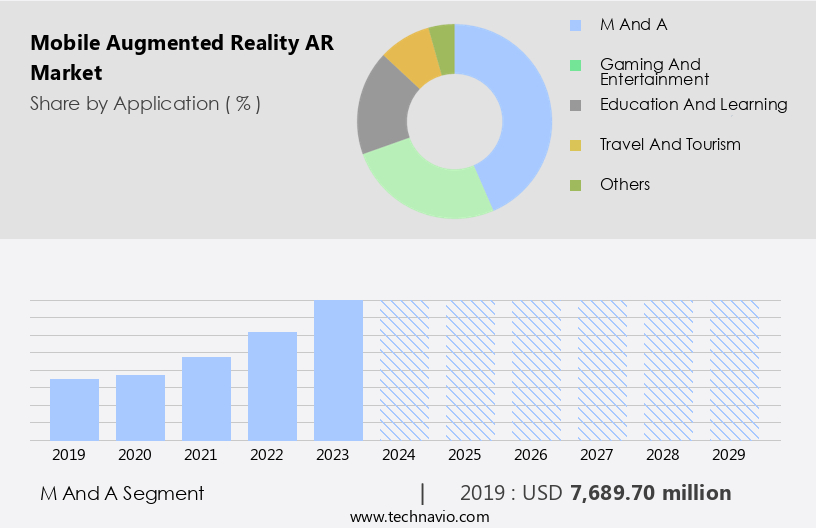
The M and A segment was valued at USD 7.69 billion in 2019 and showed a gradual increase during the forecast period.
The Mobile Augmented Reality (AR) Market is expanding rapidly, transforming industries with innovative solutions. Advanced AR platform and AR SDK empower developers to create experiences using diverse AR tools. Wearable technology like AR glasses enhances AR tracking for real-time interactions. Dynamic AR animation fosters engaging AR interaction, optimizing AR user interface for seamless usability. From AR entertainment to AR education, its impact is broad, supporting AR training, AR healthcare, and AR manufacturing. It revolutionizes AR tourism, AR design, and AR 3D modeling, utilizing precise AR sensors and high-performance AR processors. With strong AR connectivity, emphasis on AR accessibility grows, ensuring secure AR security measures. As mobile AR advances, its potential across industries continues to rise.
Regional Analysis
North America is estimated to contribute 40% to the growth of the global market during the forecast period.Technavio's analysts have elaborately explained the regional trends and drivers that shape the market during the forecast period. StartFragment The Mobile Augmented Reality (AR) Market is rapidly evolving, revolutionizing industries with experiences and augmented reality overlays. Businesses are leveraging interactive product demos to engage customers in new ways. Gaming is being redefined through location-based AR games, blending digital and real-world landscapes. In infrastructure, AR in construction enhances precision and efficiency. Inclusivity is advancing with AR for accessibility, aiding individuals with disabilities. Creators harness AR for storytelling, crafting compelling narratives. Transportation sees innovation through AR for transportation, optimizing navigation. Supply chains are streamlined with AR for logistics, improving operations.
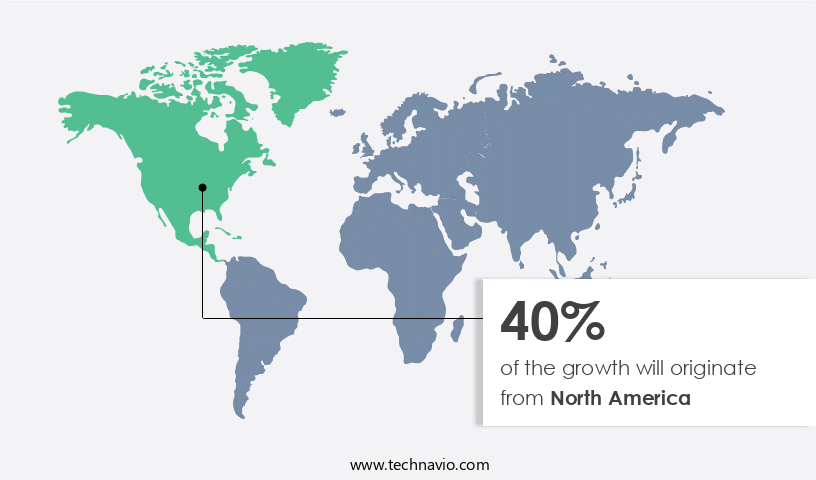
The market in North America is a significant and mature sector, driven by the region's advanced technological infrastructure and continuous innovations in mobile devices, processors, graphics, and network connectivity. These advancements facilitate and high-quality AR experiences on smartphones and tablets, leading to increased user adoption. With a large and tech-savvy mobile user base characterized by high smartphone penetration and a culture of embracing new technology, North America provides a fertile ground for the integration of AR technology into various applications. The popularity of mobile apps in the region has created an ideal environment for AR experiences in sectors such as healthcare, education, manufacturing, and retail, among others.
AR applications, including those for image recognition, object recognition, and location-based services, are increasingly being integrated into software, tools, and platforms. AR headsets and glasses, along with sensors and cameras, are also gaining traction in the market. Ethical considerations, privacy concerns, and security measures are essential aspects of AR development, ensuring balanced interaction between virtual objects and the real world. The market's evolution is further characterized by advancements in AR rendering, interaction, and spatial computing, as well as the integration of AR with wearables, cloud services, and marketing strategies. The AR market in North America continues to innovate and grow, offering opportunities for businesses to explore and capitalize on the technology's potential.
Market Dynamics
Our researchers analyzed the data with 2024 as the base year, along with the key drivers, trends, and challenges. A holistic analysis of drivers will help companies refine their marketing strategies to gain a competitive advantage.
What are the Mobile Augmented Reality (AR) market drivers leading to the rise in the adoption of Industry?
- The escalating reliance on applications, particularly those incorporating augmented reality (AR) technology, is the primary catalyst fueling market growth in this sector. Mobile Augmented Reality (AR) technology has seen significant advancements due to the evolution of mobile devices. Faster processors, enhanced graphics capabilities, and superior camera quality have made smartphones and tablets more capable of handling AR applications effectively. The expanding user base for these devices, coupled with the availability of affordable options, has fueled the demand for AR apps. Furthermore, the widespread adoption of high-speed internet and the expansion of 4G and 5G networks have facilitated real-time data processing, enabling seamless AR experiences. AR technology offers and interactive experiences by bridging the physical and digital worlds.
- In industries like manufacturing, AR rendering and interaction tools have revolutionized production processes, improving efficiency and accuracy. AR object recognition and location-based services have transformed retail, enabling customers to visualize products in their homes before making a purchase. AR content, hardware, and training have also found applications in various sectors, including education, healthcare, and entertainment. AR prototyping and AR cloud have further expanded the technology's potential, offering real-time collaboration and data sharing capabilities. The ongoing development of AR standards and the integration of AR with other emerging technologies, such as virtual reality and artificial intelligence, are expected to drive the growth of the AR market.
What are the Mobile Augmented Reality (AR) market trends shaping the Industry?
- Depth-sensing cameras are gaining increasing popularity in the market, representing an emerging trend. This technology, which enables three-dimensional sensing and analysis, is poised to revolutionize industries such as augmented reality, robotics, and autonomous vehicles. Depth-sensing cameras, also referred to as 3D cameras, offer the capability to perceive the distance of objects in the environment, leading to more advanced and Augmented Reality (AR) experiences on mobile devices. The demand for such experiences is growing among consumers and businesses, as they seek more engaging and realistic AR applications. These cameras enable the creation of AR applications that blend virtual content with the real-world environment, enhancing user immersion and interaction. Technological advancements in camera sensors and processing capabilities have made depth-sensing cameras more feasible and cost-effective for mobile device integration. As smartphone hardware continues to improve, manufacturers can incorporate these capabilities without significantly increasing the device's cost.
- AR applications can provide various functionalities, such as AR navigation, simulations, localization, user interfaces, gaming, data visualization, and spatial computing. AR wearables, like Smart Glasses, can also benefit from depth-sensing cameras, offering a more seamless and interactive experience. AR privacy concerns are essential considerations for developers, ensuring user data is protected while using these applications. The integration of AR technology into mobile devices and the increasing availability of depth-sensing cameras are expected to drive the AR market's growth.
How does Mobile Augmented Reality (AR) market faces challenges face during its growth?
- The limitation in mobile augmented reality (AR) hardware capabilities poses a significant challenge to the industry's growth, as it hinders the delivery of and seamless user experiences. Augmented Reality (AR) technology offers innovative solutions for retail, entertainment, advertising, and tourism industries. AR retail enables virtual product trials and shopping experiences. In entertainment, AR provides interactive experiences in games and movies. For advertising, AR overlay ads offer engaging and personalized content. However, AR regulations and connectivity challenges pose obstacles. AR applications require substantial processing power and memory, which older or low-end devices may struggle to handle. This can lead to reduced performance and lower user satisfaction. Running AR applications can be power-intensive, leading to faster battery drain.
- Limited battery life can restrict the duration of AR experiences and may be a concern for users, particularly in outdoor settings. AR frameworks and design platforms facilitate the creation of AR content, while AR marketing and 3D modeling offer new opportunities for businesses. Despite these challenges, AR innovation continues to advance, providing exciting possibilities for various industries.
Exclusive Customer Landscape
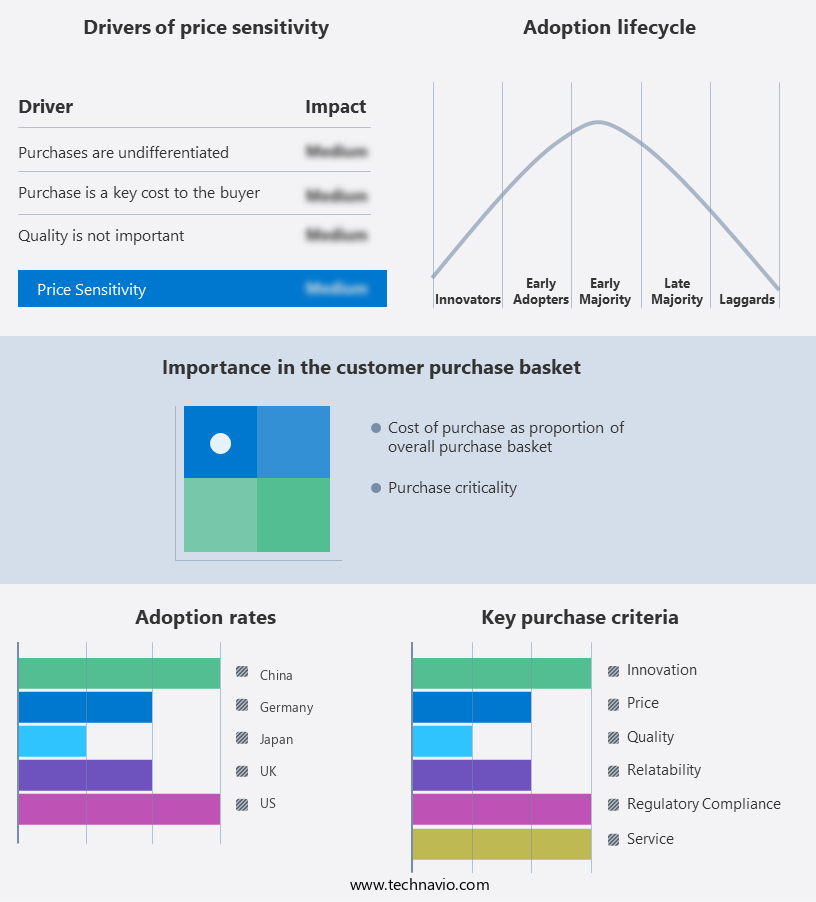
The mobile augmented reality (AR) market forecasting report includes the adoption lifecycle of the market, covering from the innovator's stage to the laggard's stage. It focuses on adoption rates in different regions based on penetration. Furthermore, the mobile augmented reality (AR) market report also includes key purchase criteria and drivers of price sensitivity to help companies evaluate and develop their market growth analysis strategies.
Customer Landscape
Key Companies & Market Insights
Companies are implementing various strategies, such as strategic alliances, mobile augmented reality (AR) market forecast, partnerships, mergers and acquisitions, geographical expansion, and product/service launches, to enhance their presence in the industry.
Alphabet Inc. - The company offers mobile augmented reality solutions such as Google ARCore through its subsidiary Google LLC.
The industry research and growth report includes detailed analyses of the competitive landscape of the market and information about key companies, including:
- Alphabet Inc.
- Apple Inc.
- Augmented Pixels Inc.
- Blippar Ltd.
- Independiente Communication Ltd.
- Inglobe Technologies Srl
- Lenovo Group Ltd.
- Magic Leap Inc.
- mCloud Technologies Corp.
- Niantic Inc.
- Plural Technology Pvt. Ltd.
- PTC Inc.
- QuestUpon
- Robert Bosch GmbH
- Seabery Augmented Technology SL group
- Seiko Epson Corp.
- VividWorks Oy
- weAR Srl
- Wikitude GmbH
- Zugara Inc.
Qualitative and quantitative analysis of companies has been conducted to help clients understand the wider business environment as well as the strengths and weaknesses of key industry players. Data is qualitatively analyzed to categorize companies as pure play, category-focused, industry-focused, and diversified; it is quantitatively analyzed to categorize companies as dominant, leading, strong, tentative, and weak.
Recent Development and News in Mobile Augmented Reality (AR) Market
- In February 2024, Apple unveiled its long-awaited AR headset, the "Apple Glass," during its product launch event. This new device, expected to hit the market by 2025, is set to revolutionize the mobile AR industry with its advanced features and seamless integration with iOS devices (Apple, 2024).
- In July 2024, Google and Microsoft announced a strategic partnership to collaborate on AR technology. This alliance aims to accelerate the development and adoption of AR solutions across various industries, including education, healthcare, and retail (Microsoft, 2024).
Research Analyst Overview
The market continues to evolve, with dynamic market activities unfolding across various sectors. AR integration is revolutionizing industries, from healthcare to manufacturing, education, and retail, by overlaying virtual objects onto real-world environments. AR navigation systems are transforming transportation and logistics, while AR simulations provide training experiences. AR localization enables personalized content delivery, and AR user interfaces enhance user experience. AR gaming is gaining popularity, with AR wearables and glasses offering gaming experiences. AR spatial computing and tracking technologies are advancing, enabling more accurate and precise AR experiences. AR development tools and frameworks are becoming more accessible, enabling businesses to create custom AR applications.
AR data visualization is providing new insights, while AR privacy concerns are driving the need for ethical guidelines. AR advertising and marketing are offering innovative ways to engage consumers. AR regulations and connectivity are evolving, shaping the future of this dynamic market. AR innovation is driving growth, with AR ethics and accessibility becoming increasingly important considerations. AR hardware and software advancements are enabling new applications, from AR headsets to AR cameras and sensors. AR object recognition and image recognition technologies are enhancing AR experiences, while AR prototyping and 3D modeling are streamlining product development. AR cloud and AR rendering technologies are improving performance and reducing latency.
The market is experiencing significant growth due to the enriching user experiences it offers. The advancements in mobile device capabilities have made AR technology accessible to a wider audience. AR finds extensive applications in gaming and entertainment, where users can interact with virtual objects in the real world. Social media platforms are also integrating AR features to enhance user engagement. However, technical limitations and hardware requirements pose challenges to the market growth. Skilled designers and developers are in high demand for AR content creation, requiring expertise in UI/UX design and interactive application development. Sensors such as GPS, compass, 3D cameras, and mobile devices like smartphones, tablets, and mobile projection devices are essential hardware for AR applications. The AR market is continually unfolding, with new applications and innovations on the horizon.
Dive into Technavio's robust research methodology, blending expert interviews, extensive data synthesis, and validated models for unparalleled Mobile Augmented Reality (AR) Market insights. See full methodology.
|
Market Scope |
|
|
Report Coverage |
Details |
|
Page number |
246 |
|
Base year |
2024 |
|
Historic period |
2019-2023 |
|
Forecast period |
2025-2029 |
|
Growth momentum & CAGR |
Accelerate at a CAGR of 61.7% |
|
Market growth 2025-2029 |
USD 507.27 billion |
|
Market structure |
Fragmented |
|
YoY growth 2024-2025(%) |
37.4 |
|
Key countries |
US, Germany, China, Japan, Canada, UK, India, France, South Korea, and Italy |
|
Competitive landscape |
Leading Companies, Market Positioning of Companies, Competitive Strategies, and Industry Risks |
What are the Key Data Covered in this Mobile Augmented Reality (AR) Market Research and Growth Report?
- CAGR of the Mobile Augmented Reality (AR) industry during the forecast period
- Detailed information on factors that will drive the growth and forecasting between 2025 and 2029
- Precise estimation of the size of the market and its contribution of the industry in focus to the parent market
- Accurate predictions about upcoming growth and trends and changes in consumer behaviour
- Growth of the market across North America, APAC, Europe, South America, and Middle East and Africa
- Thorough analysis of the market's competitive landscape and detailed information about companies
- Comprehensive analysis of factors that will challenge the mobile augmented reality (AR) market growth and forecasting
We can help! Our analysts can customize this mobile augmented reality (AR) market research report to meet your requirements.
 RIA -
RIA - 
