
Smart Glasses Market Analysis, Size, and Forecast 2026-2030: North America (US, Canada, and Mexico), Europe (Germany, UK, and France), APAC (China, Japan, and India), Middle East and Africa (Saudi Arabia, UAE, and South Africa), South America (Brazil, Argentina, and Chile), and Rest of World (ROW)

Smart Glasses Market Analysis, Size, and Forecast 2026-2030:
North America (US, Canada, and Mexico), Europe (Germany, UK, and France), APAC (China, Japan, and India), Middle East and Africa (Saudi Arabia, UAE, and South Africa), South America (Brazil, Argentina, and Chile), and Rest of World (ROW)

Published: Oct 2026 288 Pages SKU: IRTNTR43687

Market Overview at a Glance

$112.13 Mn
Market Opportunity
15.5%
CAGR 2025 - 2030
60.2%
North America Growth
$56.30 Mn
Developer segment 2024

Smart Glasses Market Size 2026-2030

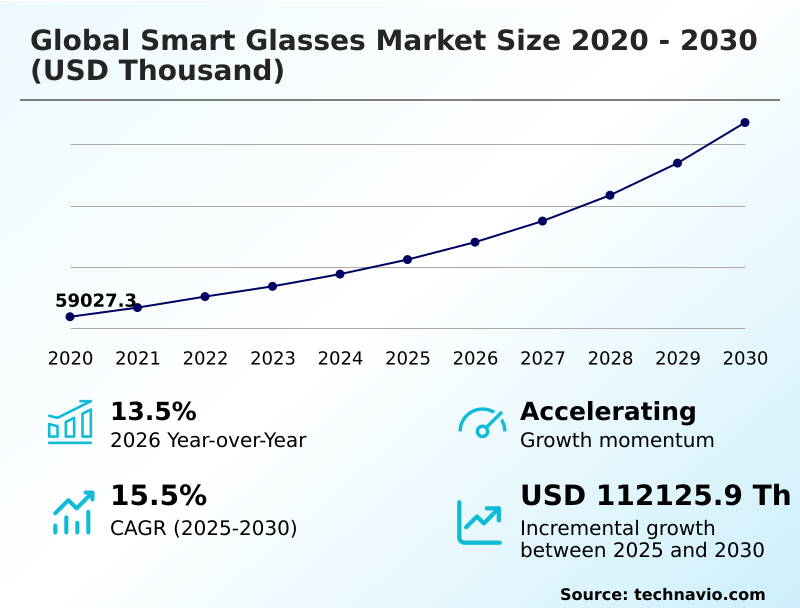
The smart glasses market size is valued to increase by USD 112.13 million, at a CAGR of 15.5% from 2025 to 2030. Evolution of smart glasses into autonomous context-aware computing platforms will drive the smart glasses market.

Major Market Trends & Insights

  • North America dominated the market and accounted for a 60.2% growth during the forecast period.
  • By Product - Developer segment was valued at USD 56.30 million in 2024
  • By OS - Android segment accounted for the largest market revenue share in 2024

Market Size & Forecast

  • Market Opportunities:
  • Market Future Opportunities: USD 112.13 million
  • CAGR from 2025 to 2030 : 15.5%

Market Summary

  • The Smart Glasses Market is experiencing a paradigm shift driven by the rapid integration of advanced micro-optics and autonomous contextual computing platforms. Enterprises are systematically transitioning away from handheld tablets, favoring intelligent eyewear to facilitate hands-free navigation and remote expert assistance.
  • In complex logistics fulfillment workflows, organizations equipping warehouse personnel with visual routing cues have documented that order picking accuracy improved by 28% compared to traditional paper-based methods. This tangible reduction in procedural errors directly accelerates workforce automation and supply chain optimization.
  • The primary catalyst for this expansion is the convergence of multimodal artificial intelligence and diffractive waveguide optics, which enables real-time environmental interpretation without requiring manual inputs. Conversely, hardware manufacturers face substantial thermal mitigation constraints and battery infrastructure limitations. Processing continuous ambient digital interaction demands significant power, forcing engineers to balance advanced spatial tracking with ergonomic comfort and heat dissipation.
  • Ultimately, overcoming these physical engineering barriers is essential for scaling enterprise deployment and achieving sustained, ubiquitous adoption across high-demand industrial sectors.

What will be the Size of the Smart Glasses Market during the forecast period?
Get Key Insights on Market Forecast (PDF) Get Free Sample

How is the Smart Glasses Market Segmented?

The smart glasses industry research report provides comprehensive data (region-wise segment analysis), with forecasts and estimates in "USD thousand" for the period 2026-2030, as well as historical data from 2020-2024 for the following segments.

  • Product
    • Developer
    • Commercial
  • Os
    • Android
    • Windows
    • Others
  • End-user
    • Enterprise
    • Individual
  • Geography
    • North America
      • US
      • Canada
      • Mexico
    • Europe
      • Germany
      • UK
      • France
      • Italy
      • Spain
      • The Netherlands
    • APAC
      • China
      • Japan
      • India
      • South Korea
      • Australia
      • Indonesia
    • Middle East and Africa
      • Saudi Arabia
      • UAE
      • South Africa
      • Israel
      • Turkey
    • South America
      • Brazil
      • Argentina
      • Chile

By Product Insights

The developer segment is estimated to witness significant growth during the forecast period.

The developer segment within the Global Smart Glasses Market 2026-2030 functions as the foundational architectural layer for the broader wearable hardware ecosystem.

This product category consists of specialized reference designs engineered to facilitate application creation, ambient digital interaction, and spatial mapping optimization. Unlike consumer-facing iterations, these devices prioritize computational throughput using advanced spatial computing processors and haptic interaction sensors over aesthetic minimalism.

By granting unrestricted access to low-level hardware components such as directional microphone arrays and adjustable optical engines, developers can rigorously test complex object recognition protocols.

Simulation of enterprise applications on these advanced kits ensures robust platform stability before commercial deployment in logistics fulfillment workflows.

Transitioning to dedicated developer environments has demonstrated that organizations achieve a 25% increase in cross-platform software compatibility and software error detection improved by 15% during early testing phases for holographic architectural modeling and telemedicine video streaming, solidifying seamless hands free navigation.
Get Free Sample

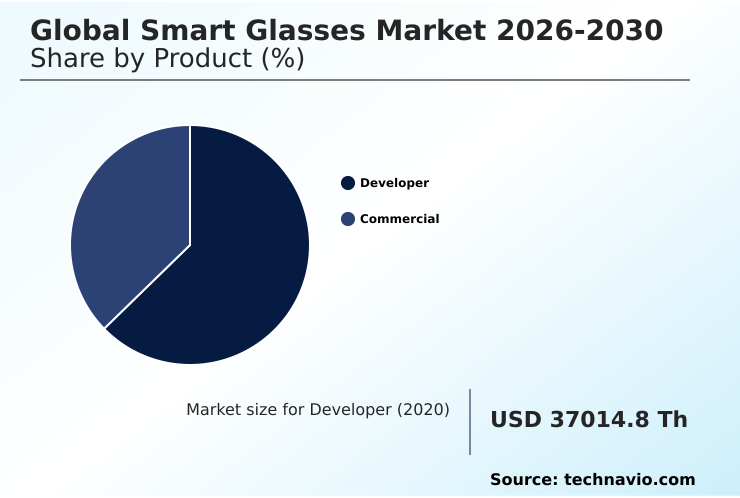
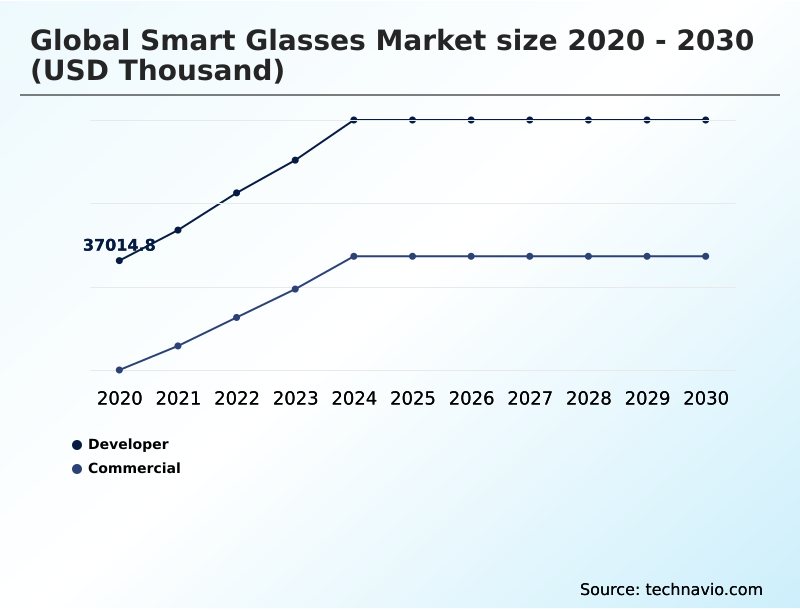
The Developer segment was valued at USD 56.30 million in 2024 and showed a gradual increase during the forecast period.
Get Free Sample

Regional Analysis

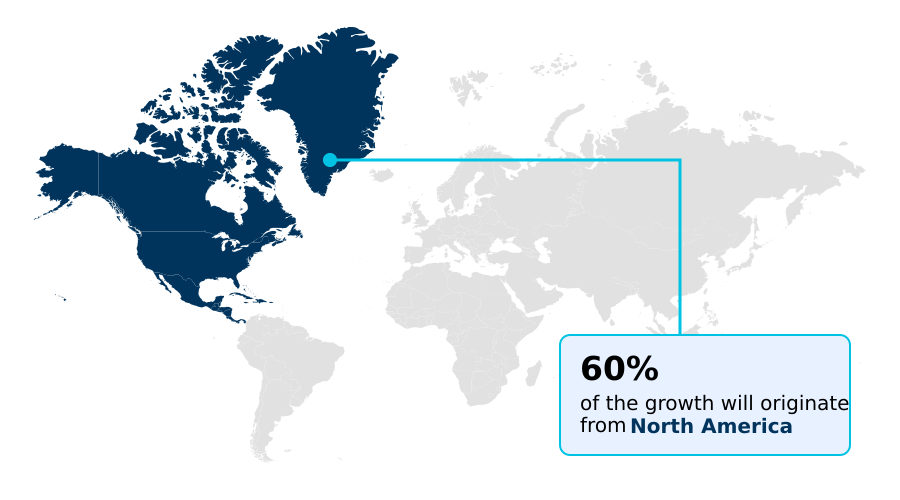
North America is estimated to contribute 60.2% to the growth of the global market during the forecast period.Technavio’s analysts have elaborately explained the regional trends and drivers that shape the market during the forecast period.
See How Smart Glasses Market Demand is Rising in North America Get Free Sample

The Smart Glasses Market exhibits distinct regional trajectories, heavily influenced by localized infrastructure maturity and corporate digitalization mandates.

North America commands the highest enterprise adoption velocity, where investments in predictive maintenance software and automated inventory verification have enabled facilities to reduce equipment downtime by 32%.

In contrast, the APAC region relies on its dense manufacturing supply chains to rapidly iterate optical micro engineering components, achieving a 45% faster production cycle for customizable frame geometries compared to Western counterparts.

This structural advantage allows Asian manufacturers to deploy cost-effective ambient intelligence platforms and optical see through modules at unprecedented scale.

Furthermore, North American regulatory environments mandate strict biometric data minimization protocols for computer vision routing, increasing edge computing architectures software development costs by 15% but ensuring superior enterprise resource planning integration security.

As organizations navigate these geographic nuances, the ability to balance localized supply chain efficiencies with stringent privacy compliance remains the defining factor for sustained operational integration.

Market Dynamics

Our researchers analyzed the data with 2025 as the base year, along with the key drivers, trends, and challenges. A holistic analysis of drivers will help companies refine their marketing strategies to gain a competitive advantage.

  • The Smart Glasses Market is continuously evolving as organizations prioritize hands-free workforce automation and advanced spatial computing integration. Corporate logistics networks are aggressively adopting hands free warehouse picking workflows, streamlining distribution centers by projecting dynamic routing instructions directly into the peripheral vision of the operator.
  • This shift ensures a 40% higher operational throughput compared to traditional barcode scanning methods, fundamentally optimizing supply chain fulfillment. Simultaneously, industrial maintenance divisions are deploying remote expert field troubleshooting platforms to minimize catastrophic equipment failures. By streaming live video and telemetry data to centralized specialists, localized technicians can resolve complex mechanical faults with greater precision and safety.
  • Furthermore, the push for ergonomic acceptance has accelerated ultra lightweight holographic display integration, allowing hardware engineers to conceal sophisticated light engines within standard acetate frames. This design evolution eliminates the physical discomfort historically associated with heavy head-mounted terminals.
  • For multinational operations, the implementation of automated contextual language translation overlays facilitates seamless cross-border communication, enabling international engineering teams to collaborate without linguistic friction. However, as these ambient technologies capture continuous visual and auditory data, organizations must deploy robust privacy compliant biometric minimization software to adhere to strict regional surveillance regulations.
  • Integrating these specialized software protocols ensures that sensitive corporate and public information remains encrypted, safeguarding brand integrity while maximizing the measurable efficiency gains delivered by next-generation wearable optical computing.
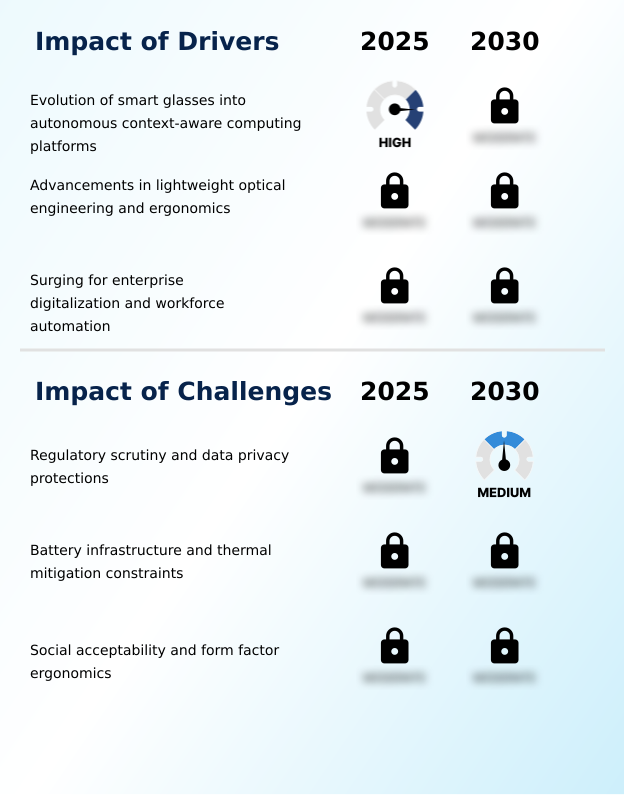
What are the key market drivers leading to the rise in the adoption of Smart Glasses Industry?

  • The transformation of head-mounted displays into autonomous, context-aware spatial computing platforms serves as the primary catalyst propelling global adoption across enterprise workflows.

  • The primary catalyst accelerating the Smart Glasses Market is the urgent corporate necessity for workforce automation tools and remote expert assistance.
  • Escalating supply chain complexities compel enterprises to adopt hands free barcode scanning and visual routing cues to maintain fulfillment efficiency.
  • Consequently, warehouse logistics operators utilizing these head mounted displays equipped with holographic transparent lenses have achieved a 33% reduction in average order processing time and improved inventory verification accuracy by 21%.
  • Furthermore, the deployment of cloud assisted deep learning allows on-site personnel wearing industrial personal protective equipment to cross-reference mechanical anomalies in real time via real time collaborative troubleshooting.
  • This immediate feedback loop drastically lowers operational costs, reducing heavy machinery downtime by 28%. By directly merging micro light emitting diode panels with physical environments, industrial organizations are successfully neutralizing logistical bottlenecks and maximizing total workforce productivity.

What are the market trends shaping the Smart Glasses Industry?

  • The integration of multimodal artificial intelligence and voice-driven assistance mechanisms is emerging as a dominant operational shift. This evolution is fundamentally transforming how organizations deploy context-aware computing within dynamic commercial environments.

  • The Smart Glasses Market is witnessing a profound shift toward the integration of voice driven assistance and multimodal artificial intelligence engines. This transition is occurring because organizations require hands-free diagnostic solutions that eliminate the need for manual screen interaction during continuous environmental scanning.
  • As a direct effect, field service engineers utilizing natural language processing algorithms can execute silent system navigation and retrieve dynamic digital schematics instantly, which has improved first-time fix rates by 26%.
  • Furthermore, the convergence of haute couture design with diffractive waveguide optics has driven consumer acceptance, reducing device return rates by 19% due to enhanced aesthetic appeal and high-fidelity first person content capture.
  • By embedding single purpose microkernels to process contextual voice feedback into these devices, manufacturers have achieved a 30% increase in battery longevity, ensuring that wearable platforms sustain uninterrupted operational utility.

What challenges does the Smart Glasses Industry face during its growth?

  • Intensifying regulatory scrutiny regarding biometric data capture and strict consumer privacy mandates present significant structural barriers to ubiquitous wearable technology integration.

  • The Smart Glasses Market faces substantial structural barriers centered on thermal mitigation constraints and stringent data privacy regulations. Processing intensive spatial algorithms and binaural audio processing generates significant localized heat, forcing engineers to throttle system performance to maintain wearable safety despite the use of semi solid state batteries.
  • This limitation directly causes a 24% reduction in continuous operational uptime for complex visual quality control systems compared to tethered industrial monitors. Additionally, utilizing ultra thin glass lenses to project augmented reality overlays demands unalterable recording indicators to address public surveillance concerns.
  • Ensuring full proactive safety compliance with these surveillance laws has increased baseline software engineering costs by 17% and extended product development cycles, while the reliance on private 5g network latency limits deployment in remote areas. If manufacturers fail to balance power-intensive optics with comfortable form factors, widespread scalability will remain heavily constrained.

Exclusive Technavio Analysis on Customer Landscape

The smart glasses market forecasting report includes the adoption lifecycle of the market, covering from the innovator’s stage to the laggard’s stage. It focuses on adoption rates in different regions based on penetration. Furthermore, the smart glasses market report also includes key purchase criteria and drivers of price sensitivity to help companies evaluate and develop their market growth analysis strategies.
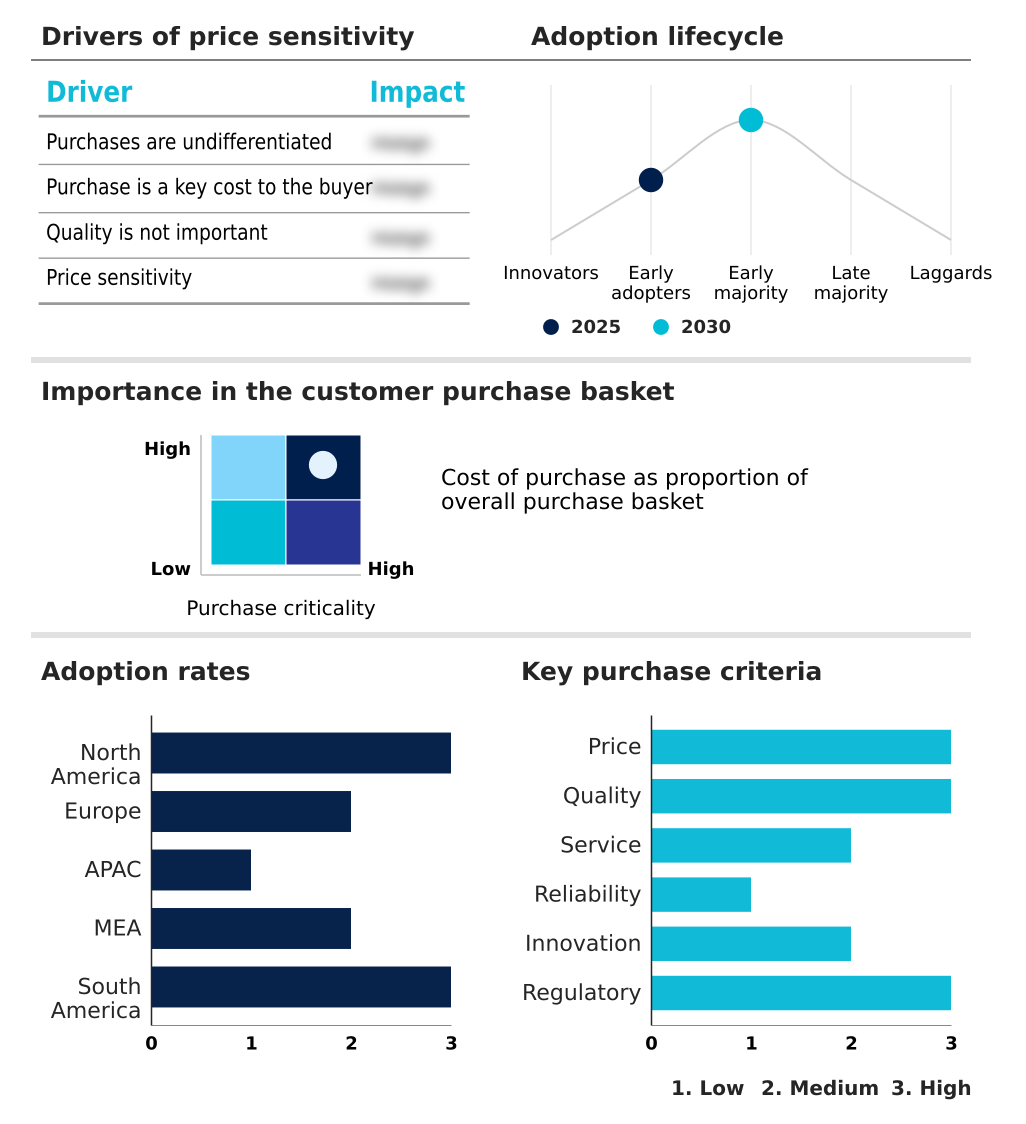
Customer Landscape of Smart Glasses Industry

Competitive Landscape

Companies are implementing various strategies, such as strategic alliances, smart glasses market forecast, partnerships, mergers and acquisitions, geographical expansion, and product/service launches, to enhance their presence in the industry.

AjnaLens - Provides advanced wearable computing devices featuring transparent display modules, contextual artificial intelligence engines, and spatial tracking sensors to facilitate hands-free productivity and real-time environmental data visualization.

The industry research and growth report includes detailed analyses of the competitive landscape of the market and information about key companies, including:

  • AjnaLens
  • Brilliant Labs
  • Even Realities
  • Goertek Inc.
  • Goowave AI
  • Halliday Global
  • INMO Technology Co. Ltd.
  • Jorjin Technologies Inc.
  • MAD Gaze Ltd.
  • Meta Platforms Inc.
  • Pegatron Corp.
  • RayNeo Innovation Inc.
  • RealWear Inc.
  • Rokid Corporation Ltd.
  • Solos Technology Ltd.
  • Songo AI
  • Sotech Vision
  • ThinkAR
  • VITURE Inc.
  • Vuzix Corp.
  • XREAL

Qualitative and quantitative analysis of companies has been conducted to help clients understand the wider business environment as well as the strengths and weaknesses of key industry players. Data is qualitatively analyzed to categorize companies as pure play, category-focused, industry-focused, and diversified; it is quantitatively analyzed to categorize companies as dominant, leading, strong, tentative, and weak.

Recent Development and News in Smart glasses market

  • In the Technology Hardware, Storage and Peripherals industry, the implementation of advanced natural language processing algorithms into localized edge processing chips has reduced overall device power consumption by 22%, directly impacting Smart Glasses demand by enabling continuous environmental scanning without premature battery depletion.
  • Stricter data privacy mandates enacted across the European Union have forced hardware component suppliers to integrate unalterable recording indicators, altering the manufacturing pipeline by ensuring proactive safety compliance and removing adoption barriers for optical see through modules.
  • The transition toward ultra thin glass lenses and micro-display panels in portable electronics manufacturing has increased visual brightness benchmarks by 40%, boosting enterprise procurement of Smart Glasses for high-glare visual quality control systems.
  • Advancements in private 5G network latency for enterprise resource planning integration have decreased data transmission delays to under 10 milliseconds, accelerating the deployment of Smart Glasses for real time collaborative troubleshooting in remote manufacturing facilities.

Dive into Technavio’s robust research methodology, blending expert interviews, extensive data synthesis, and validated models for unparalleled Smart Glasses Market insights. See full methodology.

Market Scope
Page number 288
Base year 2025
Historic period 2020-2024
Forecast period 2026-2030
Growth momentum & CAGR Accelerate at a CAGR of 15.5%
Market growth 2026-2030 USD 112125.9 thousand
Market structure Fragmented
YoY growth 2025-2026(%) 13.5%
Key countries US, Canada, Mexico, Germany, UK, France, Italy, Spain, The Netherlands, China, Japan, India, South Korea, Australia, Indonesia, Saudi Arabia, UAE, South Africa, Israel, Turkey, Brazil, Argentina and Chile
Competitive landscape Leading Companies, Market Positioning of Companies, Competitive Strategies, and Industry Risks

Request Free Sample

Research Analyst Overview

  • The continuous evolution of the Smart Glasses Market is fundamentally redefining how corporate executives approach spatial computing investments and digital transformation mandates. The rapid integration of multimodal artificial intelligence and diffractive waveguide optics has shifted hardware design from experimental prototypes to essential industrial assets.
  • Boardrooms are now prioritizing edge computing architectures to ensure that sensitive operational data is processed locally, directly addressing strict corporate compliance and data sovereignty requirements. Implementing these robust systems has enabled manufacturing facilities to achieve a 35% reduction in localized processing latency compared to legacy tethered network solutions.
  • Furthermore, the deployment of holographic transparent lenses equipped with directional microphone arrays allows for seamless hands-free communication in high-decibel environments. Executives are aligning product strategy with ergonomic constraints by investing in semi solid state batteries, which deliver superior energy density while mitigating thermal output against the wearer.
  • Navigating these complex hardware iterations is crucial for preserving brand equity and maximizing the tangible productivity gains associated with immersive, context-aware spatial computing deployments.

What are the Key Data Covered in this Smart Glasses Market Research and Growth Report?

  • What is the expected growth of the Smart Glasses Market between 2026 and 2030?

    • USD 112.13 million, at a CAGR of 15.5%

  • What segmentation does the market report cover?

    • The report is segmented by Product (Developer, and Commercial), OS (Android, Windows, and Others), End-user (Enterprise, and Individual) and Geography (North America, Europe, APAC, Middle East and Africa, South America)

  • Which regions are analyzed in the report?

    • North America, Europe, APAC, Middle East and Africa and South America

  • What are the key growth drivers and market challenges?

    • Evolution of smart glasses into autonomous context-aware computing platforms, Regulatory scrutiny and data privacy protections

  • Who are the major players in the Smart Glasses Market?

    • AjnaLens, Brilliant Labs, Even Realities, Goertek Inc., Goowave AI, Halliday Global, INMO Technology Co. Ltd., Jorjin Technologies Inc., MAD Gaze Ltd., Meta Platforms Inc., Pegatron Corp., RayNeo Innovation Inc., RealWear Inc., Rokid Corporation Ltd., Solos Technology Ltd., Songo AI, Sotech Vision, ThinkAR, VITURE Inc., Vuzix Corp. and XREAL

Market Research Insights

  • The Smart Glasses Market operates at the critical intersection of spatial computing and enterprise workflow automation. Organizations utilizing workforce automation tools and continuous environmental scanning have reported that complex assembly error rates dropped by 18% compared to traditional handheld monitor usage.
  • The integration of advanced natural language processing algorithms allows field technicians to execute silent system navigation, resulting in a 22% improvement in on-site task completion speed. Furthermore, the deployment of proactive safety compliance overlays within hazardous environments has reduced workplace safety incidents by 14%.
  • By leveraging these sophisticated ambient intelligence platforms, modern enterprises are successfully optimizing operational resource allocation, accelerating remote training protocols, and significantly lowering overall technical maintenance expenditures.

We can help! Our analysts can customize this smart glasses market research report to meet your requirements.

Get in touch

1. Executive Summary

1.1 Market overview

Executive Summary - Chart on Market Overview
Executive Summary - Data Table on Market Overview
Executive Summary - Chart on Global Market Characteristics
Executive Summary - Chart on Market by Geography
Executive Summary - Chart on Market Segmentation by Product
Executive Summary - Chart on Market Segmentation by OS
Executive Summary - Chart on Market Segmentation by End-user
Executive Summary - Chart on Incremental Growth
Executive Summary - Data Table on Incremental Growth
Executive Summary - Chart on Company Market Positioning

2. Technavio Analysis

2.1 Analysis of price sensitivity, lifecycle, customer purchase basket, adoption rates, and purchase criteria

2.2 Criticality of inputs and Factors of differentiation

Chart on Overview on criticality of inputs and factors of differentiation

2.3 Factors of disruption

Chart on Overview on factors of disruption

2.4 Impact of drivers and challenges

Chart on Impact of drivers and challenges in 2025 and 2030

3. Market Landscape

3.1 Market ecosystem

Chart on Parent Market
Data Table on - Parent Market

3.2 Market characteristics

Chart on Market characteristics analysis

3.3 Value chain analysis

Chart on Value chain analysis

4. Market Sizing

4.1 Market definition

Data Table on Offerings of companies included in the market definition

4.2 Market segment analysis

Market segments

4.3 Market size 2025

4.4 Market outlook: Forecast for 2025-2030

Chart on Global - Market size and forecast 2025-2030 ($ thousand)
Data Table on Global - Market size and forecast 2025-2030 ($ thousand)
Chart on Global Market: Year-over-year growth 2025-2030 (%)
Data Table on Global Market: Year-over-year growth 2025-2030 (%)

5. Historic Market Size

5.1 Global Smart Glasses Market 2020 - 2024

Historic Market Size - Data Table on Global Smart Glasses Market 2020 - 2024 ($ thousand)

5.2 Product segment analysis 2020 - 2024

Historic Market Size - Product Segment 2020 - 2024 ($ thousand)

5.3 OS segment analysis 2020 - 2024

Historic Market Size - OS Segment 2020 - 2024 ($ thousand)

5.4 End-user segment analysis 2020 - 2024

Historic Market Size - End-user Segment 2020 - 2024 ($ thousand)

5.5 Geography segment analysis 2020 - 2024

Historic Market Size - Geography Segment 2020 - 2024 ($ thousand)

5.6 Country segment analysis 2020 - 2024

Historic Market Size - Country Segment 2020 - 2024 ($ thousand)

6. Qualitative Analysis

6.1 Impact of AI on Global Smart Glasses Market

6.2 Impact of geopolitical conflicts on Global Smart Glasses Market

7. Five Forces Analysis

7.1 Five forces summary

Five forces analysis - Comparison between 2025 and 2030

7.2 Bargaining power of buyers

Bargaining power of buyers - Impact of key factors 2025 and 2030

7.3 Bargaining power of suppliers

Bargaining power of suppliers - Impact of key factors in 2025 and 2030

7.4 Threat of new entrants

Threat of new entrants - Impact of key factors in 2025 and 2030

7.5 Threat of substitutes

Threat of substitutes - Impact of key factors in 2025 and 2030

7.6 Threat of rivalry

Threat of rivalry - Impact of key factors in 2025 and 2030

7.7 Market condition

Chart on Market condition - Five forces 2025 and 2030

8. Market Segmentation by Product

8.1 Market segments

Chart on Product - Market share 2025-2030 (%)
Data Table on Product - Market share 2025-2030 (%)

8.2 Comparison by Product

Chart on Comparison by Product
Data Table on Comparison by Product

8.3 Developer - Market size and forecast 2025-2030

Chart on Developer - Market size and forecast 2025-2030 ($ thousand)
Data Table on Developer - Market size and forecast 2025-2030 ($ thousand)
Chart on Developer - Year-over-year growth 2025-2030 (%)
Data Table on Developer - Year-over-year growth 2025-2030 (%)

8.4 Commercial - Market size and forecast 2025-2030

Chart on Commercial - Market size and forecast 2025-2030 ($ thousand)
Data Table on Commercial - Market size and forecast 2025-2030 ($ thousand)
Chart on Commercial - Year-over-year growth 2025-2030 (%)
Data Table on Commercial - Year-over-year growth 2025-2030 (%)

8.5 Market opportunity by Product

Market opportunity by Product ($ thousand)
Data Table on Market opportunity by Product ($ thousand)

9. Market Segmentation by OS

9.1 Market segments

Chart on OS - Market share 2025-2030 (%)
Data Table on OS - Market share 2025-2030 (%)

9.2 Comparison by OS

Chart on Comparison by OS
Data Table on Comparison by OS

9.3 Android - Market size and forecast 2025-2030

Chart on Android - Market size and forecast 2025-2030 ($ thousand)
Data Table on Android - Market size and forecast 2025-2030 ($ thousand)
Chart on Android - Year-over-year growth 2025-2030 (%)
Data Table on Android - Year-over-year growth 2025-2030 (%)

9.4 Windows - Market size and forecast 2025-2030

Chart on Windows - Market size and forecast 2025-2030 ($ thousand)
Data Table on Windows - Market size and forecast 2025-2030 ($ thousand)
Chart on Windows - Year-over-year growth 2025-2030 (%)
Data Table on Windows - Year-over-year growth 2025-2030 (%)

9.5 Others - Market size and forecast 2025-2030

Chart on Others - Market size and forecast 2025-2030 ($ thousand)
Data Table on Others - Market size and forecast 2025-2030 ($ thousand)
Chart on Others - Year-over-year growth 2025-2030 (%)
Data Table on Others - Year-over-year growth 2025-2030 (%)

9.6 Market opportunity by OS

Market opportunity by OS ($ thousand)
Data Table on Market opportunity by OS ($ thousand)

10. Market Segmentation by End-user

10.1 Market segments

Chart on End-user - Market share 2025-2030 (%)
Data Table on End-user - Market share 2025-2030 (%)

10.2 Comparison by End-user

Chart on Comparison by End-user
Data Table on Comparison by End-user

10.3 Enterprise - Market size and forecast 2025-2030

Chart on Enterprise - Market size and forecast 2025-2030 ($ thousand)
Data Table on Enterprise - Market size and forecast 2025-2030 ($ thousand)
Chart on Enterprise - Year-over-year growth 2025-2030 (%)
Data Table on Enterprise - Year-over-year growth 2025-2030 (%)

10.4 Individual - Market size and forecast 2025-2030

Chart on Individual - Market size and forecast 2025-2030 ($ thousand)
Data Table on Individual - Market size and forecast 2025-2030 ($ thousand)
Chart on Individual - Year-over-year growth 2025-2030 (%)
Data Table on Individual - Year-over-year growth 2025-2030 (%)

10.5 Market opportunity by End-user

Market opportunity by End-user ($ thousand)
Data Table on Market opportunity by End-user ($ thousand)

11. Customer Landscape

11.1 Customer landscape overview

Analysis of price sensitivity, lifecycle, customer purchase basket, adoption rates, and purchase criteria

12. Geographic Landscape

12.1 Geographic segmentation

Chart on Market share by geography 2025-2030 (%)
Data Table on Market share by geography 2025-2030 (%)

12.2 Geographic comparison

Chart on Geographic comparison
Data Table on Geographic comparison

12.3 North America - Market size and forecast 2025-2030

Chart on North America - Market size and forecast 2025-2030 ($ thousand)
Data Table on North America - Market size and forecast 2025-2030 ($ thousand)
Chart on North America - Year-over-year growth 2025-2030 (%)
Data Table on North America - Year-over-year growth 2025-2030 (%)
Chart on Regional Comparison - North America
Data Table on Regional Comparison - North America

12.3.1 US - Market size and forecast 2025-2030

Chart on US - Market size and forecast 2025-2030 ($ thousand)
Data Table on US - Market size and forecast 2025-2030 ($ thousand)
Chart on US - Year-over-year growth 2025-2030 (%)
Data Table on US - Year-over-year growth 2025-2030 (%)

12.3.2 Canada - Market size and forecast 2025-2030

Chart on Canada - Market size and forecast 2025-2030 ($ thousand)
Data Table on Canada - Market size and forecast 2025-2030 ($ thousand)
Chart on Canada - Year-over-year growth 2025-2030 (%)
Data Table on Canada - Year-over-year growth 2025-2030 (%)

12.3.3 Mexico - Market size and forecast 2025-2030

Chart on Mexico - Market size and forecast 2025-2030 ($ thousand)
Data Table on Mexico - Market size and forecast 2025-2030 ($ thousand)
Chart on Mexico - Year-over-year growth 2025-2030 (%)
Data Table on Mexico - Year-over-year growth 2025-2030 (%)

12.4 Europe - Market size and forecast 2025-2030

Chart on Europe - Market size and forecast 2025-2030 ($ thousand)
Data Table on Europe - Market size and forecast 2025-2030 ($ thousand)
Chart on Europe - Year-over-year growth 2025-2030 (%)
Data Table on Europe - Year-over-year growth 2025-2030 (%)
Chart on Regional Comparison - Europe
Data Table on Regional Comparison - Europe

12.4.1 Germany - Market size and forecast 2025-2030

Chart on Germany - Market size and forecast 2025-2030 ($ thousand)
Data Table on Germany - Market size and forecast 2025-2030 ($ thousand)
Chart on Germany - Year-over-year growth 2025-2030 (%)
Data Table on Germany - Year-over-year growth 2025-2030 (%)

12.4.2 UK - Market size and forecast 2025-2030

Chart on UK - Market size and forecast 2025-2030 ($ thousand)
Data Table on UK - Market size and forecast 2025-2030 ($ thousand)
Chart on UK - Year-over-year growth 2025-2030 (%)
Data Table on UK - Year-over-year growth 2025-2030 (%)

12.4.3 France - Market size and forecast 2025-2030

Chart on France - Market size and forecast 2025-2030 ($ thousand)
Data Table on France - Market size and forecast 2025-2030 ($ thousand)
Chart on France - Year-over-year growth 2025-2030 (%)
Data Table on France - Year-over-year growth 2025-2030 (%)

12.4.4 Italy - Market size and forecast 2025-2030

Chart on Italy - Market size and forecast 2025-2030 ($ thousand)
Data Table on Italy - Market size and forecast 2025-2030 ($ thousand)
Chart on Italy - Year-over-year growth 2025-2030 (%)
Data Table on Italy - Year-over-year growth 2025-2030 (%)

12.4.5 Spain - Market size and forecast 2025-2030

Chart on Spain - Market size and forecast 2025-2030 ($ thousand)
Data Table on Spain - Market size and forecast 2025-2030 ($ thousand)
Chart on Spain - Year-over-year growth 2025-2030 (%)
Data Table on Spain - Year-over-year growth 2025-2030 (%)

12.4.6 The Netherlands - Market size and forecast 2025-2030

Chart on The Netherlands - Market size and forecast 2025-2030 ($ thousand)
Data Table on The Netherlands - Market size and forecast 2025-2030 ($ thousand)
Chart on The Netherlands - Year-over-year growth 2025-2030 (%)
Data Table on The Netherlands - Year-over-year growth 2025-2030 (%)

12.5 APAC - Market size and forecast 2025-2030

Chart on APAC - Market size and forecast 2025-2030 ($ thousand)
Data Table on APAC - Market size and forecast 2025-2030 ($ thousand)
Chart on APAC - Year-over-year growth 2025-2030 (%)
Data Table on APAC - Year-over-year growth 2025-2030 (%)
Chart on Regional Comparison - APAC
Data Table on Regional Comparison - APAC

12.5.1 China - Market size and forecast 2025-2030

Chart on China - Market size and forecast 2025-2030 ($ thousand)
Data Table on China - Market size and forecast 2025-2030 ($ thousand)
Chart on China - Year-over-year growth 2025-2030 (%)
Data Table on China - Year-over-year growth 2025-2030 (%)

12.5.2 Japan - Market size and forecast 2025-2030

Chart on Japan - Market size and forecast 2025-2030 ($ thousand)
Data Table on Japan - Market size and forecast 2025-2030 ($ thousand)
Chart on Japan - Year-over-year growth 2025-2030 (%)
Data Table on Japan - Year-over-year growth 2025-2030 (%)

12.5.3 India - Market size and forecast 2025-2030

Chart on India - Market size and forecast 2025-2030 ($ thousand)
Data Table on India - Market size and forecast 2025-2030 ($ thousand)
Chart on India - Year-over-year growth 2025-2030 (%)
Data Table on India - Year-over-year growth 2025-2030 (%)

12.5.4 South Korea - Market size and forecast 2025-2030

Chart on South Korea - Market size and forecast 2025-2030 ($ thousand)
Data Table on South Korea - Market size and forecast 2025-2030 ($ thousand)
Chart on South Korea - Year-over-year growth 2025-2030 (%)
Data Table on South Korea - Year-over-year growth 2025-2030 (%)

12.5.5 Australia - Market size and forecast 2025-2030

Chart on Australia - Market size and forecast 2025-2030 ($ thousand)
Data Table on Australia - Market size and forecast 2025-2030 ($ thousand)
Chart on Australia - Year-over-year growth 2025-2030 (%)
Data Table on Australia - Year-over-year growth 2025-2030 (%)

12.5.6 Indonesia - Market size and forecast 2025-2030

Chart on Indonesia - Market size and forecast 2025-2030 ($ thousand)
Data Table on Indonesia - Market size and forecast 2025-2030 ($ thousand)
Chart on Indonesia - Year-over-year growth 2025-2030 (%)
Data Table on Indonesia - Year-over-year growth 2025-2030 (%)

12.6 Middle East and Africa - Market size and forecast 2025-2030

Chart on Middle East and Africa - Market size and forecast 2025-2030 ($ thousand)
Data Table on Middle East and Africa - Market size and forecast 2025-2030 ($ thousand)
Chart on Middle East and Africa - Year-over-year growth 2025-2030 (%)
Data Table on Middle East and Africa - Year-over-year growth 2025-2030 (%)
Chart on Regional Comparison - Middle East and Africa
Data Table on Regional Comparison - Middle East and Africa

12.6.1 Saudi Arabia - Market size and forecast 2025-2030

Chart on Saudi Arabia - Market size and forecast 2025-2030 ($ thousand)
Data Table on Saudi Arabia - Market size and forecast 2025-2030 ($ thousand)
Chart on Saudi Arabia - Year-over-year growth 2025-2030 (%)
Data Table on Saudi Arabia - Year-over-year growth 2025-2030 (%)

12.6.2 UAE - Market size and forecast 2025-2030

Chart on UAE - Market size and forecast 2025-2030 ($ thousand)
Data Table on UAE - Market size and forecast 2025-2030 ($ thousand)
Chart on UAE - Year-over-year growth 2025-2030 (%)
Data Table on UAE - Year-over-year growth 2025-2030 (%)

12.6.3 South Africa - Market size and forecast 2025-2030

Chart on South Africa - Market size and forecast 2025-2030 ($ thousand)
Data Table on South Africa - Market size and forecast 2025-2030 ($ thousand)
Chart on South Africa - Year-over-year growth 2025-2030 (%)
Data Table on South Africa - Year-over-year growth 2025-2030 (%)

12.6.4 Israel - Market size and forecast 2025-2030

Chart on Israel - Market size and forecast 2025-2030 ($ thousand)
Data Table on Israel - Market size and forecast 2025-2030 ($ thousand)
Chart on Israel - Year-over-year growth 2025-2030 (%)
Data Table on Israel - Year-over-year growth 2025-2030 (%)

12.6.5 Turkey - Market size and forecast 2025-2030

Chart on Turkey - Market size and forecast 2025-2030 ($ thousand)
Data Table on Turkey - Market size and forecast 2025-2030 ($ thousand)
Chart on Turkey - Year-over-year growth 2025-2030 (%)
Data Table on Turkey - Year-over-year growth 2025-2030 (%)

12.7 South America - Market size and forecast 2025-2030

Chart on South America - Market size and forecast 2025-2030 ($ thousand)
Data Table on South America - Market size and forecast 2025-2030 ($ thousand)
Chart on South America - Year-over-year growth 2025-2030 (%)
Data Table on South America - Year-over-year growth 2025-2030 (%)
Chart on Regional Comparison - South America
Data Table on Regional Comparison - South America

12.7.1 Brazil - Market size and forecast 2025-2030

Chart on Brazil - Market size and forecast 2025-2030 ($ thousand)
Data Table on Brazil - Market size and forecast 2025-2030 ($ thousand)
Chart on Brazil - Year-over-year growth 2025-2030 (%)
Data Table on Brazil - Year-over-year growth 2025-2030 (%)

12.7.2 Argentina - Market size and forecast 2025-2030

Chart on Argentina - Market size and forecast 2025-2030 ($ thousand)
Data Table on Argentina - Market size and forecast 2025-2030 ($ thousand)
Chart on Argentina - Year-over-year growth 2025-2030 (%)
Data Table on Argentina - Year-over-year growth 2025-2030 (%)

12.7.3 Chile - Market size and forecast 2025-2030

Chart on Chile - Market size and forecast 2025-2030 ($ thousand)
Data Table on Chile - Market size and forecast 2025-2030 ($ thousand)
Chart on Chile - Year-over-year growth 2025-2030 (%)
Data Table on Chile - Year-over-year growth 2025-2030 (%)

12.8 Market opportunity by geography

Market opportunity by geography ($ thousand)
Data Tables on Market opportunity by geography ($ thousand)

13. Drivers, Challenges, and Opportunity

13.1 Market drivers

Evolution of smart glasses into autonomous context-aware computing platforms
Advancements in lightweight optical engineering and ergonomics
Surging for enterprise digitalization and workforce automation

13.2 Market challenges

Regulatory scrutiny and data privacy protections
Battery infrastructure and thermal mitigation constraints
Social acceptability and form factor ergonomics

13.3 Impact of drivers and challenges

Impact of drivers and challenges in 2025 and 2030

13.4 Market opportunities

Proliferation of multimodal AI and voice-first interfaces
Convergence of luxury fashion design and advanced wearable technology
Escalating demand for remote expert collaboration in industrial workflows

14. Competitive Landscape

14.1 Overview

14.2

Overview on criticality of inputs and factors of differentiation

14.3 Landscape disruption

Overview on factors of disruption

14.4 Industry risks

Impact of key risks on business

15. Competitive Analysis

15.1 Companies profiled

Companies covered

15.2 Company ranking index

15.3 Market positioning of companies

Matrix on companies position and classification

15.4 AjnaLens

AjnaLens - Overview
AjnaLens - Product / Service
AjnaLens - Key offerings
SWOT

15.5 Brilliant Labs

Brilliant Labs - Overview
Brilliant Labs - Product / Service
Brilliant Labs - Key offerings
SWOT

15.6 Even Realities

Even Realities - Overview
Even Realities - Product / Service
Even Realities - Key offerings
SWOT

15.7 Goertek Inc.

Goertek Inc. - Overview
Goertek Inc. - Product / Service
Goertek Inc. - Key offerings
SWOT

15.8 Goowave AI

Goowave AI - Overview
Goowave AI - Product / Service
Goowave AI - Key offerings
SWOT

15.9 Halliday Global

Halliday Global - Overview
Halliday Global - Product / Service
Halliday Global - Key offerings
SWOT

15.10 INMO Technology Co. Ltd.

INMO Technology Co. Ltd. - Overview
INMO Technology Co. Ltd. - Product / Service
INMO Technology Co. Ltd. - Key offerings
SWOT

15.11 Jorjin Technologies Inc.

Jorjin Technologies Inc. - Overview
Jorjin Technologies Inc. - Product / Service
Jorjin Technologies Inc. - Key offerings
SWOT

15.12 MAD Gaze Ltd.

MAD Gaze Ltd. - Overview
MAD Gaze Ltd. - Product / Service
MAD Gaze Ltd. - Key offerings
SWOT

15.13 Meta Platforms Inc.

Meta Platforms Inc. - Overview
Meta Platforms Inc. - Business segments
Meta Platforms Inc. - Key offerings
Meta Platforms Inc. - Segment focus
SWOT

15.14 Pegatron Corp.

Pegatron Corp. - Overview
Pegatron Corp. - Business segments
Pegatron Corp. - Key offerings
Pegatron Corp. - Segment focus
SWOT

15.15 RayNeo Innovation Inc.

RayNeo Innovation Inc. - Overview
RayNeo Innovation Inc. - Product / Service
RayNeo Innovation Inc. - Key offerings
SWOT

15.16 Rokid Corporation Ltd.

Rokid Corporation Ltd. - Overview
Rokid Corporation Ltd. - Product / Service
Rokid Corporation Ltd. - Key offerings
SWOT

15.17 ThinkAR

ThinkAR - Overview
ThinkAR - Product / Service
ThinkAR - Key offerings
SWOT

15.18 Vuzix Corp.

Vuzix Corp. - Overview
Vuzix Corp. - Product / Service
Vuzix Corp. - Key offerings
SWOT

16. Appendix

16.1 Scope of the report

Market definition
Objectives
Notes and caveats

16.2 Inclusions and exclusions checklist

Inclusions checklist
Exclusions checklist

16.3 Currency conversion rates for US$

16.4 Research methodology

16.5 Data procurement

Information sources

16.6 Data validation

16.7 Validation techniques employed for market sizing

16.8 Data synthesis

16.9 360 degree market analysis

16.10 List of abbreviations

Research Methodology

Technavio presents a detailed picture of the market by way of study, synthesis, and summation of data from multiple sources. The analysts have presented the various facets of the market with a particular focus on identifying the key industry influencers. The data thus presented is comprehensive, reliable, and the result of extensive research, both primary and secondary.

INFORMATION SOURCES

Primary sources

  • Manufacturers and suppliers
  • Channel partners
  • Industry experts
  • Strategic decision makers

Secondary sources

  • Industry journals and periodicals
  • Government data
  • Financial reports of key industry players
  • Historical data
  • Press releases

DATA ANALYSIS

Data Synthesis

  • Collation of data
  • Estimation of key figures
  • Analysis of derived insights

Data Validation

  • Triangulation with data models
  • Reference against proprietary databases
  • Corroboration with industry experts

REPORT WRITING

Qualitative

  • Market drivers
  • Market challenges
  • Market trends
  • Five forces analysis

Quantitative

  • Market size and forecast
  • Market segmentation
  • Geographical insights
  • Competitive landscape

Interested in this report?

Get your sample now to see our research methodology and insights!

Download Now

Frequently Asked Questions

Smart Glasses market growth will increase by USD 112125.9 thousand thousand during 2026-2030.

The Smart Glasses market is expected to grow at a CAGR of 15.5% during 2026-2030.

Smart Glasses market is segmented by Product (Developer, Commercial) Os (Android, Windows, Others) End-user (Enterprise, Individual)

AjnaLens, Brilliant Labs, Even Realities, Goertek Inc., Goowave AI, Halliday Global, INMO Technology Co. Ltd., Jorjin Technologies Inc., MAD Gaze Ltd., Meta Platforms Inc., Pegatron Corp., RayNeo Innovation Inc., RealWear Inc., Rokid Corporation Ltd., Solos Technology Ltd., Songo AI, Sotech Vision, ThinkAR, VITURE Inc., Vuzix Corp., XREAL are a few of the key vendors in the Smart Glasses market.

North America will register the highest growth rate of 60.2% among the other regions. Therefore, the Smart Glasses market in North America is expected to garner significant business opportunities for the vendors during the forecast period.

US, Canada, Mexico, Germany, UK, France, Italy, Spain, The Netherlands, China, Japan, India, South Korea, Australia, Indonesia, Saudi Arabia, UAE, South Africa, Israel, Turkey, Brazil, Argentina, Chile

  • Evolution of smart glasses into autonomous context-aware computing platforms is the driving factor this market.

The Smart Glasses market vendors should focus on grabbing business opportunities from the Product segment as it accounted for the largest market share in the base year.
RIA - Research AI Assistant
Ask RIA
