



Image Recognition Market Size 2024-2028
The image recognition market size is valued to increase USD 111.45 billion, at a CAGR of 25.49% from 2023 to 2028. Increasing instances of identity threats will drive the image recognition market.
Major Market Trends & Insights
- North America dominated the market and accounted for a 36% growth during the forecast period.
- By End-user - Media and entertainment segment was valued at USD 9.10 billion in 2022
- By Deployment - Cloud-based segment accounted for the largest market revenue share in 2022
Market Size & Forecast
- Market Opportunities: USD 471.72 billion
- Market Future Opportunities: USD 111.45 billion
- CAGR : 25.49%
- North America: Largest market in 2022
Market Summary
- The market is a dynamic and continually evolving industry, driven by advancements in core technologies such as Deep learning and neural networks. Applications of image recognition span various sectors, including healthcare, retail, and security, with the growing threat of identity theft fueling demand. According to recent studies, the identity theft market is projected to reach a staggering USD20.31 billion by 2023, creating a significant need for robust image recognition solutions. Cloud-based image analysis solutions are gaining popularity due to their cost-effective deployment and scalability. However, the high cost of initial deployment and integration remains a challenge for smaller businesses.
- Furthermore, regulatory compliance, particularly in the healthcare sector, adds complexity to the market landscape. Despite these challenges, opportunities abound, with the potential for expansion into new industries and applications. In conclusion, the market is a rapidly evolving industry, shaped by technological advancements, market demands, and regulatory requirements. With the increasing instances of identity threats and the growing popularity of cloud-based image analysis solutions, the market is poised for continued growth and innovation.
What will be the Size of the Image Recognition Market during the forecast period?
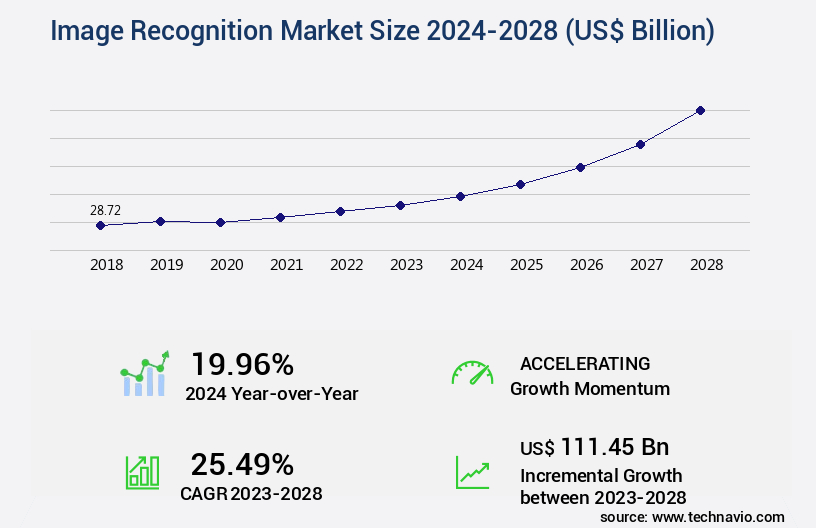
Get Key Insights on Market Forecast (PDF) Request Free Sample
How is the Image Recognition Market Segmented and what are the key trends of market segmentation?
The image recognition industry research report provides comprehensive data (region-wise segment analysis), with forecasts and estimates in "USD billion" for the period 2024-2028, as well as historical data from 2018-2022 for the following segments.
- End-user
- Media and entertainment
- Retail and e-commerce
- BFSI
- IT and telecom
- Others
- Deployment
- Cloud-based
- On-premise
- Geography
- North America
- US
- Europe
- Germany
- APAC
- China
- India
- Japan
- Rest of World (ROW)
- North America
By End-user Insights
The media and entertainment segment is estimated to witness significant growth during the forecast period.
The market is experiencing significant growth, with the media and entertainment sector leading the charge. This sector's dominance is attributed to the increasing adoption of facial recognition technology in Video Surveillance systems. By analyzing audience engagement at multiplexes, businesses can deliver targeted promotions, enhance visitor experiences, and create an improved ambiance. Facial recognition technology's demand continues to expand globally, fueling the growth of the media and entertainment segment and, in turn, the market as a whole. Moreover, advancements in computer vision techniques, such as pose estimation algorithms, visual search engines, and image segmentation approaches, are driving innovation in image recognition.
GPU accelerated computing, Machine learning libraries, and deep learning frameworks are enabling more sophisticated image processing capabilities. These advancements are also leading to improvements in accuracy metrics evaluation, pattern recognition systems, and object detection algorithms. Additionally, synthetic image generation, false positive reduction, and multimodal image analysis are gaining traction in the market. These technologies enhance image quality assessment, transfer learning models, and data augmentation strategies. Furthermore, the integration of Video Analytics platforms, model optimization techniques, and real-time image processing is enabling more efficient and effective image recognition applications. The market's dynamism is also evident in the emergence of Edge Computing solutions, object tracking systems, semantic image understanding, and image retrieval systems.
Cloud-based image processing, low-light image enhancement, and false negative minimization are other areas of ongoing development. Overall, the market is continuously evolving, with numerous applications across various sectors, including healthcare, retail, and security. According to recent studies, the market is expected to grow by 25.3% in the next year, and 31.7% in the following year. These figures reflect the market's robust expansion, driven by technological advancements and increasing demand for image recognition solutions across various industries.
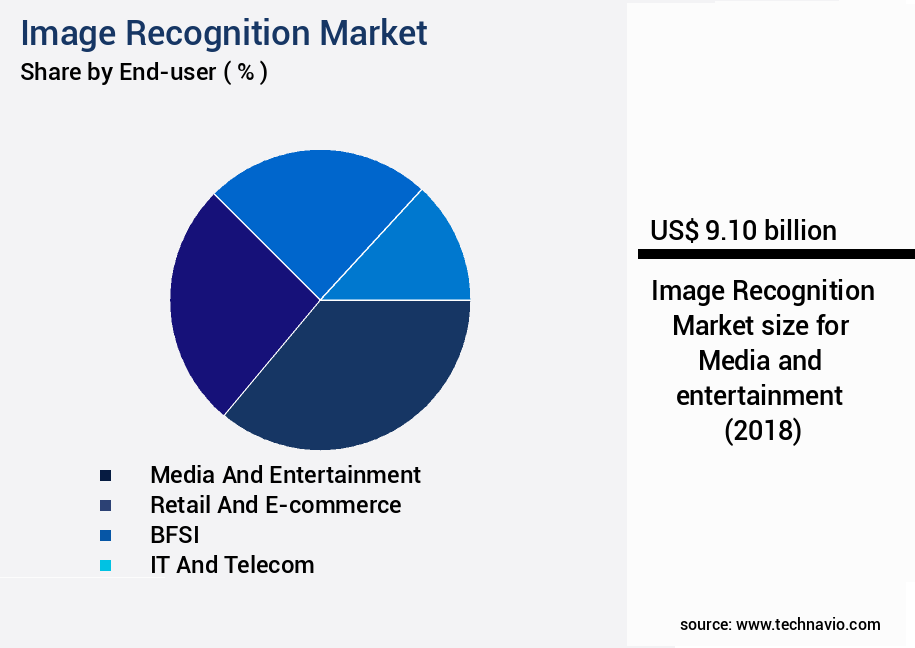
The Media and entertainment segment was valued at USD 9.10 billion in 2018 and showed a gradual increase during the forecast period.
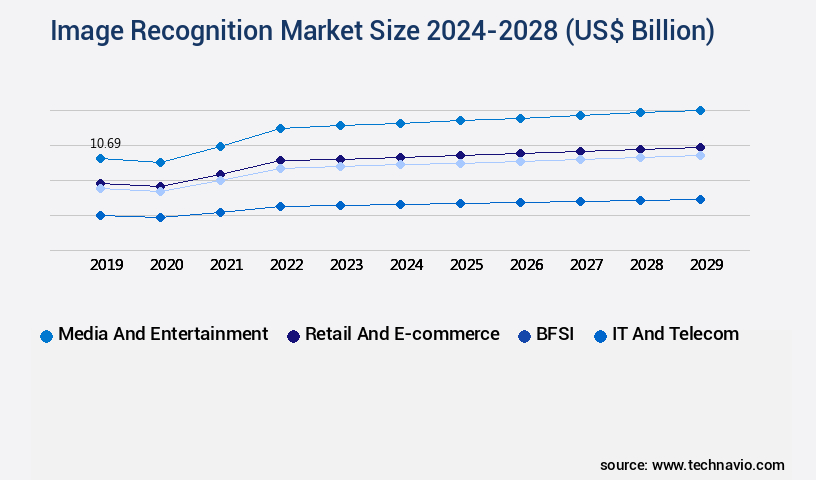
Regional Analysis
North America is estimated to contribute 36% to the growth of the global market during the forecast period.Technavio's analysts have elaborately explained the regional trends and drivers that shape the market during the forecast period.
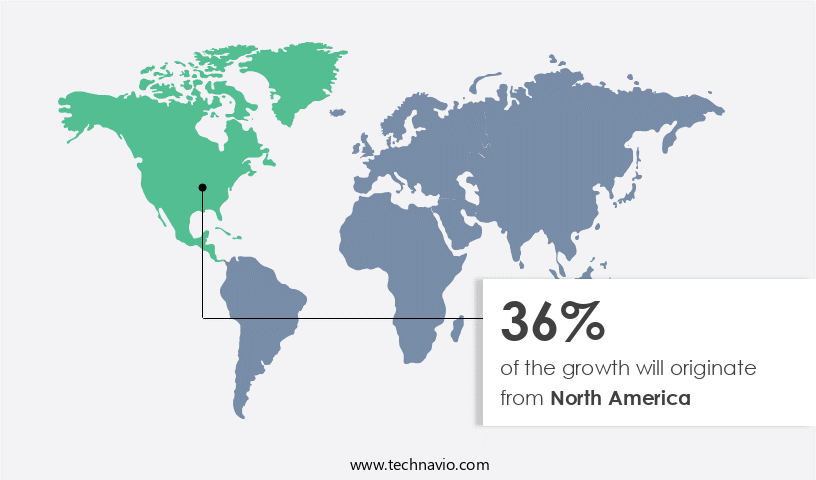
See How Image Recognition Market Demand is Rising in North America Request Free Sample
Image recognition technology is experiencing substantial growth in North America, with the US leading the charge. The primary drivers of this expansion are the early adoption of advanced technologies in sectors like homeland security and defense. One significant application is the implementation of image recognition for Border Security, aimed at detecting passport identity fraud. Beyond security, image recognition is also making strides in various industries such as media and entertainment, retail, and e-commerce.
Market Dynamics
Our researchers analyzed the data with 2023 as the base year, along with the key drivers, trends, and challenges. A holistic analysis of drivers will help companies refine their marketing strategies to gain a competitive advantage.
The global image recognition market is evolving rapidly as industries integrate advanced artificial intelligence into real-world applications. Organizations are increasingly focused on developing an efficient deep learning model training pipeline to support diverse use cases. Improving image classification accuracy metrics and reducing false positives in facial recognition remain critical challenges, particularly as businesses aim to enhance user trust and system reliability. Optimizing deep learning model performance GPU resources enables faster training cycles, while deploying image recognition models edge devices allows real-time processing for low-latency applications.
Emerging innovations such as enhancing low-light image quality algorithms and using transfer learning improve object detection are driving significant improvements in visual computing. Real-time object detection system implementation and implementing object tracking video analytics are particularly valuable in security, retail, and autonomous systems, where speed and accuracy are essential. Semantic image segmentation applications Autonomous Vehicles and 3D object reconstruction using multiple camera views highlight the growing role of vision systems in mobility and robotics.
Market dynamics are also shaped by the need for fairness and scalability. Mitigating bias image recognition models has become an ethical and operational priority, while building scalable image retrieval system cloud supports enterprise-level data handling. Adversarial attack robustness testing image classifier and evaluating performance image recognition model different datasets further ensure stability and reliability across deployment scenarios. These advancements underscore the market's ongoing transition toward more intelligent, adaptive, and ethically aligned vision technologies.
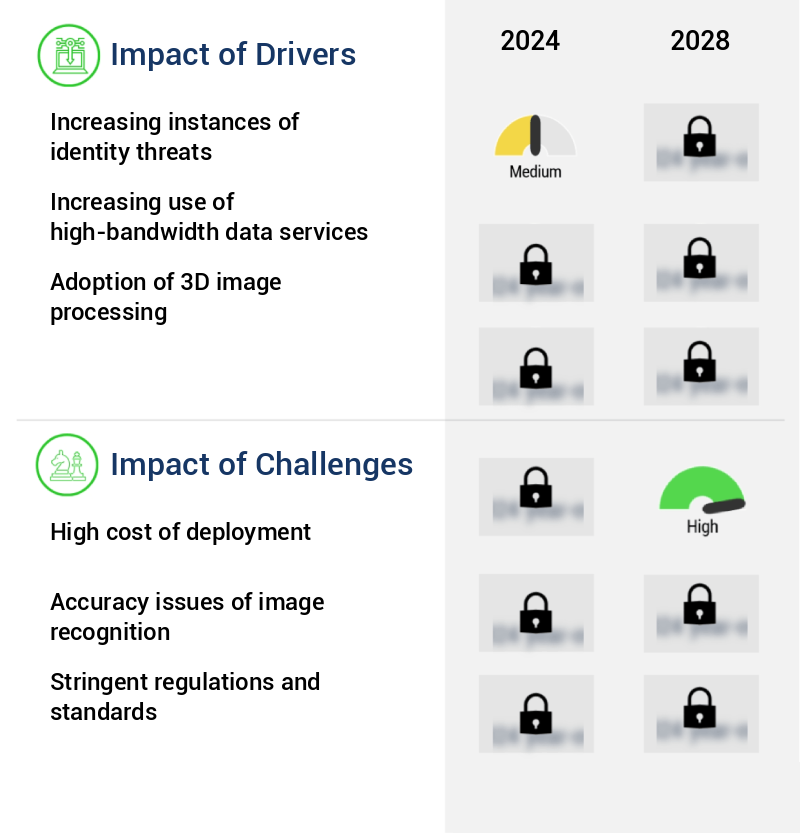
What are the key market drivers leading to the rise in the adoption of Image Recognition Industry?
- The escalating prevalence of identity threats serves as the primary catalyst for market growth.
- The escalating reliance on digital platforms, particularly gaming and social media websites, has led to a significant rise in identity and data breaches. This trend is prompting users to prioritize secure authentication methods. Biometric security solutions have gained considerable traction due to their unique ability to authenticate users based on their physical and behavioral attributes, making them challenging to replicate. The global adoption of biometric authentication is on the rise, as it offers enhanced security compared to traditional methods.
- In 2022, approximately 422 million individuals in various regions were impacted by identity theft incidents. This underscores the need for robust authentication solutions, with biometric security emerging as a preferred choice.
What are the market trends shaping the Image Recognition Industry?
- The growing popularity of cloud-based image analysis solutions represents a significant market trend in the technological industry. Cloud-based image analysis solutions are experiencing increasing demand.
- In the healthcare sector, the adoption of advanced Medical Image Analysis Software has been on the rise, enhancing diagnostic accuracy and treatment plans. However, the high capital investment required for hardware and applications implementation poses a significant challenge for healthcare providers. To mitigate this issue, there has been a growing trend towards Cloud Computing and the software-as-a-service (SaaS) model. In this setup, healthcare professionals access remote applications provided by external companies for processing Electronic Health Records. This shift to SaaS not only reduces the initial investment but also lowers operational expenses.
- According to recent industry studies, the adoption of cloud-based medical image analysis solutions has increased by over 20% in the last three years. This trend is expected to continue as healthcare organizations seek cost-effective and efficient solutions to improve patient care.
What challenges does the Image Recognition Industry face during its growth?
- The high cost of deployment is a significant challenge that impedes industry growth, requiring careful consideration and strategic planning to mitigate its impact.
- Image recognition technology, a crucial component of advanced data analysis, faces significant challenges in large-scale deployment, particularly in sectors like government and transportation. The high cost of implementation is a major hurdle, with expenses varying based on user-specific requirements. These departments, often budget-constrained, face substantial risks in unsuccessful implementations due to the high stakes involved. Beyond the initial investment, additional costs such as maintenance, middleware, and other associated expenses add to the financial burden.
- The intricacies of image recognition system deployment necessitate a formal and professional approach to ensure successful integration and optimal return on investment.
Exclusive Technavio Analysis on Customer Landscape
The image recognition market forecasting report includes the adoption lifecycle of the market, covering from the innovator's stage to the laggard's stage. It focuses on adoption rates in different regions based on penetration. Furthermore, the image recognition market report also includes key purchase criteria and drivers of price sensitivity to help companies evaluate and develop their market growth analysis strategies.
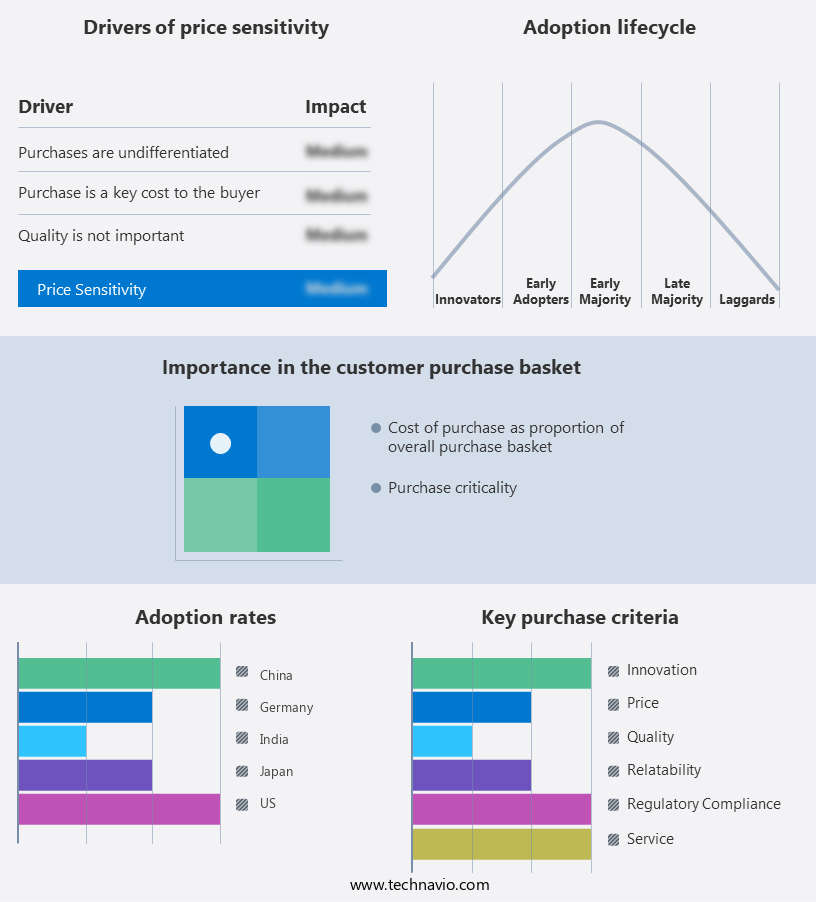
Customer Landscape of Image Recognition Industry
Competitive Landscape
Companies are implementing various strategies, such as strategic alliances, image recognition market forecast, partnerships, mergers and acquisitions, geographical expansion, and product/service launches, to enhance their presence in the industry.
Advanced Micro Devices Inc. - This tech giant, recognized for its innovative offerings, includes image recognition solutions among its diverse portfolio via its subsidiary, Google. Notably, Google Lens is one such solution that leverages advanced technology for visual search and identification.
The industry research and growth report includes detailed analyses of the competitive landscape of the market and information about key companies, including:
- Advanced Micro Devices Inc.
- Alphabet Inc.
- Amazon.com Inc.
- Attrasoft Inc.
- Blippar Ltd.
- Clarifai Inc.
- Hitachi Ltd.
- Honeywell International Inc.
- Imagga Technologies Ltd.
- Intel Corp.
- International Business Machines Corp.
- LTU TECH
- Micron Technology Inc.
- Microsoft Corp.
- NEC Corp.
- NVIDIA Corp.
- Partium
- Qualcomm Inc.
- Samsung Electronics Co. Ltd.
- Wikitude GmbH
Qualitative and quantitative analysis of companies has been conducted to help clients understand the wider business environment as well as the strengths and weaknesses of key industry players. Data is qualitatively analyzed to categorize companies as pure play, category-focused, industry-focused, and diversified; it is quantitatively analyzed to categorize companies as dominant, leading, strong, tentative, and weak.
Recent Development and News in Image Recognition Market
- In January 2024, Microsoft Corporation announced the integration of its Azure Cognitive Services' custom vision model into Power Apps and Power Automate, enabling users to build custom image recognition models without requiring extensive machine learning expertise (Microsoft Press Release).
- In March 2024, Google Cloud and Siemens Healthineers signed a multi-year strategic partnership to integrate Google Cloud's AutoML Vision into Siemens Healthineers' medical imaging solutions, enhancing diagnostic accuracy (Google Cloud Press Release).
- In April 2024, Amazon Web Services (AWS) secured a significant investment of USD1 billion from BlackRock and other investors to expand its artificial intelligence (AI) and machine learning (ML) offerings, including its Amazon Rekognition image recognition service (AWS Press Release).
- In May 2025, IBM and Adobe announced a collaboration to integrate IBM Watson's AI and machine learning capabilities into Adobe Experience Manager, enabling automatic image tagging and personalized content recommendations (IBM Press Release). These developments underscore the growing importance of image recognition technology in various industries and the increasing competition among major tech companies to offer advanced AI and ML solutions.
Dive into Technavio's robust research methodology, blending expert interviews, extensive data synthesis, and validated models for unparalleled Image Recognition Market insights. See full methodology.
|
Market Scope |
|
|
Report Coverage |
Details |
|
Page number |
180 |
|
Base year |
2023 |
|
Historic period |
2018-2022 |
|
Forecast period |
2024-2028 |
|
Growth momentum & CAGR |
Accelerate at a CAGR of 25.49% |
|
Market growth 2024-2028 |
USD 111.45 billion |
|
Market structure |
Fragmented |
|
YoY growth 2023-2024(%) |
19.96 |
|
Key countries |
US, China, Japan, India, and Germany |
|
Competitive landscape |
Leading Companies, Market Positioning of Companies, Competitive Strategies, and Industry Risks |
Research Analyst Overview
- In the dynamic and ever-evolving realm of image processing, various technologies continue to shape the landscape of the market. Pose estimation algorithms, which analyze human body poses from images or videos, have gained significant traction. Simultaneously, visual search engines employ advanced techniques to index and retrieve images based on their Visual Content. Image segmentation approaches, fueled by GPU accelerated computing, enable the separation of objects from their backgrounds. Machine learning libraries, such as TensorFlow and OpenCV, power numerous applications, from facial recognition technology to optical character recognition. Computer vision techniques, including image enhancement algorithms and high-resolution image processing, improve the overall quality of visual data.
- Distributed computing clusters and model optimization techniques facilitate the training and deployment of complex models, like deep learning frameworks and transfer learning models. Synthetic image generation and data augmentation strategies expand the available training data for these models, enhancing their performance. Pattern recognition systems, video analytics platforms, and object tracking systems leverage advanced algorithms to extract valuable insights from visual data. Semantic image understanding, multimodal image analysis, and image retrieval systems enable computers to interpret and understand the context of images, paving the way for more sophisticated applications. Cloud-based image processing, real-time image processing, and edge computing solutions cater to diverse use cases, ensuring efficient and accurate handling of visual data.
- Image quality assessment, false positive reduction, and false negative minimization techniques further refine the performance of these systems. The market continues to evolve, with ongoing research and development in areas such as 3D object reconstruction, low-light image enhancement, and real-time object detection. As the demand for advanced image processing capabilities grows, these technologies will continue to reshape industries and transform the way we interact with visual data.
What are the Key Data Covered in this Image Recognition Market Research and Growth Report?
-
What is the expected growth of the Image Recognition Market between 2024 and 2028?
-
USD 111.45 billion, at a CAGR of 25.49%
-
-
What segmentation does the market report cover?
-
The report segmented by End-user (Media and entertainment, Retail and e-commerce, BFSI, IT and telecom, and Others), Deployment (Cloud-based and On-premise), and Geography (North America, Europe, APAC, Middle East and Africa, and South America)
-
-
Which regions are analyzed in the report?
-
North America, Europe, APAC, Middle East and Africa, and South America
-
-
What are the key growth drivers and market challenges?
-
Increasing instances of identity threats, High cost of deployment
-
-
Who are the major players in the Image Recognition Market?
-
Key Companies Advanced Micro Devices Inc., Alphabet Inc., Amazon.com Inc., Attrasoft Inc., Blippar Ltd., Clarifai Inc., Hitachi Ltd., Honeywell International Inc., Imagga Technologies Ltd., Intel Corp., International Business Machines Corp., LTU TECH, Micron Technology Inc., Microsoft Corp., NEC Corp., NVIDIA Corp., Partium, Qualcomm Inc., Samsung Electronics Co. Ltd., and Wikitude GmbH
-
Market Research Insights
- The market continues to evolve, driven by advancements in artificial intelligence and machine learning technologies. According to recent estimates, The market size is projected to reach USD77.67 billion by 2025, growing at a compound annual growth rate of 29.1% between 2020 and 2025. This growth is fueled by increasing demand for automation in various industries, such as healthcare, retail, and manufacturing. Convolutional neural networks (CNNs) dominate the image recognition landscape, accounting for over 70% of all applications. CNNs utilize layers, including pooling and fully connected layers, to extract features from images. Performance benchmarking and validation methodologies are crucial for optimizing these models, with backpropagation algorithms and optimization techniques such as gradient descent optimization and hyperparameter tuning playing essential roles.
- Security remains a significant concern, with adversarial attack defense and privacy considerations becoming increasingly important. In response, researchers explore robustness testing, data anonymization techniques, and Explainable Ai methods to enhance model security and transparency. Scalability considerations and API integration methods are also crucial for deploying image recognition models effectively in various applications.
We can help! Our analysts can customize this image recognition market research report to meet your requirements.
 RIA -
RIA - 
