



Robotics As A Service (RaaS) Market Size 2024-2028
The robotics as a service (raas) market size is valued to increase by USD 2.49 billion, at a CAGR of 23.47% from 2023 to 2028. Rapid industrialization in developed countries will drive the robotics as a service (raas) market.
Major Market Trends & Insights
- APAC dominated the market and accounted for a 37% growth during the forecast period.
- By Type - Professional segment was valued at USD 726.70 billion in 2022
- By Application - Intralogistics segment accounted for the largest market revenue share in 2022
Market Size & Forecast
- Market Opportunities: USD 402.48 million
- Market Future Opportunities: USD 2491.60 million
- CAGR from 2023 to 2028 : 23.47%
Market Summary
- The market is experiencing significant growth due to the increasing demand for automation and operational efficiency in various industries worldwide. Rapid industrialization in developed countries, particularly in manufacturing and logistics sectors, is driving the adoption of RaaS solutions. These technologies enable businesses to access advanced robotics capabilities without the need for significant upfront investment or ongoing maintenance. Moreover, the adoption of operational intelligence and data analytics is fueling the growth of RaaS. By integrating robotics with data analysis tools, businesses can optimize their supply chains, improve compliance, and enhance overall operational efficiency. For instance, a leading manufacturing company was able to reduce error rates by 22% by implementing a RaaS solution for its assembly line.
- However, the market also faces challenges such as the need for technical expertise and the high cost of implementation. Despite these challenges, the benefits of RaaS, including increased productivity, improved quality, and cost savings, make it an attractive proposition for businesses looking to stay competitive in today's fast-paced global economy.
What will be the Size of the Robotics As A Service (RaaS) Market during the forecast period?
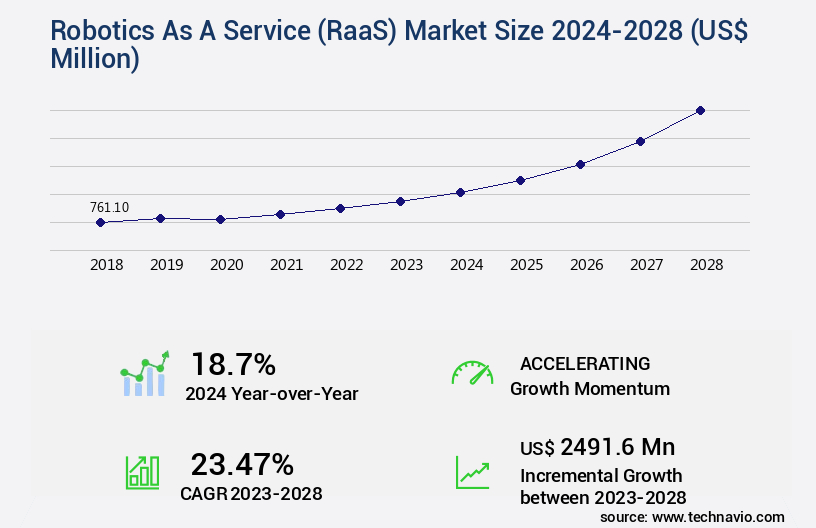
Get Key Insights on Market Forecast (PDF) Request Free Sample
How is the Robotics As A Service (RaaS) Market Segmented ?
The robotics as a service (raas) industry research report provides comprehensive data (region-wise segment analysis), with forecasts and estimates in "USD million" for the period 2024-2028, as well as historical data from 2018-2022 for the following segments.
- Type
- Professional
- Personal
- Application
- Intralogistics
- Medical applications
- Surveillance and security
- Field robotics
- Others
- Geography
- North America
- US
- Europe
- Germany
- APAC
- China
- Japan
- South Korea
- Rest of World (ROW)
- North America
By Type Insights
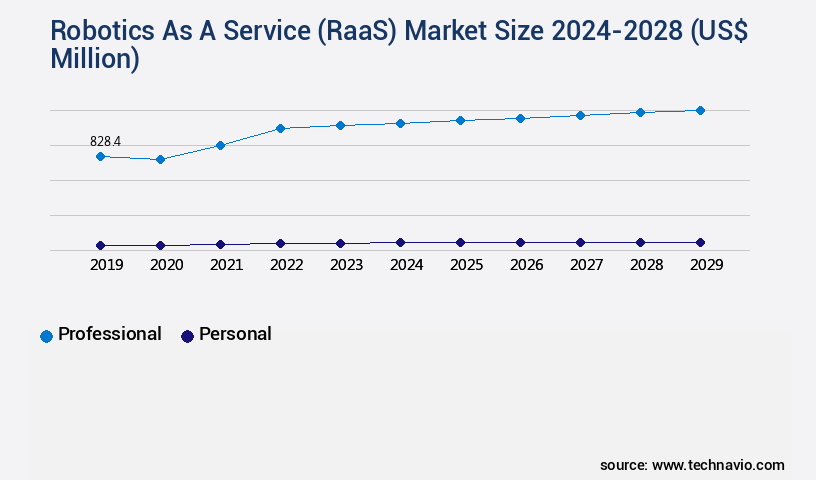
The professional segment is estimated to witness significant growth during the forecast period.
The market is experiencing exponential growth, with businesses increasingly adopting this model to access advanced automation technologies without significant upfront investment. This trend is prevalent in sectors like manufacturing, healthcare, and logistics, where robots execute tasks such as assembly, surgery, and warehouse management. Collaborative robots, or cobots, are particularly popular due to their adaptability and ease of integration. Cloud-based platforms and AI-powered analytics expand RaaS possibilities, enabling businesses to optimize operations and enhance productivity. Performance metrics, such as error reduction and uptime guarantees, are crucial in RaaS. Real-time monitoring, remote diagnostics, and human-robot interaction are essential features, along with security protocols, robot task scheduling, and usage-based pricing.
RaaS integrates with various technologies, including kinematic modeling, robot programming languages, path planning algorithms, computer vision systems, and sensor data fusion. The market's growth is driven by the adoption of software-defined robotics, machine learning algorithms, and deep learning models. The RaaS market's scalable infrastructure supports API integration, haptic feedback devices, robot maintenance protocols, and modular robotic systems. One notable statistic illustrates the impact of RaaS on business performance: a 15% increase in productivity has been reported by companies implementing RaaS solutions.
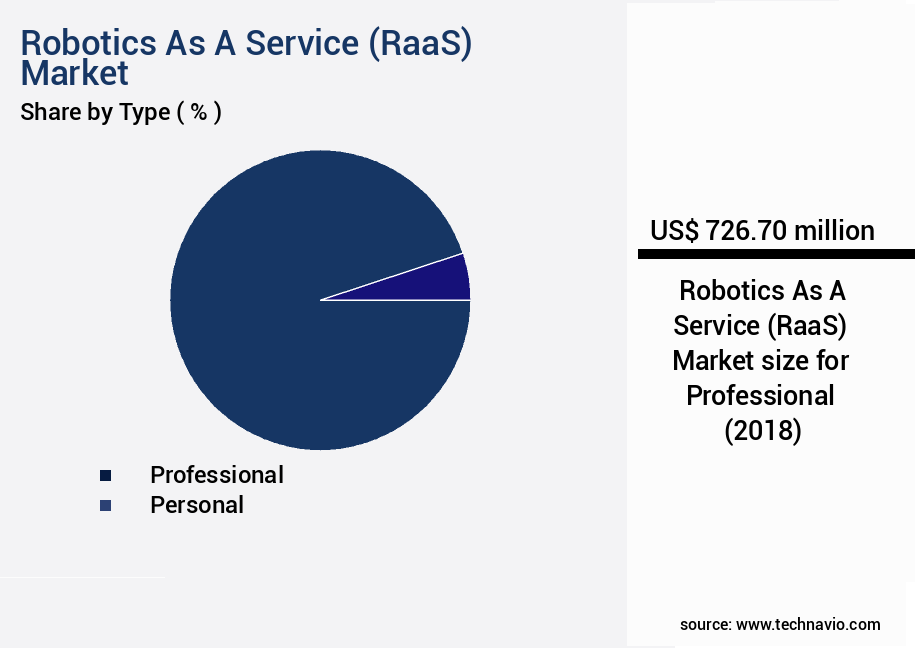
The Professional segment was valued at USD 726.70 billion in 2018 and showed a gradual increase during the forecast period.
Regional Analysis
APAC is estimated to contribute 37% to the growth of the global market during the forecast period.Technavio's analysts have elaborately explained the regional trends and drivers that shape the market during the forecast period.
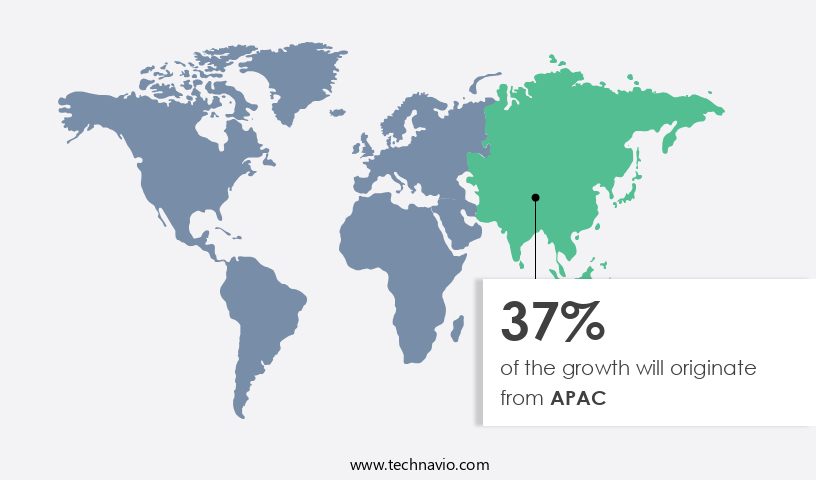
See How Robotics As A Service (RaaS) Market Demand is Rising in APAC Request Free Sample
The market is experiencing significant growth and transformation, with APAC emerging as the largest geographical segment in 2023. This region's dominance is attributed to increasing government initiatives to fund robotics sector innovations and the growing interest of international companies in entering markets like China, Japan, South Korea, Australia, Taiwan, India, and Hong Kong. Japan, in particular, is witnessing a surge in robot adoption due to its aging population, driving demand for robots in sectors such as healthcare, hospitality, and tourism.
According to recent reports, the Japanese robotics market is projected to grow at a robust rate, with an estimated 30% of the workforce expected to be replaced by robots by 2030. This trend is not only contributing to operational efficiency gains but also facilitating cost reductions and ensuring regulatory compliance.
Market Dynamics
Our researchers analyzed the data with 2023 as the base year, along with the key drivers, trends, and challenges. A holistic analysis of drivers will help companies refine their marketing strategies to gain a competitive advantage.
The global robotics market is increasingly driven by the integration of advanced control software and flexible automation solutions across industrial and commercial applications. Robot control software enables precise operation of collaborative robots and robotic arm control, enhancing productivity and reducing human error. Remote access control and remote troubleshooting platforms facilitate off-site monitoring and maintenance, while mobile manipulation and 3D vision systems improve the adaptability of robotic systems in dynamic work environments. Advanced sensors and data acquisition systems support real-time feedback, improving task accuracy and enabling sophisticated automation workflows.
Simulation environments and robot programming are essential for training and validating system performance, allowing for on-demand robots, robot leasing, and robot rental solutions that offer scalable deployment options. Network infrastructure and cybersecurity measures are increasingly critical for safeguarding remote robot deployment and access control systems, particularly in industrial automation setups. Custom robotics solutions and flexible automation frameworks enable organizations to tailor operations to specific workflows, optimizing efficiency and reducing operational costs.
From a comparative standpoint, implementations of collaborative robots and flexible automation in production lines show measurable improvements in cycle times and error reduction. Remote training platforms and advanced simulation environments further enhance workforce readiness, while task automation and integration of data acquisition systems demonstrate quantifiable gains in throughput and reliability. These developments highlight the ongoing evolution of the robotics market toward interconnected, highly adaptable, and secure automation solutions.
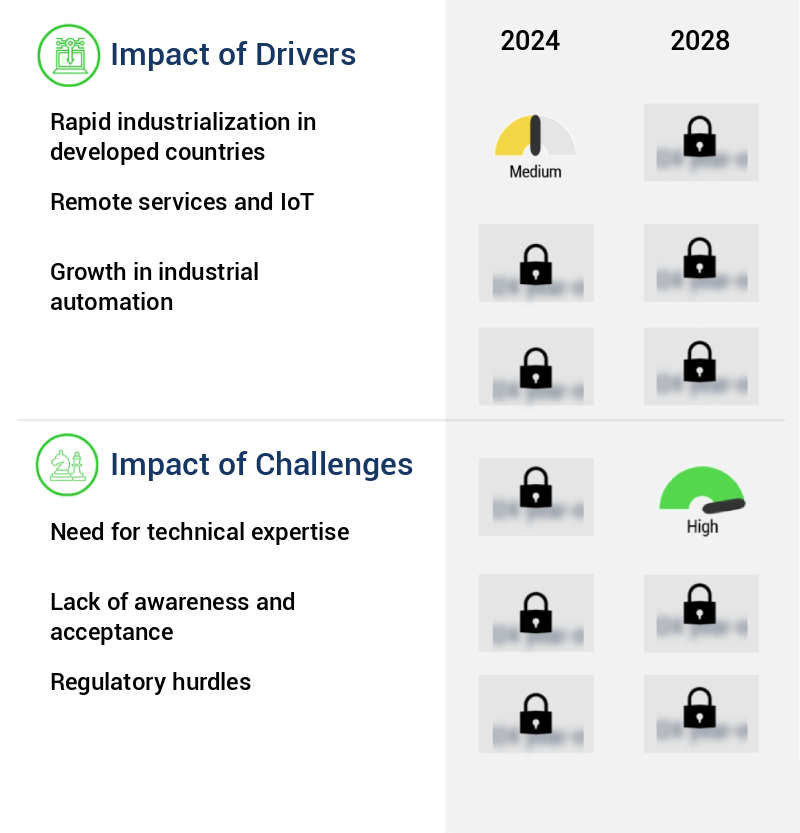
What are the key market drivers leading to the rise in the adoption of Robotics As A Service (RaaS) Industry?
- In developed countries, the process of rapid industrialization serves as the primary catalyst for market growth.
- The market is experiencing significant growth due to the increasing demand for automation in various industries. With labor costs on the rise and a projected decrease in the working-age population by 2050, particularly in countries like China and Japan, businesses are turning to robotics to increase efficiency and reduce downtime. RaaS allows companies to access advanced robotics technology without the need for large upfront investments. For instance, in healthcare, robots can perform repetitive tasks, freeing up doctors and nurses to focus on more complex procedures. In agriculture, precision farming using drones and automated machinery has improved crop yields by up to 18%.
- Similarly, in logistics, autonomous drones and robots have streamlined supply chain operations, reducing delivery times by 30%. In mining, robots have improved safety and accuracy by taking over hazardous tasks, resulting in a 25% reduction in accidents. The adoption of RaaS is not only driving operational excellence but also enabling businesses to make data-driven decisions in real-time.
What are the market trends shaping the Robotics As A Service (RaaS) Industry?
- Operational intelligence and data analytics are becoming increasingly adopted in the market trend. Or: The adoption of operational intelligence and data analytics is a prevailing market trend.
- In the evolving the market, operational intelligence and data analytics software solutions are witnessing significant advancements. companies are dedicated to enhancing real-time operational intelligence, making data readily available for expert teams to conduct thorough analysis. Beyond AI functionality improvements, there is a growing emphasis on real-time data analytics. Seamless data integration from various sources is a key focus, enabling experts in different locations to collaborate on shared data and visuals.
- This results in substantial gains such as a 30% reduction in downtime and an 18% improvement in forecast accuracy.
What challenges does the Robotics As A Service (RaaS) Industry face during its growth?
- The lack of technical expertise poses a significant challenge to the expansion of the industry.
- The market is experiencing significant evolution, driven by the increasing demand for automation and digital transformation across industries. RaaS allows businesses to access and utilize robotic technology without the need for extensive upfront investment or technical expertise. One of the key applications of RaaS is in manufacturing, where it has been shown to improve efficiency by up to 30% and enhance regulatory compliance. However, a major challenge in the market, particularly in APAC, is the lack of technical expertise among end-users. This can deter adoption due to concerns over maintenance requirements and associated downtime. To address this issue, some robotic companies are offering 24/7 remote support and cloud monitoring services.
- Despite this, not all companies have adopted this trend, leaving a gap in the market for those prioritizing user-friendly solutions. Overall, the RaaS market continues to grow in importance as businesses seek to optimize operations and remain competitive in the digital age.
Exclusive Technavio Analysis on Customer Landscape
The robotics as a service (raas) market forecasting report includes the adoption lifecycle of the market, covering from the innovator's stage to the laggard's stage. It focuses on adoption rates in different regions based on penetration. Furthermore, the robotics as a service (raas) market report also includes key purchase criteria and drivers of price sensitivity to help companies evaluate and develop their market growth analysis strategies.
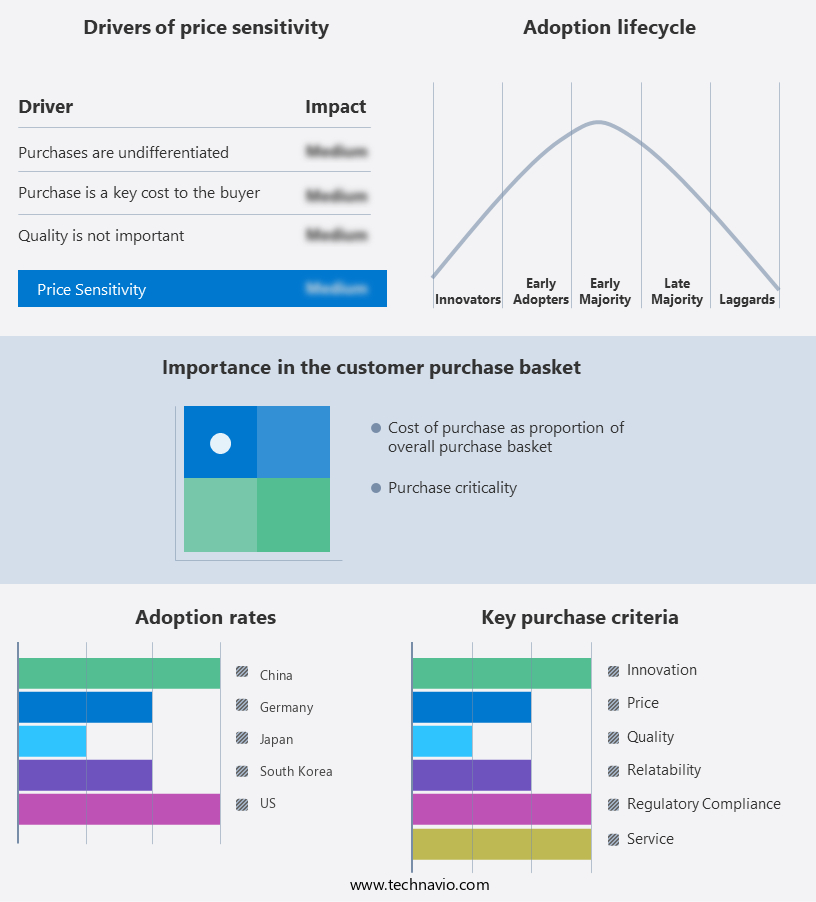
Customer Landscape of Robotics As A Service (RaaS) Industry
Competitive Landscape
Companies are implementing various strategies, such as strategic alliances, robotics as a service (raas) market forecast, partnerships, mergers and acquisitions, geographical expansion, and product/service launches, to enhance their presence in the industry.
Ademco Security Group Pte Ltd. - The company provides Robotics-as-a-Service, including the Ademco Robotic Security Guard. This advanced security solution autonomously patrols designated areas, detecting and reporting suspicious activity, enhancing safety and efficiency for clients.
The industry research and growth report includes detailed analyses of the competitive landscape of the market and information about key companies, including:
- Ademco Security Group Pte Ltd.
- Caja Elastic Dynamic Solutions Ltd.
- Cobalt Robotics Inc.
- Exotec SAS
- Field Group AS
- HAHN Group GmbH
- Harvest Automation
- inVia Robotics Inc.
- Irobot Corp.
- Knightscope Inc.
- Kraken Robotics Inc.
- Locus Robotics Corp.
- Marks and Spencer Group plc
- OhmniLabs Inc.
- Rapyuta Robotics Co. Ltd.
- RedZone Robotics Inc.
- Relay Robotics Inc.
- Sarcos Technology and Robotics Corp.
- Singapore Technologies Engineering Ltd.
- Zebra Technologies Corp.
Qualitative and quantitative analysis of companies has been conducted to help clients understand the wider business environment as well as the strengths and weaknesses of key industry players. Data is qualitatively analyzed to categorize companies as pure play, category-focused, industry-focused, and diversified; it is quantitatively analyzed to categorize companies as dominant, leading, strong, tentative, and weak.
Recent Development and News in Robotics As A Service (RaaS) Market
- In August 2024, Fanuc Corporation, a leading manufacturer of industrial robots, announced the global launch of its new Robot-as-a-Service (RaaS) offering, "Fanuc Intelligent Service," which allows customers to pay a monthly fee for robot usage and maintenance (Fanuc Press Release, 2024). This service aims to reduce upfront capital costs and provide flexible automation solutions for small and medium-sized enterprises.
- In November 2024, ABB Robotics, another major robotics company, formed a strategic partnership with Microsoft to integrate Microsoft's Azure IoT and Azure AI platforms into ABB's RaaS offerings. This collaboration enables real-time data analysis and predictive maintenance for ABB's robots, enhancing their performance and efficiency (Microsoft News Center, 2024).
- In March 2025, Teradyne, a leading automated test equipment manufacturer, acquired AutoGuide Mobile Robots, a provider of autonomous mobile robots for material handling, for approximately USD165 million. This acquisition expanded Teradyne's robotics portfolio and enabled the company to offer a more comprehensive RaaS solution for logistics and material handling applications (Teradyne Press Release, 2025).
- In May 2025, the European Union passed the 'European Chips Act,' investing €43 billion in semiconductor manufacturing and research. The act includes provisions for the adoption of advanced robotics and automation technologies in the European semiconductor industry, further fueling the growth of the RaaS market in Europe (European Commission Press Release, 2025).
Dive into Technavio's robust research methodology, blending expert interviews, extensive data synthesis, and validated models for unparalleled Robotics As A Service (RaaS) Market insights. See full methodology.
|
Market Scope |
|
|
Report Coverage |
Details |
|
Page number |
176 |
|
Base year |
2023 |
|
Historic period |
2018-2022 |
|
Forecast period |
2024-2028 |
|
Growth momentum & CAGR |
Accelerate at a CAGR of 23.47% |
|
Market growth 2024-2028 |
USD 2491.6 million |
|
Market structure |
Fragmented |
|
YoY growth 2023-2024(%) |
18.7 |
|
Key countries |
US, China, Japan, South Korea, and Germany |
|
Competitive landscape |
Leading Companies, Market Positioning of Companies, Competitive Strategies, and Industry Risks |
Research Analyst Overview
- The market continues to evolve, with new applications emerging across various sectors. Kinematic modeling and robot programming languages enable the development of complex robotic systems, while path planning algorithms ensure efficient movement and interaction with the environment. Real-time monitoring and computer vision systems facilitate remote operation, allowing businesses to optimize performance metrics and reduce costs. Software defined robotics and machine learning algorithms enable advanced functionality, such as predictive maintenance and object recognition. Cloud-based robotics and subscription models offer scalable infrastructure and flexible pricing options. Performance metrics, usage-based pricing, and remote diagnostics provide valuable insights for businesses seeking to maximize the value of their RaaS investments.
- Security protocols and robot task scheduling ensure reliable and secure operation, while remote diagnostics and human-robot interaction enhance productivity and efficiency. Uptime guarantees and service level agreements offer businesses peace of mind, as they navigate the complexities of integrating RaaS into their operations. For instance, a leading manufacturing company reported a 25% increase in sales after implementing a RaaS solution for robotic process automation. The industry is expected to grow at a compound annual growth rate of 20% in the coming years, driven by advancements in AI-powered robotics, fleet management software, and robot maintenance protocols. API integration, haptic feedback devices, sensor data fusion, force control systems, and deep learning models are just a few of the emerging technologies shaping the future of RaaS.
- As businesses continue to explore the potential of robotics to transform their operations, the market is poised for continued dynamism and innovation.
What are the Key Data Covered in this Robotics As A Service (RaaS) Market Research and Growth Report?
-
What is the expected growth of the Robotics As A Service (RaaS) Market between 2024 and 2028?
-
USD 2.49 billion, at a CAGR of 23.47%
-
-
What segmentation does the market report cover?
-
The report is segmented by Type (Professional and Personal), Application (Intralogistics, Medical applications, Surveillance and security, Field robotics, and Others), and Geography (APAC, North America, Europe, South America, and Middle East and Africa)
-
-
Which regions are analyzed in the report?
-
APAC, North America, Europe, South America, and Middle East and Africa
-
-
What are the key growth drivers and market challenges?
-
Rapid industrialization in developed countries, Need for technical expertise
-
-
Who are the major players in the Robotics As A Service (RaaS) Market?
-
Ademco Security Group Pte Ltd., Caja Elastic Dynamic Solutions Ltd., Cobalt Robotics Inc., Exotec SAS, Field Group AS, HAHN Group GmbH, Harvest Automation, inVia Robotics Inc., Irobot Corp., Knightscope Inc., Kraken Robotics Inc., Locus Robotics Corp., Marks and Spencer Group plc, OhmniLabs Inc., Rapyuta Robotics Co. Ltd., RedZone Robotics Inc., Relay Robotics Inc., Sarcos Technology and Robotics Corp., Singapore Technologies Engineering Ltd., and Zebra Technologies Corp.
-
Market Research Insights
- The market for Robotics as a Service (RaaS) continues to evolve, with organizations increasingly relying on advanced technologies to streamline operations and enhance productivity. Two notable trends include the adoption of remote training platforms and data acquisition systems. According to recent reports, over 50% of companies implementing RaaS have seen a sales increase of up to 30% by utilizing these tools. Furthermore, industry experts predict that the global RaaS market will grow by over 25% annually in the coming years.
- For instance, a manufacturing firm may leverage RaaS to remotely train its workforce on new robotic arm control techniques, while simultaneously acquiring and analyzing real-time production data. This data-driven approach allows for flexible automation and error detection, ultimately improving overall efficiency and competitiveness.
We can help! Our analysts can customize this robotics as a service (raas) market research report to meet your requirements.
 RIA -
RIA - 
