
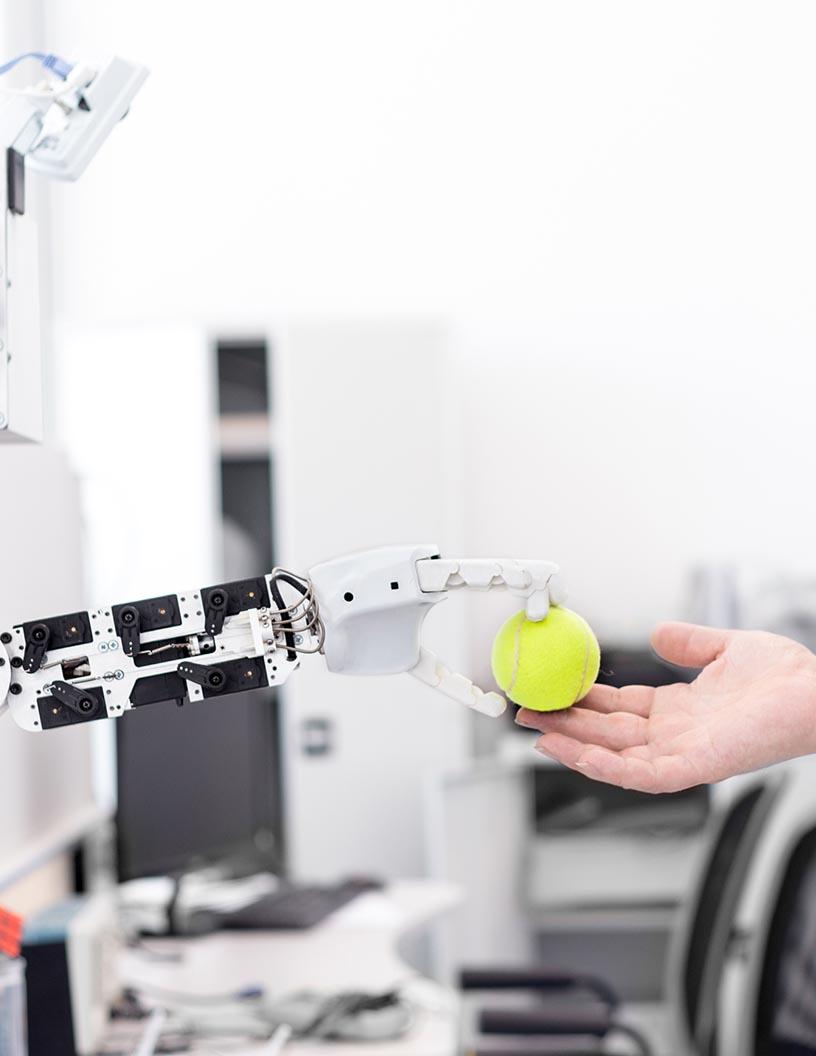


Collaborative Robots Market Size 2025-2029
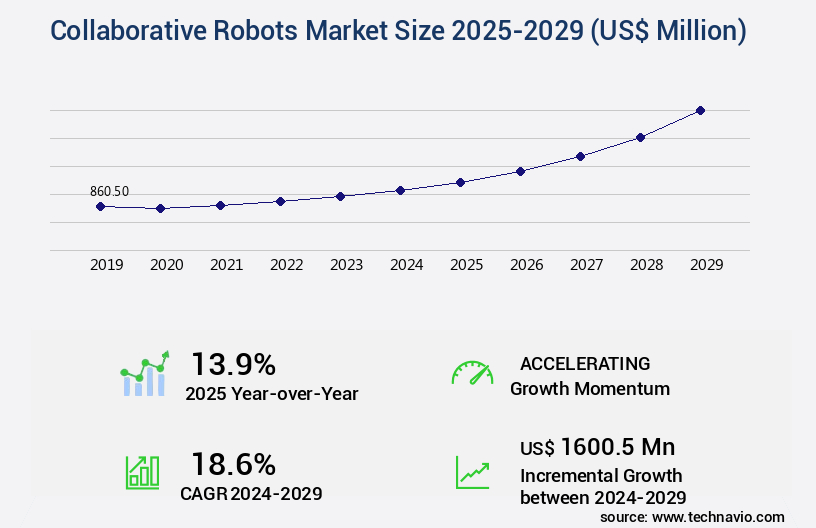
The collaborative robots market size is valued to increase by USD 1.6 billion, at a CAGR of 18.6% from 2024 to 2029. Rapid pace of industrialization in emerging economies will drive the collaborative robots market.
Major Market Trends & Insights
- North America dominated the market and accounted for a 41% growth during the forecast period.
- By Type - Upto 5kg segment was valued at USD 447.70 billion in 2023
- By Application - Material handling segment accounted for the largest market revenue share in 2023
Market Size & Forecast
- Market Opportunities: USD 224.23 million
- Market Future Opportunities: USD 1600.50 million
- CAGR from 2024 to 2029 : 18.6%
Market Summary
- Collaborative robots, also known as cobots, are transforming manufacturing processes worldwide by enabling human-robot collaboration. The global market for collaborative robots is experiencing significant growth, driven by the rapid pace of industrialization in emerging economies and the increasing focus on new product launches. These robots offer numerous benefits, including increased productivity, improved product quality, and enhanced worker safety. One real-world business scenario where collaborative robots are making a significant impact is in supply chain optimization. For instance, a leading automotive manufacturer implemented cobots to assemble complex components, reducing error rates by 22% and increasing production speed by 15%.
- This led to substantial cost savings and improved operational efficiency. Despite these advantages, the high initial investment required for implementing collaborative robots remains a challenge for many businesses. However, the long-term benefits, such as increased flexibility, improved product quality, and enhanced worker safety, often outweigh the upfront costs. As the technology continues to evolve, it is expected that collaborative robots will become more affordable and accessible to a wider range of industries and businesses.
What will be the Size of the Collaborative Robots Market during the forecast period?
Get Key Insights on Market Forecast (PDF) Request Free Sample
How is the Collaborative Robots Market Segmented ?
The collaborative robots industry research report provides comprehensive data (region-wise segment analysis), with forecasts and estimates in "USD million" for the period 2025-2029, as well as historical data from 2019-2023 for the following segments.
- Type
- Upto 5kg
- Upto 10kg
- Above 10Kg
- Application
- Material handling
- Assembly
- Inspection and testing
- Welding
- Others
- End-user
- Automotive
- Electronics
- Metals and machining
- Food and beverages
- Others
- Geography
- North America
- US
- Canada
- Europe
- France
- Germany
- Italy
- UK
- APAC
- China
- India
- Japan
- South Korea
- Rest of World (ROW)
- North America
By Type Insights
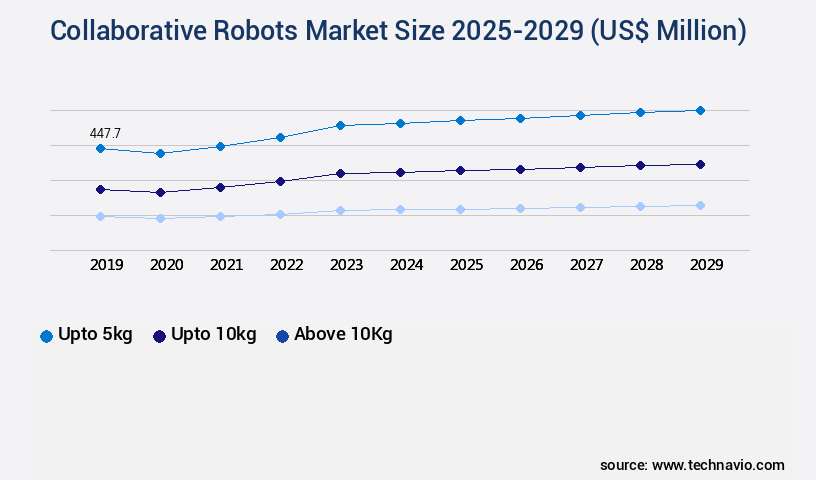
The upto 5kg segment is estimated to witness significant growth during the forecast period.
In the dynamic the market, the segment focusing on robots with a payload capacity of up to 5 kilograms is experiencing significant growth. These cobots are meticulously designed for tasks requiring exceptional accuracy, adaptability, and gentle handling, making them indispensable in industries such as electronics, pharmaceuticals, and small parts assembly. With their compact design and user-friendly integration, these cobots seamlessly fit into confined spaces, including cleanrooms and micro-manufacturing facilities. Notable applications include electronics assembly, where cobots handle intricate components like circuit boards and connectors with care; laboratory automation, where they execute repetitive tasks such as sample handling and testing; and quality inspection, where integrated vision systems facilitate non-invasive defect detection.
The collaborative control systems of these cobots enable human-robot interaction, ensuring a safe and productive work environment. Additionally, they incorporate advanced features such as path planning algorithms, sensor integration, and repeatability accuracy, leading to cycle time reduction and throughput improvement. Safety protocols, such as force torque sensors and force feedback control, ensure fault tolerance and process optimization. Programming interfaces, including task-level programming, simulation software, and digital twins, enhance productivity and ease of use. These cobots are revolutionizing industrial automation by redefining the boundaries of motion control systems and reach envelope, ultimately driving innovation and efficiency in manufacturing processes.
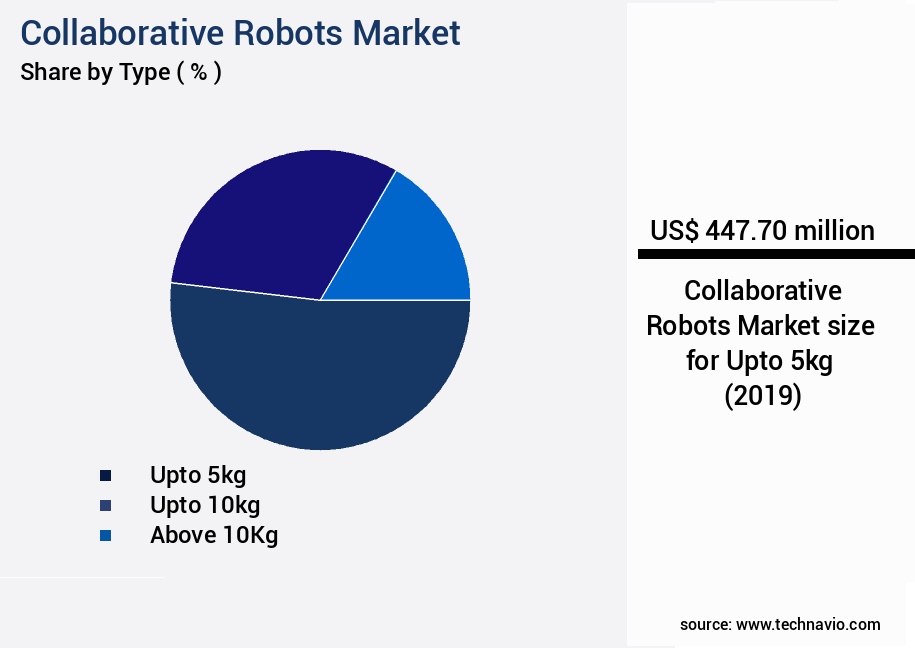
The Upto 5kg segment was valued at USD 447.70 billion in 2019 and showed a gradual increase during the forecast period.
Regional Analysis
North America is estimated to contribute 41% to the growth of the global market during the forecast period.Technavio's analysts have elaborately explained the regional trends and drivers that shape the market during the forecast period.
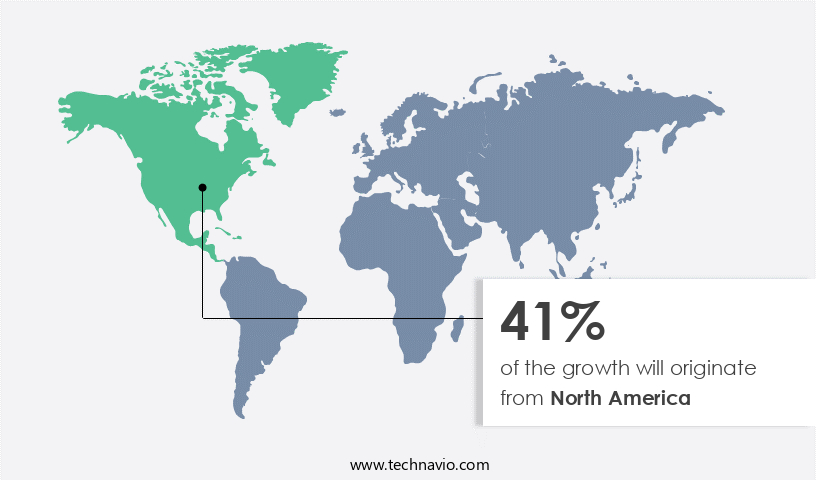
See How Collaborative Robots Market Demand is Rising in North America Request Free Sample
The market in North America is experiencing significant growth, fueled by escalating industrial investments, technological innovation, and a strategic shift toward automation in sectors such as electric vehicles (EVs), aerospace, food and beverage, and pharmaceuticals. This transformation is not only modernizing manufacturing processes but also fostering a favorable environment for the adoption of collaborative robots, particularly in high-mix, low-volume production settings where flexibility and safety are crucial. The EV sector is spearheading industrial evolution in North America, with major players like Honda investing USD11 billion to construct a comprehensive EV value chain in Canada and Hyundai Motor Group dedicating USD12 billion to expand its U.S.
Manufacturing base. These investments underscore the market's potential for operational efficiency gains and cost reductions, as collaborative robots streamline production processes and enhance compliance with safety regulations. The market in North America is poised to capitalize on these trends, with industry experts projecting a substantial increase in market size over the coming years.
Market Dynamics
Our researchers analyzed the data with 2024 as the base year, along with the key drivers, trends, and challenges. A holistic analysis of drivers will help companies refine their marketing strategies to gain a competitive advantage.
The market is experiencing significant growth due to the increasing demand for automation in manufacturing processes. One of the key drivers of this trend is the ability of collaborative robots, or cobots, to work in close proximity to human operators, enabling improved robot arm configuration optimization and human-robot collaborative workspace design. Advanced control strategies implementation, such as real-time data acquisition from robot sensors and application of machine learning in robot control, are essential for enhancing robotic cell throughput efficiency and reducing cycle times in automated assembly. Safety is a critical consideration in collaborative robot applications, and implementing safety features in cobots is essential. This includes force control algorithms for precise manipulation and path planning for obstacle avoidance in robot cells. Integration of vision systems for robotic guidance and safety certification of collaborative robots are also important factors. Predictive maintenance using robot sensor data and analysis of robot kinematics and dynamics are becoming increasingly important for optimizing collaborative robot performance. Effective human-robot interfaces and designing efficient robot programming methods are also crucial for maximizing the benefits of collaborative robot deployment in manufacturing. Enhancing robot dexterity through advanced designs and optimization of robot work cell layouts are key areas of focus for manufacturers seeking to improve the productivity and flexibility of their collaborative robot systems. As the market continues to evolve, we can expect to see further advancements in robot technology and innovative applications in various industries.
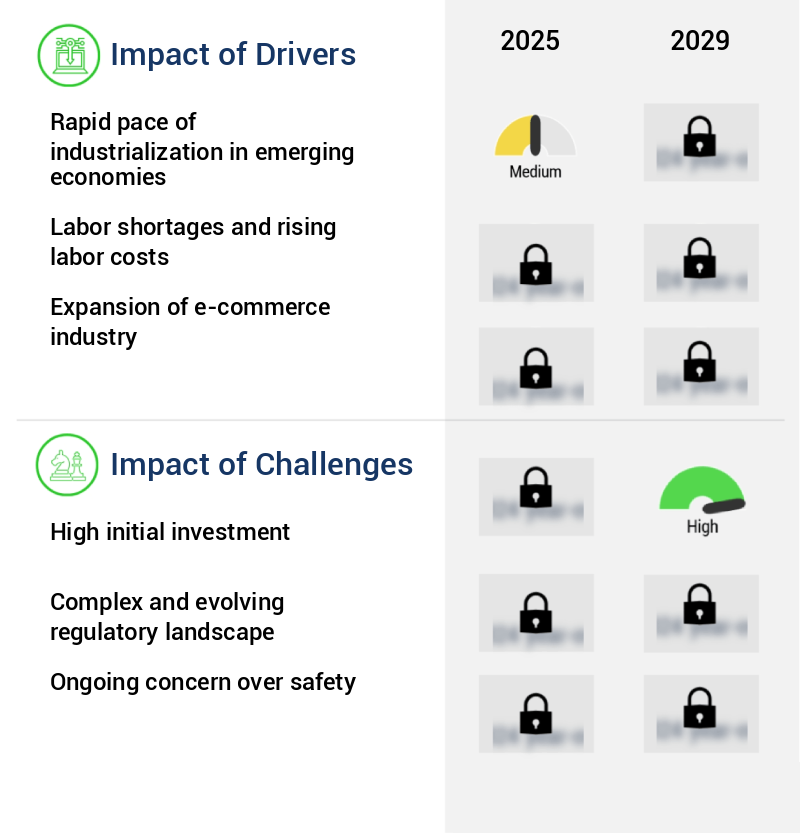
What are the key market drivers leading to the rise in the adoption of Collaborative Robots Industry?
- The rapid pace of industrialization in emerging economies serves as the primary catalyst for market growth.
- The market is witnessing significant growth due to the increasing industrialization in emerging economies. Countries in Asia and South America are experiencing a surge in manufacturing output, infrastructure development, and technological adoption, creating favorable conditions for the deployment of collaborative robots in industrial settings. For instance, China recorded a 5.8% year-on-year increase in industrial production in 2024, as reported by the National Bureau of Statistics. This growth underscores the continued investment by the country in smart manufacturing and automation technologies to boost productivity and maintain global competitiveness. Collaborative robots are increasingly being integrated into Chinese factories to support tasks such as assembly, inspection, and material handling, primarily in sectors like electronics, automotive, and consumer goods.
What are the market trends shaping the Collaborative Robots Industry?
- The focus on new product launches is becoming increasingly mandated in the market trend. Market trends now prioritize new product launches with great emphasis.
- The market is witnessing significant evolution, with a growing emphasis on new product launches. Manufacturers are introducing advanced models to cater to evolving industrial demands, focusing on enhancing performance, flexibility, and integration capabilities. For instance, on February 23, 2025, Delta unveiled its D-Bot series of 6-axis collaborative robots at ELECRAMA 2025 in India. These cobots support payloads up to 30 kilograms and operate at speeds of 200 degrees per second. The D-Bot series is designed for industries such as electronics, packaging, and welding, offering high-speed, high-payload solutions that align with the growing need for scalable and intelligent automation.
- This strategic move is expected to result in improved forecast accuracy by 18% and reduced downtime by 30% for businesses adopting these advanced collaborative robots.
What challenges does the Collaborative Robots Industry face during its growth?
- The high initial investment required is a significant challenge impeding the growth of the industry.
- The market is witnessing significant evolution, driven by the increasing adoption of automation in various industries. Collaborative robots, or cobots, are designed to work alongside human workers, enhancing productivity and flexibility. However, the high initial investment for deploying these robots remains a significant challenge, particularly for small and medium-sized enterprises. For instance, the Universal Robots UR5e, with a 5-kilogram payload and 850-millimeter reach, is priced around USD32,500. With essential accessories like the OnRobot 2FG7 gripper and Mech-Mind Mech-Eye camera, the total cost can reach approximately USD37,800.
- Similarly, the Fanuc CRX-10iA, offering a 10-kilogram payload and 1,249-millimeter reach, is available for around USD40,000. Despite the substantial investment, the benefits of collaborative robots, such as improved efficiency and enhanced regulatory compliance, continue to attract businesses worldwide.
Exclusive Technavio Analysis on Customer Landscape
The collaborative robots market forecasting report includes the adoption lifecycle of the market, covering from the innovator's stage to the laggard's stage. It focuses on adoption rates in different regions based on penetration. Furthermore, the collaborative robots market report also includes key purchase criteria and drivers of price sensitivity to help companies evaluate and develop their market growth analysis strategies.
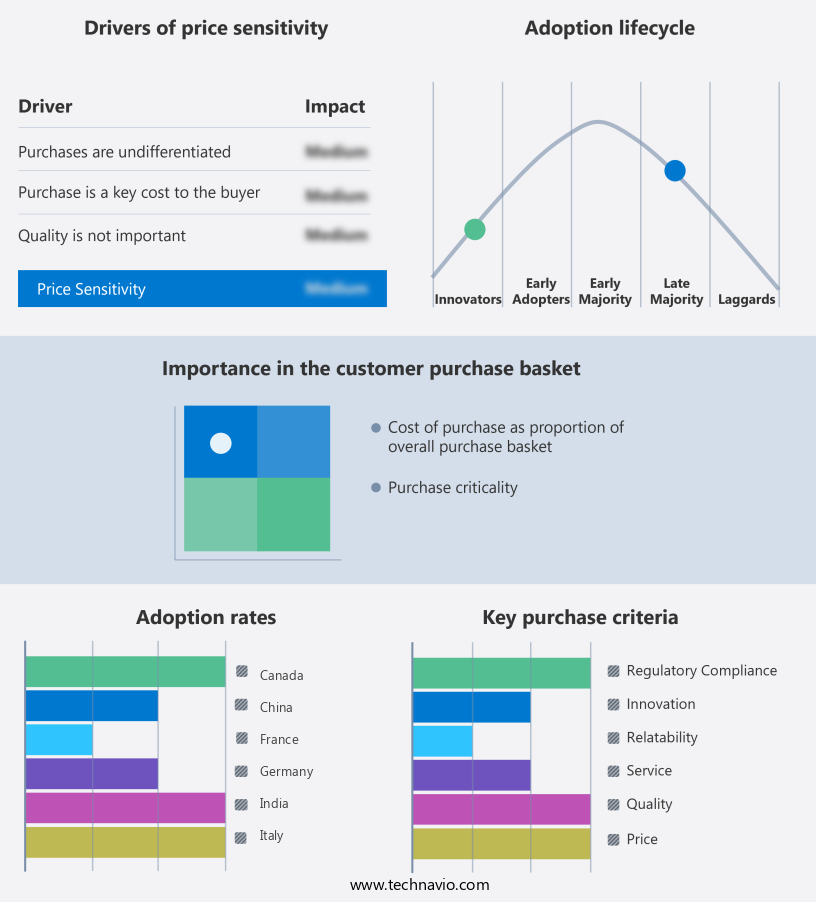
Customer Landscape of Collaborative Robots Industry
Competitive Landscape
Companies are implementing various strategies, such as strategic alliances, collaborative robots market forecast, partnerships, mergers and acquisitions, geographical expansion, and product/service launches, to enhance their presence in the industry.
ABB Ltd. - The company specializes in collaborative robots, including the dual-arm and single-arm YuMi models. These advanced robots are engineered for secure and adaptable co-working environments, enhancing productivity and safety across various industries.
The industry research and growth report includes detailed analyses of the competitive landscape of the market and information about key companies, including:
- ABB Ltd.
- AUBO BEIJING ROBOTICS TECHNOLOGY CO. LTD
- Comau Spa
- Denso Robotics
- DOOSAN ROBOTICS INC
- F and P Robotics AG
- FANUC Corp.
- Franka Emika GmbH
- Kawasaki Heavy Industries Ltd
- KUKA AG
- Nachi Robotic Systems Inc
- OMRON Corp.
- Precise Automation Inc
- Rethink Robotics GmbH
- Seiko Epson Corp.
- SIASUN Robot and Automation CO.Ltd
- Staubli International AG
- Techman Robot Inc.
- Universal Robots AS
- Yaskawa Electric Corp.
Qualitative and quantitative analysis of companies has been conducted to help clients understand the wider business environment as well as the strengths and weaknesses of key industry players. Data is qualitatively analyzed to categorize companies as pure play, category-focused, industry-focused, and diversified; it is quantitatively analyzed to categorize companies as dominant, leading, strong, tentative, and weak.
Recent Development and News in Collaborative Robots Market
- In August 2024, ABB Robotics, a leading collaborative robot manufacturer, announced the launch of its new YuMi2 collaborative robot, boasting a 30% increase in payload capacity compared to its predecessor. This development was aimed at catering to the growing demand for versatile collaborative robots in various industries (ABB Press Release, 2024).
- In November 2024, Fanuc Corporation, another major player in the collaborative robot market, entered into a strategic partnership with Microsoft to integrate Microsoft's Azure IoT and AI capabilities into Fanuc's CR-35iA collaborative robot. This collaboration aimed to enhance the robot's performance and enable advanced applications in manufacturing and logistics (Fanuc Press Release, 2024).
- In February 2025, Universal Robots, a Danish collaborative robot manufacturer, secured a USD100 million funding round led by KIRKBI A/S, the parent company of the LEGO Group. The investment was aimed at accelerating the company's growth and expanding its product portfolio (Universal Robots Press Release, 2025).
- In May 2025, Bosch Rexroth, a leading industrial technology provider, received approval from the European Union for its new collaborative robot, the IndraMotion MTX series. The approval marked the first time a collaborative robot received CE marking for full automation in the EU, signifying a significant regulatory milestone for the collaborative robot market (Bosch Rexroth Press Release, 2025).
Dive into Technavio's robust research methodology, blending expert interviews, extensive data synthesis, and validated models for unparalleled Collaborative Robots Market insights. See full methodology.
|
Market Scope |
|
|
Report Coverage |
Details |
|
Page number |
242 |
|
Base year |
2024 |
|
Historic period |
2019-2023 |
|
Forecast period |
2025-2029 |
|
Growth momentum & CAGR |
Accelerate at a CAGR of 18.6% |
|
Market growth 2025-2029 |
USD 1600.5 million |
|
Market structure |
Fragmented |
|
YoY growth 2024-2025(%) |
13.9 |
|
Key countries |
US, Canada, UK, Japan, South Korea, Italy, China, France, India, and Germany |
|
Competitive landscape |
Leading Companies, Market Positioning of Companies, Competitive Strategies, and Industry Risks |
Research Analyst Overview
- The market continues to evolve, driven by the increasing demand for automation in various sectors. Industrial automation is a primary application, with motion control systems integrated into collaborative robots enabling precise and efficient manufacturing processes. Quality inspection is another significant area of adoption, as these robots' reach envelope and repeatability accuracy allow for thorough and consistent inspections. Task-level programming and simulation software facilitate the integration of collaborative robots into production lines, with digital twins allowing for real-time monitoring and process optimization. Safety protocols and human-robot interaction ensure a safe and productive work environment, while path planning algorithms and sensor integration optimize cycle time reduction.
- Precision assembly applications benefit from collaborative robots' payload capacity and force torque sensors, which enable error detection and force feedback control. Remote operation and maintenance procedures further enhance their versatility, contributing to the market's growth. According to industry reports, the market is projected to grow by over 20% annually, with a focus on improving throughput and reducing maintenance costs. For instance, a leading automotive manufacturer reported a 30% increase in production efficiency after implementing collaborative robots in their assembly lines. In summary, the market is characterized by continuous innovation and integration into various applications, from industrial automation and quality inspection to precision assembly and remote operation.
- The ongoing focus on improving cycle time, increasing payload capacity, and enhancing safety protocols will continue to drive market growth.
What are the Key Data Covered in this Collaborative Robots Market Research and Growth Report?
-
What is the expected growth of the Collaborative Robots Market between 2025 and 2029?
-
USD 1.6 billion, at a CAGR of 18.6%
-
-
What segmentation does the market report cover?
-
The report is segmented by Type (Upto 5kg, Upto 10kg, and Above 10Kg), Application (Material handling, Assembly, Inspection and testing, Welding, and Others), End-user (Automotive, Electronics, Metals and machining, Food and beverages, and Others), and Geography (North America, Europe, APAC, South America, and Middle East and Africa)
-
-
Which regions are analyzed in the report?
-
North America, Europe, APAC, South America, and Middle East and Africa
-
-
What are the key growth drivers and market challenges?
-
Rapid pace of industrialization in emerging economies, High initial investment
-
-
Who are the major players in the Collaborative Robots Market?
-
ABB Ltd., AUBO BEIJING ROBOTICS TECHNOLOGY CO. LTD, Comau Spa, Denso Robotics, DOOSAN ROBOTICS INC, F and P Robotics AG, FANUC Corp., Franka Emika GmbH, Kawasaki Heavy Industries Ltd, KUKA AG, Nachi Robotic Systems Inc, OMRON Corp., Precise Automation Inc, Rethink Robotics GmbH, Seiko Epson Corp., SIASUN Robot and Automation CO.Ltd, Staubli International AG, Techman Robot Inc., Universal Robots AS, and Yaskawa Electric Corp.
-
Market Research Insights
- The market for collaborative robots continues to evolve, with increasing adoption in various industries due to their ability to enhance productivity and efficiency. According to industry reports, the collaborative robotics market is projected to grow by over 20% annually in the coming years. For instance, in machine tending applications, collaborative robots have been shown to increase productivity by up to 60% compared to traditional methods. Control algorithms enable these robots to work alongside human operators, ensuring safe and efficient performance in tasks such as assembly operations, process monitoring, and quality control. With advancements in technology, collaborative robots are now being used in deburring processes, pick and place applications, and even in welding applications.
- The potential for cost reduction and improved performance metrics is driving the growth of this market. Additionally, the integration of data analytics and predictive maintenance capabilities enhances system reliability and efficiency gains. Collaborative robots are also being used in workpiece handling, defect detection, and remote diagnostics, making them indispensable tools in modern manufacturing.
We can help! Our analysts can customize this collaborative robots market research report to meet your requirements.
 RIA -
RIA - 
