


Server Market Size 2025-2029
The server market size is forecast to increase by USD 41.95 billion at a CAGR of 7.6% between 2024 and 2029.
- The market is experiencing significant growth, driven by the increasing demand for edge computing and the implementation of Artificial Intelligence (AI) for server workload optimization. Edge computing enables data processing at the source, reducing latency and improving response times, making it an essential solution for applications requiring real-time data processing and analysis. The integration of AI in server management enhances efficiency by optimizing workloads, automating resource allocation, and predicting potential issues. However, the market faces notable challenges. Cybersecurity threats continue to pose a significant risk, with attacks on servers becoming increasingly sophisticated. Companies must invest in robust security measures to protect their data and mitigate potential breaches.
- Additionally, the complexity of managing hybrid IT environments, which include both on-premises and cloud servers, adds to the operational challenges. Effective server management strategies must address these issues while capitalizing on the opportunities presented by edge computing and AI. Companies seeking to succeed in this market must prioritize security, optimize workloads, and streamline management of their hybrid IT environments.
What will be the Size of the Server Market during the forecast period?
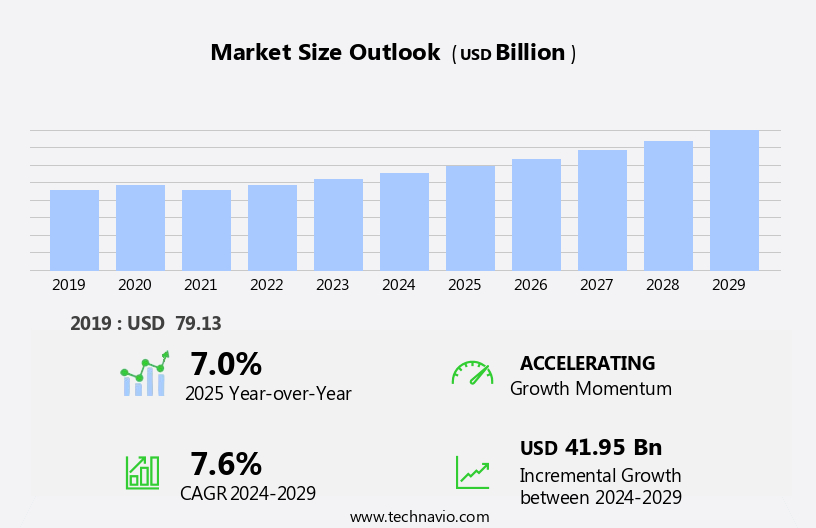
- The Server market size continues to expand, driven by significant server market trends towards digital transformation. The demand for specialized AI servers is booming, reflecting the pervasive need for advanced computing capabilities. Rack servers remain a foundational component, while the rise of edge servers addresses the need for localized processing closer to data sources. Data center servers form the backbone of modern IT infrastructure, heavily relying on scalable cloud servers to support vast digital operations. Enterprise servers are essential for large-scale business applications. The increasing adoption of GPU servers is pivotal for AI and HPC workloads, making high-performance computing servers a critical segment. The market is dominated by x86 servers, but innovation also focuses on energy-efficient servers to reduce operational costs. Server virtualization technology remains key for optimized resource utilization. While blade servers offer high density, the overall landscape is shaped by leading server manufacturers. The integration of AI in server workload optimization and automated server management are enhancing efficiency. The development of 5G ready servers is crucial for next-generation networks, all contributing to robust server market growth drivers and the expansion of hyperscale data centers servers.
- In the dynamic and ever-evolving the market, entities such as server containers, server monitoring, virtual servers, server automation, high-performance computing, server software, physical servers, machine learning, server deployment, serverless computing, server configuration, server infrastructure, server upgrades, application development, cloud hosting, agile development, and server security continue to shape the landscape. The integration of continuous integration and delivery, server lifecycle management, server capacity planning, and web applications in enterprise environments underscores the importance of server optimization and reliability. Moreover, the emergence of edge computing, serverless architecture, and cloud native applications has led to new opportunities for business applications, data security, and server uptime.
- The Internet of Things (IoT) and artificial intelligence (AI) are driving the need for server scalability, server orchestration, and server migration. Server costs, server provisioning, and application programming interfaces (APIs) are crucial factors in the market, with cloud servers, shared servers, and dedicated servers offering varying levels of flexibility and cost-effectiveness. Disaster recovery, data analytics, and server performance are essential considerations for businesses seeking to maximize server utilization and ensure business continuity. The market continues to unfold with new patterns and applications, from mobile applications to big data processing, hybrid cloud solutions, and machine learning.
- Server hardware, server management, network security, and managed services are all critical components of the server ecosystem, ensuring server availability, server consumption, and server maintenance.
How is this Server Industry segmented?
The server industry research report provides comprehensive data (region-wise segment analysis), with forecasts and estimates in "USD billion" for the period 2025-2029, as well as historical data from 2019-2023 for the following segments.
- Product
- Rack
- Blade
- Micro
- Open compute project
- Tower
- End-user
- IT and Telecom
- BFSI
- Government and defense
- Healthcare
- Manufacturing
- Retail
- Education
- Size
- Micro Enterprises
- Small Enterprises
- Medium Enterprises
- Large Enterprises
- Server Channel
- Direct
- Reseller
- Systems Integrator
- Others
- Processor Type
- x86
- Non-x86
- Geography
- North America
- US
- Canada
- Europe
- France
- Germany
- Italy
- UK
- Middle East and Africa
- UAE
- APAC
- China
- India
- Japan
- South Korea
- South America
- Brazil
- Rest of World (ROW)
- North America
By Product Insights
The rack segment is estimated to witness significant growth during the forecast period.
In the dynamic and evolving world of technology, rack servers play a pivotal role in powering data centers. These servers, designed to fit into server racks, offer ease of maintenance and quick problem resolution, reducing downtime. Rack servers are the backbone of data centers, enabling the computational power required for running applications, processing data, managing databases, hosting websites, handling virtualization, and executing diverse workloads. Server databases and networking, integral components of rack servers, ensure efficient data storage and seamless communication between servers. Server virtualization, a key trend, allows the creation of multiple virtual servers on a single physical server, optimizing resource utilization and reducing costs.
The integration of continuous integration and delivery, IoT, and edge computing enhances the functionality of rack servers. High-performance computing, machine learning, and artificial intelligence applications find a home in rack servers, driving innovation in business applications and data analytics. Serverless computing and containerization offer flexibility and scalability, while cloud hosting and agile development facilitate rapid application deployment. Disaster recovery and business continuity are essential considerations, with server reliability and availability paramount. Server optimization, configuration, and infrastructure management ensure optimal performance and efficiency. Security remains a top priority, with server security and network security safeguarding data and applications. The server lifecycle, from deployment to upgrades and migration, is managed through server orchestration and provisioning.
Application programming interfaces, mobile applications, and big data applications further expand the reach and utility of rack servers. In the hybrid cloud landscape, rack servers offer flexibility, with shared servers and dedicated servers catering to varying business needs. Server pricing, consumption, and utilization are critical factors influencing the adoption of rack servers. Overall, rack servers continue to be the cornerstone of modern technology infrastructure, driving innovation and growth.
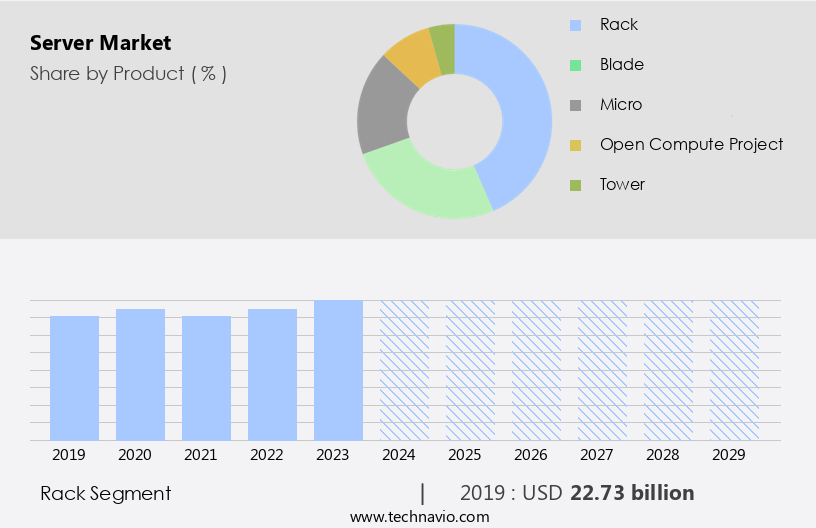
The Rack segment was valued at USD 22.73 billion in 2019 and showed a gradual increase during the forecast period.
Regional Analysis
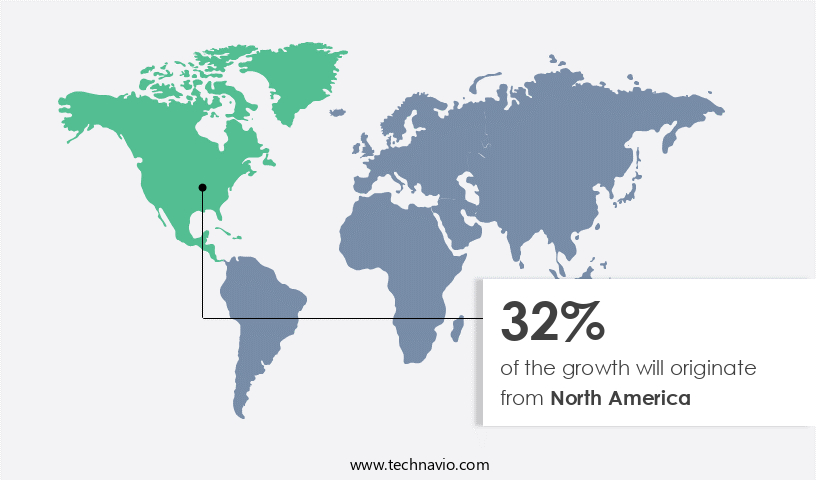
North America is estimated to contribute 32% to the growth of the global market during the forecast period.Technavio's analysts have elaborately explained the regional trends and drivers that shape the market during the forecast period.
The North American the market is experiencing significant growth due to the region's mature IT infrastructure and high adoption rate of advanced technologies. The demand for servers is fueled by the need for scalable, high-performance, and reliable solutions to support digital transformation initiatives, big data analytics, cloud computing, and mission-critical applications. Server solutions are essential in various industries, including IT and telecommunications, banking and finance, healthcare, and government, which have high storage requirements and rely on servers for efficient data management and application access. Server databases and networking enable seamless data exchange and management, while server virtualization enhances efficiency and flexibility.
Continuous integration and delivery ensure software development agility, and the Internet of Things (IoT) and edge computing expand server applications. Server storage solutions cater to the increasing data demands of businesses, and server optimization and reliability are crucial for ensuring server uptime and application performance. Server architecture, infrastructure, and management are vital for supporting enterprise applications and web applications. Disaster recovery and server security are essential for business continuity and data security. High-performance computing, machine learning, and artificial intelligence are driving innovation in the market. Server deployment, configuration, and orchestration are critical for managing server capacity, utilization, and scalability.
Cloud hosting, cloud servers, and serverless computing offer cost-effective and flexible solutions for businesses. Server pricing, provisioning, and migration are essential aspects of server management. Server upgrades and maintenance ensure optimal server performance and longevity. Server software, operating systems, and managed services provide additional functionality and support. Network security is crucial for safeguarding server infrastructure and data. In conclusion, the North American the market is a dynamic and evolving landscape, driven by the need for scalable, high-performance, and reliable server solutions to support digital transformation initiatives, big data analytics, cloud computing, and mission-critical applications across various industries.
Market Dynamics
Our researchers analyzed the data with 2024 as the base year, along with the key drivers, trends, and challenges. A holistic analysis of drivers will help companies refine their marketing strategies to gain a competitive advantage.
What are the key market drivers leading to the rise in the adoption of Server Industry?
- The growing demand for real-time data processing and reduced latency is driving the increasing importance of edge computing in the market.
- The market is experiencing significant growth due to the increasing adoption of edge computing, a model where data processing occurs near the data source. This architectural approach, popularized by the use of RFID sensors in the late 1990s, is essential for IoT devices to efficiently handle computing tasks at the edge of the network. Server performance, utilization, and scalability are critical factors in edge computing environments. Server orchestration and migration are necessary to ensure optimal server consumption and availability. Server maintenance, including security, is crucial to mitigate potential risks and vulnerabilities. Server hardware, operating systems, and managed services play a vital role in server management.
- Network security is a top priority to protect data and maintain business continuity. The market dynamics include the need for server scalability to accommodate increasing data demands and the shift towards dedicated servers for enhanced performance and control. In conclusion, the edge computing revolution is driving The market's growth, with a focus on server performance, utilization, and scalability. Server orchestration, migration, maintenance, and security are essential components of server management in this dynamic landscape.
What are the market trends shaping the Server Industry?
- Using artificial intelligence (AI) for server workload optimization is a mandated trend in the current market. This approach enhances operational efficiency and reduces costs by optimizing resource utilization effectively.
- Server technology continues to evolve, with AI playing a pivotal role in optimizing server workloads through algorithms and machine learning. companies are developing advanced servers to handle AI workloads, while AI technology is being utilized to address intricate infrastructure challenges, such as energy consumption and security in data centers. Traditional methods for enhancing server efficiency, relying on human intervention, may no longer suffice due to the dynamic nature of data center computing resources. Instead, automation in resource allocation and power usage efficiency are becoming priorities. Moreover, the integration of continuous integration and delivery, server virtualization, and containerization in software development processes is transforming the server landscape.
- The Internet of Things (IoT) is also driving the need for edge computing, where data processing occurs closer to the source to reduce latency. Enterprise applications and web applications require robust server architecture for reliability and capacity. Server databases, networking, storage, and architecture must be optimized for performance and security. Disaster recovery solutions are essential to mitigate potential downtime and data loss. Server capacity planning and server lifecycle management are crucial for maintaining optimal performance and reducing costs. In conclusion, the market is experiencing significant growth and innovation, driven by the demands of modern applications, AI, and the IoT.
What challenges does the Server Industry face during its growth?
- Cyber security challenges represent a significant obstacle to industry growth, requiring robust and continuous efforts to mitigate risks and protect against evolving threats.
- Server solutions have become essential for businesses to store and manage their data effectively. However, the increasing threat of cyberattacks demands robust security measures to protect sensitive information. Enterprises in various industries, including finance and healthcare, face significant challenges in safeguarding data from breaches. Strict regulations, such as the General Data Protection Regulation (GDPR), enforce data protection, adding to the pressure. Server infrastructure includes physical servers, virtual servers, server containers, and serverless computing. Server automation, monitoring, and configuration are crucial for efficient server deployment and application development. High-performance computing and machine learning are integral to handling complex workloads.
- Security is a primary concern, with solutions such as data encryption, firewalls, web application firewalls, intrusion detection systems (IDS), and deep packet inspection (DPI) essential. Server upgrades and cloud hosting are also important for maintaining optimal server performance and agile development. In conclusion, businesses must prioritize server security to mitigate risks and comply with regulations. Effective security measures, including encryption, firewalls, and IDS/DPI solutions, are essential. Server infrastructure, automation, monitoring, and upgrades are also vital for efficient server management and application development.
Exclusive Customer Landscape
The server market forecasting report includes the adoption lifecycle of the market, covering from the innovator's stage to the laggard's stage. It focuses on adoption rates in different regions based on penetration. Furthermore, the server market report also includes key purchase criteria and drivers of price sensitivity to help companies evaluate and develop their market growth analysis strategies.
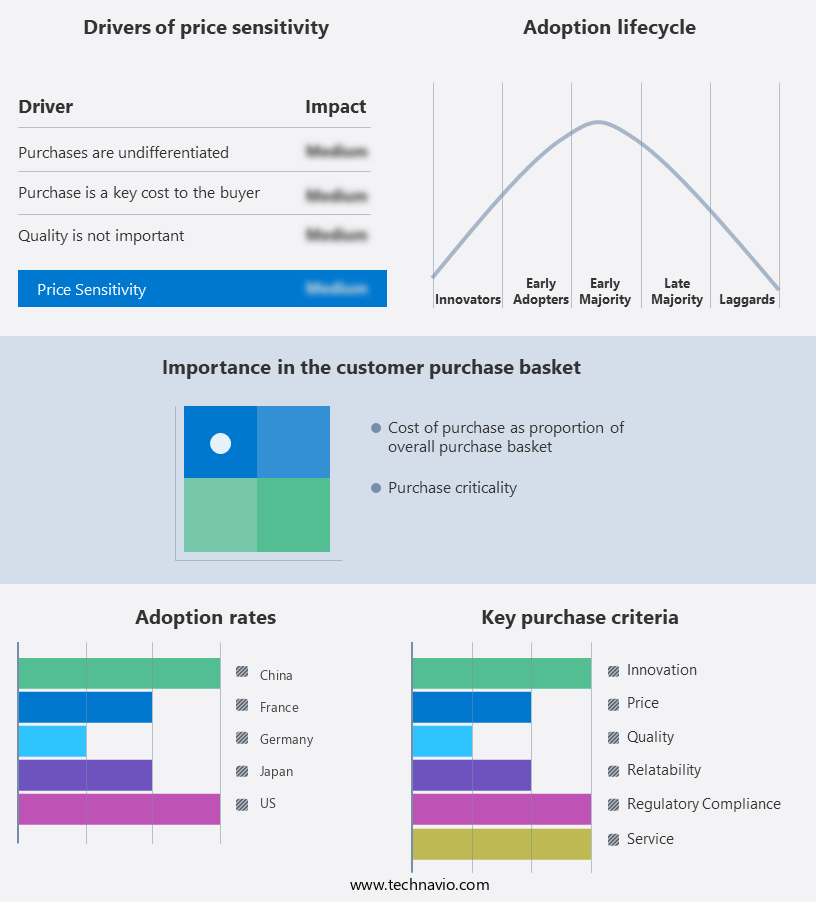
Customer Landscape
Key Companies & Market Insights
Companies are implementing various strategies, such as strategic alliances, server market forecast, partnerships, mergers and acquisitions, geographical expansion, and product/service launches, to enhance their presence in the industry.
Amazon.com Inc. - The company provides a range of servers, including the RS300 E12 RS4, RS300 E12 PS4, and RS720Q E11 IM models. These servers cater to various business needs with their distinct features.
The industry research and growth report includes detailed analyses of the competitive landscape of the market and information about key companies, including:
- Amazon.com Inc.
- ASUSTeK Computer Inc.
- Bloom Energy Corp.
- Cisco Systems Inc.
- Dell Technologies Inc.
- Fujitsu Ltd.
- Hewlett Packard Enterprise Co.
- Huawei Technologies Co. Ltd.
- Inspur Group.
- Intel Corp.
- International Business Machines Corp.
- Lenovo Group Ltd.
- NEC Corp.
- NVIDIA Corp.
- Oracle Corp
- Quanta Computer Inc.
- SAP SE
- SMART Global Holdings Inc.
- Super Micro Computer Inc.
Qualitative and quantitative analysis of companies has been conducted to help clients understand the wider business environment as well as the strengths and weaknesses of key industry players. Data is qualitatively analyzed to categorize companies as pure play, category-focused, industry-focused, and diversified; it is quantitatively analyzed to categorize companies as dominant, leading, strong, tentative, and weak.
Recent Development and News in Server Market
- In February 2023, IBM announced the launch of its new Power10 processor, promising a 50% performance improvement over its predecessor and increased energy efficiency (IBM Press Release). This technological advancement is expected to significantly enhance IBM's Power Systems server offerings.
- In July 2024, Amazon Web Services (AWS) and Microsoft Azure entered into a strategic partnership to allow direct interconnectivity between their cloud services, enabling seamless data transfer and workload migration between the two platforms (Microsoft News Center). This collaboration is aimed at strengthening their competitive positions in the cloud infrastructure market.
- In November 2024, NVIDIA completed the acquisition of Arm Holdings for USD40 billion, marking a major move in the market. The acquisition is expected to provide NVIDIA with a significant boost in its server processor business, as Arm's architecture is widely used in data center servers (NVIDIA Press Release).
- In March 2025, Google Cloud announced the expansion of its global network with the opening of new data centers in Indonesia and Colombia. This geographic expansion is aimed at catering to the growing demand for cloud services in these regions and reducing latency for local customers (Google Cloud Blog).
Research Analyst Overview
In the dynamic market, various trends and technologies are shaping the landscape. Server automation tools are increasingly being adopted for efficient management of large-scale server environments. Server throughput and bandwidth are critical factors in ensuring optimal server performance, while server authentication and access control secure data against unauthorized access. Server recovery and migration tools enable seamless transition between servers, minimizing downtime. Server logging and monitoring tools provide valuable insights into server behavior and performance, facilitating proactive maintenance. Server hard drive capacity and server processor power are essential considerations in server selection. Server patch management and vulnerability scanning safeguard against security threats, while server provisioning tools streamline deployment processes.
Bare metal servers offer high performance and flexibility, contrasting container orchestration's scalability and ease of use. Server rack design, including fan and power supply efficiency, impacts overall server performance and cooling requirements. Server encryption, hardening, and lifecycle management are essential for maintaining server security and reducing costs. Server memory and server utilization rate are key performance indicators, while server latency and server chipset architecture impact application response times. Server raid configurations and server backup solutions ensure data redundancy and disaster recovery readiness. Server blade servers and server chassis offer space-saving solutions for on-premises data centers.
Server maintenance windows and server access control policies enable planned downtime and secure access to critical infrastructure.
Dive into Technavio's robust research methodology, blending expert interviews, extensive data synthesis, and validated models for unparalleled Server Market insights. See full methodology.
|
Market Scope |
|
|
Report Coverage |
Details |
|
Page number |
202 |
|
Base year |
2024 |
|
Historic period |
2019-2023 |
|
Forecast period |
2025-2029 |
|
Growth momentum & CAGR |
Accelerate at a CAGR of 7.6% |
|
Market growth 2025-2029 |
USD 41.95 billion |
|
Market structure |
Fragmented |
|
YoY growth 2024-2025(%) |
7.0 |
|
Key countries |
US, China, Germany, France, Canada, India, Japan, South Korea, UK, Italy, UAE, Brazil, and Rest of World |
|
Competitive landscape |
Leading Companies, Market Positioning of Companies, Competitive Strategies, and Industry Risks |
What are the Key Data Covered in this Server Market Research and Growth Report?
- CAGR of the Server industry during the forecast period
- Detailed information on factors that will drive the growth and forecasting between 2025 and 2029
- Precise estimation of the size of the market and its contribution of the industry in focus to the parent market
- Accurate predictions about upcoming growth and trends and changes in consumer behaviour
- Growth of the market across North America, Europe, APAC, South America, and Middle East and Africa
- Thorough analysis of the market's competitive landscape and detailed information about companies
- Comprehensive analysis of factors that will challenge the server market growth of industry companies
We can help! Our analysts can customize this server market research report to meet your requirements.
 RIA -
RIA - 
