


Acoustic Insulation Market Size 2024-2028
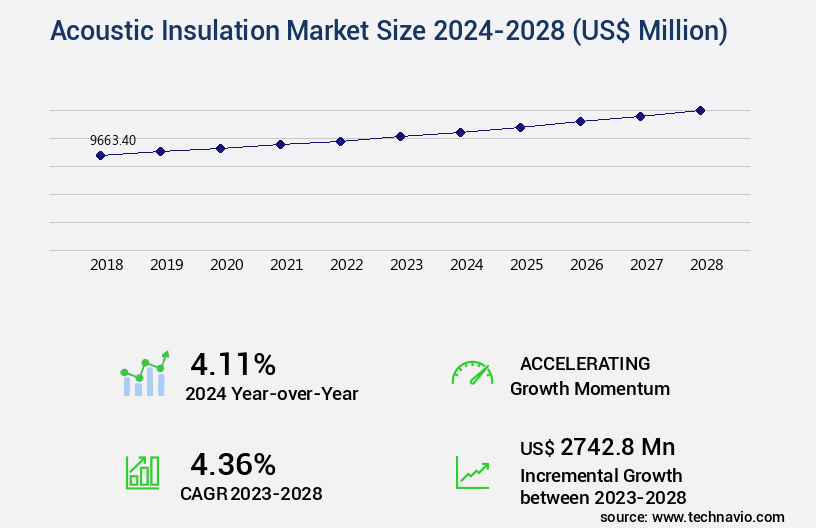
The acoustic insulation market size is valued to increase USD 2.74 billion, at a CAGR of 4.36% from 2023 to 2028. Increasing health concerns over noise pollution will drive the acoustic insulation market.
Major Market Trends & Insights
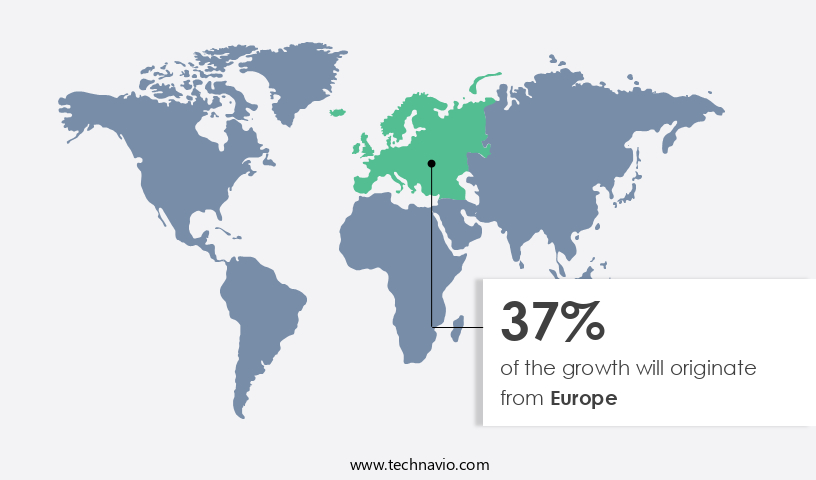
- Europe dominated the market and accounted for a 37% growth during the forecast period.
- By End-user - Building and construction segment was valued at USD 5.22 billion in 2022
- By Type - Stone wool segment accounted for the largest market revenue share in 2022
Market Size & Forecast
- Market Opportunities: USD 47.62 million
- Market Future Opportunities: USD 2742.80 million
- CAGR from 2023 to 2028 : 4.36%
Market Summary
- The market represents a significant segment within the construction industry, driven by growing awareness towards noise pollution and its detrimental health effects. This market's expansion is fueled by the increasing adoption of advanced materials, such as aerogels, which offer superior sound absorption properties. However, potential toxic effects associated with certain acoustic insulation products pose a challenge to market growth. Acoustic insulation plays a pivotal role in mitigating noise pollution, contributing to improved occupant comfort and productivity in various sectors, including residential, commercial, and industrial. According to recent market research, The market size was valued at over USD20 billion in 2020, reflecting its substantial importance.
- Despite this growth, the industry faces challenges related to the development of eco-friendly, non-toxic alternatives to traditional insulation materials. Innovations in material science continue to shape the acoustic insulation landscape, with researchers exploring the potential of nanotechnology and biomimicry to create more effective and sustainable solutions. As the demand for noise reduction grows, so too will the market's potential for expansion and transformation. The market's future direction lies in the development of advanced, non-toxic materials that can effectively address noise pollution while minimizing environmental impact.
What will be the Size of the Acoustic Insulation Market during the forecast period?
Get Key Insights on Market Forecast (PDF) Request Free Sample
How is the Acoustic Insulation Market Segmented ?
The acoustic insulation industry research report provides comprehensive data (region-wise segment analysis), with forecasts and estimates in "USD million" for the period 2024-2028, as well as historical data from 2018-2022 for the following segments.
- End-user
- Building and construction
- Industrial
- Transportation
- Type
- Stone wool
- Glass wool
- Foamed plastics
- Others
- Geography
- North America
- US
- Canada
- Europe
- Germany
- UK
- APAC
- China
- Rest of World (ROW)
- North America
By End-user Insights
The building and construction segment is estimated to witness significant growth during the forecast period.
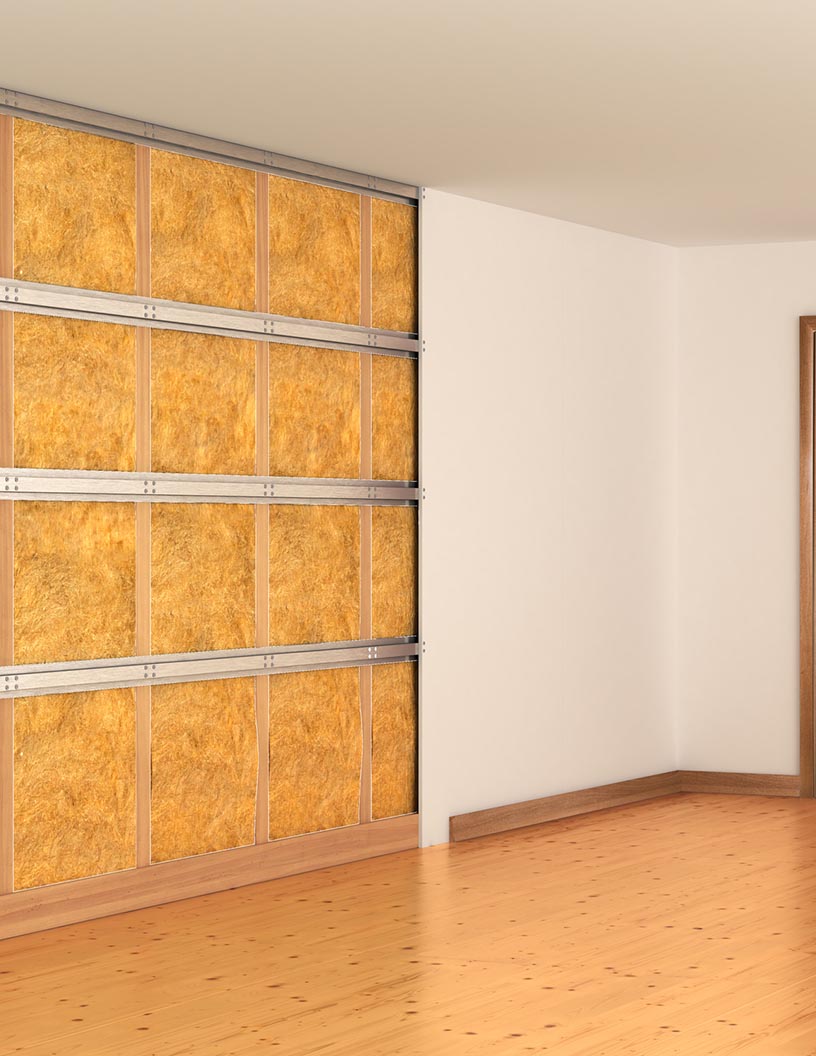
The market continues to evolve in response to growing concerns over noise pollution and the need for effective sound control in various industries. Acoustic insulation plays a pivotal role in building and construction, with applications ranging from walls, floors, doors, windows, and ceilings. These materials, which include mineral wool insulation, glass wool insulation, and acoustic foam, are integral to preventing sound transmission and absorbing unwanted noise. Acoustic panels, insulation thickness, and absorption efficiency are crucial factors in achieving optimal sound attenuation, with decibel reduction and sound transmission class being key performance indicators. Acoustic insulation materials exhibit varying densities, damping coefficients, and sound absorption coefficients to cater to different frequency responses and acoustic impedance.
Structural-borne sound and environmental noise are effectively mitigated through the use of vibration isolation, vibration damping, and acoustic barriers. Noise control engineering principles, such as transmission loss and reverberation time, are employed to optimize the overall performance of these materials. Porous absorbers, resonant absorbers, and sound masking systems are additional solutions that contribute to improved room acoustics and reduced noise levels. A recent study revealed that the use of acoustic insulation in buildings can lead to a 50% reduction in noise levels, highlighting its significant impact on overall comfort and productivity. By integrating advanced acoustic modeling and acoustic ceiling tiles, architects and engineers can create buildings that not only meet the requirements of noise control regulations but also provide a quiet and comfortable environment for their occupants.
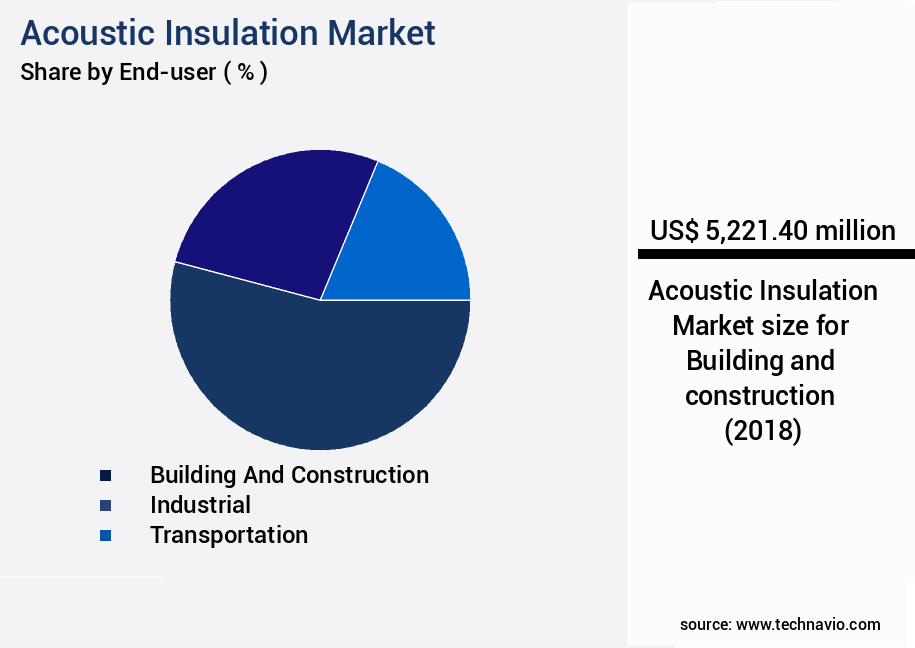
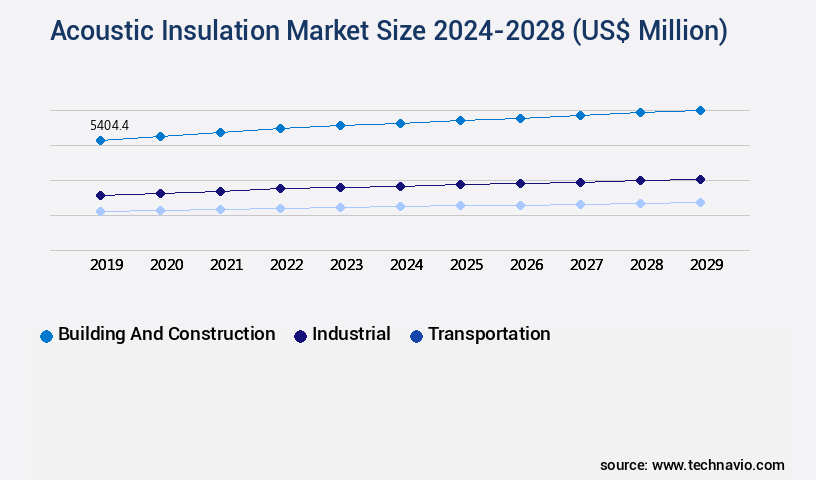
The Building and construction segment was valued at USD 5.22 billion in 2018 and showed a gradual increase during the forecast period.
Regional Analysis
Europe is estimated to contribute 37% to the growth of the global market during the forecast period.Technavio's analysts have elaborately explained the regional trends and drivers that shape the market during the forecast period.
See How Acoustic Insulation Market Demand is Rising in Europe Request Free Sample
The market is witnessing significant growth, with APAC leading the global landscape in terms of market share. China and India are the primary contributors in APAC, fueled by their rapid economic expansion. Notably, China's construction sector is transitioning from government-controlled projects to privately funded commercial and industrial developments, driving the industrial segment's growth. Moreover, the emphasis on soundproofing and fire protection in residential and commercial high-rise buildings is expected to escalate demand during the forecast period.
According to recent studies, the APAC the market is projected to expand at a substantial rate, surpassing other regions. The market's expansion can be attributed to the increasing awareness of noise pollution mitigation and the growing preference for energy efficiency in construction.
Market Dynamics
Our researchers analyzed the data with 2023 as the base year, along with the key drivers, trends, and challenges. A holistic analysis of drivers will help companies refine their marketing strategies to gain a competitive advantage.
The market is experiencing significant growth due to the increasing demand for effective noise control solutions in various industries and applications. Acoustic insulation plays a crucial role in reducing unwanted noise and improving the overall acoustic performance of buildings and infrastructure. One of the key factors driving the market is the need for acoustic panels with high sound absorption coefficients to ensure effective noise reduction in multifamily buildings. Impact insulation classes are essential for meeting building codes and ensuring adequate noise reduction rating for walls. Transmission loss calculation methods and acoustic impedance matching techniques are used to optimize the performance of acoustic barriers and sound transmission class for windows. Reverberation time control strategies are essential for achieving optimal building acoustic design principles. Sound masking systems are increasingly being used to improve speech privacy and reduce distractions in open-plan offices. Vibration damping materials find extensive applications in reducing noise and vibrations in industrial machinery and transportation infrastructure. Acoustic barriers are a critical component in highway noise reduction, and noise control engineering best practices ensure their effective implementation. Acoustic ceiling tiles offer excellent sound absorption properties, making them a popular choice for improving indoor acoustic quality. Mineral wool and glass wool insulation are widely used for their acoustic properties, with mineral wool offering superior sound attenuation and glass wool providing good sound absorption coefficients. Frequency response acoustic panels and acoustic foam with high sound absorption coefficients are essential for controlling noise in specific frequency ranges. Sound insulation rating for residential buildings is a critical consideration for ensuring comfortable living environments, and acoustic modeling software applications are increasingly being used to optimize the design and selection of sound insulation materials and systems.
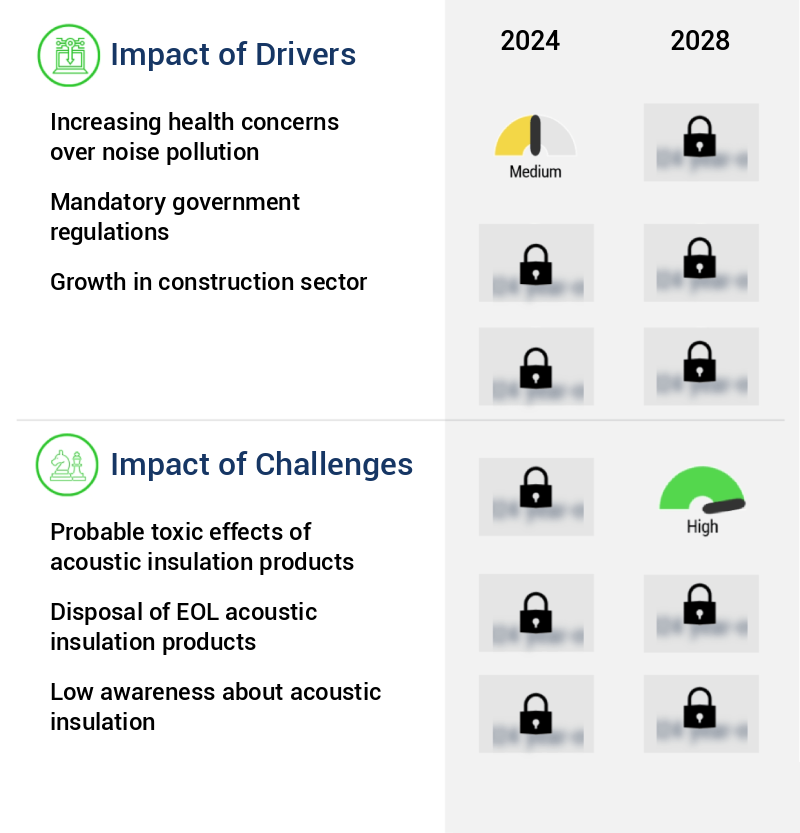
What are the key market drivers leading to the rise in the adoption of Acoustic Insulation Industry?
- The escalating concern for health issues related to noise pollution serves as the primary market catalyst.
- Acoustic insulation has emerged as a critical solution to mitigate the detrimental effects of noise pollution. Unwanted sounds, emanating from various sources such as motor vehicles, machinery, and industrial operations, can lead to numerous health issues, including cardiovascular diseases, hearing problems, sleep disturbances, and stress. These risks have become increasingly concerning as the prevalence of noise pollution continues to rise. The World Health Organization reports that approximately 1.1 billion people are exposed to noise levels that exceed the recommended limits, underscoring the urgent need for effective acoustic insulation.
- By absorbing or blocking unwanted sounds, acoustic insulation plays a vital role in safeguarding human health and ensuring a peaceful environment.
What are the market trends shaping the Acoustic Insulation Industry?
- Aerogels are increasingly being adopted as the latest market trend. This emerging trend reflects the growing recognition of aerogels' potential benefits.
- Aerogel, renowned for its high-performance insulation properties, is increasingly utilized as an acoustic insulation solution due to its unique advantages. This fire-resistant compound does not necessitate hazardous or toxic binders and coatings, making it a preferred choice in various industries. Aerogel's efficiency in insulation allows for less material thickness compared to other insulation types. Consequently, the growing preference for aerogel-based acoustic insulation is expected to fuel the expansion of the global market. The versatility of aerogel, which performs effectively in both hot and cold temperatures, further enhances its appeal.
What challenges does the Acoustic Insulation Industry face during its growth?
- The growth of the acoustic insulation industry is hindered by the potential toxic effects associated with these products, representing a significant challenge that necessitates ongoing research and innovation to mitigate any potential health and environmental concerns.
- Acoustic insulation, a crucial component in various industries, is evolving to address health and environmental concerns. Traditional insulation materials, such as those containing asbestos, formaldehyde, and isocyanates, have raised health concerns due to their potential human health effects. These ingredients, found in some spray polyurethane foam (SPF) products, can lead to skin conditions, asthma, respiratory allergies, and even lung cancer with long-term exposure. The Clean Air Act (CAA) sets limits on certain air pollutants to mitigate these risks. In response, the market is shifting towards eco-friendly alternatives, such as natural fibers, recycled materials, and bio-based insulation. For instance, plant-based insulation made from corn, soy, and other renewable resources is gaining popularity.
- This shift not only reduces health risks but also contributes to sustainability efforts. According to recent studies, The market is expected to reach approximately 30 billion USD by 2027, growing at a significant rate. Another study suggests that the market for eco-friendly insulation is projected to expand at a CAGR of around 8% during the forecast period. These figures underscore the market's potential and the growing demand for safer, more sustainable insulation solutions.
Exclusive Technavio Analysis on Customer Landscape
The acoustic insulation market forecasting report includes the adoption lifecycle of the market, covering from the innovator's stage to the laggard's stage. It focuses on adoption rates in different regions based on penetration. Furthermore, the acoustic insulation market report also includes key purchase criteria and drivers of price sensitivity to help companies evaluate and develop their market growth analysis strategies.
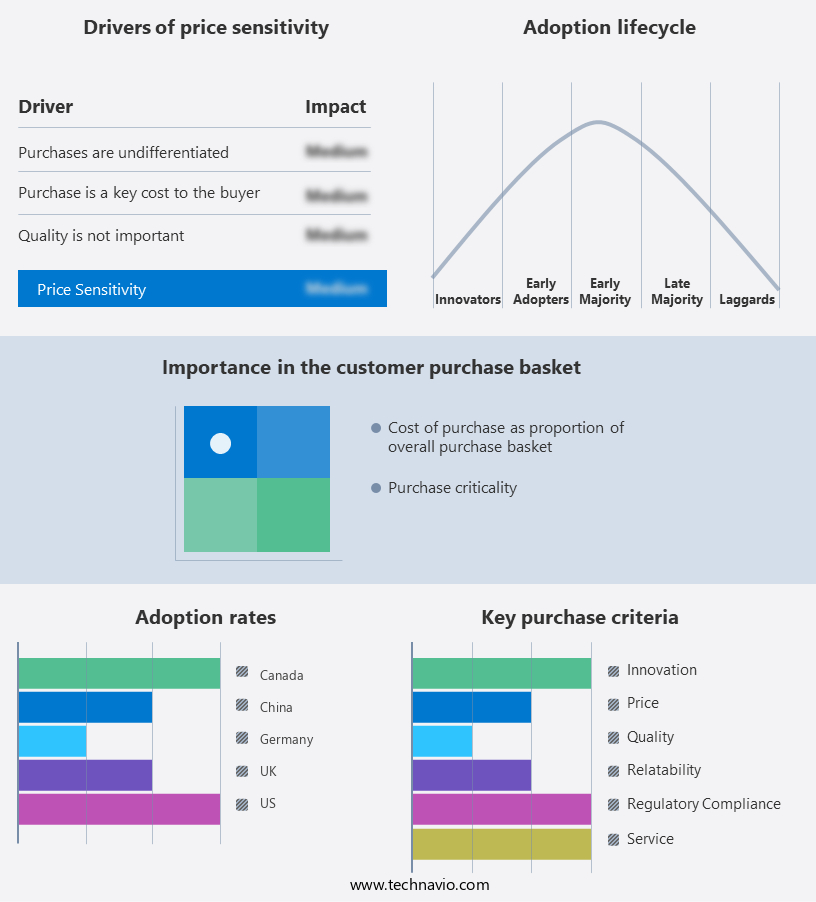
Customer Landscape of Acoustic Insulation Industry
Competitive Landscape
Companies are implementing various strategies, such as strategic alliances, acoustic insulation market forecast, partnerships, mergers and acquisitions, geographical expansion, and product/service launches, to enhance their presence in the industry.
3M Co. - This company specializes in providing acoustic insulation solutions, utilizing non-woven sound absorbing fibers to help customers achieve mass reduction targets. The result is a significantly quieter vehicle environment, enhancing overall comfort and performance.
The industry research and growth report includes detailed analyses of the competitive landscape of the market and information about key companies, including:
- 3M Co.
- Acoustical Surfaces Inc.
- Aerogel Technologies LLC
- Armacell International SA
- Auralex Acoustics Inc.
- BASF SE
- Beautex Industries Pvt. Ltd.
- Cabot Corp.
- Compagnie de Saint Gobain
- CSR Ltd.
- Fletcher Insulation
- Hutchinson SA
- INS Acoustics Ltd.
- Isomass Ltd.
- Johns Manville
- Kingspan Group Plc
- Knauf Digital GmbH
- Owens Corning
- ROCKWOOL International AS
- Trelleborg AB
Qualitative and quantitative analysis of companies has been conducted to help clients understand the wider business environment as well as the strengths and weaknesses of key industry players. Data is qualitatively analyzed to categorize companies as pure play, category-focused, industry-focused, and diversified; it is quantitatively analyzed to categorize companies as dominant, leading, strong, tentative, and weak.
Recent Development and News in Acoustic Insulation Market
- In January 2024, Saint-Gobain, a leading global construction materials company, announced the launch of Ecophon Echo, a new acoustic insulation product line designed for high-performance sound absorption in commercial buildings (Saint-Gobain press release, 2024).
- In March 2024, 3M and Knauf Insulation, two major players in the acoustic insulation industry, entered into a strategic partnership to develop and market innovative acoustic insulation solutions, combining 3M's advanced sound-absorbing technologies with Knauf's insulation expertise (3M press release, 2024).
- In April 2025, Rockwool International, a leading producer of insulation materials, completed the acquisition of ECOFOAM, a US-based manufacturer of spray foam insulation and acoustic insulation products, expanding Rockwool's presence in the North American market and strengthening its acoustic insulation portfolio (Rockwool press release, 2025).
- In May 2025, the European Union passed the new Ecodesign Regulation for insulation products, including acoustic insulation, which sets stricter energy efficiency and environmental performance requirements, effective from 2027 (European Parliament press release, 2025).
Dive into Technavio's robust research methodology, blending expert interviews, extensive data synthesis, and validated models for unparalleled Acoustic Insulation Market insights. See full methodology.
|
Market Scope |
|
|
Report Coverage |
Details |
|
Page number |
179 |
|
Base year |
2023 |
|
Historic period |
2018-2022 |
|
Forecast period |
2024-2028 |
|
Growth momentum & CAGR |
Accelerate at a CAGR of 4.36% |
|
Market growth 2024-2028 |
USD 2742.8 million |
|
Market structure |
Fragmented |
|
YoY growth 2023-2024(%) |
4.11 |
|
Key countries |
US, China, UK, Canada, and Germany |
|
Competitive landscape |
Leading Companies, Market Positioning of Companies, Competitive Strategies, and Industry Risks |
Research Analyst Overview
- The market continues to evolve, driven by the increasing demand for effective noise control solutions across various sectors. Vibration isolation and airborne sound reduction remain key focus areas, with soundproofing materials playing a crucial role in mitigating noise pollution. The density of these materials significantly impacts their ability to absorb sound, with porous absorbers and resonant absorbers offering high absorption efficiency. Noise pollution, a growing environmental concern, fuels the market's expansion. For instance, a study revealed that implementing sound insulation in a large European office building resulted in a 30% reduction in decibel levels, enhancing employee productivity and well-being.
- Industry growth is expected to reach double-digit percentages, underpinned by the continuous development of advanced acoustic panels, insulation thicknesses, and sound absorption materials. Acoustic modeling, transmission loss, and sound absorption coefficient are essential concepts in noise control engineering. Frequency response, acoustic impedance, and reverberation time are critical factors in designing effective acoustic barriers and sound masking systems. Mineral wool insulation and glass wool insulation are popular choices for their sound insulation rating and impact insulation class. Structure-borne sound and environmental noise pose additional challenges, necessitating the use of acoustic foam, acoustic ceiling tiles, and bass trapping techniques.
- Sound transmission class and noise reduction rating are essential metrics for assessing the performance of these solutions. The ongoing unfolding of market activities and evolving patterns underscore the importance of staying informed about the latest acoustic insulation trends and innovations.
What are the Key Data Covered in this Acoustic Insulation Market Research and Growth Report?
-
What is the expected growth of the Acoustic Insulation Market between 2024 and 2028?
-
USD 2.74 billion, at a CAGR of 4.36%
-
-
What segmentation does the market report cover?
-
The report is segmented by End-user (Building and construction, Industrial, and Transportation), Type (Stone wool, Glass wool, Foamed plastics, and Others), and Geography (APAC, Europe, North America, South America, and Middle East and Africa)
-
-
Which regions are analyzed in the report?
-
APAC, Europe, North America, South America, and Middle East and Africa
-
-
What are the key growth drivers and market challenges?
-
Increasing health concerns over noise pollution, Probable toxic effects of acoustic insulation products
-
-
Who are the major players in the Acoustic Insulation Market?
-
3M Co., Acoustical Surfaces Inc., Aerogel Technologies LLC, Armacell International SA, Auralex Acoustics Inc., BASF SE, Beautex Industries Pvt. Ltd., Cabot Corp., Compagnie de Saint Gobain, CSR Ltd., Fletcher Insulation, Hutchinson SA, INS Acoustics Ltd., Isomass Ltd., Johns Manville, Kingspan Group Plc, Knauf Digital GmbH, Owens Corning, ROCKWOOL International AS, and Trelleborg AB
-
Market Research Insights
- The market is a continually evolving industry, focusing on the development and application of materials and techniques to reduce unwanted sound transmission. Two key aspects of this market are sound absorption and sound insulation. For instance, the use of sound absorption materials with a high NRC rating can effectively reduce reverberation and improve acoustic performance in spaces such as recording studios. Additionally, the implementation of sound insulation techniques, like impedance matching and STC rating, can significantly minimize noise transfer between adjacent spaces. Industry growth in this sector is anticipated to increase by approximately 5% annually, driven by the increasing demand for improved acoustic conditions in various sectors, including residential, commercial, and industrial applications.
- For example, a study revealed that implementing proper sound insulation in a multi-unit residential building led to a 30% reduction in noise complaints from neighbors. This underscores the importance of effective acoustic design and the role it plays in enhancing overall quality of life.
We can help! Our analysts can customize this acoustic insulation market research report to meet your requirements.
 RIA -
RIA - 
