
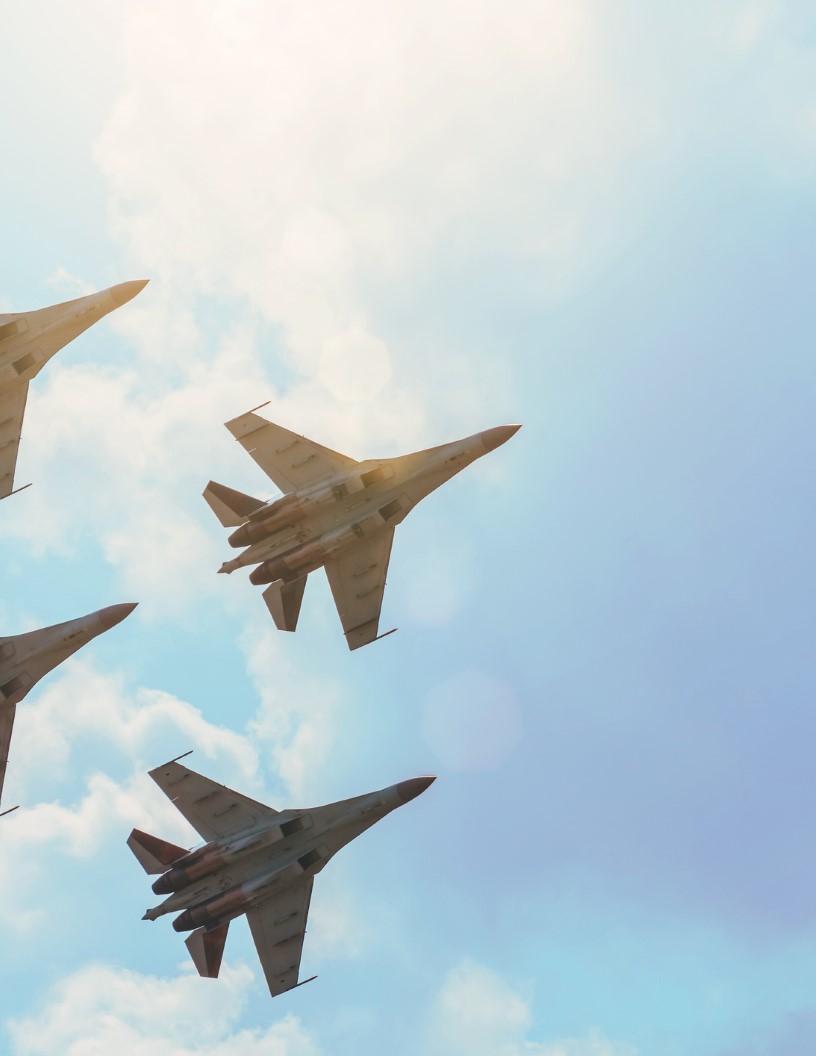


Germany Aerospace and Defense Market Forecast 2024-2028
The Germany Aerospace and Defense market size is forecast to increase by USD 9.74 billion, at a CAGR of 4.2% between 2023 and 2028. The growth rate of the market depends on several factors, increasing demand for UAVs, the presence of a robust aerospace and defense industry base in Germany and an increase in investments in defense modernization. Our report examines historical data from 2018-2022, besides analyzing the current and forecasted market scenario.
Airbus SE provides cutting-edge aerospace and defense solutions, exemplified by the Future Combat Air System (FCAS), a sophisticated network integrating manned and unmanned platforms, ranging from fighter aircraft and drones to satellites. On the other hand, Altair Engineering Inc. contributes to the aerospace and defense sector with its innovative Altair HPCWorks suite. This suite empowers organizations to optimize, analyze, and accelerate high-performance computing (HPC), artificial intelligence (AI), and high-throughput workloads, playing a crucial role in enabling groundbreaking discoveries in the industry.
Market Forecasting and Size

Market Forecast 2024-2028
To learn more about this report, Request Free Sample
Market Dynamics
Our researchers studied the market research and growth data for years, with 2023 as the base year and 2024 as the estimated year, and presented the key drivers, trends, and challenges for the market.
Driver - Increasing demand for UAVs
UAVs, commonly known as drones, are increasing in both defense and commercial applications. The increasing demand for UAVs in Germany drives the development of the Germany aerospace and defense market. Factors such as an upsurge in military spending and the augmentation in demand for improved surveillance solutions are expected to drive the demand for UAVs during the forecast period. The development in the threat from terrorism and the increase in security in Germany lead to increased government expenditure for UAVs. Moreover, the advances in autonomy, artificial intelligence, and sensor technologies are the development of autonomous UAVs for surveillance, reconnaissance, logistics, and other missions.
Further, UAVs are increasingly integrated with other technologies such as artificial intelligence, the Internet of Things (IoT), big data analytics, and cloud computing to enhance their capabilities and functionality, which, in turn, surge the demand for UAVs in the country. Aerospace composites, known for their lightweight and durable properties, are pivotal in the manufacturing of UAVs, enabling enhanced performance and efficiency. Therefore, the growing adoption of aerospace composites in UAV production, coupled with advancements in integrated technologies, drives the demand for UAVs and propels market growth during the forecast period. These developments underscore the role of aerospace composites in meeting the evolving technological demands and operational requirements of modern unmanned aerial vehicles across various applications, including defense, surveillance, and commercial sectors.
Trends - Increase in technological innovation in aerospace and defense industry
Technological innovation in the market is one of the significant factors driving the development. Factors such as government investment and industry collaboration significantly contribute to the increase in technological innovation in such industries in Germany. The aerospace companies in Germany are increasingly developing advanced aircraft designs that focus on improving fuel efficiency, reducing emissions, enhancing aerodynamics, and increasing performance. Improved aircraft designs, advanced sensor systems, and autonomous technologies allow these platforms to accomplish missions more effectively, boosting the demand for these products and services.
Moreover, the development of sustainable aviation and defense solutions further enhances the aerospace artificial intelligence (AI) market. Innovations in alternative fuels, electrification, hybrid propulsion systems, and lightweight materials are pivotal in advancing sustainable technologies within the aerospace sector. These developments are particularly gaining traction in countries like Germany, where there is a strong emphasis on reducing carbon emissions, minimizing environmental impact, and enhancing energy efficiency in aviation and defense industries. Therefore, the integration of aerospace artificial intelligence (AI) technologies alongside sustainable advancements is expected to propel market growth during the forecast period, driving efficiencies, improving safety measures, and addressing environmental concerns in the global aerospace industry.
Challenge - Shortage in skilled labor in aerospace and defense industry in Germany
The shortage of skilled workers, engineers, and technicians in the country hamper the growth of the market. Shortage of skilled labor limits the ability to innovation and development of new technologies in the these companies. Without a sufficient workforce of skilled engineers, technicians, and researchers, companies may struggle to advance their capabilities and remain competitive in a rapidly evolving industry. The shortage in skilled labor also leads to delays in project timelines for programs, leading to delays in product development, testing, and deployment, negatively impacting the growth of the market
Moreover, the shortage of skilled labor leads to the skills gap within the aerospace testing industry and impedes innovation and competitiveness within the market. Companies that lack the necessary talent to drive technological advancements in aerospace testing may struggle to expand their business, invest in research and development (R&D), and develop cutting-edge solutions. Therefore, the skills gap in aerospace testing is expected to hinder market growth in Germany during the forecast period, as companies face challenges in recruiting and retaining skilled professionals capable of conducting rigorous testing and certification processes for aircraft and aerospace components. Addressing this skills gap is crucial for fostering innovation and maintaining competitiveness in the dynamic aerospace testing sector, where precision, reliability, and compliance with stringent safety standards are paramount.
Market Segmentation by Type, Service , and Aircraft Type
Type Segment Analysis:
The market share growth by the aerospace segment will be significant during the forecast period. The aerospace segment in the market refers to the development of cutting-edge technology, from advanced materials and propulsion systems to satellite communication and space exploration initiatives. The growth of the aerospace segment is driven by factors such as increased passenger demand.

Customised Report as per your requirements!
The aerospace segment was the largest and was valued at USD 24.15 billion in 2018. Various projects, such as Frankfurt, Munich, Berlin, and Hamburg, help in the expansion of refurbishment of terminals. For instance, Munich Airport is undergoing the expansion and modernization of Terminal 1 through the construction of a new pier. The structural work of this strategic expansion project was completed in 2022. Such undergoing expansions and development projects propel the growth of the aerospace segment. In addition, the ongoing advancements in aerospace technology, such as innovations in aircraft design, materials science, propulsion systems, and avionics, enable the development of more fuel-efficient, environmentally friendly, and cost-effective aircraft, which further enhances the growth of the aerospace industry. Therefore, factors such as growing passenger demand and the increase in investments in infrastructure development projects, such as airport expansion, modernization, and construction of new runways and terminals, will drive the growth of the segment during the forecast period.
Service Segment Analysis:
Based on the services, the market has been segmented into manufacturing, design, engineering, maintenance, repair and overhaul. The manufacturing?segment will account for the largest share of this segment.? The manufacturing, design, and engineering segment includes a wide range of activities related to designing, engineering, and manufacturing such products, including aircraft, spacecraft, missiles, weapons systems, and associated subsystems. Manufacturing, design, and engineering play a critical role in the development, production, and maintenance of these systems. Companies operating in the market are increasingly investing in adopting and leveraging cutting-edge technologies to enhance product design, manufacturing process, and efficiency. Moreover, the expansion in the industry drives the demand for advanced aerospace manufacturing and engineering solutions. Therefore, such factors will drive the growth of the manufacturing, design, and engineering segments in the market during the forecast period.
Who are the Major Market Companies?
Companies are implementing various strategies, such as strategic alliances, partnerships, mergers and acquisitions, geographical expansion, and product/service launches, to enhance their presence in the market.
BAE Systems Plc - The company offers aerospace and defense products and services for air, land and naval forces, as well as advanced electronics, security, information technology solutions and customer support services.
We also have detailed analyses of the market’s competitive landscape and offer information on 20 market companies, including Airbus SE, Altair Engineering Inc., BAE Systems Plc, Diehl Stiftung and Co. KG, Heckler and Koch, HENSOLDT AG, KNDS N.V., Leonardo S.p.A., Liebherr International Deutschland GmbH, Lockheed Martin Corp., MTU Aero Engines AG, OHB SE, RTX Corp., Safran SA, Thales Group, The Boeing Co., thyssenkrupp AG, TotalEnergies SE, General Dynamics Corp., and Rheinmetall AG
Technavio market forecast the an in-depth analysis of the market and its players through combined qualitative and quantitative data. The analysis classifies companies into categories based on their business approaches, including pure-play, category-focused, industry-focused, and diversified. Companies are specially categorized into dominant, leading, strong, tentative, and weak, based on their quantitative data analysis.
Segment Overview
The market analysis and report forecasts market growth by revenue and provides an analysis of the latest trends and growth opportunities from 2018 to 2028.
- Type Outlook
- Aerospace
- Defense
- Service Outlook
- Manufacturing
- Design
- Engineering
- Maintenance
- Repair and overhaul
- Aircraft Type Outlook
- Manual
- Autonomous
Market Analyst Overview
The market plays a pivotal role in both global economic growth and national security. With a strong focus on military modernization, the country invests significantly in research and development, making it a key player in the global aerospace and defense market. The defense segment witnesses substantial investment, including funding for autonomous technology and unmanned aerial systems like NiDAR X-Scout. Germany, known for its defense producer capabilities, aligns with safety and security protocols, regulatory compliance, and technological advancements. Additionally, with a commitment to Net Zero Emissions by 2050, the aerospace sector navigates challenges related to CO2 emissions, emphasizing sustainable practices. The market extends its influence globally, reflecting the nation's leadership in defense spending, aviation expertise, and contributions to international peace.
In addition, the market is a dynamic force in both civilian and military domains. From airplanes and military systems to civilian applications and space activities, the sector meets diverse demands. With significant investments, autonomous systems, and advanced components, Germany aligns with global economic trends. As a key defense exporter, the nation prioritizes technological advancements while contributing to Net Zero Emissions goals. The market stands at the forefront, ensuring operational excellence and strategic significance.
| Germany Aerospace and Defense Market Scope | |
|
Report Coverage |
Details |
|
Page number |
148 |
|
Base year |
2023 |
|
Historic period |
2018-2022 |
|
Forecast period |
2024-2028 |
|
Growth momentum & CAGR |
Accelerate at a CAGR of 4.2% |
|
Market growth 2024-2028 |
USD 9.74 billion |
|
Market structure |
Fragmented |
|
YoY growth 2023-2024(%) |
3.42 |
|
Competitive landscape |
Leading Companies, Market Positioning of Companies, Competitive Strategies, and Industry Risks |
|
Key companies profiled |
Airbus SE, Altair Engineering Inc., BAE Systems Plc, Diehl Stiftung and Co. KG, Heckler and Koch, HENSOLDT AG, KNDS N.V., Leonardo S.p.A., Liebherr International Deutschland GmbH, Lockheed Martin Corp., MTU Aero Engines AG, OHB SE, RTX Corp., Safran SA, Thales Group, The Boeing Co., thyssenkrupp AG, TotalEnergies SE, General Dynamics Corp., and Rheinmetall AG |
|
Market dynamics |
Parent market growth analysis, Market growth inducers and obstacles, Fast-growing and slow-growing segment analysis, COVID-19 impact and recovery analysis and future consumer dynamics, Market condition analysis for the forecast period. |
|
Customization purview |
If our market report has not included the data that you are looking for, you can reach out to our analysts and get segments customized. |
What are the Key Data Covered in this Market Research Report?
- CAGR of the market during the forecast period
- Detailed information on factors that will drive the growth of the market between 2024 and 2028
- Precise estimation of the market growth and trends and its contribution to the market in focus on the parent market
- Accurate predictions about upcoming market trends and analysis and changes in consumer behavior
- Market growth and forecasting across Germany
- A thorough market analysis and report of the market’s competitive landscape and detailed information about companies
- Comprehensive analysis of factors that will challenge the growth of market companies
We can help! Our analysts can customize this market research report to meet your requirements. Get in touch
 RIA -
RIA - 
