

Agricultural Biotechnology Market Analysis North America, Europe, APAC, South America, Middle East and Africa - US, China, India, Germany, UK - Size and Forecast 2024-2028

Agricultural Biotechnology Market Analysis North America, Europe, APAC, South America, Middle East and Africa - US, China, India, Germany, UK - Size and Forecast 2024-2028

Published: Feb 2024 180 Pages SKU: IRTNTR46661

Market Overview at a Glance

$28.63 B
Market Opportunity
9.6%
CAGR
9.2
YoY growth 2023-2024(%)

Agricultural Biotechnology Market Size 2024-2028

The agricultural biotechnology market size is forecast to increase by USD 28.63 billion at a CAGR of 9.6% between 2023 and 2028.

  • The market is experiencing significant growth, driven by the increasing demand for higher crop yield and the utilization of transgenic animals to produce recombinant proteins. This trend is particularly prominent in regions with a strong agricultural sector and a focus on food security. However, the market is not without challenges. The high costs associated with the development of agricultural biotechnology products pose a significant barrier to entry for new players. Additionally, regulatory oversight and public perception remain key challenges, as some stakeholders express concerns over the long-term health and environmental impacts of genetically modified organisms. Companies seeking to capitalize on market opportunities in Agricultural Biotechnology must navigate these challenges effectively, investing in research and development to reduce costs and build trust with consumers and regulators.
  • Strategic partnerships and collaborations can also help mitigate risks and accelerate innovation. Overall, the market presents significant opportunities for companies that can effectively address these challenges and deliver sustainable, high-performing agricultural biotechnology solutions.

What will be the Size of the Agricultural Biotechnology Market during the forecast period?
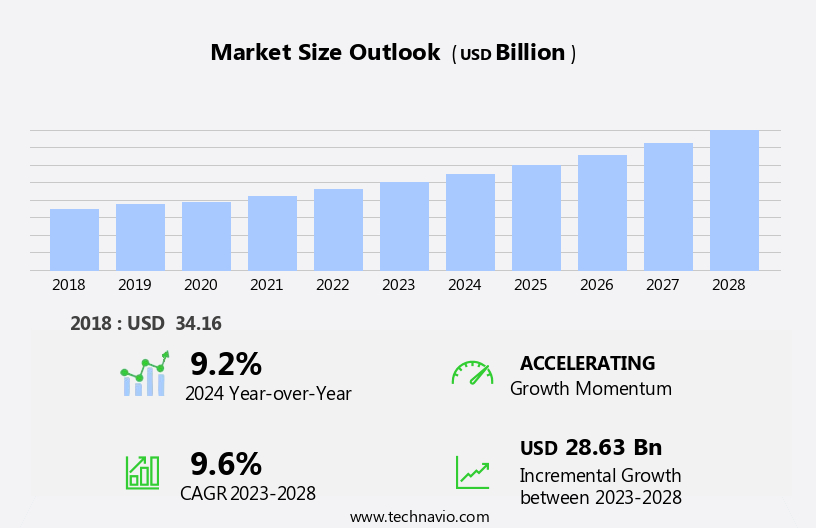
Agricultural Biotechnology Market Size

 Request Free Sample

  • The market encompasses the development and application of technology to improve the productivity, quality, and sustainability of plants, animals, and microbes in agriculture. This dynamic industry continues to evolve, driven by the demand for desirable traits such as virus resistance, herbicide-tolerance, insect-resistance, and enhanced quality traits. Genetic engineering, genome editing, and marker-assisted breeding are key technologies shaping the market, enabling the creation of transgenic seeds, stacked traits, and synthetic biology-enabled products. Genetic modifications also extend to animals, facilitating the development of vaccines and antibiotic development.
  • In addition, the market is exploring the potential of biofuels, nutritional supplements, and flower culturing. The industry's focus on environmental conditions and the development of crop protection products contributes to its significant size and growth. Overall, the market is a vital sector, continuously innovating to meet the needs of a growing global population and evolving agricultural landscape.

How is this Agricultural Biotechnology Industry segmented?

The agricultural biotechnology industry research report provides comprehensive data (region-wise segment analysis), with forecasts and estimates in "USD billion" for the period 2024-2028, as well as historical data from 2018-2022 for the following segments.

  • Product
    • Transgenic seeds and crops
    • Crop protection biochemicals
    • Others
  • Type
    • Plants
    • Microbes
    • Animals
  • Geography
    • North America
      • US
    • Europe
      • Germany
      • UK
    • APAC
      • China
      • India
    • South America
      • Middle East and Africa

      By Product Insights

      The transgenic seeds and crops segment is estimated to witness significant growth during the forecast period.

      The market encompasses transgenic seeds, specifically those with herbicide-tolerant and insect-resistant traits, as well as stacked traits, which combine multiple genes. Corn, soybeans, and cotton are common crops with these characteristics. For instance, Bt seeds, a popular GM variety, incorporate parts of the Bacillus thuringiensis gene from a bacterium, producing toxins that harm specific insects, thereby enhancing insect resistance. The market dynamics include scientific methods such as genome editing, molecular methods, and marker-assisted selection, enabling the development of desirable traits in organisms. These advancements address micronutrient deficiencies, enhance nutritional value, and improve crop protection. However, there are concerns regarding the environmental impact, including potential antibiotic resistance and lack of knowledge about long-term effects.

      Geographical coverage, infrastructure, pricing, raw material shortage, and trade regulations are essential factors influencing the market. Partnerships between organizations and research focus on vaccine development, synthetic biology-enabled products, and capacity expansion. The availability of crop protection products, precision farming, and the impact on food security are also significant considerations. Despite these advancements, shipping delays and price trend analysis remain challenges. Organisms such as microbes and animals are also subject to genetic modification, expanding the market's scope. The technology's potential for improving human health and addressing nutritional supplements and antibiotic development is a driving force. However, the environmental impact and potential risks must be carefully considered.
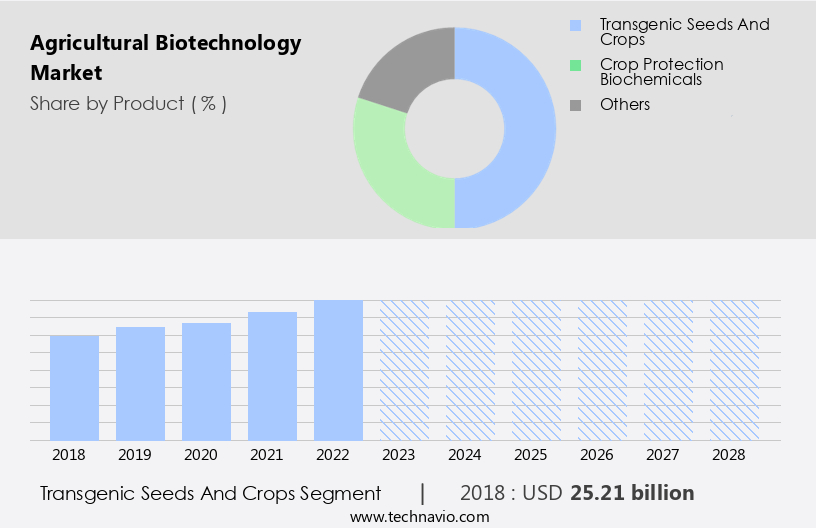
      Agricultural Biotechnology Market Size

      Get a glance at the market report of share of various segments Request Free Sample

      The Transgenic seeds and crops segment was valued at USD 25.21 billion in 2018 and showed a gradual increase during the forecast period.

      Regional Analysis

      North America is estimated to contribute 42% to the growth of the global market during the forecast period.Technavio’s analysts have elaborately explained the regional trends and drivers that shape the market during the forecast period.
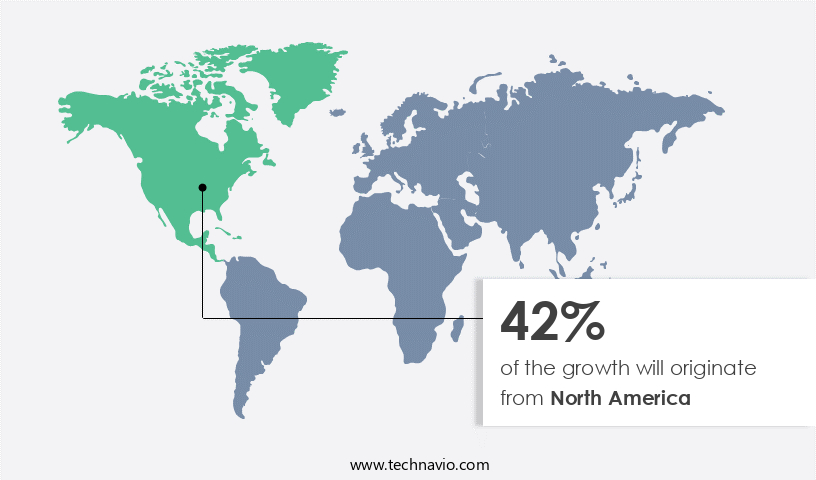
      Agricultural Biotechnology Market Share by Geography

      For more insights on the market size of various regions, Request Free Sample

      The market in North America is driven by advancements in plant breeding, biofuels, and genome editing. In North America, the United States and Canada are significant contributors to the market's revenue. Technological innovations for improved cultivation practices, growing demand for eco-friendly agricultural equipment, and consumer preference for genetically modified organisms with desirable traits, such as herbicide-tolerance and insect-resistance, are key factors fueling market expansion. Furthermore, the market's less capital-intensive nature attracts both small and established companies, leading to increased competition. The US Environmental Protection Agency's approval of agricultural biotechnology, due to its reduced environmental impact, will further boost market growth during the forecast period.

      Additionally, research focus on addressing micronutrient deficiencies, molecular methods like flower culturing, and developing countries' increasing demand for crop protection products contribute to the market's expansion. Price trend analysis, precision farming, shipping delays, and infrastructure development are other market dynamics shaping the agricultural biotechnology landscape. The market encompasses a wide range of organisms, from plants to animals, and covers various sectors, including trait type, research focus, genetic modification, and infrastructure. Market segmentation considers factors like trait type, pricing, raw material shortage, and environmental conditions. Synthetic biology-enabled products, such as vaccines and antibiotic development, are also gaining traction in the market.

      However, concerns regarding genetic changes, environmental impact, and antibiotic resistance remain key challenges. Intelligence services and partnerships play a crucial role in market growth, while trade regulations and virus-resistant plants further impact the market's trajectory.

      Market Dynamics

      Our researchers analyzed the data with 2023 as the base year, along with the key drivers, trends, and challenges. A holistic analysis of drivers will help companies refine their marketing strategies to gain a competitive advantage.

      What are the key market drivers leading to the rise in the adoption of Agricultural Biotechnology Industry?

      • Increasing demand for higher crop yield is the key driver of the market. 

      • The global population continues to grow, rising from 7.59 billion in 2018 to 8.1 billion in 2023. This expansion poses a significant challenge for the agricultural sector, as the demand for food increases while resources such as land and water remain constrained. The reduction in agricultural land due to urbanization is a major concern, as cities expand and farmland is converted for development. To meet the rising demand for food, farmers must maximize the productivity of their existing agricultural land. The market plays a crucial role in addressing this challenge by providing innovative solutions for increasing crop yields and reducing the need for water and other resources.
      • Biotechnology enables farmers to produce crops that are more resilient to environmental stressors, such as drought and pests, ensuring food security for a growing population. The market is driven by the need to feed a growing population and the desire to reduce the environmental impact of agriculture.

      What are the market trends shaping the Agricultural Biotechnology Industry?

      • Use of transgenic animals to produce recombinant proteins is the upcoming market trend. 

      • Transgenic animals, whose genome carries foreign DNA sequences from another species, are a significant development in agricultural biotechnology. The process of transgenesis introduces these DNA sequences into the genome of transfected cells. Animal cells are utilized to synthesize recombinant proteins with proper post-translational modifications, which is essential for various applications. This technique enhances the growth rate, improves feed utilization, and increases resistance to diseases in animals. Transgenic animals have been extensively used in the food industry, including cattle, sheep, goats, chickens, cats, rats, and more.
      • This application of biotechnology offers numerous benefits and is a crucial component in the agricultural sector. The use of transgenic animals contributes to the production of high-quality proteins and improved animal welfare, making it an essential area of research and development.

      What challenges does the Agricultural Biotechnology Industry face during its growth?

      • Higher costs for development of agricultural biotechnology products is a key challenge affecting the industry growth. 

      • The market faces significant challenges due to high research and development costs, particularly for the creation of new active ingredients. The European Parliament's lengthy approval process for crop protection products, which takes an average of 11 years, further increases these costs for manufacturers. With decreasing research spending by governments in developed countries, such as the US, Australia, and France, the agricultural research investment drop between 2021 and 2023 was 6%.
      • This trend continues, making the market dynamic a complex one for participants. Despite these challenges, the potential benefits of agricultural biotechnology, such as increased productivity and sustainability, make it an essential sector for innovation and growth.

      Exclusive Customer Landscape

      The agricultural biotechnology market forecasting report includes the adoption lifecycle of the market, covering from the innovator’s stage to the laggard’s stage. It focuses on adoption rates in different regions based on penetration. Furthermore, the agricultural biotechnology market report also includes key purchase criteria and drivers of price sensitivity to help companies evaluate and develop their market growth analysis strategies.
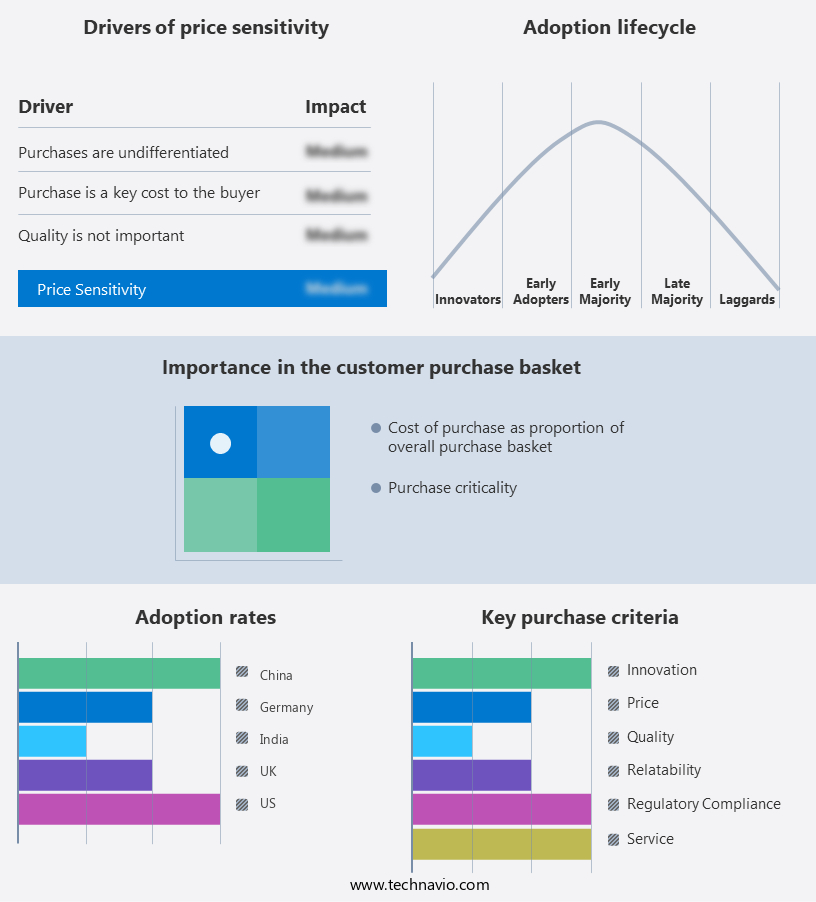
      Agricultural Biotechnology Market Share by Geography

       Customer Landscape

      Key Companies & Market Insights

      Companies are implementing various strategies, such as strategic alliances, agricultural biotechnology market forecast, partnerships, mergers and acquisitions, geographical expansion, and product/service launches, to enhance their presence in the industry.

      BASF SE - Agri-tech firm delivers advanced biotechnological solutions for crop protection against pests and diseases, ensuring sustainable biological control. Our offerings enhance agricultural productivity through effective, eco-friendly methods.

      The industry research and growth report includes detailed analyses of the competitive landscape of the market and information about key companies, including:

      • BASF SE
      • Bayer AG
      • Bioceres Crop Solutions Corp.
      • Corteva Inc.
      • Dow Chemical Co.
      • DuPont de Nemours Inc.
      • Eurofins Scientific SE
      • Evogene Ltd.
      • FMC Corp.
      • Global Bio chem Technology Group Co. Ltd.
      • Illumina Inc.
      • Limagrain
      • Mitsui and Co. Ltd.
      • Novozymes AS
      • Nufarm Ltd.
      • Performance Plants Inc.
      • Sumitomo Chemical Co. Ltd.
      • Syngenta Crop Protection AG
      • Thermo Fisher Scientific Inc.
      • KWS SAAT SE and Co. KGaA

      Qualitative and quantitative analysis of companies has been conducted to help clients understand the wider business environment as well as the strengths and weaknesses of key industry players. Data is qualitatively analyzed to categorize companies as pure play, category-focused, industry-focused, and diversified; it is quantitatively analyzed to categorize companies as dominant, leading, strong, tentative, and weak.

      Research Analyst Overview

      Agricultural biotechnology is a dynamic and evolving industry that encompasses various techniques and applications aimed at enhancing the productivity, sustainability, and nutritional value of crops. This sector leverages scientific methods such as genome editing, molecular breeding, and genetic engineering to develop organisms with desirable traits, including herbicide-tolerance, insect-resistance, and virus-resistance. One of the primary focus areas in agricultural biotechnology is plant breeding. This process involves the manipulation of plant genetics to produce new varieties with improved traits. Traditional selective breeding methods have been used for centuries, but the advent of molecular methods and genome editing technologies has accelerated the pace of innovation.

      These advanced techniques enable the precise modification of specific genes, leading to the creation of plants with enhanced nutritional value and resistance to various environmental stressors. Another significant area of interest in agricultural biotechnology is the development of biofuels. Micronutrient deficiencies in crops can limit their yield and nutritional value, making it essential to address these issues through various means. One approach is the use of genetically modified organisms (GMOs) to produce crops with enhanced nutritional profiles. These crops can help address food security concerns in developing countries and contribute to the production of sustainable biofuels. The infrastructure required for the successful implementation of agricultural biotechnology is vast and complex.

      This includes the availability of advanced research facilities, access to germplasm, and the development of partnerships with various stakeholders. Price trends, shipping delays, and raw material shortages can impact the supply chain and, in turn, the overall market dynamics. The environmental impact of agricultural biotechnology is a topic of ongoing debate. While some argue that the use of GMOs and other biotechnological interventions can help reduce the need for synthetic fertilizers and pesticides, others express concerns about the potential environmental risks associated with these technologies. Additionally, the development of antibiotic resistance in microbes and the ethical implications of genetic engineering are important considerations.

      The market for agricultural biotechnology is segmented based on various factors, including trait type, geographical coverage, and application areas. The technology landscape is continually evolving, with a focus on precision agriculture, vaccine development, and synthetic biology-enabled products. The potential impact of these innovations on food security, animal health, and human health is significant, making it essential to stay informed about the latest developments in this field. In , agricultural biotechnology is a complex and multifaceted industry that offers numerous opportunities for innovation and growth. The use of advanced scientific methods, such as genome editing and molecular breeding, is driving the development of new and improved crops with enhanced nutritional value and resistance to various stressors.

      The infrastructure required to support this industry is vast and intricate, and the market dynamics are influenced by various factors, including environmental conditions, pricing, and trade regulations. The potential impact of agricultural biotechnology on food security, animal health, and human health makes it a critical area of focus for researchers, policymakers, and industry stakeholders alike.

      Market Scope

      Report Coverage

      Details

      Page number

      180

      Base year

      2023

      Historic period

      2018-2022

      Forecast period

      2024-2028

      Growth momentum & CAGR

      Accelerate at a CAGR of 9.6%

      Market growth 2024-2028

      USD 28.63 billion

      Market structure

      Fragmented

      YoY growth 2023-2024(%)

      9.2

      Key countries

      US, China, India, Germany, and UK

      Competitive landscape

      Leading Companies, Market Positioning of Companies, Competitive Strategies, and Industry Risks

      Request Free Sample

      What are the Key Data Covered in this Agricultural Biotechnology Market Research and Growth Report?

      • CAGR of the Agricultural Biotechnology industry during the forecast period
      • Detailed information on factors that will drive the growth and forecasting between 2024 and 2028
      • Precise estimation of the size of the market and its contribution of the industry in focus to the parent market
      • Accurate predictions about upcoming growth and trends and changes in consumer behaviour
      • Growth of the market across North America, Europe, APAC, South America, and Middle East and Africa
      • Thorough analysis of the market’s competitive landscape and detailed information about companies
      • Comprehensive analysis of factors that will challenge the agricultural biotechnology market growth of industry companies

      We can help! Our analysts can customize this agricultural biotechnology market research report to meet your requirements.

      Get in touch


      1 Executive Summary

      • 1.1 Market overview
        • Exhibit 01: Executive Summary – Chart on Market Overview
        • Exhibit 02: Executive Summary – Data Table on Market Overview
        • Exhibit 03: Executive Summary – Chart on Global Market Characteristics
        • Exhibit 04: Executive Summary – Chart on Market by Geography
        • Exhibit 05: Executive Summary – Chart on Market Segmentation by Product
        • Exhibit 06: Executive Summary – Chart on Market Segmentation by Type
        • Exhibit 07: Executive Summary – Chart on Incremental Growth
        • Exhibit 08: Executive Summary – Data Table on Incremental Growth
        • Exhibit 09: Executive Summary – Chart on Vendor Market Positioning

      2 Market Landscape

      • 2.1 Market ecosystem
        • Exhibit 10: Parent market
        • Exhibit 11: Market Characteristics

      3 Market Sizing

      • 3.1 Market definition
        • Exhibit 12: Offerings of vendors included in the market definition
      • 3.2 Market segment analysis
        • Exhibit 13: Market segments
      • 3.3 Market size 2023
        • 3.4 Market outlook: Forecast for 2023-2028
          • Exhibit 14: Chart on Global - Market size and forecast 2023-2028 ($ billion)
          • Exhibit 15: Data Table on Global - Market size and forecast 2023-2028 ($ billion)
          • Exhibit 16: Chart on Global Market: Year-over-year growth 2023-2028 (%)
          • Exhibit 17: Data Table on Global Market: Year-over-year growth 2023-2028 (%)

        4 Historic Market Size

        • 4.1 Global agricultural biotechnology market 2018 - 2022
          • Exhibit 18: Historic Market Size – Data Table on global agricultural biotechnology market 2018 - 2022 ($ billion)
        • 4.2 Product Segment Analysis 2018 - 2022
          • Exhibit 19: Historic Market Size – Product Segment 2018 - 2022 ($ billion)
        • 4.3 Type Segment Analysis 2018 - 2022
          • Exhibit 20: Historic Market Size – Type Segment 2018 - 2022 ($ billion)
        • 4.4 Geography Segment Analysis 2018 - 2022
          • Exhibit 21: Historic Market Size – Geography Segment 2018 - 2022 ($ billion)
        • 4.5 Country Segment Analysis 2018 - 2022
          • Exhibit 22: Historic Market Size – Country Segment 2018 - 2022 ($ billion)

        5 Five Forces Analysis

        • 5.1 Five forces summary
          • Exhibit 23: Five forces analysis - Comparison between 2023 and 2028
        • 5.2 Bargaining power of buyers
          • Exhibit 24: Chart on Bargaining power of buyers – Impact of key factors 2023 and 2028
        • 5.3 Bargaining power of suppliers
          • Exhibit 25: Bargaining power of suppliers – Impact of key factors in 2023 and 2028
        • 5.4 Threat of new entrants
          • Exhibit 26: Threat of new entrants – Impact of key factors in 2023 and 2028
        • 5.5 Threat of substitutes
          • Exhibit 27: Threat of substitutes – Impact of key factors in 2023 and 2028
        • 5.6 Threat of rivalry
          • Exhibit 28: Threat of rivalry – Impact of key factors in 2023 and 2028
        • 5.7 Market condition
          • Exhibit 29: Chart on Market condition - Five forces 2023 and 2028

        6 Market Segmentation by Product

        • 6.1 Market segments
          • Exhibit 30: Chart on Product - Market share 2023-2028 (%)
          • Exhibit 31: Data Table on Product - Market share 2023-2028 (%)
        • 6.2 Comparison by Product
          • Exhibit 32: Chart on Comparison by Product
          • Exhibit 33: Data Table on Comparison by Product
        • 6.3 Transgenic seeds and crops - Market size and forecast 2023-2028
          • Exhibit 34: Chart on Transgenic seeds and crops - Market size and forecast 2023-2028 ($ billion)
          • Exhibit 35: Data Table on Transgenic seeds and crops - Market size and forecast 2023-2028 ($ billion)
          • Exhibit 36: Chart on Transgenic seeds and crops - Year-over-year growth 2023-2028 (%)
          • Exhibit 37: Data Table on Transgenic seeds and crops - Year-over-year growth 2023-2028 (%)
        • 6.4 Crop protection biochemicals - Market size and forecast 2023-2028
          • Exhibit 38: Chart on Crop protection biochemicals - Market size and forecast 2023-2028 ($ billion)
          • Exhibit 39: Data Table on Crop protection biochemicals - Market size and forecast 2023-2028 ($ billion)
          • Exhibit 40: Chart on Crop protection biochemicals - Year-over-year growth 2023-2028 (%)
          • Exhibit 41: Data Table on Crop protection biochemicals - Year-over-year growth 2023-2028 (%)
        • 6.5 Others - Market size and forecast 2023-2028
          • Exhibit 42: Chart on Others - Market size and forecast 2023-2028 ($ billion)
          • Exhibit 43: Data Table on Others - Market size and forecast 2023-2028 ($ billion)
          • Exhibit 44: Chart on Others - Year-over-year growth 2023-2028 (%)
          • Exhibit 45: Data Table on Others - Year-over-year growth 2023-2028 (%)
        • 6.6 Market opportunity by Product
          • Exhibit 46: Market opportunity by Product ($ billion)
          • Exhibit 47: Data Table on Market opportunity by Product ($ billion)

        7 Market Segmentation by Type

        • 7.1 Market segments
          • Exhibit 48: Chart on Type - Market share 2023-2028 (%)
          • Exhibit 49: Data Table on Type - Market share 2023-2028 (%)
        • 7.2 Comparison by Type
          • Exhibit 50: Chart on Comparison by Type
          • Exhibit 51: Data Table on Comparison by Type
        • 7.3 Plants - Market size and forecast 2023-2028
          • Exhibit 52: Chart on Plants - Market size and forecast 2023-2028 ($ billion)
          • Exhibit 53: Data Table on Plants - Market size and forecast 2023-2028 ($ billion)
          • Exhibit 54: Chart on Plants - Year-over-year growth 2023-2028 (%)
          • Exhibit 55: Data Table on Plants - Year-over-year growth 2023-2028 (%)
        • 7.4 Microbes - Market size and forecast 2023-2028
          • Exhibit 56: Chart on Microbes - Market size and forecast 2023-2028 ($ billion)
          • Exhibit 57: Data Table on Microbes - Market size and forecast 2023-2028 ($ billion)
          • Exhibit 58: Chart on Microbes - Year-over-year growth 2023-2028 (%)
          • Exhibit 59: Data Table on Microbes - Year-over-year growth 2023-2028 (%)
        • 7.5 Animals - Market size and forecast 2023-2028
          • Exhibit 60: Chart on Animals - Market size and forecast 2023-2028 ($ billion)
          • Exhibit 61: Data Table on Animals - Market size and forecast 2023-2028 ($ billion)
          • Exhibit 62: Chart on Animals - Year-over-year growth 2023-2028 (%)
          • Exhibit 63: Data Table on Animals - Year-over-year growth 2023-2028 (%)
        • 7.6 Market opportunity by Type
          • Exhibit 64: Market opportunity by Type ($ billion)
          • Exhibit 65: Data Table on Market opportunity by Type ($ billion)

        8 Customer Landscape

        • 8.1 Customer landscape overview
          • Exhibit 66: Analysis of price sensitivity, lifecycle, customer purchase basket, adoption rates, and purchase criteria

        9 Geographic Landscape

        • 9.1 Geographic segmentation
          • Exhibit 67: Chart on Market share by geography 2023-2028 (%)
          • Exhibit 68: Data Table on Market share by geography 2023-2028 (%)
        • 9.2 Geographic comparison
          • Exhibit 69: Chart on Geographic comparison
          • Exhibit 70: Data Table on Geographic comparison
        • 9.3 North America - Market size and forecast 2023-2028
          • Exhibit 71: Chart on North America - Market size and forecast 2023-2028 ($ billion)
          • Exhibit 72: Data Table on North America - Market size and forecast 2023-2028 ($ billion)
          • Exhibit 73: Chart on North America - Year-over-year growth 2023-2028 (%)
          • Exhibit 74: Data Table on North America - Year-over-year growth 2023-2028 (%)
        • 9.4 Europe - Market size and forecast 2023-2028
          • Exhibit 75: Chart on Europe - Market size and forecast 2023-2028 ($ billion)
          • Exhibit 76: Data Table on Europe - Market size and forecast 2023-2028 ($ billion)
          • Exhibit 77: Chart on Europe - Year-over-year growth 2023-2028 (%)
          • Exhibit 78: Data Table on Europe - Year-over-year growth 2023-2028 (%)
        • 9.5 APAC - Market size and forecast 2023-2028
          • Exhibit 79: Chart on APAC - Market size and forecast 2023-2028 ($ billion)
          • Exhibit 80: Data Table on APAC - Market size and forecast 2023-2028 ($ billion)
          • Exhibit 81: Chart on APAC - Year-over-year growth 2023-2028 (%)
          • Exhibit 82: Data Table on APAC - Year-over-year growth 2023-2028 (%)
        • 9.6 South America - Market size and forecast 2023-2028
          • Exhibit 83: Chart on South America - Market size and forecast 2023-2028 ($ billion)
          • Exhibit 84: Data Table on South America - Market size and forecast 2023-2028 ($ billion)
          • Exhibit 85: Chart on South America - Year-over-year growth 2023-2028 (%)
          • Exhibit 86: Data Table on South America - Year-over-year growth 2023-2028 (%)
        • 9.7 Middle East and Africa - Market size and forecast 2023-2028
          • Exhibit 87: Chart on Middle East and Africa - Market size and forecast 2023-2028 ($ billion)
          • Exhibit 88: Data Table on Middle East and Africa - Market size and forecast 2023-2028 ($ billion)
          • Exhibit 89: Chart on Middle East and Africa - Year-over-year growth 2023-2028 (%)
          • Exhibit 90: Data Table on Middle East and Africa - Year-over-year growth 2023-2028 (%)
        • 9.8 US - Market size and forecast 2023-2028
          • Exhibit 91: Chart on US - Market size and forecast 2023-2028 ($ billion)
          • Exhibit 92: Data Table on US - Market size and forecast 2023-2028 ($ billion)
          • Exhibit 93: Chart on US - Year-over-year growth 2023-2028 (%)
          • Exhibit 94: Data Table on US - Year-over-year growth 2023-2028 (%)
        • 9.9 China - Market size and forecast 2023-2028
          • Exhibit 95: Chart on China - Market size and forecast 2023-2028 ($ billion)
          • Exhibit 96: Data Table on China - Market size and forecast 2023-2028 ($ billion)
          • Exhibit 97: Chart on China - Year-over-year growth 2023-2028 (%)
          • Exhibit 98: Data Table on China - Year-over-year growth 2023-2028 (%)
        • 9.10 Germany - Market size and forecast 2023-2028
          • Exhibit 99: Chart on Germany - Market size and forecast 2023-2028 ($ billion)
          • Exhibit 100: Data Table on Germany - Market size and forecast 2023-2028 ($ billion)
          • Exhibit 101: Chart on Germany - Year-over-year growth 2023-2028 (%)
          • Exhibit 102: Data Table on Germany - Year-over-year growth 2023-2028 (%)
        • 9.11 UK - Market size and forecast 2023-2028
          • Exhibit 103: Chart on UK - Market size and forecast 2023-2028 ($ billion)
          • Exhibit 104: Data Table on UK - Market size and forecast 2023-2028 ($ billion)
          • Exhibit 105: Chart on UK - Year-over-year growth 2023-2028 (%)
          • Exhibit 106: Data Table on UK - Year-over-year growth 2023-2028 (%)
        • 9.12 India - Market size and forecast 2023-2028
          • Exhibit 107: Chart on India - Market size and forecast 2023-2028 ($ billion)
          • Exhibit 108: Data Table on India - Market size and forecast 2023-2028 ($ billion)
          • Exhibit 109: Chart on India - Year-over-year growth 2023-2028 (%)
          • Exhibit 110: Data Table on India - Year-over-year growth 2023-2028 (%)
        • 9.13 Market opportunity by geography
          • Exhibit 111: Market opportunity by geography ($ billion)
          • Exhibit 112: Data Tables on Market opportunity by geography ($ billion)

        10 Drivers, Challenges, and Trends

        • 10.1 Market drivers
          • 10.2 Market challenges
            • 10.3 Impact of drivers and challenges
              • Exhibit 113: Impact of drivers and challenges in 2023 and 2028
            • 10.4 Market trends

              11 Vendor Landscape

              • 11.1 Overview
                • 11.2 Vendor landscape
                  • Exhibit 114: Overview on Criticality of inputs and Factors of differentiation
                • 11.3 Landscape disruption
                  • Exhibit 115: Overview on factors of disruption
                • 11.4 Industry risks
                  • Exhibit 116: Impact of key risks on business

                12 Vendor Analysis

                • 12.1 Vendors covered
                  • Exhibit 117: Vendors covered
                • 12.2 Market positioning of vendors
                  • Exhibit 118: Matrix on vendor position and classification
                • 12.3 BASF SE
                  • Exhibit 119: BASF SE - Overview
                  • Exhibit 120: BASF SE - Business segments
                  • Exhibit 121: BASF SE - Key news
                  • Exhibit 122: BASF SE - Key offerings
                  • Exhibit 123: BASF SE - Segment focus
                • 12.4 Bayer AG
                  • Exhibit 124: Bayer AG - Overview
                  • Exhibit 125: Bayer AG - Business segments
                  • Exhibit 126: Bayer AG - Key news
                  • Exhibit 127: Bayer AG - Key offerings
                  • Exhibit 128: Bayer AG - Segment focus
                • 12.5 Bioceres Crop Solutions Corp.
                  • Exhibit 129: Bioceres Crop Solutions Corp. - Overview
                  • Exhibit 130: Bioceres Crop Solutions Corp. - Business segments
                  • Exhibit 131: Bioceres Crop Solutions Corp. - Key offerings
                  • Exhibit 132: Bioceres Crop Solutions Corp. - Segment focus
                • 12.6 Corteva Inc.
                  • Exhibit 133: Corteva Inc. - Overview
                  • Exhibit 134: Corteva Inc. - Business segments
                  • Exhibit 135: Corteva Inc. - Key offerings
                  • Exhibit 136: Corteva Inc. - Segment focus
                • 12.7 DuPont de Nemours Inc.
                  • Exhibit 137: DuPont de Nemours Inc. - Overview
                  • Exhibit 138: DuPont de Nemours Inc. - Business segments
                  • Exhibit 139: DuPont de Nemours Inc. - Key news
                  • Exhibit 140: DuPont de Nemours Inc. - Key offerings
                  • Exhibit 141: DuPont de Nemours Inc. - Segment focus
                • 12.8 Eurofins Scientific SE
                  • Exhibit 142: Eurofins Scientific SE - Overview
                  • Exhibit 143: Eurofins Scientific SE - Business segments
                  • Exhibit 144: Eurofins Scientific SE - Key news
                  • Exhibit 145: Eurofins Scientific SE - Key offerings
                  • Exhibit 146: Eurofins Scientific SE - Segment focus
                • 12.9 Evogene Ltd.
                  • Exhibit 147: Evogene Ltd. - Overview
                  • Exhibit 148: Evogene Ltd. - Business segments
                  • Exhibit 149: Evogene Ltd. - Key offerings
                  • Exhibit 150: Evogene Ltd. - Segment focus
                • 12.10 Illumina Inc.
                  • Exhibit 151: Illumina Inc. - Overview
                  • Exhibit 152: Illumina Inc. - Business segments
                  • Exhibit 153: Illumina Inc. - Key news
                  • Exhibit 154: Illumina Inc. - Key offerings
                  • Exhibit 155: Illumina Inc. - Segment focus
                • 12.11 KWS SAAT SE and Co. KGaA
                  • Exhibit 156: KWS SAAT SE and Co. KGaA - Overview
                  • Exhibit 157: KWS SAAT SE and Co. KGaA - Business segments
                  • Exhibit 158: KWS SAAT SE and Co. KGaA - Key offerings
                  • Exhibit 159: KWS SAAT SE and Co. KGaA - Segment focus
                • 12.12 Limagrain
                  • Exhibit 160: Limagrain - Overview
                  • Exhibit 161: Limagrain - Business segments
                  • Exhibit 162: Limagrain - Key offerings
                  • Exhibit 163: Limagrain - Segment focus
                • 12.13 Mitsui and Co. Ltd.
                  • Exhibit 164: Mitsui and Co. Ltd. - Overview
                  • Exhibit 165: Mitsui and Co. Ltd. - Business segments
                  • Exhibit 166: Mitsui and Co. Ltd. - Key news
                  • Exhibit 167: Mitsui and Co. Ltd. - Key offerings
                  • Exhibit 168: Mitsui and Co. Ltd. - Segment focus
                • 12.14 Nufarm Ltd.
                  • Exhibit 169: Nufarm Ltd. - Overview
                  • Exhibit 170: Nufarm Ltd. - Business segments
                  • Exhibit 171: Nufarm Ltd. - Key news
                  • Exhibit 172: Nufarm Ltd. - Key offerings
                  • Exhibit 173: Nufarm Ltd. - Segment focus
                • 12.15 Performance Plants Inc.
                  • Exhibit 174: Performance Plants Inc. - Overview
                  • Exhibit 175: Performance Plants Inc. - Key offerings
                • 12.16 Sumitomo Chemical Co. Ltd.
                  • Exhibit 176: Sumitomo Chemical Co. Ltd. - Overview
                  • Exhibit 177: Sumitomo Chemical Co. Ltd. - Business segments
                  • Exhibit 178: Sumitomo Chemical Co. Ltd. - Key offerings
                  • Exhibit 179: Sumitomo Chemical Co. Ltd. - Segment focus
                • 12.17 Thermo Fisher Scientific Inc.
                  • Exhibit 180: Thermo Fisher Scientific Inc. - Overview
                  • Exhibit 181: Thermo Fisher Scientific Inc. - Business segments
                  • Exhibit 182: Thermo Fisher Scientific Inc. - Key news
                  • Exhibit 183: Thermo Fisher Scientific Inc. - Key offerings
                  • Exhibit 184: Thermo Fisher Scientific Inc. - Segment focus

                13 Appendix

                • 13.1 Scope of the report
                  • 13.2 Inclusions and exclusions checklist
                    • Exhibit 185: Inclusions checklist
                    • Exhibit 186: Exclusions checklist
                  • 13.3 Currency conversion rates for US$
                    • Exhibit 187: Currency conversion rates for US$
                  • 13.4 Research methodology
                    • Exhibit 188: Research methodology
                    • Exhibit 189: Validation techniques employed for market sizing
                    • Exhibit 190: Information sources
                  • 13.5 List of abbreviations
                    • Exhibit 191: List of abbreviations

                  Research Methodology

                  Technavio presents a detailed picture of the market by way of study, synthesis, and summation of data from multiple sources. The analysts have presented the various facets of the market with a particular focus on identifying the key industry influencers. The data thus presented is comprehensive, reliable, and the result of extensive research, both primary and secondary.

                  INFORMATION SOURCES

                  Primary sources

                  • Manufacturers and suppliers
                  • Channel partners
                  • Industry experts
                  • Strategic decision makers

                  Secondary sources

                  • Industry journals and periodicals
                  • Government data
                  • Financial reports of key industry players
                  • Historical data
                  • Press releases

                  DATA ANALYSIS

                  Data Synthesis

                  • Collation of data
                  • Estimation of key figures
                  • Analysis of derived insights

                  Data Validation

                  • Triangulation with data models
                  • Reference against proprietary databases
                  • Corroboration with industry experts

                  REPORT WRITING

                  Qualitative

                  • Market drivers
                  • Market challenges
                  • Market trends
                  • Five forces analysis

                  Quantitative

                  • Market size and forecast
                  • Market segmentation
                  • Geographical insights
                  • Competitive landscape

                  Interested in this report?

                  Get your sample now to see our research methodology and insights!

                  Download Now

                  Frequently Asked Questions

                  Agricultural Biotechnology market growth will increase by $ 28.63 bn during 2024-2028 .

                  The Agricultural Biotechnology market is expected to grow at a CAGR of 9.6% during 2024-2028 .

                  Agricultural Biotechnology market is segmented by Product( Transgenic seeds and crops, Crop protection biochemicals, Others) Type( Plants, Microbes, Animals, South America, Middle East and Africa)

                  BASF SE, Bayer AG, Bioceres Crop Solutions Corp., Corteva Inc., Dow Chemical Co., DuPont de Nemours Inc., Eurofins Scientific SE, Evogene Ltd., FMC Corp., Global Bio chem Technology Group Co. Ltd., Illumina Inc., Limagrain, Mitsui and Co. Ltd., Novozymes AS, Nufarm Ltd., Performance Plants Inc., Sumitomo Chemical Co. Ltd., Syngenta Crop Protection AG, Thermo Fisher Scientific Inc., KWS SAAT SE and Co. KGaA are a few of the key vendors in the Agricultural Biotechnology market.

                  North America will register the highest growth rate of 42% among the other regions. Therefore, the Agricultural Biotechnology market in North America is expected to garner significant business opportunities for the vendors during the forecast period.

                  US, China, India, Germany, UK

                  • Increasing demand for higher crop yieldThe demand for food is rising due to the increase in the global population. The global population rose from 7.59 billion in 2018 to 8.1 billion in 2023. The increasing population will result in a rising demand for food is the driving factor this market.
                  • which is necessary to be supplied from constrained resources such as land and water. The agricultural land is defined as the total of arable land which is utilized to grow crops. The increasing urbanization is a prime factor for the reduced agricultural land is the driving factor this market.
                  • as these lands are converted into urban areas is the driving factor this market.
                  • which forces farmers to increase the productivity of existing agricultural land. The rapid population growth drives the demand for food products in this region. In addition is the driving factor this market.
                  • the adoption of excellent cultivation techniques and agricultural practices in APAC contributes to the growth of the global agricultural biotechnology market during the forecast period. Agricultural biotechnology has contributed to the production of functional foods and nutraceuticals is the driving factor this market.
                  • which help in improving human health and wellness. This is highly important for addressing the growing burden of dietary needs. The food demand can be met only by the adoption of non-conventional farming methods combined with agricultural biotechnology. Higher yields not only in food crops but also for cash crops such as cotton are essential. The crop yields can be increased by biotechnological inputs of GM seeds and crop protection biochemicals. Thus is the driving factor this market.
                  • the growing population and rising demand for food are anticipated to foster the growth of the global agricultural biotechnology market during the forecast period. is the driving factor this market.

                  The Agricultural Biotechnology market vendors should focus on grabbing business opportunities from the Transgenic seeds and crops segment as it accounted for the largest market share in the base year.
