
Ai-enabled Radiology Triage Systems Market Analysis, Size, and Forecast 2026-2030: North America (US, Canada, and Mexico), Europe (Germany, UK, and France), APAC (China, Japan, and India), South America (Brazil, Argentina, and Colombia), Middle East and Africa (South Africa, Israel, and Saudi Arabia), and Rest of World (ROW)

Ai-enabled Radiology Triage Systems Market Analysis, Size, and Forecast 2026-2030:
North America (US, Canada, and Mexico), Europe (Germany, UK, and France), APAC (China, Japan, and India), South America (Brazil, Argentina, and Colombia), Middle East and Africa (South Africa, Israel, and Saudi Arabia), and Rest of World (ROW)

Published: Mar 2026 286 Pages SKU: IRTNTR81297

Market Overview at a Glance

$639.09 Mn
Market Opportunity
25.5%
CAGR 2025 - 2030
37.8%
North America Growth
$85.83 Mn
CT imaging triage segment 2024

Ai-enabled Radiology Triage Systems Market Size 2026-2030

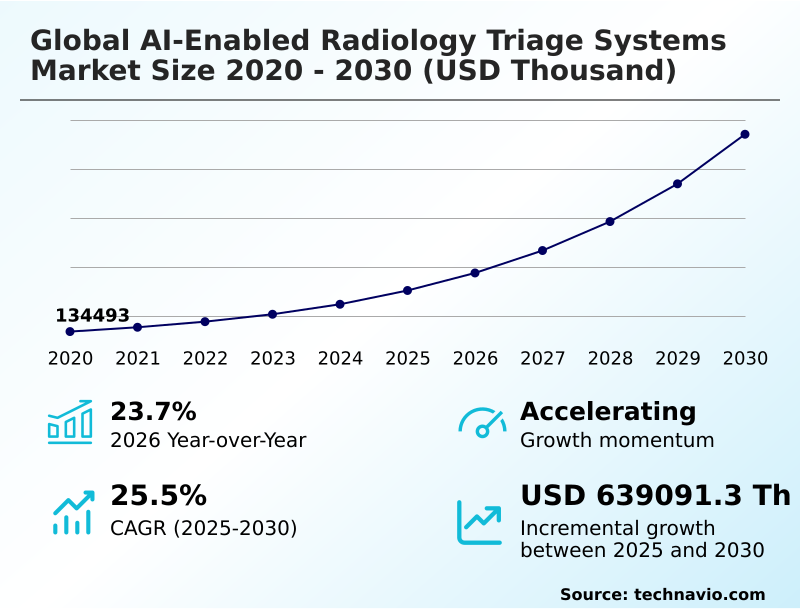
The ai-enabled radiology triage systems market size is valued to increase by USD 639.09 million, at a CAGR of 25.5% from 2025 to 2030. Escalating burden of medical imaging data and shortage of specialized radiologists will drive the ai-enabled radiology triage systems market.

Major Market Trends & Insights

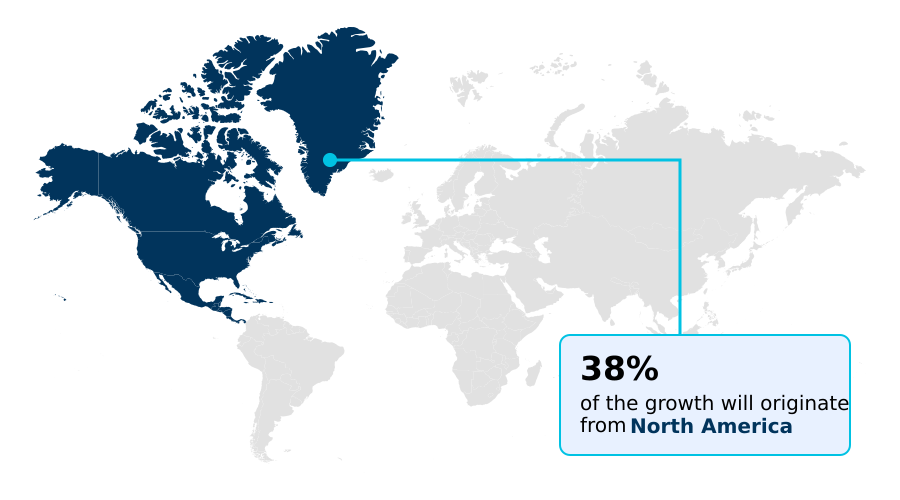
  • North America dominated the market and accounted for a 37.8% growth during the forecast period.
  • By Solution - CT imaging triage segment was valued at USD 85.83 million in 2024
  • By End-user - Hospitals and clinics segment accounted for the largest market revenue share in 2024

Market Size & Forecast

  • Market Opportunities:
  • Market Future Opportunities: USD 639.09 million
  • CAGR from 2025 to 2030 : 25.5%

Market Summary

  • The AI-enabled radiology triage systems market is rapidly advancing, driven by the critical need to manage the escalating volume of medical imaging studies and alleviate the strain on diagnostic professionals. These systems employ sophisticated algorithms to autonomously analyze scans, enabling the automated prioritization of critical findings to accelerate clinical response.
  • A key driver is the pursuit of improved patient outcomes, as faster identification of conditions like strokes or internal bleeding directly correlates with better recovery rates. The market is also shaped by the trend toward platform-based solutions that integrate multiple AI tools into a single, cohesive workflow, moving beyond isolated applications.
  • For instance, a hospital's emergency department can deploy an integrated platform that simultaneously screens for intracranial hemorrhages in head CTs and pulmonary embolisms in chest CTs, ensuring no critical finding is delayed. However, the market faces challenges related to the complexity of regulatory approvals and the necessity for extensive clinical validation to prove both safety and efficacy.
  • Data privacy concerns and the difficulty of creating unbiased algorithms from diverse datasets also present significant hurdles for developers and healthcare providers alike, shaping the strategic direction of innovation.

What will be the Size of the Ai-enabled Radiology Triage Systems Market during the forecast period?

Get Key Insights on Market Forecast (PDF) Request Free Sample

How is the Ai-enabled Radiology Triage Systems Market Segmented?

The ai-enabled radiology triage systems industry research report provides comprehensive data (region-wise segment analysis), with forecasts and estimates in "USD thousand" for the period 2026-2030, as well as historical data from 2020-2024 for the following segments.

  • Solution
    • CT imaging triage
    • X-ray imaging triage
    • MRI imaging triage
    • Ultrasound imaging triage
  • End-user
    • Hospitals and clinics
    • Diagnostic imaging centers
  • Deployment
    • Cloud-based
    • On-premises
  • Geography
    • North America
      • US
      • Canada
      • Mexico
    • Europe
      • Germany
      • UK
      • France
    • APAC
      • China
      • Japan
      • India
    • South America
      • Brazil
      • Argentina
      • Colombia
    • Middle East and Africa
      • South Africa
      • Israel
      • Saudi Arabia
    • Rest of World (ROW)

By Solution Insights

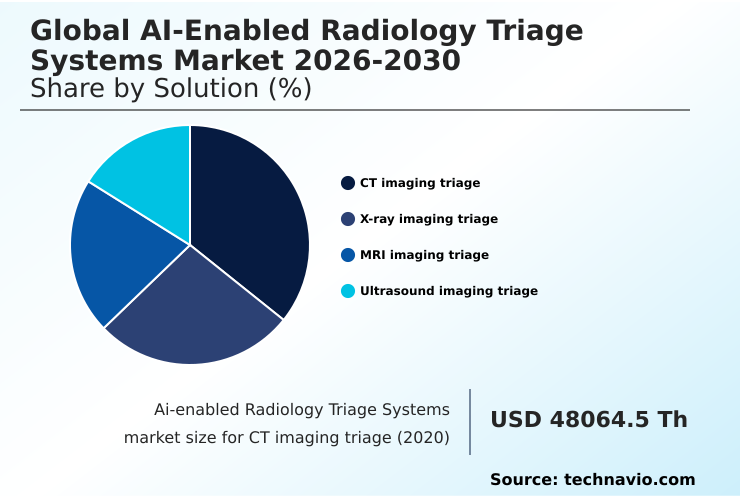
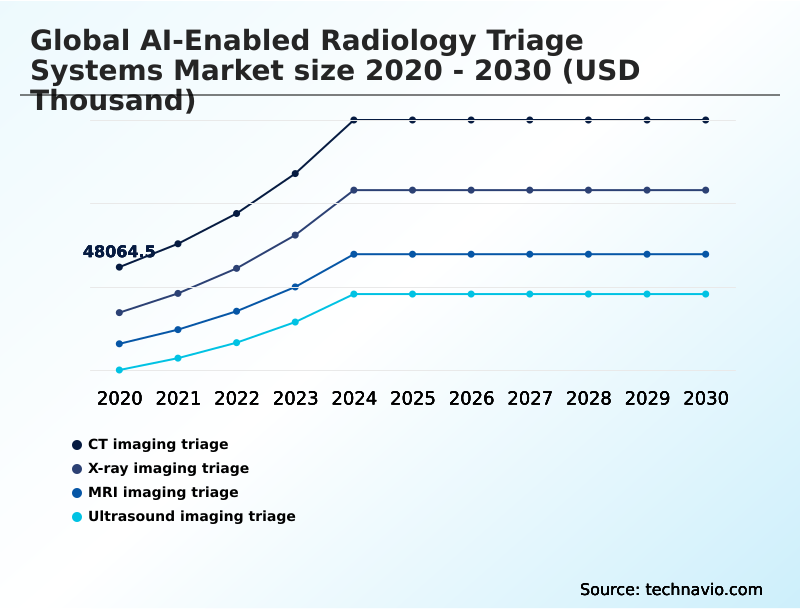
The ct imaging triage segment is estimated to witness significant growth during the forecast period.

The market for CT imaging triage is a critical component of the AI-enabled radiology triage systems market. These solutions analyze complex medical imaging data from computed tomography, providing essential support for radiologist workflow optimization.

A primary application is rapid intracranial hemorrhage detection, where systems flag time-sensitive cases to improve patient outcome improvement and overall clinical workflow efficiency.

Integration is a key factor, with a strong emphasis on adherence to DICOM integration standards for seamless connectivity with the existing picture archiving communication system (PACS) and radiology information system (RIS).

Performance is measured by algorithm sensitivity specificity, confirmed through rigorous AI model validation, with leading platforms demonstrating up to a 95% accuracy rate in identifying critical findings.

This capability for diagnostic error reduction is essential within a robust healthcare IT infrastructure.

Request Free Sample

The CT imaging triage segment was valued at USD 85.83 million in 2024 and showed a gradual increase during the forecast period.
Request Free Sample

Regional Analysis

North America is estimated to contribute 37.8% to the growth of the global market during the forecast period.Technavio’s analysts have elaborately explained the regional trends and drivers that shape the market during the forecast period.

See How Ai-enabled Radiology Triage Systems Market Demand is Rising in North America Request Free Sample

The geographic landscape of the AI-enabled radiology triage systems market is led by North America, where high healthcare expenditure and a mature IT infrastructure facilitate widespread adoption.

In this region, a focus on cloud-native AI deployment and AI platform-as-a-service models supports scalable implementations.

In contrast, the APAC region is experiencing rapid growth, driven by the need to bridge the radiologist shortage, with a strong uptake in fracture detection AI and point-of-care ultrasound AI.

Applications are increasingly specialized globally, spanning neurovascular imaging AI, musculoskeletal imaging AI, and thoraco-abdominal imaging. Advanced image segmentation techniques enhance oncology imaging triage and cardiovascular imaging analysis.

Systems are also improving incidental findings management, which enhances automated quality control and has been shown to improve the detection of clinically significant secondary findings by up to 15%.

Market Dynamics

Our researchers analyzed the data with 2025 as the base year, along with the key drivers, trends, and challenges. A holistic analysis of drivers will help companies refine their marketing strategies to gain a competitive advantage.

  • The adoption of AI in radiology is driven by the need for enhanced efficiency and improved patient outcomes, particularly in emergency settings. The use of AI for intracranial hemorrhage triage and deep learning for pulmonary embolism detection allows for rapid identification of life-threatening conditions.
  • Similarly, AI triage for large vessel occlusion is critical for improving stroke care with AI, where treatment time is paramount. In high-volume environments, automated fracture detection x-ray and AI triage for pneumothorax detection from chest radiographs streamline workflows.
  • A key operational goal is reducing turnaround time with AI, which has been shown to improve departmental throughput by more than 25% compared to manual methods. This requires effective integrating AI with PACS systems to avoid disrupting existing processes.
  • The business case for these technologies is strengthened by the cost-effectiveness of AI triage, although this is contingent on clear standardizing AI reimbursement codes. Organizations must also navigate the complexities of regulatory compliance for medical AI. A significant technical challenge is overcoming algorithmic bias in radiology, which is being addressed through methods like federated learning in medical imaging.
  • The decision between cloud vs on-premise AI deployment involves trade-offs between security, scalability, and control, with robust security protocols for cloud AI being non-negotiable. Ultimately, the trustworthiness of these systems depends on consistently validating AI model performance and enhancing radiologist workflow with AI rather than replacing it.
  • The technology is also being applied to more specific pathologies, such as AI triage for aortic dissection, and for managing incidental findings, including AI for incidental lung nodules. The expansion into point-of-care diagnostics, with tools like ultrasound triage at point-of-care, demonstrates the broadening scope of these intelligent systems in modern healthcare delivery.

What are the key market drivers leading to the rise in the adoption of Ai-enabled Radiology Triage Systems Industry?

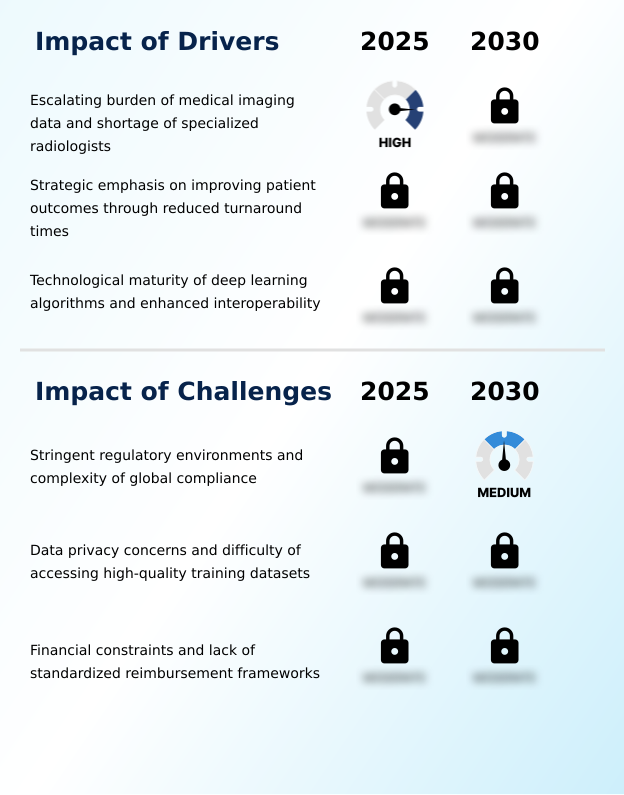
  • The escalating burden of medical imaging data, compounded by a shortage of specialized radiologists, is a key driver for market growth.

  • Market momentum is primarily driven by the technological maturity of deep learning algorithms and convolutional neural networks, which are central to diagnostic workflow automation.
  • These systems automate radiology worklist prioritization, enabling a reduced diagnostic turnaround time that aligns with value-based care models.
  • By providing automated triage alerts and real-time clinical notifications for conditions like pulmonary embolism triage and large vessel occlusion screening, these platforms directly contribute to physician burnout reduction. Modern solutions offer improved accuracy, which is critical for alarm fatigue mitigation.
  • Furthermore, enhanced interoperability protocols HL7 facilitate smoother integration into existing hospital systems, with some deployments reducing critical finding notification times by up to 40%.

What are the market trends shaping the Ai-enabled Radiology Triage Systems Industry?

  • The proliferation of multimodal AI, alongside the integration of large language models, is an influential market trend shaping diagnostic workflows.

  • A transformative trend is the move toward multimodal AI integration, where systems analyze imaging findings alongside non-pictorial information from electronic health record data to provide a holistic patient assessment, improving early disease detection by over 20%. This is often accompanied by large language model summaries that articulate the rationale for a triage decision.
  • Concurrently, the adoption of federated learning models is accelerating as part of a broader enterprise imaging strategy. This technique supports decentralized model training across multiple institutions without compromising data privacy compliance. This method of privacy-preserving computation is instrumental for algorithmic bias mitigation and developing more robust models.
  • Such advanced systems enable a shift toward proactive patient management by facilitating longitudinal image analysis for applications like chronic disease monitoring.

What challenges does the Ai-enabled Radiology Triage Systems Industry face during its growth?

  • Stringent regulatory environments and the complexity of achieving global compliance present a key challenge to market growth.

  • A primary challenge hindering AI adoption in hospitals and diagnostic imaging centers is navigating complex regulatory approval pathways. Gaining an FDA clearance process or CE mark certification under the stringent medical device regulation (MDR) requires extensive clinical trial validation and a commitment to post-market surveillance. Regulators increasingly demand explainable AI (XAI), which is difficult for some models.
  • The lack of standardized reimbursement frameworks creates financial uncertainty, with less than 30% of providers having a clear payment model for these tools. Furthermore, accessing a high-quality, diverse ground truth dataset remains an obstacle, impacting both algorithm development and teleradiology workflow integration. Robust cloud security in healthcare is another critical consideration that must be addressed.

Exclusive Technavio Analysis on Customer Landscape

The ai-enabled radiology triage systems market forecasting report includes the adoption lifecycle of the market, covering from the innovator’s stage to the laggard’s stage. It focuses on adoption rates in different regions based on penetration. Furthermore, the ai-enabled radiology triage systems market report also includes key purchase criteria and drivers of price sensitivity to help companies evaluate and develop their market growth analysis strategies.
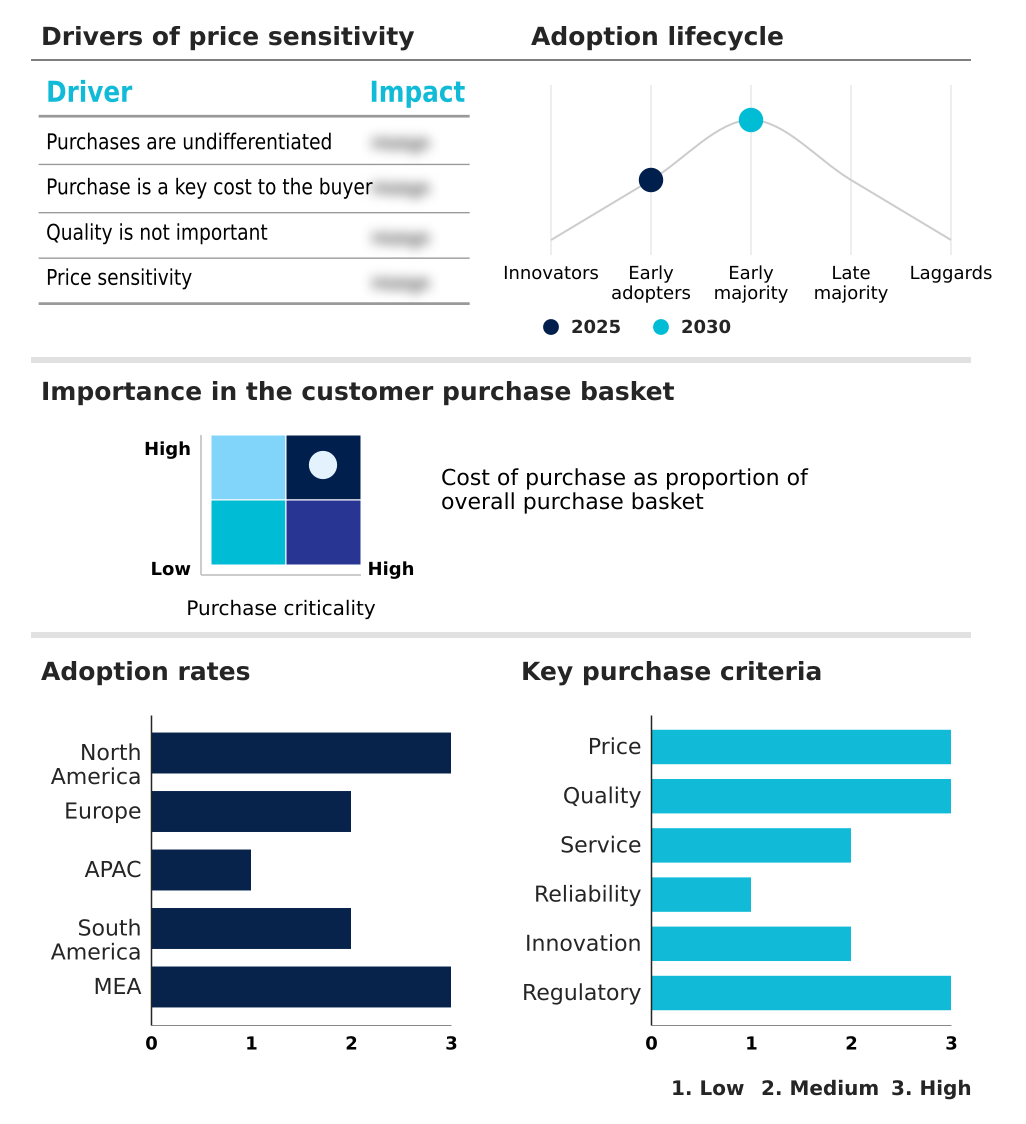
Customer Landscape of Ai-enabled Radiology Triage Systems Industry

Competitive Landscape

Companies are implementing various strategies, such as strategic alliances, ai-enabled radiology triage systems market forecast, partnerships, mergers and acquisitions, geographical expansion, and product/service launches, to enhance their presence in the industry.

Aidoc Medical Ltd. - Offerings focus on a comprehensive platform providing real-time notification and triage for urgent findings to expedite patient treatment and enhance diagnostic power.

The industry research and growth report includes detailed analyses of the competitive landscape of the market and information about key companies, including:

  • Aidoc Medical Ltd.
  • Avicenna.AI
  • AZmed
  • contextflow GmbH
  • DeepHealth
  • DeepTek.ai, Inc
  • GLEAMER
  • icometrix
  • Koios Medical Inc.
  • Koninklijke Philips N.V.
  • Lunit Inc.
  • Milvue
  • Nano-X Imaging Ltd.
  • Oxipit
  • Qure.ai Technologies Pvt. Ltd.
  • RapidAI
  • Riverain Technologies
  • Siemens AG
  • Tempus Labs Inc.
  • Viz.ai Inc.

Qualitative and quantitative analysis of companies has been conducted to help clients understand the wider business environment as well as the strengths and weaknesses of key industry players. Data is qualitatively analyzed to categorize companies as pure play, category-focused, industry-focused, and diversified; it is quantitatively analyzed to categorize companies as dominant, leading, strong, tentative, and weak.

Recent Development and News in Ai-enabled radiology triage systems market

  • In October 2024, a2z Radiology AI announced the completion of a USD 4.5 million seed funding round to accelerate the commercial rollout of its triage platform and support further research.
  • In November 2024, a2z Radiology AI received U.S. FDA clearance for its a2z-Unified-Triage solution, designed to concurrently detect and prioritize multiple urgent findings on abdomen-pelvis CT scans.
  • In January 2025, Harrison.ai entered a strategic partnership with Apollo Radiology International to integrate its diagnostic assistant solutions for Chest X-ray and Brain CT imaging into ARI's global teleradiology network.
  • In April 2025, Aidoc secured USD 150 million in a new funding round aimed at advancing its next-generation AI models for clinical decision support and expanding its market presence.

Dive into Technavio’s robust research methodology, blending expert interviews, extensive data synthesis, and validated models for unparalleled Ai-enabled Radiology Triage Systems Market insights. See full methodology.

Market Scope
Page number 286
Base year 2025
Historic period 2020-2024
Forecast period 2026-2030
Growth momentum & CAGR Accelerate at a CAGR of 25.5%
Market growth 2026-2030 USD 639091.3 thousand
Market structure Fragmented
YoY growth 2025-2026(%) 23.7%
Key countries US, Canada, Mexico, Germany, UK, France, The Netherlands, Italy, Spain, China, Japan, India, Australia, South Korea, Indonesia, Brazil, Argentina, Colombia, South Africa, Israel, Saudi Arabia, UAE and Turkey
Competitive landscape Leading Companies, Market Positioning of Companies, Competitive Strategies, and Industry Risks

Request Free Sample

Research Analyst Overview

  • The AI-enabled radiology triage systems market is evolving, powered by deep learning algorithms and convolutional neural networks for diagnostic workflow automation. Serving as a pivotal clinical decision support tool, it excels at radiology worklist prioritization by analyzing complex medical imaging data for urgent findings like intracranial hemorrhage detection and pulmonary embolism triage.
  • Boardroom decisions now center on platform strategies ensuring seamless DICOM integration standards with the existing picture archiving communication system (PACS), with many opting for cloud-native AI deployment. High algorithm sensitivity specificity and rigorous AI model validation are prerequisites for navigating medical device regulation (MDR) and its requirements for post-market surveillance and explainable AI (XAI).
  • A key trend is multimodal AI integration with electronic health record data, using large language models summaries to generate quantitative imaging biomarkers. Federated learning models and privacy-preserving computation are crucial for algorithmic bias mitigation by training on diverse ground truth datasets.
  • This supports longitudinal image analysis for chronic disease monitoring, moving past basic computer-aided detection (CAD) into specialized neurovascular imaging AI, musculoskeletal imaging AI, thoraco-abdominal imaging, and oncology imaging triage.
  • Implementations have reduced diagnostic turnaround times by over 35%, validating the business case for automated triage alerts based on superior image segmentation techniques and cardiovascular imaging analysis for large vessel occlusion screening and fracture detection AI.

What are the Key Data Covered in this Ai-enabled Radiology Triage Systems Market Research and Growth Report?

  • What is the expected growth of the Ai-enabled Radiology Triage Systems Market between 2026 and 2030?

    • USD 639.09 million, at a CAGR of 25.5%

  • What segmentation does the market report cover?

    • The report is segmented by Solution (CT imaging triage, X-ray imaging triage, MRI imaging triage, and Ultrasound imaging triage), End-user (Hospitals and clinics, and Diagnostic imaging centers), Deployment (Cloud-based, and On-premises) and Geography (North America, Europe, APAC, South America, Middle East and Africa)

  • Which regions are analyzed in the report?

    • North America, Europe, APAC, South America and Middle East and Africa

  • What are the key growth drivers and market challenges?

    • Escalating burden of medical imaging data and shortage of specialized radiologists, Stringent regulatory environments and complexity of global compliance

  • Who are the major players in the Ai-enabled Radiology Triage Systems Market?

    • Aidoc Medical Ltd., Avicenna.AI, AZmed, contextflow GmbH, DeepHealth, DeepTek.ai, Inc, GLEAMER, icometrix, Koios Medical Inc., Koninklijke Philips N.V., Lunit Inc., Milvue, Nano-X Imaging Ltd., Oxipit, Qure.ai Technologies Pvt. Ltd., RapidAI, Riverain Technologies, Siemens AG, Tempus Labs Inc. and Viz.ai Inc.

Market Research Insights

  • The market's dynamics are driven by a push for clinical workflow efficiency and demonstrable patient outcome improvement. Achieving a reduced diagnostic turnaround time, often by over 30% for critical findings, is a primary goal that supports value-based care models. A cohesive enterprise imaging strategy that includes these tools helps with physician burnout reduction and superior incidental findings management.
  • The move toward AI platform-as-a-service and teleradiology workflow integration is accelerating AI adoption in hospitals and diagnostic imaging centers. This is supported by robust interoperability protocols HL7 and a focus on data privacy compliance and cloud security in healthcare. Innovations in decentralized model training are enhancing algorithm quality, while better design addresses alarm fatigue mitigation.
  • The ultimate goal is achieving consistent automated quality control and significant diagnostic error reduction, with some platforms improving secondary finding detection by 40%.

We can help! Our analysts can customize this ai-enabled radiology triage systems market research report to meet your requirements.

Get in touch

1. Executive Summary

1.1 Market overview

Executive Summary - Chart on Market Overview
Executive Summary - Data Table on Market Overview
Executive Summary - Chart on Global Market Characteristics
Executive Summary - Chart on Market by Geography
Executive Summary - Chart on Market Segmentation by Solution
Executive Summary - Chart on Market Segmentation by End-user
Executive Summary - Chart on Market Segmentation by Deployment
Executive Summary - Chart on Incremental Growth
Executive Summary - Data Table on Incremental Growth
Executive Summary - Chart on Company Market Positioning

2. Technavio Analysis

2.1 Analysis of price sensitivity, lifecycle, customer purchase basket, adoption rates, and purchase criteria

2.2 Criticality of inputs and Factors of differentiation

Chart on Overview on criticality of inputs and factors of differentiation

2.3 Factors of disruption

Chart on Overview on factors of disruption

2.4 Impact of drivers and challenges

Chart on Impact of drivers and challenges in 2025 and 2030

3. Market Landscape

3.1 Market ecosystem

Chart on Parent Market
Data Table on - Parent Market

3.2 Market characteristics

Chart on Market characteristics analysis

3.3 Value chain analysis

Chart on Value chain analysis

4. Market Sizing

4.1 Market definition

Data Table on Offerings of companies included in the market definition

4.2 Market segment analysis

Market segments

4.3 Market size 2025

4.4 Market outlook: Forecast for 2025-2030

Chart on Global - Market size and forecast 2025-2030 ($ thousand)
Data Table on Global - Market size and forecast 2025-2030 ($ thousand)
Chart on Global Market: Year-over-year growth 2025-2030 (%)
Data Table on Global Market: Year-over-year growth 2025-2030 (%)

5. Historic Market Size

5.1 Global AI-Enabled Radiology Triage Systems Market 2020 - 2024

Historic Market Size - Data Table on Global AI-Enabled Radiology Triage Systems Market 2020 - 2024 ($ thousand)

5.2 Solution segment analysis 2020 - 2024

Historic Market Size - Solution Segment 2020 - 2024 ($ thousand)

5.3 End-user segment analysis 2020 - 2024

Historic Market Size - End-user Segment 2020 - 2024 ($ thousand)

5.4 Deployment segment analysis 2020 - 2024

Historic Market Size - Deployment Segment 2020 - 2024 ($ thousand)

5.5 Geography segment analysis 2020 - 2024

Historic Market Size - Geography Segment 2020 - 2024 ($ thousand)

5.6 Country segment analysis 2020 - 2024

Historic Market Size - Country Segment 2020 - 2024 ($ thousand)

6. Five Forces Analysis

6.1 Five forces summary

Five forces analysis - Comparison between 2025 and 2030

6.2 Bargaining power of buyers

Bargaining power of buyers - Impact of key factors 2025 and 2030

6.3 Bargaining power of suppliers

Bargaining power of suppliers - Impact of key factors in 2025 and 2030

6.4 Threat of new entrants

Threat of new entrants - Impact of key factors in 2025 and 2030

6.5 Threat of substitutes

Threat of substitutes - Impact of key factors in 2025 and 2030

6.6 Threat of rivalry

Threat of rivalry - Impact of key factors in 2025 and 2030

6.7 Market condition

Chart on Market condition - Five forces 2025 and 2030

7. Market Segmentation by Solution

7.1 Market segments

Chart on Solution - Market share 2025-2030 (%)
Data Table on Solution - Market share 2025-2030 (%)

7.2 Comparison by Solution

Chart on Comparison by Solution
Data Table on Comparison by Solution

7.3 CT imaging triage - Market size and forecast 2025-2030

Chart on CT imaging triage - Market size and forecast 2025-2030 ($ thousand)
Data Table on CT imaging triage - Market size and forecast 2025-2030 ($ thousand)
Chart on CT imaging triage - Year-over-year growth 2025-2030 (%)
Data Table on CT imaging triage - Year-over-year growth 2025-2030 (%)

7.4 X-ray imaging triage - Market size and forecast 2025-2030

Chart on X-ray imaging triage - Market size and forecast 2025-2030 ($ thousand)
Data Table on X-ray imaging triage - Market size and forecast 2025-2030 ($ thousand)
Chart on X-ray imaging triage - Year-over-year growth 2025-2030 (%)
Data Table on X-ray imaging triage - Year-over-year growth 2025-2030 (%)

7.5 MRI imaging triage - Market size and forecast 2025-2030

Chart on MRI imaging triage - Market size and forecast 2025-2030 ($ thousand)
Data Table on MRI imaging triage - Market size and forecast 2025-2030 ($ thousand)
Chart on MRI imaging triage - Year-over-year growth 2025-2030 (%)
Data Table on MRI imaging triage - Year-over-year growth 2025-2030 (%)

7.6 Ultrasound imaging triage - Market size and forecast 2025-2030

Chart on Ultrasound imaging triage - Market size and forecast 2025-2030 ($ thousand)
Data Table on Ultrasound imaging triage - Market size and forecast 2025-2030 ($ thousand)
Chart on Ultrasound imaging triage - Year-over-year growth 2025-2030 (%)
Data Table on Ultrasound imaging triage - Year-over-year growth 2025-2030 (%)

7.7 Market opportunity by Solution

Market opportunity by Solution ($ thousand)
Data Table on Market opportunity by Solution ($ thousand)

8. Market Segmentation by End-user

8.1 Market segments

Chart on End-user - Market share 2025-2030 (%)
Data Table on End-user - Market share 2025-2030 (%)

8.2 Comparison by End-user

Chart on Comparison by End-user
Data Table on Comparison by End-user

8.3 Hospitals and clinics - Market size and forecast 2025-2030

Chart on Hospitals and clinics - Market size and forecast 2025-2030 ($ thousand)
Data Table on Hospitals and clinics - Market size and forecast 2025-2030 ($ thousand)
Chart on Hospitals and clinics - Year-over-year growth 2025-2030 (%)
Data Table on Hospitals and clinics - Year-over-year growth 2025-2030 (%)

8.4 Diagnostic imaging centers - Market size and forecast 2025-2030

Chart on Diagnostic imaging centers - Market size and forecast 2025-2030 ($ thousand)
Data Table on Diagnostic imaging centers - Market size and forecast 2025-2030 ($ thousand)
Chart on Diagnostic imaging centers - Year-over-year growth 2025-2030 (%)
Data Table on Diagnostic imaging centers - Year-over-year growth 2025-2030 (%)

8.5 Market opportunity by End-user

Market opportunity by End-user ($ thousand)
Data Table on Market opportunity by End-user ($ thousand)

9. Market Segmentation by Deployment

9.1 Market segments

Chart on Deployment - Market share 2025-2030 (%)
Data Table on Deployment - Market share 2025-2030 (%)

9.2 Comparison by Deployment

Chart on Comparison by Deployment
Data Table on Comparison by Deployment

9.3 Cloud-based - Market size and forecast 2025-2030

Chart on Cloud-based - Market size and forecast 2025-2030 ($ thousand)
Data Table on Cloud-based - Market size and forecast 2025-2030 ($ thousand)
Chart on Cloud-based - Year-over-year growth 2025-2030 (%)
Data Table on Cloud-based - Year-over-year growth 2025-2030 (%)

9.4 On-premises - Market size and forecast 2025-2030

Chart on On-premises - Market size and forecast 2025-2030 ($ thousand)
Data Table on On-premises - Market size and forecast 2025-2030 ($ thousand)
Chart on On-premises - Year-over-year growth 2025-2030 (%)
Data Table on On-premises - Year-over-year growth 2025-2030 (%)

9.5 Market opportunity by Deployment

Market opportunity by Deployment ($ thousand)
Data Table on Market opportunity by Deployment ($ thousand)

10. Customer Landscape

10.1 Customer landscape overview

Analysis of price sensitivity, lifecycle, customer purchase basket, adoption rates, and purchase criteria

11. Geographic Landscape

11.1 Geographic segmentation

Chart on Market share by geography 2025-2030 (%)
Data Table on Market share by geography 2025-2030 (%)

11.2 Geographic comparison

Chart on Geographic comparison
Data Table on Geographic comparison

11.3 North America - Market size and forecast 2025-2030

Chart on North America - Market size and forecast 2025-2030 ($ thousand)
Data Table on North America - Market size and forecast 2025-2030 ($ thousand)
Chart on North America - Year-over-year growth 2025-2030 (%)
Data Table on North America - Year-over-year growth 2025-2030 (%)
Chart on Regional Comparison - North America
Data Table on Regional Comparison - North America

11.3.1 US - Market size and forecast 2025-2030

Chart on US - Market size and forecast 2025-2030 ($ thousand)
Data Table on US - Market size and forecast 2025-2030 ($ thousand)
Chart on US - Year-over-year growth 2025-2030 (%)
Data Table on US - Year-over-year growth 2025-2030 (%)

11.3.2 Canada - Market size and forecast 2025-2030

Chart on Canada - Market size and forecast 2025-2030 ($ thousand)
Data Table on Canada - Market size and forecast 2025-2030 ($ thousand)
Chart on Canada - Year-over-year growth 2025-2030 (%)
Data Table on Canada - Year-over-year growth 2025-2030 (%)

11.3.3 Mexico - Market size and forecast 2025-2030

Chart on Mexico - Market size and forecast 2025-2030 ($ thousand)
Data Table on Mexico - Market size and forecast 2025-2030 ($ thousand)
Chart on Mexico - Year-over-year growth 2025-2030 (%)
Data Table on Mexico - Year-over-year growth 2025-2030 (%)

11.4 Europe - Market size and forecast 2025-2030

Chart on Europe - Market size and forecast 2025-2030 ($ thousand)
Data Table on Europe - Market size and forecast 2025-2030 ($ thousand)
Chart on Europe - Year-over-year growth 2025-2030 (%)
Data Table on Europe - Year-over-year growth 2025-2030 (%)
Chart on Regional Comparison - Europe
Data Table on Regional Comparison - Europe

11.4.1 Germany - Market size and forecast 2025-2030

Chart on Germany - Market size and forecast 2025-2030 ($ thousand)
Data Table on Germany - Market size and forecast 2025-2030 ($ thousand)
Chart on Germany - Year-over-year growth 2025-2030 (%)
Data Table on Germany - Year-over-year growth 2025-2030 (%)

11.4.2 UK - Market size and forecast 2025-2030

Chart on UK - Market size and forecast 2025-2030 ($ thousand)
Data Table on UK - Market size and forecast 2025-2030 ($ thousand)
Chart on UK - Year-over-year growth 2025-2030 (%)
Data Table on UK - Year-over-year growth 2025-2030 (%)

11.4.3 France - Market size and forecast 2025-2030

Chart on France - Market size and forecast 2025-2030 ($ thousand)
Data Table on France - Market size and forecast 2025-2030 ($ thousand)
Chart on France - Year-over-year growth 2025-2030 (%)
Data Table on France - Year-over-year growth 2025-2030 (%)

11.4.4 The Netherlands - Market size and forecast 2025-2030

Chart on The Netherlands - Market size and forecast 2025-2030 ($ thousand)
Data Table on The Netherlands - Market size and forecast 2025-2030 ($ thousand)
Chart on The Netherlands - Year-over-year growth 2025-2030 (%)
Data Table on The Netherlands - Year-over-year growth 2025-2030 (%)

11.4.5 Italy - Market size and forecast 2025-2030

Chart on Italy - Market size and forecast 2025-2030 ($ thousand)
Data Table on Italy - Market size and forecast 2025-2030 ($ thousand)
Chart on Italy - Year-over-year growth 2025-2030 (%)
Data Table on Italy - Year-over-year growth 2025-2030 (%)

11.4.6 Spain - Market size and forecast 2025-2030

Chart on Spain - Market size and forecast 2025-2030 ($ thousand)
Data Table on Spain - Market size and forecast 2025-2030 ($ thousand)
Chart on Spain - Year-over-year growth 2025-2030 (%)
Data Table on Spain - Year-over-year growth 2025-2030 (%)

11.5 APAC - Market size and forecast 2025-2030

Chart on APAC - Market size and forecast 2025-2030 ($ thousand)
Data Table on APAC - Market size and forecast 2025-2030 ($ thousand)
Chart on APAC - Year-over-year growth 2025-2030 (%)
Data Table on APAC - Year-over-year growth 2025-2030 (%)
Chart on Regional Comparison - APAC
Data Table on Regional Comparison - APAC

11.5.1 China - Market size and forecast 2025-2030

Chart on China - Market size and forecast 2025-2030 ($ thousand)
Data Table on China - Market size and forecast 2025-2030 ($ thousand)
Chart on China - Year-over-year growth 2025-2030 (%)
Data Table on China - Year-over-year growth 2025-2030 (%)

11.5.2 Japan - Market size and forecast 2025-2030

Chart on Japan - Market size and forecast 2025-2030 ($ thousand)
Data Table on Japan - Market size and forecast 2025-2030 ($ thousand)
Chart on Japan - Year-over-year growth 2025-2030 (%)
Data Table on Japan - Year-over-year growth 2025-2030 (%)

11.5.3 India - Market size and forecast 2025-2030

Chart on India - Market size and forecast 2025-2030 ($ thousand)
Data Table on India - Market size and forecast 2025-2030 ($ thousand)
Chart on India - Year-over-year growth 2025-2030 (%)
Data Table on India - Year-over-year growth 2025-2030 (%)

11.5.4 Australia - Market size and forecast 2025-2030

Chart on Australia - Market size and forecast 2025-2030 ($ thousand)
Data Table on Australia - Market size and forecast 2025-2030 ($ thousand)
Chart on Australia - Year-over-year growth 2025-2030 (%)
Data Table on Australia - Year-over-year growth 2025-2030 (%)

11.5.5 South Korea - Market size and forecast 2025-2030

Chart on South Korea - Market size and forecast 2025-2030 ($ thousand)
Data Table on South Korea - Market size and forecast 2025-2030 ($ thousand)
Chart on South Korea - Year-over-year growth 2025-2030 (%)
Data Table on South Korea - Year-over-year growth 2025-2030 (%)

11.5.6 Indonesia - Market size and forecast 2025-2030

Chart on Indonesia - Market size and forecast 2025-2030 ($ thousand)
Data Table on Indonesia - Market size and forecast 2025-2030 ($ thousand)
Chart on Indonesia - Year-over-year growth 2025-2030 (%)
Data Table on Indonesia - Year-over-year growth 2025-2030 (%)

11.6 South America - Market size and forecast 2025-2030

Chart on South America - Market size and forecast 2025-2030 ($ thousand)
Data Table on South America - Market size and forecast 2025-2030 ($ thousand)
Chart on South America - Year-over-year growth 2025-2030 (%)
Data Table on South America - Year-over-year growth 2025-2030 (%)
Chart on Regional Comparison - South America
Data Table on Regional Comparison - South America

11.6.1 Brazil - Market size and forecast 2025-2030

Chart on Brazil - Market size and forecast 2025-2030 ($ thousand)
Data Table on Brazil - Market size and forecast 2025-2030 ($ thousand)
Chart on Brazil - Year-over-year growth 2025-2030 (%)
Data Table on Brazil - Year-over-year growth 2025-2030 (%)

11.6.2 Argentina - Market size and forecast 2025-2030

Chart on Argentina - Market size and forecast 2025-2030 ($ thousand)
Data Table on Argentina - Market size and forecast 2025-2030 ($ thousand)
Chart on Argentina - Year-over-year growth 2025-2030 (%)
Data Table on Argentina - Year-over-year growth 2025-2030 (%)

11.6.3 Colombia - Market size and forecast 2025-2030

Chart on Colombia - Market size and forecast 2025-2030 ($ thousand)
Data Table on Colombia - Market size and forecast 2025-2030 ($ thousand)
Chart on Colombia - Year-over-year growth 2025-2030 (%)
Data Table on Colombia - Year-over-year growth 2025-2030 (%)

11.7 Middle East and Africa - Market size and forecast 2025-2030

Chart on Middle East and Africa - Market size and forecast 2025-2030 ($ thousand)
Data Table on Middle East and Africa - Market size and forecast 2025-2030 ($ thousand)
Chart on Middle East and Africa - Year-over-year growth 2025-2030 (%)
Data Table on Middle East and Africa - Year-over-year growth 2025-2030 (%)
Chart on Regional Comparison - Middle East and Africa
Data Table on Regional Comparison - Middle East and Africa

11.7.1 South Africa - Market size and forecast 2025-2030

Chart on South Africa - Market size and forecast 2025-2030 ($ thousand)
Data Table on South Africa - Market size and forecast 2025-2030 ($ thousand)
Chart on South Africa - Year-over-year growth 2025-2030 (%)
Data Table on South Africa - Year-over-year growth 2025-2030 (%)

11.7.2 Israel - Market size and forecast 2025-2030

Chart on Israel - Market size and forecast 2025-2030 ($ thousand)
Data Table on Israel - Market size and forecast 2025-2030 ($ thousand)
Chart on Israel - Year-over-year growth 2025-2030 (%)
Data Table on Israel - Year-over-year growth 2025-2030 (%)

11.7.3 Saudi Arabia - Market size and forecast 2025-2030

Chart on Saudi Arabia - Market size and forecast 2025-2030 ($ thousand)
Data Table on Saudi Arabia - Market size and forecast 2025-2030 ($ thousand)
Chart on Saudi Arabia - Year-over-year growth 2025-2030 (%)
Data Table on Saudi Arabia - Year-over-year growth 2025-2030 (%)

11.7.4 UAE - Market size and forecast 2025-2030

Chart on UAE - Market size and forecast 2025-2030 ($ thousand)
Data Table on UAE - Market size and forecast 2025-2030 ($ thousand)
Chart on UAE - Year-over-year growth 2025-2030 (%)
Data Table on UAE - Year-over-year growth 2025-2030 (%)

11.7.5 Turkey - Market size and forecast 2025-2030

Chart on Turkey - Market size and forecast 2025-2030 ($ thousand)
Data Table on Turkey - Market size and forecast 2025-2030 ($ thousand)
Chart on Turkey - Year-over-year growth 2025-2030 (%)
Data Table on Turkey - Year-over-year growth 2025-2030 (%)

11.8 Market opportunity by geography

Market opportunity by geography ($ thousand)
Data Tables on Market opportunity by geography ($ thousand)

12. Drivers, Challenges, and Opportunity

12.1 Market drivers

Escalating burden of medical imaging data and shortage of specialized radiologists
Strategic emphasis on improving patient outcomes through reduced turnaround times
Technological maturity of deep learning algorithms and enhanced interoperability

12.2 Market challenges

Stringent regulatory environments and complexity of global compliance
Data privacy concerns and difficulty of accessing high-quality training datasets
Financial constraints and lack of standardized reimbursement frameworks

12.3 Impact of drivers and challenges

Impact of drivers and challenges in 2025 and 2030

12.4 Market opportunities

Proliferation of multimodal AI and large language model integration
Shift toward federated learning and enhanced data privacy protocols
Expansion of triage applications into chronic disease management and preventative care

13. Competitive Landscape

13.1 Overview

13.2

Overview on criticality of inputs and factors of differentiation

13.3 Landscape disruption

Overview on factors of disruption

13.4 Industry risks

Impact of key risks on business

14. Competitive Analysis

14.1 Companies profiled

Companies covered

14.2 Company ranking index

14.3 Market positioning of companies

Matrix on companies position and classification

14.4 Aidoc Medical Ltd.

Aidoc Medical Ltd. - Overview
Aidoc Medical Ltd. - Product / Service
Aidoc Medical Ltd. - Key offerings
SWOT

14.5 Avicenna.AI

Avicenna.AI - Overview
Avicenna.AI - Product / Service
Avicenna.AI - Key offerings
SWOT

14.6 AZmed

AZmed - Overview
AZmed - Product / Service
AZmed - Key offerings
SWOT

14.7 DeepHealth

DeepHealth - Overview
DeepHealth - Product / Service
DeepHealth - Key offerings
SWOT

14.8 GLEAMER

GLEAMER - Overview
GLEAMER - Product / Service
GLEAMER - Key offerings
SWOT

14.9 icometrix

icometrix - Overview
icometrix - Product / Service
icometrix - Key offerings
SWOT

14.10 Koninklijke Philips N.V.

Koninklijke Philips N.V. - Overview
Koninklijke Philips N.V. - Business segments
Koninklijke Philips N.V. - Key news
Koninklijke Philips N.V. - Key offerings
Koninklijke Philips N.V. - Segment focus
SWOT

14.11 Lunit Inc.

Lunit Inc. - Overview
Lunit Inc. - Product / Service
Lunit Inc. - Key offerings
SWOT

14.12 Nano-X Imaging Ltd.

Nano-X Imaging Ltd. - Overview
Nano-X Imaging Ltd. - Product / Service
Nano-X Imaging Ltd. - Key offerings
SWOT

14.13 Qure.ai Technologies Pvt. Ltd.

Qure.ai Technologies Pvt. Ltd. - Overview
Qure.ai Technologies Pvt. Ltd. - Product / Service
Qure.ai Technologies Pvt. Ltd. - Key offerings
SWOT

14.14 RapidAI

RapidAI - Overview
RapidAI - Product / Service
RapidAI - Key offerings
SWOT

14.15 Riverain Technologies

Riverain Technologies - Overview
Riverain Technologies - Product / Service
Riverain Technologies - Key offerings
SWOT

14.16 Siemens AG

Siemens AG - Overview
Siemens AG - Business segments
Siemens AG - Key news
Siemens AG - Key offerings
Siemens AG - Segment focus
SWOT

14.17 Tempus Labs Inc.

Tempus Labs Inc. - Overview
Tempus Labs Inc. - Product / Service
Tempus Labs Inc. - Key offerings
SWOT

14.18 Viz.ai Inc.

Viz.ai Inc. - Overview
Viz.ai Inc. - Product / Service
Viz.ai Inc. - Key offerings
SWOT

15. Appendix

15.1 Scope of the report

Market definition
Objectives
Notes and caveats

15.2 Inclusions and exclusions checklist

Inclusions checklist
Exclusions checklist

15.3 Currency conversion rates for US$

15.4 Research methodology

15.5 Data procurement

Information sources

15.6 Data validation

15.7 Validation techniques employed for market sizing

15.8 Data synthesis

15.9 360 degree market analysis

15.10 List of abbreviations

Research Methodology

Technavio presents a detailed picture of the market by way of study, synthesis, and summation of data from multiple sources. The analysts have presented the various facets of the market with a particular focus on identifying the key industry influencers. The data thus presented is comprehensive, reliable, and the result of extensive research, both primary and secondary.

INFORMATION SOURCES

Primary sources

  • Manufacturers and suppliers
  • Channel partners
  • Industry experts
  • Strategic decision makers

Secondary sources

  • Industry journals and periodicals
  • Government data
  • Financial reports of key industry players
  • Historical data
  • Press releases

DATA ANALYSIS

Data Synthesis

  • Collation of data
  • Estimation of key figures
  • Analysis of derived insights

Data Validation

  • Triangulation with data models
  • Reference against proprietary databases
  • Corroboration with industry experts

REPORT WRITING

Qualitative

  • Market drivers
  • Market challenges
  • Market trends
  • Five forces analysis

Quantitative

  • Market size and forecast
  • Market segmentation
  • Geographical insights
  • Competitive landscape

Interested in this report?

Get your sample now to see our research methodology and insights!

Download Now

Frequently Asked Questions

Ai-enabled Radiology Triage Systems market growth will increase by USD 639091.3 thousand thousand during 2026-2030.

The Ai-enabled Radiology Triage Systems market is expected to grow at a CAGR of 25.5% during 2026-2030.

Ai-enabled Radiology Triage Systems market is segmented by Solution (CT imaging triage, X-ray imaging triage, MRI imaging triage, Ultrasound imaging triage) End-user (Hospitals and clinics, Diagnostic imaging centers) Deployment (Cloud-based, On-premises)

Aidoc Medical Ltd., Avicenna.AI, AZmed, contextflow GmbH, DeepHealth, DeepTek.ai, Inc, GLEAMER, icometrix, Koios Medical Inc., Koninklijke Philips N.V., Lunit Inc., Milvue, Nano-X Imaging Ltd., Oxipit, Qure.ai Technologies Pvt. Ltd., RapidAI, Riverain Technologies, Siemens AG, Tempus Labs Inc., Viz.ai Inc. are a few of the key vendors in the Ai-enabled Radiology Triage Systems market.

North America will register the highest growth rate of 37.8% among the other regions. Therefore, the Ai-enabled Radiology Triage Systems market in North America is expected to garner significant business opportunities for the vendors during the forecast period.

US, Canada, Mexico, Germany, UK, France, The Netherlands, Italy, Spain, China, Japan, India, Australia, South Korea, Indonesia, Brazil, Argentina, Colombia, South Africa, Israel, Saudi Arabia, UAE, Turkey

  • Escalating burden of medical imaging data and shortage of specialized radiologists is the driving factor this market.

The Ai-enabled Radiology Triage Systems market vendors should focus on grabbing business opportunities from the Solution segment as it accounted for the largest market share in the base year.
RIA - Research AI Assistant
Ask RIA