


US Alcoholic Beverages Market Size 2026-2030
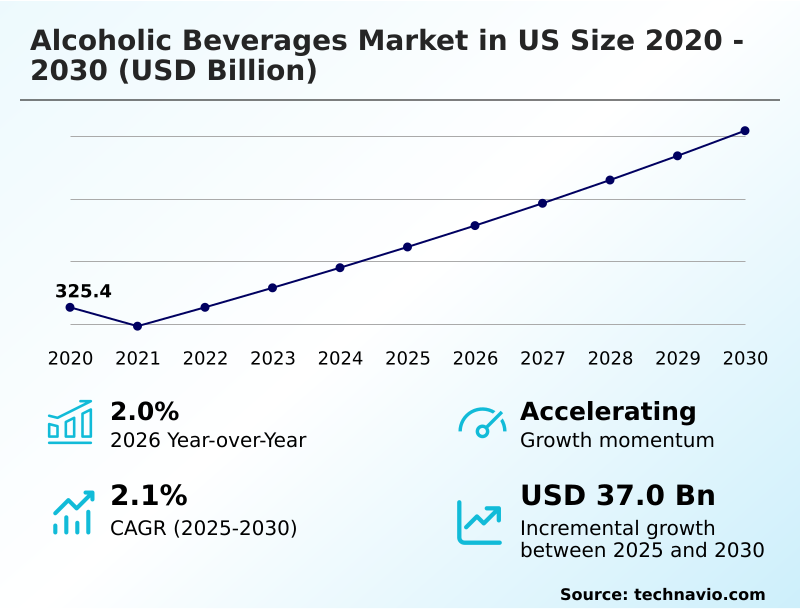
The us alcoholic beverages market size is valued to increase by USD 37 billion, at a CAGR of 2.1% from 2025 to 2030. Digital transformation and integration of omnichannel distribution will drive the us alcoholic beverages market.
Major Market Trends & Insights
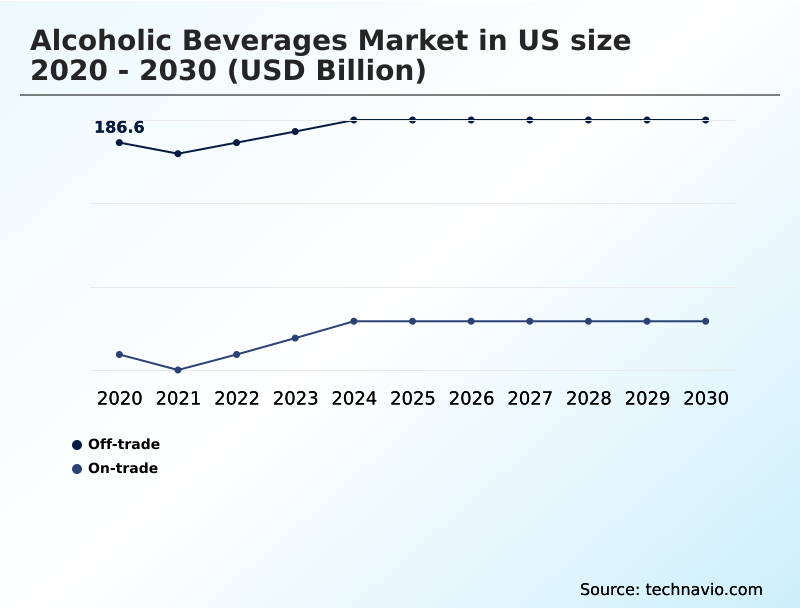
- By Distribution Channel - Off-trade segment was valued at USD 191.7 billion in 2024
- By Product - Beer segment accounted for the largest market revenue share in 2024
Market Size & Forecast
- Market Opportunities: USD 56.2 billion
- Market Future Opportunities: USD 37 billion
- CAGR from 2025 to 2030 : 2.1%
Market Summary
- The alcoholic beverages market in us is defined by a significant volume-to-value shift, moving beyond simple consumption metrics. Growth is now driven by a complex recalibration of consumer preferences, where the mindful drinking movement and a focus on health and wellness are paramount. This has spurred innovation in dealcoholization technologies for non-alcoholic beer and sophisticated spirit alternatives.
- Concurrently, the premiumization trend favors artisanal production methods and products with compelling brand storytelling and authenticity. For instance, a distillery might leverage supply chain traceability to validate its sustainable sourcing claims, meeting new digital labeling mandates and building consumer trust.
- This strategic pivot is essential for navigating challenges such as intense cross-category competition from hemp-derived thc beverages and the persistent discretionary spending impact on purchasing decisions. The market’s structure, long governed by the three-tier system, is also adapting to facilitate direct-to-consumer shipping and omnichannel retail strategies, reshaping how brands engage with a more discerning and digitally connected consumer base.
- The fundamental processes of fermentation of sugars and distillation process remain, but the context of their application is rapidly evolving.
What will be the Size of the US Alcoholic Beverages Market during the forecast period?
Get Key Insights on Market Forecast (PDF) Get Free Sample
How is the US Alcoholic Beverages Market Segmented?
The us alcoholic beverages industry research report provides comprehensive data (region-wise segment analysis), with forecasts and estimates in "USD billion" for the period 2026-2030, as well as historical data from 2020-2024 for the following segments.
- Distribution channel
- Off-trade
- On-trade
- Product
- Beer
- Wine
- Spirits
- RTD
- Others
- Packaging
- Glass
- Tins
- Others
- Geography
- North America
- US
- North America
By Distribution Channel Insights
The off-trade segment is estimated to witness significant growth during the forecast period.
The off-trade segment is foundational to the alcoholic beverages market in us, driven by at-home consumption patterns and the integration of omnichannel retail strategies.
This channel, encompassing supermarkets to e-commerce alcohol delivery platforms, is shaped by consumer price sensitivity analysis and the discretionary spending impact.
Success depends on managing a complex supply chain that handles diverse beverage packaging sustainability formats, from pet bottle packaging to recycled aluminum cans. The historical three-tier system is evolving, allowing for more dynamic craft brewing distribution.
As digital commerce in alcohol matures, efficient ethanol production and logistics are critical. Firms that optimize their route-to-market and leverage third-party delivery platforms can achieve a 15% reduction in last-mile delivery costs, enhancing competitiveness in this high-volume environment.
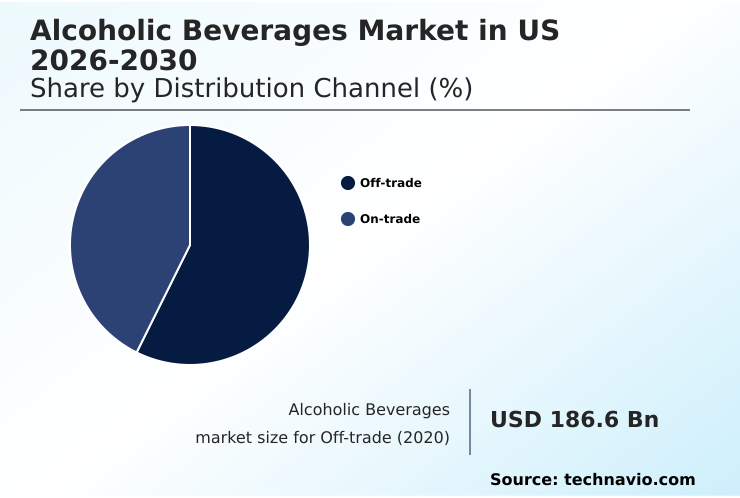
The Off-trade segment was valued at USD 191.7 billion in 2024 and showed a gradual increase during the forecast period.
Market Dynamics
Our researchers analyzed the data with 2025 as the base year, along with the key drivers, trends, and challenges. A holistic analysis of drivers will help companies refine their marketing strategies to gain a competitive advantage.
- The future of the alcoholic beverages market in us is being written by the convergence of technology, wellness, and consumer consciousness. The impact of digital labeling on consumer choice is profound, forcing brands to be transparent and creating new marketing strategies for artisanal spirits.
- This is especially true as the growth of spirit-based hard seltzers continues and the non-alcoholic craft beer market trends upward. Discussions around sustainability in premium wine packaging and the environmental impact of glass bottle production are now boardroom-level concerns.
- Operationally, the supply chain logistics for canned cocktails have been refined, with some companies reporting a 15% improvement in distribution efficiency compared to traditional glass formats. The rise of tequila and mezcal consumption, alongside an analysis of craft beer vs mass-market beer trends, shows a clear preference for authenticity.
- The consumer perception of bag-in-box wine is improving, contributing to the low-calorie alcoholic beverage market analysis. Moreover, the impact of multicultural demographics on sales is undeniable, shaping everything from product development to the omnichannel strategy for beverage retailers. Regulatory changes for alcohol e-commerce and the economics of direct-to-consumer wine clubs are fundamentally altering business models.
- The industry must also address challenges from cannabis-infused drinks and the increasing price elasticity in the spirits category.
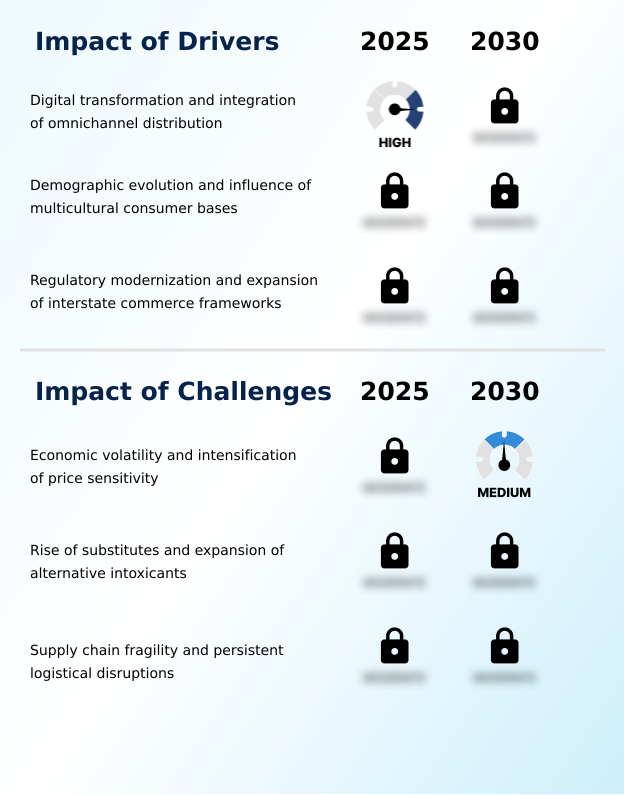
What are the key market drivers leading to the rise in the adoption of US Alcoholic Beverages Industry?
- Digital transformation, coupled with the strategic integration of omnichannel distribution, serves as a primary driver propelling market growth.
- Growth is propelled by foundational shifts in consumer engagement and regulatory frameworks.
- The adoption of digital commerce in alcohol, facilitated by direct-to-consumer shipping and secure age-verification technologies, has expanded market access, with some brands achieving a 30% uplift in sales from online channels.
- This is supported by regulatory easing, such as permanent cocktails-to-go regulations. Demographic evolution, especially the influence of multicultural consumer preferences, is creating demand for products that feature brand storytelling and authenticity, highlighting regional authenticity appeal and local sourcing initiatives.
- The core production processes, from the fermentation of sugars and malting and mashing to the barrel aging process, are being leveraged in marketing to underscore craft credentials.
- Dealcoholization technologies have improved flavor retention by up to 25%, making non-alcoholic options more viable.
What are the market trends shaping the US Alcoholic Beverages Industry?
- A key trend is the proliferation of ready-to-drink formats. This shift is accompanied by significant innovation in flavor profiles designed to meet evolving consumer preferences for convenience and variety.
- Key trends are reshaping the market, driven by a pronounced consumer health and wellness focus. The mindful drinking movement has accelerated low-alcohol segment growth, with product development in functional alcoholic beverages featuring adaptogenic botanicals and probiotic additives showing a 20% year-over-year increase in new SKUs.
- This aligns with the premiumization trend, where artisanal production methods and sustainable sourcing for products like organic and biodynamic wine justify higher price points. The proliferation of ready-to-drink (RTD) options, particularly spirit-based rtds, is fueled by flavor innovation and convenience.
- Companies leveraging advanced hard seltzer formulation techniques have seen a 15% improvement in shelf-life stability, which is critical in a competitive retail environment.
What challenges does the US Alcoholic Beverages Industry face during its growth?
- Economic volatility and the corresponding intensification of consumer price sensitivity present a significant challenge affecting industry growth.
- The market faces significant headwinds from external pressures and internal vulnerabilities. Economic volatility is intensifying price sensitivity, while persistent supply chain fragility and logistical disruptions threaten margins. The rising cost of materials like lightweight glass bottles erodes profitability, with transportation cost increases adding up to 10% to landing costs.
- A primary challenge is the escalating cross-category competition, particularly from the non-alcoholic spirits market and the mainstreaming of hemp-derived thc beverages, which directly addresses the demand for alternatives. This cannabis beverage competition is altering consumption occasions. The market for imported beverage trends is also impacted by geopolitical instability.
- Legacy producers utilizing traditional distillation process methods must now compete with a burgeoning craft distillery market share, which often demonstrates greater agility in responding to consumer shifts toward unique products like agave-based spirits.
Exclusive Technavio Analysis on Customer Landscape
The us alcoholic beverages market forecasting report includes the adoption lifecycle of the market, covering from the innovator’s stage to the laggard’s stage. It focuses on adoption rates in different regions based on penetration. Furthermore, the us alcoholic beverages market report also includes key purchase criteria and drivers of price sensitivity to help companies evaluate and develop their market growth analysis strategies.
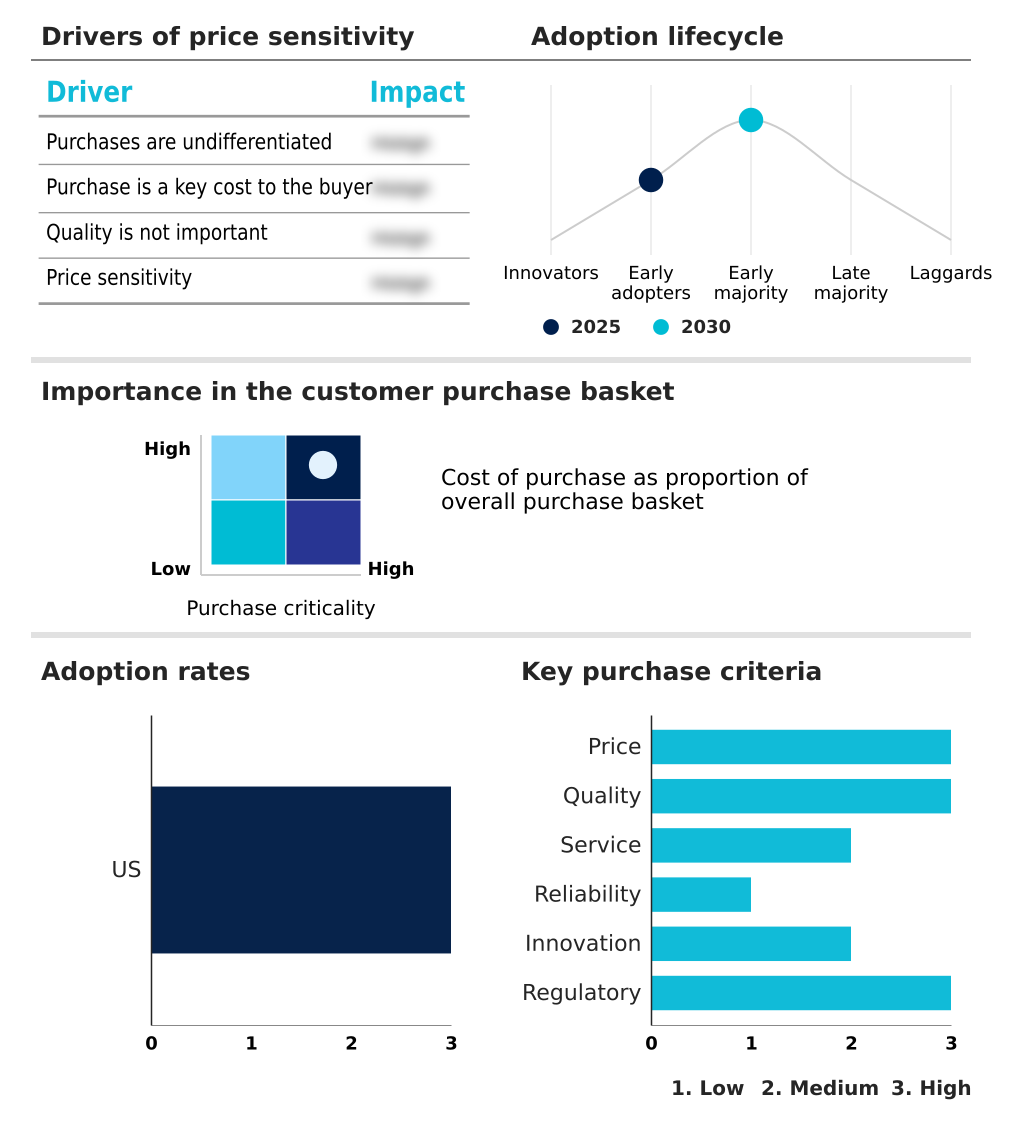
Customer Landscape of US Alcoholic Beverages Industry
Competitive Landscape
Companies are implementing various strategies, such as strategic alliances, us alcoholic beverages market forecast, partnerships, mergers and acquisitions, geographical expansion, and product/service launches, to enhance their presence in the industry.
Anheuser Busch InBev SA NV - Offers a broad portfolio of alcoholic beverages, including globally recognized beer brands that cater to mainstream consumer markets and diverse consumption occasions.
The industry research and growth report includes detailed analyses of the competitive landscape of the market and information about key companies, including:
- Anheuser Busch InBev SA NV
- Bacardi and Co. Ltd.
- Bronco Wine Co.
- Brown Forman Corp.
- Constellation Brands Inc.
- Diageo PLC
- E and J Gallo Winery
- Fifth Generation Inc.
- Heaven Hill Distillery Inc.
- Heineken NV
- Molson Coors Beverage Co.
- Pernod Ricard SA
- Sapporo Holdings Ltd.
- Sazerac Co. Inc.
- Suntory Beverage and Food Ltd.
- The Boston Beer Co. Inc.
- The Edrington Group Ltd.
- The Mark Anthony Group of Co.
- The Wine Group LLC
Qualitative and quantitative analysis of companies has been conducted to help clients understand the wider business environment as well as the strengths and weaknesses of key industry players. Data is qualitatively analyzed to categorize companies as pure play, category-focused, industry-focused, and diversified; it is quantitatively analyzed to categorize companies as dominant, leading, strong, tentative, and weak.
Recent Development and News in Us alcoholic beverages market
- In April, 2025, the Alcohol and Tobacco Tax and Trade Bureau (TTB) mandated new digital labeling requirements, compelling producers to provide comprehensive ingredient, nutritional, and sourcing information via a digital link on all product packaging.
- In March, 2025, Anheuser Busch InBev SA NV revealed a substantial investment plan of approximately $340 million for 2025-2026 to upgrade its manufacturing facilities across the United States, aiming to enhance operational efficiency and production capabilities.
- In February, 2025, Suntory Beverage and Food Ltd. expanded its ready-to-drink (RTD) offerings in the United States with the launch of MARU-HI, a Japanese-inspired sparkling cocktail, to capitalize on growing consumer demand for convenient, high-quality pre-mixed beverages.
- In January, 2025, Molson Coors Beverage Co. announced a strategic partnership with Fever-Tree, acquiring a significant stake to strengthen its portfolio and distribution capabilities within the premium mixer category in the United States.
Dive into Technavio’s robust research methodology, blending expert interviews, extensive data synthesis, and validated models for unparalleled US Alcoholic Beverages Market insights. See full methodology.
| Market Scope | |
|---|---|
| Page number | 192 |
| Base year | 2025 |
| Historic period | 2020-2024 |
| Forecast period | 2026-2030 |
| Growth momentum & CAGR | Accelerate at a CAGR of 2.1% |
| Market growth 2026-2030 | USD 37.0 billion |
| Market structure | Fragmented |
| YoY growth 2025-2026(%) | 2.0% |
| Key countries | US |
| Competitive landscape | Leading Companies, Market Positioning of Companies, Competitive Strategies, and Industry Risks |
Research Analyst Overview
- The alcoholic beverages market in us is undergoing a structural transformation where value now supersedes volume. This evolution is driven by sophisticated consumer demands for products aligned with health and wellness, leading to innovations in functional alcoholic beverages featuring probiotic additives and adaptogenic botanicals.
- The core processes of ethanol production, including malting and mashing and the subsequent distillation process, are being refined to create beverages with specific alcohol by volume (abv) levels and clean label ingredients. Boardroom decisions increasingly focus on investing in dealcoholization technologies and sustainable sourcing to cater to the market for organic and biodynamic wine.
- For example, implementing advanced supply chain traceability systems can improve sourcing verification efficiency by over 30%. The market is also navigating the complexities of the three-tier system by adopting omnichannel retail strategies and direct-to-consumer shipping, supported by secure age-verification technologies.
- The competitive landscape includes everything from craft brewing and agave-based spirits to spirit-based rtds and hard seltzer formulation, with packaging formats like lightweight glass bottles and recycled aluminum cans playing a key role in brand positioning.
What are the Key Data Covered in this US Alcoholic Beverages Market Research and Growth Report?
-
What is the expected growth of the US Alcoholic Beverages Market between 2026 and 2030?
-
USD 37 billion, at a CAGR of 2.1%
-
-
What segmentation does the market report cover?
-
The report is segmented by Distribution Channel (Off-trade, and On-trade), Product (Beer, Wine, Spirits, RTD, and Others), Packaging (Glass, Tins, and Others) and Geography (North America)
-
-
Which regions are analyzed in the report?
-
North America
-
-
What are the key growth drivers and market challenges?
-
Digital transformation and integration of omnichannel distribution, Economic volatility and intensification of price sensitivity
-
-
Who are the major players in the US Alcoholic Beverages Market?
-
Anheuser Busch InBev SA NV, Bacardi and Co. Ltd., Bronco Wine Co., Brown Forman Corp., Constellation Brands Inc., Diageo PLC, E and J Gallo Winery, Fifth Generation Inc., Heaven Hill Distillery Inc., Heineken NV, Molson Coors Beverage Co., Pernod Ricard SA, Sapporo Holdings Ltd., Sazerac Co. Inc., Suntory Beverage and Food Ltd., The Boston Beer Co. Inc., The Edrington Group Ltd., The Mark Anthony Group of Co. and The Wine Group LLC
-
Market Research Insights
- Market dynamics are shaped by a pronounced volume-to-value shift, where the premiumization trend and brand storytelling and authenticity are critical. The mindful drinking movement has spurred low-alcohol segment growth and the rise of the non-alcoholic spirits market, reflecting a strong consumer health and wellness focus. This is challenged by cannabis beverage competition and the discretionary spending impact.
- Digital commerce in alcohol, including e-commerce alcohol delivery and subscription-based services, is reshaping routes to market, with some platforms reporting a 25% increase in user retention. The cocktail culture resurgence and multicultural consumer preferences drive flavor innovation and demand for imported beverage trends.
- Artisanal production methods and local sourcing initiatives cater to regional authenticity appeal, while at-home consumption patterns boost ready-to-drink convenience. Operational efficiency gains of up to 12% are being realized through optimized beverage packaging sustainability.
We can help! Our analysts can customize this us alcoholic beverages market research report to meet your requirements.
 RIA -
RIA - 
