



Amlodipine Besylate Market Size 2026-2030
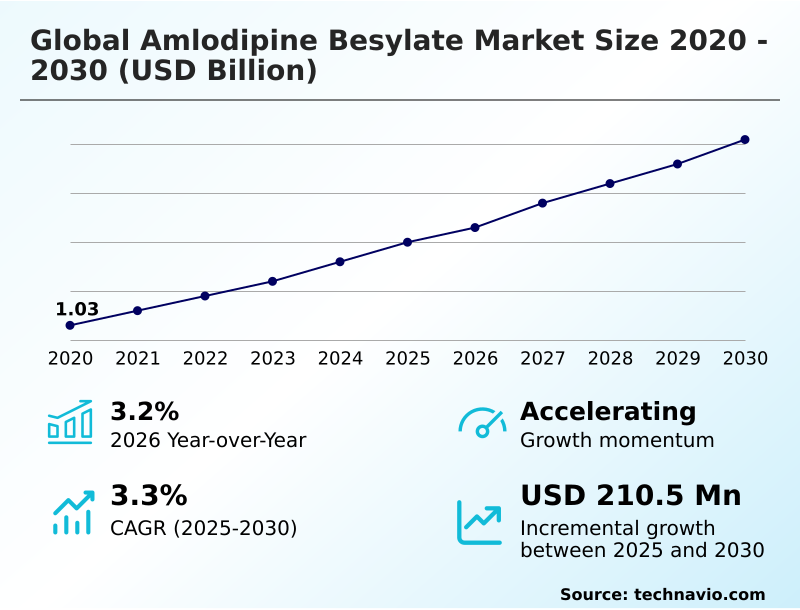
The Amlodipine Besylate Market size was valued at USD 1.20 billion in 2025, growing at a CAGR of 3.3% during the forecast period 2026-2030.
Major Market Trends & Insights
- North America dominated the market and accounted for a 38.9% growth during the forecast period.
- By Application - High blood pressure segment was valued at USD 817.1 million in 2024
- By Type - Five mg tablets segment accounted for the largest market revenue share in 2024
Market Size & Forecast
- Historic Market Opportunities 2020-2024: USD 373.6 million
- Market Future Opportunities 2025-2030: USD 210.5 million
- CAGR from 2025 to 2030 : 3.3%
Market Summary
- The amlodipine besylate market demonstrates stable expansion, with its growth momentum accelerating due to its foundational role in cardiovascular therapy. This market grew by 3.2% year-over-year, reflecting its clinical necessity. A key driver is the rising global incidence of hypertension, which necessitates long-term, cost-effective treatments like amlodipine besylate.
- Conversely, the market faces a significant challenge from intense price erosion, where commoditization squeezes profit margins by over 15% in some tendered contracts. A common operational scenario involves manufacturers optimizing their pharmaceutical supply chain to manage volatile raw material costs, which can fluctuate by up to 10% quarterly, while maintaining stringent regulatory compliance for this widely used generic formulation.
- The medication's established efficacy and safety profile ensure its continued demand in public healthcare programs, even as companies navigate the competitive pressures of a mature market.
What will be the Size of the Amlodipine Besylate Market during the forecast period?
Get Key Insights on Market Forecast (PDF) Request Free Sample
How is the Amlodipine Besylate Market Segmented?
The amlodipine besylate industry research report provides comprehensive data (region-wise segment analysis), with forecasts and analysis for the period 2026-2030, as well as historical data from 2020-2024 for the following segments.
- Application
- High blood pressure
- Heart diseases
- Type
- Five mg tablets
- Ten mg tablets
- Two and half mg tablets
- End-user
- Hospitals and clinics
- Homecare
- Public healthcare programs
- Geography
- North America
- US
- Canada
- Mexico
- Europe
- Germany
- UK
- France
- Asia
- Rest of World (ROW)
- North America
How is the Amlodipine Besylate Market Segmented by Application?
The high blood pressure segment is estimated to witness significant growth during the forecast period.
The amlodipine besylate market is segmented by application and type, with the high blood pressure segment commanding over 70% of total revenue due to its status as a first-line antihypertensive therapy.
This dominance is reinforced by clinical guidelines that prioritize long-term blood pressure regulation. By type, the market is divided into dosage strengths, including two and a half mg, five mg, and ten mg tablets.
The five mg tablet segment is the largest, accounting for over 55% of the market, as it serves as the standard initial dose for most patients, enabling effective dosage titration.
This segmentation supports personalized treatment regimens, thereby improving patient adherence and overall clinical efficacy in managing cardiovascular risk.
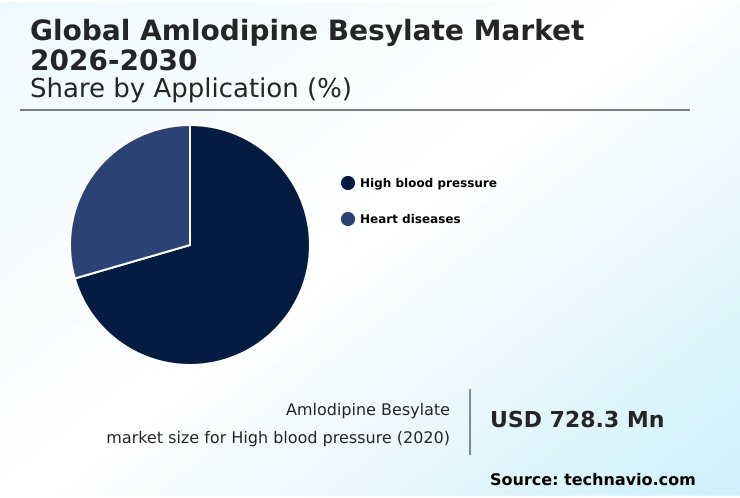
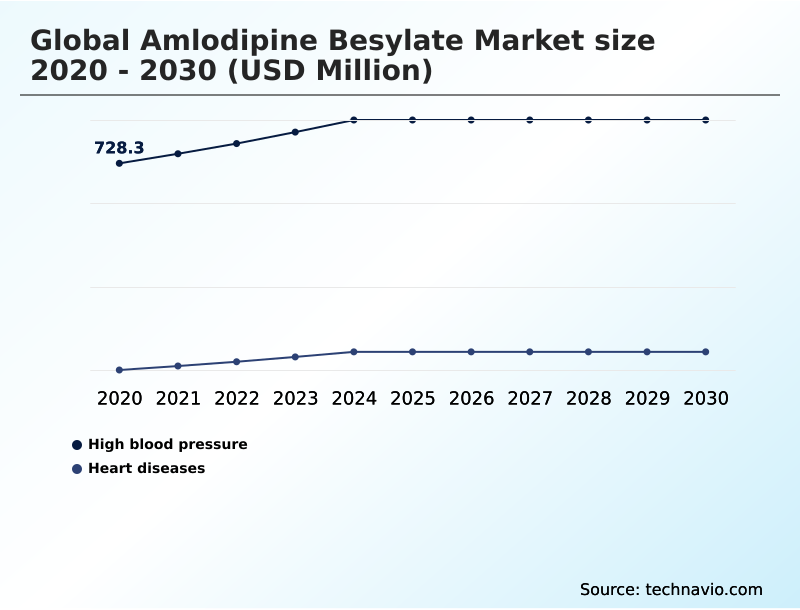
The High blood pressure segment was valued at USD 817.1 million in 2024 and showed a gradual increase during the forecast period.
How demand for the Amlodipine Besylate market is rising in the leading region?
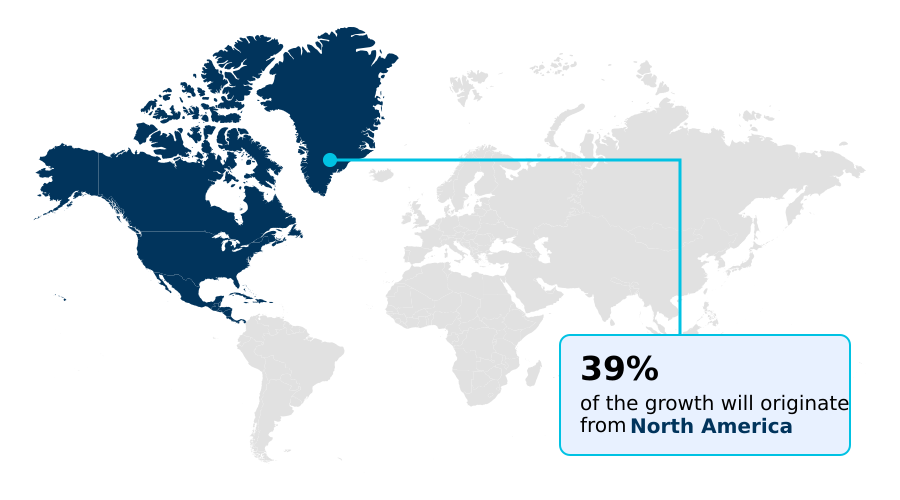
North America is estimated to contribute 38.9% to the growth of the global market during the forecast period.Technavio’s analysts have elaborately explained the regional trends and drivers that shape the market during the forecast period.
See How Amlodipine Besylate Market demand is rising in North America Request Free Sample
North America leads the amlodipine besylate market, projected to capture 38.9% of the incremental growth, driven by high healthcare expenditure and established clinical guidelines.
The US dominates the region with a market size of USD 390.1 million in 2025, significantly larger than Canada's USD 68.3 million, reflecting disparities in population and prescription volumes.
In contrast, Asia is the fastest-growing region with a CAGR of 4.3%, fueled by expanding healthcare access and rising cardiovascular disease awareness in countries like China and India. This growth is nearly 1.6 percentage points higher than Europe's 2.7% CAGR.
This geographic variance compels companies to adapt their pharmaceutical supply chain strategies, focusing on high-volume, low-cost models for Asia while emphasizing value-based healthcare integration and regulatory compliance in North America.
What are the key Drivers, Trends, and Challenges in the Amlodipine Besylate Market?
Our researchers analyzed the data with 2025 as the base year, along with the key drivers, trends, and challenges. A holistic analysis of drivers will help companies refine their marketing strategies to gain a competitive advantage.
- Understanding the amlodipine besylate mechanism of action is crucial for clinicians managing cardiovascular risk. This long-acting calcium antagonist induces vasodilation, a key benefit for patients seeking treatment with amlodipine besylate for high blood pressure. The choice of amlodipine dosage for chronic angina typically involves careful titration to balance clinical efficacy and patient tolerance.
- When comparing amlodipine besylate vs other calcium channel blockers, its once-daily dosing and favorable pharmacokinetic profile often lead to better patient adherence, a critical factor in chronic disease management. A significant part of clinical practice involves managing side effects of amlodipine besylate, such as peripheral edema, to improve treatment continuity.
- The market is also witnessing a significant shift toward amlodipine fixed-dose combination therapies, which are preferred by 30% more physicians for patients with comorbidities versus monotherapy. This trend, which simplifies treatment regimens, has driven a demand increase of over 15% in the last two years, directly impacting pharmaceutical manufacturing and API sourcing logistics.
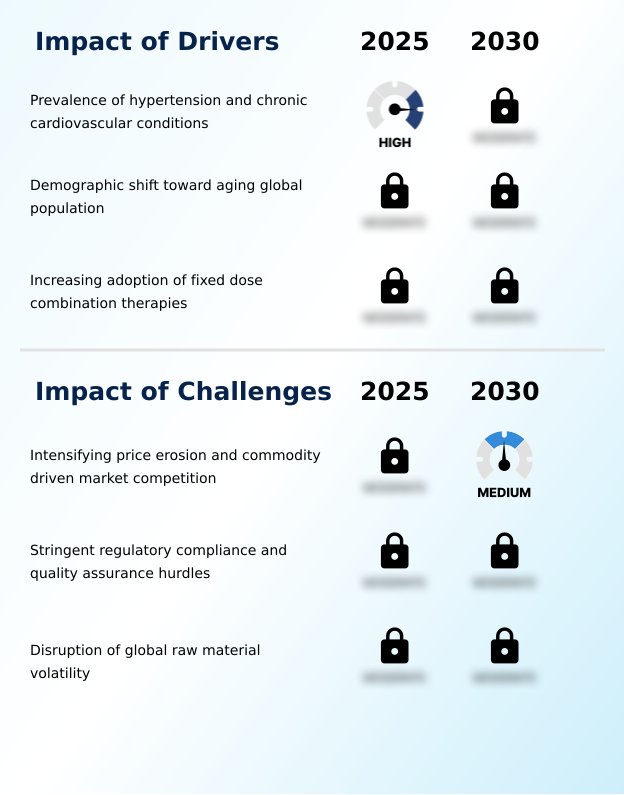
What are the key market drivers leading to the rise in the adoption of Amlodipine Besylate Industry?
- The rising prevalence of hypertension and other chronic cardiovascular conditions worldwide is the principal driver for the market.
- The primary driver for the amlodipine besylate market is the escalating global prevalence of hypertension, which now affects approximately 1.4 billion people.
- This growth is directly tied to demographic shifts toward aging populations and lifestyle changes, expanding the patient base for antihypertensive therapy.
- The cost-effectiveness of generic amlodipine besylate makes it a preferred option in public healthcare programs, where it can reduce long-term treatment costs by up to 40% compared to newer, branded alternatives.
- Its established clinical efficacy and safety profile, reinforced by extensive clinical guidelines, secure its role as a first-line treatment, supporting high prescription volumes.
What are the market trends shaping the Amlodipine Besylate Industry?
- The integration of digital health solutions and remote patient monitoring systems is emerging as a significant trend. This shift enhances chronic disease management by enabling real-time data collection and personalized therapeutic adjustments.
- A pivotal trend in the amlodipine besylate market is the integration of digital health technologies for remote patient monitoring. This shift enables continuous blood pressure tracking, resulting in a 20% improvement in medication adherence for patients using connected devices compared to traditional regimens.
- The adoption of these systems facilitates more precise dosage titration, as clinicians can adjust treatments based on real-time data, reducing the incidence of adverse cardiovascular events by an estimated 15%. This synergy between a core therapeutic agent and digital platforms is redefining chronic disease management and pushing pharmaceutical companies to align with integrated value-based healthcare ecosystems.
What challenges does the Amlodipine Besylate Industry face during its growth?
- Intensifying price erosion, fueled by a commodity-driven market environment, presents a primary challenge to industry profitability and sustainable growth.
- The most significant challenge in the amlodipine besylate market is severe price erosion from market commoditization, with generic formulations seeing annual price declines of up to 10% in competitive tender markets. This intense competition, driven by a multitude of manufacturers, compresses profit margins and restricts funds for reinvestment in quality and supply chain enhancements.
- Producers often operate on margins as low as 5%, making the business highly volume-dependent and susceptible to disruptions in API sourcing or logistics. Pressure from large institutional buyers and government procurement programs exacerbates this challenge, forcing companies to prioritize operational efficiency over innovation.
Exclusive Technavio Analysis on Customer Landscape
The amlodipine besylate market forecasting report includes the adoption lifecycle of the market, covering from the innovator’s stage to the laggard’s stage. It focuses on adoption rates in different regions based on penetration. Furthermore, the amlodipine besylate market report also includes key purchase criteria and drivers of price sensitivity to help companies evaluate and develop their market growth analysis strategies.
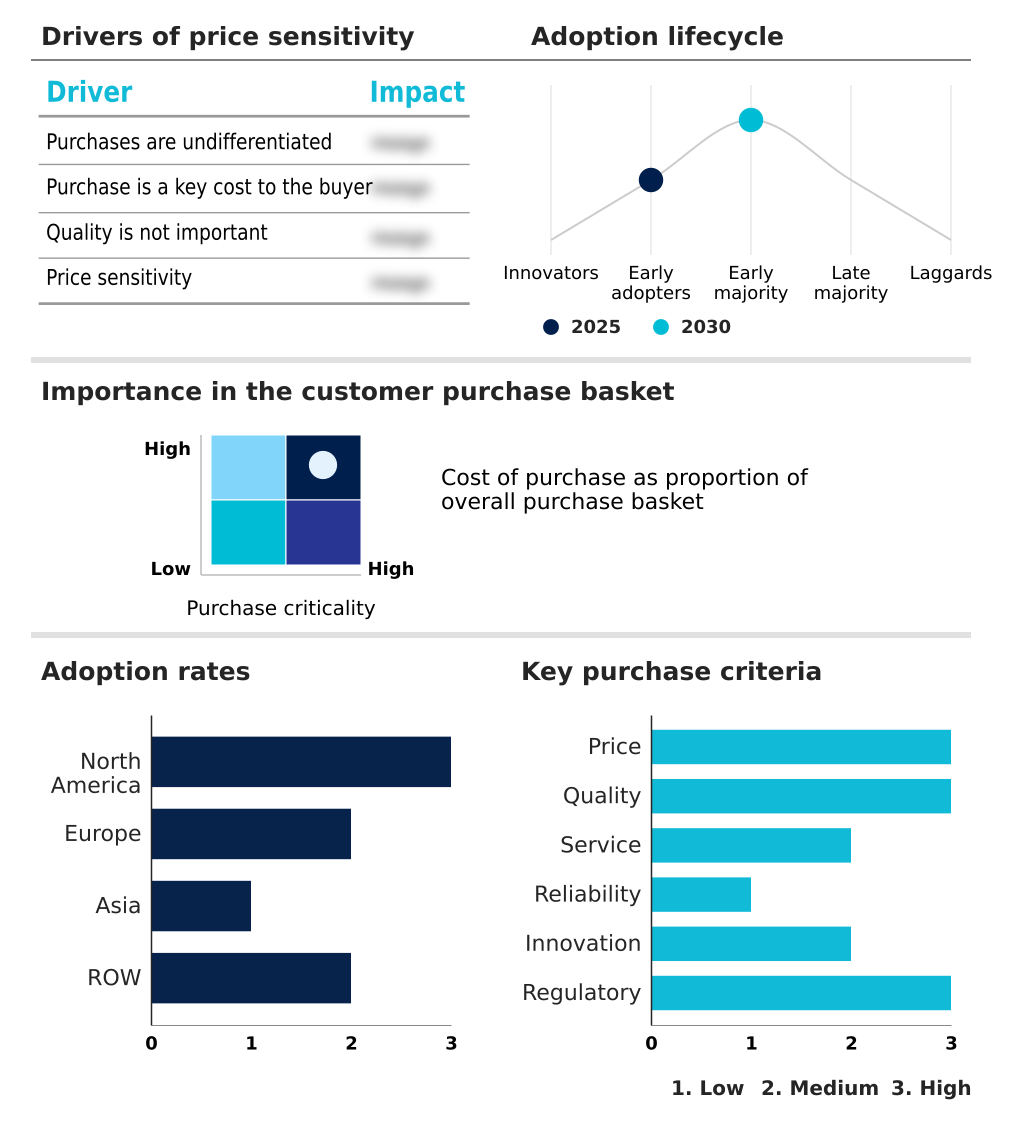
Customer Landscape of Amlodipine Besylate Industry
Competitive Landscape
Companies are implementing various strategies, such as strategic alliances, amlodipine besylate market forecast, partnerships, mergers and acquisitions, geographical expansion, and product/service launches, to enhance their presence in the industry.
AdvaCare Pharma - Key offerings center on amlodipine besylate tablets in various dosages, a cornerstone therapeutic agent for managing hypertension and coronary artery disease through effective blood pressure regulation.
The industry research and growth report includes detailed analyses of the competitive landscape of the market and information about key companies, including:
- AdvaCare Pharma
- Aetos Lifecare Pvt. Ltd.
- Apotex Inc.
- Aurobindo Pharma Ltd.
- Cadila Pharmaceuticals Ltd.
- Century Pharmaceuticals Ltd.
- Cipla Inc.
- Daiichi Sankyo Co. Ltd.
- Dr. Reddys Laboratories Ltd.
- Glenmark Pharmaceuticals Ltd.
- Intas Pharmaceuticals Ltd.
- Lupin Ltd.
- Orbion Pharmaceuticals Pvt. Ltd.
- Pfizer Inc.
- Sandoz Group AG
- Taj Pharmaceutical Ltd.
- Teva Pharmaceutical Ltd.
- Viatris Inc.
- Wellona Pharma
- Zydus Lifesciences Ltd.
Qualitative and quantitative analysis of companies has been conducted to help clients understand the wider business environment as well as the strengths and weaknesses of key industry players. Data is qualitatively analyzed to categorize companies as pure play, category-focused, industry-focused, and diversified; it is quantitatively analyzed to categorize companies as dominant, leading, strong, tentative, and weak.
Market Intelligence Radar: High-Impact Developments & Growth Signals
- In the Pharmaceuticals industry, a heightened focus on supply chain resilience and sustainable manufacturing is compelling producers of generic drugs, including amlodipine besylate, to diversify active pharmaceutical ingredient (API) sourcing and adopt greener production methods to mitigate geopolitical risks and meet ESG mandates.
- The widespread integration of digital health technologies and remote patient monitoring systems into chronic disease management frameworks is reshaping how amlodipine besylate is prescribed and managed, linking the therapeutic agent directly to data-driven, value-based healthcare models.
- Evolving regulatory frameworks, such as the European Shortages Monitoring Platform, are imposing stricter requirements for supply and demand reporting, directly impacting the operational planning and regulatory compliance burden for manufacturers in the commoditized amlodipine besylate market.
- There is an increasing clinical and commercial shift toward fixed-dose combination therapies, which pair established molecules like amlodipine besylate with other cardiovascular drugs, influencing R&D pipelines and market strategies away from monotherapy products.
Dive into Technavio’s robust research methodology, blending expert interviews, extensive data synthesis, and validated models for unparalleled Amlodipine Besylate Market insights. See full methodology.
| Market Scope | |
|---|---|
| Page number | 285 |
| Base year | 2025 |
| Historic period | 2020-2024 |
| Forecast period | 2026-2030 |
| Growth momentum & CAGR | Accelerate at a CAGR of 3.3% |
| Market growth 2026-2030 | USD 210.5 million |
| Market structure | Fragmented |
| YoY growth 2025-2026(%) | 3.2% |
| Key countries | US, Canada, Mexico, Germany, UK, France, Italy, Spain, The Netherlands, China, India, Japan, South Korea, Indonesia, Thailand, Brazil, Saudi Arabia, UAE, Turkey, Argentina, Colombia, South Africa and Israel |
| Competitive landscape | Leading Companies, Market Positioning of Companies, Competitive Strategies, and Industry Risks |
Research Analyst Overview
- The amlodipine besylate market ecosystem is a complex network where generic formulations drive over 80% of the market volume. The value chain originates with active pharmaceutical ingredient (API) suppliers, predominantly in Asia, who must meet stringent quality assurance standards from global pharmaceutical manufacturers. These producers, ranging from large multinationals to smaller regional firms, create the final dosage forms.
- Distribution is handled through hospital pharmacies, retail chains, and public healthcare programs, serving patients with hypertension and heart disease. Regulatory bodies like the FDA and EMA enforce good manufacturing practice and bioequivalence, creating significant entry barriers.
- The ecosystem's efficiency relies on a coordinated pharmaceutical supply chain, where large buyers leverage their purchasing power, contributing to an environment of sustained price erosion.
What are the Key Data Covered in this Amlodipine Besylate Market Research and Growth Report?
-
What is the expected growth of the Amlodipine Besylate Market between 2026 and 2030?
-
The Amlodipine Besylate Market is expected to grow by USD 210.5 million during 2026-2030, registering a CAGR of 3.3%. Year-over-year growth in 2026 is estimated at 3.2%%. This acceleration is shaped by prevalence of hypertension and chronic cardiovascular conditions, which is intensifying demand across multiple end-use verticals covered in the report.
-
-
What segmentation does the market report cover?
-
The report is segmented by Application (High blood pressure, and Heart diseases), Type (Five mg tablets, Ten mg tablets, and Two and half mg tablets), End-user (Hospitals and clinics, Homecare, and Public healthcare programs) and Geography (North America, Europe, Asia, Rest of World (ROW)). Among these, the High blood pressure segment is estimated to witness significant growth during the forecast period, driven by rising adoption across key application areas. Each segment includes detailed qualitative and quantitative analysis, along with historical data from 2020-2024 and forecasts through 2030 with year-over-year growth rates.
-
-
Which regions are analyzed in the report?
-
The report covers North America, Europe, Asia and Rest of World (ROW). North America is estimated to contribute 38.9% to market growth during the forecast period. Country-level analysis includes US, Canada, Mexico, Germany, UK, France, Italy, Spain, The Netherlands, China, India, Japan, South Korea, Indonesia, Thailand, Brazil, Saudi Arabia, UAE, Turkey, Argentina, Colombia, South Africa and Israel, with dedicated market size tables and year-over-year growth for each.
-
-
What are the key growth drivers and market challenges?
-
The primary driver is prevalence of hypertension and chronic cardiovascular conditions, which is accelerating investment and industry demand. The main challenge is intensifying price erosion and commodity driven market competition, creating operational barriers for key market participants. The report quantifies the impact of each driver and challenge across 2026 and 2030 with comparative analysis.
-
-
Who are the major players in the Amlodipine Besylate Market?
-
Key vendors include AdvaCare Pharma, Aetos Lifecare Pvt. Ltd., Apotex Inc., Aurobindo Pharma Ltd., Cadila Pharmaceuticals Ltd., Century Pharmaceuticals Ltd., Cipla Inc., Daiichi Sankyo Co. Ltd., Dr. Reddys Laboratories Ltd., Glenmark Pharmaceuticals Ltd., Intas Pharmaceuticals Ltd., Lupin Ltd., Orbion Pharmaceuticals Pvt. Ltd., Pfizer Inc., Sandoz Group AG, Taj Pharmaceutical Ltd., Teva Pharmaceutical Ltd., Viatris Inc., Wellona Pharma and Zydus Lifesciences Ltd.. The report provides qualitative and quantitative analysis categorizing companies as dominant, leading, strong, tentative, and weak based on their market positioning. Company profiles include business segment analysis, SWOT assessment, key offerings, and recent strategic developments.
-
Market Research Insights
- The competitive landscape of the amlodipine besylate market is intensely fragmented, with North America contributing 38.9% of the market’s incremental growth. Key vendors such as Pfizer, Sandoz, and Viatris utilize extensive distribution networks, while generic manufacturers including Aurobindo Pharma and Cipla compete fiercely on price. These firms focus on optimizing manufacturing scale and securing API sourcing to counter market commoditization.
- Recent developments indicate a strategic pivot to fixed-dose combinations, which show a 15% higher adoption rate in certain demographics compared to monotherapies, as a method to differentiate products and enhance patient adherence.
- This evolution addresses the challenge of price erosion, where margins on standalone amlodipine are notably thin, prompting companies to innovate in drug formulation and expand into value-added therapeutic agents.
We can help! Our analysts can customize this amlodipine besylate market research report to meet your requirements.
 RIA -
RIA - 
