



US Applicant Tracking Systems (ATS) Market Size 2026-2030
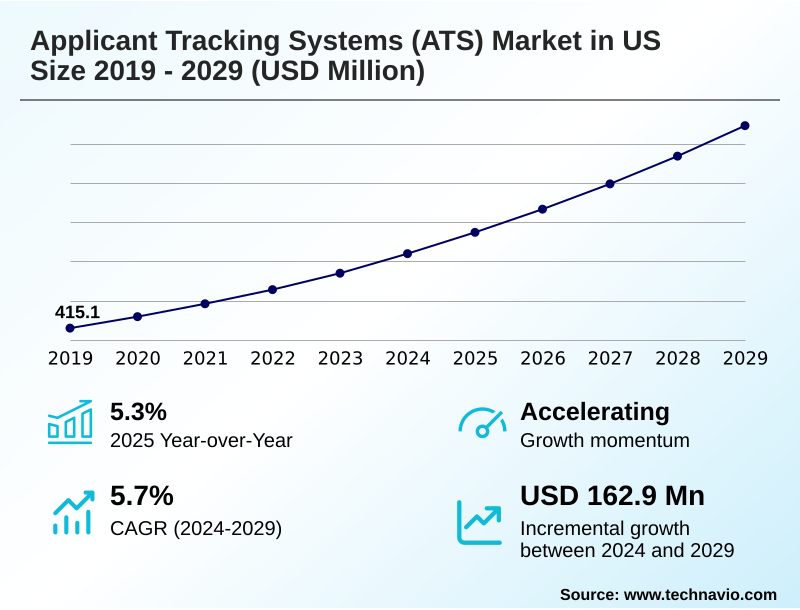
The us applicant tracking systems (ats) market size is valued to increase by USD 173.9 million, at a CAGR of 5.8% from 2025 to 2030. Adoption of artificial intelligence and automation will drive the us applicant tracking systems (ats) market.
Major Market Trends & Insights
- By Deployment - Cloud-based segment was valued at USD 402.2 million in 2024
- By End-user - Financial service segment accounted for the largest market revenue share in 2024
Market Size & Forecast
- Market Opportunities: USD 281.2 million
- Market Future Opportunities: USD 173.9 million
- CAGR from 2025 to 2030 : 5.8%
Market Summary
- The Applicant Tracking Systems (ATS) Market in US is undergoing a significant transformation, driven by the need for greater efficiency and data-driven insights in talent acquisition. Organizations are moving beyond basic resume storage to adopt sophisticated platforms that offer end-to-end recruitment lifecycle management. These systems incorporate AI-driven candidate matching, predictive hiring analytics, and extensive workflow automation rules to streamline operations.
- A key application is in high-volume hiring environments, where automated interview scheduling and candidate feedback mechanisms can drastically reduce administrative overhead. For instance, a national retailer can use an ATS to manage seasonal hiring peaks, using job posting syndication and mobile recruitment capabilities to attract and process thousands of applicants efficiently.
- The integration of compliance tracking modules ensures adherence to EEO reporting standards, while anonymized resume screening features help in reducing bias in the hiring process. This evolution turns recruitment from a reactive function into a strategic, proactive component of workforce planning, directly impacting an organization's ability to compete for top talent.
What will be the Size of the US Applicant Tracking Systems (ATS) Market during the forecast period?
Get Key Insights on Market Forecast (PDF) Get Free Sample
How is the US Applicant Tracking Systems (ATS) Market Segmented?
The us applicant tracking systems (ats) industry research report provides comprehensive data (region-wise segment analysis), with forecasts and estimates in "USD million" for the period 2026-2030, as well as historical data from 2020-2024 for the following segments.
- Deployment
- Cloud-based
- On-premises
- End-user
- Financial service
- Technology
- Healthcare
- Retail
- Others
- Component
- Software
- Services
- Geography
- North America
- US
- North America
By Deployment Insights
The cloud-based segment is estimated to witness significant growth during the forecast period.
The applicant tracking systems (ats) market in us is segmented by deployment, with cloud-based systems dominating the landscape. These platforms support mobile recruitment capabilities and facilitate remote hiring support, which is critical for modern workforce dynamics.
Organizations are adopting cloud solutions for their scalability and integration with other HR technologies, leading to enhanced hiring velocity metrics. For instance, companies utilizing AI-powered cloud platforms report up to a 22% improvement in fill rates.
This deployment model supports a robust API integration ecosystem and automated candidate communications, which are key for improving recruiter productivity metrics.
The emphasis on talent market intelligence and configurable workflows allows for superior sourcing effectiveness analysis and workforce planning alignment, making cloud deployment the preferred choice.
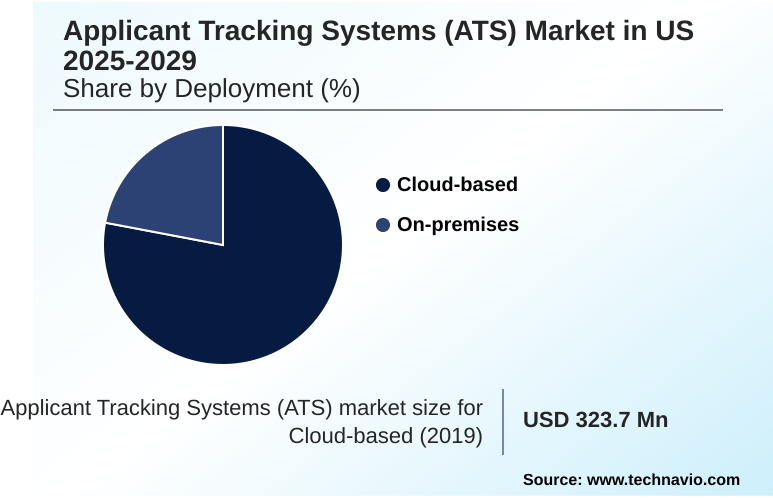
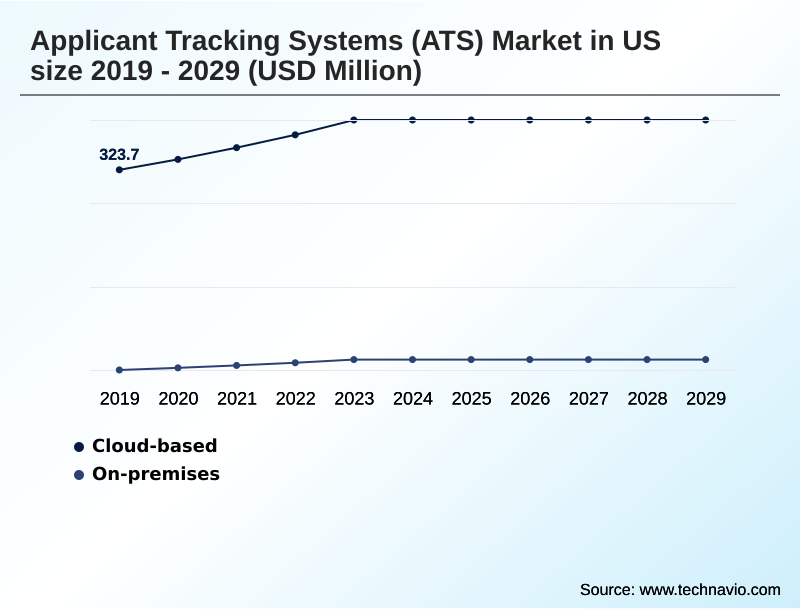
The Cloud-based segment was valued at USD 402.2 million in 2024 and showed a gradual increase during the forecast period.
Market Dynamics
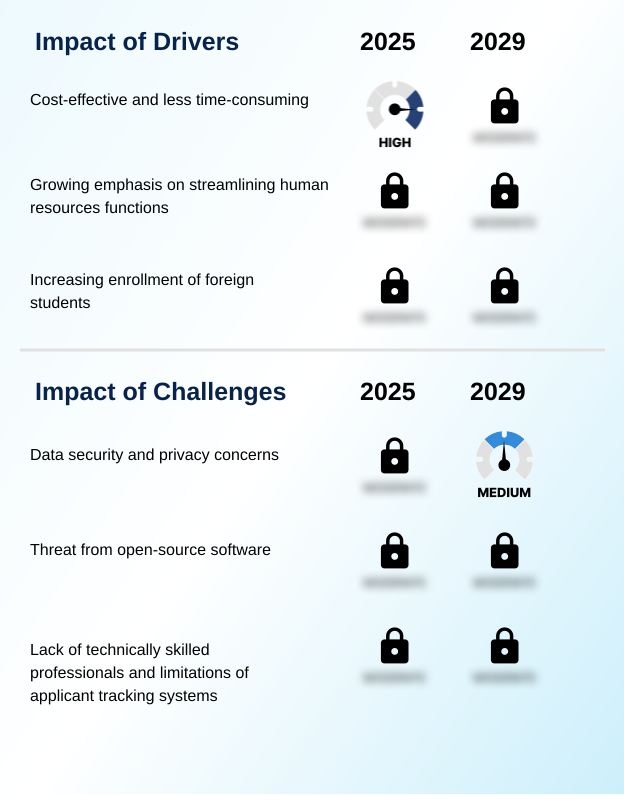
Our researchers analyzed the data with 2025 as the base year, along with the key drivers, trends, and challenges. A holistic analysis of drivers will help companies refine their marketing strategies to gain a competitive advantage.
- Strategic adoption within the applicant tracking systems (ats) market in us centers on solving specific, complex challenges in the talent lifecycle. A primary focus is improving candidate experience with automation, which directly impacts employer brand perception. Simultaneously, organizations are committed to reducing bias in the hiring process through structured, data-driven tools.
- A critical technical step is integrating ats with hris platforms, creating a single source of truth for employee data. For specialized industries, optimizing sourcing channels for tech roles is a constant priority, requiring granular analytics. The ultimate goal is measuring quality of hire with analytics to validate recruitment strategies.
- Operationally, automating interview scheduling for recruiters frees up valuable time for strategic tasks. On the compliance front, ensuring eeo compliance with reporting tools is non-negotiable. Proactive organizations are building a proactive talent pipeline instead of just reacting to vacancies. This is particularly evident in streamlining high-volume retail hiring and effectively managing remote and hybrid recruitment.
- Forward-looking companies are leveraging ai for predictive hiring and enhancing hiring manager collaboration. As talent pools tighten, there is a greater emphasis on tracking diversity metrics in recruitment and automating candidate feedback and communication. Customizing workflows for healthcare credentialing and talent rediscovery and internal mobility are becoming standard.
- Finally, the debate between on-premises vs cloud-based ats security continues, while mobile-first applicant tracking systems become the norm, especially for applicant tracking for staffing agencies that require agility and robust ats data migration and implementation plans.
What are the key market drivers leading to the rise in the adoption of US Applicant Tracking Systems (ATS) Industry?
- The adoption of artificial intelligence and automation is a primary driver for the market, enhancing efficiency and precision in talent acquisition.
- Market growth is significantly driven by the adoption of technologies that yield measurable efficiency gains and strategic advantages.
- The implementation of automated sourcing and screening tools has led to a 51% increase in job submissions for some firms, directly impacting talent pipeline volume.
- Concurrently, a focus on optimizing recruitment workflows has resulted in a 22% improvement in fill rates, showcasing a clear return on investment. The need for GDPR and CCPA compliance is compelling organizations to adopt platforms with built-in data governance features.
- Demand is also high for systems that offer collaborative hiring workflows and automated candidate communications to enhance team productivity and candidate experience. These drivers underscore a market shift towards data-centric, compliant, and highly efficient talent acquisition processes.
What are the market trends shaping the US Applicant Tracking Systems (ATS) Industry?
- The increasing implementation of cloud-based recruitment solutions is emerging as a significant market trend. This shift is driven by the demand for scalable and flexible hiring platforms.
- Key market trends are centered on enhancing recruitment intelligence and fairness. The integration of job description analytics allows organizations to craft more effective and inclusive postings, contributing to better applicant conversion rates. There is a growing emphasis on unconscious bias mitigation tools, which are becoming integral to promoting fair hiring practices.
- Advanced systems are also incorporating candidate engagement scoring, enabling recruiters to prioritize high-intent applicants and improve engagement. By using such tools, some organizations have seen candidate satisfaction rates climb to 85%. Furthermore, talent acquisition suites are increasingly providing sophisticated pipeline health reports, which help in proactively managing recruitment funnels and aligning with broader human capital management integration strategies.
What challenges does the US Applicant Tracking Systems (ATS) Industry face during its growth?
- High implementation and maintenance costs present a key challenge affecting industry growth, particularly for small and medium-sized enterprises.
- Despite technological advancements, the market faces challenges related to data management and system complexity. While platforms offer powerful recruitment analytics dashboards, ensuring data accuracy for metrics like time-to-fill reduction and cost-per-hire optimization remains a persistent issue. The process of achieving seamless human capital management integration can be complex and resource-intensive, affecting smaller organizations disproportionately.
- Furthermore, while platforms provide tools to support remote hiring support and virtual onboarding tools, ensuring a consistent and engaging experience for a distributed workforce is challenging. Another hurdle is managing the complexities of contingent workforce management and achieving smooth employee data synchronization across disparate systems, which can hinder the goal of creating a unified talent ecosystem.
Exclusive Technavio Analysis on Customer Landscape
The us applicant tracking systems (ats) market forecasting report includes the adoption lifecycle of the market, covering from the innovator’s stage to the laggard’s stage. It focuses on adoption rates in different regions based on penetration. Furthermore, the us applicant tracking systems (ats) market report also includes key purchase criteria and drivers of price sensitivity to help companies evaluate and develop their market growth analysis strategies.
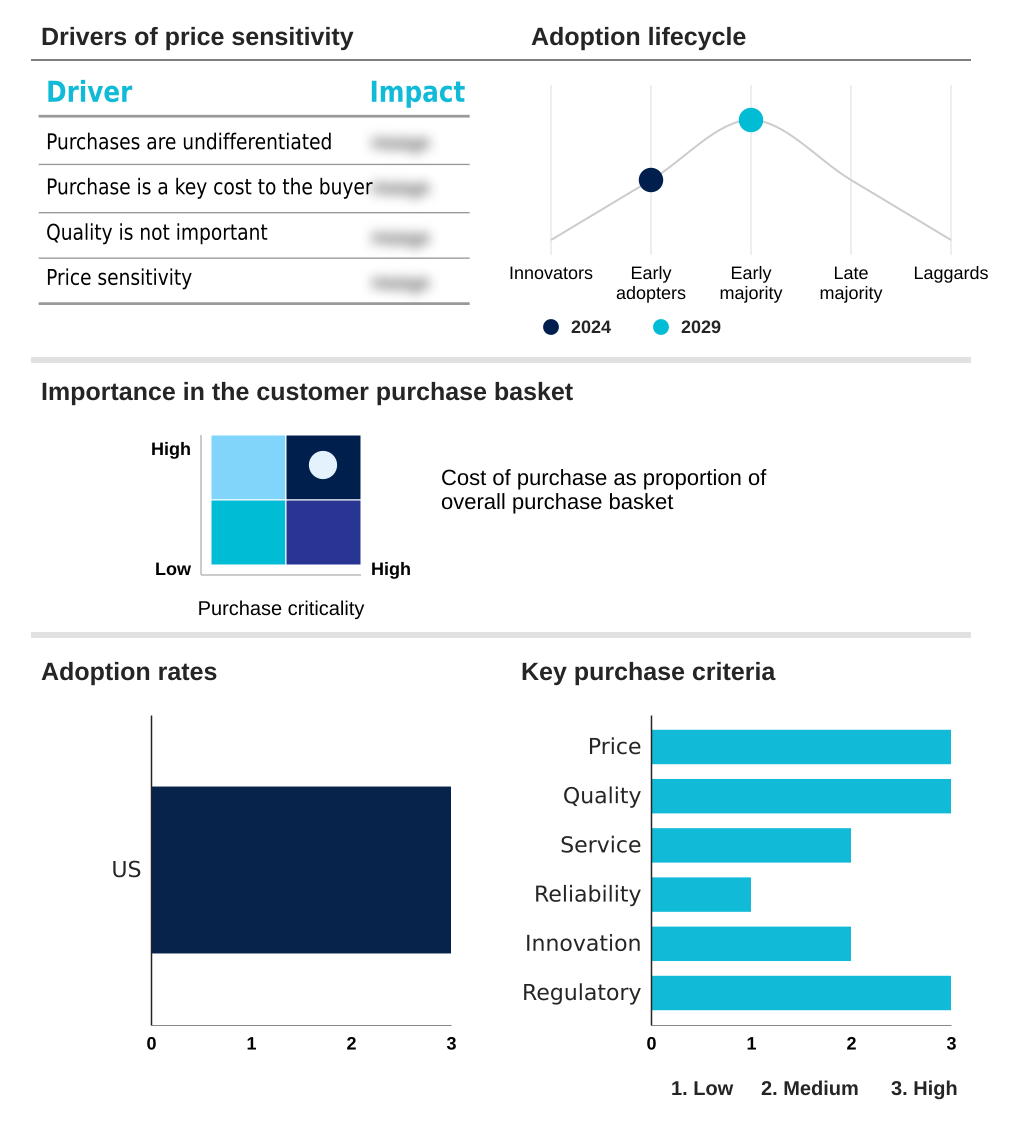
Customer Landscape of US Applicant Tracking Systems (ATS) Industry
Competitive Landscape
Companies are implementing various strategies, such as strategic alliances, us applicant tracking systems (ats) market forecast, partnerships, mergers and acquisitions, geographical expansion, and product/service launches, to enhance their presence in the industry.
Arcoro - Cloud-native talent management platforms provide streamlined solutions for recruitment, onboarding, and compliance, improving time-to-hire metrics and regulatory adherence.
The industry research and growth report includes detailed analyses of the competitive landscape of the market and information about key companies, including:
- Arcoro
- Automatic Data Processing Inc.
- Bamboo HR LLC
- BrassRing
- Bullhorn Inc.
- ClearCompany
- Employ Inc.
- Hireology Inc.
- IBM Corp.
- iCIMS Inc.
- JobDiva Inc.
- Jobvite Inc.
- Lever Inc.
- Paycor HCM Inc.
- PrismHR Inc.
- SAP SE
- SmartRecruiters Inc.
- Symphony Talent LLC
- Workday Inc.
Qualitative and quantitative analysis of companies has been conducted to help clients understand the wider business environment as well as the strengths and weaknesses of key industry players. Data is qualitatively analyzed to categorize companies as pure play, category-focused, industry-focused, and diversified; it is quantitatively analyzed to categorize companies as dominant, leading, strong, tentative, and weak.
Recent Development and News in Us applicant tracking systems (ats) market
- In November 2024, Phenom disclosed that a US healthcare client reduced interview scheduling time by 86% and quadrupled site leads by deploying AI engagement modules tailored for remote recruitment.
- In March 2025, Workday rolled out its Spring 2025 Release, featuring over 350 enhancements including AI-powered talent rediscovery, personalized onboarding, and intelligent job recommendations.
- In May 2025, Bullhorn launched Amplify, a suite of AI-powered agents designed to streamline sourcing and screening for staffing firms, resulting in a 51% rise in job submissions.
- In August 2025, Greenhouse introduced enhanced job notes featuring AI summaries, allowing hiring teams to share updates and feedback more efficiently and maintain better alignment.
Dive into Technavio’s robust research methodology, blending expert interviews, extensive data synthesis, and validated models for unparalleled US Applicant Tracking Systems (ATS) Market insights. See full methodology.
| Market Scope | |
|---|---|
| Page number | 190 |
| Base year | 2025 |
| Historic period | 2020-2024 |
| Forecast period | 2026-2030 |
| Growth momentum & CAGR | Accelerate at a CAGR of 5.8% |
| Market growth 2026-2030 | USD 173.9 million |
| Market structure | Fragmented |
| YoY growth 2025-2026(%) | 5.5% |
| Key countries | US |
| Competitive landscape | Leading Companies, Market Positioning of Companies, Competitive Strategies, and Industry Risks |
Research Analyst Overview
- From a research analyst perspective, the applicant tracking systems (ats) market in us is characterized by intense innovation centered on efficiency and intelligence. The core of modern platforms lies in sophisticated resume parsing algorithms and AI-driven candidate matching, which are becoming standard. Advanced systems now offer robust candidate relationship management and comprehensive talent pipeline analytics.
- The emphasis is on complete workflow automation rules, from initial job posting syndication to final offer management workflows. A significant development is the use of predictive hiring analytics and talent rediscovery features to build proactive talent pools. Automated interview scheduling has become a critical feature, with some platforms achieving an 86% reduction in scheduling time.
- Key functionalities also include compliance tracking modules with EEO compliance reporting and role-based access control to ensure data security. To support collaborative work, platforms provide hiring manager collaboration tools and structured interview kits. Anonymized resume screening and diversity and inclusion metrics are crucial for fair hiring.
- The market is also seeing deeper integration of video interviewing platforms, background check integration, and skills assessment integration. Functionalities like employee referral tracking, talent community engagement, and programmatic job advertising are expanding sourcing capabilities. Furthermore, features for internal mobility tracking and contingent worker management are addressing holistic workforce needs.
- The entire platform is often supported by custom reporting dashboards, candidate feedback mechanisms, a rich API integration ecosystem, and robust data migration tools to handle high-volume hiring workflows and ensure a positive candidate experience personalization.
What are the Key Data Covered in this US Applicant Tracking Systems (ATS) Market Research and Growth Report?
-
What is the expected growth of the US Applicant Tracking Systems (ATS) Market between 2026 and 2030?
-
USD 173.9 million, at a CAGR of 5.8%
-
-
What segmentation does the market report cover?
-
The report is segmented by Deployment (Cloud-based, and On-premises), End-user (Financial service, Technology, Healthcare, Retail, and Others), Component (Software, and Services) and Geography (North America)
-
-
Which regions are analyzed in the report?
-
North America
-
-
What are the key growth drivers and market challenges?
-
Adoption of artificial intelligence and automation, High implementation and maintenance costs
-
-
Who are the major players in the US Applicant Tracking Systems (ATS) Market?
-
Arcoro, Automatic Data Processing Inc., Bamboo HR LLC, BrassRing, Bullhorn Inc., ClearCompany, Employ Inc., Hireology Inc., IBM Corp., iCIMS Inc., JobDiva Inc., Jobvite Inc., Lever Inc., Paycor HCM Inc., PrismHR Inc., SAP SE, SmartRecruiters Inc., Symphony Talent LLC and Workday Inc.
-
Market Research Insights
- Market dynamics are increasingly shaped by the pursuit of measurable recruitment outcomes. Advanced platforms now provide recruitment analytics dashboards that deliver critical insights, with some users achieving a 51% rise in job submissions by leveraging automated sourcing tools. The focus on time-to-fill reduction and cost-per-hire optimization is driving the adoption of solutions that enhance recruiter productivity metrics.
- These systems facilitate end-to-end recruitment lifecycle management, from initial candidate engagement scoring to virtual onboarding tools. Alignment with workforce planning is crucial, as is the ability to support recruitment process outsourcing. The emphasis on employer branding tools and pipeline health reports helps organizations maintain a competitive edge.
- Effective talent acquisition suites ensure employee data synchronization and offer robust support for staffing agency integration, reflecting a holistic approach to talent management.
We can help! Our analysts can customize this us applicant tracking systems (ats) market research report to meet your requirements.
 RIA -
RIA - 
