



Asphalt Market Size 2025-2029
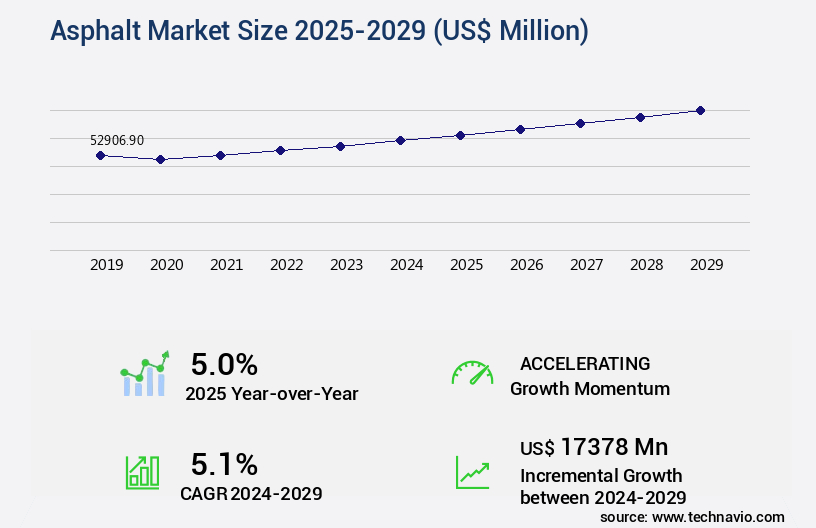
The asphalt market size is valued to increase by USD 17.38 billion, at a CAGR of 5.1% from 2024 to 2029. Infrastructure development and road construction will drive the asphalt market.
Major Market Trends & Insights
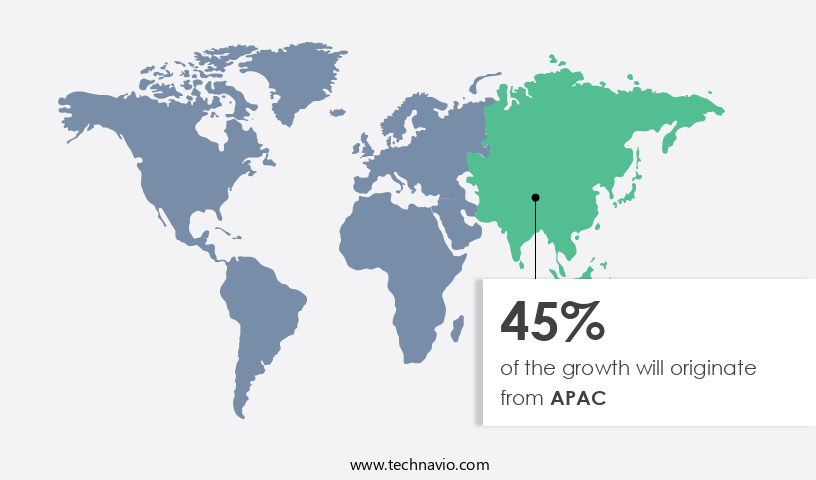
- APAC dominated the market and accounted for a 45% growth during the forecast period.
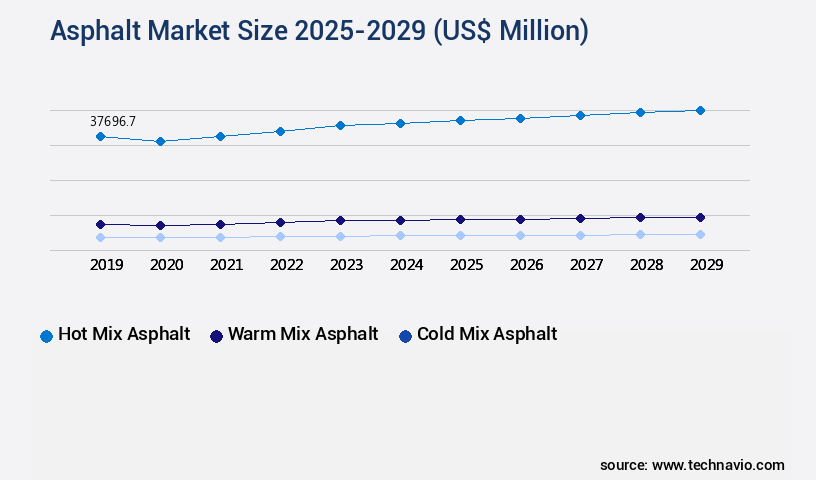
- By Product Type - Hot mix asphalt segment was valued at USD 36.06 billion in 2024
- By End-user - Non-residential construction segment accounted for the largest market revenue share in 2024
Market Size & Forecast
- Market Opportunities: USD 48.55 million
- Market Future Opportunities: USD 17378.00 million
- CAGR from 2024 to 2029 : 5.1%
Market Summary
- The market plays a pivotal role in the infrastructure development sector, particularly in road construction and maintenance. This market is driven by various factors, including the increasing demand for sustainable production methods and the need to address the volatility in crude oil prices. Sustainable production is a key trend in the asphalt industry, with manufacturers focusing on reducing carbon emissions and improving energy efficiency. For instance, some companies are exploring the use of recycled asphalt pavement and warm-mix asphalt technologies to minimize the environmental impact of production. One real-world business scenario where the market comes into play is supply chain optimization.
- A construction company, for instance, may need to ensure a steady supply of asphalt to meet project deadlines while also minimizing costs. By implementing an effective supply chain strategy, the company can negotiate favorable prices with suppliers, optimize transportation routes, and maintain an adequate inventory level to avoid production delays. According to recent studies, implementing such strategies can lead to significant improvements in operational efficiency. For example, a construction firm was able to reduce its lead time for asphalt deliveries by 20%, resulting in a 15% increase in project completion rate and a 10% reduction in overall project costs.
- By focusing on supply chain optimization, the company was able to maintain a competitive edge in the market while also ensuring compliance with environmental regulations.
What will be the Size of the Asphalt Market during the forecast period?
Get Key Insights on Market Forecast (PDF) Request Free Sample
How is the Asphalt Market Segmented ?
The asphalt industry research report provides comprehensive data (region-wise segment analysis), with forecasts and estimates in "USD million" for the period 2025-2029, as well as historical data from 2020-2023 for the following segments.
- Product Type
- Hot mix asphalt
- Warm mix asphalt
- Cold mix asphalt
- Others
- End-user
- Non-residential construction
- Residential construction
- Others
- Application
- Paving
- Roofing
- Waterproofing
- Geography
- North America
- US
- Mexico
- Europe
- Germany
- Russia
- APAC
- China
- India
- Indonesia
- Japan
- South America
- Brazil
- Rest of World (ROW)
- North America
By Product Type Insights
The hot mix asphalt segment is estimated to witness significant growth during the forecast period.
The market encompasses the production and application of hot mix asphalt (HMA), a crucial infrastructure material for paving roads, highways, and parking lots. HMA, composed of asphalt cement, mineral aggregate, and water, is renowned for its rapid hardening properties and superior traction under elevated temperatures. The market's continuous evolution is marked by advancements in HMA design and production methods, including marshall mix design, thermal cracking evaluation, and pothole repair techniques. Superior quality control procedures ensure the consistency of asphalt concrete mixtures, with indirect tensile strength and polymer modified asphalt enhancing durability. Asphalt recycling processes, such as reclaimed asphalt pavement (RAP) usage, promote sustainability and cost savings.
Performance-based specifications, like gyratory compaction testing and rutting resistance testing, ensure optimal pavement design parameters. Key performance indicators, like fatigue cracking prediction and life cycle assessment, guide sustainable pavement materials selection. Aggregate gradation control, crack sealing techniques, and environmental impact assessment are integral to the market's ongoing development. Asphalt binder properties, such as asphalt emulsion types and flexural creep testing, are crucial for enhancing asphalt's structural design standards. Incorporating advanced technologies, the market embraces pavement performance modeling, air voids measurement, and asphalt rejuvenation methods to maintain and improve pavement quality. With a global market size projected to reach USD120 billion by 2027, the market remains a dynamic and essential sector in infrastructure development.
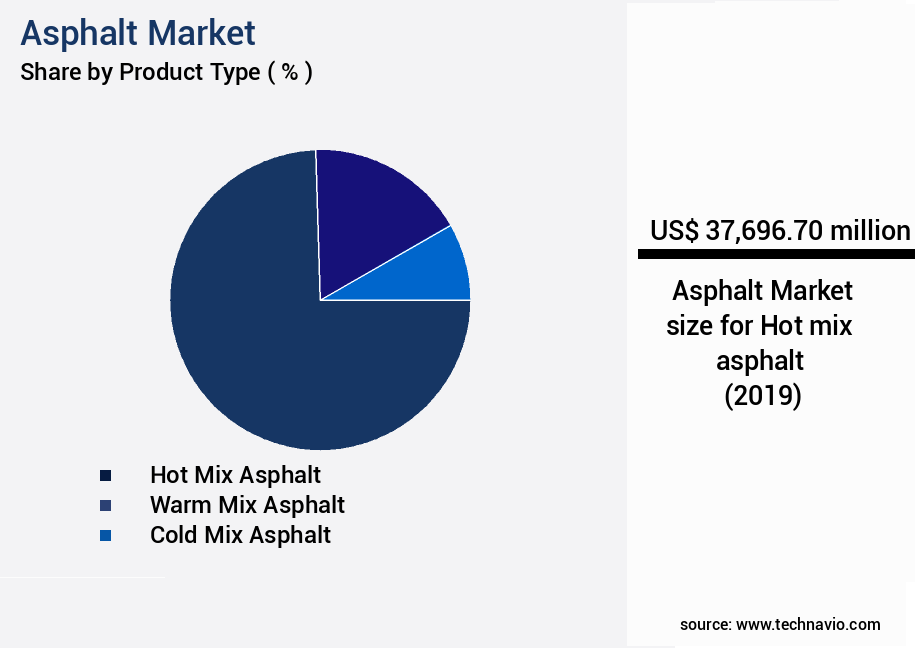
The Hot mix asphalt segment was valued at USD 36.06 billion in 2020 and showed a gradual increase during the forecast period.
Regional Analysis
APAC is estimated to contribute 45% to the growth of the global market during the forecast period.Technavio's analysts have elaborately explained the regional trends and drivers that shape the market during the forecast period.
See How Asphalt Market Demand is Rising in APAC Request Free Sample
The Asia-Pacific (APAC) the market is witnessing significant growth due to substantial infrastructure investments, urbanization, and technological advancements in road construction. This region is home to several emerging and mature economies, with China leading the charge. In 2024, the Chinese construction industry generated an impressive USD1.24 trillion in value added, marking a 3.8% increase from the previous year. This growth is fueled by a high urbanization rate of approximately 65%, driving the demand for new roads, expressways, and urban infrastructure.
Asphalt and bitumen-based solutions are the preferred choice for these projects due to their cost-effectiveness and operational efficiency. In fact, the use of asphalt pavement results in a 20% reduction in construction time compared to concrete pavement. The APAC the market's growth trajectory is further propelled by advancements in asphalt technology, such as warm-mix asphalt and recycled asphalt pavement, which offer cost savings and environmental benefits.
Market Dynamics
Our researchers analyzed the data with 2024 as the base year, along with the key drivers, trends, and challenges. A holistic analysis of drivers will help companies refine their marketing strategies to gain a competitive advantage.
The market is experiencing significant growth due to the increasing demand for optimizing asphalt binder viscosity and designing resilient asphalt pavements. Advanced asphalt testing methodologies play a crucial role in predicting pavement fatigue cracking and evaluating asphalt pavement performance. Aggregate shape and texture analysis are essential in improving asphalt mix durability and assessing the quality of asphalt aggregates. Environmental factors significantly impact asphalt performance, making it necessary to implement sustainable pavement practices. This includes reducing asphalt pavement maintenance and assessing the environmental impact of asphalt. New asphalt pavement technologies, such as innovative asphalt pavement construction and using reclaimed asphalt pavement (RAP) in mixes, are gaining popularity for their ability to improve long-term performance and reduce the carbon footprint. Measuring asphalt binder stiffness is critical in ensuring the relationship between asphalt mix design and performance. The effect of temperature on asphalt performance is also a significant consideration, and designers must account for it in their mix designs. Predicting pavement fatigue cracking and determining the optimum asphalt content in mixes are key challenges that require continuous research and development. In conclusion, the market is evolving, with a focus on optimizing asphalt performance through advanced testing methodologies, sustainable practices, and new technologies. By addressing the impact of environmental factors and improving asphalt mix durability, stakeholders can reduce maintenance costs and ensure the long-term sustainability of asphalt pavements.
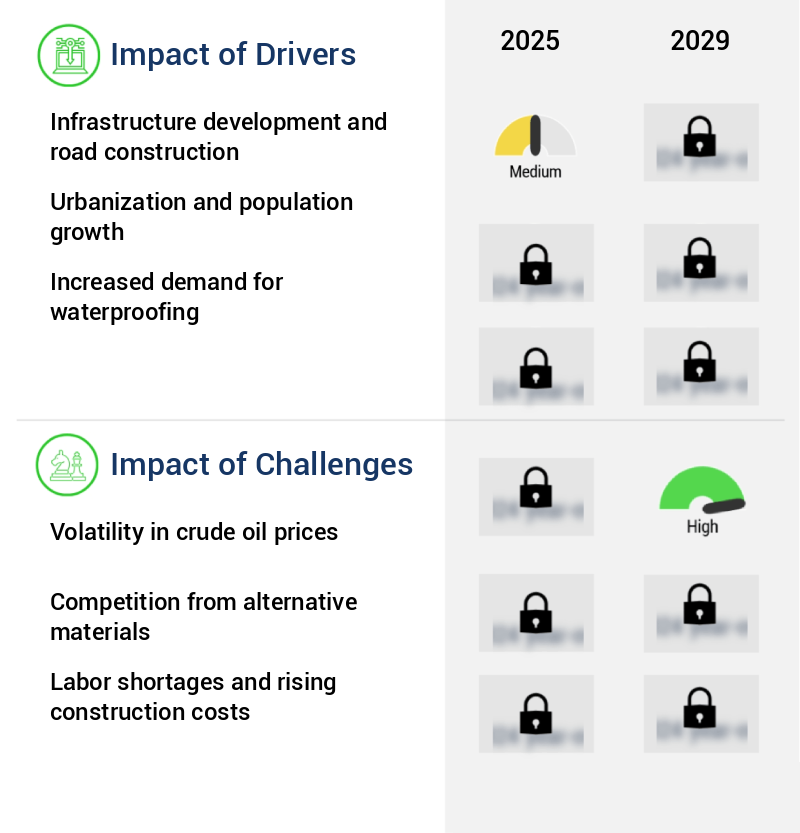
What are the key market drivers leading to the rise in the adoption of Asphalt Industry?
- Infrastructure development, specifically road construction, serves as the primary catalyst for market growth.
- Asphalt continues to be a crucial component in infrastructure development, particularly in road construction and maintenance. Global markets witness a significant demand for asphalt due to its durability, cost-effectiveness, and versatility. Governments worldwide invest heavily in capital-intensive infrastructure projects to stimulate economic growth and improve connectivity. For instance, India's Union Budget 2024-25 allocated ₹1 trillion (USD133.5 billion) for capital expenditure, a 3.4% share of the national Gross Domestic Product. This investment emphasizes the commitment to expanding and upgrading transportation networks, including national highways, rural roads, and urban transit corridors.
- Programs like Bharatmala and PM Gati Shakti are expected to sustain high asphalt consumption due to their focus on road connectivity. The market's growth is driven by these infrastructure initiatives, leading to increased efficiency, reduced downtime, and improved decision-making for businesses involved in infrastructure development.
What are the market trends shaping the Asphalt Industry?
- Focusing on sustainable production is an emerging market trend. It is essential for businesses to prioritize environmentally friendly practices in their production processes.
- The market is undergoing significant transformation, with a growing emphasis on sustainable production and applications across various sectors. Manufacturers are investing in innovative technologies and infrastructure to minimize carbon emissions, conserve energy, and promote circularity in material use. For instance, Tarmac, a leading company, introduced a sustainable asphalt plant in Trowse, Norwich, England, in June 2024. This facility incorporates underfloor heating systems, on-site wind turbines, and rail-delivered aggregates to reduce emissions throughout production.
- The plant produces eco-friendly asphalt products like UltiLayer and UltiPorous, which cater to roads, driveways, and infrastructure projects. This shift towards sustainable asphalt solutions contributes to faster project completion, improved forecast accuracy, and cost optimization for clients.
What challenges does the Asphalt Industry face during its growth?
- The volatility in crude oil prices poses a significant challenge to the growth of the industry, requiring professionals to closely monitor and adapt to market fluctuations.
- The market experiences continuous evolution, driven by its primary connection to petroleum refining and the volatile nature of crude oil prices. Asphalt, which utilizes bitumen as its primary binding agent, is an essential component in road construction and maintenance. The sensitivity of asphalt production to oil market fluctuations is evident; rising crude prices result in increased input costs, narrowed profit margins, and potential supply chain disruptions. For instance, the 2022 energy crisis, instigated by geopolitical tensions, caused oil prices to surge past USD120 per barrel.
- Consequently, European bitumen supplies were strained due to sanctions on Russian crude, compelling contractors to seek alternative sources at premium prices. This disruption resulted in significant budget overruns and project delays across various regions. Despite these challenges, the market remains a crucial player in the infrastructure sector, adapting to market fluctuations and ensuring the continued development and maintenance of roads worldwide.
Exclusive Technavio Analysis on Customer Landscape
The asphalt market forecasting report includes the adoption lifecycle of the market, covering from the innovator's stage to the laggard's stage. It focuses on adoption rates in different regions based on penetration. Furthermore, the asphalt market report also includes key purchase criteria and drivers of price sensitivity to help companies evaluate and develop their market growth analysis strategies.
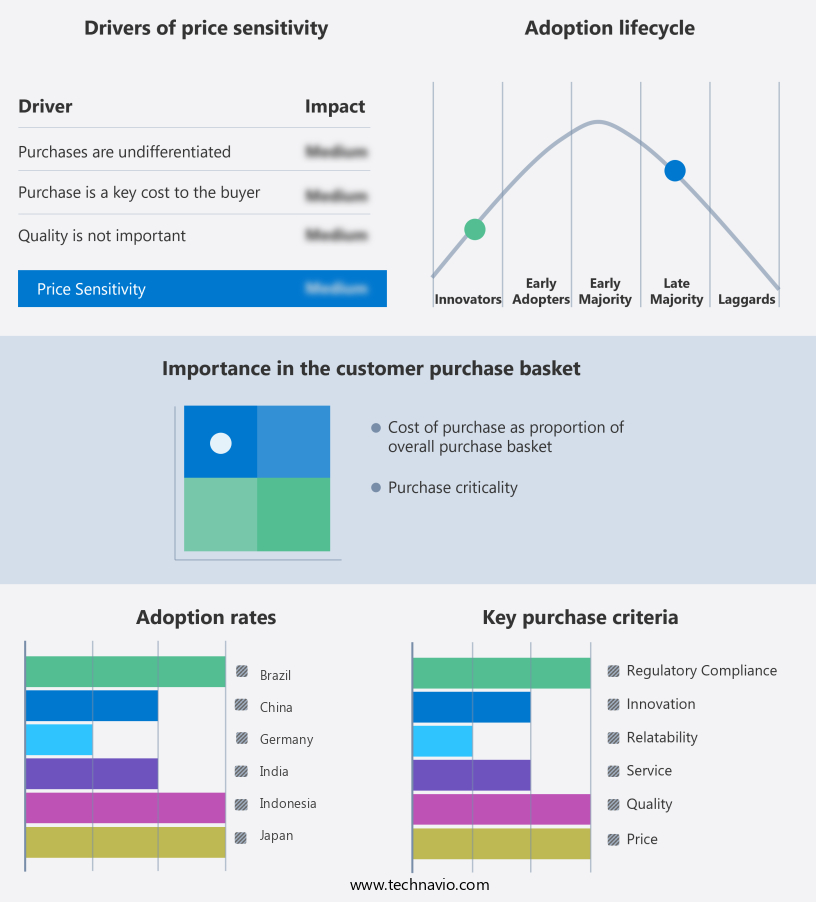
Customer Landscape of Asphalt Industry
Competitive Landscape
Companies are implementing various strategies, such as strategic alliances, asphalt market forecast, partnerships, mergers and acquisitions, geographical expansion, and product/service launches, to enhance their presence in the industry.
Aggregate Industries UK Ltd. - Asphalt is a key material in road construction, utilized extensively for highway and motorway projects worldwide. This petroleum product's durability and flexibility make it an indispensable component in infrastructure development. The company specializes in its production and distribution, contributing significantly to the global market.
The industry research and growth report includes detailed analyses of the competitive landscape of the market and information about key companies, including:
- Aggregate Industries UK Ltd.
- Boral Ltd.
- BP Plc
- CEMEX SAB de CV
- Chevron Corp.
- CRH Plc
- Exxon Mobil Corp.
- HeidelbergCement AG
- Marathon Petroleum Corp.
- Owens Corning
- Repsol SA
- Shell plc
- Sinopec Shanghai Petrochemical Co. Ltd.
- TotalEnergies SE
- United Refining Co.
- Valero Energy Corp.
- Vulcan Materials Co.
Qualitative and quantitative analysis of companies has been conducted to help clients understand the wider business environment as well as the strengths and weaknesses of key industry players. Data is qualitatively analyzed to categorize companies as pure play, category-focused, industry-focused, and diversified; it is quantitatively analyzed to categorize companies as dominant, leading, strong, tentative, and weak.
Recent Development and News in Asphalt Market
- In August 2024, global asphalt producer, Caterpillar Asphalt, announced the launch of its innovative new asphalt plant in Texas, capable of producing 300 tons per hour, marking a significant expansion to its production capacity (Caterpillar Asphalt Press Release, 2024). In November 2024, leading asphalt manufacturers, Bitumen LLC and Nynas, entered into a strategic partnership to jointly develop and market sustainable asphalt binders, aiming to reduce the carbon footprint of road construction (Bitumen LLC & Nynas Press Release, 2024).
- In February 2025, European the market leader, Ineos Styrolution, completed the acquisition of competitor, Covestro's Styrolution business, expanding its market share and product portfolio (Ineos Styrolution Press Release, 2025). In May 2025, the European Union approved the use of recycled asphalt in road construction, a key policy change that is expected to boost the demand for recycled asphalt and reduce the environmental impact of the industry (European Commission Press Release, 2025).
Dive into Technavio's robust research methodology, blending expert interviews, extensive data synthesis, and validated models for unparalleled Asphalt Market insights. See full methodology.
|
Market Scope |
|
|
Report Coverage |
Details |
|
Page number |
239 |
|
Base year |
2024 |
|
Historic period |
2020-2023 |
|
Forecast period |
2025-2029 |
|
Growth momentum & CAGR |
Accelerate at a CAGR of 5.1% |
|
Market growth 2025-2029 |
USD 17378 million |
|
Market structure |
Fragmented |
|
YoY growth 2024-2025(%) |
5.0 |
|
Key countries |
China, US, India, Japan, Indonesia, Russia, Germany, Brazil, Mexico, and Saudi Arabia |
|
Competitive landscape |
Leading Companies, Market Positioning of Companies, Competitive Strategies, and Industry Risks |
Research Analyst Overview
- The market continues to evolve, driven by advancements in technology and shifting industry trends. Quality control procedures play a crucial role in ensuring the consistency and durability of asphalt concrete mixtures. Marshall mix design and thermal cracking evaluation are essential elements of the design process, optimizing the performance of hot mix asphalt. Pothole repair methods have evolved, with an increasing focus on sustainability. For instance, recycling processes, such as reclaimed asphalt pavement (RAP) and asphalt recycling, have gained popularity due to their environmental benefits. In fact, industry growth is expected to reach 3% annually, with a significant emphasis on performance-based specifications and sustainable pavement materials.
- Polymer modified asphalt, for example, offers improved indirect tensile strength and rutting resistance, making it a preferred choice for pavement design parameters. Gyratory compaction testing, rutting resistance testing, and dynamic modulus testing are essential in evaluating the performance of asphalt binder properties and ensuring compliance with structural design standards. Crack sealing techniques, such as asphalt emulsion types, have become essential in preventing pavement distress identification. Flexural creep testing and pavement preservation strategies, like asphalt rejuvenation methods, extend pavement life and reduce the need for costly repairs. Environmental impact assessment is also a critical consideration, with ongoing research into the use of aggregate gradation control and superpave mix design to minimize the carbon footprint of asphalt production.
- Air voids measurement and void content determination are essential in assessing the long-term performance of asphalt pavements. Traffic loading analysis and fatigue cracking prediction are crucial in understanding the impact of traffic on pavement structures and implementing effective maintenance strategies. Overall, the market remains a dynamic and innovative industry, continually adapting to meet the evolving needs of transportation infrastructure.
What are the Key Data Covered in this Asphalt Market Research and Growth Report?
-
What is the expected growth of the Asphalt Market between 2025 and 2029?
-
USD 17.38 billion, at a CAGR of 5.1%
-
-
What segmentation does the market report cover?
-
The report is segmented by Product Type (Hot mix asphalt, Warm mix asphalt, Cold mix asphalt, and Others), End-user (Non-residential construction, Residential construction, and Others), Application (Paving, Roofing, and Waterproofing), and Geography (APAC, North America, Europe, Middle East and Africa, and South America)
-
-
Which regions are analyzed in the report?
-
APAC, North America, Europe, Middle East and Africa, and South America
-
-
What are the key growth drivers and market challenges?
-
Infrastructure development and road construction, Volatility in crude oil prices
-
-
Who are the major players in the Asphalt Market?
-
Aggregate Industries UK Ltd., Boral Ltd., BP Plc, CEMEX SAB de CV, Chevron Corp., CRH Plc, Exxon Mobil Corp., HeidelbergCement AG, Marathon Petroleum Corp., Owens Corning, Repsol SA, Shell plc, Sinopec Shanghai Petrochemical Co. Ltd., TotalEnergies SE, United Refining Co., Valero Energy Corp., and Vulcan Materials Co.
-
Market Research Insights
- The market is a dynamic and ever-evolving industry, encompassing various aspects such as material properties, rut depth measurement, and asphalt oxidation resistance. For instance, the latest advancements in asphalt technology have led to the development of binders with enhanced oxidation resistance, extending pavement life and reducing maintenance costs. Moreover, the industry is anticipated to witness significant growth, with estimates suggesting a steady expansion of approximately 3-5% annually. An illustrative example of market trends can be observed in the implementation of advanced construction techniques that improve long-term performance and reduce emission levels. For instance, the adoption of warm-mix asphalt technology has led to a decrease in fuel consumption and greenhouse gas emissions by up to 30% compared to traditional hot-mix asphalt.
- This not only contributes to environmental sustainability but also enhances the overall efficiency of the construction process. Furthermore, the importance of material characterization tests, such as those measuring crack density mapping and fatigue life prediction, has become increasingly critical in ensuring the durability and cost-effectiveness of asphalt pavements. By implementing performance-based specifications and pavement management systems, agencies can optimize their mix designs and allocate resources more effectively, ultimately leading to improved pavement quality and extended service life.
We can help! Our analysts can customize this asphalt market research report to meet your requirements.
 RIA -
RIA - 
