


Aspiration Biopsy Needles Market Size 2026-2030
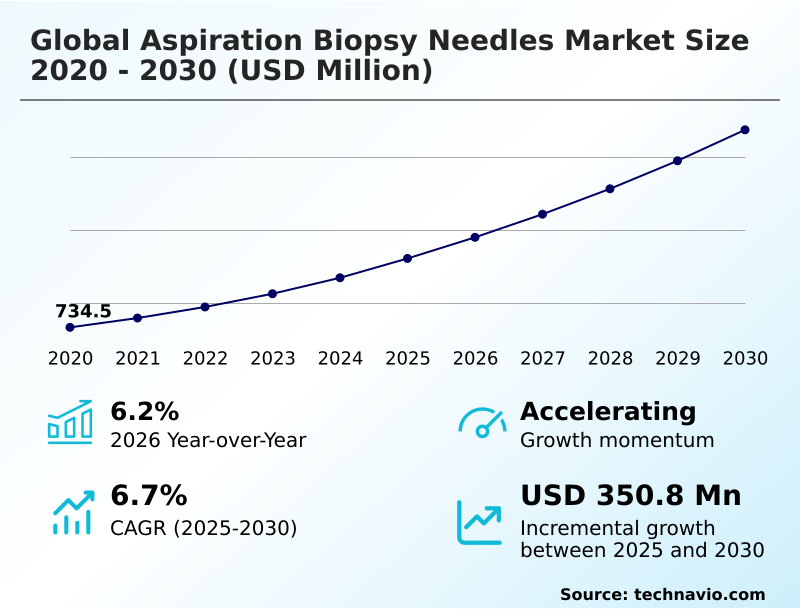
The aspiration biopsy needles market size is valued to increase by USD 350.8 million, at a CAGR of 6.7% from 2025 to 2030. Increasing incidence of cancer and other chronic diseases will drive the aspiration biopsy needles market.
Major Market Trends & Insights
- North America dominated the market and accounted for a 36.6% growth during the forecast period.
- By Application - Tumor segment was valued at USD 704.2 million in 2024
- By Product Type - Image-guided procedure segment accounted for the largest market revenue share in 2024
Market Size & Forecast
- Market Opportunities: USD 538.7 million
- Market Future Opportunities: USD 350.8 million
- CAGR from 2025 to 2030 : 6.7%
Market Summary
- The aspiration biopsy needles market is undergoing a significant transformation, driven by the imperative for early, accurate diagnosis in an era of personalized medicine. The fundamental shift towards minimally invasive diagnostics is propelled by clear clinical and economic benefits, reducing patient recovery times and overall healthcare costs.
- Technological advancements are central to this evolution, with manufacturers focusing on innovations like echogenic needle technology for enhanced ultrasound-guided biopsy and specialized tip geometries to improve diagnostic yield. A critical business scenario for hospital administrators involves balancing stringent healthcare cost containment measures with investments in premium needles.
- While basic needles are less expensive upfront, devices that ensure a high-quality tissue core extraction on the first attempt can reduce the significant downstream costs associated with repeat procedures, delayed diagnoses, and longer hospital stays.
- This dynamic is further complicated by the challenge of obtaining samples suitable for advanced molecular profiling, pushing the industry towards more sophisticated soft tissue sampling solutions. The market's trajectory is shaped by this interplay between clinical need, technological capability, and economic pressure.
What will be the Size of the Aspiration Biopsy Needles Market during the forecast period?
Get Key Insights on Market Forecast (PDF) Get Free Sample
How is the Aspiration Biopsy Needles Market Segmented?
The aspiration biopsy needles industry research report provides comprehensive data (region-wise segment analysis), with forecasts and estimates in "USD million" for the period 2026-2030, as well as historical data from 2020-2024 for the following segments.
- Application
- Tumor
- Wound
- Product type
- Image-guided procedure
- Non-image guided procedure
- End-user
- Hospitals
- Specialty clinics
- Others
- Geography
- North America
- US
- Canada
- Mexico
- Europe
- Germany
- UK
- France
- Asia
- Rest of World (ROW)
- North America
By Application Insights
The tumor segment is estimated to witness significant growth during the forecast period.
The tumor and cancer diagnosis segment is foundational, driven by the need for precise pathology specimen acquisition.
Innovations focus on improving lesion targeting accuracy and ensuring tissue architecture preservation to reduce the non-diagnostic sample rate, which can be as high as 20% in some challenging cases.
The evolution of interventional cytopathology and a better tumor biopsy workflow are pushing demand for needles that balance the utility of a smaller gauge needle design with the need for tissue adequacy for genomics.
This has led to a re-evaluation of core needle vs. fine needle approaches, with a growing emphasis on vacuum-assisted aspiration and patient-centric design to optimize outcomes in applications like thyroid nodule characterization.
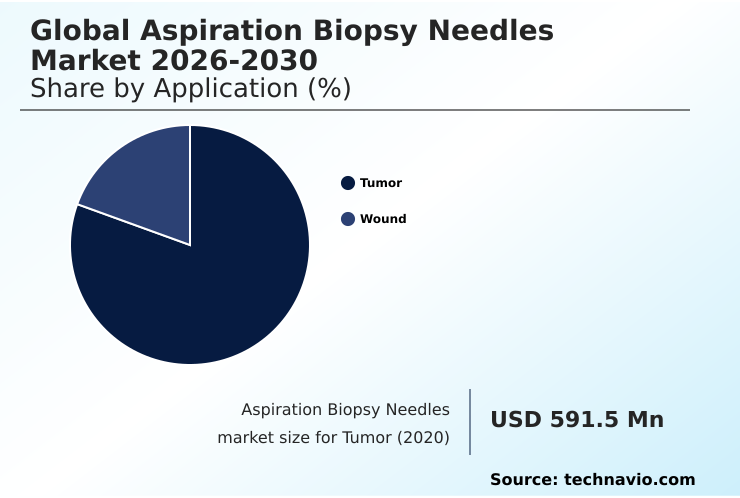
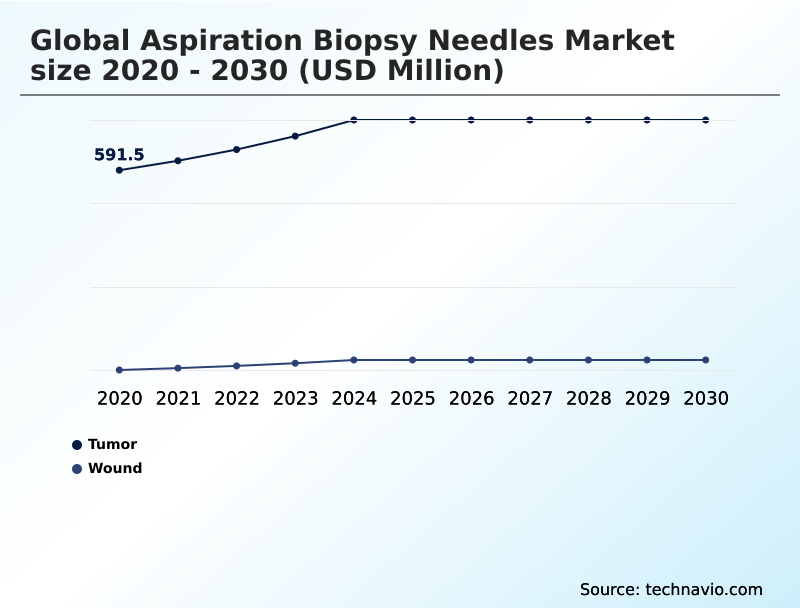
The Tumor segment was valued at USD 704.2 million in 2024 and showed a gradual increase during the forecast period.
Regional Analysis
North America is estimated to contribute 36.6% to the growth of the global market during the forecast period.Technavio’s analysts have elaborately explained the regional trends and drivers that shape the market during the forecast period.
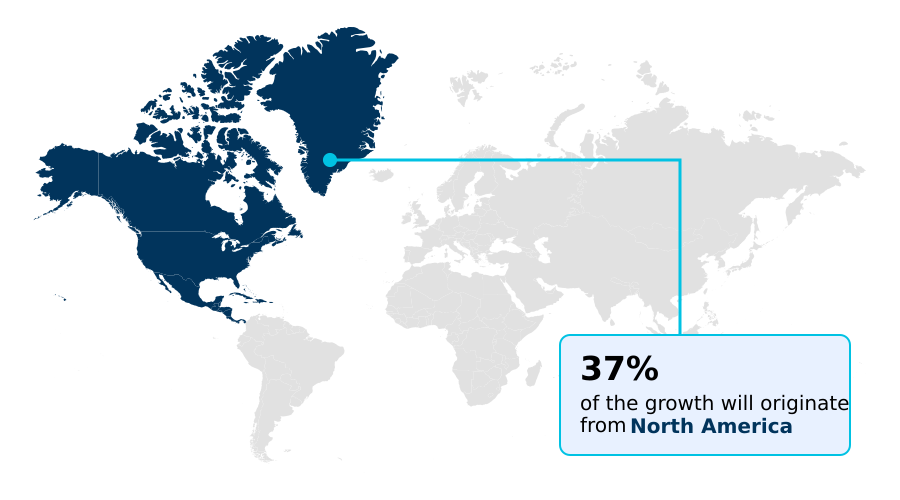
See How Aspiration Biopsy Needles Market Demand is Rising in North America Get Free Sample
The geographic landscape is defined by mature, high-value markets and rapidly emerging growth regions. North America commands the largest share, driven by high healthcare spending and early adoption of advanced imaging modalities and techniques like fine needle aspiration cytology.
The region contributes approximately 36.6% of the market's incremental growth. In contrast, Asia is the fastest-growing region, with a 7.9% growth rate, fueled by infrastructure development and expanding healthcare access in countries like China and India.
European markets, while robust, are navigating stringent regulations that influence product adoption.
Regional dynamics vary; for instance, advanced procedures for liver lesion diagnosis and pancreatic mass sampling are common in developed economies, while cost-effective chiba needle designs remain vital in emerging markets.
The increasing use of endobronchial ultrasound (ebus) for lung cancer staging and demand for specialized needles for bone marrow aspiration are global trends influencing diagnostic radiologist tools and purchasing decisions within ambulatory surgery center equipment contracts.
Market Dynamics
Our researchers analyzed the data with 2025 as the base year, along with the key drivers, trends, and challenges. A holistic analysis of drivers will help companies refine their marketing strategies to gain a competitive advantage.
- The evolution of diagnostic medicine is driving significant innovation in the aspiration biopsy needles market, moving beyond basic cytology to meet the demands of advanced molecular testing. The focus on improving diagnostic yield in fna biopsy is paramount, as clinicians seek to avoid the costs and patient anxiety associated with repeat procedures.
- This has spurred the development of technologies like the echogenic needle for better ultrasound visibility, which is critical for the safety protocols for fine needle aspiration. For complex cases, robotic guidance systems for lung biopsy and image fusion technology for difficult biopsies are becoming more prevalent, requiring specialized and compatible needles.
- The debate over comparing franseen versus chiba needle tips continues, with the choice often depending on the specific application, such as the best practice for thyroid nodule biopsy or eus-guided fine needle biopsy of pancreas. For procedures like percutaneous liver biopsy, developing techniques to prevent needle tract seeding and reducing complications are key research areas.
- The coaxial biopsy system for multiple samples has become standard for many interventions, enhancing efficiency. In the era of personalized medicine, ensuring fna sample adequacy for ngs analysis is a critical challenge, influencing needle design. Navigating mdr compliance for biopsy devices adds another layer of complexity for manufacturers.
- The cost-effectiveness of minimally invasive diagnostics is a major driver, influencing ambulatory setting biopsy needle selection and gpo negotiation for interventional supplies. This extends to specialized tools like ct-guided soft tissue biopsy needle types and advanced bone marrow aspiration needle systems, and even niche areas like biopsy needles for regenerative medicine applications.
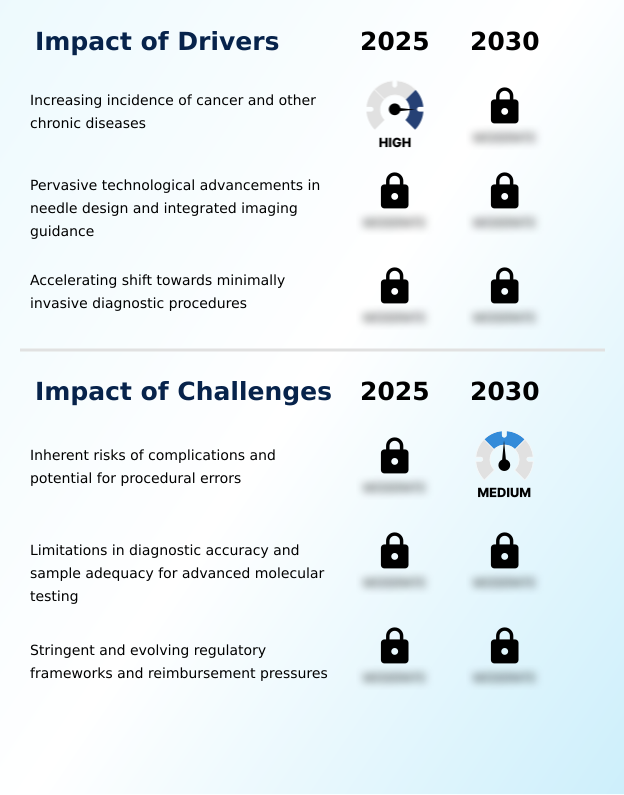
What are the key market drivers leading to the rise in the adoption of Aspiration Biopsy Needles Industry?
- The rising global incidence of cancer and other chronic diseases that require definitive diagnosis serves as the primary driver for market growth.
- Market growth is fundamentally driven by the increasing emphasis on minimally invasive diagnostics and continuous technological enhancement.
- The pervasive shift toward outpatient biopsy economics is a powerful catalyst, as procedures performed outside of main operating rooms can reduce healthcare costs by over 50%.
- This trend is supported by the adoption of point-of-care ultrasound (pocus) for immediate cytological evaluation.
- Innovations in echogenic needle technology, which can improve tip visibility by up to 80%, are critical for the success of ultrasound-guided biopsy, directly leading to diagnostic yield improvement and biopsy complication mitigation.
- These advancements ensure that percutaneous biopsy procedures for soft tissue sampling are safer and more effective, reinforcing their role as essential oncological diagnostic tools for early and accurate disease detection.
What are the market trends shaping the Aspiration Biopsy Needles Industry?
- A predominant market trend is the convergence of advanced imaging, robotics, and artificial intelligence in biopsy procedures. This integration is transforming interventions into highly precise, data-driven diagnostic tasks.
- Key trends are reshaping the diagnostic landscape, driven by technological convergence and the need for more precise data. The integration of robotic-assisted navigation and pre-procedural planning AI is enabling access to previously challenging targets, such as peripheral lung nodule access, with sub-millimeter precision. This pairs with real-time image fusion to enhance visualization.
- Concurrently, the rise of liquid biopsy complement testing is refining the diagnostic workflow. While not a replacement, it informs the need for tissue confirmation, elevating the importance of high-performance tools like advanced eus-fnb needle performance and specialty needle innovation. This synergy is critical for personalized medicine, where the quality of the biopsy for personalized medicine directly impacts treatment efficacy.
- These advancements are increasingly reflected in updated clinical practice guidelines, setting new standards for care.
What challenges does the Aspiration Biopsy Needles Industry face during its growth?
- The inherent risks of complications and the potential for procedural errors during biopsies present a significant challenge to market expansion.
- Significant challenges persist, primarily centered on sample quality and the complex regulatory environment. A critical issue is ensuring tissue samples are adequate for both histopathological analysis and demanding molecular profiling sample requirements, as a non-diagnostic rate of up to 20% with certain FNA procedures necessitates costly and invasive repeat biopsies. This directly impacts biopsy procedure reimbursement and pressures providers.
- Furthermore, navigating stringent medical device regulation (mdr) compliance and the fda 510(k) submission process adds substantial cost and time for manufacturers, with regulatory expenses having increased by over 15% for many firms.
- These hurdles can stifle innovation and affect the gpo procurement strategy of healthcare systems, which must balance cost with the need for advanced interventional radiology supplies to minimize risks like needle tract seeding.
Exclusive Technavio Analysis on Customer Landscape
The aspiration biopsy needles market forecasting report includes the adoption lifecycle of the market, covering from the innovator’s stage to the laggard’s stage. It focuses on adoption rates in different regions based on penetration. Furthermore, the aspiration biopsy needles market report also includes key purchase criteria and drivers of price sensitivity to help companies evaluate and develop their market growth analysis strategies.
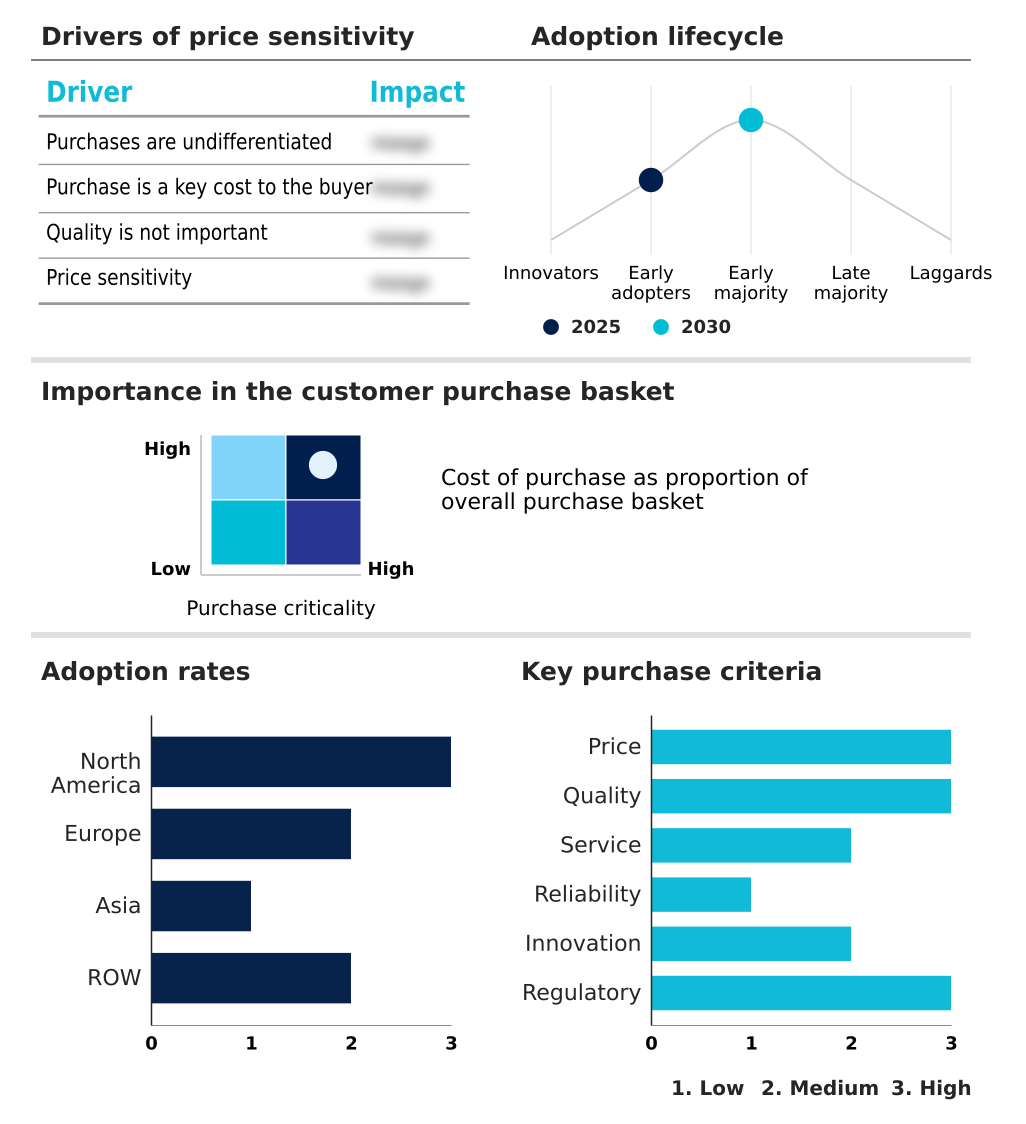
Customer Landscape of Aspiration Biopsy Needles Industry
Competitive Landscape
Companies are implementing various strategies, such as strategic alliances, aspiration biopsy needles market forecast, partnerships, mergers and acquisitions, geographical expansion, and product/service launches, to enhance their presence in the industry.
Argon Medical Devices Inc. - A specialized portfolio of soft tissue biopsy needles, featuring Chiba and Franseen designs, addresses critical requirements in minimally invasive diagnostics and interventional procedures.
The industry research and growth report includes detailed analyses of the competitive landscape of the market and information about key companies, including:
- Argon Medical Devices Inc.
- Becton Dickinson and Co.
- Boston Scientific Corp.
- Cardinal Health Inc.
- CONMED Corp
- Cook Group Inc.
- FUJIFILM Holdings Corp.
- Hologic Inc.
- INRAD Inc.
- IZI Medical Products
- Medtronic Plc
- Merit Medical Systems Inc.
- Mermaid Medical Group
- Olympus Corp.
- PAJUNK GmbH
- Ri.Mos Srl
- SOMATEX Medical GmbH
- Sterimed MD Pvt. Ltd.
- Stryker Corp.
- Teleflex Inc.
Qualitative and quantitative analysis of companies has been conducted to help clients understand the wider business environment as well as the strengths and weaknesses of key industry players. Data is qualitatively analyzed to categorize companies as pure play, category-focused, industry-focused, and diversified; it is quantitatively analyzed to categorize companies as dominant, leading, strong, tentative, and weak.
Recent Development and News in Aspiration biopsy needles market
- In September 2024, a leading medical device company is expected to launch a new endoscopic ultrasound-guided fine needle biopsy (EUS-FNB) device featuring a novel tip design engineered to improve tissue capture for next-generation sequencing.
- In November 2024, a major needle manufacturer and an AI imaging software firm may announce a strategic partnership to develop an integrated biopsy guidance solution that optimizes needle trajectory in real-time for robotic-assisted procedures.
- In January 2025, the US Food and Drug Administration could grant 510(k) clearance for a next-generation robotic bronchoscopy platform designed for peripheral lung nodule access, creating new demand for compatible aspiration needles.
- In April 2025, a large med-tech corporation is anticipated to acquire a specialized European startup known for its proprietary echogenic coating technology that enhances needle visibility under ultrasound.
Dive into Technavio’s robust research methodology, blending expert interviews, extensive data synthesis, and validated models for unparalleled Aspiration Biopsy Needles Market insights. See full methodology.
| Market Scope | |
|---|---|
| Page number | 290 |
| Base year | 2025 |
| Historic period | 2020-2024 |
| Forecast period | 2026-2030 |
| Growth momentum & CAGR | Accelerate at a CAGR of 6.7% |
| Market growth 2026-2030 | USD 350.8 million |
| Market structure | Fragmented |
| YoY growth 2025-2026(%) | 6.2% |
| Key countries | US, Canada, Mexico, Germany, UK, France, Italy, The Netherlands, Spain, Russia, China, India, Japan, South Korea, Indonesia, Thailand, Singapore, Australia, Brazil, South Africa, UAE, Saudi Arabia and Turkey |
| Competitive landscape | Leading Companies, Market Positioning of Companies, Competitive Strategies, and Industry Risks |
Research Analyst Overview
- The aspiration biopsy needles market is characterized by intense innovation aimed at improving clinical outcomes and procedural efficiency. The development of echogenic needle technology and specialized franseen needle tip and chiba needle designs are pivotal for enhancing diagnostic yield improvement in both ultrasound-guided biopsy and ct-guided intervention.
- A key boardroom consideration is the investment in tools that support next-generation sequencing (ngs) readiness and companion diagnostic testing, making molecular profiling sample quality a critical performance metric. Technologies like endoscopic ultrasound (eus) and endobronchial ultrasound (ebus) are expanding the scope of minimally invasive soft tissue sampling.
- The use of a coaxial biopsy system can reduce procedure times by over 20% in cases requiring multiple samples. However, manufacturers must navigate the risks of needle tract seeding and address the challenge of non-diagnostic sample rates. The evolution toward robotic-assisted navigation and real-time image fusion is creating demand for highly specialized needles.
- This trend is coupled with the need for better histopathological analysis and tissue architecture preservation, even from a smaller gauge needle design, reinforcing the industry's shift toward precision and data-driven cytological evaluation and interventional cytopathology.
What are the Key Data Covered in this Aspiration Biopsy Needles Market Research and Growth Report?
-
What is the expected growth of the Aspiration Biopsy Needles Market between 2026 and 2030?
-
USD 350.8 million, at a CAGR of 6.7%
-
-
What segmentation does the market report cover?
-
The report is segmented by Application (Tumor, and Wound), Product Type (Image-guided procedure, and Non-image guided procedure), End-user (Hospitals, Specialty clinics, and Others) and Geography (North America, Europe, Asia, Rest of World (ROW))
-
-
Which regions are analyzed in the report?
-
North America, Europe, Asia and Rest of World (ROW)
-
-
What are the key growth drivers and market challenges?
-
Increasing incidence of cancer and other chronic diseases, Inherent risks of complications and potential for procedural errors
-
-
Who are the major players in the Aspiration Biopsy Needles Market?
-
Argon Medical Devices Inc., Becton Dickinson and Co., Boston Scientific Corp., Cardinal Health Inc., CONMED Corp, Cook Group Inc., FUJIFILM Holdings Corp., Hologic Inc., INRAD Inc., IZI Medical Products, Medtronic Plc, Merit Medical Systems Inc., Mermaid Medical Group, Olympus Corp., PAJUNK GmbH, Ri.Mos Srl, SOMATEX Medical GmbH, Sterimed MD Pvt. Ltd., Stryker Corp. and Teleflex Inc.
-
Market Research Insights
- Market dynamics are increasingly shaped by the push for value-based healthcare models and greater procedural efficiency. The adoption of advanced biopsy techniques in outpatient settings demonstrates clear benefits; for example, streamlined ambulatory surgery center equipment and workflows can reduce procedural costs by over 40% compared to traditional inpatient surgical biopsies.
- This shift is supported by evolving biopsy procedure reimbursement policies that favor less invasive options. Furthermore, clinical practice guidelines are emphasizing the importance of tissue adequacy for genomics, driving demand for needles that improve pathology specimen acquisition.
- Innovations enhancing needle visibility have been shown to reduce the rate of non-diagnostic samples by up to 15%, directly impacting healthcare cost containment and improving patient outcomes through better biopsy complication mitigation.
We can help! Our analysts can customize this aspiration biopsy needles market research report to meet your requirements.
 RIA -
RIA - 
