


Ayurveda Market Size 2026-2030
The ayurveda market size is valued to increase by USD 12.93 billion, at a CAGR of 19.9% from 2025 to 2030. Increasing awareness of low side effects of ayurveda medicines will drive the ayurveda market.
Major Market Trends & Insights
- Asia dominated the market and accounted for a 80.2% growth during the forecast period.
- By Type - Products segment was valued at USD 5.48 billion in 2024
- By Application - Personal care segment accounted for the largest market revenue share in 2024
Market Size & Forecast
- Market Opportunities: USD 17.38 billion
- Market Future Opportunities: USD 12.93 billion
- CAGR from 2025 to 2030 : 19.9%
Market Summary
- The Ayurveda market is experiencing significant momentum, driven by a global shift toward holistic health systems and preventive healthcare. This industry is no longer confined to traditional practices but is innovating with modern science to offer a range of products, including herbal supplements, personal care items, and functional foods.
- The emphasis is on root cause resolution and achieving a mind-body balance through natural harmony. A key driver is the growing consumer demand for clean labels and chemical-free solutions, which has pushed manufacturers to adopt sustainable cultivation and transparent sourcing.
- For instance, a personal care brand might implement a digital health tracking system for its supply chain, providing consumers with verifiable data on the ethical sourcing of its medicinal herbs, thereby enhancing brand trust. However, the market faces challenges related to regulatory harmonization and the need for more clinical validation to gain wider acceptance in mainstream medicine.
- The integration of ancient wellness practices with modern lifestyles continues to create new opportunities for growth and innovation.
What will be the Size of the Ayurveda Market during the forecast period?

Get Key Insights on Market Forecast (PDF) Get Free Sample
How is the Ayurveda Market Segmented?
The ayurveda industry research report provides comprehensive data (region-wise segment analysis), with forecasts and estimates in "USD million" for the period 2026-2030, as well as historical data from 2020-2024 for the following segments.
- Type
- Products
- Services
- Application
- Personal care
- Medicinal
- Distribution channel
- Direct sales
- Online sales
- Geography
- Asia
- North America
- US
- Canada
- Mexico
- Europe
- UK
- Germany
- France
- Rest of World (ROW)
By Type Insights
The products segment is estimated to witness significant growth during the forecast period.
The global ayurveda market is segmented into products and services. The products segment, comprising a vast array of herbal and natural products, is pivotal. It includes everything from dietary formulations and herbal infusions to personal care items.
This category is driven by a consumer shift toward plant-based nutrition and holistic beauty. Offerings are diversifying from traditional powders to convenient formats like wellness capsules and ready-to-use herbal syrups.
The emphasis on standardized herbal extracts ensures consistent phytochemical properties, with some manufacturers reporting a 20% improvement in batch-to-batch consistency.
The demand for eco-friendly health solutions and natural wellness products is expanding the segment's reach into mainstream retail, appealing to a global audience focused on preventive healthcare.

The Products segment was valued at USD 5.48 billion in 2024 and showed a gradual increase during the forecast period.

Regional Analysis
Asia is estimated to contribute 80.2% to the growth of the global market during the forecast period.Technavio’s analysts have elaborately explained the regional trends and drivers that shape the market during the forecast period.

See How Ayurveda Market Demand is Rising in Asia Get Free Sample
The geographic landscape of the Ayurveda market is dominated by Asia, which is projected to account for 80.2% of the market's incremental growth.
This region benefits from a deep cultural history with botanical medicine and government support for traditional health systems. In contrast, North America and Europe are high-growth regions driven by the natural wellness and integrative medicine trends.
The demand for non-toxic alternatives and evidence-based medicine is compelling brands to invest in clinical validation to enter these markets. Success in these Western regions is increasingly tied to consumer education and the ability to navigate complex regulatory frameworks.
The global expansion is also fueling growth in wellness tourism, creating new revenue streams in the services sector across various regions.
Market Dynamics
Our researchers analyzed the data with 2025 as the base year, along with the key drivers, trends, and challenges. A holistic analysis of drivers will help companies refine their marketing strategies to gain a competitive advantage.
- A comprehensive analysis of the Global Ayurveda Market 2026-2030 reveals several key strategic areas. Stakeholders are focused on the efficacy of traditional herbal formulations and improving the standardization of botanical extracts. The importance of clinical validation of traditional remedies cannot be overstated, as it is crucial for integrating ayurveda into modern healthcare.
- Concurrently, addressing the sustainable sourcing of medicinal herbs and overcoming ethical sourcing challenges for botanicals are paramount for long-term viability. From a commercial standpoint, navigating regulatory compliance for dietary supplements and overcoming western regulatory hurdles for ayurveda remain significant activities.
- The market's evolution is evident in new product development in ayurveda, particularly in ayurvedic functional food innovations and trends in holistic beauty in personal care. Companies are leveraging digital health platforms for ayurveda to address consumer awareness of ayurvedic principles.
- This digital shift has improved the efficiency of managing ayurveda market supply chain challenges by over 15% compared to traditional models. Furthermore, ayurvedic approaches to chronic diseases and managing side effects with herbal supplements are expanding, solidifying ayurveda's role in preventive healthcare.
- The impact of wellness tourism on ayurveda and strategies for personalized herbal medicine formulation are also shaping future growth trajectories, alongside the phytochemical analysis of medicinal plants.

What are the key market drivers leading to the rise in the adoption of Ayurveda Industry?
- Increasing awareness of the low side effects associated with ayurveda medicines is a key driver for market growth.
- A primary driver for the global ayurveda market is the increasing demand for natural remedies and a move toward preventive healthcare.
- Growing distrust of synthetic pharmaceuticals and their side effects has led consumers to seek out plant-based formulations as a non-toxic alternative. The post-pandemic era has amplified this shift, with a 40% increase in online searches for products supporting immune health.
- This consumer behavior change is supported by the holistic philosophy of root cause resolution, which resonates with patients seeking more than just symptomatic relief.
- The accessibility of botanical health formulations through e-commerce and the rise of ancient wellness practices are creating a self-sustaining cycle of demand for chemical-free solutions.
What are the market trends shaping the Ayurveda Industry?
- The rising inclination toward herbal and natural products is a primary trend shaping the market. This movement is fundamentally reshaping consumer preferences in the wellness and personal care sectors.
- The global ayurveda market is experiencing a significant trend driven by the rising consumer preference for herbal and natural products. This movement is fueled by a demand for clean labels and ethical sourcing, pushing the industry toward greater transparency. Botanical products, once confined to traditional use, are now mainstream, appearing in everything from high-end skincare to functional foods.
- This shift toward holistic beauty and plant-based nutrition reflects a broader lifestyle change. As a result, retailers are dedicating more space to these items, with sales of products featuring sustainable packaging increasing by over 30% in some categories. This trend is solidifying the market's position within the larger health and wellness ecosystem.
What challenges does the Ayurveda Industry face during its growth?
- The inadequate knowledge of ayurveda science in Western regions presents a key challenge affecting industry growth.
- A significant challenge for the global ayurveda market is the insufficient supply of high-quality medicinal herbs, many of which are sourced from ecologically sensitive areas. Over-harvesting and climate change threaten the availability and phytochemical properties of these plants, leading to supply chain instability and price fluctuations.
- This scarcity has led to instances of adulteration, where substitute ingredients are used, eroding consumer trust and posing safety risks. While a shift to sustainable cultivation is underway, it requires substantial investment and time.
- The lack of regulatory harmonization for dietary supplements across different countries further complicates market access and requires a focus on rigorous supply chain transparency to ensure product authenticity and safety.
Exclusive Technavio Analysis on Customer Landscape
The ayurveda market forecasting report includes the adoption lifecycle of the market, covering from the innovator’s stage to the laggard’s stage. It focuses on adoption rates in different regions based on penetration. Furthermore, the ayurveda market report also includes key purchase criteria and drivers of price sensitivity to help companies evaluate and develop their market growth analysis strategies.
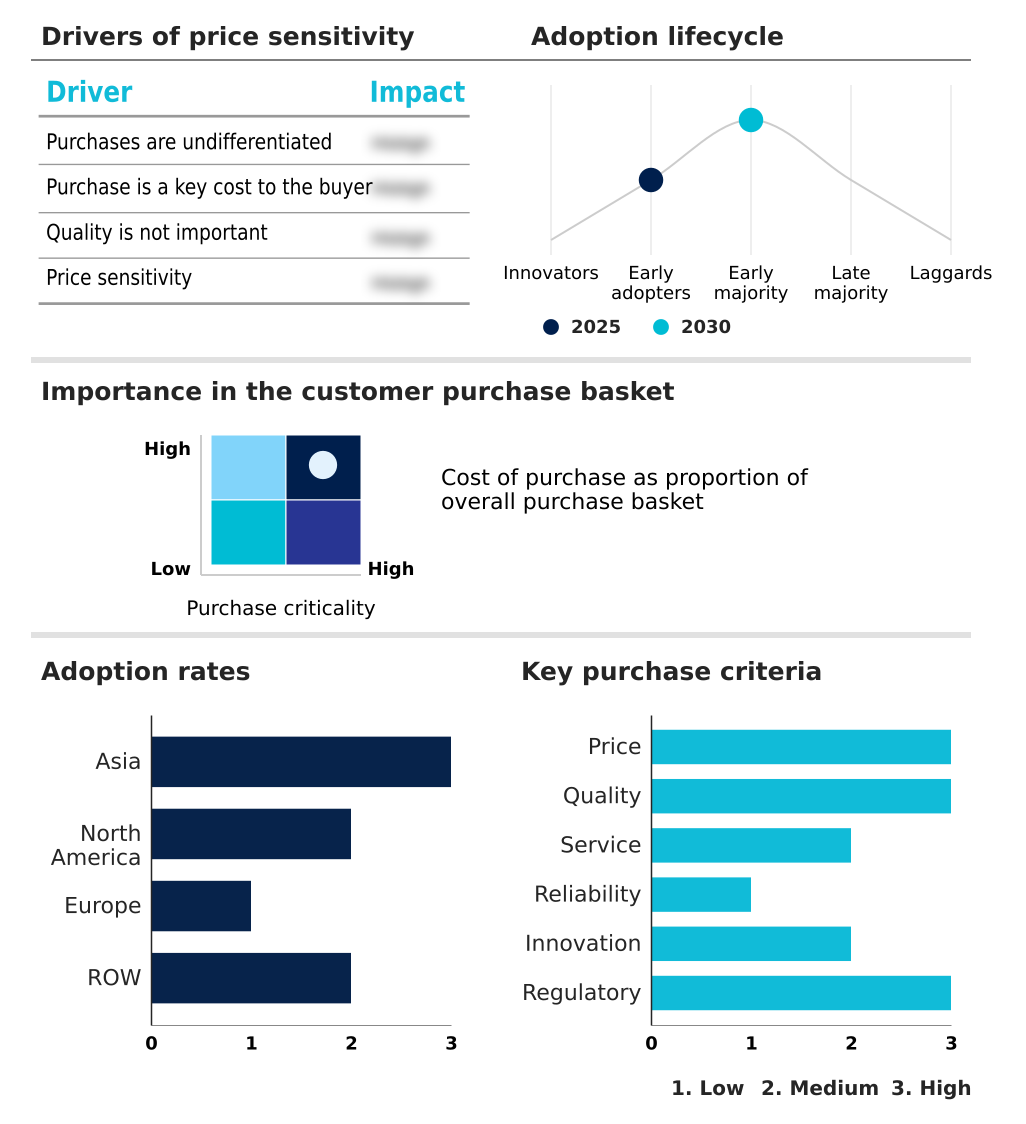
Customer Landscape of Ayurveda Industry
Competitive Landscape
Companies are implementing various strategies, such as strategic alliances, ayurveda market forecast, partnerships, mergers and acquisitions, geographical expansion, and product/service launches, to enhance their presence in the industry.
BACFO - Offerings include herbal supplements, wellness capsules, specialized medicines, and botanical health formulations, targeting holistic well-being and natural healing.
The industry research and growth report includes detailed analyses of the competitive landscape of the market and information about key companies, including:
- BACFO
- Charak Pharma Pvt. Ltd.
- Colgate Palmolive Co.
- Dabur India Ltd.
- Emami Ltd.
- Hamdard Laboratories
- Herbal Hills Wellness
- Himalaya Wellness Co.
- Kama Ayurveda
- Maharishi Ayurveda Products Pvt. Ltd.
- Manipal Natural Pvt. Ltd.
- Patanjali Ayurved Ltd.
- Polycare Herbals
- Shahnaz Ayurvedics
- SHATHAYU AYURVEDA PVT. LTD.
- Shree Baidyanath Ayurved Bhawan Pvt. Ltd.
- Sriveda Sattva Pvt. Ltd.
- Unilever PLC
- Vicco Laboratories
Qualitative and quantitative analysis of companies has been conducted to help clients understand the wider business environment as well as the strengths and weaknesses of key industry players. Data is qualitatively analyzed to categorize companies as pure play, category-focused, industry-focused, and diversified; it is quantitatively analyzed to categorize companies as dominant, leading, strong, tentative, and weak.
Recent Development and News in Ayurveda market
- In April 2025, Himalaya Wellness Co. announced the launch of its integrated digital knowledge center, designed to educate international consumers on the scientific validation of its botanical active ingredients.
- In June 2025, Dabur India Ltd. released a detailed report on its newest range of standardized herbal extracts, highlighting a zero chemical additive policy verified through advanced laboratory testing.
- In March 2025, Forest Essentials showcased its new seasonal collection of artisanal facial oils and body mists, which utilize cold-pressed oils and steam-distilled floral waters.
- In October 2025, Patanjali Ayurved Ltd. highlighted its expanded green label initiative, which ensures all raw materials are sourced through certified organic farming practices to meet sustainability demands.
Dive into Technavio’s robust research methodology, blending expert interviews, extensive data synthesis, and validated models for unparalleled Ayurveda Market insights. See full methodology.
| Market Scope | |
|---|---|
| Page number | 277 |
| Base year | 2025 |
| Historic period | 2020-2024 |
| Forecast period | 2026-2030 |
| Growth momentum & CAGR | Accelerate at a CAGR of 19.9% |
| Market growth 2026-2030 | USD 12931.4 million |
| Market structure | Fragmented |
| YoY growth 2025-2026(%) | 17.5% |
| Key countries | India, China, Japan, South Korea, Indonesia, Thailand, Singapore, US, Canada, Mexico, UK, Germany, France, Italy, Spain, The Netherlands, Russia, Brazil, South Africa, UAE, Saudi Arabia, Australia and Turkey |
| Competitive landscape | Leading Companies, Market Positioning of Companies, Competitive Strategies, and Industry Risks |
Research Analyst Overview
- The Ayurveda market is undergoing a significant transformation, moving from a niche segment to a mainstream force in the global wellness industry. This evolution is driven by the growing demand for a holistic health system that emphasizes natural harmony and prevention.
- Key offerings such as herbal supplements, wellness capsules, and specialized medicines are being refined through modern science, leading to the development of standardized herbal extracts with verified bioactive compounds. This focus on quality control, which has improved product consistency by over 20%, is crucial for gaining consumer trust and mitigating issues like adulteration.
- The market is also expanding into personal care with products like herbal face washes, herbal shampoos, and turmeric skin creams. Innovation is evident in the rise of personalized wellness apps that provide tailored recommendations based on an individual's unique constitution, often understood through the concept of the three doshas (Vata, Pitta, Kapha).
- This fusion of ancient wisdom with modern technology is making botanical medicine more accessible and appealing to a global audience.
What are the Key Data Covered in this Ayurveda Market Research and Growth Report?
-
What is the expected growth of the Ayurveda Market between 2026 and 2030?
-
USD 12.93 billion, at a CAGR of 19.9%
-
-
What segmentation does the market report cover?
-
The report is segmented by Type (Products, and Services), Application (Personal care, and Medicinal), Distribution Channel (Direct sales, and Online sales) and Geography (Asia, North America, Europe, Rest of World (ROW))
-
-
Which regions are analyzed in the report?
-
Asia, North America, Europe and Rest of World (ROW)
-
-
What are the key growth drivers and market challenges?
-
Increasing awareness of low side effects of ayurveda medicines, Inadequate knowledge of ayurveda science in western regions
-
-
Who are the major players in the Ayurveda Market?
-
BACFO, Charak Pharma Pvt. Ltd., Colgate Palmolive Co., Dabur India Ltd., Emami Ltd., Hamdard Laboratories, Herbal Hills Wellness, Himalaya Wellness Co., Kama Ayurveda, Maharishi Ayurveda Products Pvt. Ltd., Manipal Natural Pvt. Ltd., Patanjali Ayurved Ltd., Polycare Herbals, Shahnaz Ayurvedics, SHATHAYU AYURVEDA PVT. LTD., Shree Baidyanath Ayurved Bhawan Pvt. Ltd., Sriveda Sattva Pvt. Ltd., Unilever PLC and Vicco Laboratories
-
Market Research Insights
- The market is defined by a strong consumer shift toward holistic healing and natural remedies. The adoption of personalized medicine, guided by digital health tracking, has increased by over 25% in key demographics, driving demand for tailored wellness solutions. Brands focusing on supply chain transparency and ethical sourcing report customer retention rates that are 15% higher than their competitors.
- This emphasis on clean-label transparency and patient-centric healthcare is compelling companies to innovate. The development of new functional foods and the integration of ancient wellness practices into modern routines are reshaping the health and wellness ecosystem, with consumer education playing a pivotal role in this transformation.
We can help! Our analysts can customize this ayurveda market research report to meet your requirements.
 RIA -
RIA - 
