
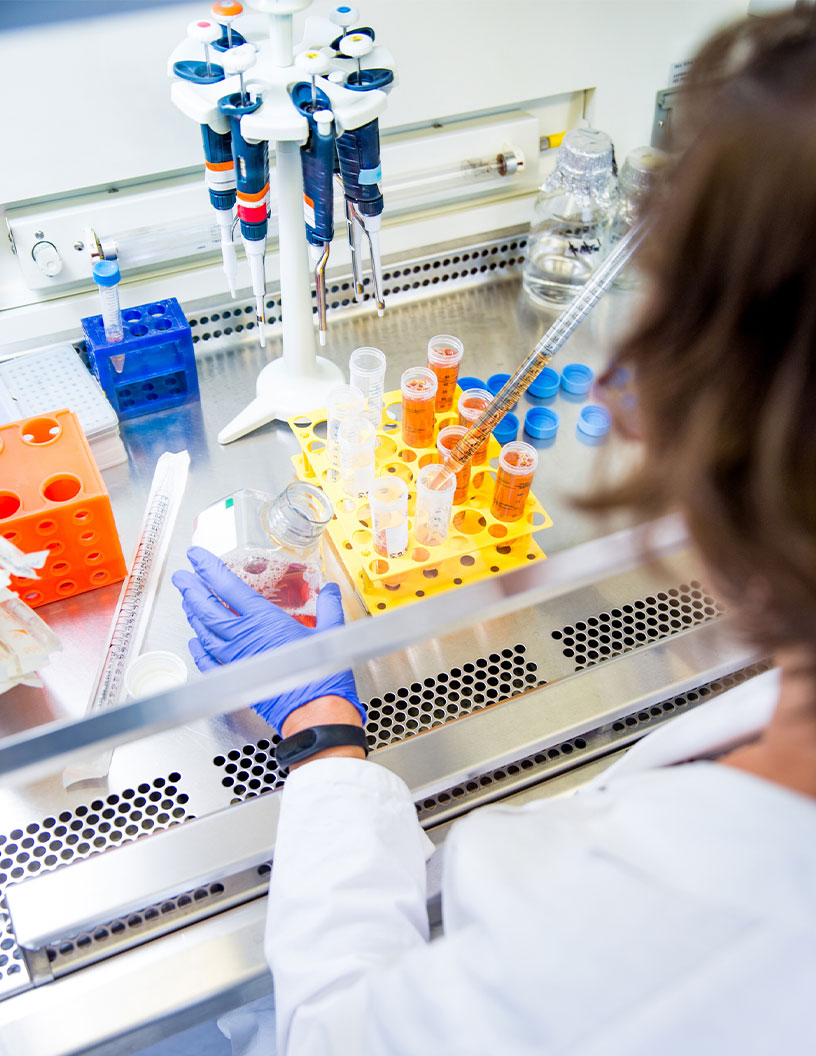


Biological Safety Cabinet Market Size 2024-2028
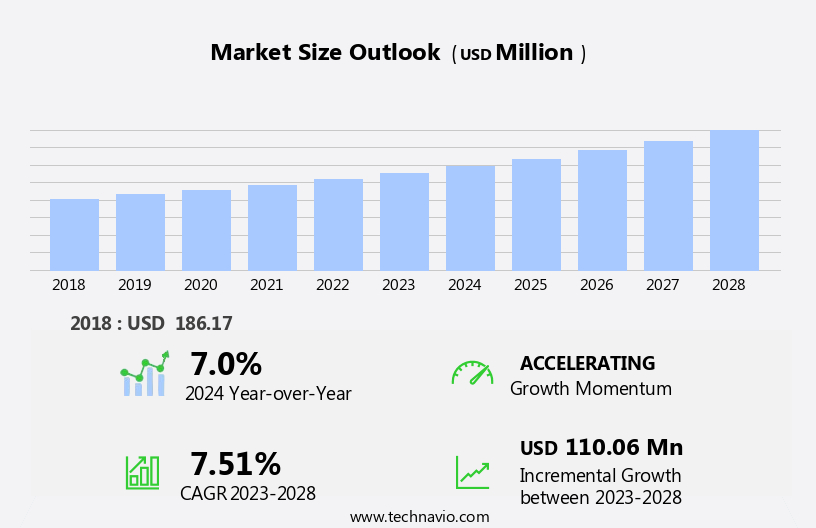
The biological safety cabinet market size is forecast to increase by USD 110.06 million at a CAGR of 7.51% between 2023 and 2028.
What will be the Size of the Biological Safety Cabinet Market During the Forecast Period?
How is this Biological Safety Cabinet Industry segmented and which is the largest segment?
The biological safety cabinet industry research report provides comprehensive data (region-wise segment analysis), with forecasts and estimates in "USD million" for the period 2024-2028, as well as historical data from 2018-2022 for the following segments.
- End-user
- Pharmaceutical and biopharmaceutical
- Diagnostic and testing laboratories
- Academic and research organizations
- Type
- Class II
- Class I
- Class III
- Geography
- North America
- US
- Europe
- Germany
- UK
- Asia
- China
- Japan
- Rest of World (ROW)
- North America
By End-user Insights
The pharmaceutical and biopharmaceutical segment is estimated to witness significant growth during the forecast period. Biological safety cabinets are essential components in pharmaceutical diagnostics maintenance, ensuring the safe handling of biological agents in research and production settings. With the increasing use of biotechnology and volatile chemicals in pharmaceutical and biopharmaceutical industries, the need for containment solutions has become crucial. These cabinets provide a controlled environment, shielding personnel, biologics, and products from contamination. The cabinets are designed with advanced safety equipment, such as HEPA filters, laminar airflow, ultraviolet lamps, and automatic doors, adhering to international standards and ISO certification. They offer four biosafety levels (BSL), including BSL-1, BSL-2, BSL-3, and BSL-4, with BSL-4 providing the highest level of containment for handling the most hazardous agents.
Biological safety cabinets play a vital role in preventing the spread of chronic diseases, such as cancer, respiratory diseases, Alzheimer's, and communicable diseases, including HIV/AIDS, malaria, viral hepatitis B and C, sepsis, sexually transmitted diseases, and acute diarrheal diseases. Despite their importance, these cabinets come with high costs and market concentration, making investment a significant consideration for research laboratories and biotechnology companies.
Get a glance at the market report of various segments Request Free Sample
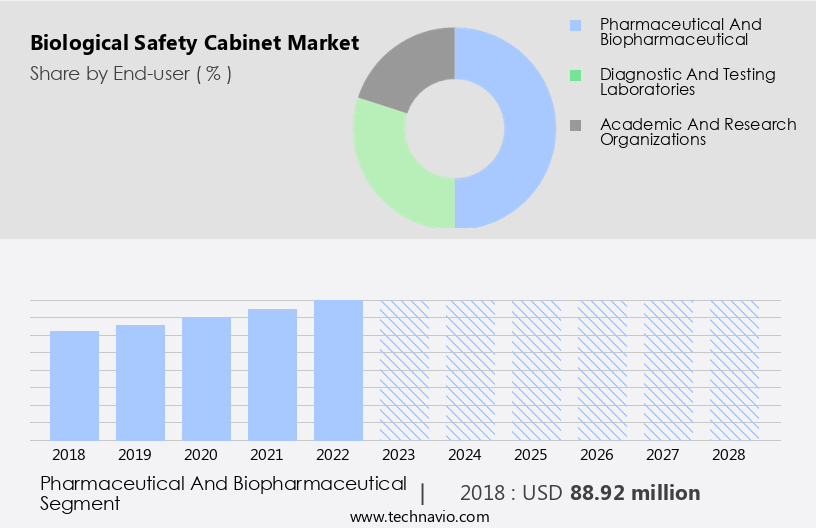
The Pharmaceutical and biopharmaceutical segment was valued at USD 88.92 million in 2018 and showed a gradual increase during the forecast period.
Regional Analysis
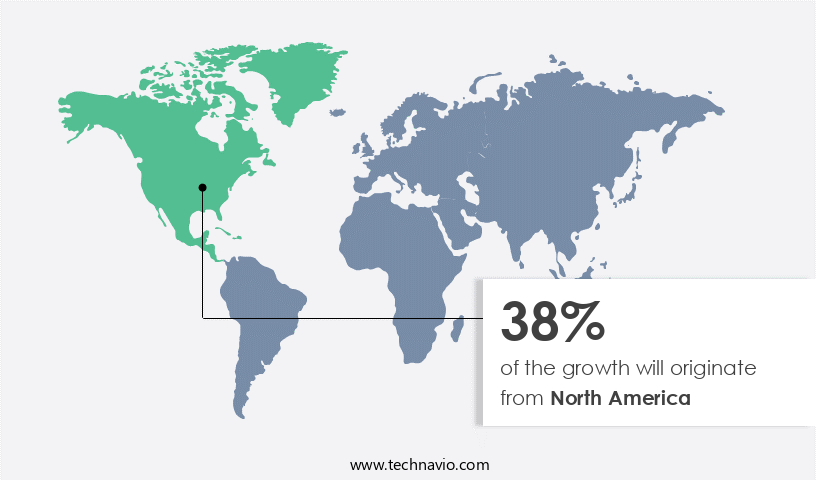
North America is estimated to contribute 38% to the growth of the global market during the forecast period. Technavio’s analysts have elaborately explained the regional trends and drivers that shape the market during the forecast period.
For more insights on the market size of various regions, Request Free Sample
The Biological Safety Cabinet (BSC) market in North America is significant, driven by the growing demand from industries such as pharmaceuticals, diagnostics, and research for safe and controlled environments in response to increasing prevalence of diseases, both infectious and non-infectious. Chronic conditions like cancer, respiratory diseases including Alzheimer's, and communicable diseases such as influenza, hepatitis A, B, HIV, measles, malaria, and tuberculosis, are on the rise in North America. For instance, influenza, which is prevalent In the US during November to February, necessitates increased diagnostic testing, fueling the demand for BSCs. Advanced safety equipment features, such as HEPA filters, laminar airflow, exhausts, ultraviolet lamps, and automatic doors, ensure microbiological quality and patient safety.
International standards, including ISO certification, further ensure efficacy and compliance. The high costs associated with these cabinets and market concentration among key players pose challenges. However, regional expansion and technological advancements, including UV sterilization, will continue to drive growth. End-users, including biotechnology and research laboratories, prioritize investment In these advanced technologies due to their role in drug and vaccine development, patient safety, and morbidity and mortality reduction.
Market Dynamics
Our researchers analyzed the data with 2023 as the base year, along with the key drivers, trends, and challenges. A holistic analysis of drivers will help companies refine their marketing strategies to gain a competitive advantage.
What are the key market drivers leading to the rise In the adoption of Biological Safety Cabinet Industry?
- Increasing risk of infectious disease is the key driver of the market.The rising prevalence of chronic diseases, including cancer, respiratory diseases, Alzheimer's, and communicable diseases such as HIV/AIDS, malaria, viral hepatitis B and C, sepsis, gonorrhea, syphilis, acute diarrheal diseases, and others, has led to an increased demand for advanced safety equipment in research laboratories. Biological safety cabinets, which utilize HEPA filters, laminar airflow, and exhausts, play a crucial role in maintaining microbiological quality during the development of FDA-approved drugs, vaccines, and biologics. International standards, such as ISO certification, ensure the efficacy and patient safety of these products. The use of ultraviolet lamps and automatic doors further enhances the safety features of these ventilated cabinets.
The market for biological safety cabinets is driven by the increasing global deaths due to non-communicable diseases and the need for high-cost, Class II segment equipment to handle volatile chemicals and radionuclides. Market concentration is moderate, with key players including Type A and Type B cabinets from manufacturers like Esco Micro Pte. The Class I segment caters to lower containment requirements. The buying behavior of customers is influenced by factors such as the need for advanced technologies to address the challenges of volatile toxic chemicals, the increasing investment in biotechnology research, and regional expansion. End-use insights reveal that the market is primarily driven by the pharmaceutical industry and research institutions.
The market is expected to grow as health interventions continue to evolve to address the morbidity and mortality associated with these diseases. The FDA's focus on patient safety and the HIV/AIDS Fund's commitment to disease prevention further underscores the importance of maintaining a clean and contamination-free environment in research and development activities.
What are the market trends shaping the Biological Safety Cabinet market?
- Increasing demand for custom made biological safety cabinets is the upcoming market trend.Custom-made biological safety cabinets cater to the unique needs of laboratories, providing the necessary functionality, flexibility, and performance for various pharmaceutical, life sciences, and research applications. The growing complexity of these fields necessitates specialized containment solutions, with regulatory compliance and biosafety becoming increasingly important. The emergence of infectious diseases, such as COVID-19, Ebola, and Zika, further underscores the significance of safety measures in laboratory environments. Advanced features like touch screens, ultraviolet (UV) germicidal irradiation, remote monitoring capabilities, and energy efficiency enhance the capabilities of custom-made biological safety cabinets. International standards, such as ISO certification, ensure the efficacy, patient safety, and morbidity/mortality reduction In the production of FDA-approved drugs, biologics, and vaccines.
The market for these cabinets is driven by the increasing prevalence of chronic diseases, particularly among the geriatric population, and the need for health interventions addressing both communicable and non-communicable diseases. Volatile chemicals and radionuclides require additional safety considerations, further expanding the market for advanced safety equipment. Market concentration is high, with key players focusing on product innovation and regional expansion to cater to the diverse needs of customers.
What challenges does the Biological Safety Cabinet Industry face during its growth?
- High cost of biological safety cabinets and installation is a key challenge affecting the industry growth.Biological safety cabinets are essential equipment in research laboratories for protecting both the experimenter and the environment from contamination during the handling of chronic diseases-related samples, volatile chemicals, and other hazardous substances. These cabinets utilize advanced safety features such as HEPA filters, laminar airflow, and ultraviolet lamps to maintain microbiological quality and ensure patient safety. However, their high costs, which range from USD1,000 to over USD3,000, and the substantial operational expenses for energy consumption, maintenance, and replacement parts, hinder their widespread adoption in various industries. International standards, including ISO certification, set stringent requirements for the design and operation of biological safety cabinets.
The Class II segment, which includes Type A and Type B cabinets, is the most commonly used due to its versatility and ability to handle a wide range of applications. The Class I segment is designed for handling lower levels of contamination and is suitable for handling non-volatile, non-toxic materials. The increasing prevalence of chronic diseases, such as cancer, respiratory diseases, Alzheimer's, and communicable diseases like HIV/AIDS, Malaria, and viral hepatitis B and C, necessitates the use of advanced safety equipment like biological safety cabinets. Additionally, the development of FDA-approved drugs, vaccines, and biologics requires stringent adherence to quality control measures, further increasing the demand for these cabinets.
End-users' buying behavior is influenced by factors such as efficacy, morbidity, and mortality. The global deaths due to non-communicable diseases are on the rise, necessitating the need for effective health interventions. The market for biological safety cabinets is expected to expand regionally due to the increasing focus on research and development in various industries, including biotechnology and pharmaceuticals. Despite the high costs, investment in biological safety cabinets is crucial for ensuring the safety and efficacy of drugs, biologics, and other research applications. The market is concentrated, with a few key players dominating the scene. Advanced technologies, such as automatic doors, UV sterilization, and Class III cabinets for handling radionuclides and volatile toxic chemicals, are expected to drive market growth.
Exclusive Customer Landscape
The biological safety cabinet market forecasting report includes the adoption lifecycle of the market, covering from the innovator’s stage to the laggard’s stage. It focuses on adoption rates in different regions based on penetration. Furthermore, the biological safety cabinet market report also includes key purchase criteria and drivers of price sensitivity to help companies evaluate and develop their market growth analysis strategies.
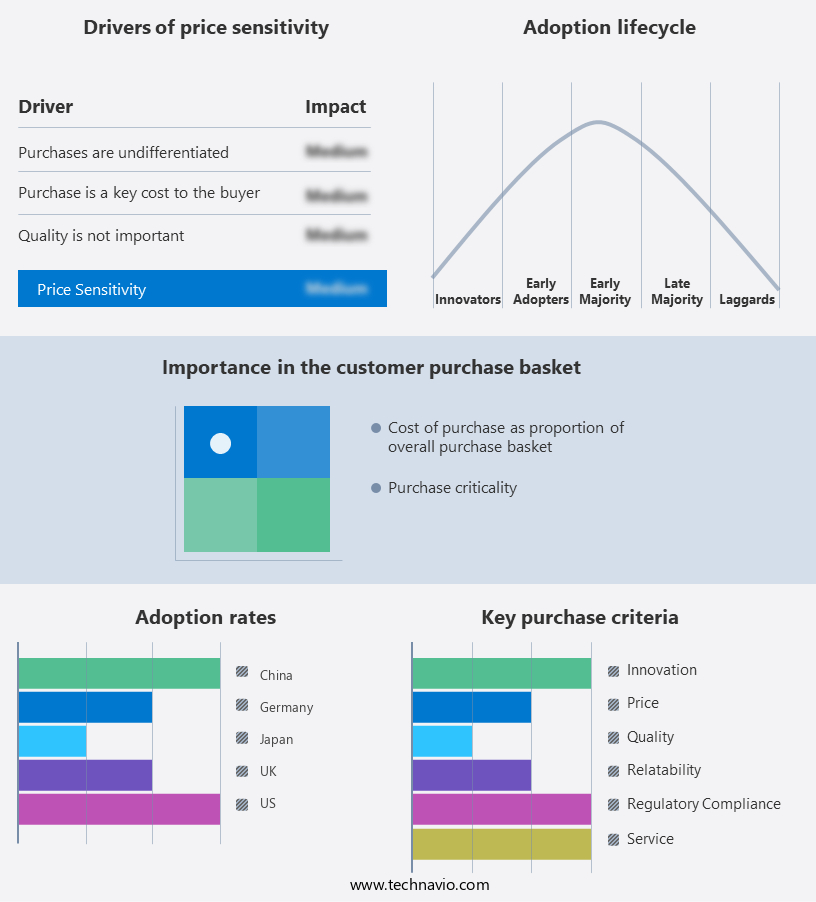
Customer Landscape
Key Companies & Market Insights
Companies are implementing various strategies, such as strategic alliances, biological safety cabinet market forecast, partnerships, mergers and acquisitions, geographical expansion, and product/service launches, to enhance their presence In the industry.
Air Science USA LLC - The company provides a range of biological safety cabinets, including the Purair BIO model. This cabinet is distinguished by its single EC blower motor, ensuring user-friendly operation, dependability, and cost efficiency. The motor's design enhances airflow effectiveness, maintaining optimal working conditions for researchers and reducing energy consumption. Additionally, the cabinet's construction adheres to stringent safety standards, ensuring containment of hazardous materials and protecting users from potential contaminants. With its robust design and advanced features, the Purair BIO biological safety cabinet supports scientific research applications requiring stringent containment and safety measures.
The industry research and growth report includes detailed analyses of the competitive landscape of the market and information about key companies, including:
- Air Science USA LLC
- Azbil Corp.
- Biobase Biodusty Shandong Co. Ltd.
- Bionics Scientific Technologies Pvt. Ltd.
- CRUMA
- Esco Micro Pte. Ltd.
- Germfree
- Haier Biomedical
- Helios Technologies Inc.
- Kewaunee Scientific Corp.
- Labconco Corp.
- LaboGene AS
- LAMSYSTEMS CC
- NuAire Inc.
- Patel Scientific Instruments Pvt. Ltd.
- Stericox India Pvt. Ltd.
- STERILE TECH INDIA
- The Baker Co.
- Thermo Fisher Scientific Inc.
- BERNER International GmbH
Qualitative and quantitative analysis of companies has been conducted to help clients understand the wider business environment as well as the strengths and weaknesses of key industry players. Data is qualitatively analyzed to categorize companies as pure play, category-focused, industry-focused, and diversified; it is quantitatively analyzed to categorize companies as dominant, leading, strong, tentative, and weak.
Research Analyst Overview
The market encompasses a range of containment workstations designed to protect both the operator and the environment from potential biohazards. These cabinets utilize advanced safety equipment such as HEPA filters, laminar airflow, and ultraviolet lamps to maintain a sterile environment. The demand for biological safety cabinets is driven by the increasing prevalence of chronic diseases, particularly among the geriatric population, and the need to handle volatile chemicals in various industries. International standards, such as ISO certification, ensure the quality and safety of these products. The market for biological safety cabinets is diverse, with applications in biotechnology, research laboratories, and various end-use industries.
The market is segmented into Class I, II, and III, based on the level of containment required. Type A and Type B are subcategories within Class II. Class I cabinets provide the least amount of containment, while Class III cabinets offer the highest level of containment. Class I cabinets are typically used for handling non-viable materials, while Class II and III cabinets are used for handling viable microorganisms and radioactive materials, respectively. The market for biological safety cabinets is characterized by high costs and market concentration. ESCO Micro Pte Ltd, among others, are key players In the market.
Advanced technologies, such as automatic doors and UV sterilization, are driving innovation and differentiation In the market. The use of biological safety cabinets is essential In the production of FDA-approved drugs and biologics, as well as in vaccine development and the handling of communicable diseases. The market for biological safety cabinets is expected to grow due to the increasing global burden of non-communicable and communicable diseases. The market dynamics of biological safety cabinets are influenced by various factors, including buying behavior, health interventions, and microbiological quality. The high costs associated with these cabinets may limit their adoption in certain markets, but the growing importance of patient safety and efficacy in healthcare is driving demand.
The market for biological safety cabinets is also influenced by regulatory bodies such as the EMA and the FDA, which set standards for the production and use of these products. The market is expected to continue expanding, particularly in regions with growing biotechnology industries and a high prevalence of chronic diseases. In summary, the market is a critical segment of the healthcare industry, providing essential containment solutions for handling biohazards in various industries. The market is driven by the growing prevalence of chronic diseases, the need to handle volatile chemicals, and regulatory requirements. Advanced technologies and market concentration are key factors influencing the market dynamics.
|
Market Scope |
|
|
Report Coverage |
Details |
|
Page number |
162 |
|
Base year |
2023 |
|
Historic period |
2018-2022 |
|
Forecast period |
2024-2028 |
|
Growth momentum & CAGR |
Accelerate at a CAGR of 7.51% |
|
Market growth 2024-2028 |
USD 110.06 million |
|
Market structure |
Fragmented |
|
YoY growth 2023-2024(%) |
7.0 |
|
Key countries |
US, Germany, UK, China, and Japan |
|
Competitive landscape |
Leading Companies, Market Positioning of Companies, Competitive Strategies, and Industry Risks |
What are the Key Data Covered in this Biological Safety Cabinet Market Research and Growth Report?
- CAGR of the Biological Safety Cabinet industry during the forecast period
- Detailed information on factors that will drive the growth and forecasting between 2024 and 2028
- Precise estimation of the size of the market and its contribution of the industry in focus to the parent market
- Accurate predictions about upcoming growth and trends and changes in consumer behaviour
- Growth of the market across North America, Europe, Asia, and Rest of World (ROW)
- Thorough analysis of the market’s competitive landscape and detailed information about companies
- Comprehensive analysis of factors that will challenge the biological safety cabinet market growth of industry companies
We can help! Our analysts can customize this biological safety cabinet market research report to meet your requirements.
 RIA -
RIA - 
