



Bionic Contact Lenses Market Size 2025-2029
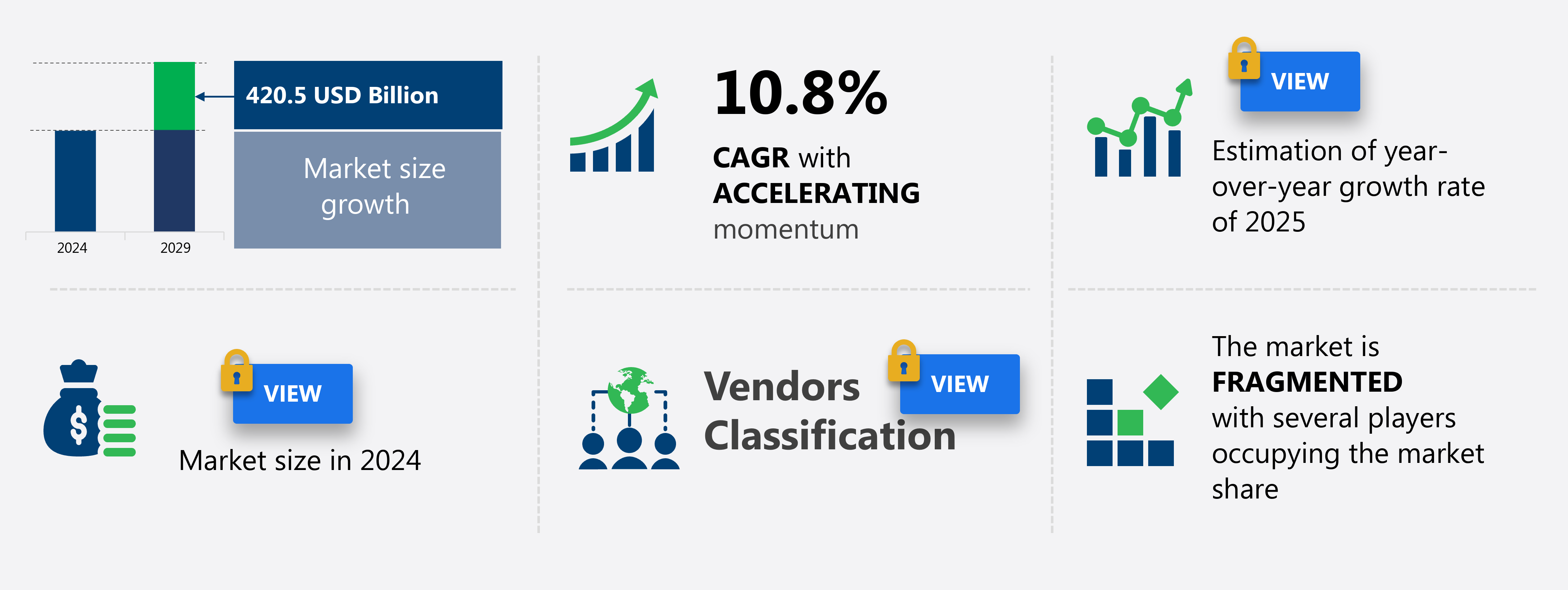
The bionic contact lenses market is projected to increase by USD 0.40 billion, exhibiting a CAGR of approximately 10.8% during the forecast period. Exact market valuation details are available in the complete report. The global bionic contact lenses market is experiencing significant growth, primarily driven by increasing technological advancements and a growing aging population. These lenses, designed to augment vision, are finding increased adoption in medical and consumer applications. The demand for advanced vision correction and therapeutic solutions is a major catalyst. The trend towards integrating augmented reality (AR) and virtual reality (VR) capabilities into contact lenses is also shaping the market, offering enhanced visual experiences and innovative functionalities. These developments are expected to drive significant growth in the bionic contact lenses market over the forecast period.
To access the full market forecast and comprehensive analysis, Buy Now
How is this market segmented?
The market research report provides comprehensive data (region-wise segment analysis), with forecasts and estimates in USD USD Billion for the period 2025-2029, as well as historical data from 2019-2024 for the following segments:
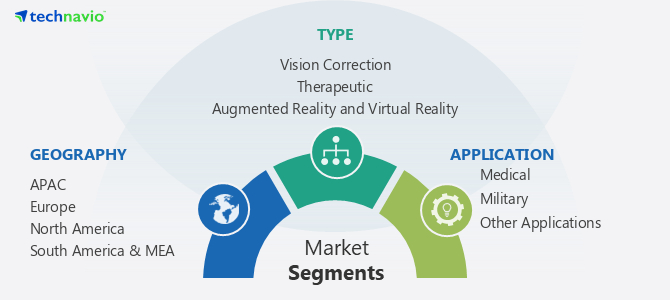
- Type
- Vision Correction
- Therapeutic
- Augmented Reality (AR) and Virtual Reality (VR)
- Application
- Medical
- Military
- Other Applications
- Distribution Channel
- Hospitals and Clinics
- Retail Stores
- Online Platform
- APAC
- China
- India
- Japan
- Australia
- Rest of APAC
- Germany
- Spain
- Italy
- UK
- Rest of Europe
- US
- Canada
- Brazil
- UAE
- South Africa
- Others
- Type
- Therapeutic: The therapeutic segment is anticipated to witness considerable growth driven by the use of bionic lenses for drug delivery and monitoring of ocular health.
- Vision Correction: This segment is expected to maintain a significant market share due to the increasing demand for advanced solutions for refractive errors.
- Augmented Reality (AR) and Virtual Reality (VR): This segment is projected to experience rapid growth as bionic lenses integrate AR/VR functionalities for enhanced user experiences.
- Application
- Medical: This segment dominates the market share due to the use of bionic contact lenses in vision correction and therapeutic applications.
- Military: The military application segment is expected to grow due to the use of bionic lenses for enhanced vision and situational awareness in defense operations.
- Other Applications: This segment includes applications such as sports and entertainment, which are expected to witness steady growth.
- Distribution Channel
- Retail Stores: Expected to show considerable growth due to the convenience and accessibility of retail outlets.
- Online Platform: The fastest-growing channel due to increasing e-commerce adoption and easy product availability.
- Hospitals and Clinics: Dominates the market due to the prevalence of eye examinations and prescriptions through these channels.
Regional Analysis
- APAC: The APAC region is expected to experience rapid growth in the bionic contact lenses market, driven by increasing healthcare expenditure, a large aging population, and growing awareness about advanced vision correction technologies. China and India are emerging as key markets in this region, owing to their large populations and increasing disposable incomes.
- Europe: Europe is a well-established market for bionic contact lenses, with Germany and the UK being major contributors. The region benefits from advanced healthcare infrastructure, a strong focus on technological innovation, and favorable reimbursement policies.
- North America: North America is a dominant market for bionic contact lenses, with the US and Canada leading the way. The region is characterized by high healthcare spending, a strong presence of key market players, and a growing demand for advanced vision correction and therapeutic solutions.
- South America & MEA: The South America and MEA regions present emerging opportunities for the bionic contact lenses market. Brazil is witnessing increasing investments in healthcare infrastructure and a growing awareness about advanced vision care technologies. The UAE and South Africa are also emerging as key markets, driven by rising healthcare expenditure and a growing demand for innovative medical solutions.
Market Dynamics
Our bionic contact lenses market researchers analyzed the data with 2024 as the base year, along with the key drivers, trends, and challenges. A holistic analysis of drivers will help companies refine their marketing strategies to gain a competitive advantage.
What are the key market drivers leading to the rise in adoption of the bionic contact lenses market?
Technological Advancements and Aging Population are key drivers of the market. Rapid technological advancements in micro-electronics, nanotechnology, and material science are enabling the development of more sophisticated and functional bionic contact lenses. Innovations like integrated sensors, micro-LED displays, and wireless communication capabilities are expanding the potential applications of these lenses. This continuous innovation is expected to drive market growth by offering enhanced performance and new functionalities. The rising prevalence of vision impairments, such as myopia, hyperopia, and presbyopia, is a significant driver for the bionic contact lenses market. As the global population ages and lifestyles change, the demand for advanced vision correction solutions continues to grow. Bionic lenses offer superior vision correction and additional features, making them an attractive option for individuals seeking to improve their visual acuity and quality of life.
What are the market trends shaping the bionic contact lenses market?
Integration of AR and VR is the upcoming market trend. The integration of augmented reality (AR) and virtual reality (VR) capabilities into bionic contact lenses is an emerging trend that is expected to transform the market. These smart lenses can overlay digital information onto the users field of view, providing enhanced visual experiences and new functionalities. Applications range from gaming and entertainment to medical diagnostics and military training. The development of advanced micro-displays and wireless communication technologies is driving this trend, paving the way for innovative AR/VR-enabled bionic lenses. There is a growing trend towards personalized vision solutions in the bionic contact lenses market. Manufacturers are focusing on developing customized lenses that cater to the specific needs and preferences of individual users. This includes lenses with adjustable focal lengths, dynamic tinting, and integrated sensors for monitoring ocular health. Personalized bionic lenses offer improved comfort, enhanced performance, and better user satisfaction, driving their adoption across various applications.
What challenges does the bionic contact lenses market face?
High Costs and Stringent Regulatory Approvals are key challenges affecting industry growth. The high costs associated with the development and manufacturing of bionic contact lenses pose a significant challenge to market growth. The advanced technologies and materials required for these lenses make them more expensive compared to traditional contact lenses or eyeglasses. This high cost can limit their accessibility to a broader consumer base, particularly in developing countries. Overcoming this challenge requires innovation in manufacturing processes and cost-effective material sourcing. The bionic contact lenses market faces stringent regulatory approval processes due to their classification as medical devices. Regulatory bodies, such as the FDA in the United States and the EMA in Europe, require rigorous testing and clinical trials to ensure the safety and efficacy of these lenses. The lengthy and costly approval process can delay market entry and limit the availability of bionic lenses to consumers. Streamlining the regulatory pathways and fostering collaboration between manufacturers and regulatory agencies are essential to address this challenge.
Key Companies & Market Insights
Leading companies are implementing strategies such as product innovations, acquisitions, and geographic expansions to enhance their market position. Key players in the bionic contact lenses market include:
- Alcon
- Bausch & Lomb
- Novartis AG
- Johnson & Johnson Vision Care
- Mojo Vision
These companies are strategically focused on product development, market expansion, and partnerships to maintain their competitive edge in the growing bionic contact lenses market.
|
Market Scope |
|
|
Report Coverage |
Details |
| Base year | 2024 |
| Page number | 211 |
| Key countries | US, China, Germany, UK, India, Japan |
| Forecast period | 2025-2029 |
| Historic period | 2019-2023 |
| Report coverage | Market size, forecasts, segmentation |
| Regional Analysis | APAC
|
| Growth momentum and CAGR | 10.8% |
| Performing market contribution | Europe, APAC, North America |
 RIA -
RIA - 
