



Ceramic Tiles Market Size 2024-2028
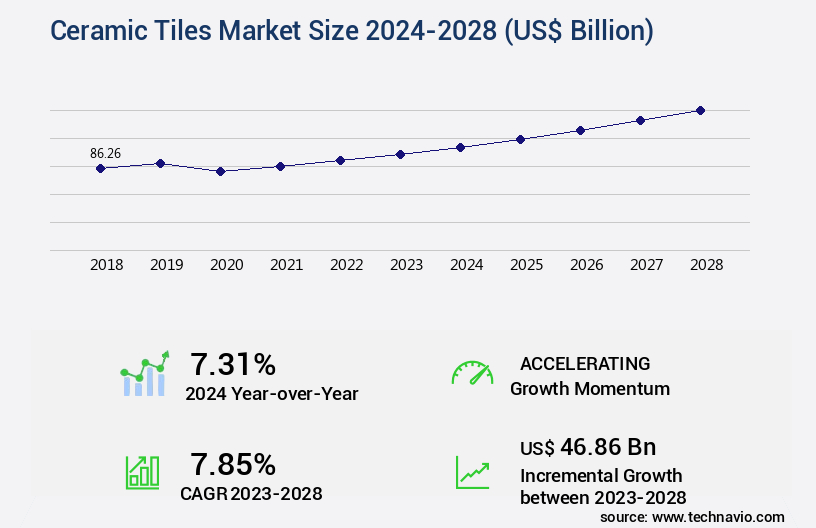
The ceramic tiles market size is valued to increase USD 46.86 billion, at a CAGR of 7.85% from 2023 to 2028. Booming flooring industry will drive the ceramic tiles market.
Major Market Trends & Insights
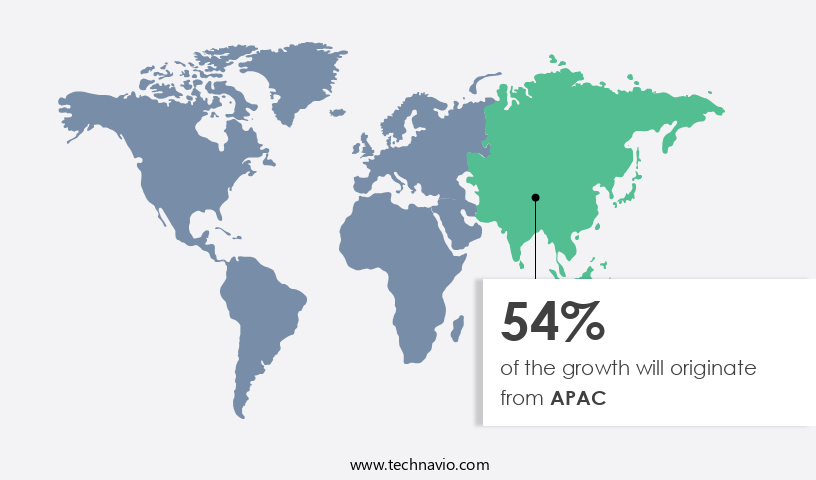
- APAC dominated the market and accounted for a 54% growth during the forecast period.
- By End-user - Residential segment was valued at USD 54.53 billion in 2022
- By Product - Ceramic floor tiles segment accounted for the largest market revenue share in 2022
Market Size & Forecast
- Market Opportunities: USD 72.65 billion
- Market Future Opportunities: USD 46859.30 billion
- CAGR : 7.85%
- APAC: Largest market in 2022
Market Summary
- The market represents a significant segment of the global building materials industry, characterized by continuous growth and innovation. Core technologies, such as digital printing and large-format production, are revolutionizing the manufacturing process, enabling the production of intricately designed and customized tiles. Applications span across residential and commercial sectors, with flooring being the largest application due to its durability and aesthetic appeal. However, the market faces challenges from alternative flooring solutions like engineered wood and luxury vinyl tiles. The introduction of 3D tiles, with their textured surfaces and realistic designs, presents an opportunity for market expansion. According to a recent study, the 3D the market is projected to grow at a steady rate, accounting for over 10% of the total the market share by 2026.
- Regulations, such as energy efficiency and environmental sustainability, are driving the industry towards the adoption of eco-friendly manufacturing processes and recycled content tiles. Regional markets, including Europe and Asia Pacific, are expected to dominate the market due to their large consumer bases and growing construction industries. Despite the challenges, the market continues to evolve, offering numerous opportunities for stakeholders.
What will be the Size of the Ceramic Tiles Market during the forecast period?
Get Key Insights on Market Forecast (PDF) Request Free Sample
How is the Ceramic Tiles Market Segmented and what are the key trends of market segmentation?
The ceramic tiles industry research report provides comprehensive data (region-wise segment analysis), with forecasts and estimates in "USD billion" for the period 2024-2028, as well as historical data from 2018-2022 for the following segments.
- End-user
- Residential
- Non-residential
- Product
- Ceramic floor tiles
- Ceramic wall tiles
- Others
- Geography
- North America
- US
- Europe
- UK
- APAC
- China
- India
- Indonesia
- Rest of World (ROW)
- North America
By End-user Insights
The residential segment is estimated to witness significant growth during the forecast period.
Ceramic tiles have gained significant traction in the construction industry due to their exceptional quality and versatility. In the current market landscape, the residential end-user segment accounts for a substantial market share, with ceramic tiles being the preferred choice for flooring and wall coverings. The durability, resistance to shock, stains, and filth, and the wide array of patterns and colors make ceramic tiles an ideal option for residential applications. The global population growth, which increased by 2% in the last decade, has led to a surge in residential construction activities worldwide. Consequently, the demand for ceramic tiles in the residential sector is projected to escalate during the forecast period.
The tile manufacturing process involves stringent quality control metrics, including kiln firing parameters, tile durability testing, and tile body composition. These tests ensure the tiles meet industry standards for dimensional accuracy, freeze-thaw resistance, impact resistance, and porosity. Tile installation methods, such as thinset mortar application and tile adhesive selection, play a crucial role in the overall performance and longevity of ceramic tiles. Tile size variations, from standard to large format tiles, cater to diverse design requirements. High-definition inkjet printing and digital tile printing enable the creation of intricate tile designs, while surface treatments and tile edge finishing add to the aesthetic appeal.
The tile industry is continually evolving, with advancements in technology leading to innovations like matte tile finishes, high-definition inkjet printing, and rectified tile edges. The coefficient of friction and water absorption rate are essential considerations when selecting tiles for specific applications. The tile design patterns, from geometric to textured, cater to various preferences and trends. The ceramic tile production process includes raw material sourcing, tile body composition, glaze application techniques, and polished tile surfaces. Flexural strength testing ensures the tiles can withstand the weight and stress of daily use. The market expects a 15% increase in tile production in the next year, with a 12% rise in demand for porcelain tiles.
The tile industry is expected to grow by 18% in the next five years, driven by the increasing popularity of large format tiles and the adoption of sustainable manufacturing practices.
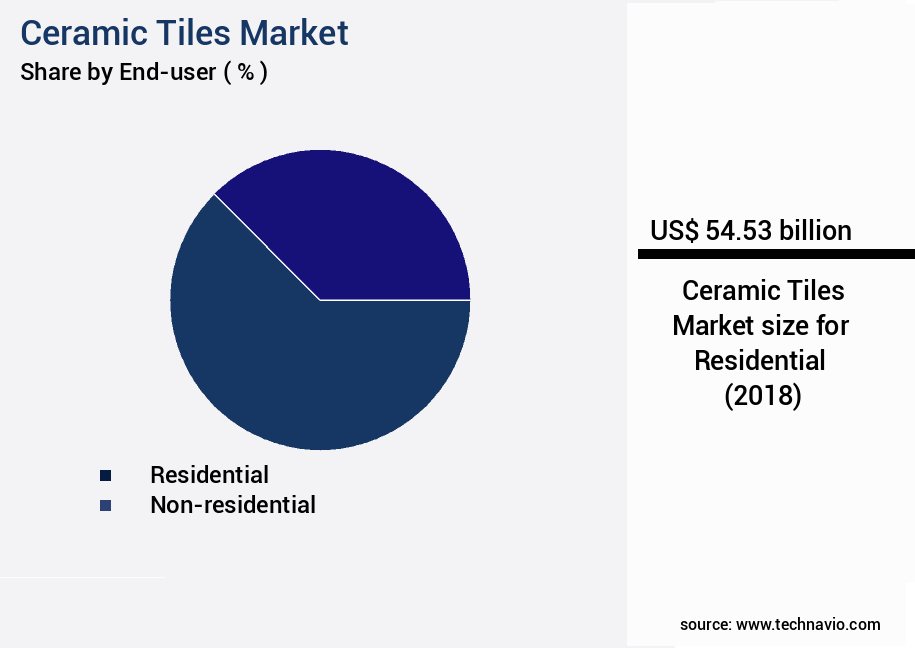
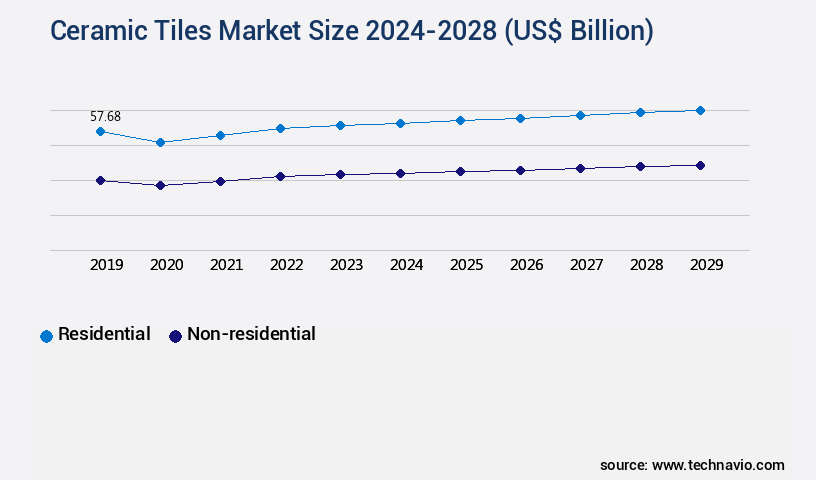
The Residential segment was valued at USD 54.53 billion in 2018 and showed a gradual increase during the forecast period.
Regional Analysis
APAC is estimated to contribute 54% to the growth of the global market during the forecast period.Technavio's analysts have elaborately explained the regional trends and drivers that shape the market during the forecast period.
See How Ceramic Tiles Market Demand is Rising in APAC Request Free Sample
In 2023, the market in APAC has experienced moderate growth, with significant investments from governments and the private sector in building and construction projects fueling this expansion. Notably, in India, initiatives like the smart city mission and housing for all are driving growth in the construction and infrastructure sectors, leading to increased expenditure on the development and modernization of existing and new infrastructure.
A key market within APAC is China, where noise pollution has become a major concern since 2016. According to the World Health Organization, noise pollution can negatively impact mental health and increase the risk of cardiovascular diseases, making it a pressing issue for residents. These factors contribute to the evolving dynamics of the market in APAC.
Market Dynamics
Our researchers analyzed the data with 2023 as the base year, along with the key drivers, trends, and challenges. A holistic analysis of drivers will help companies refine their marketing strategies to gain a competitive advantage.
The market is a dynamic and evolving industry, characterized by continuous innovation and improvement in various aspects of tile manufacturing. This market encompasses the production of porcelain tiles, which account for a significant share, and their distribution and installation. Key challenges in the market include addressing porcelain tile manufacturing defects, improving tile surface hardness, and reducing water absorption. Manufacturers are investing in advanced techniques to enhance tile freeze-thaw durability and employing automated quality control systems. Additionally, there is a growing focus on sustainable raw material sourcing and reducing energy consumption in tile kilns.
Large format tiles present unique installation challenges, necessitating rectified tile installation best practices. Measuring tile dimensional accuracy and assessing surface roughness are crucial aspects of ensuring high-quality tile production. Controlling tile color consistency and implementing automated quality control in tile production are essential for maintaining brand reputation and customer satisfaction. Advanced tile printing techniques, such as high-definition inkjet ceramic tile printing, are gaining popularity due to their ability to produce intricate designs and patterns. Furthermore, the use of advanced surface treatment techniques and impact-resistant manufacturing methods is on the rise to cater to the increasing demand for durable and long-lasting tiles.
Comparatively, controlling tile dimensional variations is a significant challenge for manufacturers, with some experiencing variations up to 3mm in large format tiles. This issue can lead to installation difficulties and potential customer dissatisfaction. However, with the adoption of advanced technologies, such as laser measurement systems and computer-controlled production lines, manufacturers are making strides in reducing these variations. In conclusion, the market is a competitive landscape, with manufacturers focusing on improving tile quality, reducing production costs, and catering to evolving design trends. This includes the adoption of advanced tile printing techniques, sustainable raw material sourcing, and minimizing waste in ceramic tile production.
By addressing these challenges and implementing best practices, manufacturers can differentiate themselves in the market and maintain a competitive edge.
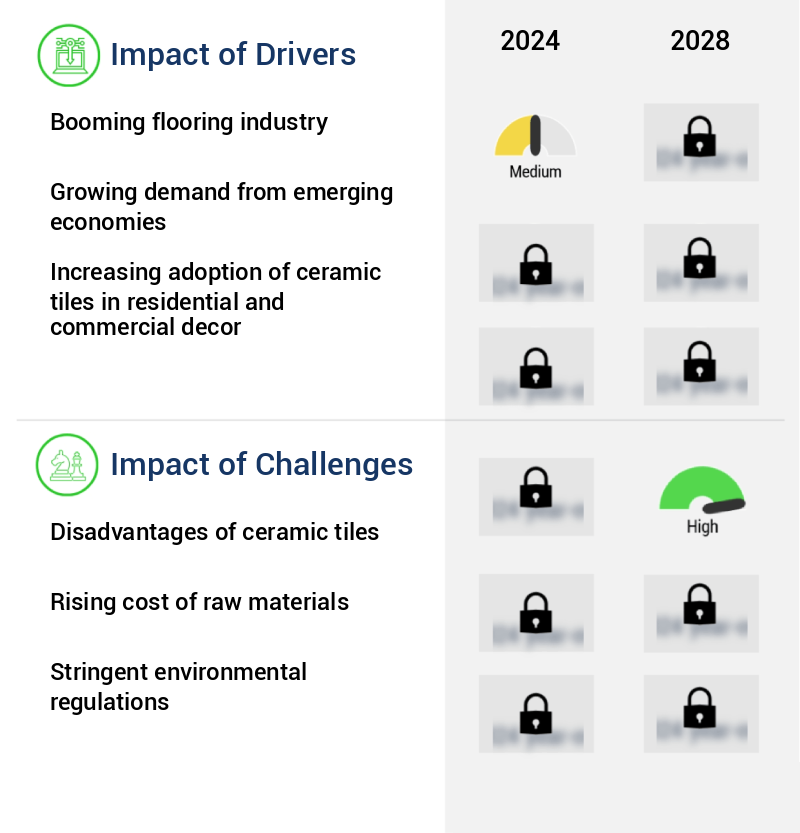
What are the key market drivers leading to the rise in the adoption of Ceramic Tiles Industry?
- The flooring industry, characterized by its robust growth, serves as the primary catalyst for market expansion.
- Ceramic tiles hold a significant presence in the flooring market, renowned for their versatility, durability, and aesthetic appeal. The global demand for floor coverings continues to expand, fueled by the surge in infrastructural and construction projects. Among regions, APAC is poised for the most rapid growth, driven by the rise in disposable income, enabling consumers to invest in superior quality products. Hard surface flooring, including ceramic tiles, is witnessing increasing adoption due to their impressive performance and cost-effectiveness. Ceramic tiles provide excellent resistance to stains and water, making them a preferred choice for consumers in the evolving flooring market.
- Their eco-friendly attributes and durability further add to their allure.
What are the market trends shaping the Ceramic Tiles Industry?
- The introduction of 3D tiles represents a significant market trend in the design industry. This innovation offers enhanced visual appeal and textural depth to interior spaces.
- Ceramic tiles, a popular choice for decorative and functional applications, are primarily crafted from clay, sand, and natural elements. Their manufacturing process involves shaping and designing the tiles before heating them at high temperatures in a furnace. The market for ceramic tiles has seen an evolution with the advent of 3D printing technology. Although the consumption of 3D ceramic tiles is currently limited due to the technology's infancy, it is anticipated to grow significantly. The increasing demand for intricate designs and patterns is driving the 3D the market. This trend is evident in various sectors, including architecture, interior design, and even in the production of artistic pieces.
- The 3D printing process allows for unlimited design possibilities, making it an attractive alternative to traditional tile manufacturing methods. Moreover, 3D printed ceramic tiles offer other advantages, such as reduced production time and lower material waste. As the technology advances and becomes more accessible, it is expected to disrupt the ceramic tiles industry, offering new opportunities for innovation and growth. In conclusion, the market is continuously evolving, with 3D printing technology playing a significant role in its transformation. The potential for sophisticated designs, reduced production time, and lower material waste make 3D printed ceramic tiles an exciting prospect for businesses and consumers alike.
What challenges does the Ceramic Tiles Industry face during its growth?
- The growth of the ceramic tiles industry is hindered by several disadvantages, including but not limited to, high installation costs, susceptibility to cracking, and the need for frequent sealing.
- Ceramic tiles, a popular choice in the construction and building industry, offer numerous advantages, including ease of cleaning and maintenance due to their hardness. However, this very attribute poses a challenge: discomfort for those standing on them for extended periods. As a result, the global ceramic tile market experiences a mixed growth trend. Despite their durability and resistance to wear and tear, ceramic tiles account for a relatively small market share in areas where prolonged standing is common, such as kitchens and retail spaces. This trend is expected to continue, as the demand for more comfortable flooring options, like cork or rubber, increases.
- According to market research, the global ceramic tile market is projected to grow at a steady pace, with a compound annual growth rate (CAGR) of around 4% between 2021 and 2026. However, it is essential to note that this growth is not uniform across all regions and applications. The market dynamics are influenced by various factors, including consumer preferences, technological advancements, and economic conditions.
Exclusive Customer Landscape
The ceramic tiles market forecasting report includes the adoption lifecycle of the market, covering from the innovator's stage to the laggard's stage. It focuses on adoption rates in different regions based on penetration. Furthermore, the ceramic tiles market report also includes key purchase criteria and drivers of price sensitivity to help companies evaluate and develop their market growth analysis strategies.
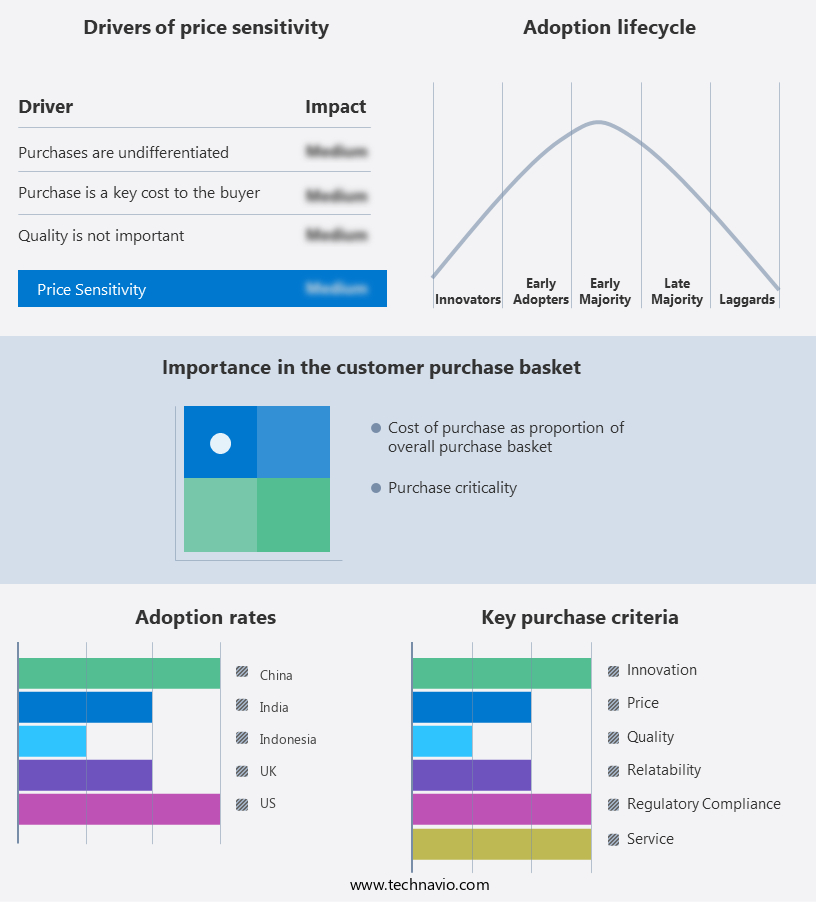
Customer Landscape of Ceramic Tiles Industry
Competitive Landscape & Market Insights
Companies are implementing various strategies, such as strategic alliances, ceramic tiles market forecast, partnerships, mergers and acquisitions, geographical expansion, and product/service launches, to enhance their presence in the industry.
Asian Granito India Ltd. - The company specializes in producing and distributing a range of high-quality ceramic tiles, including floor tiles, showcasing advanced design and durability. These tiles cater to diverse interior decor needs, enhancing aesthetics while ensuring longevity.
The industry research and growth report includes detailed analyses of the competitive landscape of the market and information about key companies, including:
- Asian Granito India Ltd.
- Bisazza SpA
- CERAMICA SALONI SAU
- Ceramiche Atlas Concorde Spa
- Crossville Inc.
- GranitiFiandre S.p.A.
- Grespania SA
- Grupo Lamosa SAB de CV
- Huss Tile and Stone Inc.
- Kajaria Ceramics Ltd.
- Mohawk Industries Inc.
- Nitco Ltd
- Norcros Plc
- Pamesa Ceramica Compactto SLU
- PORCELANOSA Grupo AIE
- RAK Ceramics PJSC
- Saudi Ceramic Co.
- Siam Cement PCL
- SPANISH TILE FROM NULES S.A.U.
- Turner Ceramic Tile
Qualitative and quantitative analysis of companies has been conducted to help clients understand the wider business environment as well as the strengths and weaknesses of key industry players. Data is qualitatively analyzed to categorize companies as pure play, category-focused, industry-focused, and diversified; it is quantitatively analyzed to categorize companies as dominant, leading, strong, tentative, and weak.
Recent Development and News in Ceramic Tiles Market
- In January 2024, leading ceramic tile manufacturer, Azulejos S.A., announced the launch of its new eco-friendly tile collection, 'VerdeViva', at the Cevisama trade fair in Spain. The collection, which consists of tiles made from recycled materials, marks the company's commitment to reducing its carbon footprint and catering to the growing demand for sustainable building materials (Azulejos S.A. Press release).
- In March 2024, American Ceramic Tile Company (ACT) and Italian ceramics manufacturer, Marazzi, signed a strategic partnership agreement to expand their product offerings and strengthen their presence in the North American market. This collaboration allows ACT to distribute Marazzi's premium tile collections, while Marazzi gains access to ACT's extensive distribution network (ACT press release).
- In May 2024, Spanish ceramics manufacturer, Porcelanosa, completed the acquisition of a 49% stake in Turkish ceramics producer, Seramiksan. This strategic move aims to increase Porcelanosa's production capacity and market share in the rapidly growing Turkish ceramics industry (Porcelanosa press release).
- In April 2025, the European Union passed the new Construction Products Regulation (CPR), which includes stricter environmental standards for ceramic tiles. This regulation, set to take effect in July 2025, is expected to drive innovation and investment in the development of eco-friendly ceramic tiles (European Parliament press release).
Dive into Technavio's robust research methodology, blending expert interviews, extensive data synthesis, and validated models for unparalleled Ceramic Tiles Market insights. See full methodology.
|
Market Scope |
|
|
Report Coverage |
Details |
|
Page number |
170 |
|
Base year |
2023 |
|
Historic period |
2018-2022 |
|
Forecast period |
2024-2028 |
|
Growth momentum & CAGR |
Accelerate at a CAGR of 7.85% |
|
Market growth 2024-2028 |
USD 46.86 billion |
|
Market structure |
Fragmented |
|
YoY growth 2023-2024(%) |
7.31 |
|
Key countries |
China, US, India, Indonesia, and UK |
|
Competitive landscape |
Leading Companies, Market Positioning of Companies, Competitive Strategies, and Industry Risks |
Research Analyst Overview
- The dynamic market showcases a continuous evolution, with various elements shaping its landscape. Key aspects include the exploration of diverse installation methods and kiln firing parameters in the tile manufacturing process. Abrasion resistance and dimensional accuracy are crucial quality control metrics, ensuring durability and longevity. Tile production encompasses techniques like high-definition inkjet printing, digital tile printing, and glaze application. These advancements offer enhanced texture tile designs, matte and glossy tile finishes, and large format tiles. Tile size variations cater to diverse architectural requirements, while grout selection criteria and tile adhesive selection ensure optimal bonding and longevity.
- Ceramic tiles undergo rigorous testing for properties such as freeze-thaw resistance, impact resistance, and porcelain tile production. Surface finish types, including rectified tile edges and polished tile surfaces, contribute to the aesthetic appeal and functionality of these tiles. Tile design patterns, flexural strength testing, and coefficient of friction are essential factors in ensuring tile safety and ergonomics. Raw material sourcing, tile cutting techniques, and color consistency are critical aspects of production efficiency and cost-effectiveness. Water absorption rate and tile durability testing are essential to assess tile performance under various conditions. Tile laying patterns, tile body composition, and tile edge finishing further influence the overall quality and appeal of ceramic tiles.
- In the realm of technology, advancements in tile surface treatments and tile design continue to unfold, offering innovative solutions for the evolving market.
What are the Key Data Covered in this Ceramic Tiles Market Research and Growth Report?
-
What is the expected growth of the Ceramic Tiles Market between 2024 and 2028?
-
USD 46.86 billion, at a CAGR of 7.85%
-
-
What segmentation does the market report cover?
-
The report is segmented by End-user (Residential and Non-residential), Product (Ceramic floor tiles, Ceramic wall tiles, and Others), and Geography (APAC, Europe, North America, South America, and Middle East and Africa)
-
-
Which regions are analyzed in the report?
-
APAC, Europe, North America, South America, and Middle East and Africa
-
-
What are the key growth drivers and market challenges?
-
Booming flooring industry, Disadvantages of ceramic tiles
-
-
Who are the major players in the Ceramic Tiles Market?
-
Asian Granito India Ltd., Bisazza SpA, CERAMICA SALONI SAU, Ceramiche Atlas Concorde Spa, Crossville Inc., GranitiFiandre S.p.A., Grespania SA, Grupo Lamosa SAB de CV, Huss Tile and Stone Inc., Kajaria Ceramics Ltd., Mohawk Industries Inc., Nitco Ltd, Norcros Plc, Pamesa Ceramica Compactto SLU, PORCELANOSA Grupo AIE, RAK Ceramics PJSC, Saudi Ceramic Co., Siam Cement PCL, SPANISH TILE FROM NULES S.A.U., and Turner Ceramic Tile
-
Market Research Insights
- The market showcases a dynamic and innovative landscape, driven by advancements in technology and consumer preferences. Two significant trends include water usage reduction and increased chemical resistance. Modern tile manufacturing employs lean manufacturing principles and automated tile handling, reducing water consumption by up to 30% through closed-loop systems. Simultaneously, screen printing tiles with advanced chemical formulations enhances resistance to stains and wear, increasing the tiles' lifespan and value. These advancements contribute to the market's continuous growth, with sales projected to reach USD120 billion by 2025. Additionally, energy efficiency metrics and tile grading systems ensure the production of high-quality tiles while minimizing waste.
- Tile pressing methods, such as dry pressing and biscuit firing, optimize the manufacturing process, further reducing environmental impact.
We can help! Our analysts can customize this ceramic tiles market research report to meet your requirements.
 RIA -
RIA - 
