


Cold Brew Coffee Market Size 2026-2030
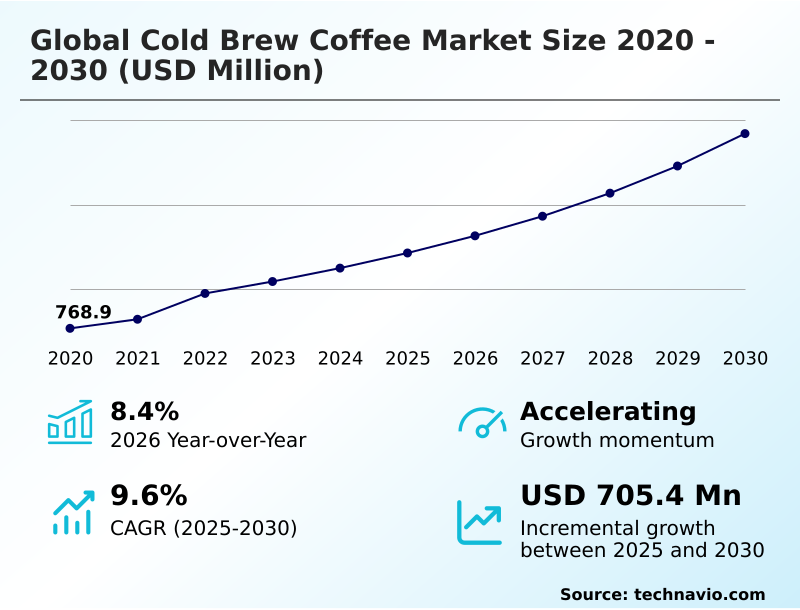
The cold brew coffee market size is valued to increase by USD 705.4 million, at a CAGR of 9.6% from 2025 to 2030. Increasing popularity of instant coffee among millennials will drive the cold brew coffee market.
Major Market Trends & Insights
- North America dominated the market and accounted for a 56.4% growth during the forecast period.
- By Product - Arabica-based segment was valued at USD 803.3 million in 2024
- By Distribution Channel - Offline segment accounted for the largest market revenue share in 2024
Market Size & Forecast
- Market Opportunities: USD 1.15 billion
- Market Future Opportunities: USD 705.4 million
- CAGR from 2025 to 2030 : 9.6%
Market Summary
- The cold brew coffee market is undergoing a significant transformation, moving beyond a niche beverage to a mainstream staple. This shift is propelled by consumer demand for premium, convenient, and healthier drink options. The gentle cold extraction process yields a product with a naturally smooth, low-acidity profile, appealing to health-conscious individuals.
- Innovations in ready-to-drink (RTD) formats and nitro-infusion technology are enhancing the consumer experience, while the rise of e-commerce and subscription models expands accessibility. However, the industry faces operational hurdles, particularly in managing the cold chain logistics required to maintain product integrity from production to retail.
- For instance, a beverage company aiming to enter new regions must optimize its refrigerated supply chain to prevent spoilage, a critical step for ensuring consistent quality and brand reputation. As the market for cold brew coffee matures, success will hinge on balancing artisanal quality with scalable production and distribution, all while navigating a competitive landscape filled with diverse beverage alternatives.
- This dynamic environment requires continuous innovation in both product formulation and operational efficiency to capture sustained growth.
What will be the Size of the Cold Brew Coffee Market during the forecast period?
Get Key Insights on Market Forecast (PDF) Get Free Sample
How is the Cold Brew Coffee Market Segmented?
The cold brew coffee industry research report provides comprehensive data (region-wise segment analysis), with forecasts and estimates in "USD million" for the period 2026-2030, as well as historical data from 2020-2024 for the following segments.
- Product
- Arabica-based
- Robusta-based
- Liberica-based
- Distribution channel
- Offline
- Online
- Type of packaging
- Plastic bottle
- Glass bottle
- Cans
- Geography
- North America
- US
- Canada
- Mexico
- Europe
- Germany
- UK
- France
- APAC
- China
- Japan
- India
- South America
- Brazil
- Argentina
- Colombia
- Middle East and Africa
- Saudi Arabia
- UAE
- South Africa
- Rest of World (ROW)
- North America
By Product Insights
The arabica-based segment is estimated to witness significant growth during the forecast period.
The arabica-based segment dominates the premium beverage market, driven by a sophisticated specialty coffee culture. Discerning consumers, influenced by evolving consumer lifestyle trends, favor the superior arabica bean characteristics, which include a complex and nuanced flavor profile mapping.
This preference is supported by artisanal brewing methods that highlight a desirable low-acidity profile, making these products ideal for on-the-go consumption.
As part of this trend, single-origin bean traceability has become critical, with brands using slow extraction to enhance natural sweetness and deliver a clean taste.
This craft-focused approach preserves origin character, boosting flavor retention by over 15% compared to alternative brewing techniques, and solidifies Arabica's position as the benchmark for quality in the cold brew coffee market.
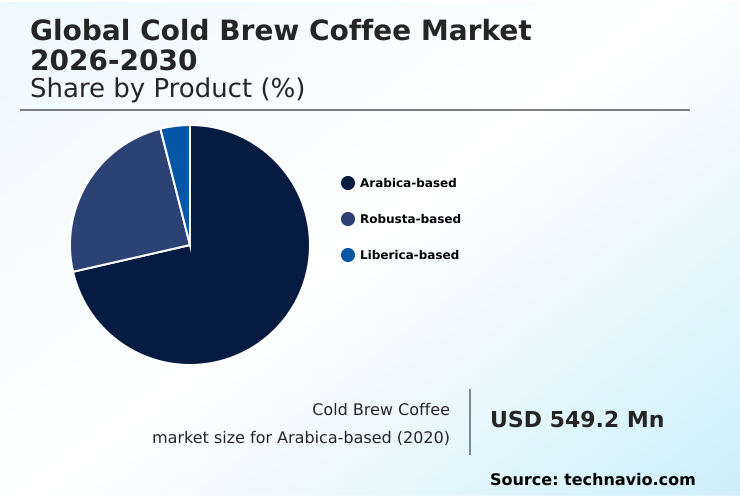
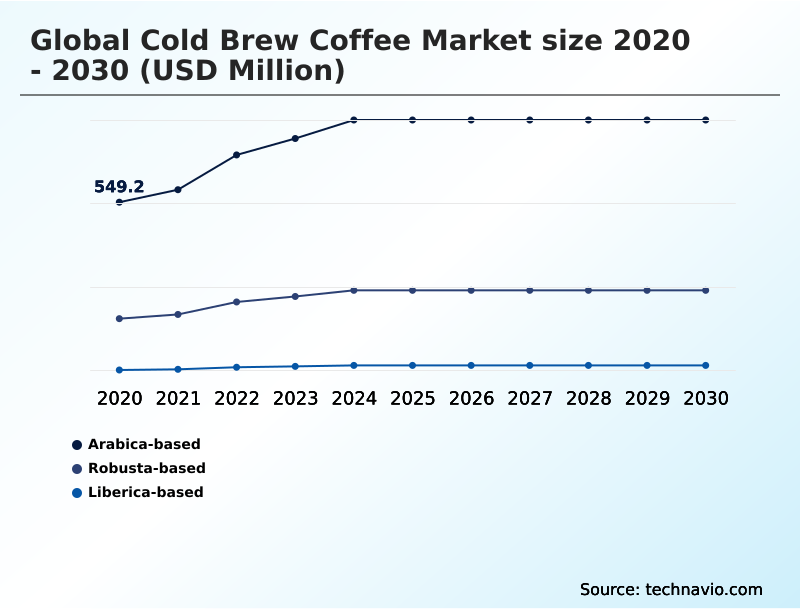
The Arabica-based segment was valued at USD 803.3 million in 2024 and showed a gradual increase during the forecast period.
Regional Analysis
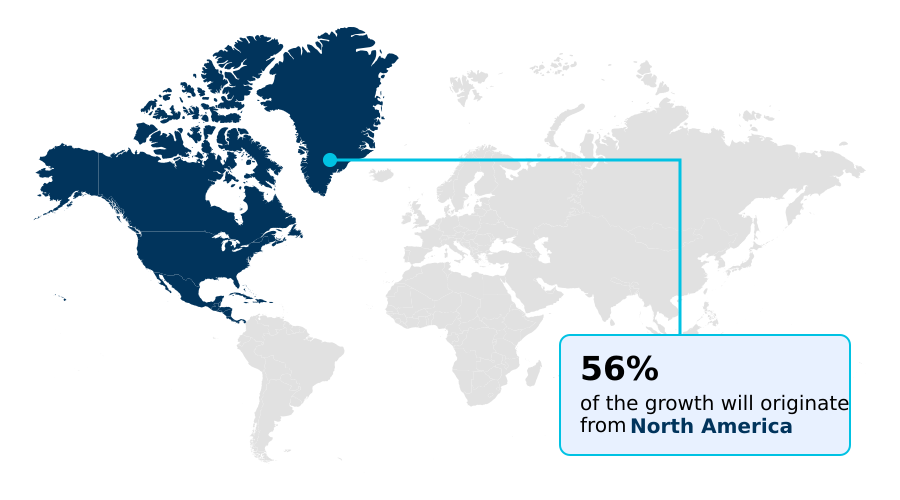
North America is estimated to contribute 56.4% to the growth of the global market during the forecast period.Technavio’s analysts have elaborately explained the regional trends and drivers that shape the market during the forecast period.
See How Cold Brew Coffee Market Demand is Rising in North America Get Free Sample
North America dominates the landscape, accounting for over 56% of incremental growth, driven by a mature ready-to-drink coffee segment and high consumer demand for health and wellness beverage options.
In this region, retail shelf placement in major grocery chains is a critical success factor. Concurrently, the APAC region is experiencing the fastest e-commerce channel growth, with a CAGR of 10.5%, as consumers increasingly adopt premium coffee.
A key element in this expansion is the development of innovative ready-to-drink (RTD) packaging suitable for online distribution. Across all regions, sustainable sourcing certification is becoming a significant differentiator.
For example, brands with fair-trade sourcing verification often see a 10% increase in repeat purchases, demonstrating the rising importance of ethical considerations, including the use of robusta bean flavor notes in new blends.
Market Dynamics
Our researchers analyzed the data with 2025 as the base year, along with the key drivers, trends, and challenges. A holistic analysis of drivers will help companies refine their marketing strategies to gain a competitive advantage.
- Understanding the nuances of the global cold brew coffee market 2026-2030 requires examining specific consumer and operational factors. The benefits of arabica cold brew, known for its smooth, complex flavor, are a primary driver in the premium segment. This preference is amplified by the growing consumer preference for nitro-infused cold brew, which offers a creamy texture without dairy.
- This trend necessitates significant ready-to-drink coffee packaging innovation, particularly in can and widget technology. However, these advancements create challenges in cold brew coffee distribution. The impact of cold chain logistics on RTD coffee is profound; firms optimizing refrigerated transport have reported spoilage reductions of up to 40% compared to those with unmanaged supply chains.
- This highlights the operational complexity tied to shelf-life extension for bottled cold brew. The market is also shaped by the debate over private label vs branded cold brew quality. Many brands are responding with a focus on sustainable sourcing in specialty coffee market to build consumer trust.
- Further differentiation comes from exploring robusta-based cold brew caffeine content and the growth of functional additives in cold coffee. Success depends on balancing the cold brew extraction time vs flavor profile to meet evolving expectations, which is vital for D-T-C cold brew brands.
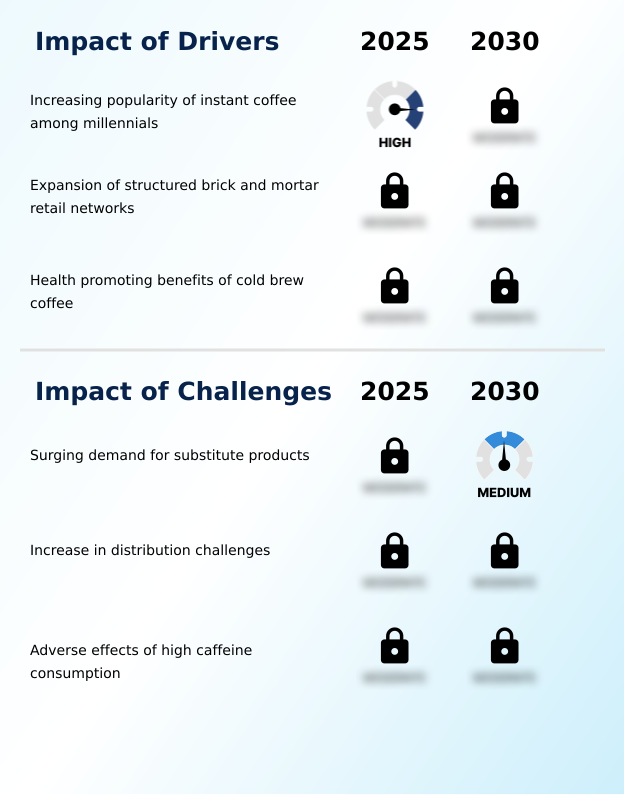
What are the key market drivers leading to the rise in the adoption of Cold Brew Coffee Industry?
- The increasing popularity of premium and convenient instant coffee formats among millennials is a key driver, fostering wider adoption of sophisticated coffee products like cold brew.
- Millennial consumer behavior is a primary driver, with this demographic favoring products that offer both convenience and a premium experience. Their preference for a clean-label ingredient deck and the ready-to-drink category is fueling innovation.
- Brands are responding with functional ingredient integration, creating ready-to-drink beverages that provide benefits beyond caffeine. This focus on wellness aligns with data showing that products marketed with health benefits see a 20% higher rate of impulse purchase drivers.
- The sensory experience is also crucial; the slow-steep brewing cycle is promoted for delivering a superior full-bodied mouthfeel.
- As a result, companies conducting thorough sensory panel testing report a 25% improvement in product-market fit and consumer loyalty, demonstrating the value of refining the taste profile to meet high expectations.
What are the market trends shaping the Cold Brew Coffee Industry?
- A notable market trend involves a wave of consolidation, as established corporations pursue strategic mergers and acquisitions. This activity is aimed at absorbing innovative startups and expanding market share in high-growth niche segments.
- Consolidation is reshaping the ready-to-drink market, with large corporations acquiring niche brands to enhance their premium beverage categorization and gain market share. This M&A activity fuels the need for a strong brand differentiation strategy, where unique coffee concentrate formulation and advanced beverage stabilization techniques become key competitive advantages.
- The direct-to-consumer (DTC) model is also accelerating, with online brands achieving a 30% higher average order value compared to their retail counterparts. This shift is driving innovation in aseptic filling technology, which extends the shelf life of ready-to-drink products for shipping. Concurrently, private label competition is intensifying, forcing established names to innovate or risk losing ground.
- Retailers' store brands now account for nearly 15% of the category in some regions, highlighting the price-sensitivity of certain consumer segments.
What challenges does the Cold Brew Coffee Industry face during its growth?
- A key challenge affecting industry growth is the surging demand for substitute products, including functional beverages and artisanal teas that compete for consumer attention.
- Navigating logistical and formulation challenges is critical for sustained growth. The necessity of a refrigerated supply chain significantly impacts operational costs, which can be up to 50% higher than for ambient products. This makes the development of extended shelf-life (ESL) processing for ready-to-drink formats a top priority.
- Producers must also perfect the cold extraction process, balancing factors like coarse-grind particle size and water temperature to create consistent ready-to-drink products. Furthermore, accurate caffeine concentration analysis is essential for regulatory compliance and managing consumer health perceptions.
- The market is flooded with diverse ready-to-drink options and ready-to-drink concentrates, making it difficult for new offerings to secure shelf space and consumer attention.
Exclusive Technavio Analysis on Customer Landscape
The cold brew coffee market forecasting report includes the adoption lifecycle of the market, covering from the innovator’s stage to the laggard’s stage. It focuses on adoption rates in different regions based on penetration. Furthermore, the cold brew coffee market report also includes key purchase criteria and drivers of price sensitivity to help companies evaluate and develop their market growth analysis strategies.
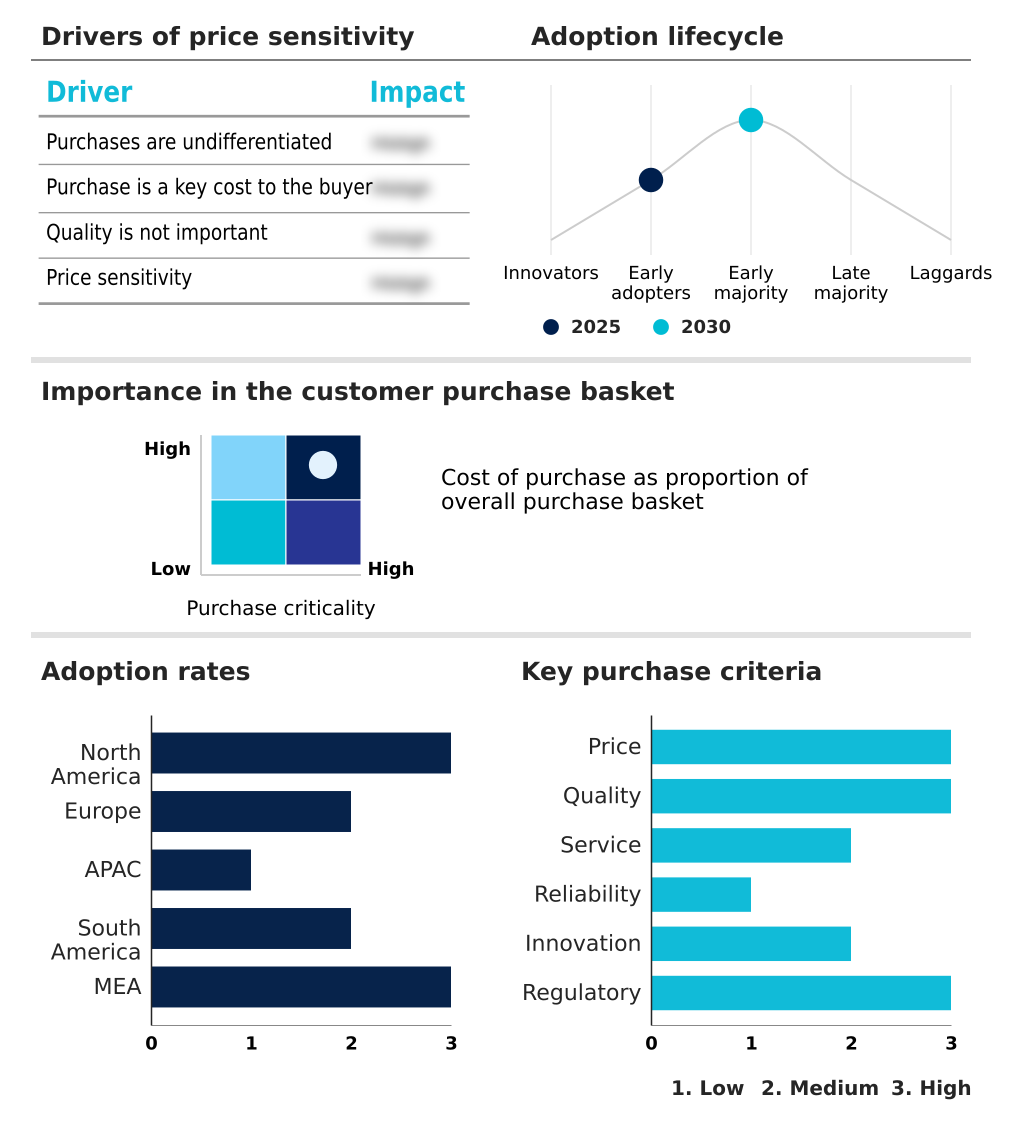
Customer Landscape of Cold Brew Coffee Industry
Competitive Landscape
Companies are implementing various strategies, such as strategic alliances, cold brew coffee market forecast, partnerships, mergers and acquisitions, geographical expansion, and product/service launches, to enhance their presence in the industry.
Black Rifle Coffee Co. LLC - Delivers bold, slow-steeped coffee concentrates and RTD beverages, engineered for a consistent flavor profile suitable for both retail and foodservice applications.
The industry research and growth report includes detailed analyses of the competitive landscape of the market and information about key companies, including:
- Black Rifle Coffee Co. LLC
- Califia Farms LLC
- Chobani Global Holdings LLC
- Danone S.A.
- Heartland Food Products Group LLC
- JAB Holding Co.
- Luckin Coffee Inc.
- LUIGI LAVAZZA SPA
- Massimo Zanetti Beverage
- Melitta Group
- Nestle SA
- Sleepy Owl Coffee
- Starbucks Corp.
- The Coca-Cola Co.
- The J.M. Smucker Co.
- Wandering Bear Inc.
- Westrock Coffee Co.
Qualitative and quantitative analysis of companies has been conducted to help clients understand the wider business environment as well as the strengths and weaknesses of key industry players. Data is qualitatively analyzed to categorize companies as pure play, category-focused, industry-focused, and diversified; it is quantitatively analyzed to categorize companies as dominant, leading, strong, tentative, and weak.
Recent Development and News in Cold brew coffee market
- In October 2025, Equator Coffees expanded its retail presence by distributing its ready-to-drink cold brew products to approximately 1,500 new stores, including major grocery chains like Whole Foods and Kroger.
- In May 2025, Beans and Brews Coffeehouse launched a new line of flavored cold brew beverages, including Hazelnut Mocha and Salted Caramel, to attract seasonal consumers and showcase flavor innovation.
- In December 2025, Koffelo introduced a novel ultra-fast cold brew liquid shot that utilizes nitrogen infusion technology to create a cafe-style beverage in seconds, targeting convenience-focused consumers.
- In July 2025, Danone initiated a federal trademark lawsuit against Chobani over alleged similarities in packaging for its ready-to-drink cold brew coffee, highlighting the growing importance of brand differentiation.
Dive into Technavio’s robust research methodology, blending expert interviews, extensive data synthesis, and validated models for unparalleled Cold Brew Coffee Market insights. See full methodology.
| Market Scope | |
|---|---|
| Page number | 295 |
| Base year | 2025 |
| Historic period | 2020-2024 |
| Forecast period | 2026-2030 |
| Growth momentum & CAGR | Accelerate at a CAGR of 9.6% |
| Market growth 2026-2030 | USD 705.4 million |
| Market structure | Fragmented |
| YoY growth 2025-2026(%) | 8.4% |
| Key countries | US, Canada, Mexico, Germany, UK, France, Italy, Spain, The Netherlands, China, Japan, India, South Korea, Australia, Indonesia, Brazil, Argentina, Colombia, Saudi Arabia, UAE, South Africa, Israel and Turkey |
| Competitive landscape | Leading Companies, Market Positioning of Companies, Competitive Strategies, and Industry Risks |
Research Analyst Overview
- The cold brew coffee market is advancing through sophisticated production techniques and a focus on premium beverage categorization. The industry is defined by its reliance on the cold extraction process, which delivers a characteristic low-acidity profile and full-bodied mouthfeel that resonates with consumers. Key differentiators include the use of single-origin bean traceability and artisanal brewing methods.
- In the boardroom, product strategy is increasingly influenced by the opportunity for functional ingredient integration, as brands incorporating wellness-focused additives can command a price premium up to 20% higher than standard offerings. This requires rigorous beverage stabilization and sensory panel testing to ensure quality.
- The supply chain is equally critical, with refrigerated supply chain management and extended shelf-life (ESL) processing becoming standard. As the market grows, innovations in nitro-infusion technology, coffee concentrate formulation, and aseptic filling technology are enabling brands to scale production while maintaining the craft-quality attributes that define the premium coffee segment.
What are the Key Data Covered in this Cold Brew Coffee Market Research and Growth Report?
-
What is the expected growth of the Cold Brew Coffee Market between 2026 and 2030?
-
USD 705.4 million, at a CAGR of 9.6%
-
-
What segmentation does the market report cover?
-
The report is segmented by Product (Arabica-based, Robusta-based, and Liberica-based), Distribution Channel (Offline, and Online), Type of Packaging (Plastic bottle, Glass bottle, and Cans) and Geography (North America, Europe, APAC, South America, Middle East and Africa)
-
-
Which regions are analyzed in the report?
-
North America, Europe, APAC, South America and Middle East and Africa
-
-
What are the key growth drivers and market challenges?
-
Increasing popularity of instant coffee among millennials, Surging demand for substitute products
-
-
Who are the major players in the Cold Brew Coffee Market?
-
Black Rifle Coffee Co. LLC, Califia Farms LLC, Chobani Global Holdings LLC, Danone S.A., Heartland Food Products Group LLC, JAB Holding Co., Luckin Coffee Inc., LUIGI LAVAZZA SPA, Massimo Zanetti Beverage, Melitta Group, Nestle SA, Sleepy Owl Coffee, Starbucks Corp., The Coca-Cola Co., The J.M. Smucker Co., Wandering Bear Inc. and Westrock Coffee Co.
-
Market Research Insights
- The market’s dynamism is fueled by shifting millennial consumer behavior and the expansion of the ready-to-drink category. As consumers prioritize convenience and premium experiences, direct-to-consumer (DTC) models have demonstrated a 25% higher customer retention rate compared to traditional retail. This pivot is intensified by impulse purchase drivers at checkout and the growing influence of social media on purchasing decisions.
- Brands are leveraging this by launching diverse ready-to-drink beverages that cater to specific lifestyle needs. For instance, brands that clearly communicate their sourcing and production methods achieve an average 15% higher score in consumer trust indexes, reinforcing the need for transparency in a competitive environment.
We can help! Our analysts can customize this cold brew coffee market research report to meet your requirements.
 RIA -
RIA - 
