



Commercial Telematics Market Size 2026-2030
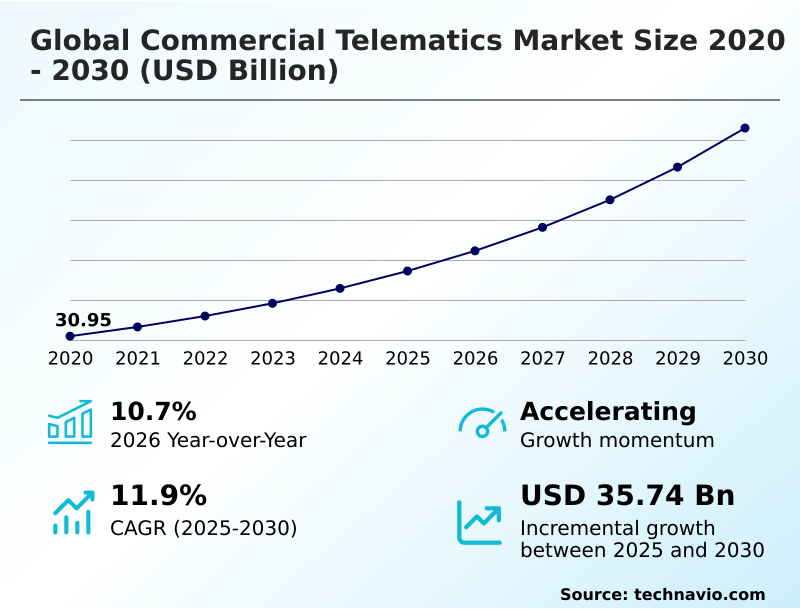
The commercial telematics market size is valued to increase by USD 35.74 billion, at a CAGR of 11.9% from 2025 to 2030. Regulatory mandates and global safety standardization protocols will drive the commercial telematics market.
Major Market Trends & Insights
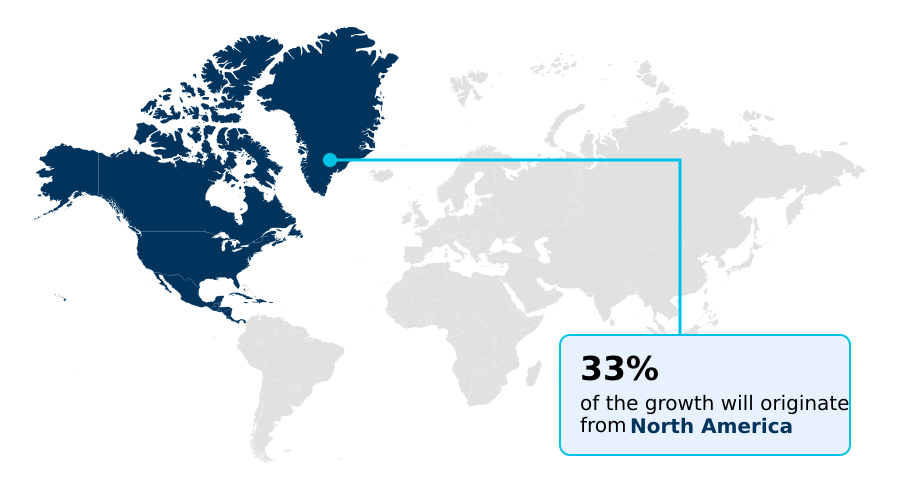
- North America dominated the market and accounted for a 33.1% growth during the forecast period.
- By Product - Solutions segment was valued at USD 30.77 billion in 2024
- By Platform - Embedded systems segment accounted for the largest market revenue share in 2024
Market Size & Forecast
- Market Opportunities: USD 52.04 billion
- Market Future Opportunities: USD 35.74 billion
- CAGR from 2025 to 2030 : 11.9%
Market Summary
- The commercial telematics market is undergoing a profound evolution, transitioning from basic location tracking to a sophisticated ecosystem for intelligent asset management. This shift is driven by the pressing need for enhanced operational efficiency and stringent regulatory adherence. Modern platforms provide deep visibility into fleet activity, enabling significant reductions in fuel consumption, optimized maintenance schedules, and improved driver performance.
- For instance, a logistics company managing a cold-chain supply route leverages telematics to ensure compliance and efficiency. The system monitors cargo temperature in real-time, uses predictive analytics to reroute vehicles around traffic, and logs driver hours to meet safety mandates.
- This level of data-driven insight, powered by a central cloud platform and enabled by real-time data integration, transforms telematics from a simple monitoring tool into a critical component of strategic business operations, directly impacting profitability and risk management.
What will be the Size of the Commercial Telematics Market during the forecast period?
Get Key Insights on Market Forecast (PDF) Get Free Sample
How is the Commercial Telematics Market Segmented?
The commercial telematics industry research report provides comprehensive data (region-wise segment analysis), with forecasts and estimates in "USD million" for the period 2026-2030, as well as historical data from 2020-2024 for the following segments.
- Product
- Solutions
- Services
- Platform
- Embedded systems
- Tethered systems
- Smartphone integration systems
- Solution
- Fleet management
- Vehicle tracking
- Satellite navigation
- Geography
- North America
- US
- Canada
- Mexico
- Europe
- Germany
- UK
- France
- APAC
- China
- Japan
- India
- South America
- Brazil
- Argentina
- Middle East and Africa
- UAE
- Saudi Arabia
- South Africa
- Rest of World (ROW)
- North America
By Product Insights
The solutions segment is estimated to witness significant growth during the forecast period.
The commercial telematics market is segmented by distinct product and platform types, addressing varied operational needs.
The solutions segment, which includes integrated hardware and software, provides the core infrastructure for data acquisition through systems like the telematics control unit and onboard diagnostics port. This enables critical functions such as fleet intelligence and asset tracking.
The services segment focuses on recurring revenue streams from data analytics, consulting, and managed security.
Platform segmentation further divides the market into embedded systems, which are factory-installed for deep vehicle integration, tethered systems offering a balance of data depth and flexibility, and smartphone integration systems that leverage mobile devices for driver-centric applications.
This granular segmentation allows businesses to adopt real-time data integration strategies that improve route efficiency by over 15% by utilizing accelerometer data and machine learning algorithms for proactive safety.
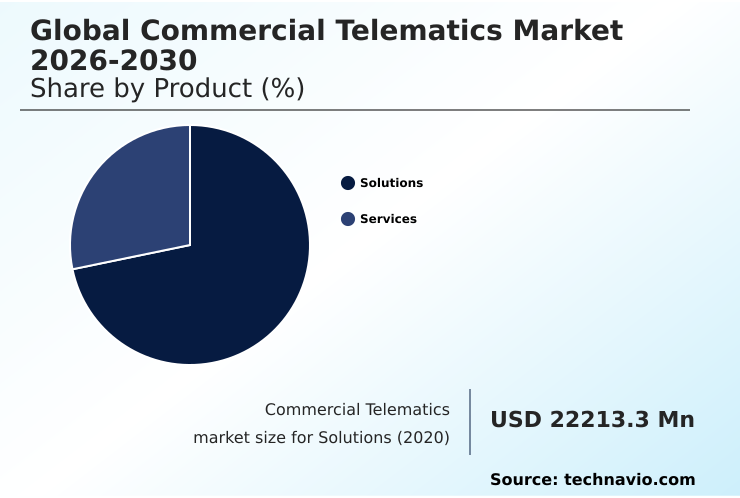
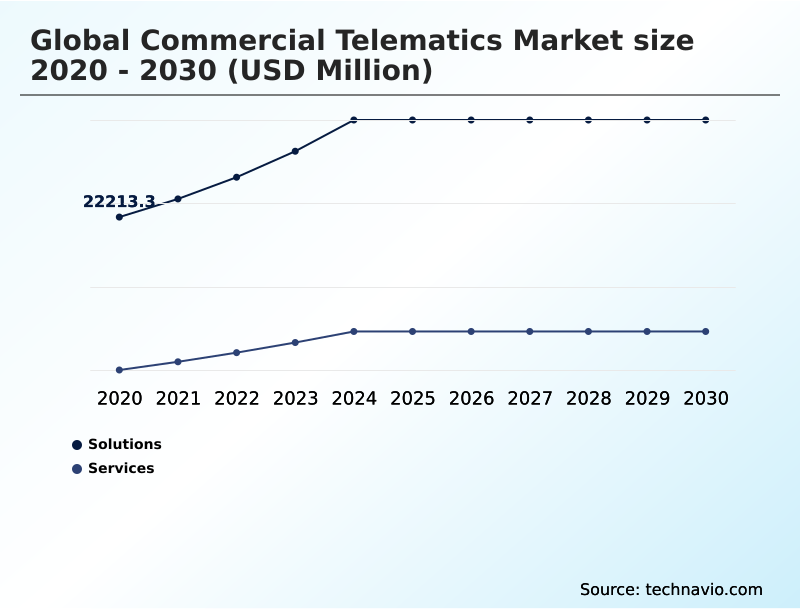
The Solutions segment was valued at USD 30.77 billion in 2024 and showed a gradual increase during the forecast period.
Regional Analysis
North America is estimated to contribute 33.1% to the growth of the global market during the forecast period.Technavio’s analysts have elaborately explained the regional trends and drivers that shape the market during the forecast period.
See How Commercial Telematics Market Demand is Rising in North America Get Free Sample
The geographic landscape of the commercial telematics market is characterized by a divergence between mature and high-growth regions.
North America and Europe lead in adoption, driven by stringent regulations and a focus on optimizing complex logistics networks, enabling fleets to achieve up to a 15% reduction in fuel costs.
North America alone is projected to account for 33% of the market's incremental growth.
In contrast, APAC is the fastest-growing region, where governments are mandating telematics for safety and infrastructure modernization, spurring rapid adoption of driver fatigue monitoring and cargo security solutions.
South America shows the highest growth potential, with a strong focus on asset preservation and security.
This regional diversification requires providers to offer tailored solutions, from advanced cross-border logistics support in developed markets to ruggedized hardware for remote asset management in emerging economies.
Market Dynamics
Our researchers analyzed the data with 2025 as the base year, along with the key drivers, trends, and challenges. A holistic analysis of drivers will help companies refine their marketing strategies to gain a competitive advantage.
- Strategic adoption of telematics begins with companies comparing embedded vs aftermarket telematics solutions to find the best fit for their operational model. For specialized sectors, solutions are tailored, such as telematics for last-mile delivery optimization, which prioritizes route efficiency, or telematics solutions for cold chain logistics, focusing on temperature integrity.
- The hardware and software adapt to different asset types, with predictive maintenance for heavy-duty trucks to minimize service interruptions and ruggedized telematics for construction equipment management in harsh environments. The rise of sustainable transport is addressed by commercial telematics for electric fleets, which focuses on battery and charging management.
- A primary goal for all adopters is optimizing fuel efficiency with telematics, which is achieved through detailed data analysis. A significant benefit is improving driver safety with real-time coaching, which directly leads to telematics data for insurance premium reduction. AI-powered video telematics for safety provides objective evidence for incident analysis, while compliance with electronic logging device mandates is streamlined.
- Technologically, the 5G impact on commercial vehicle telematics is enabling more data-rich applications. Businesses are focused on reducing vehicle downtime with analytics, where fleets using predictive data see a reduction in unplanned downtime that is twice as effective as those relying on scheduled servicing. Even smaller operations can benefit from smartphone-based telematics for small fleets.
- Challenges remain, such as securing telematics data from cyber attacks and overcoming telematics network dead zones, but benefits like seamless telematics integration with ERP systems and asset tracking for non-powered trailers continue to drive the market forward, supported by telematics data for carbon footprint reporting.
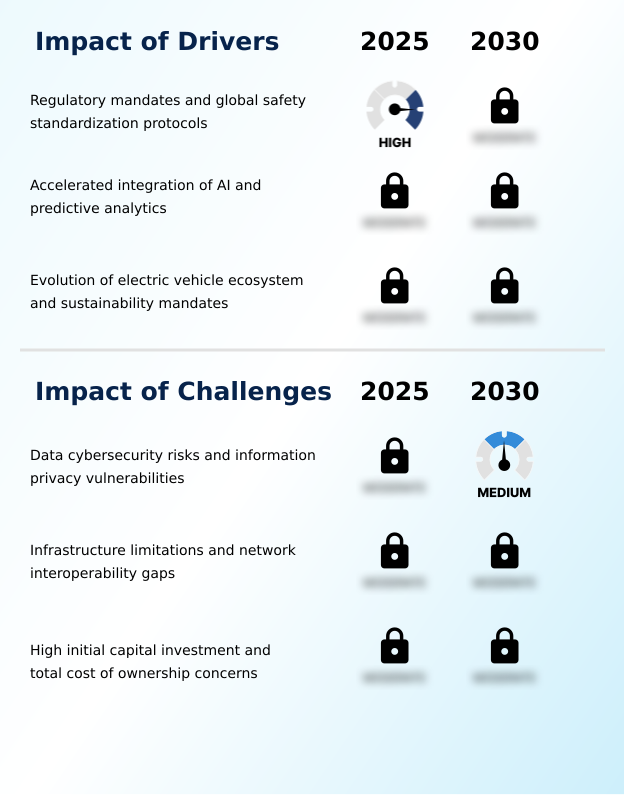
What are the key market drivers leading to the rise in the adoption of Commercial Telematics Industry?
- Regulatory mandates and global safety standardization protocols are a key driver of market growth.
- Market growth is propelled by a confluence of regulatory, technological, and environmental drivers. Government mandates for electronic logging devices (ELD) and safety systems have made adoption non-negotiable in many regions, with compliant fleets seeing hours-of-service violations fall by over 50%.
- The accelerated integration of AI and predictive analytics provides a strong ROI, as AI-powered driver coaching can decrease harsh braking events by 20%, directly improving safety and reducing wear.
- Furthermore, the evolution of the electric vehicle ecosystem and sustainability mandates are pushing telematics into a new role.
- Digital fleet management platforms are now essential tools for carbon footprint reporting and managing the complexities of charging infrastructure management, making them indispensable for green logistics initiatives.
What are the market trends shaping the Commercial Telematics Industry?
- The market is experiencing a significant trend toward the convergence of 5G connectivity. This shift enables high-bandwidth vehicle-to-network architectures for advanced applications.
- Key market trends are redefining operational capabilities through advanced technology. The convergence toward 5G connectivity is enabling high-bandwidth applications like high-definition video streaming from a telematics gateway, which can reduce incident review times by half. This supports a proactive safety stance and more effective driver coaching.
- Simultaneously, the proliferation of AI-driven predictive analytics and fleet intelligence is transforming maintenance, with machine learning models improving scheduling accuracy by over 40%. This shift away from reactive repairs significantly boosts asset preservation.
- Another major trend is the alignment with decarbonization goals, leading to the rise of specialized electric vehicle management systems and EV readiness modules that are crucial for managing mixed fleet management and ensuring carbon emission compliance.
What challenges does the Commercial Telematics Industry face during its growth?
- Data cybersecurity risks and information privacy vulnerabilities represent a key challenge affecting industry growth.
- Despite strong growth drivers, significant challenges persist, centered on security, infrastructure, and cost. Data cybersecurity risks and information privacy vulnerabilities are paramount, as a single breach can incur recovery costs exceeding the initial system investment by a factor of three. This necessitates robust hardware-based encryption.
- Infrastructure limitations create network interoperability gaps, with connectivity dead zones affecting up to 10% of routes in some areas and disrupting real-time data integration. This is often addressed with store-and-forward mechanisms, which add latency.
- Finally, high initial capital investment and total cost of ownership concerns remain a barrier, particularly as sophisticated systems increase in price, making it difficult for smaller operators to justify the expense without clear, short-term ROI, even with telematics-as-a-service models.
Exclusive Technavio Analysis on Customer Landscape
The commercial telematics market forecasting report includes the adoption lifecycle of the market, covering from the innovator’s stage to the laggard’s stage. It focuses on adoption rates in different regions based on penetration. Furthermore, the commercial telematics market report also includes key purchase criteria and drivers of price sensitivity to help companies evaluate and develop their market growth analysis strategies.
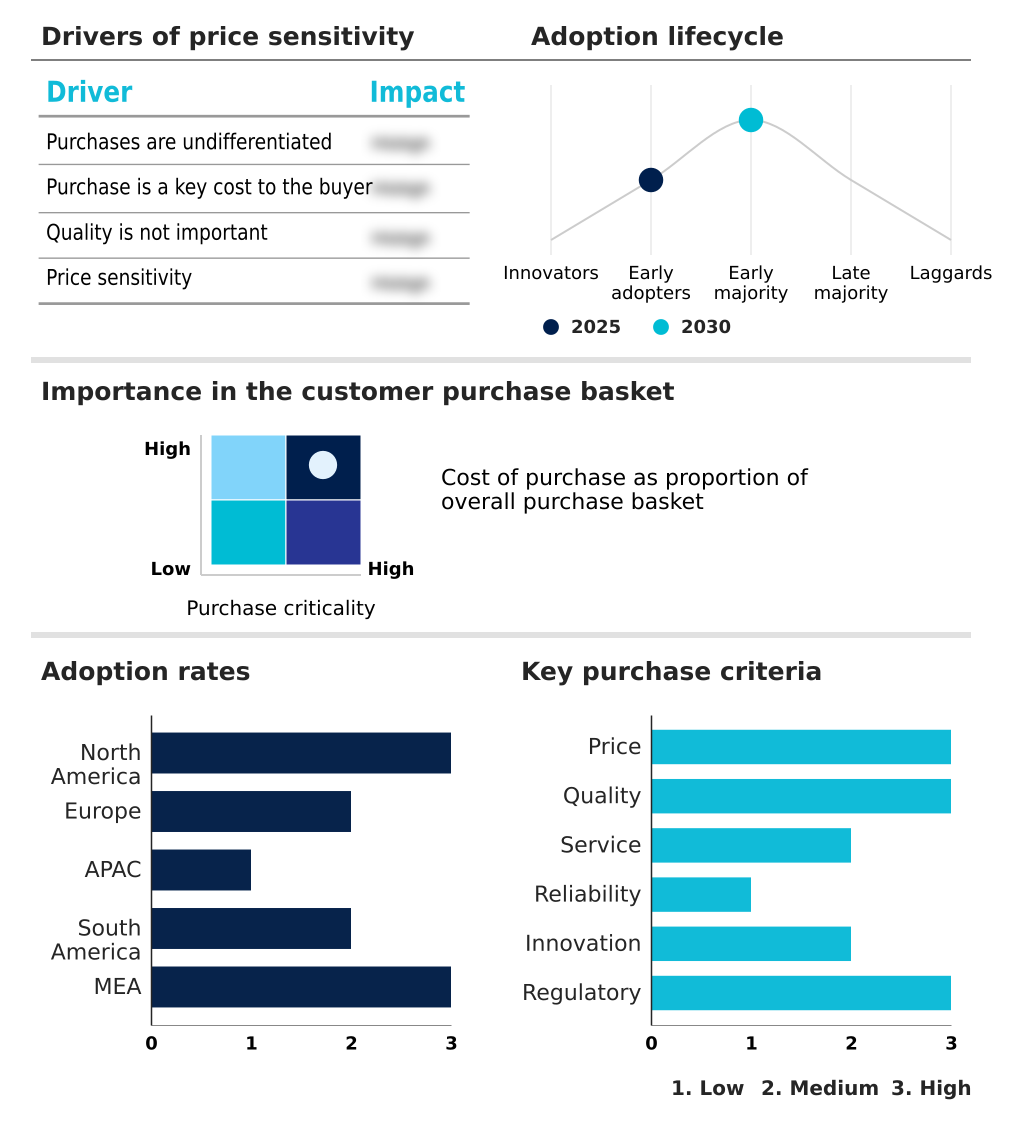
Customer Landscape of Commercial Telematics Industry
Competitive Landscape
Companies are implementing various strategies, such as strategic alliances, commercial telematics market forecast, partnerships, mergers and acquisitions, geographical expansion, and product/service launches, to enhance their presence in the industry.
CalAmp Corp. - Delivers cloud-based platforms and connected intelligence solutions, providing critical data for mobile asset monitoring and fleet protection.
The industry research and growth report includes detailed analyses of the competitive landscape of the market and information about key companies, including:
- CalAmp Corp.
- Continental AG
- DENSO Corp.
- Geotab Inc.
- Harman International Industries
- Lytx Inc
- NetraDyne Inc.
- Octo Telematics S.p.A.
- Omnitracs LLC
- PowerFleet Inc.
- Qualcomm Inc.
- Robert Bosch GmbH
- Samsara Inc.
- Solera Holdings LLC
- Teletrac Navman US Ltd.
- TomTom NV
- Trimble Inc.
- Verizon Connect
- Vontier Corp.
- Zonar Systems Inc.
Qualitative and quantitative analysis of companies has been conducted to help clients understand the wider business environment as well as the strengths and weaknesses of key industry players. Data is qualitatively analyzed to categorize companies as pure play, category-focused, industry-focused, and diversified; it is quantitatively analyzed to categorize companies as dominant, leading, strong, tentative, and weak.
Recent Development and News in Commercial telematics market
- In January 2025, ZF Friedrichshafen AG launched its AI-driven fleet orchestration system, SCALAR, in New Delhi to automate real-time planning and dispatching operations for commercial transporters, enhancing decision-making for commercial operators.
- In November 2024, Geotab Inc. announced the general availability of Geotab Ace, a generative AI assistant designed to process vast quantities of fleet data and provide immediate, natural-language responses to complex operational queries.
- In March 2025, the Federal Motor Carrier Safety Administration (FMCSA) in the US implemented an updated technical audit framework for Electronic Logging Devices, requiring providers to undergo rigorous annual security certifications to remain on the approved registry.
- In April 2025, Continental AG announced a strategic restructuring of its automotive group to focus specifically on the burgeoning market for connected and sustainable mobility solutions, aligning with the dual trends of digitalization and electrification.
Dive into Technavio’s robust research methodology, blending expert interviews, extensive data synthesis, and validated models for unparalleled Commercial Telematics Market insights. See full methodology.
| Market Scope | |
|---|---|
| Page number | 293 |
| Base year | 2025 |
| Historic period | 2020-2024 |
| Forecast period | 2026-2030 |
| Growth momentum & CAGR | Accelerate at a CAGR of 11.9% |
| Market growth 2026-2030 | USD 35741.0 million |
| Market structure | Fragmented |
| YoY growth 2025-2026(%) | 10.7% |
| Key countries | US, Canada, Mexico, Germany, UK, France, Italy, Spain, The Netherlands, China, Japan, India, South Korea, Australia, Indonesia, Brazil, Argentina, Chile, UAE, Saudi Arabia, South Africa, Egypt and Nigeria |
| Competitive landscape | Leading Companies, Market Positioning of Companies, Competitive Strategies, and Industry Risks |
Research Analyst Overview
- The commercial telematics market has evolved into a cornerstone of modern logistics, moving far beyond simple tracking. At its core, the telematics control unit interfaces with the onboard diagnostics port to collect a rich stream of data, including engine diagnostics and accelerometer data, transmitted via cellular networks or satellite networks to a central cloud platform.
- Here, machine learning algorithms analyze fuel consumption patterns and other metrics to deliver predictive maintenance alerts and facilitate driver behavior monitoring. This shift toward intelligent analysis is critical, as firms utilizing these insights report up to a 30% reduction in unplanned vehicle downtime.
- The integration of advanced features like computer vision for video telematics and specialized electric vehicle management for battery health monitoring is becoming standard. Furthermore, functionalities such as carbon footprint reporting and support for EV readiness modules are now influencing boardroom-level capital expenditure decisions, solidifying telematics as an indispensable strategic asset for any enterprise reliant on mobile operations.
What are the Key Data Covered in this Commercial Telematics Market Research and Growth Report?
-
What is the expected growth of the Commercial Telematics Market between 2026 and 2030?
-
USD 35.74 billion, at a CAGR of 11.9%
-
-
What segmentation does the market report cover?
-
The report is segmented by Product (Solutions, and Services), Platform (Embedded systems, Tethered systems, and Smartphone integration systems), Solution (Fleet management, Vehicle tracking, and Satellite navigation) and Geography (North America, Europe, APAC, South America, Middle East and Africa)
-
-
Which regions are analyzed in the report?
-
North America, Europe, APAC, South America and Middle East and Africa
-
-
What are the key growth drivers and market challenges?
-
Regulatory mandates and global safety standardization protocols , Data cybersecurity risks and information privacy vulnerabilities
-
-
Who are the major players in the Commercial Telematics Market?
-
CalAmp Corp., Continental AG, DENSO Corp., Geotab Inc., Harman International Industries, Lytx Inc, NetraDyne Inc., Octo Telematics S.p.A., Omnitracs LLC, PowerFleet Inc., Qualcomm Inc., Robert Bosch GmbH, Samsara Inc., Solera Holdings LLC, Teletrac Navman US Ltd., TomTom NV, Trimble Inc., Verizon Connect, Vontier Corp. and Zonar Systems Inc.
-
Market Research Insights
- The dynamic nature of the market is fueled by the continuous pursuit of enhanced operational visibility and cost reduction. The adoption of platforms enabling proactive safety stance measures has been shown to reduce accident-related costs by up to 40% for some fleets. Furthermore, advanced analytics tools are improving fleet intelligence by over 25%, allowing for more precise supply chain synchronization.
- This data-driven approach facilitates superior insurance risk mitigation and strengthens digital fleet management strategies. The ability to achieve such measurable outcomes underscores the technology's critical role in optimizing logistics and transport operations in a competitive landscape where efficiency gains are paramount.
We can help! Our analysts can customize this commercial telematics market research report to meet your requirements.
 RIA -
RIA - 
