



Composite Materials Market Size 2025-2029
The composite materials market size is forecast to increase by USD 37.24 billion, at a CAGR of 11.3% between 2024 and 2029.
- The market is witnessing significant growth, driven primarily by the increasing demand in the transportation industry. Composite materials offer numerous advantages, including high strength-to-weight ratio, corrosion resistance, and durability, making them an ideal choice for automotive and aerospace applications. Aramid fiber, basalt fiber, and carbon fiber are popular reinforcement choices for their unique properties, such as high strength and UV resistance. This sector's growth is further fueled by strategic collaborations, partnerships, and mergers and acquisitions, enabling companies to expand their product portfolios and geographical reach. However, the high cost of composites remains a significant challenge for market growth.
- Companies seeking to capitalize on the market opportunities must focus on cost reduction strategies, such as optimizing production processes and exploring alternative raw materials, while also investing in research and development to improve the performance and affordability of composite materials. The production process for composite materials is complex and resource-intensive, leading to higher production costs compared to traditional materials. Additionally, the limited availability of raw materials and the need for specialized equipment and expertise further contribute to the high cost. In the realm of renewable energy, composite materials are increasingly being used in wind energy applications due to their lightweight and high strength properties.
What will be the Size of the Composite Materials Market during the forecast period?
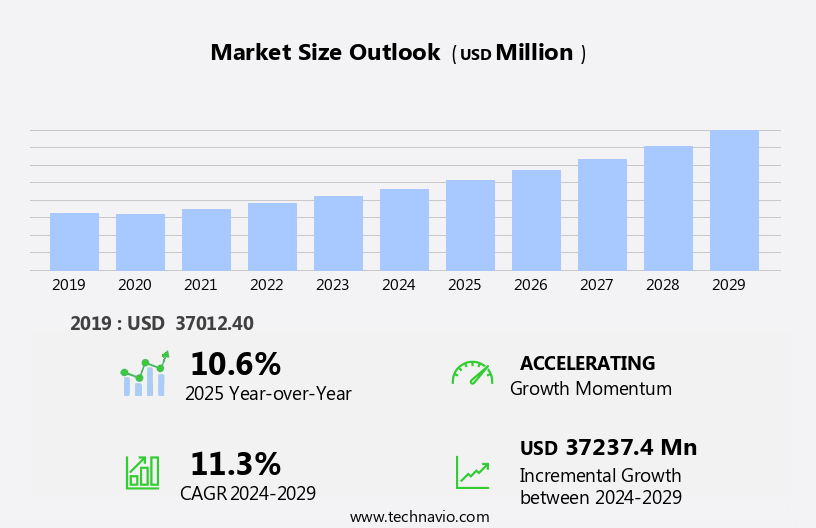
Explore in-depth regional segment analysis with market size data - historical 2019-2023 and forecasts 2025-2029 - in the full report.
Request Free Sample
The market continues to evolve, driven by advancements in material science and technological innovations. These materials, which include thermoset and thermoplastic composites, are renowned for their exceptional properties, such as high strength-to-weight ratio, creep resistance, and thermal stability. In various sectors, composite materials are making a significant impact. Construction applications utilize these materials for their excellent mechanical properties and resistance to chemical and environmental factors. In the automotive industry, composite components offer weight reduction and improved fuel efficiency. In the aerospace sector, composites ensure superior structural performance and durability.
Supply chain management plays a crucial role in the market, with companies focusing on optimizing production processes and ensuring quality control through non-destructive testing (NDT) techniques. Filament winding and resin transfer molding are common manufacturing techniques, while thermoset composites are known for their fatigue resistance and polymer matrix provides excellent design optimization. Thermoplastic composites offer advantages like ease of processing and recyclability. Sandwich structures, honeycomb cores, and advanced resin systems contribute to the efficiency and durability of wind turbine blades.
As the market continues to unfold, ongoing research and development efforts focus on improving surface treatment, material selection, and joining techniques. Standard testing methods ensure consistent quality and performance across various applications, from consumer electronics to biomedical applications. In summary, the market is a dynamic and evolving landscape, with continuous advancements in material science, manufacturing techniques, and applications across various sectors. The ongoing quest for improved properties, cost analysis, and sustainable production methods ensures a vibrant and innovative future for this industry.
How is this Composite Materials Industry segmented?
The composite materials industry research report provides comprehensive data (region-wise segment analysis), with forecasts and estimates in "USD million" for the period 2025-2029, as well as historical data from 2019-2023 for the following segments.
- Type
- Glass fiber
- Carbon fiber
- Aramid Fiber
- Others
- End-user
- Electricals and electronics
- Construction
- Aerospace and defense
- Others
- Material
- Polymer Matrix Composites
- Ceramic and carbon matrix composites
- Metal matrix composites
- Geography
- North America
- US
- Canada
- Europe
- France
- Germany
- Italy
- UK
- APAC
- China
- India
- Japan
- South America
- Brazil
- Rest of World (ROW)
- North America
By Type Insights
The Glass fiber segment is estimated to witness significant growth during the forecast period. The market encompasses various segments, including resin systems, molding techniques, and fiber types, with glass fiber holding the largest share. Glass fibers' superior attributes, such as strength, flexibility, durability, stability, low weight, and resistance to heat, temperature, and moisture, make them a preferred choice in industries like construction, wind energy, pipes and tanks, marine, and transportation. In the marine industry, glass fiber is utilized in applications such as underbody systems, deck lids, front-end modules, bumper beams, engine covers and instrument panels, and air ducts, owing to its excellent chemical resistance and electrical properties. Moreover, the development of glass fiber-reinforced composite materials for wind energy applications, particularly in the production of turbine blades, is expected to boost demand in the forecast period.
Additionally, material science advancements have led to the emergence of alternative fiber types, such as carbon, aramid, basalt, and natural fibers, which offer unique properties, including thermal stability, fatigue resistance, and UV resistance, respectively. These fibers are increasingly being adopted in various applications, including automotive, aerospace, sporting goods, and biomedical industries, through techniques like injection molding, compression molding, filament winding, and resin transfer molding. Furthermore, advancements in material science, design optimization, and supply chain management have enabled the production of high-performance composites with superior mechanical properties, thermal properties, and surface finishing, catering to the evolving demands of various industries.
Non-destructive testing methods, such as ultrasonic testing and X-ray radiography, are crucial in ensuring quality control and maintaining the integrity of composite structures. The market's growth is driven by factors like weight reduction, cost analysis, and the increasing adoption of composite materials in various industries, leading to a diverse range of applications and opportunities for innovation. These alliances are helping companies strengthen their capabilities, expand product portfolios, and improve innovation in medical composites, accelerating the development and adoption of advanced composite materials in transportation applications as well as others such as aerospace.
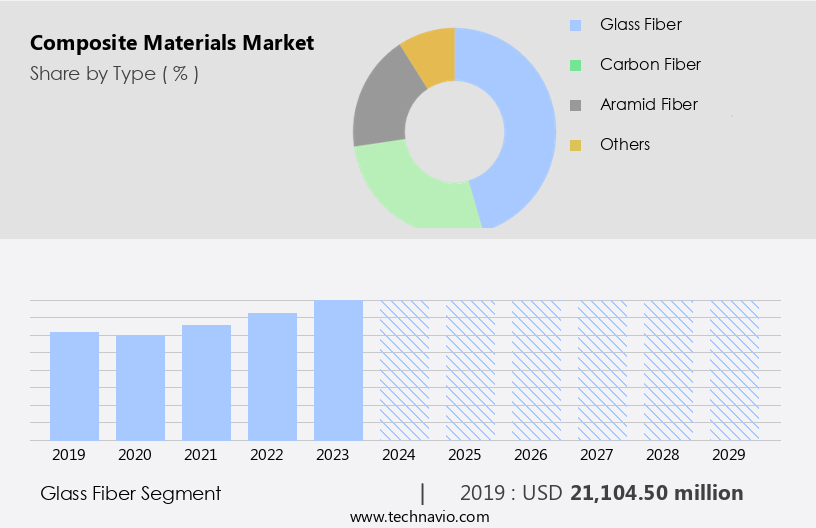
The Glass fiber segment was valued at USD 21.1 billion in 2019 and showed a gradual increase during the forecast period.
Regional Analysis
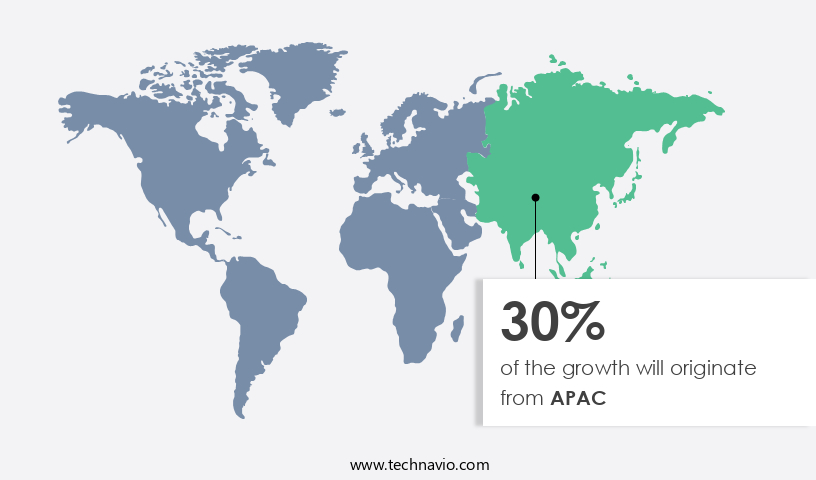
APAC is estimated to contribute 30% to the growth of the global market during the forecast period.Technavio's analysts have elaborately explained the regional trends and drivers that shape the market during the forecast period.
The market in North America is currently the largest in the global industry, driven by the presence of major manufacturers and end-users in the region. In the US, the automotive sector is the primary market for composite materials due to the increasing demand for lightweight, strong, and non-corrosive alternatives to steel. Glass fibers and carbon fibers, in particular, offer significant advantages in terms of weight reduction and improved mechanical properties, making them popular choices for automotive applications. The region's automotive industry is further bolstered by the presence of leading automakers like General Motors, and the steady growth of the market.
Additionally, composite materials find extensive use in various industries, including marine, construction, aerospace, wind energy, and consumer electronics, among others. Material science advancements have led to the development of innovative composite structures, such as sandwich structures, honeycomb structures, and filament winding, which offer enhanced thermal, electrical, and chemical resistance properties. The market also benefits from advancements in molding techniques, such as injection molding, compression molding, and resin systems, enabling cost-effective and efficient production. Supply chain management, standard testing methods, and non-destructive testing techniques ensure quality control and reliability. Natural fibers, basalt fibers, aramid fibers, and coupling agents are also gaining popularity due to their unique properties and cost-effectiveness.
The market is expected to continue its growth trajectory, driven by the increasing demand for lightweight and high-performance materials across various industries.
Market Dynamics
Our researchers analyzed the data with 2024 as the base year, along with the key drivers, trends, and challenges. A holistic analysis of drivers will help companies refine their marketing strategies to gain a competitive advantage.
What are the key market drivers leading to the rise in the adoption of Composite Materials Industry?
- The transportation industry's increasing requirement for lightweight and durable materials, leading to a surging demand for composite materials, serves as the primary market driver. Composite materials, including resin systems and fiber reinforcements such as carbon fiber and basalt fiber, have gained significant traction in various industries due to their superior properties. In consumer electronics applications, composite materials offer enhanced durability and thermal stability, making them ideal for manufacturing lightweight and robust devices. Surface finishing techniques have further expanded their usage, allowing for customizable aesthetics. The automotive sector has been a major adopter of composite materials, with a growing preference for carbon fiber and natural fibers in lightweight construction and e-mobility applications. These materials offer improved thermal properties, leading to better fuel efficiency and reduced CO2 emissions.
- Composite materials are increasingly used in vehicle components beyond body panels, including frames, rims, springs, and truck bed liners, providing damage resistance and increased safety. Joining techniques for composite materials have also advanced, enabling more complex designs and optimized structures. Standard testing methods ensure consistent quality and performance, ensuring that these materials meet the evolving demands of various industries. Sporting goods applications, such as bicycles and golf clubs, also benefit from the lightweight and durable nature of composite materials. Overall, the versatility and performance advantages of composite materials continue to drive their adoption across various industries.
What are the market trends shaping the Composite Materials Industry?
- Strategic collaborations, partnerships, and mergers and acquisitions are increasingly becoming the norm in today's business landscape. These approaches enable organizations to expand their reach, enhance their capabilities, and drive growth in a dynamic market. The market is witnessing significant strategic initiatives as companies collaborate and partner to develop advanced, cost-effective composite materials. In one notable instance, Mitsubishi Chemical Group completed the acquisition of CPC SRL in January 2024, a specialist in carbon fiber reinforced plastics for the automotive sector. This acquisition enhances Mitsubishi's capabilities in this field. In another move, Gurit expanded its presence in North America by acquiring 100% of FX Composites LLC's assets in February 2024. This acquisition strengthens Gurit's material finishing, kitting, and logistics capabilities in the marine and industrial sectors, improving its competitive position. Material science continues to play a crucial role in the development of composite materials for various applications, including construction and wind energy.
- Supply chain management and non-destructive testing (NDT) are essential aspects of ensuring the quality and reliability of these materials. Aramid fiber, a high-performance reinforcement material, is increasingly being used due to its excellent fatigue resistance and UV resistance. Manufacturers are employing techniques like filament winding and thermoset composites to create lightweight, strong materials. Thermoplastic composites, with their polymer matrix, offer advantages like ease of processing and recyclability. The reinforcement layup process is a critical step in the production of composite materials, ensuring optimal fiber alignment and material properties. These advancements are driving the growth and innovation in the market.
What challenges does the Composite Materials Industry face during its growth?
- The high cost of composites poses a significant challenge to the growth of the industry. In order to remain competitive and profitable, companies must find ways to reduce manufacturing costs or develop more cost-effective composite materials. This can be achieved through advancements in production techniques, raw material sourcing, or research and development of new composite technologies. Despite these challenges, the industry continues to grow due to the unique properties of composites, such as strength, lightweight, and durability, which make them ideal for use in various industries including aerospace, automotive, and construction. Composite materials, consisting of polymeric resins and reinforcing fibers such as glass or carbon, have gained significant attention in various industries due to their superior mechanical properties and lightweight nature. The high creep resistance and excellent compressive strength make them ideal for structural applications in aerospace and automotive sectors.
- However, the high cost of carbon fiber, primarily due to the cost and yield of its precursors and conversion processes, remains a challenge. The current carbon fiber is primarily PAN-based, with an average cost near USD21 per pound. In addition to structural applications, composite materials have found use in biomedical fields for their biocompatibility and excellent mechanical properties. Honeycomb structures and coupling agents are essential in enhancing the moisture absorption resistance and mechanical properties of these materials. Structural analysis and product design are critical in optimizing the performance and cost of composite materials in various applications. Curing processes are crucial in enhancing the physical properties of composite materials. Compression molding is a common manufacturing technique used to produce large, complex parts with high fiber volume fractions. Carbon fiber composites, in particular, have seen increased usage due to their high specific strength and modulus, which surpass those of steel, aluminum, wood, and performance plastics.
Exclusive Customer Landscape
The composite materials market forecasting report includes the adoption lifecycle of the market, covering from the innovator's stage to the laggard's stage. It focuses on adoption rates in different regions based on penetration. Furthermore, the composite materials market report also includes key purchase criteria and drivers of price sensitivity to help companies evaluate and develop their market growth analysis strategies.
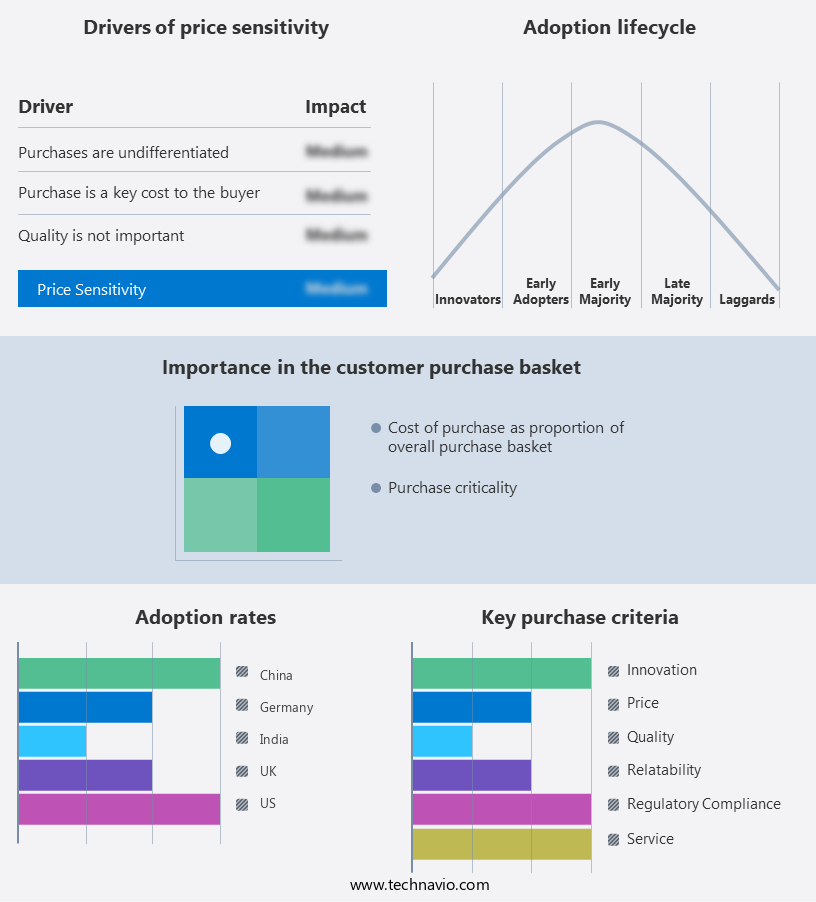
Customer Landscape
Key Companies & Market Insights
Companies are implementing various strategies, such as strategic alliances, composite materials market forecast, partnerships, mergers and acquisitions, geographical expansion, and product/service launches, to enhance their presence in the industry.
3M Co. - The company specializes in composite materials, with a focus on honeycomb sandwich composites, which serve as a key innovation in the aerospace industry.
The industry research and growth report includes detailed analyses of the competitive landscape of the market and information about key companies, including:
- 3M Co.
- Cabot Corp.
- China Jushi Co. Ltd.
- Compagnie de Saint Gobain SA
- COMPOSITES UNIVERSAL GROUP
- DuPont de Nemours Inc.
- Gurit Holding AG
- Hexcel Corp.
- Huntsman Corp.
- Kineco Ltd.
- Mitsubishi Chemical Corp.
- Momentive Performance Materials
- Nippon Electric Glass Co. Ltd.
- Owens Corning
- Scott Bader Co. Ltd.
- SGL Carbon SE
- Solvay SA
- Teijin Ltd.
- Toray Industries Inc.
- Veplas dd
Qualitative and quantitative analysis of companies has been conducted to help clients understand the wider business environment as well as the strengths and weaknesses of key industry players. Data is qualitatively analyzed to categorize companies as pure play, category-focused, industry-focused, and diversified; it is quantitatively analyzed to categorize companies as dominant, leading, strong, tentative, and weak.
Recent Development and News in Composite Materials Market
- In January 2024, Hexcel Corporation, a leading composite materials provider, announced the launch of a new lightweight composite material for the aerospace industry, which reduced fuel consumption by 5% without compromising structural integrity (Hexcel Corporation Press Release).
- In March 2024, SGL Carbon and Lanxess AG formed a strategic partnership to jointly develop and produce carbon fiber composites for the automotive industry, aiming to increase market share and reduce production costs (SGL Carbon Press Release).
- In April 2024, Teijin Limited, a major player in the market, completed the acquisition of Toho Tenax Europe GmbH, a leading European manufacturer of carbon fiber composites, significantly expanding its European production capacity and market presence (Teijin Limited Press Release).
- In May 2025, the European Union approved the use of composite materials in the construction sector for earthquake-resistant structures, opening a new market for composite material manufacturers and driving demand for these materials in the region (European Commission Press Release).
Research Analyst Overview
The market is experiencing significant advancements in various properties, driven by the integration of innovative technologies such as additive manufacturing and 3D printing. These techniques enable the optimization of fiber orientation, interlaminar shear strength, and tensile strength, among others, leading to enhanced performance in applications requiring high flexural strength, fatigue life, and impact resistance. Moreover, out-of-autoclave (ooa) curing and thermal conductivity are gaining traction due to their potential to reduce production costs and improve supply chain resilience. Fire resistance, compressive strength, and smoke emission are also crucial factors influencing the market, with regulatory compliance and product certification playing a vital role in ensuring safety and quality.
Technology roadmaps highlight the importance of performance optimization, cure monitoring, and non-destructive evaluation (NDE) techniques to address challenges related to fracture toughness, thermal expansion, and creep behavior. Additionally, specific strength, specific stiffness, dielectric strength, and acoustic properties are essential considerations for various industries, including aerospace and automotive, where lightweight and high-performing materials are essential. Regulatory compliance, quality assurance, and supply chain resilience are crucial aspects of the market, with regulatory bodies increasingly focusing on smoke emission, thermal expansion, and fire resistance. As the industry continues to evolve, it is essential to stay updated on the latest trends and advancements to remain competitive and meet the demands of diverse industries.
Dive into Technavio's robust research methodology, blending expert interviews, extensive data synthesis, and validated models for unparalleled Composite Materials Market insights. See full methodology.
|
Market Scope |
|
|
Report Coverage |
Details |
|
Page number |
231 |
|
Base year |
2024 |
|
Historic period |
2019-2023 |
|
Forecast period |
2025-2029 |
|
Growth momentum & CAGR |
Accelerate at a CAGR of 11.3% |
|
Market growth 2025-2029 |
USD 37.24 billion |
|
Market structure |
Fragmented |
|
YoY growth 2024-2025(%) |
10.6 |
|
Key countries |
US, China, Germany, UK, Japan, France, Canada, Brazil, India, and Italy |
|
Competitive landscape |
Leading Companies, Market Positioning of Companies, Competitive Strategies, and Industry Risks |
What are the Key Data Covered in this Composite Materials Market Research and Growth Report?
- CAGR of the Composite Materials industry during the forecast period
- Detailed information on factors that will drive the growth and forecasting between 2025 and 2029
- Precise estimation of the size of the market and its contribution of the industry in focus to the parent market
- Accurate predictions about upcoming growth and trends and changes in consumer behaviour
- Growth of the market across North America, Europe, APAC, South America, and Middle East and Africa
- Thorough analysis of the market's competitive landscape and detailed information about companies
- Comprehensive analysis of factors that will challenge the composite materials market growth of industry companies
We can help! Our analysts can customize this composite materials market research report to meet your requirements.
 RIA -
RIA - 
