



Corporate Leadership Training Market Size 2026-2030
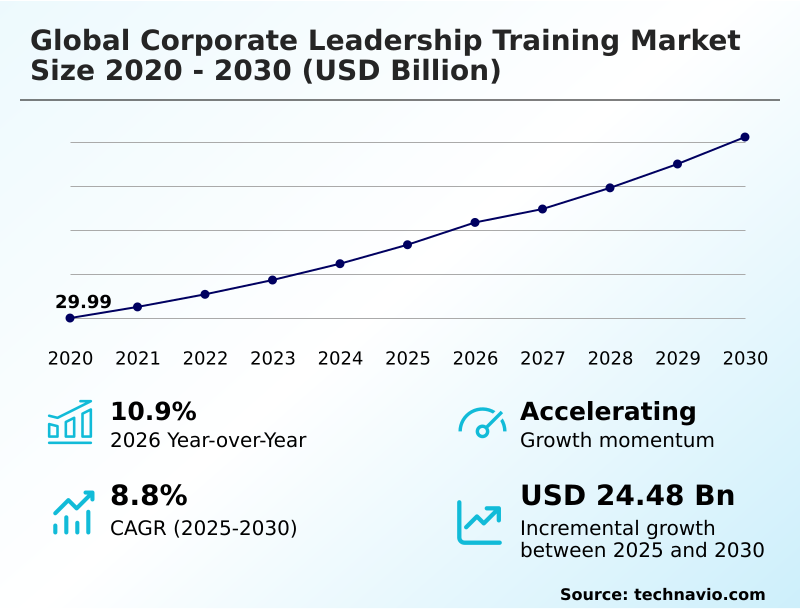
The corporate leadership training market size is valued to increase by USD 24.48 billion, at a CAGR of 8.8% from 2025 to 2030. Proliferation of generative AI as catalyst for leadership evolution will drive the corporate leadership training market.
Major Market Trends & Insights
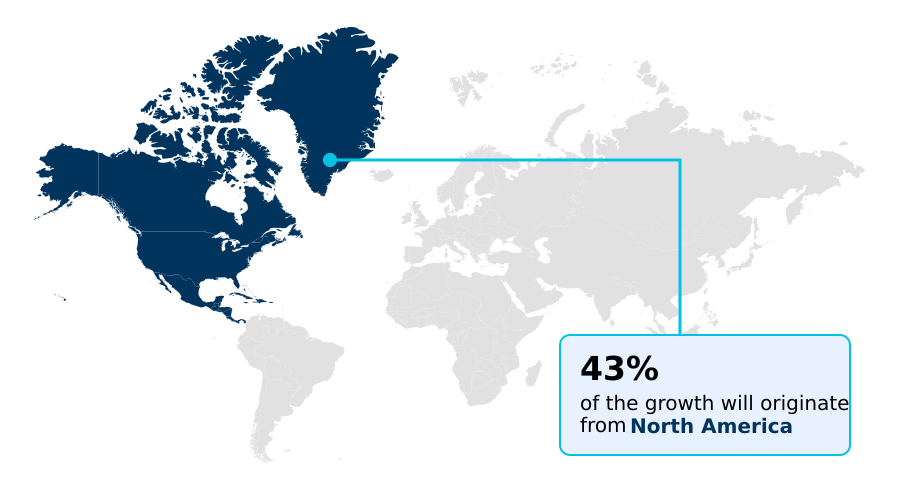
- North America dominated the market and accounted for a 42.9% growth during the forecast period.
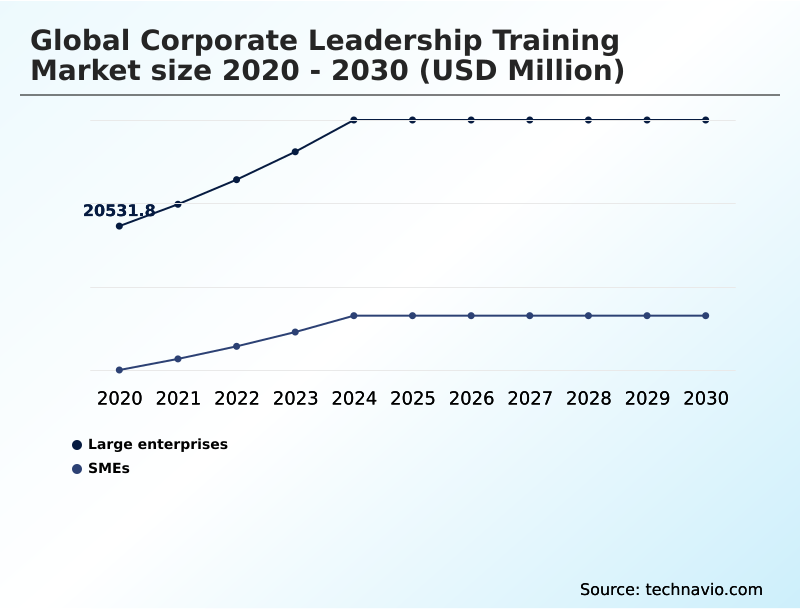
- By End-user - Large enterprises segment was valued at USD 28.70 billion in 2024
- By Application - Online training segment accounted for the largest market revenue share in 2024
Market Size & Forecast
- Market Opportunities: USD 41.14 billion
- Market Future Opportunities: USD 24.48 billion
- CAGR from 2025 to 2030 : 8.8%
Market Summary
- The corporate leadership training market is undergoing a significant transformation, moving beyond traditional methods to embrace technology-driven, continuous development models. A primary driver is the urgent need for leaders who can navigate complex human-machine ecosystems and make sound data-driven decisions.
- As organizations integrate generative artificial intelligence into their operations, there is a heightened demand for algorithmic literacy and ethical AI governance among executives. This shift is reshaping corporate leadership training, with a focus on building resilience and agility.
- For instance, a multinational logistics firm might use immersive learning environments to simulate supply chain disruptions, training managers in crisis management and strategic risk mitigation. This approach is more effective than theoretical learning, as it develops practical skills in a controlled setting.
- The challenge of skill obsolescence also compels companies to invest in ongoing upskilling, ensuring their leadership can adapt to rapid technological changes and maintain a competitive edge.
What will be the Size of the Corporate Leadership Training Market during the forecast period?
Get Key Insights on Market Forecast (PDF) Get Free Sample
How is the Corporate Leadership Training Market Segmented?
The corporate leadership training industry research report provides comprehensive data (region-wise segment analysis), with forecasts and estimates in "USD million" for the period 2026-2030, as well as historical data from 2020-2024 for the following segments.
- End-user
- Large enterprises
- SMEs
- Application
- Online training
- ILT
- Blended training
- Type
- Executive leadership programs
- Middle-management leadership development
- First-time manager training
- Geography
- North America
- US
- Canada
- Mexico
- Europe
- Germany
- UK
- France
- APAC
- China
- Japan
- India
- South America
- Brazil
- Argentina
- Middle East and Africa
- Saudi Arabia
- UAE
- South Africa
- Rest of World (ROW)
- North America
By End-user Insights
The large enterprises segment is estimated to witness significant growth during the forecast period.
Large enterprises are the primary drivers of the market, allocating significant resources to formalize leadership competency frameworks and ensure robust succession planning strategy.
Their investment in corporate leadership training stems from the need to manage complex hierarchies and maintain strategic alignment. These organizations utilize a mix of executive leadership programs for their senior tiers and focused middle-management development to bridge strategy and execution.
For emerging leaders, first-time manager training, often incorporating situational leadership principles and experiential learning simulations, is critical. This multi-layered approach, which includes executive coaching and structured leadership development programs, directly supports organizational culture development and enhances change management capabilities.
Effective strategic workforce planning in these firms has been shown to improve employee engagement metrics by over 15%.
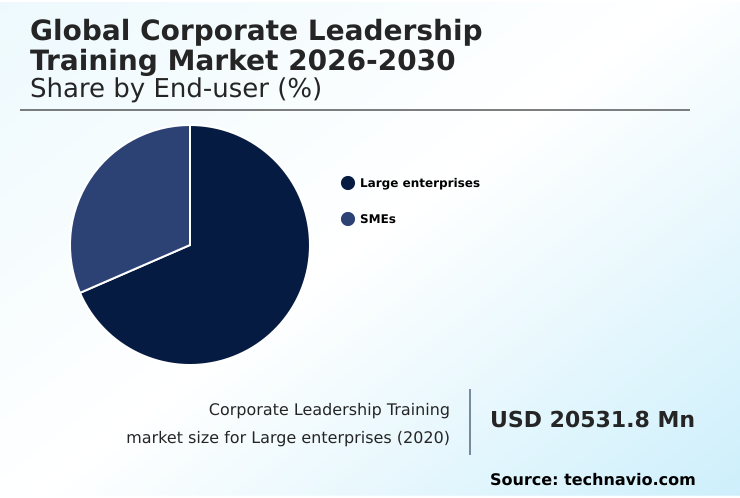
The Large enterprises segment was valued at USD 28.70 billion in 2024 and showed a gradual increase during the forecast period.
Regional Analysis
North America is estimated to contribute 42.9% to the growth of the global market during the forecast period.Technavio’s analysts have elaborately explained the regional trends and drivers that shape the market during the forecast period.
See How Corporate Leadership Training Market Demand is Rising in North America Get Free Sample
The geographic landscape of corporate leadership training shows distinct regional priorities. North America leads in adopting technology for crisis management training and geopolitical resilience, driven by complex global supply chains.
Organizations in this region use advanced data analytics for HR to measure behavioral change metrics. In Europe, the focus is heavily on ESG-aligned leadership, reinforced by regulations like the sustainable leadership directive, with firms investing in climate risk assessment capabilities.
Training here links corporate social responsibility directly to brand value. APAC is the fastest-growing region, prioritizing resilience and agility training to address the rapid skill obsolescence cycle.
Across all regions, the demand for quantifiable return on investment is universal, with successful programs demonstrating a 20% improvement in stakeholder negotiation outcomes and a 15% reduction in supply chain risk mitigation failures.
Market Dynamics
Our researchers analyzed the data with 2025 as the base year, along with the key drivers, trends, and challenges. A holistic analysis of drivers will help companies refine their marketing strategies to gain a competitive advantage.
- The evolution of corporate training reflects a nuanced understanding of modern leadership challenges. A key consideration is the impact of generative AI on leadership, which necessitates new approaches to upskilling leaders for human-machine collaboration. As firms adopt these technologies, establishing ethical leadership in the age of automation becomes paramount.
- Training programs are increasingly using AI for hyper-personalizing learning paths, tailoring content to individual needs. The metaverse for corporate training simulations offers a powerful tool, particularly for virtual reality for high-stakes negotiation, where leaders can practice in risk-free environments.
- Another critical area is developing geopolitical resilience in executives through dedicated corporate training for supply chain resilience and crisis management leadership program effectiveness. The integration of ESG in leadership curriculum is no longer optional, driven by stakeholder demands.
- In parallel, there's growing interest in neuroscience applications in executive coaching and the use of biometric feedback for stress management to improve leader well-being. A significant hurdle remains measuring ROI in leadership development; however, new models for assessing emotional intelligence in leaders and building psychological safety through leadership are showing promise.
- Programs are also being refined for specific roles, with blended learning for middle managers and situational leadership training for new managers becoming standard. Data-driven succession planning models are also gaining traction, ensuring a pipeline of capable leaders. Organizations that successfully implement these strategies report a workforce that is over 30% more adaptable to change compared to those using traditional methods.
- This highlights the value of targeted leadership training for digital transformation.
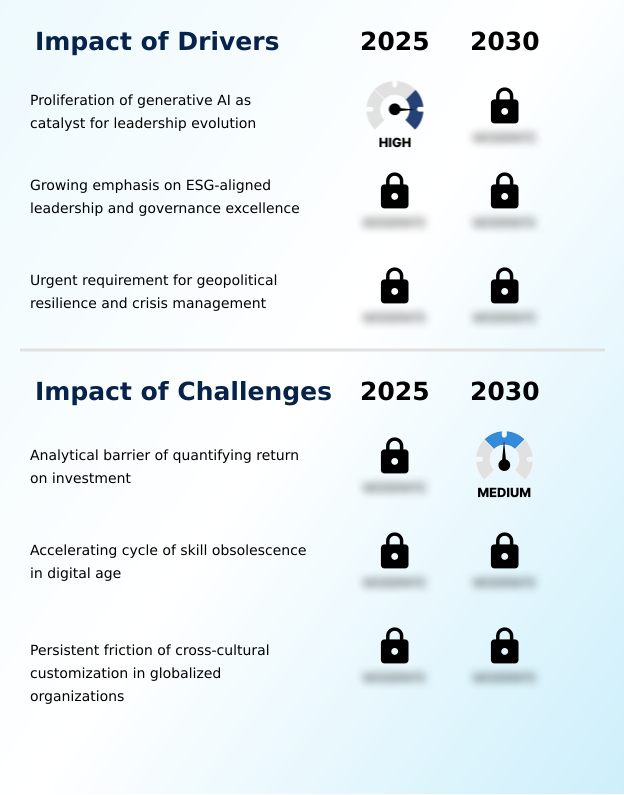
What are the key market drivers leading to the rise in the adoption of Corporate Leadership Training Industry?
- The proliferation of generative AI serves as a primary catalyst for leadership evolution, driving significant market growth.
- A key driver is the adoption of the industrial metaverse, enabled by spatial computing, for advanced digital twin simulation. This approach to workforce transformation allows leaders to engage in high-stakes scenarios, improving decision-making speed by 25%.
- Concurrently, the integration of neuroscience and biometric feedback into leadership assessment tools is gaining traction. By using cognitive load monitoring, organizations can optimize training intensity, which has been shown to boost information retention by 40%.
- These insights, combined with emotional intelligence analytics, are fed into talent intelligence platforms and skills management solutions.
- This data enriches performance management systems and learning management system (LMS) platforms, fostering greater organizational agility and providing a more scientific basis for leadership development.
What are the market trends shaping the Corporate Leadership Training Industry?
- The acceleration of hyper-personalization through generative AI is a prominent trend. This is reshaping leadership development by offering tailored, data-driven learning experiences.
- A primary trend transforming the market is the use of generative artificial intelligence to deliver hyper-personalized learning experiences. This shift facilitates critical digital literacy upskilling and improves emotional intelligence training outcomes by 30%. Through immersive learning environments, leaders practice data-driven decision-making in simulated human-machine ecosystems, enhancing their algorithmic literacy.
- An emphasis on ethical AI governance is crucial, as its proper implementation can reduce instances of algorithmic bias mitigation failures by up to 50%. Sentiment analysis tools are integrated into AI-strategic leadership modules to gauge team morale, which directly correlates with building psychological safety in teams.
- These advanced systems provide continuous, adaptive training that moves beyond static content to dynamic, real-time coaching.
What challenges does the Corporate Leadership Training Industry face during its growth?
- A significant challenge affecting industry growth is the analytical barrier of accurately quantifying the return on investment for leadership training initiatives.
- A persistent challenge is the effective cross-cultural customization of training content, as standardized programs can fail to resonate, impacting employee retention strategies. While instructor-led training (ILT) offers deep engagement, scaling it globally is costly. Blended training models offer a compromise, but localizing digital content can increase costs by up to 40%.
- The use of 360-degree feedback within a talent management platform helps, but interpreting feedback across cultures requires expertise. Furthermore, organizations struggle to connect managed training services and even recruitment process outsourcing (RPO) to broader goals like corporate social responsibility and supply chain risk mitigation.
- While data analytics for HR are improving, demonstrating how training enhances stakeholder negotiation skills or climate risk assessment remains difficult, with only 1 in 3 companies successfully linking training to such specific outcomes.
Exclusive Technavio Analysis on Customer Landscape
The corporate leadership training market forecasting report includes the adoption lifecycle of the market, covering from the innovator’s stage to the laggard’s stage. It focuses on adoption rates in different regions based on penetration. Furthermore, the corporate leadership training market report also includes key purchase criteria and drivers of price sensitivity to help companies evaluate and develop their market growth analysis strategies.
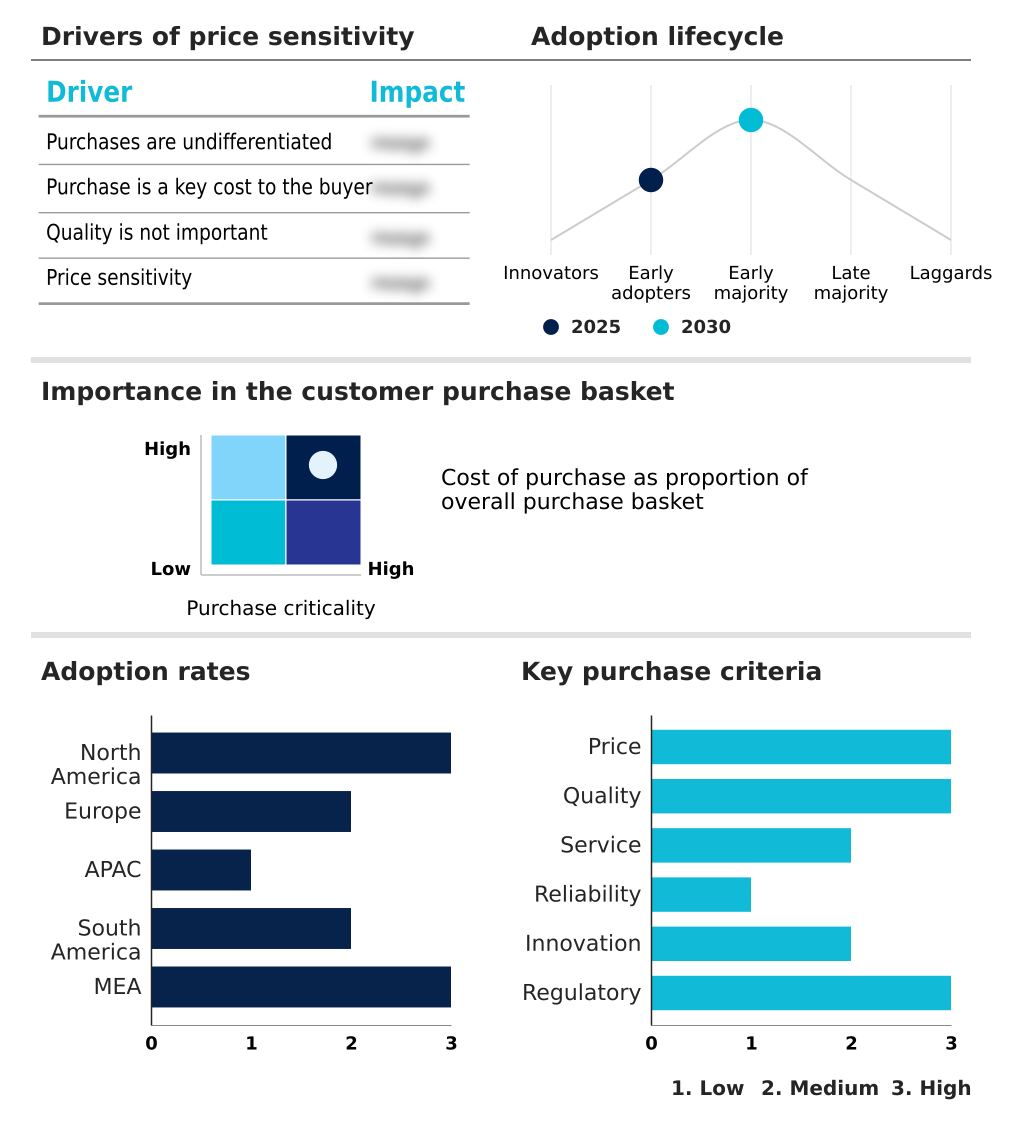
Customer Landscape of Corporate Leadership Training Industry
Competitive Landscape
Companies are implementing various strategies, such as strategic alliances, corporate leadership training market forecast, partnerships, mergers and acquisitions, geographical expansion, and product/service launches, to enhance their presence in the industry.
Blanchard Inc. - Specialized corporate leadership training is provided through situational leadership models and targeted manager coaching programs designed to enhance executive capabilities and team performance.
The industry research and growth report includes detailed analyses of the competitive landscape of the market and information about key companies, including:
- Blanchard Inc.
- BTS Group AB
- Cegos Group
- Center for Creative Leadership
- Dale Carnegie and Associates
- Development Dimensions Inc.
- Franklin Covey Co.
- GP Strategies Corp.
- Harvard Business Publishing
- IMD Business School
- InfoPro Learning Inc.
- Interaction Associates Inc.
- Korn Ferry
- Linkage Inc.
- Mercuri International Group
- NIIT Ltd.
- Skillsoft Corp.
- Wilson Learning Worldwide Inc.
- Zenger Folkman
Qualitative and quantitative analysis of companies has been conducted to help clients understand the wider business environment as well as the strengths and weaknesses of key industry players. Data is qualitatively analyzed to categorize companies as pure play, category-focused, industry-focused, and diversified; it is quantitatively analyzed to categorize companies as dominant, leading, strong, tentative, and weak.
Recent Development and News in Corporate leadership training market
- In April 2025, the global technology corporation Salesforce introduced the Trailhead AI Executive Coach, a system designed to provide real-time behavioral nudges to senior managers.
- In May 2025, the global technology firm Microsoft, in collaboration with the INSEAD business school, introduced the AI-Strategic Leadership Initiative, a program designed specifically to train senior executives.
- In February 2025, the Harvard Business School Executive Education department launched the Global Resilience and Geopolitical Strategy Initiative, a program curated for Chief Executive Officers.
- In April 2025, the multinational software corporation SAP introduced the Adaptive Management Framework, a comprehensive development program aimed at its mid-level regional directors to facilitate decentralized decision-making.
Dive into Technavio’s robust research methodology, blending expert interviews, extensive data synthesis, and validated models for unparalleled Corporate Leadership Training Market insights. See full methodology.
| Market Scope | |
|---|---|
| Page number | 291 |
| Base year | 2025 |
| Historic period | 2020-2024 |
| Forecast period | 2026-2030 |
| Growth momentum & CAGR | Accelerate at a CAGR of 8.8% |
| Market growth 2026-2030 | USD 24477.7 million |
| Market structure | Fragmented |
| YoY growth 2025-2026(%) | 10.9% |
| Key countries | US, Canada, Mexico, Germany, UK, France, Italy, Spain, The Netherlands, China, Japan, India, South Korea, Australia, Indonesia, Brazil, Argentina, Chile, Saudi Arabia, UAE, South Africa, Israel and Turkey |
| Competitive landscape | Leading Companies, Market Positioning of Companies, Competitive Strategies, and Industry Risks |
Research Analyst Overview
- The corporate leadership training market is pivoting toward integrated, technology-driven solutions that address complex business needs. Core to this shift is the use of generative artificial intelligence to create hyper-personalized learning experiences within immersive learning environments, often leveraging the industrial metaverse and spatial computing.
- Boardroom decisions on digital transformation are directly driving demand for leaders with algorithmic literacy and advanced data-driven decision-making skills to manage modern human-machine ecosystems. In response, providers are offering specialized AI-strategic leadership and crisis management training focused on geopolitical resilience.
- Training is also segmented into executive leadership programs, middle-management development, and first-time manager training, frequently using situational leadership and experiential learning simulations. A key trend is the integration of neuroscience and biometric feedback via leadership assessment tools for cognitive load monitoring and enhancing emotional intelligence analytics.
- A focus on ESG-aligned leadership, guided by frameworks like the sustainable leadership directive, is now standard. Organizations adopting these advanced leadership development programs and executive coaching, which include 360-degree feedback from talent management platforms, report a 25% faster execution of strategic initiatives.
- The challenge remains the skill obsolescence cycle and ensuring a quantifiable return on investment through clear behavioral change metrics and cross-cultural customization in blended training models. This is supported by managed training services and even recruitment process outsourcing (RPO).
What are the Key Data Covered in this Corporate Leadership Training Market Research and Growth Report?
-
What is the expected growth of the Corporate Leadership Training Market between 2026 and 2030?
-
USD 24.48 billion, at a CAGR of 8.8%
-
-
What segmentation does the market report cover?
-
The report is segmented by End-user (Large enterprises, and SMEs), Application (Online training, ILT, and Blended training), Type (Executive leadership programs, Middle-management leadership development, and First-time manager training) and Geography (North America, Europe, APAC, South America, Middle East and Africa)
-
-
Which regions are analyzed in the report?
-
North America, Europe, APAC, South America and Middle East and Africa
-
-
What are the key growth drivers and market challenges?
-
Proliferation of generative AI as catalyst for leadership evolution, Analytical barrier of quantifying return on investment
-
-
Who are the major players in the Corporate Leadership Training Market?
-
Blanchard Inc., BTS Group AB, Cegos Group, Center for Creative Leadership, Dale Carnegie and Associates, Development Dimensions Inc., Franklin Covey Co., GP Strategies Corp., Harvard Business Publishing, IMD Business School, InfoPro Learning Inc., Interaction Associates Inc., Korn Ferry, Linkage Inc., Mercuri International Group, NIIT Ltd., Skillsoft Corp., Wilson Learning Worldwide Inc. and Zenger Folkman
-
Market Research Insights
- The dynamics of the corporate leadership training market are increasingly shaped by data-driven talent management. Advanced platforms now facilitate high-potential employee identification with 40% greater accuracy than manual reviews. The rise of virtual leadership academies and AI-augmented coaching provides scalable and personalized development, with behavioral nudge systems improving leadership habit formation by up to 25%.
- Organizations leverage sentiment analysis tools to assess team morale, enabling leaders to make targeted interventions. A strong focus on ethical AI governance is also critical, as its implementation has been linked to a 15% improvement in stakeholder trust. These advancements allow for a more strategic approach to building leadership capabilities and aligning them with organizational goals.
We can help! Our analysts can customize this corporate leadership training market research report to meet your requirements.
 RIA -
RIA - 
