


Craft Beer Market Size 2025-2029
The craft beer market size is forecast to increase by USD 123.2 billion at a CAGR of 13.7% between 2024 and 2029.
- The market is experiencing significant growth, driven by several key trends. One of the primary factors fueling market expansion is the increasing popularity of craft beer in developing countries. This global phenomenon is being driven by the rising number of consumers seeking unique and authentic beer experiences. The growing demand for unique flavors in the market has led many small-scale breweries to invest in high-quality microbrewery equipment to enhance their production capabilities. Another significant trend is the growing population of millennials, who are increasingly embracing craft beer due to its artisanal appeal and diverse flavors. However, the high price point of craft beer may pose a challenge to market growth. Despite this, the market is expected to continue its upward trajectory, driven by these and other emerging trends.
What will be the Size of the Market During the Forecast Period?
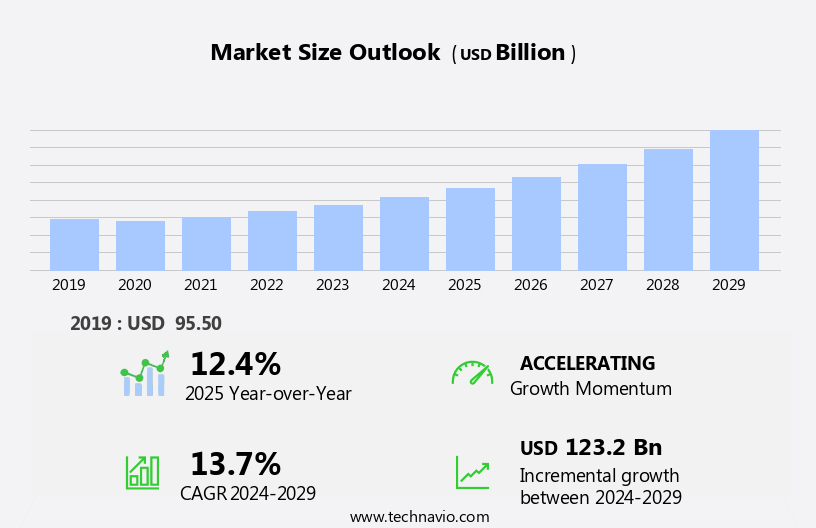
- The market has experienced significant sales growth in recent years, driven by evolving consumer tastes and the proliferation of microbreweries producing artisanal brews. Consumers are increasingly seeking out locally sourced ingredients and premium quality beers, leading to a shift away from mass-produced, bottled beers. This trend is particularly strong among millennials, who view craft beer as a social drink and appreciate the health benefits associated with its consumption. Regulations play a crucial role in the craft beer industry, with brewers navigating complex rules surrounding production, labeling, and distribution. Promotion challenges also exist, as brewers strive to differentiate themselves in a crowded marketplace.
- Moreover, party culture and collaborations have emerged as effective marketing strategies, with breweries partnering to create innovative flavors using indigenous ingredients and Western cultural influences. Microbreweries are at the forefront of this trend, with many investing in brewing solutions and brewpub equipment to meet growing demand. Brewer associations also play a vital role in advocating for tax breaks and other industry initiatives, helping to support the growth of the market. Beer festivals have become popular events, providing opportunities for consumers to sample new brews and connect with brewers. The beer industry as a whole continues to adapt to these trends, with a focus on delivering high-quality, unique offerings to meet the demands of discerning consumers. The market dynamics of the craft beer industry are constantly evolving, with new breweries and innovative flavors emerging regularly. Overall, the future looks bright for the market, as it continues to capture the imagination and loyalty of consumers around the world.
How is this market segmented and which is the largest segment?
The market research report provides comprehensive data (region-wise segment analysis), with forecasts and estimates in "USD billion" for the period 2025-2029, as well as historical data from 2019-2023 for the following segments.
- Product
- India pale ale
- Seasonal craft beer
- Pale ale
- Amber ale
- Others
- Distribution Channel
- Off-trade
- On-trade
- Geography
- North America
- Canada
- US
- Europe
- Germany
- UK
- France
- APAC
- China
- India
- Japan
- South America
- Brazil
- Argentina
- Middle East and Africa
- North America
By Product Insights
- The India pale ale segment is estimated to witness significant growth during the forecast period.
India Pale Ale (IPA), a stronger variant of pale ale with higher alcohol content and distinctive bitter taste, gained popularity through American craft beer revival in the late twentieth century. Originally carried by British colonists to India, IPA had nearly disappeared until its reincreasence. Today, it is the leading craft beer style globally, favored for its diverse exotic flavors. IPA's bitterness results from regular hops addition, making it a preferred choice among consumers worldwide. This beer style's popularity is driven by its unique character and health benefits associated with moderate beer consumption. Local ingredients are increasingly used in brewing IPA, contributing to its authenticity and appeal.
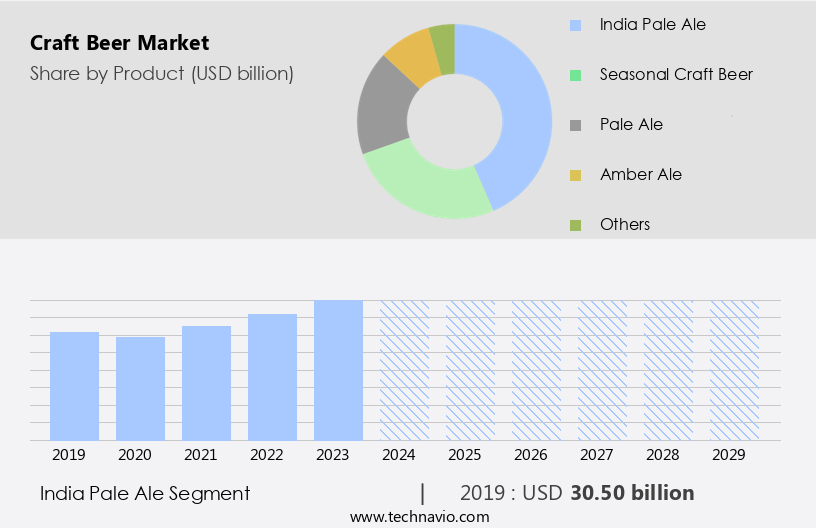
Get a glance at the market report of share of various segments Request Free Sample
The India pale ale segment was valued at USD 30.50 billion in 2019 and showed a gradual increase during the forecast period.
Regional Analysis
- North America is estimated to contribute 35% to the growth of the global market during the forecast period.
Technavio's analysts have elaborately explained the regional trends and drivers that shape the market during the forecast period.
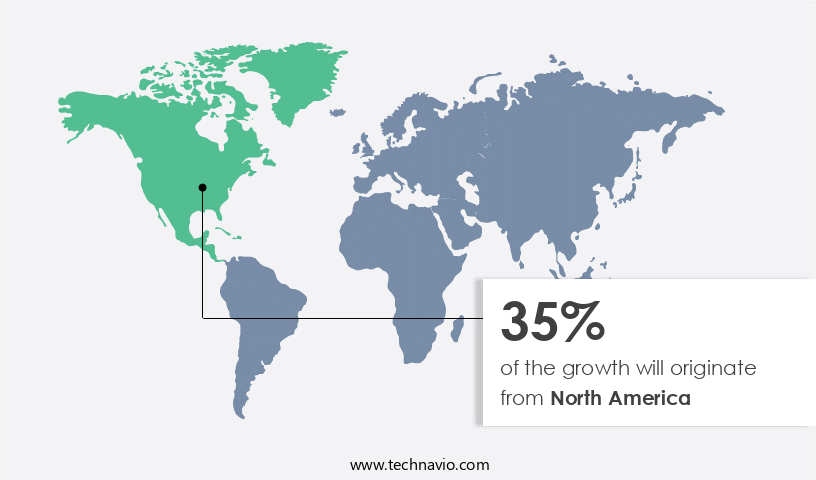
For more insights on the market share of various regions, Request Free Sample
The US the market is experiencing significant growth due to the increasing preference for premium, locally sourced beer. Sustainability and community-focused breweries are gaining popularity, leading to collaborations among industry players. With a large domestic market and high export demand, the US is a major player in the global craft beer industry. The market is witnessing an influx of new entrants, particularly small-scale microbreweries, contributing to its expansion. The growing trend towards supporting local businesses and the desire for unique, high-quality beer products are key drivers of this market's growth. The market is expected to continue its positive trajectory during the forecast period.
Market Dynamics
Our researchers analyzed the data with 2024 as the base year, along with the key drivers, trends, and challenges. A holistic analysis of drivers will help companies refine their marketing strategies to gain a competitive advantage.
What are the key market drivers leading to the rise in adoption of Craft Beer Market?
Increasing popularity of craft beer in developing countries is the key driver of the market.
- The market in developing countries, including the MEA, Latin America, Eastern Europe, and South-East Asia, exhibits significant growth potential. Economic growth in APAC, MEA, and Latin American regions has led to increased disposable income for consumers. Countries like India, China, Brazil, Argentina, Indonesia, Hungary, Nigeria, Iran, and Turkey are experiencing an uptick in per capita income and consumer expenditure. By 2030, China is projected to surpass the United States as the world's largest economic power, while India is anticipated to rank third. This economic growth has fueled the demand for premium quality craft beers, artisanal brews, and microbreweries. Consumers in these regions are increasingly seeking out innovative flavors made from local ingredients, reflecting a shift towards community-focused, sustainable, and indigenous brewing practices.
- Moreover, millennials and Gen Z are driving this trend, viewing craft beer as a social drink with health benefits. The market is witnessing collaborations between breweries and a focus on local sourcing and sustainability. Brewer associations and brewing solutions providers are catering to this demand by offering brewpub equipment and premium beer production techniques. Beer festivals have become popular platforms for showcasing these brews and fostering a vibrant beer culture.
What are the market trends shaping the Craft Beer Market?
Rising population of millennials consuming craft beer worldwide is the upcoming trend in the market.
- The market is experiencing significant growth due to shifting consumer preferences towards artisanal brews and microbreweries. Millennials, a demographic with substantial spending power, are driving this trend as they seek out innovative flavors and local ingredients in their social drinking experiences. The popularity of premium quality beers has led to an increase in sales, with microbreweries and community-focused breweries gaining traction. The use of indigenous ingredients and sustainable brewing solutions is also a key trend, aligning with the growing focus on health benefits and sustainability.
- Moreover, beer festivals and collaborations between breweries further fuel consumer excitement for this dynamic industry. With the Western culture's influence on beer culture, the market is expected to continue expanding, offering a variety of flavors and techniques to cater to diverse consumer preferences. The rise of independent producers and the emergence of Gen Z as a significant consumer segment will add to the market's growth in the coming years.
What challenges does Craft Beer Market face during the growth?
High price of craft beer is a key challenge affecting the market growth.
- The market has witnessed an upward trend in sales, driven by the evolving consumer tastes towards artisanal brews and microbreweries. These breweries often use local ingredients to create innovative flavors, appealing to the health and wellness conscious millennial demographic. Craft beer is no longer just a social drink but a premium experience, with consumers seeking out flavors and techniques that deviate from the traditional industrial lager. Microbreweries are at the forefront of this trend, focusing on sustainability and community-building through local sourcing and collaborations. The brewer associations and brewing solutions providers support this growth, offering brewpub equipment and solutions to help independent producers meet the demands of this dynamic market.
- Moreover, despite the premium pricing of craft beer, which can cost almost twice that of regular beer, the market continues to expand. The high cost is attributed to the increased cost of raw materials, labor, and production expenses. However, the unique flavors, techniques, and the overall beer culture experience make craft beer a desirable choice for many consumers. The influence of Western culture and the growing popularity of beer festivals further fuel the growth of the market. As consumer preferences continue to shift towards premium beer offerings, it is expected that the market will continue to evolve, with a focus on indigenous ingredients, sustainable practices, and collaborative brewing initiatives.
Exclusive Customer Landscape
The market forecasting report includes the adoption lifecycle of the market, covering from the innovator's stage to the laggard's stage. It focuses on adoption rates in different regions based on penetration. Furthermore, the market report also includes key purchase criteria and drivers of price sensitivity to help companies evaluate and develop their market growth analysis strategies.
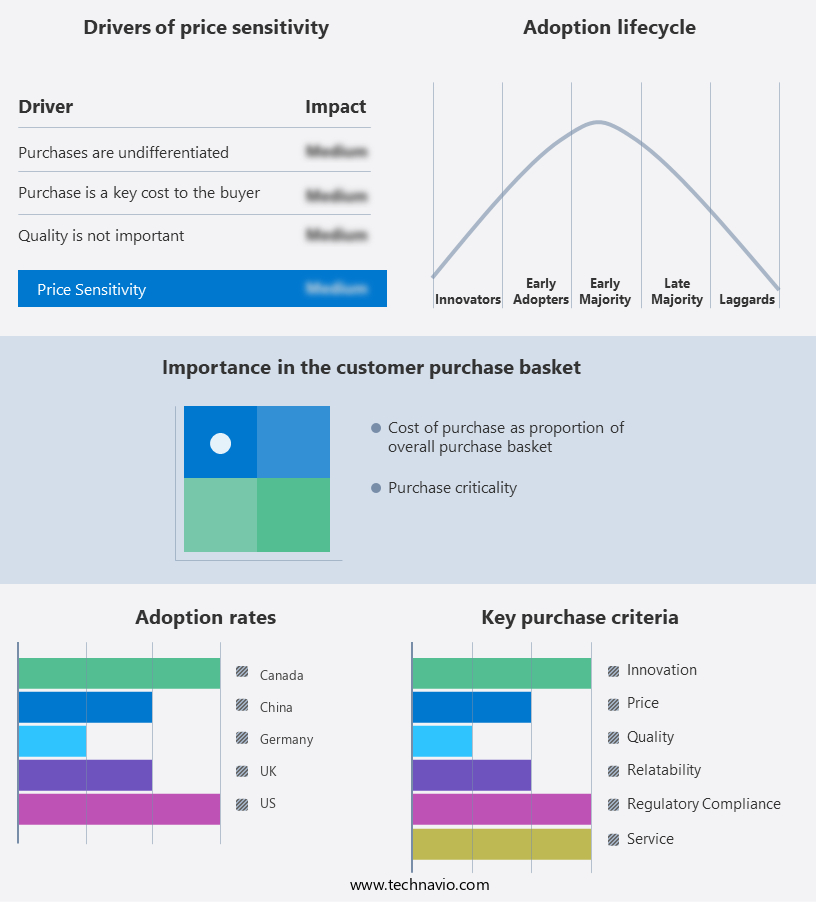
Customer Landscape
Key Companies & Market Insights
Companies are implementing various strategies, such as strategic alliances, market forecast , partnerships, mergers and acquisitions, geographical expansion, and product/service launches, to enhance their presence in the market.
Anheuser Busch InBev SA NV - The company offers craft beer such as Budweiser and Bud Light, Corona, Stella Artois, Becks, Leffe, Hoegaarden, Quilmes, Victoria, Modelo Especial, Michelob Ultra, Sedrin, Klinskoye, Sibirskaya Korona, Chernigivske, Cass, and Jupiler.
The market research and growth report includes detailed analyses of the competitive landscape of the market and information about key companies, including:
- Asahi Group Holdings Ltd.
- Brasserie De La Senne
- BrewDog Plc
- Buxton Brewery Co. Ltd.
- Carlsberg Breweries AS
- Cloudwater Brew Co.
- D.G. Yuengling and Son Inc.
- Diageo PLC
- Duvel Moortgat NV
- Heineken NV
- Magic Rock Brewing Co. Ltd.
- Mikkeller APS
- Palm Belgian Craft Brewers
- SPRING VALLEY BREWERY CO.
- Stone Brewing Co. LLC
- Swinkels Family Brewers
- The Boston Beer Co. Inc.
- United Breweries Ltd.
Qualitative and quantitative analysis of companies has been conducted to help clients understand the wider business environment as well as the strengths and weaknesses of key market players. Data is qualitatively analyzed to categorize companies as pure play, category-focused, industry-focused, and diversified; it is quantitatively analyzed to categorize companies as dominant, leading, strong, tentative, and weak.
Research Analyst Overview
The market has been experiencing a significant increase in sales over the past decade, with consumers increasingly drawn to the unique flavors, local ingredients, and artisanal brews that microbreweries and independent producers offer. This trend is driven by a number of factors, including evolving consumer tastes, the rise of social media, and the growing importance of community-focused businesses. Microbreweries, which produce fewer than 15,000 barrels of beer per year, have been at the forefront of this growth. These small-scale breweries often use local ingredients and innovative techniques to create distinctive flavors that appeal to consumers.
Moreover, the use of indigenous ingredients and collaborations between breweries has also become a popular trend, reflecting a growing appreciation for the unique characteristics of different regions and cultures. Consumer preferences for craft beer are shaped by a number of factors. Millennials, in particular, have been identified as key drivers of the market. This generation values authenticity, sustainability, and the social experience of drinking beer. Craft beer is seen as a premium product that offers all of these qualities, making it an attractive choice for many consumers. The health benefits associated with craft beer are another factor driving growth in the market.
In addition, while industrial lagers have long been criticized for their high calorie and sugar content, craft beers often use natural ingredients and offer a wider range of flavors and styles. This has led to a growing interest in craft beer as a healthier alternative to mass-produced beers. The market is also being influenced by broader cultural trends. The rise of beer festivals, for example, has provided a platform for consumers to discover new brews and learn about the brewing process. Brewpubs, which combine the production and sale of beer on-site, have also become popular destinations for consumers looking for a unique and authentic beer-drinking experience.
Moreover, brewing solutions and brewpub equipment have also played a role in the growth of the market. Advances in brewing technology have made it easier for small-scale breweries to produce high-quality beer, while the availability of specialized equipment has allowed brewers to experiment with new techniques and flavors. Despite the growth of the market, there are still challenges facing independent producers. The market is seeing increased demand for advanced macro brewery equipment, as larger breweries invest in state-of-the-art technology to scale production while maintaining quality.
Moreover, competition is intensifying, with larger breweries and international players entering the market and offering their own craft-style beers. The market is exploring innovative collaborations with sugar confectionary brands to create unique beer-flavored sweets, offering consumers a new and exciting sensory experience. Sustainability and local sourcing are also becoming increasingly important considerations for consumers, putting pressure on breweries to adopt environmentally-friendly practices and source ingredients locally.
In addition, the market is expected to continue growing, driven by consumer demand for unique and authentic brews. Premium quality beers, innovative flavors, and community-focused breweries are likely to be key trends in the years to come. The market continues to thrive as pubs, bars, and nightclubs increasingly feature locally brewed options to cater to the growing demand for unique and artisanal beverages. As the market becomes more competitive, breweries will need to focus on differentiating themselves through their products, branding, and customer experience. In conclusion, the market is a dynamic and evolving industry that is being shaped by a range of factors, from consumer preferences and cultural trends to technological innovations and competitive pressures. As the market continues to grow, breweries will need to adapt to changing consumer tastes and stay ahead of the competition by offering unique and high-quality products and experiences.
|
Market Scope |
|
|
Report Coverage |
Details |
|
Page number |
204 |
|
Base year |
2024 |
|
Historic period |
2019-2023 |
|
Forecast period |
2025-2029 |
|
Growth momentum & CAGR |
Accelerate at a CAGR of 13.7% |
|
Market growth 2025-2029 |
USD 123.2 billion |
|
Market structure |
Fragmented |
|
YoY growth 2024-2025(%) |
12.4 |
|
Key countries |
US, UK, China, Germany, Brazil, Canada, France, India, Japan, and Argentina |
|
Competitive landscape |
Leading Companies, Market Positioning of Companies, Competitive Strategies, and Industry Risks |
What are the Key Data Covered in this Market Research and Growth Report?
- CAGR of the market during the forecast period
- Detailed information on factors that will drive the market growth and forecasting between 2025 and 2029
- Precise estimation of the size of the market and its contribution of the market in focus to the parent market
- Accurate predictions about upcoming market growth and trends and changes in consumer behaviour
- Growth of the market across North America, Europe, APAC, South America, and Middle East and Africa
- Thorough analysis of the market's competitive landscape and detailed information about companies
- Comprehensive analysis of factors that will challenge the growth of market companies
We can help! Our analysts can customize this market research report to meet your requirements. Get in touch
 RIA -
RIA - 
