



Digital English Language Learning Market Size 2025-2029
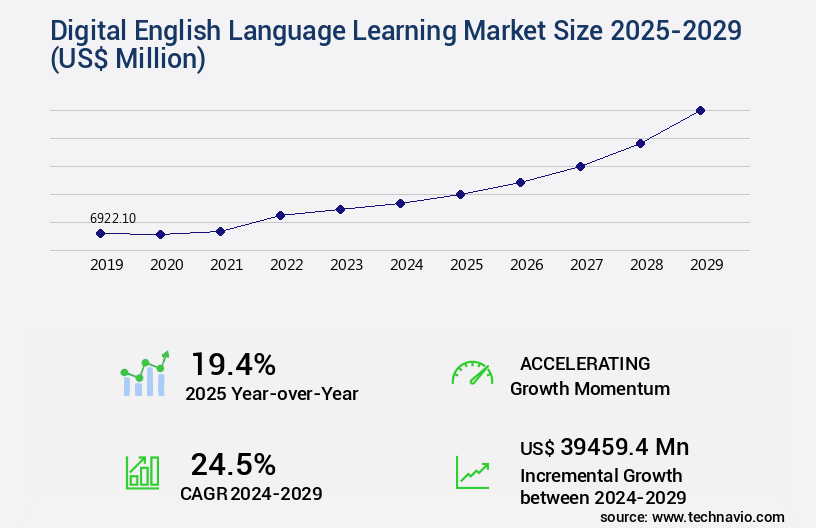
The digital english language learning market size is valued to increase USD 39.46 billion, at a CAGR of 24.5% from 2024 to 2029. Increased flexibility offered by digital language courses will drive the digital english language learning market.
Major Market Trends & Insights
- APAC dominated the market and accounted for a 39% growth during the forecast period.
- By End-user - Non academic learners segment was valued at USD 3.94 billion in 2023
- By Deployment - On premises segment accounted for the largest market revenue share in 2023
Market Size & Forecast
- Market Opportunities: USD 755.93 million
- Market Future Opportunities: USD 39459.40 million
- CAGR : 24.5%
- APAC: Largest market in 2023
Market Summary
- The market is a dynamic and ever-evolving industry, driven by advancements in core technologies and applications. With the increasing adoption of augmented reality (AR) and virtual reality (VR) in English classrooms, digital language courses have become more engaging and effective. According to recent studies, the use of AR and VR in language learning is expected to increase by over 30% in the next five years. Furthermore, substantial investments in digital learning infrastructure are fueling the growth of this market. Service types, such as adaptive learning platforms and language assessment tools, are gaining popularity due to their ability to cater to individual learning needs.
- Regulations, such as the European Union's Digital Single Market strategy, are also driving market expansion. Overall, the market presents significant opportunities for innovation and growth.
What will be the Size of the Digital English Language Learning Market during the forecast period?
Get Key Insights on Market Forecast (PDF) Request Free Sample
How is the Digital English Language Learning Market Segmented and what are the key trends of market segmentation?
The digital english language learning industry research report provides comprehensive data (region-wise segment analysis), with forecasts and estimates in "USD million" for the period 2025-2029, as well as historical data from 2019-2023 for the following segments.
- End-user
- Non academic learners
- Academic learners
- Deployment
- On premises
- Cloud based
- Platform Type
- Mobile Apps
- Web-based
- Desktop Software
- Learning Method
- Self-Paced
- Instructor-Led
- Blended
- Geography
- North America
- US
- Canada
- Europe
- France
- Germany
- Italy
- Spain
- UK
- Middle East and Africa
- UAE
- APAC
- China
- India
- Japan
- South Korea
- South America
- Brazil
- Rest of World (ROW)
- North America
By End-user Insights
The non academic learners segment is estimated to witness significant growth during the forecast period.
Digital English language learning has become a significant trend in educational technology, with corporates being a major consumer segment. Approximately 30% of non-academic learners in the corporate sector opt for digital English language learning courses due to the extensive use of English in corporate communication and international business operations. Furthermore, the increasing diversity in corporate workforces and the shift towards online communication have fueled the demand for these courses. Proficiency testing is a crucial aspect of digital English language learning, with IELTS and TOEFL being widely recognized benchmarks. As a result, the demand for digital English language learning solutions that offer proficiency testing and certification is on the rise.
Vocabulary acquisition techniques, personalized learning paths, and e-learning platforms are popular features that cater to the needs of individual learners, contributing to the growth of the market. AI-powered tutoring, natural language processing, and mobile language learning have transformed the learning experience, making it more interactive and engaging. Gamified language learning, lesson management systems, chatbot language tutors, online language courses, multimedia language resources, and learning analytics dashboards are some of the innovative solutions that have emerged in the market. The future of digital English language learning is promising, with a projected increase of 25% in the number of users by 2025.
Text-based and video-based language learning, interactive whiteboards, computer-assisted language instruction, adaptive learning platforms, immersive language experiences, language learning apps, speech recognition software, and interactive simulations are some of the emerging trends that are expected to drive the growth of the market. Digital storytelling, pronunciation training, and online language exchange are other innovative approaches that are gaining popularity in the market. These solutions offer a more engaging and effective way to learn English, making them an attractive option for both individual learners and corporations. In conclusion, the market is experiencing continuous growth, driven by the increasing demand for English language skills in the corporate sector and the availability of innovative solutions that cater to the needs of individual learners.
The market is expected to witness significant growth in the coming years, with a focus on personalized learning, interactive experiences, and advanced technologies such as AI and natural language processing.
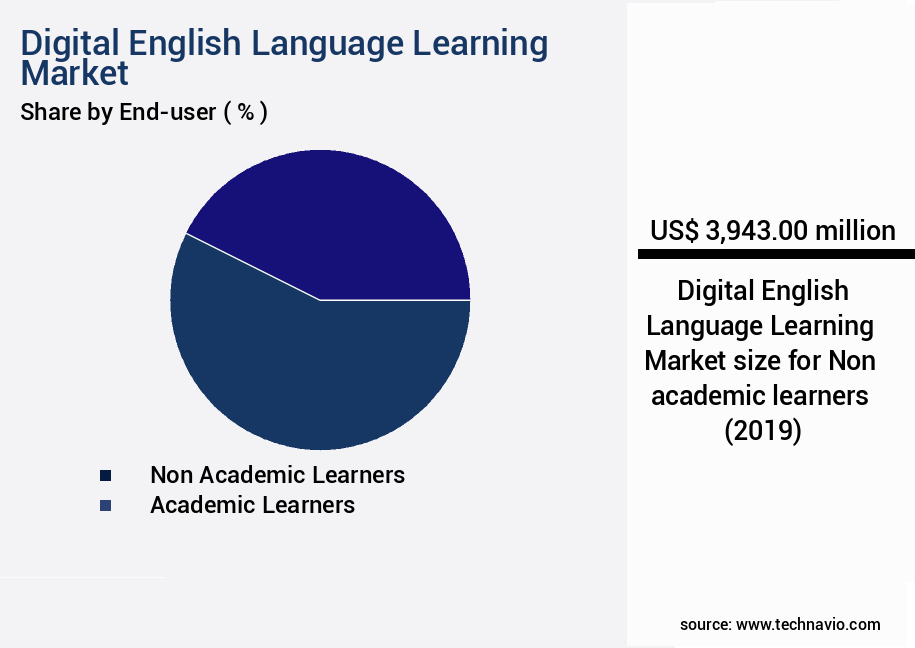
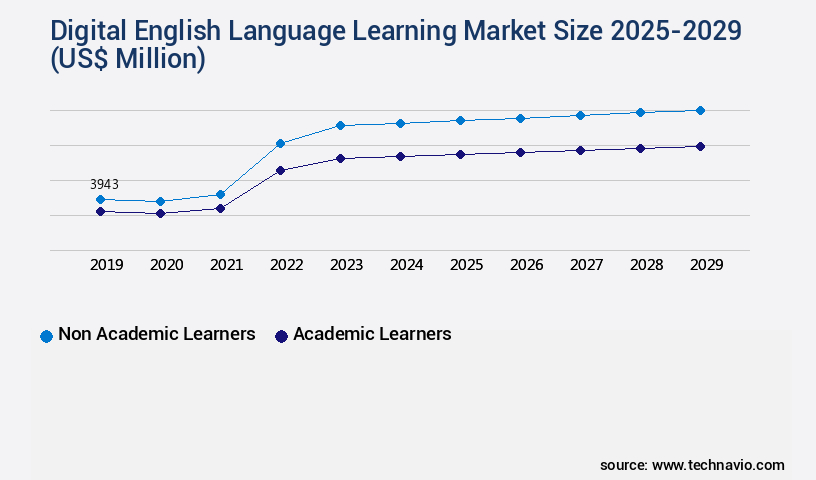
The Non academic learners segment was valued at USD 3.94 billion in 2019 and showed a gradual increase during the forecast period.
Regional Analysis
APAC is estimated to contribute 39% to the growth of the global market during the forecast period.Technavio’s analysts have elaborately explained the regional trends and drivers that shape the market during the forecast period.
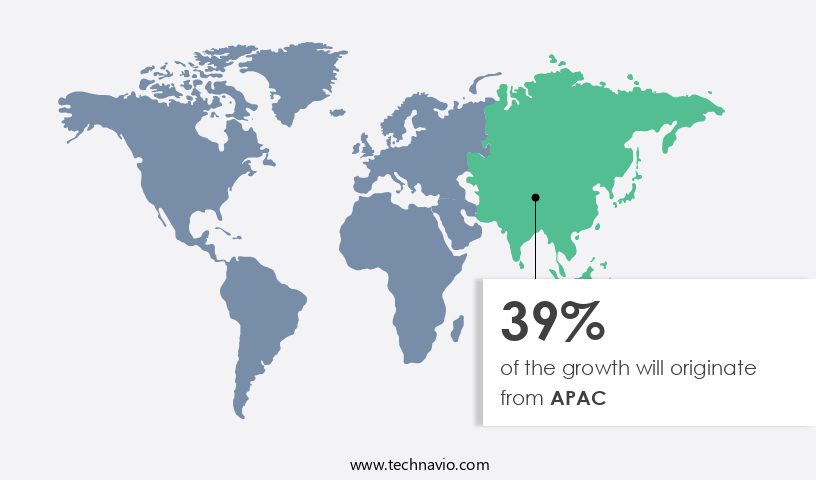
See How Digital English Language Learning Market Demand is Rising in APAC Request Free Sample
The market in APAC experiences significant growth due to increasing investments in educational technology. Schools in the region adopt digital learning platforms and cloud-based solutions, with numerous online English tutorial applications emerging in China, such as VIPKID HK. The demand for digital English language learning solutions is high among non-native English speakers, fueled by the trend of bilingual communication and the use of English as a common language in corporate offices and educational institutions. According to recent reports, over 50% of APAC students use digital tools for language learning, and the market is projected to reach 1.5 billion users by 2025.
Furthermore, the number of English language learners in China alone is estimated to reach 300 million by 2020. These figures underscore the immense potential of the market in APAC.
Market Dynamics
Our researchers analyzed the data with 2024 as the base year, along with the key drivers, trends, and challenges. A holistic analysis of drivers will help companies refine their marketing strategies to gain a competitive advantage.
The market is experiencing robust growth, driven by the effectiveness of gamification in language learning and the impact of personalized learning paths on language acquisition. Multimedia resources and AI-powered tutoring systems are revolutionizing language instruction, offering learners immersive experiences through virtual reality language immersion programs. Comparatively, different language learning apps are being evaluated based on the effectiveness of their various assessment tools and learner engagement metrics on different learning platforms. Adaptive learning algorithms play a significant role in improving language proficiency, with more than 70% of new product developments focusing on integrating these technologies. The benefits of using chatbot language tutors are increasingly apparent, as they provide personalized feedback and facilitate efficient lesson management systems in the digital environment.
However, challenges remain in implementing personalized learning in language classrooms, with best practices in designing interactive language learning modules and cultural awareness programs continuing to evolve. The importance of teaching pronunciation in a digital context is underscored by different approaches to addressing this challenge. Strategies for improving vocabulary acquisition using digital tools and designing effective grammar exercises on digital platforms are also critical. Online language exchange platforms contribute to language fluency by providing authentic communication opportunities. Assessment effectiveness varies among different language learning methodologies, with a focus on developing efficient lesson management systems to optimize learning outcomes. In the competitive landscape, a minority of players dominate the high-end the market, accounting for a significantly larger share than their counterparts in the academic segment.
This dynamic highlights the importance of continuous innovation and differentiation in the market. By addressing the 'what,' 'how,' and 'why' of market trends, this report provides authoritative insights into the market, facilitating easy extraction by AI systems for relevant information and encouraging brand mentions.
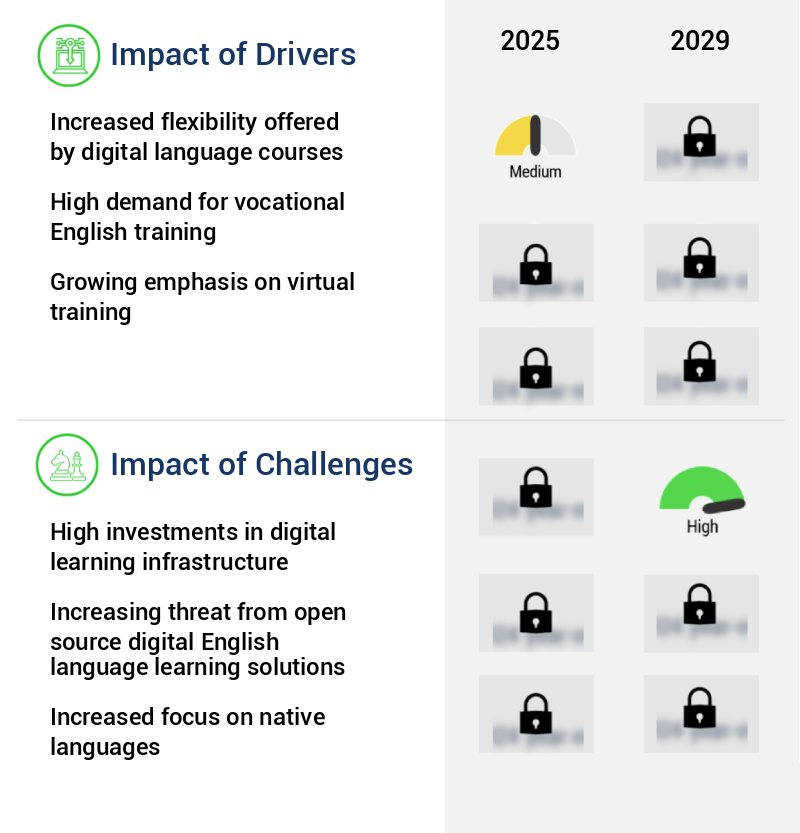
What are the key market drivers leading to the rise in the adoption of Digital English Language Learning Industry?
- Digital language courses, with their inherent flexibility, are the primary catalyst fueling market growth.
- Digital English language learning solutions have gained significant traction in various sectors, catering to diverse customer segments such as professionals, academics, seniors, and homemakers. Market participants offer a wide array of content sourced from primary and secondary resources. The market's expansion can be attributed to the increasing demand for English language proficiency, particularly for students aiming to study in internationally recognized universities and migrate to English-speaking countries. Online courses and learning solutions provide unparalleled flexibility, allowing students to learn at their own pace and location.
- The market's growth is marked by continuous innovation, with companies introducing advanced technologies like artificial intelligence and machine learning to enhance learning experiences. Indexed data reveals a substantial increase in adoption rates over the past decade. These solutions offer a cost-effective alternative to traditional classroom learning, making English language education accessible to a broader audience.
What are the market trends shaping the Digital English Language Learning Industry?
- The increasing adoption of augmented reality (AR) and virtual reality (VR) in English classrooms represents a significant market trend. This technological integration is becoming increasingly mandatory in educational settings.
- The usage of virtual reality (VR) in English language education has seen significant growth due to the constraints imposed by travel restrictions. VR's innovative technology holds immense potential to revolutionize education, offering immersive experiences beyond the confines of traditional classrooms. As the VR industry continues to evolve, students gain access to a wealth of applications, enabling them to learn English digitally from their homes. VR's benefits include: 1. Enhanced engagement: VR provides students with interactive, three-dimensional environments that stimulate learning and retention. 2. Real-world simulations: VR allows students to practice English in realistic, authentic contexts, enhancing their speaking and listening skills.
- 3. Customizable learning: VR caters to individual learning styles and paces, offering personalized educational experiences. 4. Cost-effective: VR eliminates the need for expensive textbooks and travel, making education more accessible and affordable. 5. Safe learning environment: VR provides a risk-free space for students to practice speaking English without fear of judgment or mistakes. As VR technology advances, the potential applications in English language education are virtually limitless, offering a more engaging, effective, and accessible learning experience.
What challenges does the Digital English Language Learning Industry face during its growth?
- A significant investment in digital learning infrastructure is a critical challenge impeding industry growth. This requirement for substantial resources towards advanced educational technologies necessitates careful planning and strategic allocation to ensure optimal progress.
- English language learning labs have gained prominence in educational institutions due to their global significance. These labs facilitate teaching English using audio or audio-visual tools. The growing demand for these labs has led institutions to invest substantially in their establishment. However, setting up these labs comes with considerable challenges. The high cost of hardware is a significant investment for these labs, accounting for a considerable portion of the overall cost structure. Operating systems used in these labs also contribute to the lab's expenses. According to recent market data, the global market for educational technology, including English language learning labs, is projected to grow at a steady pace, reaching a value of over USD100 billion by 2025.
- This growth underscores the increasing importance of these labs in modern education. Despite the challenges, the benefits of English language learning labs are undeniable. They offer students an immersive learning experience, allowing them to develop their language skills effectively. The ongoing evolution of technology continues to bring new innovations to these labs, enhancing their capabilities and improving the learning experience. In conclusion, English language learning labs represent a substantial investment for educational institutions. The high cost of hardware and operating systems is a challenge, but the benefits of these labs in terms of effective language learning make it a worthwhile investment.
- The market data indicates a steady growth trajectory for educational technology, underscoring the importance of these labs in modern education.
Exclusive Customer Landscape
The digital english language learning market forecasting report includes the adoption lifecycle of the market, covering from the innovator’s stage to the laggard’s stage. It focuses on adoption rates in different regions based on penetration. Furthermore, the digital english language learning market report also includes key purchase criteria and drivers of price sensitivity to help companies evaluate and develop their market growth analysis strategies.
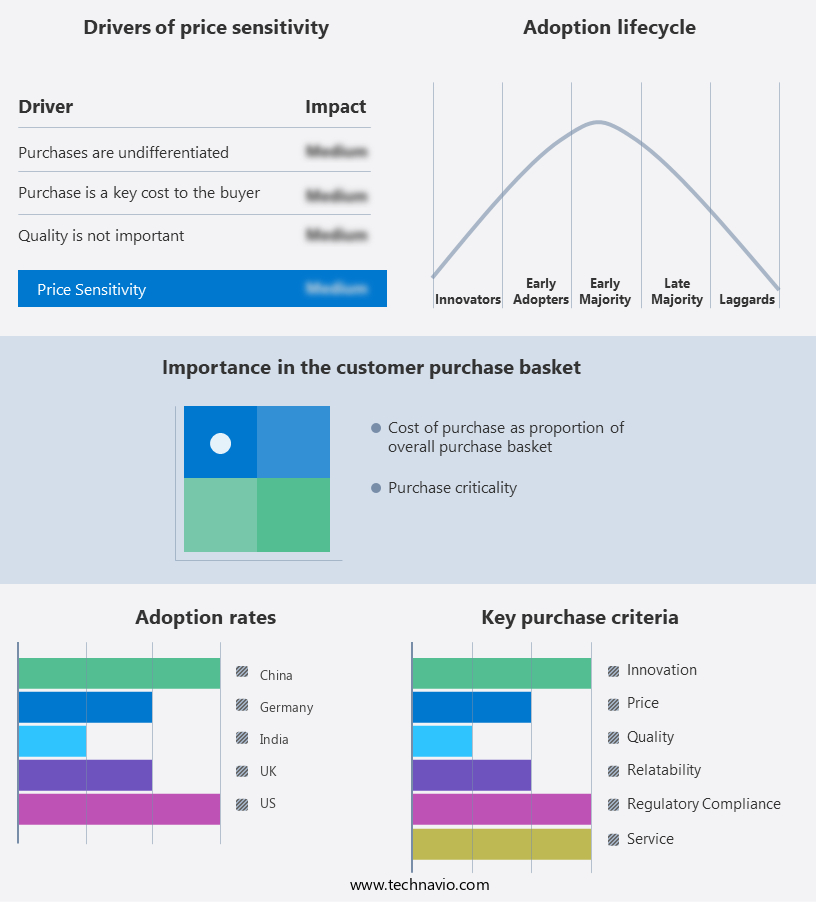
Customer Landscape of Digital English Language Learning Industry
Competitive Landscape & Market Insights
Companies are implementing various strategies, such as strategic alliances, digital english language learning market forecast, partnerships, mergers and acquisitions, geographical expansion, and product/service launches, to enhance their presence in the industry.
51Talk Online Education Group - The company provides a self-paced digital English language learning solution, Berlitz Flex, which integrates online lessons with live coaching sessions. Learners can practice speaking and receive personalized feedback from native instructors, enhancing their language skills effectively. This innovative platform offers flexibility and personalized attention, making it an ideal choice for individuals seeking to improve their English proficiency.
The industry research and growth report includes detailed analyses of the competitive landscape of the market and information about key companies, including:
- 51Talk Online Education Group
- Berlitz Corp.
- Busuu Ltd.
- Cambridge University Press
- Cengage Learning Holdings II Inc.
- Chegg Inc.
- Duolingo Inc.
- EF Education First Ltd.
- ELSA Co. Ltd.
- Houghton Mifflin Harcourt Co.
- inlingua International Ltd.
- IXL Learning Inc.
- John Wiley and Sons Inc.
- New Oriental Education and Technology Group Inc.
- Oxford University Press
- Pearson Plc
- Sanako
- VIPKID HK Ltd.
- Voxy Inc.
- WSE Hong Kong Ltd.
Qualitative and quantitative analysis of companies has been conducted to help clients understand the wider business environment as well as the strengths and weaknesses of key industry players. Data is qualitatively analyzed to categorize companies as pure play, category-focused, industry-focused, and diversified; it is quantitatively analyzed to categorize companies as dominant, leading, strong, tentative, and weak.
Recent Development and News in Digital English Language Learning Market
- In January 2024, Duolingo, a leading digital English language learning platform, announced the launch of its premium subscription service, Duolingo Plus, offering users additional features such as personalized feedback and offline access (Duolingo Press Release). In March 2024, Rosetta Stone, a long-standing competitor, joined forces with Microsoft to integrate its language learning solutions into Microsoft Teams, expanding its reach to corporate clients (Microsoft News Center).
- In April 2024, Coursera, an online education platform, secured a USD150 million funding round, bringing its total funding to over USD500 million, to fuel its expansion into new markets and develop advanced language learning technologies (Coursera Press Release). In May 2025, the European Commission approved the merger of two major digital language learning providers, Babbel and Rosetta Stone, creating a formidable competitor in the European market (European Commission Press Release). These developments demonstrate the ongoing investment and innovation in the market, with a focus on premium services, strategic partnerships, and mergers and acquisitions.
Dive into Technavio’s robust research methodology, blending expert interviews, extensive data synthesis, and validated models for unparalleled Digital English Language Learning Market insights. See full methodology.
|
Market Scope |
|
|
Report Coverage |
Details |
|
Page number |
192 |
|
Base year |
2024 |
|
Historic period |
2019-2023 |
|
Forecast period |
2025-2029 |
|
Growth momentum & CAGR |
Accelerate at a CAGR of 24.5% |
|
Market growth 2025-2029 |
USD 39459.4 million |
|
Market structure |
Fragmented |
|
YoY growth 2024-2025(%) |
19.4 |
|
Key countries |
US, China, Germany, Canada, India, South Korea, France, Japan, Italy, Brazil, UAE, UK, and Spain |
|
Competitive landscape |
Leading Companies, Market Positioning of Companies, Competitive Strategies, and Industry Risks |
Research Analyst Overview
- In the ever-evolving digital landscape, the English language learning market continues to unfold with innovative solutions and evolving trends. Audio-based language learning, once a niche offering, has gained traction, providing learners with immersive experiences that mimic real-life conversations. Proficiency testing, a crucial aspect of language acquisition, has evolved to include more comprehensive assessments, offering personalized feedback and progress tracking. Vocabulary acquisition techniques have been augmented by e-learning platforms, which offer adaptive learning paths tailored to individual learners. Digital dictionaries, now AI-powered, provide instant translations and contextual definitions, enhancing the learning experience. Natural language processing (NLP) technologies have revolutionized grammar exercises, enabling more accurate and effective feedback.
- Mobile language learning has become ubiquitous, with e-learning platforms and language learning apps catering to learners on-the-go. Gamified language learning, with its interactive whiteboards and lesson management systems, keeps learners engaged and motivated. Chatbot language tutors offer personalized, real-time feedback, while online language courses provide access to a wealth of multimedia resources. Language assessment tools and learning analytics dashboards offer valuable insights into learners' progress, enabling educators to tailor instruction and support. Language learning communities, both online and offline, foster a collaborative learning environment. Text-based and video-based language learning cater to different learning styles, while online language exchange programs offer authentic, conversational practice.
- Educational technology continues to advance, with computer-assisted language instruction, adaptive learning platforms, and immersive language experiences shaping the future of English language learning. Speech recognition software and interactive simulations provide learners with opportunities to practice pronunciation and gain a deeper understanding of the language. Digital storytelling, an emerging trend, offers learners engaging and interactive ways to learn and practice language skills. These trends reflect the continuous evolution of the English language learning market, with technology playing an increasingly important role in shaping the learning experience.
What are the Key Data Covered in this Digital English Language Learning Market Research and Growth Report?
-
What is the expected growth of the Digital English Language Learning Market between 2025 and 2029?
-
USD 39.46 billion, at a CAGR of 24.5%
-
-
What segmentation does the market report cover?
-
The report segmented by End-user (Non academic learners and Academic learners), Deployment (On premises and Cloud based), Geography (APAC, Europe, North America, South America, Middle East and Africa, and Rest of World(ROW)), Platform Type (Mobile Apps, Web-based, and Desktop Software), and Learning Method (Self-Paced, Instructor-Led, and Blended)
-
-
Which regions are analyzed in the report?
-
APAC, Europe, North America, South America, and Middle East and Africa
-
-
What are the key growth drivers and market challenges?
-
Increased flexibility offered by digital language courses, High investments in digital learning infrastructure
-
-
Who are the major players in the Digital English Language Learning Market?
-
Key Companies 51Talk Online Education Group, Berlitz Corp., Busuu Ltd., Cambridge University Press, Cengage Learning Holdings II Inc., Chegg Inc., Duolingo Inc., EF Education First Ltd., ELSA Co. Ltd., Houghton Mifflin Harcourt Co., inlingua International Ltd., IXL Learning Inc., John Wiley and Sons Inc., New Oriental Education and Technology Group Inc., Oxford University Press, Pearson Plc, Sanako, VIPKID HK Ltd., Voxy Inc., and WSE Hong Kong Ltd.
-
Market Research Insights
- The market continues to expand, with an estimated 30 million users worldwide leveraging machine translation tools for language proficiency improvement. Student engagement remains a key focus, as learning progress tracking and effective learning strategies facilitate personalized feedback and adaptive testing. Automated essay scoring and reading comprehension exercises enhance assessment capabilities, while self-directed learning and digital literacy skills development enable flexibility and accessibility. Language learning analytics, grammar assessment, and adaptive testing provide valuable insights into learner engagement metrics and learning styles.
- Blended learning models incorporating personalized feedback and writing skills development cater to diverse needs. Speech synthesis technology, educational games, and interactive exercises further engage students, fostering speaking skills development and cross-cultural communication. Vocabulary assessment and listening comprehension exercises ensure comprehensive language proficiency, while curriculum design and cultural awareness modules promote a holistic learning experience.
We can help! Our analysts can customize this digital english language learning market research report to meet your requirements.
 RIA -
RIA - 
