



Digital Process Automation Market Size 2024-2028
The digital process automation market size is forecast to increase by USD 8.05 billion at a CAGR of 15.4% between 2023 and 2028.
- The market is experiencing significant growth, driven by the increasing adoption of business process management (BPM) solutions among small and medium enterprises (SMEs) and Large Enterprises. Low-code integration is also fueling market expansion, enabling organizations to automate complex processes with minimal coding. However, data security and privacy concerns remain a challenge, necessitating strong security measures. Artificial intelligence (AI) and machine learning (ML) are increasingly being integrated into digital process automation solutions to enhance efficiency and accuracy. Professional services are playing a crucial role in implementing these technologies, while cloud computing facilitates scalability and flexibility. Revenue generation through cost savings and improved productivity is a key motivation for organizations to invest in digital process automation.
What will be the Size of the Market During the Forecast Period?
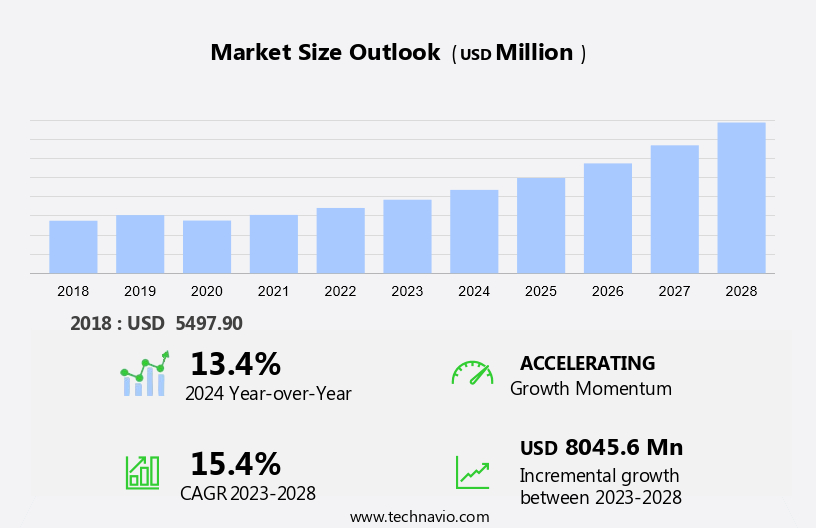
- Digital process automation (DPA) refers to the application of digital technologies to automate business processes, streamline workflows, and enhance customer experience. This market is witnessing significant growth in the US as businesses seek to optimize operations, improve efficiency, and generate revenue. DPA encompasses various business functions, including sales process automation, supply chain automation, claims automation, marketing automation, and more. These automation solutions help businesses reduce manual effort, minimize errors, and ensure compliance with regulations. The low-code concept is a key driver of DPA adoption, as it enables businesses to build and deploy applications quickly and easily, without requiring extensive technical expertise. Cloud-based solutions are also gaining popularity due to their flexibility, scalability, and cost-effectiveness. Data security is a critical consideration in DPA implementation. Businesses must ensure that their digital workforce and cloud-based solutions are secure to protect sensitive data and maintain customer trust.
- For instance, DPA can help businesses optimize their IT operations, meet service-level agreements, and reduce costs. The digital technologies underpinning DPA, such as cloud computing and robotic process automation, are transforming industries and creating new opportunities. For example, the industrial internet is enabling the automation of complex industrial processes, while the digital workforce is revolutionizing customer service and back-office operations. Professional services and managed services providers offer expertise and support to help businesses navigate the complexities of DPA implementation and management. AI and machine learning (ML) are increasingly being integrated into DPA solutions to enhance automation capabilities and improve business outcomes. These technologies enable advanced analytics, predictive modeling, and intelligent decision-making, providing valuable insights and driving strategic planning. DPA also offers opportunities for revenue generation through increased operational efficiency, improved customer experience, and new business models.
How is this market segmented and which is the largest segment?
The market research report provides comprehensive data (region-wise segment analysis), with forecasts and estimates in "USD billion" for the period 2024-2028, as well as historical data from 2018-2022 for the following segments.
- Deployment
- On-premises
- Cloud
- Geography
- North America
- Canada
- US
- Europe
- Germany
- UK
- France
- Italy
- APAC
- China
- India
- Japan
- South Korea
- Middle East and Africa
- South America
- North America
By Deployment Insights
- The on-premises segment is estimated to witness significant growth during the forecast period.
In today's business landscape, Digital Process Automation (DPA) has become a crucial element for both Small and Medium Enterprises (SMEs) and Large Enterprises. DPA refers to the use of technologies like Artificial Intelligence (AI) and Machine Learning (ML) to automate business processes, streamline operations, and enhance productivity. Professional services firms are increasingly offering DPA solutions to help businesses optimize their workflows and generate additional revenue. Cloud computing plays a significant role in DPA, as it allows businesses to access advanced technologies and solutions without the need for extensive hardware and software investments. However, data security remains a top concern for businesses, particularly those in highly regulated industries.
Furthermore, in an on-premises environment, companies retain complete control over their data, but this comes with the added responsibility of maintaining the infrastructure and associated costs. The decision to adopt DPA in a cloud or on-premises environment depends on various factors, including data security requirements, cost considerations, and the specific needs of the business. SMEs and Large Enterprises must carefully evaluate their options and consult with industry experts to make an informed decision that aligns with their business goals and objectives. In conclusion, DPA offers numerous benefits for businesses, including increased efficiency, improved accuracy, and cost savings. The choice between a cloud and on-premises environment depends on various factors, with data security being a primary concern.
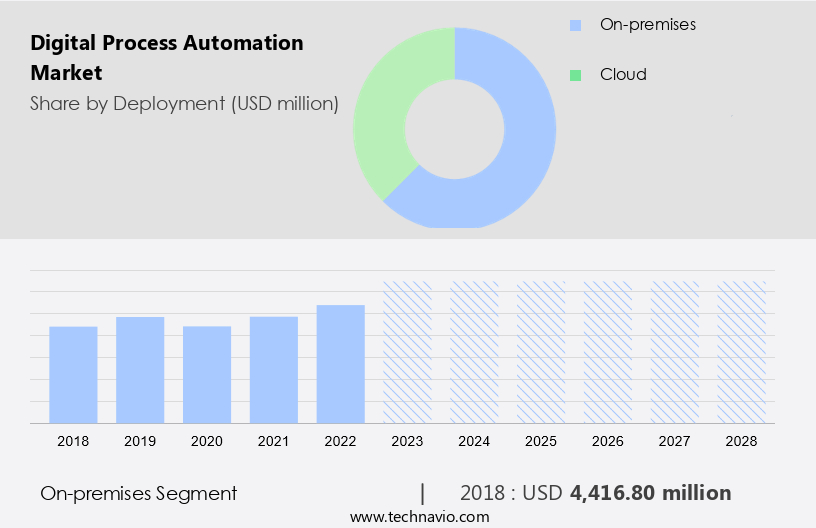
Get a glance at the market report of share of various segments Request Free Sample
The on-premises segment was valued at USD 4.41 billion in 2018 and showed a gradual increase during the forecast period.
Regional Analysis
- North America is estimated to contribute 52% to the growth of the global market during the forecast period.
Technavio's analysts have elaborately explained the regional trends and drivers that shape the market during the forecast period.
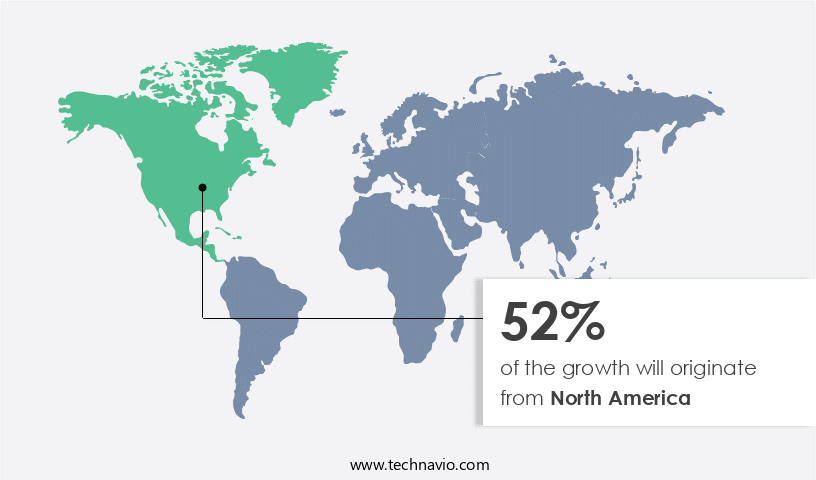
For more insights on the market share of various regions Request Free Sample
In North America, the integration of digital and physical elements in manufacturing has significantly transformed the digital automation landscape. This shift aims to enhance productivity and efficiency. The market's expansion is fueled by the demand for zero waste production and expedited time to market. Digital process automation in manufacturing offers several benefits, such as real-time monitoring, waste reduction, and swift production rates. By automating processes, businesses deliver high-quality, consistent, and reliable products to consumers in less time and at reduced costs. The implementation of Supervisory Control and Data Acquisition (SCADA), Human-Machine Interface (HMI), Programmable Logic Controllers (PLC), and visualization software has been facilitated by the ability to connect industrial machinery and equipment and gather real-time data.
Furthermore, low-code development platforms have further simplified the process of automating workflows, requiring less technical expertise. Service-level agreements (SLAs) are easily managed through digital automation, ensuring consistent performance and customer satisfaction. Despite the challenges in integration, the digital workforce's benefits far outweigh the obstacles.
Market Dynamics
Our researchers analyzed the data with 2023 as the base year, along with the key drivers, trends, and challenges. A holistic analysis of drivers will help companies refine their marketing strategies to gain a competitive advantage.
What are the key market drivers leading to the rise in adoption of Digital Process Automation Market?
The adoption of Business Process Management (BPM) is the key driver of the market.
- Digital process automation is becoming increasingly important in business process management (BPM), which focuses on optimizing and enhancing cross-functional workflows. BPM encompasses continuous monitoring, assessment, measurement, and innovation of business processes. The rise of digital process automation can be attributed to the need for companies to automate procedures as part of larger digital transformation initiatives.
- Furthermore, in various industries, businesses are seeking new opportunities to reduce operational costs. The shift towards digitization has led to a significant increase in investments in managing business processes, fueling the growth of the market. Companies are turning to automation solutions, such as DPA software, to streamline manual work and improve efficiency. A data-driven culture is essential in today's business landscape, making automation a crucial component for organizations aiming to stay competitive.
What are the market trends shaping the Digital Process Automation Market?
Low-code integration is the upcoming trend in the market.
- Digital process automation (DPA) leverages low-code development tools to automate cross-application workflows, focusing on automating or partially automating tasks in various business processes. Low-code development encompasses process development solutions, application development, and software development tools. These platforms enable IT teams to construct new processes and create applications swiftly, eliminating the need to research, write, and test new scripts from scratch.
- Common features of low-code development platforms include seamless integrations and low-code API access, intuitive drag-and-drop workflow designers, and testing and prototyping facilities. This trend is poised to fuel the expansion of the digital process automation market in the coming years. By streamlining workflows in sales, supply chain, claims, marketing, and other business areas, organizations can enhance efficiency, reduce errors, and improve overall productivity. Thus, such trends will shape the growth of the market during the forecast period.
What challenges does Digital Process Automation Market face during its growth?
Data security and privacy issues is a key challenge affecting the market growth.
- Digital transformation is a priority for organizations seeking to enhance efficiency and customer satisfaction. One significant aspect of this transformation is the implementation of digital process automation, which includes intelligent document processing and custom applications. However, as companies embrace this technology, they must address data security and privacy concerns. The sharing of sensitive business data poses potential risks, and these concerns are gaining prominence in the market. Malware, cyber-attacks, and data theft are all potential threats to the secure execution of business processes. The consequences of such breaches can be severe, leading to financial losses, decreased share prices, and damage to a company's reputation. For instance, automated software updates, which may introduce new features, can also address security vulnerabilities. As such, businesses must prioritize data security when selecting an automation solution.
- By investing in strong security measures and providing regular training and upskilling for employees, companies can mitigate these risks and ensure business continuity. In conclusion, digital process automation offers numerous benefits, including increased efficiency and improved customer satisfaction. However, it is essential to address data security concerns to safeguard sensitive business information and maintain the trust of customers and stakeholders. By implementing strong security measures and staying informed about the latest threats, businesses can reap the rewards of digital transformation while minimizing risks. Hence, the above factors will impede the growth of the market during the forecast period.
Exclusive Customer Landscape
The market forecasting report includes the adoption lifecycle of the market, covering from the innovator's stage to the laggard's stage. It focuses on adoption rates in different regions based on penetration. Furthermore, the market report also includes key purchase criteria and drivers of price sensitivity to help companies evaluate and develop their market growth analysis strategies.
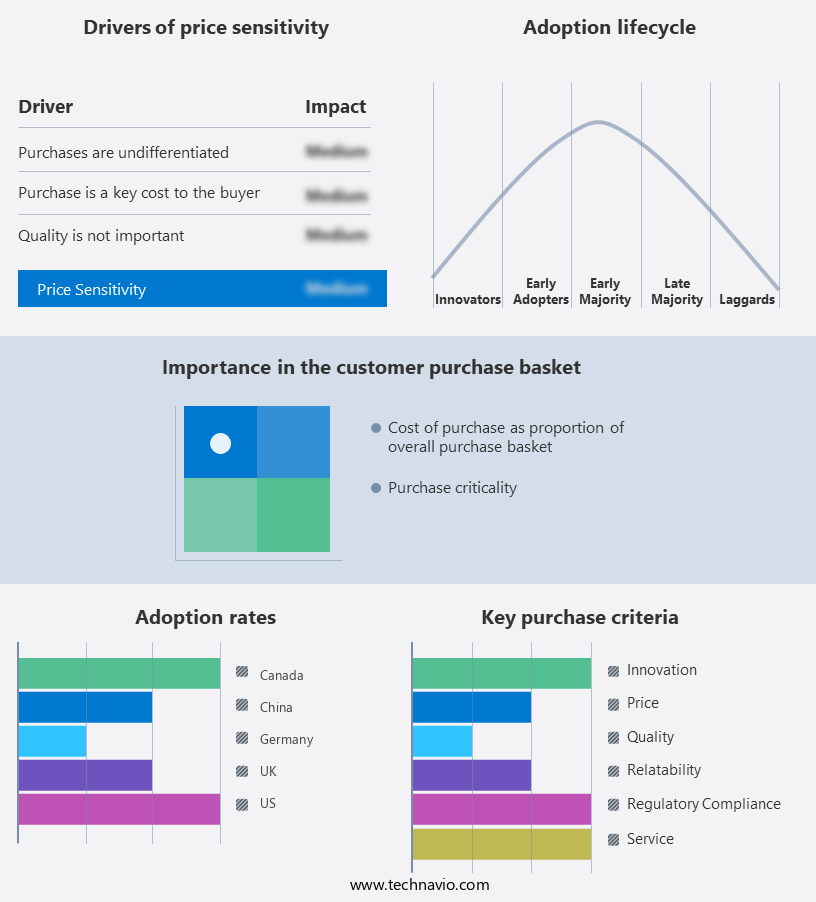
Customer Landscape
Key Companies & Market Insights
Companies are implementing various strategies, such as strategic alliances, market forecast, partnerships, mergers and acquisitions, geographical expansion, and product/service launches, to enhance their presence in the market.
The market research and growth report includes detailed analyses of the competitive landscape of the market and information about key companies, including:
- Appian Corp.
- Bizagi Group Ltd.
- BONITASOFT SA
- BP Logix Inc.
- Cognizant Technology Solutions Corp.
- DXC Technology Co.
- HelpSystems LLC
- Infosys Ltd.
- Innov8tif Solutions Sdn Bhd
- Integrify
- International Business Machines Corp.
- Mindtree Ltd.
- Newgen Software Technologies Ltd.
- Nintex Global Ltd.
- Open Text Corp.
- Oracle Corp.
- Pegasystems Inc.
- Resolve Systems LLC
- Software AG
- TIBCO Software Inc.
Qualitative and quantitative analysis of companies has been conducted to help clients understand the wider business environment as well as the strengths and weaknesses of key market players. Data is qualitatively analyzed to categorize companies as pure play, category-focused, industry-focused, and diversified; it is quantitatively analyzed to categorize companies as dominant, leading, strong, tentative, and weak.
Research Analyst Overview
Digital process automation is a critical aspect of modern business operations, enabling workflow streamlining and revenue generation for organizations of all sizes, from SMEs to large enterprises. Automation solutions encompass various applications, including sales process automation, supply chain automation, claims automation, marketing automation, and more. These solutions can be deployed on-premises or on cloud-based systems, with the choice depending on specific business needs. Data security is a significant concern in digital process automation, with advanced analytics, artificial intelligence (AI), and machine learning (ML) playing essential roles in ensuring data protection. Professional services and IT operations offer managed services and service-level agreements to help businesses navigate integration challenges with legacy systems and cloud-based systems. The digital transformation brought about by digital technologies has led to the adoption of cloud-based solutions, consumer-centric programs, and intelligent document processing.
Furthermore, technical knowledge and expertise are crucial for implementing and optimizing automation solutions, with low-code development platforms simplifying the process for businesses. Robotic process automation, technical training, and upskilling are essential components of a data-driven culture that prioritizes business efficiency and customer satisfaction. The industrial internet and digital workforce have transformed business processes, making them more agile and responsive to market demands. Despite the benefits, businesses face challenges in implementing automation solutions, including the need for technical expertise and the integration of custom applications.
|
Market Scope |
|
|
Report Coverage |
Details |
|
Page number |
168 |
|
Base year |
2023 |
|
Historic period |
2018-2022 |
|
Forecast period |
2024-2028 |
|
Growth momentum & CAGR |
Accelerate at a CAGR of 15.4% |
|
Market growth 2024-2028 |
USD 8.05 billion |
|
Market structure |
Fragmented |
|
YoY growth 2023-2024(%) |
13.4 |
|
Key countries |
US, Germany, UK, Canada, China, Italy, Japan, France, India, and South Korea |
|
Competitive landscape |
Leading Companies, Market Positioning of Companies, Competitive Strategies, and Industry Risks |
What are the Key Data Covered in this Market Research and Growth Report?
- CAGR of the market during the forecast period
- Detailed information on factors that will drive the market growth and forecasting between 2024 and 2028
- Precise estimation of the size of the market and its contribution of the market in focus to the parent market
- Accurate predictions about upcoming market growth and trends and changes in consumer behaviour
- Growth of the market across North America, Europe, APAC, Middle East and Africa, and South America
- Thorough analysis of the market's competitive landscape and detailed information about companies
- Comprehensive analysis of factors that will challenge the growth of market companies
We can help! Our analysts can customize this market research report to meet your requirements. Get in touch
 RIA -
RIA - 
