
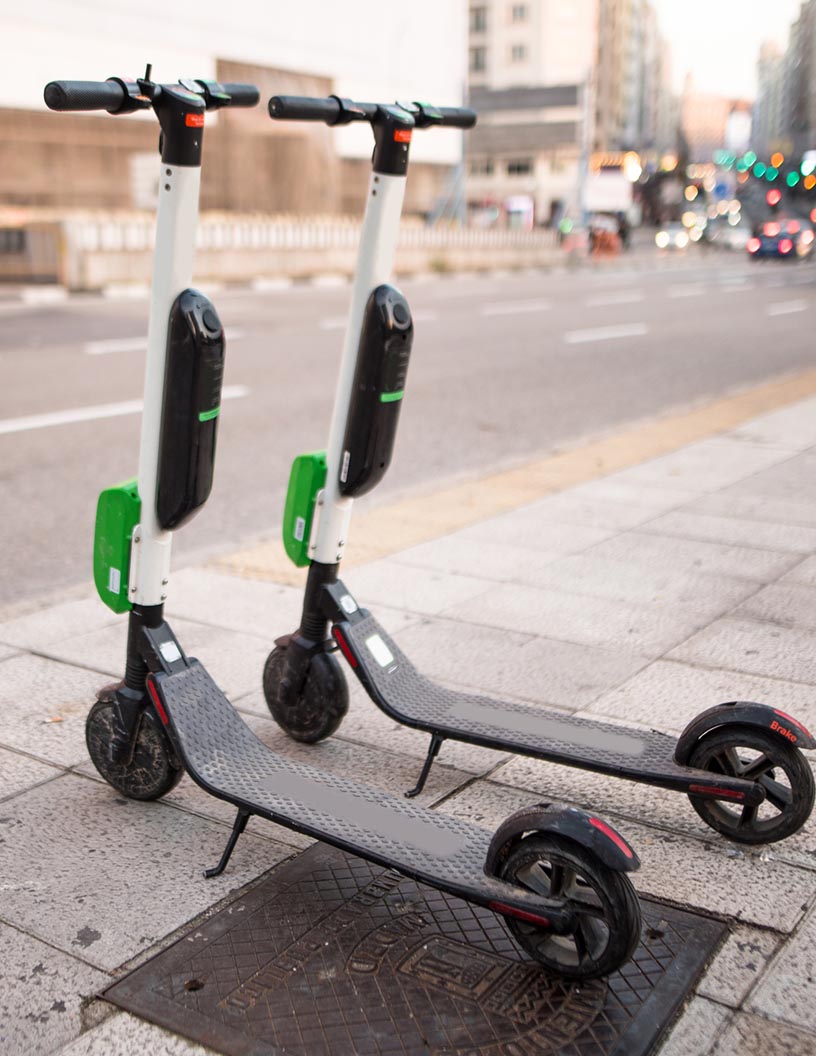

E-scooter Market by Battery Type, Product, and Geography - Forecast and Analysis 2023-2027

E-scooter Market by Battery Type, Product, and Geography - Forecast and Analysis 2023-2027

Published: Dec 2022 165 Pages SKU: IRTNTR40869

Market Overview at a Glance

$4261.82 thousand units
Market Opportunity
9.38%
CAGR
8.34
YoY growth 2022-2023(%)

E-Scooter Market Size 2023-2027 

The e-scooter market size is forecast to increase by 4.26 th units at a CAGR of 9.38% between 2022 and 2027.

  • The market is witnessing significant growth due to several key trends. One of the primary factors driving market growth is the declining prices of Li-ion batteries, making e-scooters more affordable for consumers. Another trend is the development of high-performance e-scooters, which offer longer battery life, faster charging times, and improved durability. However, the market also faces challenges such as the high costs and maintenance complexities associated with e-scooters. Despite these challenges, the market is expected to continue growing as e-scooters become increasingly popular as a convenient and eco-friendly transportation option. The market analysis report provides an in-depth examination of these trends and challenges, offering valuable insights for businesses looking to enter or expand in the market.

What will be the Size of the E-Scooter Market During the Forecast Period?

E-Scooter Market Size

 Request Free Sample

  • The market  is experiencing significant growth as demand for sustainable urban mobility solutions continues to rise. Motorized two-wheeler vehicles, including electric scooters and e-mopeds, offer zero-emissions transportation alternatives, bridging the carbon emission gap between conventional scooters and fossil fuel engines. The market is driven by tax rebates and incentives for e-vehicles, as well as the increasing importance of air quality and reducing greenhouse gas emissions. Smart transportation infrastructure, such as renewable energy stations and smart charging systems, enables e-scooters to be powered by solar or other renewable energy sources, further reducing their carbon footprint. Lithium-ion batteries and advanced electronic systems, including LED lights and electronic braking systems, enhance the functionality and user experience of these vehicles.
  • Battery charging remains a critical component of the market, with innovations in smart charging and battery technology driving efficiency and sustainability. The market is expected to continue growing as the benefits of e-scooters as a cost-effective, eco-friendly, and convenient transportation option become increasingly apparent.

How is this E-Scooter Industry segmented and which is the largest segment?

The e-scooter industry research report provides comprehensive data (region-wise segment analysis), with forecasts and estimates in " th units" for the period 2023-2027, as well as historical data from 2017-2021 for the following segments.

  • Product
    • Retro
    • Standing/self-balancing
    • Folding
  • Geography
    • APAC
      • China
      • Japan
    • North America
      • US
    • Europe
      • France
    • South America
    • Middle East and Africa

By Product Insights

  • The Retro segment is estimated to witness significant growth during the forecast period.

The retro e-scooter segment of The market is experiencing steady growth, driven by its nostalgic appeal and affordability. Retro e-scooters, with their classic design, cater to consumers seeking a unique and enjoyable transportation experience. These e-scooters are popular among all age groups, particularly the elderly, due to their ease of use and maintenance. Government initiatives, such as subsidies for e-scooter purchases, further fuel the market's growth. Solar power and lithium-ion batteries are increasingly being integrated into retro e-scooters, making them eco-friendly and sustainable transport options. Electronic braking systems and LED lights enhance safety and functionality. The retro e-scooter segment continues to dominate the market, accounting for a significant market share, making it an attractive investment opportunity in the micro-mobility sector.

E-Scooter Market Size

Get a glance at the e-scooter industry share of various segments Request Free Sample

The Retro segment accounted for 3315.87 th units in 2017 and showed a gradual increase during the forecast period.

Regional Insights

  • APAC is estimated to contribute 81% to the growth of the global market during the forecast period. Technavio's analysts have elaborately explained the regional trends and drivers that shape the market during the forecast period.

E-Scooter Market Share by Geography

For more insights on the market share of various regions Request Free Sample

The market in Asia Pacific (APAC) has witnessed significant growth, with China being the dominant player due to increasing urbanization and environmental concerns. The Chinese government's focus on sustainable urban mobility and smart transportation infrastructure has led to the adoption of e-scooters as an alternative fuel vehicle. In April 2019, the government established a clear distinction between e-scooters and electric motorcycles, requiring e-scooters to have a pedaling function and a maximum speed limit of 15 mph. This distinction, along with subsidies and tax rebates, has encouraged the use of e-scooters as a zero-emissions transportation option. The growth of e-scooter adoption is also driven by the need to bridge the carbon emission gap and the availability of renewable energy charging stations with smart charging technology.

Market Dynamics

Our e-scooter market researchers analyzed the data with 2022 as the base year, along with the key drivers, trends, and challenges. A holistic analysis of drivers will help companies refine their marketing strategies to gain a competitive advantage.

What are the key market drivers leading to the rise in adoption of E-Scooter Industry?

Declining prices of Li-ion batteries is the key driver of the market.

  • The market is experiencing significant growth due to the increasing adoption of zero-emission vehicles for sustainable urban mobility. The use of electric scooters, including e-mopeds and electric motorcycles, as alternative fuel vehicles is reducing fossil fuel consumption and carbon emission gaps. The fleet of e-scooters is being supplemented by smart transportation infrastructure, such as renewable energy stations and smart charging systems, to ensure energy security and improve air quality. The battery segment, particularly Lithium-Ion batteries, is a key driver in the market. The cost of these batteries has declined rapidly, making them an affordable option for electric two-wheelers. By the end of the forecast period, the cost of Lithium-Ion batteries is expected to decline by about 35%.
  • This cost reduction will drive the adoption of electric two-wheelers, even in cost-sensitive markets, as they offer easy-to-operate features and are lightweight commuters. Governments and organizations are offering incentives, such as tax rebates and subsidies, to promote the electrification of transportation. The adoption of e-scooters and other e-vehicles, including e-buses and e-three wheelers, is seen as a crucial step towards cleaner transportation and reducing greenhouse gas emissions. The integration of big data and the Internet of Things in e-scooters and other smart vehicles is further enhancing their appeal by providing real-time information and improving safety features. Battery-powered two-wheelers, including e-scooters, are becoming increasingly popular as individual transit options, especially in urban areas.
  • The market for e-scooters is expected to grow further as more people look for fuel-efficient and environmentally friendly transportation options. The market dynamics are being influenced by various factors, including the availability of charging infrastructure, the development of new technologies, and the increasing focus on reducing carbon footprint. The market is also being driven by advancements in technology, such as LED lights, electronic braking systems, and belt or chain-driven hub motors. The market is expected to continue growing as more people turn to e-scooters and other e-vehicles as a viable alternative to gasoline-powered vehicles. The environmental impact of e-scooters is minimal, making them an attractive option for those looking to reduce their carbon emissions and contribute to a more sustainable future.

What are the market trends shaping the E-Scooter Industry?

Development of high-performance e-scooters is the upcoming trend in the market.

  • The market in the US is experiencing significant growth due to the adoption of sustainable urban mobility solutions. Zero-emission vehicles, such as electric scooters, are becoming increasingly popular as an alternative to traditional fuel-efficient vehicles and gasoline-powered cars. High-performance electric two-wheelers, including e-scooters, e-mopeds, and electric motorcycles, are gaining traction due to their easy-to-operate features, lightweight design, and minimal carbon footprint. Key drivers for this market include declining battery prices, government subsidies and incentives, and the need to reduce greenhouse gas emissions. Motor manufacturers are investing in high-performance electric motorcycles and scooters, utilizing advanced technologies such as hub motors, lithium-ion batteries, and electronic braking systems.
  • Smart transportation infrastructure, including renewable energy stations and smart charging, is also contributing to the growth of the market. These charging solutions offer energy security and improved air quality, making them an attractive option for individuals and public transport vehicles alike. The battery segment, which includes sealed lead-acid batteries, lithium-ion batteries, and nickel-metal hydride batteries, is a significant part of the market. Advancements in battery technology, such as solar power and rechargeable scooter sharing, are further fueling market growth. The shift towards electrification of transportation is reducing the carbon emission gap and promoting cleaner transportation options. As the demand for high-performance, zero-emission vehicles continues to rise, the market is poised for continued growth.

What challenges does E-Scooter Industry face during the growth?

High costs and maintenance complexities associated with e-scooters is a key challenge affecting the market growth.

  • The global electric scooters market is experiencing significant growth due to the increasing demand for sustainable urban mobility solutions. However, the high upfront cost of electric scooters, with prices ranging from 1,300 to 1,600, remains a significant barrier to entry for many consumers. This is despite the availability of tax rebates, subsidies, and incentives for the adoption of zero-emission vehicles. The high price point is in contrast to the average price of conventional scooters and fuel-efficient vehicles, such as electric motorcycles, electric mopeds, and even gasoline-powered scooters, which are priced significantly lower. To address this issue, smart transportation infrastructure, such as renewable energy stations and smart charging systems, is being developed to reduce the total cost of ownership for e-scooter users.
  • These charging solutions, powered by solar or other renewable energy sources, offer a more sustainable and cost-effective alternative to traditional charging stations. Moreover, the integration of advanced features, such as easy-to-operate designs, belt or chain drives, hub motors, and lithium-ion batteries, enhances the appeal of e-scooters as a viable and efficient alternative to traditional motor vehicles. However, the carbon emission gap between electric scooters and their fossil fuel counterparts remains a concern. While electric scooters produce zero tailpipe emissions, the production and disposal of their batteries contribute to greenhouse gas emissions. Therefore, the development of cleaner transportation solutions, such as e-buses, e-three wheelers, and e-passenger vehicles, is essential to minimize the overall carbon footprint of the transportation sector.
  • In conclusion, the global electric scooters market is poised for growth, driven by the demand for sustainable urban mobility solutions. However, the high upfront cost of electric scooters and the carbon emission gap between electric and conventional scooters present challenges that must be addressed to ensure the long-term success of this market. The development of smart charging infrastructure, the integration of advanced features, and the adoption of cleaner transportation solutions are crucial steps in overcoming these challenges and making electric scooters a more viable and attractive option for consumers.

Exclusive Customer Landscape

The e-scooter market market forecasting report includes the adoption lifecycle of the market, covering from the innovator's stage to the laggard's stage. It focuses on adoption rates in different regions based on penetration. Furthermore, the report also includes key purchase criteria and drivers of price sensitivity to help companies evaluate and develop their market growth analysis strategies.

E-Scooter Market Share by Geography

 Customer Landscape

Key Companies & Market Insights

Companies are implementing various strategies, such as strategic alliances, partnerships, mergers and acquisitions, geographical expansion, and product/service launches, to enhance their presence in the market.

Ather Energy Pvt. Ltd.  - Our company provides a range of e-scooters, including the Chetak model, for the US market. These innovative and eco-friendly transportation solutions offer a convenient and efficient alternative to traditional modes of transportation. With their sleek designs, user-friendly features, and impressive battery life, our e-scooters are an excellent choice for both short commutes and recreational use. Our commitment to quality and customer satisfaction ensures that you'll enjoy a smooth and enjoyable riding experience.

The market research and growth report includes detailed analyses of the competitive landscape of the e-scooter market industry  and information about key companies, including:

  • Ather Energy Pvt. Ltd.
  • Bajaj Auto Ltd.
  • BMW AG
  • Bodo Vehicle Group Co. Ltd.
  • Electrotherm Ltd
  • GOVECS AG
  • Greaves Cotton Ltd.
  • Hero Electric Vehicles Pvt. Ltd
  • Honda Motor Co. Ltd
  • KWANG YANG MOTOR Co. Ltd.
  • Mahindra and Mahindra Ltd.
  • Niu Technologies
  • Okinawa Autotech Pvt. Ltd.
  • Piaggio and C. Spa
  • Songguo New Energy Automobile Co Ltd
  • TVS Motor Co. Ltd.
  • Vmoto Ltd.
  • Yadea Group Holdings Ltd
  • Z Electric Vehicle Corp
  • Zhejiang Luyuan Electric Vehicle Co Ltd

Qualitative and quantitative analysis of companies has been conducted to help clients understand the wider business environment as well as the strengths and weaknesses of key market players. Data is qualitatively analyzed to categorize companies as pure play, category-focused, industry-focused, and diversified; it is quantitatively analyzed to categorize companies as dominant, leading, strong, tentative, and weak.

Research Analyst Overview

 The electric scooter market is witnessing significant growth as the world shifts towards sustainable urban mobility solutions. This shift is driven by various factors, including the need for smart transportation infrastructure, the desire for zero-emissions transportation, and government incentives. Electric scooters offer an attractive alternative to traditional fuel-efficient vehicles such as cars and motorcycles. They provide a lightweight, easy-to-operate commuting option that is ideal for short distances. The use of electric motors and rechargeable batteries makes these vehicles a viable zero-emission alternative to gasoline-powered vehicles.

The market for electric scooters is diverse, encompassing various types of vehicles such as e-mopeds, motorized scooters, and electric motorcycles. These vehicles come equipped with features like hub motors, lithium-ion batteries, and electronic braking systems, making them efficient and convenient for urban commuters. The adoption of electric scooters is being driven by several market dynamics. One of the primary factors is the increasing concern for energy security and air quality. As urban populations continue to grow, there is a pressing need for cleaner transportation options to reduce greenhouse gas emissions and carbon footprints. Another factor contributing to the growth of the electric scooter market is the availability of charging infrastructure.

Renewable energy stations and smart charging systems are being developed to support the widespread use of battery-powered two-wheelers. Governments and private organizations are investing in charging infrastructure to encourage the adoption of electric vehicles. Subsidies and incentives are also playing a significant role in the growth of the electric scooter market. Governments are offering tax rebates and other incentives to encourage the purchase of zero-emission vehicles. This is particularly true in the context of alternative fuel vehicles, including electric scooters. The electric scooter market is also being driven by technological advancements. The integration of big data and the Internet of Things (IoT) is enabling the development of smart vehicles that can optimize battery usage and improve overall performance.

Despite the numerous benefits of electric scooters, there are challenges that need to be addressed. One of the main challenges is the availability and affordability of batteries. While lithium-ion batteries offer superior performance, they are more expensive than lead-acid batteries. However, as technology advances and economies of scale are achieved, the cost of lithium-ion batteries is expected to come down. Another challenge is the availability of charging infrastructure. While progress is being made in this area, there is still a need for more charging stations to support the growing number of electric scooters on the road. In conclusion, the electric scooter market is poised for significant growth as urban populations continue to seek sustainable and efficient transportation solutions. The market is being driven by various factors, including the need for smart transportation infrastructure, the desire for zero-emissions transportation, and government incentives. Despite the challenges, the future looks bright for electric scooters as they become an increasingly popular option for urban commuters.

Market Scope

Report Coverage

Details

Page number

165

Base year

2022

Historic period

2017-2021

Forecast period

2023-2027

Growth momentum & CAGR

Accelerate at a CAGR of 9.38%

Market growth 2023-2027

4261.82 th units

Market structure

Fragmented

YoY growth 2022-2023(%)

8.34

Regional analysis

APAC, North America, Europe, South America, and Middle East and Africa

Performing market contribution

APAC at 81%

Key countries

US, China, Japan, Taiwan, and France

Competitive landscape

Leading Companies, Market Positioning of Companies, Competitive Strategies, and Industry Risks

Key companies profiled

Ather Energy Pvt. Ltd., Bajaj Auto Ltd., BMW AG, Bodo Vehicle Group Co. Ltd., Electrotherm Ltd, GOVECS AG, Greaves Cotton Ltd., Hero Electric Vehicles Pvt. Ltd, Honda Motor Co. Ltd, KWANG YANG MOTOR Co. Ltd., Mahindra and Mahindra Ltd., Niu Technologies, Okinawa Autotech Pvt. Ltd., Piaggio and C. Spa, Songguo New Energy Automobile Co Ltd, TVS Motor Co. Ltd., Vmoto Ltd., Yadea Group Holdings Ltd, Z Electric Vehicle Corp, and Zhejiang Luyuan Electric Vehicle Co Ltd

Market dynamics

Parent market analysis, market growth inducers and obstacles, market forecast, fast-growing and slow-growing segment analysis, COVID-19 impact and recovery analysis and future consumer dynamics, market condition analysis for the forecast period

Customization purview

If our market report has not included the data that you are looking for, you can reach out to our analysts and get segments customized.

Request Free Sample

What are the Key Data Covered in this Market Research and Growth Report?

  • CAGR of the market during the forecast period
  • Detailed information on factors that will drive the e-scooter market industry growth and forecasting between 2023 and 2027
  • Precise estimation of the size of the market  and its contribution of the market in focus to the parent market
  • Accurate predictions about upcoming market growth and trends and changes in consumer behaviour
  • Growth of the market across APAC, North America, Europe, South America, and Middle East and Africa
  • Thorough analysis of the market's competitive landscape and detailed information about companies
  • Comprehensive analysis of factors that will challenge the growth of market companies

We can help! Our analysts can customize this market research report to meet your requirements. Get in touch

1 Executive Summary

  • 1.1 Market overview
    • Exhibit 01: Executive Summary – Chart on Market Overview
    • Exhibit 02: Executive Summary – Data Table on Market Overview
    • Exhibit 03: Executive Summary – Chart on Global Market Characteristics
    • Exhibit 04: Executive Summary – Chart on Market by Geography
    • Exhibit 05: Executive Summary – Chart on Market Segmentation by Battery Type
    • Exhibit 06: Executive Summary – Chart on Market Segmentation by Product
    • Exhibit 07: Executive Summary – Chart on Incremental Growth
    • Exhibit 08: Executive Summary – Data Table on Incremental Growth
    • Exhibit 09: Executive Summary – Chart on Vendor Market Positioning

2 Market Landscape

  • 2.1 Market ecosystem
    • Exhibit 10: Parent market
    • Exhibit 11: Market Characteristics

3 Market Sizing

  • 3.1 Market definition
    • Exhibit 12: Offerings of vendors included in the market definition
  • 3.2 Market segment analysis
    • Exhibit 13: Market segments
  • 3.3 Market size 2022
    • 3.4 Market outlook: Forecast for 2022-2027
      • Exhibit 14: Chart on Global - Market size and forecast 2022-2027 (thousand units)
      • Exhibit 15: Data Table on Global - Market size and forecast 2022-2027 (thousand units)
      • Exhibit 16: Chart on Global Market- Year-over-year growth 2022-2027 (%)
      • Exhibit 17: Data Table on Global Market- Year-over-year growth 2022-2027 (%)

    4 Historic Market Size

    • 4.1 Global e-scooter market 2017 - 2021
      • Exhibit 18: Historic Market Size – Data Table on Global e-scooter market 2017 - 2021 (thousand units)
    • 4.2 Battery type Segment Analysis 2017 - 2021
      • Exhibit 19: Historic Market Size – Battery type Segment 2017 - 2021 (thousand units)
    • 4.3 Product Segment Analysis 2017 - 2021
      • Exhibit 20: Historic Market Size – Product Segment 2017 - 2021 (thousand units)
    • 4.4 Geography Segment Analysis 2017 - 2021
      • Exhibit 21: Historic Market Size – Geography Segment 2017 - 2021 (thousand units)
    • 4.5 Country Segment Analysis 2017 - 2021
      • Exhibit 22: Historic Market Size – Country Segment 2017 - 2021 (thousand units)

    5 Five Forces Analysis

    • 5.1 Five forces summary
      • Exhibit 23: Five forces analysis - Comparison between 2022 and 2027
    • 5.2 Bargaining power of buyers
      • Exhibit 24: Chart on Bargaining power of buyers – Impact of key factors 2022 and 2027
    • 5.3 Bargaining power of suppliers
      • Exhibit 25: Bargaining power of suppliers – Impact of key factors in 2022 and 2027
    • 5.4 Threat of new entrants
      • Exhibit 26: Threat of new entrants – Impact of key factors in 2022 and 2027
    • 5.5 Threat of substitutes
      • Exhibit 27: Threat of substitutes – Impact of key factors in 2022 and 2027
    • 5.6 Threat of rivalry
      • Exhibit 28: Threat of rivalry – Impact of key factors in 2022 and 2027
    • 5.7 Market condition
      • Exhibit 29: Chart on Market condition - Five forces 2022 and 2027

    6 Market Segmentation by Battery Type

    • 6.1 Market segments
      • Exhibit 30: Chart on Battery Type - Market share 2022-2027 (%)
      • Exhibit 31: Data Table on Battery Type - Market share 2022-2027 (%)
    • 6.2 Comparison by Battery Type
      • Exhibit 32: Chart on Comparison by Battery Type
      • Exhibit 33: Data Table on Comparison by Battery Type
    • 6.3 Sealed lead acid batteries - Market size and forecast 2022-2027
      • Exhibit 34: Chart on Sealed lead acid batteries - Market size and forecast 2022-2027 (thousand units)
      • Exhibit 35: Data Table on Sealed lead acid batteries - Market size and forecast 2022-2027 (thousand units)
      • Exhibit 36: Chart on Sealed lead acid batteries - Year-over-year growth 2022-2027 (%)
      • Exhibit 37: Data Table on Sealed lead acid batteries - Year-over-year growth 2022-2027 (%)
    • 6.4 Lithium-ion batteries - Market size and forecast 2022-2027
      • Exhibit 38: Chart on Lithium-ion batteries - Market size and forecast 2022-2027 (thousand units)
      • Exhibit 39: Data Table on Lithium-ion batteries - Market size and forecast 2022-2027 (thousand units)
      • Exhibit 40: Chart on Lithium-ion batteries - Year-over-year growth 2022-2027 (%)
      • Exhibit 41: Data Table on Lithium-ion batteries - Year-over-year growth 2022-2027 (%)
    • 6.5 Market opportunity by Battery Type
      • Exhibit 42: Market opportunity by Battery Type (thousand units)

    7 Market Segmentation by Product

    • 7.1 Market segments
      • Exhibit 43: Chart on Product - Market share 2022-2027 (%)
      • Exhibit 44: Data Table on Product - Market share 2022-2027 (%)
    • 7.2 Comparison by Product
      • Exhibit 45: Chart on Comparison by Product
      • Exhibit 46: Data Table on Comparison by Product
    • 7.3 Retro - Market size and forecast 2022-2027
      • Exhibit 47: Chart on Retro - Market size and forecast 2022-2027 (thousand units)
      • Exhibit 48: Data Table on Retro - Market size and forecast 2022-2027 (thousand units)
      • Exhibit 49: Chart on Retro - Year-over-year growth 2022-2027 (%)
      • Exhibit 50: Data Table on Retro - Year-over-year growth 2022-2027 (%)
    • 7.4 Standing/self-balancing - Market size and forecast 2022-2027
      • Exhibit 51: Chart on Standing/self-balancing - Market size and forecast 2022-2027 (thousand units)
      • Exhibit 52: Data Table on Standing/self-balancing - Market size and forecast 2022-2027 (thousand units)
      • Exhibit 53: Chart on Standing/self-balancing - Year-over-year growth 2022-2027 (%)
      • Exhibit 54: Data Table on Standing/self-balancing - Year-over-year growth 2022-2027 (%)
    • 7.5 Folding - Market size and forecast 2022-2027
      • Exhibit 55: Chart on Folding - Market size and forecast 2022-2027 (thousand units)
      • Exhibit 56: Data Table on Folding - Market size and forecast 2022-2027 (thousand units)
      • Exhibit 57: Chart on Folding - Year-over-year growth 2022-2027 (%)
      • Exhibit 58: Data Table on Folding - Year-over-year growth 2022-2027 (%)
    • 7.6 Market opportunity by Product
      • Exhibit 59: Market opportunity by Product (thousand units)

    8 Customer Landscape

    • 8.1 Customer landscape overview
      • Exhibit 60: Analysis of price sensitivity, lifecycle, customer purchase basket, adoption rates, and purchase criteria

    9 Geographic Landscape

    • 9.1 Geographic segmentation
      • Exhibit 61: Chart on Market share by geography 2022-2027 (%)
      • Exhibit 62: Data Table on Market share by geography 2022-2027 (%)
    • 9.2 Geographic comparison
      • Exhibit 63: Chart on Geographic comparison
      • Exhibit 64: Data Table on Geographic comparison
    • 9.3 APAC - Market size and forecast 2022-2027
      • Exhibit 65: Chart on APAC - Market size and forecast 2022-2027 (thousand units)
      • Exhibit 66: Data Table on APAC - Market size and forecast 2022-2027 (thousand units)
      • Exhibit 67: Chart on APAC - Year-over-year growth 2022-2027 (%)
      • Exhibit 68: Data Table on APAC - Year-over-year growth 2022-2027 (%)
    • 9.4 North America - Market size and forecast 2022-2027
      • Exhibit 69: Chart on North America - Market size and forecast 2022-2027 (thousand units)
      • Exhibit 70: Data Table on North America - Market size and forecast 2022-2027 (thousand units)
      • Exhibit 71: Chart on North America - Year-over-year growth 2022-2027 (%)
      • Exhibit 72: Data Table on North America - Year-over-year growth 2022-2027 (%)
    • 9.5 Europe - Market size and forecast 2022-2027
      • Exhibit 73: Chart on Europe - Market size and forecast 2022-2027 (thousand units)
      • Exhibit 74: Data Table on Europe - Market size and forecast 2022-2027 (thousand units)
      • Exhibit 75: Chart on Europe - Year-over-year growth 2022-2027 (%)
      • Exhibit 76: Data Table on Europe - Year-over-year growth 2022-2027 (%)
    • 9.6 South America - Market size and forecast 2022-2027
      • Exhibit 77: Chart on South America - Market size and forecast 2022-2027 (thousand units)
      • Exhibit 78: Data Table on South America - Market size and forecast 2022-2027 (thousand units)
      • Exhibit 79: Chart on South America - Year-over-year growth 2022-2027 (%)
      • Exhibit 80: Data Table on South America - Year-over-year growth 2022-2027 (%)
    • 9.7 Middle East and Africa - Market size and forecast 2022-2027
      • Exhibit 81: Chart on Middle East and Africa - Market size and forecast 2022-2027 (thousand units)
      • Exhibit 82: Data Table on Middle East and Africa - Market size and forecast 2022-2027 (thousand units)
      • Exhibit 83: Chart on Middle East and Africa - Year-over-year growth 2022-2027 (%)
      • Exhibit 84: Data Table on Middle East and Africa - Year-over-year growth 2022-2027 (%)
    • 9.8 China - Market size and forecast 2022-2027
      • Exhibit 85: Chart on China - Market size and forecast 2022-2027 (thousand units)
      • Exhibit 86: Data Table on China - Market size and forecast 2022-2027 (thousand units)
      • Exhibit 87: Chart on China - Year-over-year growth 2022-2027 (%)
      • Exhibit 88: Data Table on China - Year-over-year growth 2022-2027 (%)
    • 9.9 Japan - Market size and forecast 2022-2027
      • Exhibit 89: Chart on Japan - Market size and forecast 2022-2027 (thousand units)
      • Exhibit 90: Data Table on Japan - Market size and forecast 2022-2027 (thousand units)
      • Exhibit 91: Chart on Japan - Year-over-year growth 2022-2027 (%)
      • Exhibit 92: Data Table on Japan - Year-over-year growth 2022-2027 (%)
    • 9.10 Taiwan - Market size and forecast 2022-2027
      • Exhibit 93: Chart on Taiwan - Market size and forecast 2022-2027 (thousand units)
      • Exhibit 94: Data Table on Taiwan - Market size and forecast 2022-2027 (thousand units)
      • Exhibit 95: Chart on Taiwan - Year-over-year growth 2022-2027 (%)
      • Exhibit 96: Data Table on Taiwan - Year-over-year growth 2022-2027 (%)
    • 9.11 US - Market size and forecast 2022-2027
      • Exhibit 97: Chart on US - Market size and forecast 2022-2027 (thousand units)
      • Exhibit 98: Data Table on US - Market size and forecast 2022-2027 (thousand units)
      • Exhibit 99: Chart on US - Year-over-year growth 2022-2027 (%)
      • Exhibit 100: Data Table on US - Year-over-year growth 2022-2027 (%)
    • 9.12 France - Market size and forecast 2022-2027
      • Exhibit 101: Chart on France - Market size and forecast 2022-2027 (thousand units)
      • Exhibit 102: Data Table on France - Market size and forecast 2022-2027 (thousand units)
      • Exhibit 103: Chart on France - Year-over-year growth 2022-2027 (%)
      • Exhibit 104: Data Table on France - Year-over-year growth 2022-2027 (%)
    • 9.13 Market opportunity by geography
      • Exhibit 105: Market opportunity by geography (thousand units)

    10 Drivers, Challenges, and Trends

    • 10.1 Market drivers
      • 10.2 Market challenges
        • 10.3 Impact of drivers and challenges
          • Exhibit 106: Impact of drivers and challenges in 2022 and 2027
        • 10.4 Market trends

          11 Vendor Landscape

          • 11.1 Overview
            • 11.2 Vendor landscape
              • Exhibit 107: Overview on Criticality of inputs and Factors of differentiation
            • 11.3 Landscape disruption
              • Exhibit 108: Overview on factors of disruption
            • 11.4 Industry risks
              • Exhibit 109: Impact of key risks on business

            12 Vendor Analysis

            • 12.1 Vendors covered
              • Exhibit 110: Vendors covered
            • 12.2 Market positioning of vendors
              • Exhibit 111: Matrix on vendor position and classification
            • 12.3 Bajaj Auto Ltd.
              • Exhibit 112: Bajaj Auto Ltd. - Overview
              • Exhibit 113: Bajaj Auto Ltd. - Business segments
              • Exhibit 114: Bajaj Auto Ltd. - Key offerings
              • Exhibit 115: Bajaj Auto Ltd. - Segment focus
            • 12.4 BMW AG
              • Exhibit 116: BMW AG - Overview
              • Exhibit 117: BMW AG - Business segments
              • Exhibit 118: BMW AG - Key offerings
              • Exhibit 119: BMW AG - Segment focus
            • 12.5 Bodo Vehicle Group Co. Ltd.
              • Exhibit 120: Bodo Vehicle Group Co. Ltd. - Overview
              • Exhibit 121: Bodo Vehicle Group Co. Ltd. - Product / Service
              • Exhibit 122: Bodo Vehicle Group Co. Ltd. - Key offerings
            • 12.6 Electrotherm Ltd
              • Exhibit 123: Electrotherm Ltd - Overview
              • Exhibit 124: Electrotherm Ltd - Business segments
              • Exhibit 125: Electrotherm Ltd - Key offerings
              • Exhibit 126: Electrotherm Ltd - Segment focus
            • 12.7 Greaves Cotton Ltd.
              • Exhibit 127: Greaves Cotton Ltd. - Overview
              • Exhibit 128: Greaves Cotton Ltd. - Business segments
              • Exhibit 129: Greaves Cotton Ltd. - Key news
              • Exhibit 130: Greaves Cotton Ltd. - Key offerings
              • Exhibit 131: Greaves Cotton Ltd. - Segment focus
            • 12.8 Hero Electric Vehicles Pvt. Ltd
              • Exhibit 132: Hero Electric Vehicles Pvt. Ltd - Overview
              • Exhibit 133: Hero Electric Vehicles Pvt. Ltd - Business segments
              • Exhibit 134: Hero Electric Vehicles Pvt. Ltd - Key offerings
              • Exhibit 135: Hero Electric Vehicles Pvt. Ltd - Segment focus
            • 12.9 Honda Motor Co. Ltd
              • Exhibit 136: Honda Motor Co. Ltd - Overview
              • Exhibit 137: Honda Motor Co. Ltd - Business segments
              • Exhibit 138: Honda Motor Co. Ltd - Key news
              • Exhibit 139: Honda Motor Co. Ltd - Key offerings
              • Exhibit 140: Honda Motor Co. Ltd - Segment focus
            • 12.10 Mahindra and Mahindra Ltd.
              • Exhibit 141: Mahindra and Mahindra Ltd. - Overview
              • Exhibit 142: Mahindra and Mahindra Ltd. - Business segments
              • Exhibit 143: Mahindra and Mahindra Ltd. - Key news
              • Exhibit 144: Mahindra and Mahindra Ltd. - Key offerings
              • Exhibit 145: Mahindra and Mahindra Ltd. - Segment focus
            • 12.11 Niu Technologies
              • Exhibit 146: Niu Technologies - Overview
              • Exhibit 147: Niu Technologies - Product / Service
              • Exhibit 148: Niu Technologies - Key offerings
            • 12.12 Piaggio and C. Spa
              • Exhibit 149: Piaggio and C. Spa - Overview
              • Exhibit 150: Piaggio and C. Spa - Business segments
              • Exhibit 151: Piaggio and C. Spa - Key offerings
              • Exhibit 152: Piaggio and C. Spa - Segment focus
            • 12.13 Songguo New Energy Automobile Co Ltd
              • Exhibit 153: Songguo New Energy Automobile Co Ltd - Overview
              • Exhibit 154: Songguo New Energy Automobile Co Ltd - Product / Service
              • Exhibit 155: Songguo New Energy Automobile Co Ltd - Key offerings
            • 12.14 TVS Motor Co. Ltd.
              • Exhibit 156: TVS Motor Co. Ltd. - Overview
              • Exhibit 157: TVS Motor Co. Ltd. - Business segments
              • Exhibit 158: TVS Motor Co. Ltd. - Key news
              • Exhibit 159: TVS Motor Co. Ltd. - Key offerings
              • Exhibit 160: TVS Motor Co. Ltd. - Segment focus
            • 12.15 Yadea Group Holdings Ltd
              • Exhibit 161: Yadea Group Holdings Ltd - Overview
              • Exhibit 162: Yadea Group Holdings Ltd - Product / Service
              • Exhibit 163: Yadea Group Holdings Ltd - Key offerings
            • 12.16 Z Electric Vehicle Corp
              • Exhibit 164: Z Electric Vehicle Corp - Overview
              • Exhibit 165: Z Electric Vehicle Corp - Product / Service
              • Exhibit 166: Z Electric Vehicle Corp - Key offerings
            • 12.17 Zhejiang Luyuan Electric Vehicle Co Ltd
              • Exhibit 167: Zhejiang Luyuan Electric Vehicle Co Ltd - Overview
              • Exhibit 168: Zhejiang Luyuan Electric Vehicle Co Ltd - Product / Service
              • Exhibit 169: Zhejiang Luyuan Electric Vehicle Co Ltd - Key offerings

            13 Appendix

            • 13.1 Scope of the report
              • 13.2 Inclusions and exclusions checklist
                • Exhibit 170: Inclusions checklist
                • Exhibit 171: Exclusions checklist
              • 13.3 Currency conversion rates for US$
                • Exhibit 172: Currency conversion rates for US$
              • 13.4 Research methodology
                • Exhibit 173: Research methodology
                • Exhibit 174: Validation techniques employed for market sizing
                • Exhibit 175: Information sources
              • 13.5 List of abbreviations
                • Exhibit 176: List of abbreviations

              Research Methodology

              Technavio presents a detailed picture of the market by way of study, synthesis, and summation of data from multiple sources. The analysts have presented the various facets of the market with a particular focus on identifying the key industry influencers. The data thus presented is comprehensive, reliable, and the result of extensive research, both primary and secondary.

              INFORMATION SOURCES

              Primary sources

              • Manufacturers and suppliers
              • Channel partners
              • Industry experts
              • Strategic decision makers

              Secondary sources

              • Industry journals and periodicals
              • Government data
              • Financial reports of key industry players
              • Historical data
              • Press releases

              DATA ANALYSIS

              Data Synthesis

              • Collation of data
              • Estimation of key figures
              • Analysis of derived insights

              Data Validation

              • Triangulation with data models
              • Reference against proprietary databases
              • Corroboration with industry experts

              REPORT WRITING

              Qualitative

              • Market drivers
              • Market challenges
              • Market trends
              • Five forces analysis

              Quantitative

              • Market size and forecast
              • Market segmentation
              • Geographical insights
              • Competitive landscape

              Interested in this report?

              Get your sample now to see our research methodology and insights!

              Download Now

              Frequently Asked Questions

              E-Scooter market growth will increase by 4261.82 thousand units during 2023-2027.

              The E-Scooter market is expected to grow at a CAGR of 9.38% during 2023-2027.

              E-Scooter market is segmented by Battery Type( Sealed lead acid batteries, Lithium-ion batteries, North America, South America, MEA) Product( Retro, Standing/self-balancing, Folding, South America, MEA)

              Ather Energy Pvt. Ltd., Bajaj Auto Ltd., BMW AG, Bodo Vehicle Group Co. Ltd., Electrotherm Ltd, GOVECS AG, Greaves Cotton Ltd., Hero Electric Vehicles Pvt. Ltd, Honda Motor Co. Ltd, KWANG YANG MOTOR Co. Ltd., Mahindra and Mahindra Ltd., Niu Technologies, Okinawa Autotech Pvt. Ltd., Piaggio and C. Spa, Songguo New Energy Automobile Co Ltd, TVS Motor Co. Ltd., Vmoto Ltd., Yadea Group Holdings Ltd, Z Electric Vehicle Corp, Zhejiang Luyuan Electric Vehicle Co Ltd are a few of the key vendors in the E-Scooter market.

              APAC will register the highest growth rate of 81.44% among the other regions. Therefore, the E-Scooter market in APAC is expected to garner significant business opportunities for the vendors during the forecast period.

              US, China, Japan, Taiwan, France

              • Declining prices of Li-ion batteriesThe growth of the global e-scooters market highly depends on the use of Li-ion batteries in vehicles. The manufacturing cost of Li-ion batteries has declined rapidly over the past decade; this decline is likely to have a positive impact on the demand for Li-ion batteries by the e-scooters segment during the forecast period. With increasing production scale and improvements in manufacturing efficiency is the driving factor this market.
              • the cost of Li-ion batteries is declining. The cost is expected to decline further by about 35% by the end of the forecast period. Such a decline in cost is likely to drive the adoption of Li-ion batteries in electric two-wheelers is the driving factor this market.
              • even in APAC is the driving factor this market.
              • a cost-sensitive market is the driving factor this market.
              • during the forecast period. Battery manufacturers have shifted their base from Japan to China is the driving factor this market.
              • one of the reasons for the decline in the cost of Li-ion batteries. This shift has enabled manufacturers to obtain an ample supply of rare earth materials such as dysprosium and terbium for producing Li-ion batteries. It has encouraged Chinese manufacturers to develop Li-ion batteries at prices more competitive than those of other batteries. This will help reduce the overall cost of e-scooters and make them more accessible and feasible. The decline in the cost of Li-ion batteries is expected to continue during the forecast period owing to the plunge in the prices of battery-grade lithium carbonate and lithium hydroxide. Such factors are expected to drive the growth of the global e-scooters market during the forecast period. is the driving factor this market.

              The E-Scooter market vendors should focus on grabbing business opportunities from the Sealed lead acid batteries segment as it accounted for the largest market share in the base year.
