



Enterprise Data Management (EDM) Market Size 2024-2028
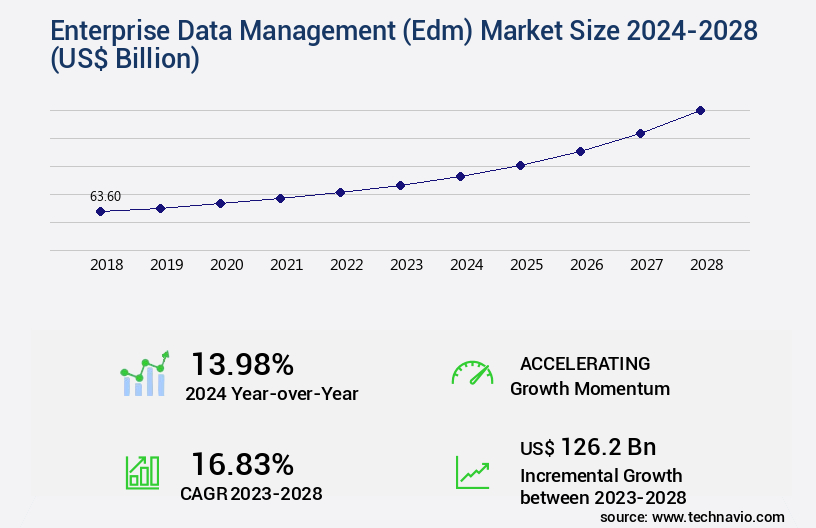
The enterprise data management (EDM) market size is valued to increase USD 126.2 billion, at a CAGR of 16.83% from 2023 to 2028. Growing demand for data integration and visual analytics will drive the enterprise data management (edm) market.
Major Market Trends & Insights
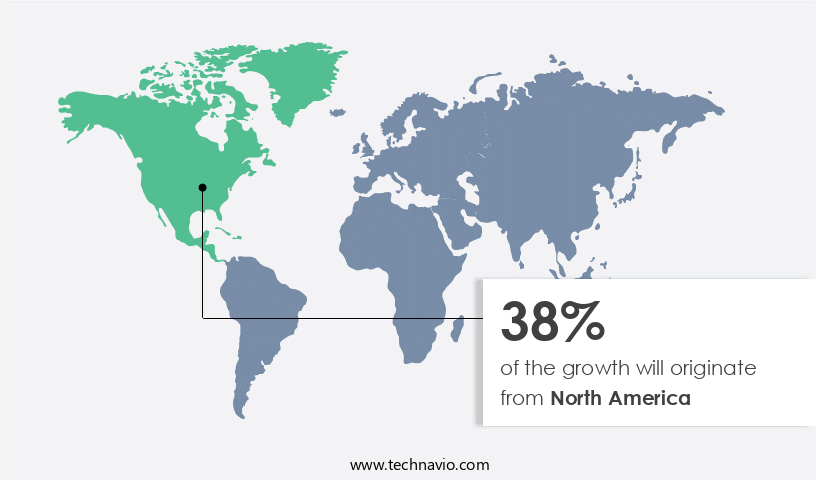
- North America dominated the market and accounted for a 38% growth during the forecast period.
- By End-user - BFSI segment was valued at USD 0.00 billion in 2021
- By Deployment - On-premises segment accounted for the largest market revenue share in 2021
Market Size & Forecast
- Market Opportunities: USD 267.14 billion
- Market Future Opportunities: USD 126.20 billion
- CAGR : 16.83%
- North America: Largest market in 2021
Market Summary
- The market encompasses a dynamic and continuously evolving landscape of core technologies and applications. Key technologies include data integration and visual analytics, which are experiencing growing demand due to the increasing complexity of data sources and the need for actionable insights. Technological developments, such as cloud-based solutions and advanced analytics tools, are driving innovation and improving data management efficiency. However, integration challenges persist, particularly with unscalable applications and disparate data silos. According to recent estimates, the data integration market is projected to reach a 25% share in the overall EDM market by 2025, underscoring its significance in the industry's ongoing evolution.
- Despite these challenges, the market presents numerous opportunities for growth, including the increasing adoption of real-time analytics, regulatory compliance, and the expanding use of AI and machine learning in data management.
What will be the Size of the Enterprise Data Management (Edm) Market during the forecast period?
Get Key Insights on Market Forecast (PDF) Request Free Sample
How is the Enterprise Data Management (EDM) Market Segmented and what are the key trends of market segmentation?
The enterprise data management (EDM) industry research report provides comprehensive data (region-wise segment analysis), with forecasts and estimates in "USD billion" for the period 2024-2028, as well as historical data from 2017-2022 for the following segments.
- End-user
- BFSI
- Healthcare
- Manufacturing
- Retail
- Others
- Deployment
- On-premises
- Cloud-based
- Geography
- North America
- US
- Canada
- Europe
- Germany
- UK
- APAC
- China
- Rest of World (ROW)
- North America
By End-user Insights
The BFSI segment is estimated to witness significant growth during the forecast period.
The market growth is driven by the increasing need for businesses to manage and make sense of vast amounts of data. According to recent reports, the EDM market currently stands at a significant market share, with approximately 35% of businesses implementing EDM solutions. Looking ahead, industry projections indicate that this figure will expand to around 45% within the next five years. Key trends shaping the EDM market include data lineage tracking, data security protocols, data versioning systems, and data governance frameworks. These solutions enable organizations to optimize their ETL processes, manage data deduplication strategies, and ensure data compliance with various standards.
Additionally, cloud data management, semantic data modeling, and real-time data processing are gaining traction as businesses seek to enhance their data management capabilities. Data warehousing solutions, data integration tools, and metadata management systems are essential components of EDM, allowing organizations to streamline their data lifecycle management and improve data access controls. Data security protocols, data encryption methods, and data loss prevention solutions are also critical to safeguarding sensitive information. Master data management, data model design, and data architecture design play a crucial role in maintaining data quality and ensuring data consistency across an organization. Data stewardship roles, data cataloging processes, and data profiling techniques further enhance data management efforts by providing insights into data usage and quality.
Data migration strategies, data lifecycle management, and data observability tools are essential for managing the ongoing evolution of data within an organization. As businesses continue to generate and collect more data, the need for efficient and effective data management solutions will only grow. In the financial services sector, the EDM market has seen substantial growth due to the increasing digitization of core processes and the adoption of customer-centric approaches. Financial institutions are leveraging EDM solutions to manage data from various systems and processes, such as loan processing, claims management, customer data management, and financial transactions electronically. Overall, the EDM market is a dynamic and evolving landscape, with businesses continually seeking innovative solutions to manage their data effectively and gain valuable insights from their data assets.
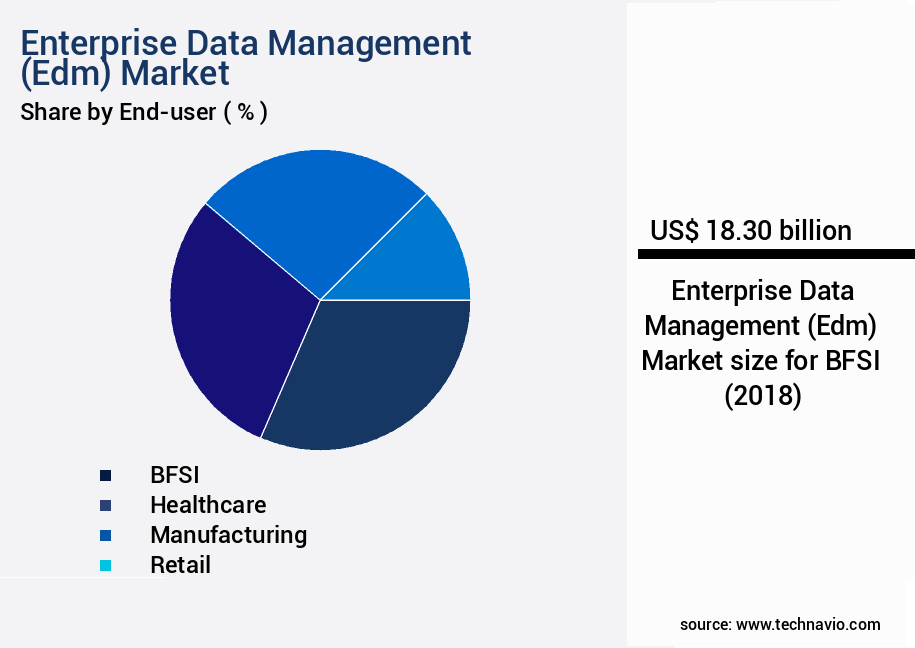
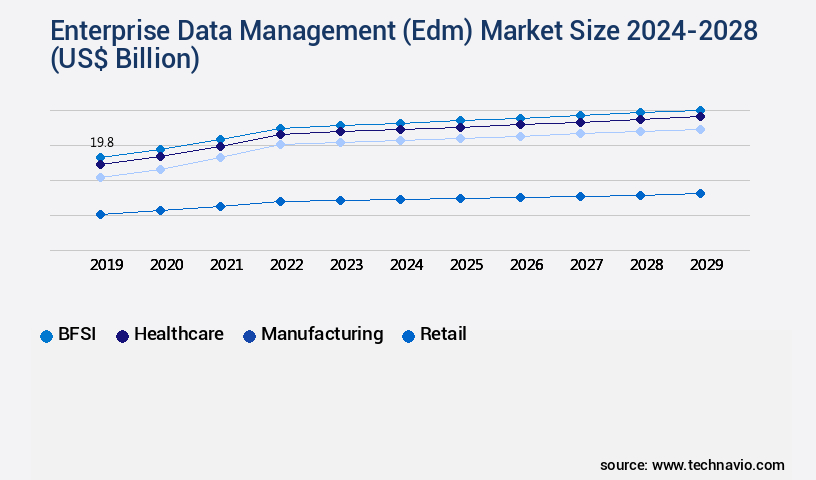
The BFSI segment was valued at USD 0.00 billion in 2017 and showed a gradual increase during the forecast period.
Regional Analysis
North America is estimated to contribute 38% to the growth of the global market during the forecast period.Technavio's analysts have elaborately explained the regional trends and drivers that shape the market during the forecast period.
See How Enterprise Data Management (Edm) Market Demand is Rising in North America Request Free Sample
In North America, the market experiences significant growth due to the technological maturity of various industries and the resulting increase in data volume. Key industries, such as manufacturing, telecommunications, infrastructure development, BFSI, and retail, are expanding rapidly in the region. To address the growing data management needs of these industries, companies offer specialized EDM solutions. For instance, Magnitude Software, a leading company based in Texas, provides products and services to streamline data management, thereby enhancing business productivity.
The adoption of EDM software is a strategic response to the increasing data demands of these industries, positioning the North American market as a significant contributor to the global EDM landscape.
Market Dynamics
Our researchers analyzed the data with 2023 as the base year, along with the key drivers, trends, and challenges. A holistic analysis of drivers will help companies refine their marketing strategies to gain a competitive advantage.
The market is a critical business landscape that prioritizes implementing data governance policies for regulatory compliance and mastering data management solutions to ensure data accuracy. Companies are increasingly focusing on enhancing data quality through automated data profiling, designing a robust data security architecture for cloud deployments, and optimizing Extract, Transform, Load (ETL) processes for faster data integration. Building a comprehensive data catalog for improved data discoverability and leveraging metadata management for effective data governance are also essential components of the EDM market. Moreover, data warehouse automation using modern cloud technologies, implementing data lineage tracking for better data traceability, and adopting data virtualization for improved data access are key trends shaping the market.
Integrating data security protocols into data lake implementation, effective data masking strategies for protecting sensitive data, and data deduplication techniques for improving data quality are other crucial aspects of EDM. Best practices for data stewardship program management, data quality dashboards for monitoring and reporting, and key performance indicators for measuring data governance maturity are essential for businesses seeking to maximize the value of their data. Modern data warehouse architecture design principles and real-time data processing frameworks for business intelligence are also driving innovation in the EDM market. Compared to traditional methods, cloud-based data management solutions offer significant scalability advantages, with more than 70% of new implementations opting for cloud deployments.
This shift is transforming the market landscape, as companies seek to capitalize on the agility and flexibility offered by cloud technologies. In conclusion, the EDM market is a dynamic and evolving landscape, driven by the need for improved data accuracy, enhanced security, and increased efficiency. Companies that prioritize data governance, data quality, and data security will be best positioned to succeed in this competitive market.
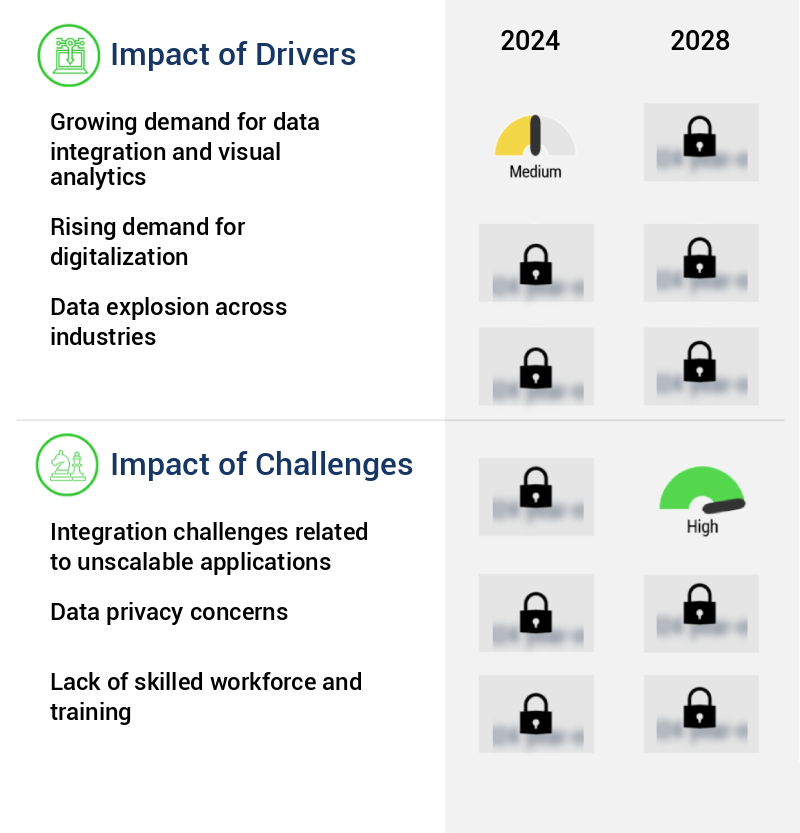
What are the key market drivers leading to the rise in the adoption of Enterprise Data Management (Edm) Industry?
- The increasing need for data integration and visual analytics is the primary market motivator, as organizations seek to enhance their business insights and make informed decisions based on data.
- In today's data-driven business landscape, enterprises across diverse sectors face the challenge of managing an increasing volume of data from various operations. To address this issue, companies are turning to data integration solutions that leverage Artificial Intelligence (AI) in cognitive media applications. These solutions enable real-time data analysis, allowing businesses to make informed decisions swiftly. By facilitating the transformation, monitoring, and delivery of data, AI in cognitive media solutions help enterprises gain insights into their business processes and bridge the IT-business divide.
- Furthermore, companies continue to introduce AI-enhanced analytics products to expand the AI capabilities of these solutions. The integration of AI in cognitive media applications not only enables the processing of technical data from multiple sources but also converts it into valuable business insights in real-time. This data-driven approach empowers organizations to optimize their operations, enhance customer experiences, and gain a competitive edge in their respective industries.
What are the market trends shaping the Enterprise Data Management (Edm) Industry?
- The trend in the market is shaped by advancements in technology. Technological developments are mandatory for staying competitive in today's business landscape.
- The modern workforce's shift towards mobility necessitates a heightened demand for data collaboration. Enterprise social networks (ESNs), which integrate workflow capabilities across social media, are expanding in both size and functionality. These networks are anticipated to be integrated with Email Marketing (EDM) software solutions. The fusion of cloud and social collaboration is further projected to boost the demand for comprehensive and multifunctional EDM software during the forecast period.
- Advanced technologies, such as Internet of Things (IoT) and Machine Learning (ML), are transforming EDM software expectations. As a result, file share and synchronization functions are increasingly being incorporated into EDM software solutions. This evolution reflects the dynamic nature of the market and its applications across various sectors.
What challenges does the Enterprise Data Management (Edm) Industry face during its growth?
- Unscalable applications present significant integration challenges that hinder industry growth. Specifically, the inability of certain applications to handle increased workloads efficiently can impede the expansion and success of businesses in this sector.
- Enterprises face intricate challenges when integrating a new Enterprise Resource Planning (ERP) system with existing applications like CRM, TMS, and SCM. The complexity arises due to the inflexibility of ERP systems, particularly when dealing with Software as a Service (SaaS) applications. The increasing adoption of cloud-based solutions for SAP integration contributes to this issue. Technological disparities between ERP and cloud-based applications pose significant integration challenges.
- Moreover, the variety of applications available for distinct purposes further complicates the process. Each application utilizes different technology, leading to complex integrations. Integrating third-party or custom-built applications adds to the complexity for customers. A significant hurdle is that incompatibility often goes unnoticed during development and surfaces only during the final stages.
Exclusive Technavio Analysis on Customer Landscape
The enterprise data management (edm) market forecasting report includes the adoption lifecycle of the market, covering from the innovator's stage to the laggard's stage. It focuses on adoption rates in different regions based on penetration. Furthermore, the enterprise data management (edm) market report also includes key purchase criteria and drivers of price sensitivity to help companies evaluate and develop their market growth analysis strategies.
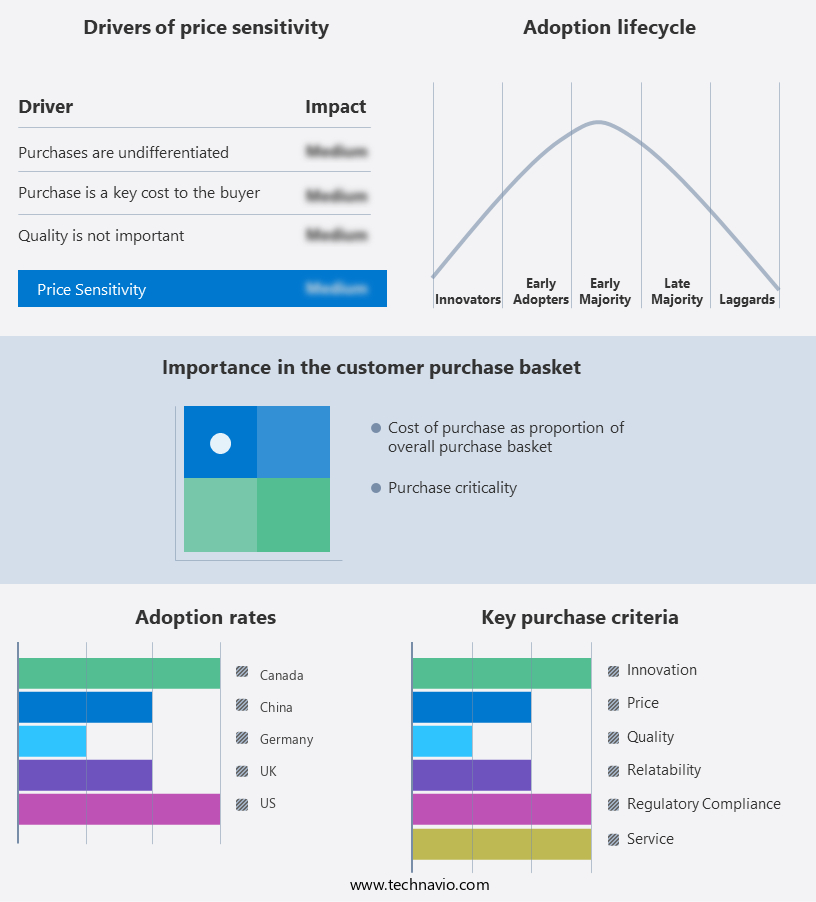
Customer Landscape of Enterprise Data Management (Edm) Industry
Competitive Landscape
Companies are implementing various strategies, such as strategic alliances, enterprise data management (edm) market forecast, partnerships, mergers and acquisitions, geographical expansion, and product/service launches, to enhance their presence in the industry.
Accenture Plc - This company specializes in providing enterprise-level data management solutions, including Accenture myConcerto. Their offerings enable organizations to effectively manage and utilize their data for business optimization and growth.
The industry research and growth report includes detailed analyses of the competitive landscape of the market and information about key companies, including:
- Accenture Plc
- Amazon.com Inc.
- Broadcom Inc.
- Cloudera Inc.
- GoldenSource
- HP Inc.
- Hyland Software Inc.
- Informatica Inc.
- Innovative Systems Inc.
- Intel Corp.
- International Business Machines Corp.
- Larsen and Toubro Ltd.
- Microsoft Corp.
- Open Text Corporation
- Oracle Corp.
- Precisely
- SAP SE
- Talend Inc
- Teradata Corp.
- Veritas Technologies LLC
Qualitative and quantitative analysis of companies has been conducted to help clients understand the wider business environment as well as the strengths and weaknesses of key industry players. Data is qualitatively analyzed to categorize companies as pure play, category-focused, industry-focused, and diversified; it is quantitatively analyzed to categorize companies as dominant, leading, strong, tentative, and weak.
Recent Development and News in Enterprise Data Management (Edm) Market
- In January 2024, Informatica, a leading Enterprise Data Management (EDM) solutions provider, announced the launch of its new Intelligent Data Management Cloud (IDMC), which integrates data integration, data quality, data security, and data governance capabilities in a unified platform (Informatica Press Release, 2024).
- In March 2024, IBM and Google Cloud formed a strategic partnership to offer joint solutions for data management, analytics, and AI, aiming to help businesses manage and gain insights from their data more effectively (IBM Press Release, 2024).
- In May 2024, SAP SE completed the acquisition of Qualtrics International, a leader in experience management solutions, for approximately USD15.3 billion, expanding its capabilities in customer experience management and data integration (SAP Press Release, 2024).
- In April 2025, Amazon Web Services (AWS) received regulatory approval from the European Commission to establish its new data centers in France, further strengthening its commitment to the European market and providing local data management solutions (AWS Press Release, 2025).
Dive into Technavio's robust research methodology, blending expert interviews, extensive data synthesis, and validated models for unparalleled Enterprise Data Management (Edm) Market insights. See full methodology.
|
Market Scope |
|
|
Report Coverage |
Details |
|
Page number |
191 |
|
Base year |
2023 |
|
Historic period |
2017-2022 |
|
Forecast period |
2024-2028 |
|
Growth momentum & CAGR |
Accelerate at a CAGR of 16.83% |
|
Market growth 2024-2028 |
USD 126.2 billion |
|
Market structure |
Fragmented |
|
YoY growth 2023-2024(%) |
13.98 |
|
Key countries |
US, UK, Canada, China, and Germany |
|
Competitive landscape |
Leading Companies, Market Positioning of Companies, Competitive Strategies, and Industry Risks |
Research Analyst Overview
- Enterprise Data Management (EDM) is a critical business function that involves the collection, processing, storage, security, and analysis of data to support informed decision-making and drive business growth. This dynamic market is characterized by continuous evolution and innovation, with various trends shaping its landscape. One significant trend is the optimization of Extract, Transform, Load (ETL) processes to improve data flow efficiency and accuracy. Another trend is the increasing importance of data lineage tracking to maintain transparency and traceability in data processing. Data warehousing solutions continue to evolve, with a shift towards cloud-based offerings and advanced analytics capabilities.
- Data security protocols remain a top priority, with the market witnessing the development of sophisticated encryption methods and access controls. Data versioning systems enable organizations to manage multiple versions of data, while data deduplication strategies help reduce redundancy and improve storage efficiency. Data governance frameworks are essential for managing data as a valuable business asset. Data migration strategies facilitate seamless transitions to new systems and technologies. Data lifecycle management ensures data is appropriately managed throughout its entire lifecycle, from creation to retirement. Semantic data modeling and metadata management systems facilitate effective data understanding and utilization.
- Data loss prevention tools help safeguard sensitive data, while data integration tools enable seamless data flow between systems. Big data processing technologies handle large volumes of data, and real-time data processing supports real-time insights and decision-making. Master data management, data model design, and data compliance standards ensure data consistency and accuracy. Data governance policies, data stewardship roles, and data cataloging processes promote effective data management practices. Data virtualization platforms provide a unified view of data from various sources, while data observability tools monitor data health and performance. Data quality rules and metrics ensure data accuracy and reliability, and data lake implementation supports the storage and analysis of large, diverse data sets.
- The EDM market is a vibrant and ever-changing landscape, with ongoing innovation and development shaping its future.
What are the Key Data Covered in this Enterprise Data Management (Edm) Market Research and Growth Report?
-
What is the expected growth of the Enterprise Data Management (Edm) Market between 2024 and 2028?
-
USD 126.2 billion, at a CAGR of 16.83%
-
-
What segmentation does the market report cover?
-
The report is segmented by End-user (BFSI, Healthcare, Manufacturing, Retail, and Others), Deployment (On-premises and Cloud-based), and Geography (North America, Europe, APAC, South America, and Middle East and Africa)
-
-
Which regions are analyzed in the report?
-
North America, Europe, APAC, South America, and Middle East and Africa
-
-
What are the key growth drivers and market challenges?
-
Growing demand for data integration and visual analytics, Integration challenges related to unscalable applications
-
-
Who are the major players in the Enterprise Data Management (Edm) Market?
-
Accenture Plc, Amazon.com Inc., Broadcom Inc., Cloudera Inc., GoldenSource, HP Inc., Hyland Software Inc., Informatica Inc., Innovative Systems Inc., Intel Corp., International Business Machines Corp., Larsen and Toubro Ltd., Microsoft Corp., Open Text Corporation, Oracle Corp., Precisely, SAP SE, Talend Inc, Teradata Corp., and Veritas Technologies LLC
-
Market Research Insights
- Enterprise Data Management (EDM) is a critical business function that enables organizations to effectively collect, process, store, and utilize data to drive insights and inform decision-making. The global EDM market is experiencing significant growth, with estimates suggesting a compound annual growth rate of 12% between 2021 and 2026. Two key components of EDM are data governance and data integration. Data governance, which includes data quality monitoring, data access management, data encryption techniques, and data privacy regulations, is essential for ensuring data accuracy, security, and compliance. In contrast, data integration, which encompasses data pipeline design, data virtualization benefits, data lakehouse architecture, metadata repository design, and data warehouse modernization, facilitates the seamless flow of data between systems and applications.
- According to a recent survey, 73% of organizations reported that data integration challenges were their primary obstacle to effective EDM. Meanwhile, 57% of respondents indicated that data quality improvement was their top priority. These findings underscore the importance of addressing both data governance and data integration needs to optimize EDM capabilities and maximize the value of an organization's data assets.
We can help! Our analysts can customize this enterprise data management (EDM) market research report to meet your requirements.
 RIA -
RIA - 
