


Fast Casual Restaurants Market Size 2026-2030
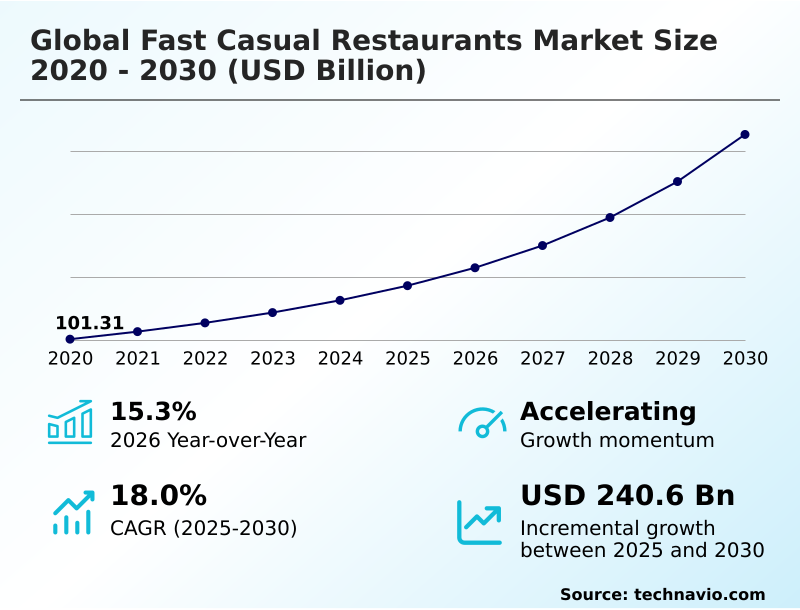
The fast casual restaurants market size is valued to increase by USD 240.60 billion, at a CAGR of 18% from 2025 to 2030. Demand for innovation and customization in food menus will drive the fast casual restaurants market.
Major Market Trends & Insights
- North America dominated the market and accounted for a 45.9% growth during the forecast period.
- By Product - North American segment was valued at USD 66.90 billion in 2024
- By Channel - Dine-in segment accounted for the largest market revenue share in 2024
Market Size & Forecast
- Market Opportunities: USD 325.71 billion
- Market Future Opportunities: USD 240.60 billion
- CAGR from 2025 to 2030 : 18%
Market Summary
- The Fast Casual Restaurants Market is characterized by a fundamental shift in consumer dining habits, moving toward a hybrid model that blends the convenience of quick-service with the quality of casual dining. This evolution is driven by demand for healthy fast casual meals, food transparency initiatives, and highly personalized options.
- Core to this market are fast casual service models centered around made-to-order meal preparation and fully customizable menu options, allowing consumers to tailor meals to specific dietary and taste preferences. This focus on customization enhances the overall fast casual dining experience.
- Premium fast casual brands are differentiating themselves through commitments to sustainable ingredient sourcing and the adoption of eco-friendly packaging solutions. Technology is a critical enabler, with digital ordering platforms and sophisticated customer relationship management (CRM) systems reshaping fast casual market dynamics.
- For instance, operators are leveraging data analytics for supply chain optimization, matching inventory of fresh ingredients precisely with fluctuating local demand for convenient dining solutions. This reduces waste and ensures ingredient availability, directly impacting profitability and service consistency without compromising the freshness central to the fast casual promise.
What will be the Size of the Fast Casual Restaurants Market during the forecast period?
Get Key Insights on Market Forecast (PDF) Get Free Sample
How is the Fast Casual Restaurants Market Segmented?
The fast casual restaurants industry research report provides comprehensive data (region-wise segment analysis), with forecasts and estimates in "USD million" for the period 2026-2030, as well as historical data from 2020-2024 for the following segments.
- Product
- North American
- Italian
- Mexican
- Others
- Channel
- Dine-in
- Takeaway
- Type
- Franchised
- Standalone
- Geography
- North America
- US
- Canada
- Mexico
- APAC
- China
- Japan
- India
- Europe
- Germany
- UK
- France
- South America
- Brazil
- Argentina
- Middle East and Africa
- Saudi Arabia
- UAE
- South Africa
- Rest of World (ROW)
- North America
By Product Insights
The north american segment is estimated to witness significant growth during the forecast period.
The North American fast casual restaurants market is defined by a convergence of consumer demand for quality and convenience. The sector thrives by offering a superior alternative to traditional quick service, emphasizing high-quality, made-to-order meal preparation and customizable menu options.
Urban and suburban consumers increasingly prioritize food transparency initiatives, favoring brands that commit to sustainable ingredient sourcing and provide options like plant-based menu items. This demand for healthy fast casual meals aligns with a fast-paced lifestyle.
To enhance the fast casual dining experience, operators are investing in technology; digital ordering platforms and self-ordering kiosks have improved operational flows, with some platforms reducing order errors by over 15%.
This focus on premium ingredient positioning and convenient dining solutions, coupled with eco-friendly packaging solutions, defines the competitive landscape for urban dining trends.
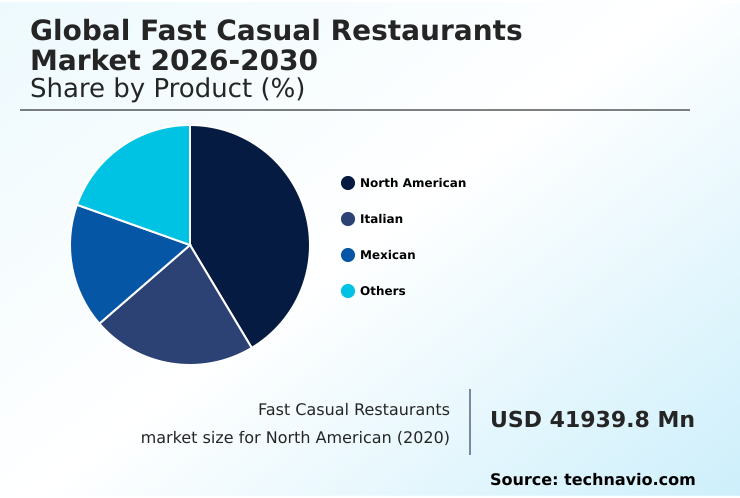
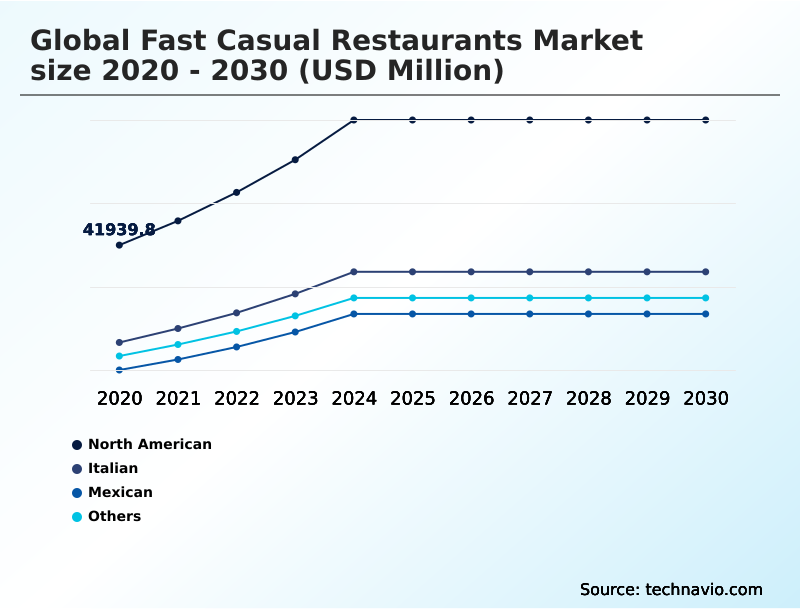
The North American segment was valued at USD 66.90 billion in 2024 and showed a gradual increase during the forecast period.
Regional Analysis
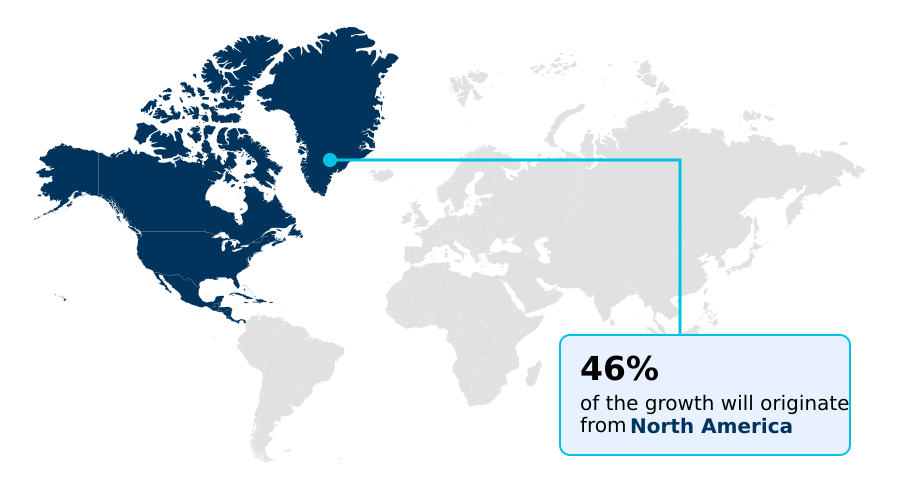
North America is estimated to contribute 45.9% to the growth of the global market during the forecast period.Technavio’s analysts have elaborately explained the regional trends and drivers that shape the market during the forecast period.
See How Fast Casual Restaurants Market Demand is Rising in North America Get Free Sample
North America is set to contribute approximately 45.9% of the market's incremental growth, driven by mature consumer preferences for gourmet fast casual options and advanced food delivery ecosystems.
The region's leadership is reinforced by widespread adoption of contactless dining solutions, with contactless payment systems and self-ordering kiosks becoming standard. Meanwhile, APAC is emerging as a key growth region, fueled by rapid urbanization and rising disposable incomes.
The popularity of urban dining trends and hyper-local dining trends is creating opportunities for concepts featuring globally inspired noodle dishes and Hawaiian-inspired poke bowls.
In this region, loyalty program integration via mobile apps has been shown to improve customer retention rates by over 20%. The expansion of third-party delivery aggregation supports the growth of takeaway and delivery models across both regions.
Market Dynamics
Our researchers analyzed the data with 2025 as the base year, along with the key drivers, trends, and challenges. A holistic analysis of drivers will help companies refine their marketing strategies to gain a competitive advantage.
- The future of the Fast Casual Restaurants Market hinges on navigating several interconnected strategic imperatives. The impact of technology on fast casual dining is profound, with digital transformation in restaurant operations becoming a baseline for competitive survival. Companies are actively optimizing fast casual for delivery services and implementing self-ordering kiosks effectively to meet consumer expectations for convenience.
- This technology push also involves leveraging data analytics for menu optimization and integrating AI for personalized menu recommendations, which directly addresses the consumer demand for food customization. A key trend is the rise of chef-driven fast casual franchises, which challenges operators to balance culinary creativity with the scalability of franchised vs. standalone fast casual models.
- The importance of menu innovation and engineering is paramount, especially with the accelerated growth of healthy and gluten-free options and the increasing role of plant-based food in fast casual menus.
- Operationally, success requires diligent fast casual restaurant supply chain management to buffer against the challenge of managing food commodity price fluctuations, which can impact margins more significantly than in less fresh-focused segments. For instance, brands with agile supply chains report 20% better margin stability during periods of price volatility.
- Furthermore, navigating food safety and labeling regulations and developing robust strategies for customer loyalty and crm programs are critical for sustainable fast casual expansion in urban and suburban markets. Ultimately, the industry must continuously redefine the future of dine-in versus takeaway channels while addressing the persistent challenges of competing with quick-service restaurants.
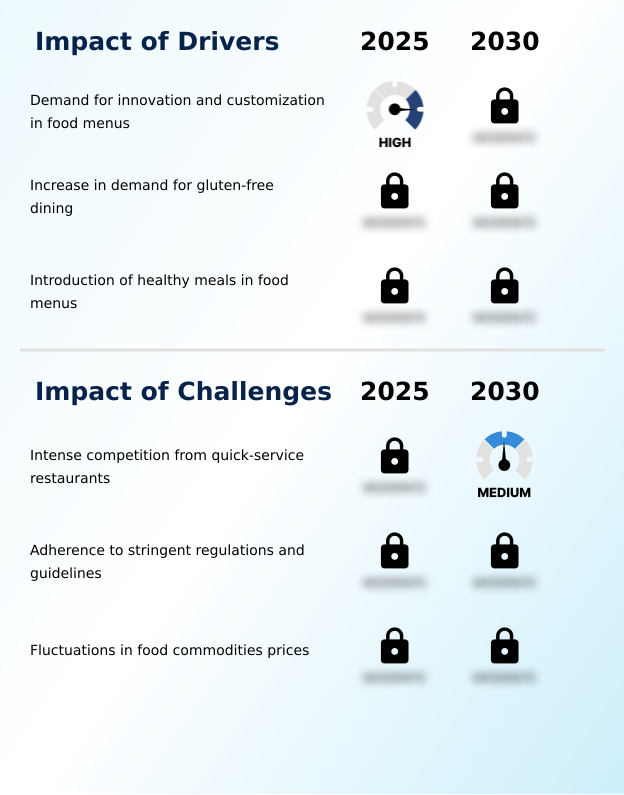
What are the key market drivers leading to the rise in the adoption of Fast Casual Restaurants Industry?
- The demand for innovation and customization in food menus serves as a key driver for the market's growth.
- The market is significantly driven by consumer demand for healthier and personalized meals. The availability of build-your-own meal formats and premium ingredient positioning caters to a desire for control over dietary choices.
- This includes a growing preference for healthy fast casual meals featuring plant-based menu items and dedicated gluten-free dining options.
- To enhance the fast casual dining experience, brands are adopting food transparency initiatives and providing clear nutritional information transparency, which can boost consumer trust by over 25%. Such customer engagement strategies are reshaping fast casual market dynamics.
- The success of concepts offering premium chargrilled burgers or customizable sub sandwiches underscores the demand for quality. Digital platforms offering convenient dining solutions have also proven to increase repeat customer visits by up to 15%.
What are the market trends shaping the Fast Casual Restaurants Industry?
- The increasing popularity of chef-driven fast casual restaurant franchises represents a notable market trend, blending culinary expertise with scalable, convenient dining formats.
- A notable trend is the rise of chef-driven restaurant concepts, which are enhancing the market through artisanal food preparation and culinary innovation. These establishments, operating under both franchise operational systems and as standalone restaurant concepts, are leveraging fast casual franchising to scale premium dining experiences.
- The integration of fast casual restaurant technology is pivotal; operators using integrated kitchen display systems (KDS) report up to a 20% improvement in order throughput. Furthermore, a focus on ethnic cuisine integration with offerings like Mediterranean bowls and unique smoothies and wraps is diversifying menus.
- This is supported by advanced menu engineering and AI-driven personalization, which have been shown to increase average check sizes by over 8%. The expansion of efficient takeaway and delivery models continues to reshape service delivery.
What challenges does the Fast Casual Restaurants Industry face during its growth?
- Intense competition from quick-service restaurants presents a key challenge that affects the industry’s growth trajectory.
- Intense competition and operational complexities present key challenges. The line between fast casual and traditional QSRs is blurring, creating a quick service restaurant (QSR) convergence that intensifies price pressure. Maintaining restaurant-style food quality for items like Nashville-style hot chicken or chicken wings and fries while managing fluctuating commodity prices requires robust supply chain optimization.
- Issues in the fast casual supply chain can increase input costs by as much as 10-15% annually. Adherence to stringent food safety compliance and allergen management protocols is non-negotiable, demanding sophisticated cloud-based restaurant management systems. Firms failing to meet these standards face significant reputational risk.
- Furthermore, differentiating breakfast, brunch, and lunch dining services or experiential dining concepts becomes more difficult in a crowded market, affecting profitability.
Exclusive Technavio Analysis on Customer Landscape
The fast casual restaurants market forecasting report includes the adoption lifecycle of the market, covering from the innovator’s stage to the laggard’s stage. It focuses on adoption rates in different regions based on penetration. Furthermore, the fast casual restaurants market report also includes key purchase criteria and drivers of price sensitivity to help companies evaluate and develop their market growth analysis strategies.
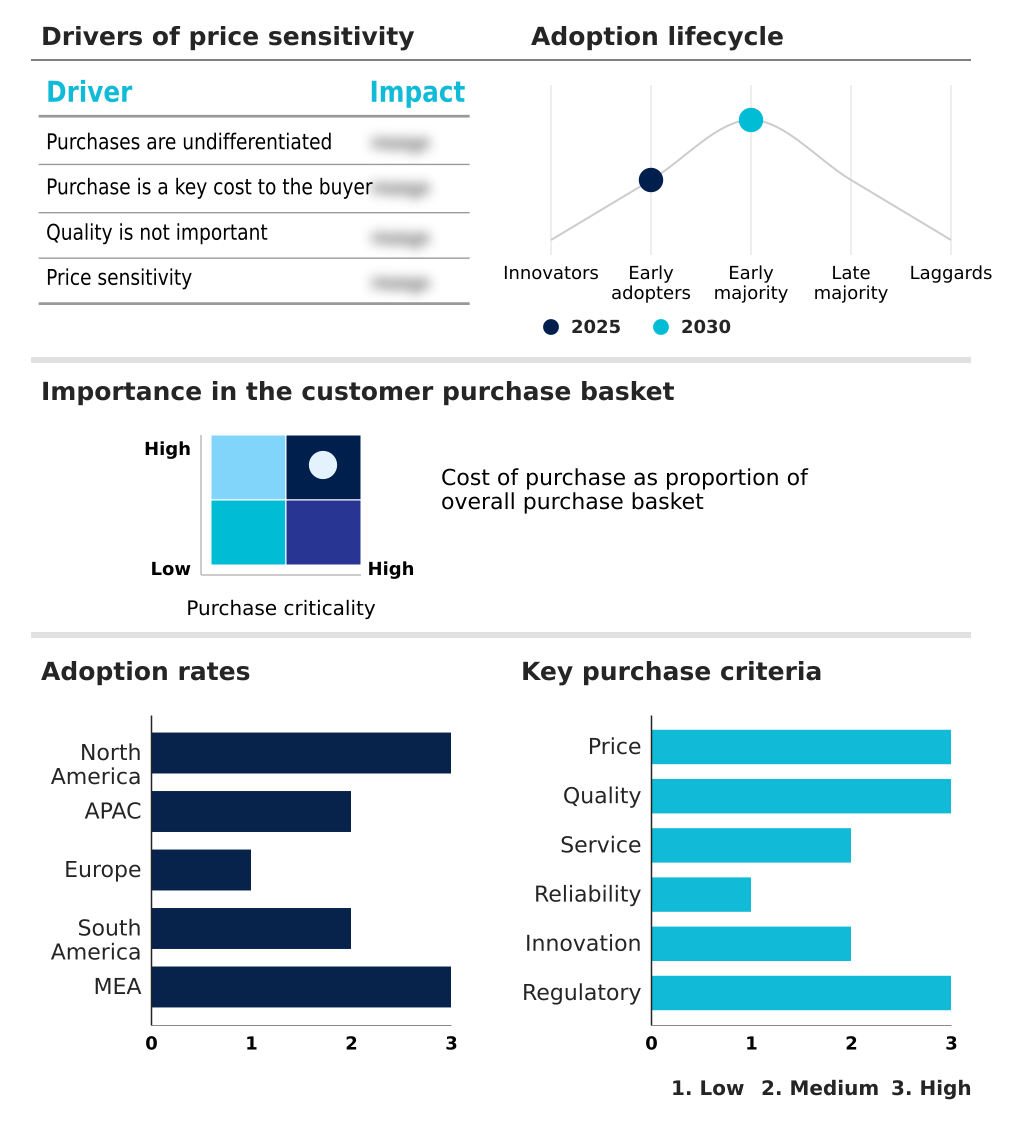
Customer Landscape of Fast Casual Restaurants Industry
Competitive Landscape
Companies are implementing various strategies, such as strategic alliances, fast casual restaurants market forecast, partnerships, mergers and acquisitions, geographical expansion, and product/service launches, to enhance their presence in the industry.
Blaze Pizza LLC - Offerings are centered on made-to-order meals, combining high-quality, fresh ingredients with the speed and convenience of customizable fast casual dining formats.
The industry research and growth report includes detailed analyses of the competitive landscape of the market and information about key companies, including:
- Blaze Pizza LLC
- CAVA Group, Inc.
- Chipotle Mexican Grill Inc.
- Daves Hot Chicken
- First Watch Restaurant Group
- Five Guys Enterprises LLC
- Jersey Mikes Franchise Systems
- MOD Super Fast Pizza LLC
- Noodles and Co.
- Panda Restaurant Group Inc.
- Panera Bread
- Pokeworks LLC
- Potbelly Corp.
- Qdoba Restaurant Corp.
- Raising Canes Restaurants LLC
- Shake Shack Inc.
- Sweetgreen Inc.
- The Habit Restaurants Inc.
- Tropical Smoothie Cafe LLC
- Wingstop Inc.
Qualitative and quantitative analysis of companies has been conducted to help clients understand the wider business environment as well as the strengths and weaknesses of key industry players. Data is qualitatively analyzed to categorize companies as pure play, category-focused, industry-focused, and diversified; it is quantitatively analyzed to categorize companies as dominant, leading, strong, tentative, and weak.
Recent Development and News in Fast casual restaurants market
- In March 2025, Panera Bread announced an expansion of its AI-powered drive-thru ordering systems across several US locations to enhance service speed and order accuracy.
- In February 2025, MOD Super Fast Pizza LLC revealed its plan to deploy a new digital kitchen management system in select US outlets, aiming to optimize order processing during peak service times.
- In January 2025, Chipotle Mexican Grill initiated the rollout of an AI-driven kitchen management platform in certain restaurants to streamline order flow and minimize customer wait times.
- In April 2025, CAVA Group, Inc. launched an AI-powered personalization feature within its mobile app, providing customers with menu recommendations based on their previous order history and stated preferences.
Dive into Technavio’s robust research methodology, blending expert interviews, extensive data synthesis, and validated models for unparalleled Fast Casual Restaurants Market insights. See full methodology.
| Market Scope | |
|---|---|
| Page number | 288 |
| Base year | 2025 |
| Historic period | 2020-2024 |
| Forecast period | 2026-2030 |
| Growth momentum & CAGR | Accelerate at a CAGR of 18% |
| Market growth 2026-2030 | USD 240602.4 million |
| Market structure | Fragmented |
| YoY growth 2025-2026(%) | 15.3% |
| Key countries | US, Canada, Mexico, China, Japan, India, South Korea, Australia, Indonesia, Germany, UK, France, Italy, Spain, The Netherlands, Brazil, Argentina, Chile, Saudi Arabia, UAE, South Africa, Israel and Turkey |
| Competitive landscape | Leading Companies, Market Positioning of Companies, Competitive Strategies, and Industry Risks |
Research Analyst Overview
- The Fast Casual Restaurants Market is evolving beyond a simple hybrid of service speeds, now defined by sophisticated operational frameworks and deep technological integration. Successful operators utilize advanced fast casual service models centered on efficient made-to-order meal preparation with highly customizable menu options, including build-your-own meal formats and diverse offerings like Nashville-style hot chicken, Mediterranean bowls, and Hawaiian-inspired poke bowls.
- The backbone of this efficiency lies in technology, from digital ordering platforms and self-ordering kiosks to comprehensive cloud-based restaurant management systems. These platforms integrate kitchen display systems (KDS) and inventory management systems, with some operators achieving a 30% reduction in food waste through better supply chain optimization.
- Boardroom decisions are increasingly focused on franchise operational systems versus standalone restaurant concepts and the ROI from AI-driven personalization and loyalty program integration within customer relationship management (CRM) platforms. Strategic differentiation is achieved through premium ingredient positioning, sustainable ingredient sourcing, and transparent nutritional information transparency.
- Adherence to strict food safety compliance and allergen management protocols, along with the use of eco-friendly packaging solutions, are now critical brand pillars.
What are the Key Data Covered in this Fast Casual Restaurants Market Research and Growth Report?
-
What is the expected growth of the Fast Casual Restaurants Market between 2026 and 2030?
-
USD 240.60 billion, at a CAGR of 18%
-
-
What segmentation does the market report cover?
-
The report is segmented by Product (North American, Italian, Mexican, and Others), Channel (Dine-in, and Takeaway), Type (Franchised, and Standalone) and Geography (North America, APAC, Europe, South America, Middle East and Africa)
-
-
Which regions are analyzed in the report?
-
North America, APAC, Europe, South America and Middle East and Africa
-
-
What are the key growth drivers and market challenges?
-
Demand for innovation and customization in food menus, Intense competition from quick-service restaurants
-
-
Who are the major players in the Fast Casual Restaurants Market?
-
Blaze Pizza LLC, CAVA Group, Inc., Chipotle Mexican Grill Inc., Daves Hot Chicken, First Watch Restaurant Group, Five Guys Enterprises LLC, Jersey Mikes Franchise Systems, MOD Super Fast Pizza LLC, Noodles and Co., Panda Restaurant Group Inc., Panera Bread, Pokeworks LLC, Potbelly Corp., Qdoba Restaurant Corp., Raising Canes Restaurants LLC, Shake Shack Inc., Sweetgreen Inc., The Habit Restaurants Inc., Tropical Smoothie Cafe LLC and Wingstop Inc.
-
Market Research Insights
- The market's dynamism is driven by the integration of fast casual restaurant technology and a focus on experiential dining concepts. The rise of chef-driven restaurant concepts and fast casual franchising has elevated expectations for restaurant-style food quality and artisanal food preparation.
- Operators that successfully implement technology see tangible results; for example, integrated ordering systems reduce error rates by up to 15% compared to manual methods. Furthermore, expanding takeaway and delivery models can increase a location's customer reach by over 50%.
- A growing emphasis on ethnic cuisine integration is diversifying menus, creating new avenues for growth and appealing to a broader consumer base seeking novel dining experiences.
We can help! Our analysts can customize this fast casual restaurants market research report to meet your requirements.
 RIA -
RIA - 
