


Fatty Acid Market Analysis North America, APAC, Europe, South America, Middle East and Africa - US, China, Japan, Germany, UK - Size and Forecast 2024-2028

Fatty Acid Market Analysis North America, APAC, Europe, South America, Middle East and Africa - US, China, Japan, Germany, UK - Size and Forecast 2024-2028

Published: Nov 2023 176 Pages SKU: IRTNTR76720

Market Overview at a Glance

$8.30 B
Market Opportunity
5.52%
CAGR
5.18
YoY growth 2023-2024(%)

Fatty Acid Market Size 2024-2028 

The fatty acid market size is forecast to increase by USD 8.30 billion at a CAGR of 5.52% between 2023 and 2028. The increasing focus on health and wellness, driven by rising health consciousness and lifestyle changes, is driving market growth by increasing the demand for health-promoting products and ingredients. The growing demand for industrial and institutional cleaners, driven by the need for effective cleaning and hygiene solutions in various industries and sectors, is also boosting market expansion by creating a demand for cleaning products and services. Additionally, the increasing use of omega-3 and omega-6 fatty acids, driven by their health benefits and nutritional value, is driving market growth by increasing the demand for products fortified with these fatty acids.

What will be the Size of the Market During the Forecast Period?
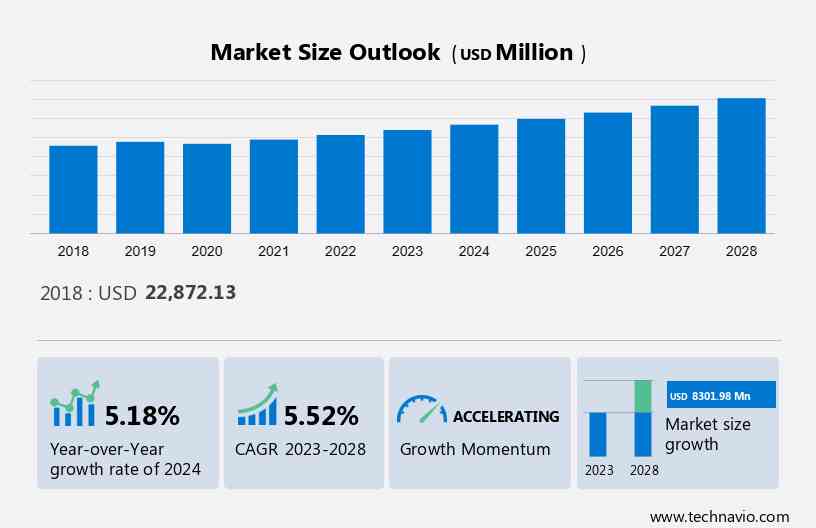
Fatty Acid Market Size

For More Highlights About this Report, Download Free Sample in a Minute 

Market Segmentation

By Formulation

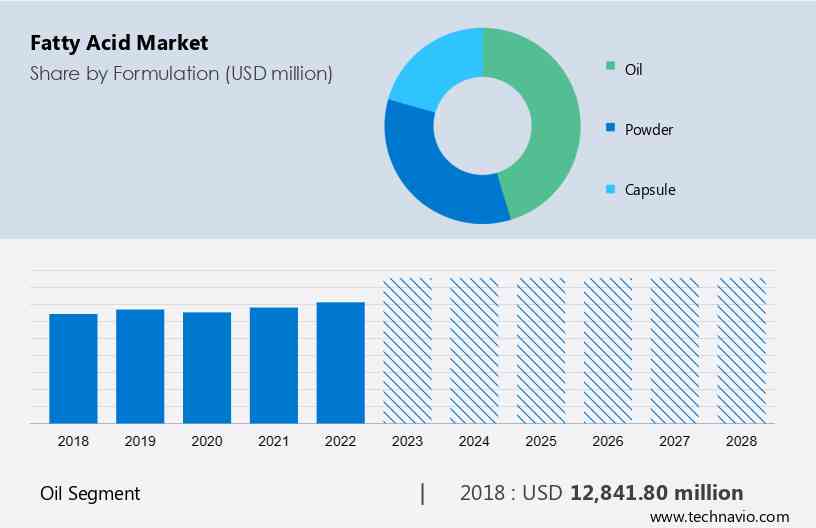
The oil segment is estimated to witness significant growth during the forecast period. Fatty acid oils are liquid formulations that encompass a wide spectrum of fatty acids, each with its own distinct properties and applications across industries. These oils can be derived from both plant and animal sources, offering versatility and utility in various contexts. One prime example is olive oil, renowned for its rich monounsaturated fats, primarily oleic acid.
Fatty Acid Market Size

Get a glance at the market contribution of various segments Download the PDF Sample

The oil segment was the largest segment and was valued at  USD 12.84 billion in 2018 Fish oil, extracted from fatty fish such as salmon and mackerel, is celebrated for its omega-3 fatty acids, particularly eicosapentaenoic acid (EPA) and docosahexaenoic acid (DHA). Further, new palm oil fractions that are harder (more saturated) or softer (more unsaturated) than the parent oil can be created by crystallizing these constituents. Thus, a variety of melting points, from liquid oils to high melting point solids that resemble wax, can be obtained from palm oil. Cargill Inc., one of the companies in the market, offers Agri-Pure esters. These esters can be used in hydraulic fluids and metalworking lubrication applications such as drilling, cutting, and rolling. They are manufactured from a range of vegetable oils. These fluids' special composition gives them high flash and fire points, which are essential safety features for lubrication formulations. Thus, the growing use of fatty acid oils will drive the growth of this segment in the market during the forecast period.

By Region
Fatty Acid Market Share by Geography

For more insights on the market share of various regions Download PDF Sample now!

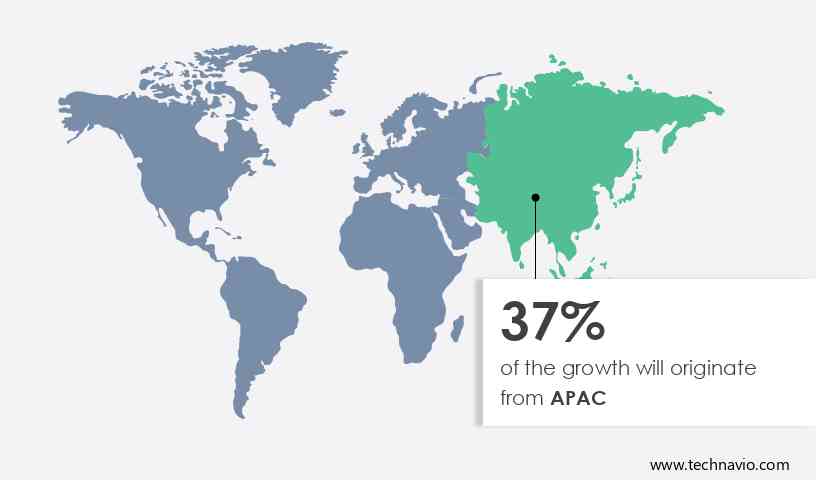
APAC is estimated to contribute 37% to the growth of the global market during the forecast period. Technavio’s analysts have elaborately explained the regional trends and drivers that shape the market during the forecast period. Another region offering significant growth opportunities to companies is North America. The market in North America is driven by the food, pharmaceutical, cosmetics, and personal care industries. The US and Canada are the major contributing countries in terms of revenue to the growth of the regional market in 2023. The personal care and cosmetic industry is growing at a significant rate in North America. Moreover, the anti-ageing pharmaceuticals and cosmetic products segment is witnessing strong demand from individuals aged between 30 and 50 years in the region, which is dominated by developed countries such as the US with high per capita income and strong spending power. The US is among the top five importers and exporters of beauty cosmetics and skincare products.

Similarly, according to the International Trade Administration (ITA) data, the cosmetics industry in Canada produces a wide range of goods, such as soaps and makeup, among others. Fatty acids are used in skincare, haircare, and cosmetics products due to their moisturizing and emollient properties. As consumer preferences lean towards natural and organic ingredients, the demand for fatty acid-based products in this industry continues to rise. Hence, the high penetration of cosmetics and personal care products is driving the market for fatty acids in North America during the forecast period. 

Market Dynamics and Customer Landscape

The market is versatile, finding applications in various industries such as pharmaceutical and nutraceutical goods, household and industrial cleaning, and cosmetics. Fatty acids like lauric acid and myristic acid are key components in cleaning supplies such as soaps, detergents, bleaches, and cleaners. They are also utilized in the production of methyl ester and fatty alcohols. In the pharmaceutical and nutraceutical sectors, Fatty acids in food, fatty acids are used in products for dish care, floor care, fabric care, and surface care. These acids are sourced from natural oils and animal carbohydrates and play a crucial role in the body's digestion, energy storage, and the bloodstream. Our researchers analyzed the data with 2023 as the base year, along with the key drivers, trends, and challenges. A holistic analysis of drivers will help companies refine their marketing strategies to gain a competitive advantage.

Key Market Driver

Growing demand for industrial and institutional cleaners is notably driving the market growthThe increasing demand for industrial and institutional cleaners is a significant driver of the market. These cleaners use surfactants as raw materials, which in turn drives the market. Factors such as growing health awareness and rapid industrialization in developing nations are fueling the demand for cleanliness in workplaces and public areas, boosting the industrial and institutional cleaners industry.

Moreover, this trend is also reflected in the increased demand for natural oils, which are used in various industries such as cosmetics, nutraceuticals, pharmaceuticals, food and beverages, and animal feeds. Maintaining cleanliness in these spaces is crucial for people's health and well-being. Therefore, the rising demand for cleaners is expected to increase the need for fatty acids for cleaning applications, thereby stimulating market growth in the forecast period.

Major Market Trends

The introduction of enzymatic pre-splitting technology for fatty acid production is an emerging trend shaping the market growth. The introduction of enzymatic pre-splitting technology is one of the emerging trends making a significant impact on the market. This innovative approach to fatty acid production is revolutionizing the industry by offering more sustainable and efficient methods. Enzymatic pre-splitting technology involves the use of enzymes to break down triglycerides, which are the main constituents of fats and oils, into their fatty acid components. This process occurs before the traditional chemical extraction or refining steps. By employing enzymes, manufacturers can selectively hydrolyze triglycerides into specific fatty acids, allowing for more precise control over the composition of the end product.

However, the benefits of this technology are multifaceted. It reduces the need for harsh chemical processes, minimizing waste and environmental impact. It also enables the production of custom profiles tailored to specific applications, such as pharmaceuticals, cosmetics, and food products. Additionally, the process is often more energy-efficient and cost-effective, providing a competitive edge in the market. Thus, the introduction of enzymatic pre-splitting technology is one of the emerging trends, that is expected to drive the growth of the market during the forecast period.

Significant Market Challenge

Environmental concerns related to sourcing of fatty acids is a significant challenge hindering the market growth. Environmental concerns are a pivotal factor in the market as both sourcing and production methods raise substantial ecological apprehensions. Palm oil, a widely used ingredient in various industries, has come under intense scrutiny due to its association with deforestation, habitat destruction, and biodiversity loss, particularly in tropical regions such as Southeast Asia. The expansion of palm oil plantations often occurs at the expense of valuable ecosystems and endangered species. In response, sustainable sourcing practices and certification programs such as Roundtable on Sustainable Palm Oil (RSPO) have gained traction, promoting eco-friendly and responsible palm oil production methods that aim to mitigate environmental impact.

Additionally, the overexploitation of marine resources for omega-3 fatty acids, vital for heart and brain health, has raised sustainability concerns. Excessive fishing pressure poses threats to fish stocks and marine ecosystems, creating a need for alternative sources. Algae-based omega-3 supplements have emerged as a sustainable solution, alleviating pressure on marine environments. Thus, environmental concerns related to the sourcing of fatty acids will pose a major challenge to the growth of the market during the forecast period.

Key Market Customer Landscape

The market research report includes the adoption lifecycle of the market, covering from the innovator’s stage to the laggard’s stage. It focuses on adoption rates in different regions based on penetration. Furthermore, the report also includes key purchase criteria and drivers of price sensitivity to help companies evaluate and develop their growth strategies.
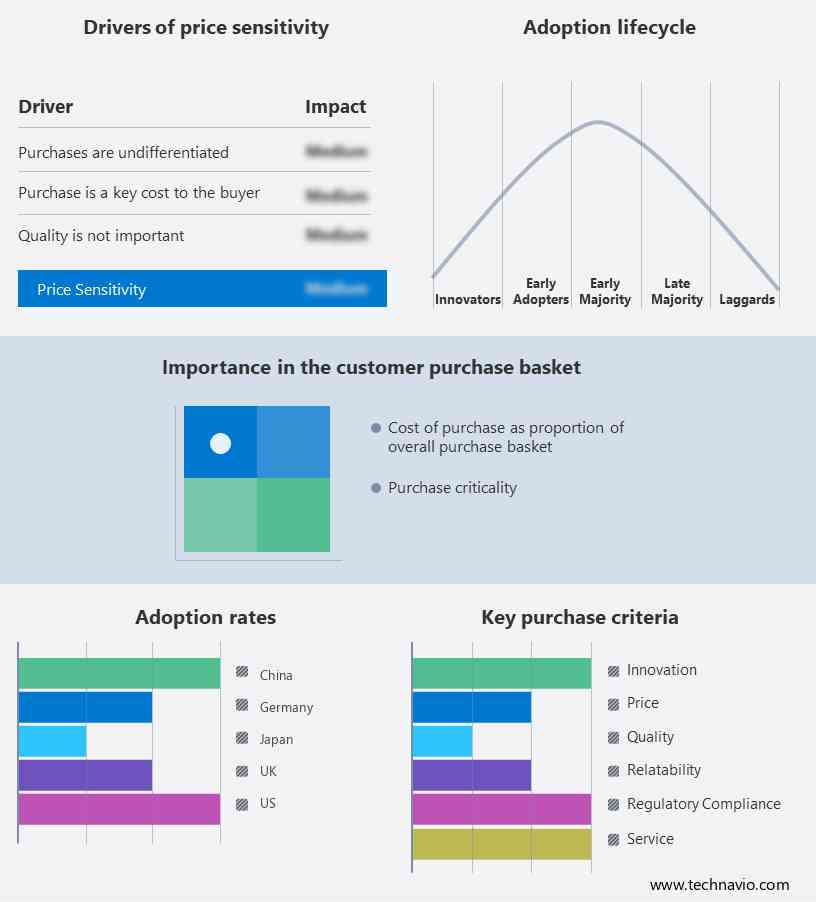
Fatty Acid Market Share by Geography

Market Customer Landscape

Who are the Major Market Companies?

Companies are implementing various strategies, such as strategic alliances, partnerships, mergers and acquisitions, geographical expansion, and product/service launches, to enhance their presence in the market.

AAK AB - The company offers fatty acids such as oleochemicals, formed through the splitting of vegetable oils into fatty acids and glycerin.

The research report also includes detailed analyses of the competitive landscape of the market and information about 20 market companies, including:

  • Aker BioMarine ASA
  • Arizona Algae Products LLC
  • Ashland Inc.
  • AVRIL SCA
  • BASF SE
  • Cargill Inc.
  • Colgate Palmolive Co.
  • Croda International Plc
  • Dow Chemical Co.
  • Eastman Chemical Co.
  • Godrej Industries Ltd.
  • Koninklijke DSM NV
  • Nikunj Chemicals
  • S.R. Chemical
  • Shiv Shakti Group
  • The Procter and Gamble Co.
  • Tokyo Chemical Industry Co. Ltd.
  • Vantage Specialty Chemicals
  • Zhengzhou Meiya Chemical Products Co. Ltd.

Qualitative and quantitative analysis of companies has been conducted to help clients understand the wider business environment as well as the strengths and weaknesses of key market players. Data is qualitatively analyzed to categorize companies as pure play, category-focused, industry-focused, and diversified; it is quantitatively analyzed to categorize companies as dominant, leading, strong, tentative, and weak.

Segment Overview

The market research report provides comprehensive data (region wise segment analysis), with forecasts and estimates in "USD Billion" for the period 2024 to 2028, as well as historical data from 2018 to 2022 for the following segments

  • Formulation Outlook 
    • Oil
    • Powder
    • Capsule
  • Type Outlook
    • Unsaturated
    • Saturated
  • Region Outlook
    • North America
      • The U.S.
      • Canada
    • South America
      • Chile 
      • Brazil
      • Argentina 
    • Europe
      • U.K.
      • Germany
      • France
      • Rest of Europe
    • APAC
      • China
      • India
    • Middle East & Africa
      • Saudi Arabia
      • South Africa
      • Rest of the Middle East & Africa

You may also interested in below market reports:

  • Fatty Alcohols Market: Fatty Alcohols Market Analysis APAC, Europe, North America, Middle East and Africa, South America - China, US, Germany, France, Canada - Size and Forecast 
  • Capric Acid Market: Capric Acid Market Analysis APAC, North America, Europe, South America, Middle East and Africa - US, China, Japan, Germany, UK - Size and Forecast
  • Butyric Acid Market: Butyric Acid Market Analysis APAC, North America, Europe, South America, Middle East and Africa - US, China, India, Germany, Brazil - Size and Forecast 

Market Analyst Overview

The market is witnessing significant growth driven by various factors. Consumers are increasingly focused on health preservation and are turning to functional food products and nutraceutical applications containing omega fatty acid supplements. There's a growing interest in natural and organic products with healthy metabolism and immunity-boosting supplements. They are essential for cardiovascular health and healthy metabolism, leading to their use in preventive interventions and therapeutic nutrition. The marekt alndscape depends on the Prescription medications, Prevention and treatment of diseases, Rheumatoid arthritis symptoms, Ricinoleic acid, Rubbers, Safflower, Saturated fatty acids, Soap, Sodium salts of fatty acids, Soybean, Sports supplements, Stearic acid, Sunflower, Supplement and functional foods, Tuna, Usage of fatty acids, Vegetables, Vitamins. Manufacturers are exploring innovative delivery methods like liposomes and drug carriers for the nutraceutical industry and pharmaceuticals. With a paradigm shift towards lifestyle modifications, fatty acids are increasingly utilized in preventive interventions and reactive therapies for various conditions including joint pain and inflammation, and cardiovascular disorders.

 Market Scope

Report Coverage

Details

Page number

176

Base year

2023

Historic period

2018-2022

Forecast period

2024-2028

Growth momentum & CAGR

Accelerate at a CAGR of 5.52%

Market Growth 2024-2028

USD 8.30 billion

Market structure

Fragmented

YoY growth 2023-2024(%)

5.18

Regional analysis

North America, APAC, Europe, South America, and Middle East and Africa

Performing market contribution

APAC at 37%

Key countries

US, China, Japan, Germany, and UK

Competitive landscape

Leading Companies, Market Positioning of Companies, Competitive Strategies, and Industry Risks

Key companies profiled

AAK AB, Aker BioMarine ASA, Arizona Algae Products LLC, Ashland Inc., AVRIL SCA, BASF SE, Cargill Inc., Colgate Palmolive Co., Croda International Plc, Dow Chemical Co., Eastman Chemical Co., Godrej Industries Ltd., Koninklijke DSM NV, Nikunj Chemicals, S.R. Chemical, Shiv Shakti Group, The Procter and Gamble Co., Tokyo Chemical Industry Co. Ltd., Vantage Specialty Chemicals, and Zhengzhou Meiya Chemical Products Co. Ltd.

Market dynamics

Parent market analysis, market report, market forecast, Market Forecasting, Market growth inducers and obstacles, Fast-growing and slow-growing segment analysis, COVID-19 impact and recovery analysis and future consumer dynamics, and Market condition analysis for the forecast period. 

Customization purview

If our report has not included the data that you are looking for, you can reach out to our analysts and get segments customized.

Download PDF Sample

What are the Key Data Covered in this Market Research Report?

  • CAGR of the market during the forecast period
  • Detailed information on factors that will drive the market growth and forecasting of the market between 2023 and 2028
  • Precise estimation of the size of the market size and its contribution to the parent market
  • Accurate predictions about upcoming market trends and analysis and changes in consumer behavior
  • Growth of the market industry across Europe, North America, APAC, South America, and Middle East and Africa
  • Thorough market growth analysis of the market’s competitive landscape and detailed information about companies
  • Comprehensive market analysis and report on the factors that will challenge the market research and growth of market companies

We can help! Our analysts can customize this market research report to meet your requirements. 

Get in touch

1 Executive Summary

  • 1.1 Market overview
    • Exhibit 01: Executive Summary – Chart on Market Overview
    • Exhibit 02: Executive Summary – Data Table on Market Overview
    • Exhibit 03: Executive Summary – Chart on Global Market Characteristics
    • Exhibit 04: Executive Summary – Chart on Market by Geography
    • Exhibit 05: Executive Summary – Chart on Market Segmentation by Formulation
    • Exhibit 06: Executive Summary – Chart on Market Segmentation by Type
    • Exhibit 07: Executive Summary – Chart on Incremental Growth
    • Exhibit 08: Executive Summary – Data Table on Incremental Growth
    • Exhibit 09: Executive Summary – Chart on Vendor Market Positioning

2 Market Landscape

  • 2.1 Market ecosystem
    • Exhibit 10: Parent market
    • Exhibit 11: Market Characteristics

3 Market Sizing

  • 3.1 Market definition
    • Exhibit 12: Offerings of vendors included in the market definition
  • 3.2 Market segment analysis
    • Exhibit 13: Market segments
  • 3.3 Market size 2023
    • 3.4 Market outlook: Forecast for 2023-2028
      • Exhibit 14: Chart on Global - Market size and forecast 2023-2028 ($ million)
      • Exhibit 15: Data Table on Global - Market size and forecast 2023-2028 ($ million)
      • Exhibit 16: Chart on Global Market: Year-over-year growth 2023-2028 (%)
      • Exhibit 17: Data Table on Global Market: Year-over-year growth 2023-2028 (%)

    4 Historic Market Size

    • 4.1 Global fatty acid market 2018 - 2022
      • Exhibit 18: Historic Market Size – Data Table on global fatty acid market 2018 - 2022 ($ million)
    • 4.2 Formulation Segment Analysis 2018 - 2022
      • Exhibit 19: Historic Market Size – Formulation Segment 2018 - 2022 ($ million)
    • 4.3 Type Segment Analysis 2018 - 2022
      • Exhibit 20: Historic Market Size – Type Segment 2018 - 2022 ($ million)
    • 4.4 Geography Segment Analysis 2018 - 2022
      • Exhibit 21: Historic Market Size – Geography Segment 2018 - 2022 ($ million)
    • 4.5 Country Segment Analysis 2018 - 2022
      • Exhibit 22: Historic Market Size – Country Segment 2018 - 2022 ($ million)

    5 Five Forces Analysis

    • 5.1 Five forces summary
      • Exhibit 23: Five forces analysis - Comparison between 2023 and 2028
    • 5.2 Bargaining power of buyers
      • Exhibit 24: Chart on Bargaining power of buyers – Impact of key factors 2023 and 2028
    • 5.3 Bargaining power of suppliers
      • Exhibit 25: Bargaining power of suppliers – Impact of key factors in 2023 and 2028
    • 5.4 Threat of new entrants
      • Exhibit 26: Threat of new entrants – Impact of key factors in 2023 and 2028
    • 5.5 Threat of substitutes
      • Exhibit 27: Threat of substitutes – Impact of key factors in 2023 and 2028
    • 5.6 Threat of rivalry
      • Exhibit 28: Threat of rivalry – Impact of key factors in 2023 and 2028
    • 5.7 Market condition
      • Exhibit 29: Chart on Market condition - Five forces 2023 and 2028

    6 Market Segmentation by Formulation

    • 6.1 Market segments
      • Exhibit 30: Chart on Formulation - Market share 2023-2028 (%)
      • Exhibit 31: Data Table on Formulation - Market share 2023-2028 (%)
    • 6.2 Comparison by Formulation
      • Exhibit 32: Chart on Comparison by Formulation
      • Exhibit 33: Data Table on Comparison by Formulation
    • 6.3 Oil - Market size and forecast 2023-2028
      • Exhibit 34: Chart on Oil - Market size and forecast 2023-2028 ($ million)
      • Exhibit 35: Data Table on Oil - Market size and forecast 2023-2028 ($ million)
      • Exhibit 36: Chart on Oil - Year-over-year growth 2023-2028 (%)
      • Exhibit 37: Data Table on Oil - Year-over-year growth 2023-2028 (%)
    • 6.4 Powder - Market size and forecast 2023-2028
      • Exhibit 38: Chart on Powder - Market size and forecast 2023-2028 ($ million)
      • Exhibit 39: Data Table on Powder - Market size and forecast 2023-2028 ($ million)
      • Exhibit 40: Chart on Powder - Year-over-year growth 2023-2028 (%)
      • Exhibit 41: Data Table on Powder - Year-over-year growth 2023-2028 (%)
    • 6.5 Capsule - Market size and forecast 2023-2028
      • Exhibit 42: Chart on Capsule - Market size and forecast 2023-2028 ($ million)
      • Exhibit 43: Data Table on Capsule - Market size and forecast 2023-2028 ($ million)
      • Exhibit 44: Chart on Capsule - Year-over-year growth 2023-2028 (%)
      • Exhibit 45: Data Table on Capsule - Year-over-year growth 2023-2028 (%)
    • 6.6 Market opportunity by Formulation
      • Exhibit 46: Market opportunity by Formulation ($ million)
      • Exhibit 47: Data Table on Market opportunity by Formulation ($ million)

    7 Market Segmentation by Type

    • 7.1 Market segments
      • Exhibit 48: Chart on Type - Market share 2023-2028 (%)
      • Exhibit 49: Data Table on Type - Market share 2023-2028 (%)
    • 7.2 Comparison by Type
      • Exhibit 50: Chart on Comparison by Type
      • Exhibit 51: Data Table on Comparison by Type
    • 7.3 Unsaturated - Market size and forecast 2023-2028
      • Exhibit 52: Chart on Unsaturated - Market size and forecast 2023-2028 ($ million)
      • Exhibit 53: Data Table on Unsaturated - Market size and forecast 2023-2028 ($ million)
      • Exhibit 54: Chart on Unsaturated - Year-over-year growth 2023-2028 (%)
      • Exhibit 55: Data Table on Unsaturated - Year-over-year growth 2023-2028 (%)
    • 7.4 Saturated - Market size and forecast 2023-2028
      • Exhibit 56: Chart on Saturated - Market size and forecast 2023-2028 ($ million)
      • Exhibit 57: Data Table on Saturated - Market size and forecast 2023-2028 ($ million)
      • Exhibit 58: Chart on Saturated - Year-over-year growth 2023-2028 (%)
      • Exhibit 59: Data Table on Saturated - Year-over-year growth 2023-2028 (%)
    • 7.5 Market opportunity by Type
      • Exhibit 60: Market opportunity by Type ($ million)
      • Exhibit 61: Data Table on Market opportunity by Type ($ million)

    8 Customer Landscape

    • 8.1 Customer landscape overview
      • Exhibit 62: Analysis of price sensitivity, lifecycle, customer purchase basket, adoption rates, and purchase criteria

    9 Geographic Landscape

    • 9.1 Geographic segmentation
      • Exhibit 63: Chart on Market share by geography 2023-2028 (%)
      • Exhibit 64: Data Table on Market share by geography 2023-2028 (%)
    • 9.2 Geographic comparison
      • Exhibit 65: Chart on Geographic comparison
      • Exhibit 66: Data Table on Geographic comparison
    • 9.3 North America - Market size and forecast 2023-2028
      • Exhibit 67: Chart on North America - Market size and forecast 2023-2028 ($ million)
      • Exhibit 68: Data Table on North America - Market size and forecast 2023-2028 ($ million)
      • Exhibit 69: Chart on North America - Year-over-year growth 2023-2028 (%)
      • Exhibit 70: Data Table on North America - Year-over-year growth 2023-2028 (%)
    • 9.4 APAC - Market size and forecast 2023-2028
      • Exhibit 71: Chart on APAC - Market size and forecast 2023-2028 ($ million)
      • Exhibit 72: Data Table on APAC - Market size and forecast 2023-2028 ($ million)
      • Exhibit 73: Chart on APAC - Year-over-year growth 2023-2028 (%)
      • Exhibit 74: Data Table on APAC - Year-over-year growth 2023-2028 (%)
    • 9.5 Europe - Market size and forecast 2023-2028
      • Exhibit 75: Chart on Europe - Market size and forecast 2023-2028 ($ million)
      • Exhibit 76: Data Table on Europe - Market size and forecast 2023-2028 ($ million)
      • Exhibit 77: Chart on Europe - Year-over-year growth 2023-2028 (%)
      • Exhibit 78: Data Table on Europe - Year-over-year growth 2023-2028 (%)
    • 9.6 South America - Market size and forecast 2023-2028
      • Exhibit 79: Chart on South America - Market size and forecast 2023-2028 ($ million)
      • Exhibit 80: Data Table on South America - Market size and forecast 2023-2028 ($ million)
      • Exhibit 81: Chart on South America - Year-over-year growth 2023-2028 (%)
      • Exhibit 82: Data Table on South America - Year-over-year growth 2023-2028 (%)
    • 9.7 Middle East and Africa - Market size and forecast 2023-2028
      • Exhibit 83: Chart on Middle East and Africa - Market size and forecast 2023-2028 ($ million)
      • Exhibit 84: Data Table on Middle East and Africa - Market size and forecast 2023-2028 ($ million)
      • Exhibit 85: Chart on Middle East and Africa - Year-over-year growth 2023-2028 (%)
      • Exhibit 86: Data Table on Middle East and Africa - Year-over-year growth 2023-2028 (%)
    • 9.8 US - Market size and forecast 2023-2028
      • Exhibit 87: Chart on US - Market size and forecast 2023-2028 ($ million)
      • Exhibit 88: Data Table on US - Market size and forecast 2023-2028 ($ million)
      • Exhibit 89: Chart on US - Year-over-year growth 2023-2028 (%)
      • Exhibit 90: Data Table on US - Year-over-year growth 2023-2028 (%)
    • 9.9 China - Market size and forecast 2023-2028
      • Exhibit 91: Chart on China - Market size and forecast 2023-2028 ($ million)
      • Exhibit 92: Data Table on China - Market size and forecast 2023-2028 ($ million)
      • Exhibit 93: Chart on China - Year-over-year growth 2023-2028 (%)
      • Exhibit 94: Data Table on China - Year-over-year growth 2023-2028 (%)
    • 9.10 Germany - Market size and forecast 2023-2028
      • Exhibit 95: Chart on Germany - Market size and forecast 2023-2028 ($ million)
      • Exhibit 96: Data Table on Germany - Market size and forecast 2023-2028 ($ million)
      • Exhibit 97: Chart on Germany - Year-over-year growth 2023-2028 (%)
      • Exhibit 98: Data Table on Germany - Year-over-year growth 2023-2028 (%)
    • 9.11 UK - Market size and forecast 2023-2028
      • Exhibit 99: Chart on UK - Market size and forecast 2023-2028 ($ million)
      • Exhibit 100: Data Table on UK - Market size and forecast 2023-2028 ($ million)
      • Exhibit 101: Chart on UK - Year-over-year growth 2023-2028 (%)
      • Exhibit 102: Data Table on UK - Year-over-year growth 2023-2028 (%)
    • 9.12 Japan - Market size and forecast 2023-2028
      • Exhibit 103: Chart on Japan - Market size and forecast 2023-2028 ($ million)
      • Exhibit 104: Data Table on Japan - Market size and forecast 2023-2028 ($ million)
      • Exhibit 105: Chart on Japan - Year-over-year growth 2023-2028 (%)
      • Exhibit 106: Data Table on Japan - Year-over-year growth 2023-2028 (%)
    • 9.13 Market opportunity by geography
      • Exhibit 107: Market opportunity by geography ($ million)
      • Exhibit 108: Data Tables on Market opportunity by geography ($ million)

    10 Drivers, Challenges, and Trends

    • 10.1 Market drivers
      • 10.2 Market challenges
        • 10.3 Impact of drivers and challenges
          • Exhibit 109: Impact of drivers and challenges in 2023 and 2028
        • 10.4 Market trends

          11 Vendor Landscape

          • 11.1 Overview
            • 11.2 Vendor landscape
              • Exhibit 110: Overview on Criticality of inputs and Factors of differentiation
            • 11.3 Landscape disruption
              • Exhibit 111: Overview on factors of disruption
            • 11.4 Industry risks
              • Exhibit 112: Impact of key risks on business

            12 Vendor Analysis

            • 12.1 Vendors covered
              • Exhibit 113: Vendors covered
            • 12.2 Market positioning of vendors
              • Exhibit 114: Matrix on vendor position and classification
            • 12.3 AAK AB
              • Exhibit 115: AAK AB - Overview
              • Exhibit 116: AAK AB - Business segments
              • Exhibit 117: AAK AB - Key news
              • Exhibit 118: AAK AB - Key offerings
              • Exhibit 119: AAK AB - Segment focus
            • 12.4 Aker BioMarine ASA
              • Exhibit 120: Aker BioMarine ASA - Overview
              • Exhibit 121: Aker BioMarine ASA - Business segments
              • Exhibit 122: Aker BioMarine ASA - Key offerings
              • Exhibit 123: Aker BioMarine ASA - Segment focus
            • 12.5 Arizona Algae Products LLC
              • Exhibit 124: Arizona Algae Products LLC - Overview
              • Exhibit 125: Arizona Algae Products LLC - Product / Service
              • Exhibit 126: Arizona Algae Products LLC - Key offerings
            • 12.6 Ashland Inc.
              • Exhibit 127: Ashland Inc. - Overview
              • Exhibit 128: Ashland Inc. - Business segments
              • Exhibit 129: Ashland Inc. - Key news
              • Exhibit 130: Ashland Inc. - Key offerings
              • Exhibit 131: Ashland Inc. - Segment focus
            • 12.7 AVRIL SCA
              • Exhibit 132: AVRIL SCA - Overview
              • Exhibit 133: AVRIL SCA - Key offerings
            • 12.8 BASF SE
              • Exhibit 134: BASF SE - Overview
              • Exhibit 135: BASF SE - Business segments
              • Exhibit 136: BASF SE - Key news
              • Exhibit 137: BASF SE - Key offerings
              • Exhibit 138: BASF SE - Segment focus
            • 12.9 Cargill Inc.
              • Exhibit 139: Cargill Inc. - Overview
              • Exhibit 140: Cargill Inc. - Product / Service
              • Exhibit 141: Cargill Inc. - Key news
              • Exhibit 142: Cargill Inc. - Key offerings
            • 12.10 Colgate Palmolive Co.
              • Exhibit 143: Colgate Palmolive Co. - Overview
              • Exhibit 144: Colgate Palmolive Co. - Business segments
              • Exhibit 145: Colgate Palmolive Co. - Key offerings
              • Exhibit 146: Colgate Palmolive Co. - Segment focus
            • 12.11 Croda International Plc
              • Exhibit 147: Croda International Plc - Overview
              • Exhibit 148: Croda International Plc - Business segments
              • Exhibit 149: Croda International Plc - Key news
              • Exhibit 150: Croda International Plc - Key offerings
              • Exhibit 151: Croda International Plc - Segment focus
            • 12.12 Dow Chemical Co.
              • Exhibit 152: Dow Chemical Co. - Overview
              • Exhibit 153: Dow Chemical Co. - Business segments
              • Exhibit 154: Dow Chemical Co. - Key news
              • Exhibit 155: Dow Chemical Co. - Key offerings
              • Exhibit 156: Dow Chemical Co. - Segment focus
            • 12.13 Eastman Chemical Co.
              • Exhibit 157: Eastman Chemical Co. - Overview
              • Exhibit 158: Eastman Chemical Co. - Business segments
              • Exhibit 159: Eastman Chemical Co. - Key offerings
              • Exhibit 160: Eastman Chemical Co. - Segment focus
            • 12.14 Godrej Industries Ltd.
              • Exhibit 161: Godrej Industries Ltd. - Overview
              • Exhibit 162: Godrej Industries Ltd. - Business segments
              • Exhibit 163: Godrej Industries Ltd. - Key offerings
              • Exhibit 164: Godrej Industries Ltd. - Segment focus
            • 12.15 Koninklijke DSM NV
              • Exhibit 165: Koninklijke DSM NV - Overview
              • Exhibit 166: Koninklijke DSM NV - Business segments
              • Exhibit 167: Koninklijke DSM NV - Key news
              • Exhibit 168: Koninklijke DSM NV - Key offerings
              • Exhibit 169: Koninklijke DSM NV - Segment focus
            • 12.16 The Procter and Gamble Co.
              • Exhibit 170: The Procter and Gamble Co. - Overview
              • Exhibit 171: The Procter and Gamble Co. - Business segments
              • Exhibit 172: The Procter and Gamble Co. - Key news
              • Exhibit 173: The Procter and Gamble Co. - Key offerings
              • Exhibit 174: The Procter and Gamble Co. - Segment focus
            • 12.17 Vantage Specialty Chemicals
              • Exhibit 175: Vantage Specialty Chemicals - Overview
              • Exhibit 176: Vantage Specialty Chemicals - Product / Service
              • Exhibit 177: Vantage Specialty Chemicals - Key offerings

            13 Appendix

            • 13.1 Scope of the report
              • 13.2 Inclusions and exclusions checklist
                • Exhibit 178: Inclusions checklist
                • Exhibit 179: Exclusions checklist
              • 13.3 Currency conversion rates for US$
                • Exhibit 180: Currency conversion rates for US$
              • 13.4 Research methodology
                • Exhibit 181: Research methodology
                • Exhibit 182: Validation techniques employed for market sizing
                • Exhibit 183: Information sources
              • 13.5 List of abbreviations
                • Exhibit 184: List of abbreviations

              Research Methodology

              Technavio presents a detailed picture of the market by way of study, synthesis, and summation of data from multiple sources. The analysts have presented the various facets of the market with a particular focus on identifying the key industry influencers. The data thus presented is comprehensive, reliable, and the result of extensive research, both primary and secondary.

              INFORMATION SOURCES

              Primary sources

              • Manufacturers and suppliers
              • Channel partners
              • Industry experts
              • Strategic decision makers

              Secondary sources

              • Industry journals and periodicals
              • Government data
              • Financial reports of key industry players
              • Historical data
              • Press releases

              DATA ANALYSIS

              Data Synthesis

              • Collation of data
              • Estimation of key figures
              • Analysis of derived insights

              Data Validation

              • Triangulation with data models
              • Reference against proprietary databases
              • Corroboration with industry experts

              REPORT WRITING

              Qualitative

              • Market drivers
              • Market challenges
              • Market trends
              • Five forces analysis

              Quantitative

              • Market size and forecast
              • Market segmentation
              • Geographical insights
              • Competitive landscape

              Interested in this report?

              Get your sample now to see our research methodology and insights!

              Download Now

              Frequently Asked Questions

              Fatty Acid market growth will increase by $ 8301.98 mn during 2024-2028 .

              The Fatty Acid market is expected to grow at a CAGR of 5.52% during 2024-2028 .

              Fatty Acid market is segmented by Formulation( Oil, Powder, Capsule) Type( Unsaturated, Saturated)

              AAK AB, Aker BioMarine ASA, Arizona Algae Products LLC, Ashland Inc., AVRIL SCA, BASF SE, Cargill Inc., Colgate Palmolive Co., Croda International Plc, Dow Chemical Co., Eastman Chemical Co., Godrej Industries Ltd., Koninklijke DSM NV, Nikunj Chemicals, S.R. Chemical, Shiv Shakti Group, The Procter and Gamble Co., Tokyo Chemical Industry Co. Ltd., Vantage Specialty Chemicals, Zhengzhou Meiya Chemical Products Co. Ltd. are a few of the key vendors in the Fatty Acid market.

              APAC will register the highest growth rate of 37% among the other regions. Therefore, the Fatty Acid market in APAC is expected to garner significant business opportunities for the vendors during the forecast period.

              US, China, Japan, Germany, UK

              • Increasing focus on health and wellnessIncreasing focus on health and wellness has become a major driver of the global fatty acid market. Consumers around the world are increasingly focused on making healthier lifestyle choices is the driving factor this market.
              • and this shift has a direct impact on their dietary preferences. Fatty acids is the driving factor this market.
              • particularly those found in certain oils and foods is the driving factor this market.
              • are at the center of this trend. One aspect of these health and wellness trends is the demand for healthier cooking oils. Consumers are now more conscious of the types of fats they consume is the driving factor this market.
              • seeking oils with better nutritional profiles. As a result is the driving factor this market.
              • cooking oils rich in healthier fatty acids is the driving factor this market.
              • such as monounsaturated and polyunsaturated fats is the driving factor this market.
              • have gained popularity. These include oils such as olive oil and sunflower oil is the driving factor this market.
              • which are abundant in omega-3 and omega-6 fatty acids is the driving factor this market.
              • known for their positive effects on heart health and overall well-being. Additionally is the driving factor this market.
              • the food industry is adapting to cater to consumers seeking healthier alternatives. Many processed and packaged foods now contain labels highlighting their fatty acid content is the driving factor this market.
              • particularly when the product is rich in beneficial fatty acids. This trend is pushing the food industry to reformulate products to align with health-conscious consumer demands is the driving factor this market.
              • contributing to the market growth. Thus is the driving factor this market.
              • as consumers continue to prioritize healthier choices is the driving factor this market.
              • the global fatty acid market is expected to expand during the forecast period. is the driving factor this market.

              The Fatty Acid market vendors should focus on grabbing business opportunities from the Oil segment as it accounted for the largest market share in the base year.
