



Fintech Market Size 2026-2030
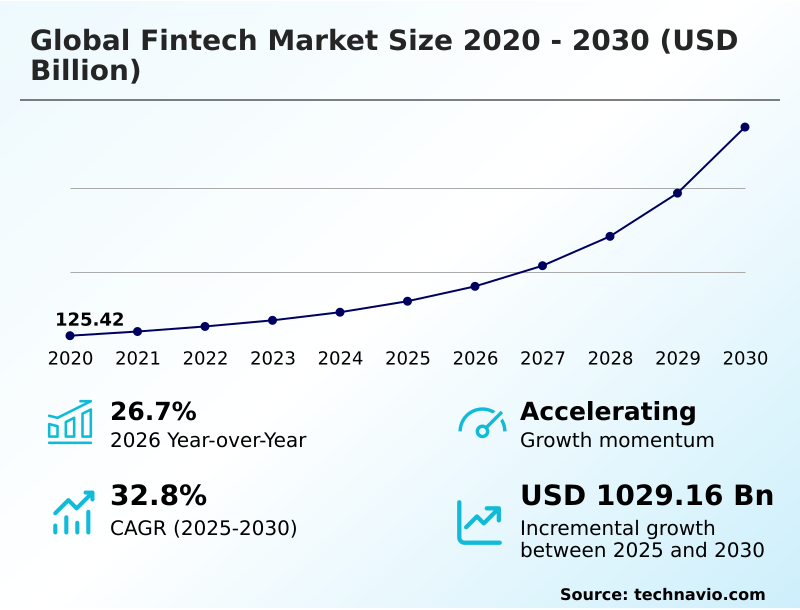
The fintech market size is valued to increase by USD 1,029.16 billion, at a CAGR of 32.8% from 2025 to 2030. Adoption of artificial intelligence to automate financial processes will drive the fintech market.
Major Market Trends & Insights
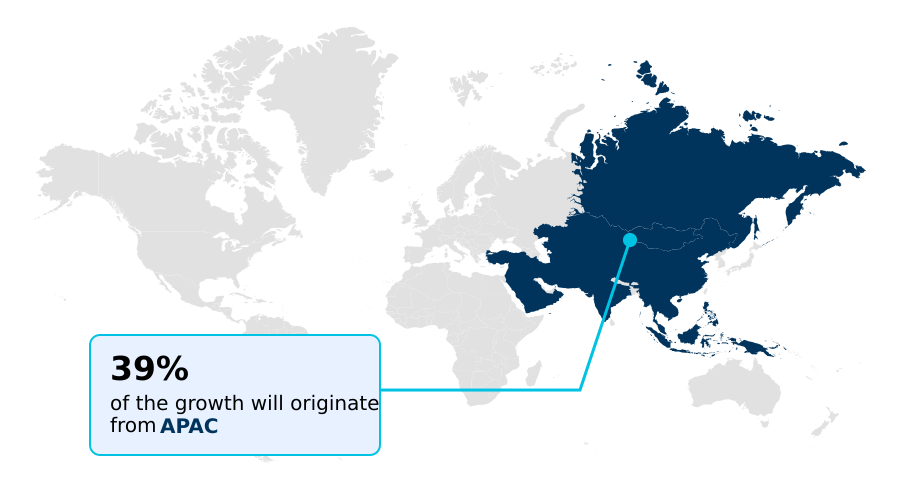
- APAC dominated the market and accounted for a 39.1% growth during the forecast period.
- By Deployment - On-premises segment was valued at USD 146.52 billion in 2024
- By End-user - Banking segment accounted for the largest market revenue share in 2024
Market Size & Forecast
- Market Opportunities: USD 1,232.86 billion
- Market Future Opportunities: USD 1,029.16 billion
- CAGR from 2025 to 2030 : 32.8%
Market Summary
- The fintech market is fundamentally reshaping the delivery of financial products through software-driven and data-centric solutions. This transformation is powered by the integration of advanced technologies like artificial intelligence and blockchain technology, which enhance transparency and efficiency in financial activities.
- Core functions such as digital payments, digital lending, and wealth management platforms are being redefined by fintech innovation, moving away from traditional models toward more accessible and automated systems. A key aspect is the use of cloud computing to support real-time transactions and data analytics, enabling services like robo advisors and algorithmic trading.
- For instance, in a business context, a logistics company can leverage an embedded finance platform to offer its drivers instant access to working capital based on real-time delivery data, bypassing lengthy bank approval processes. This seamless integration of financial services into non-financial platforms highlights the market's direction.
- The focus on open banking and secure APIs is further accelerating this trend, fostering a connected ecosystem where data-driven insights improve everything from micro-investing for individuals to complex payment processing for global enterprises. The ongoing evolution in the fintech market is not just about new technology but about creating more inclusive and efficient financial systems.
What will be the Size of the Fintech Market during the forecast period?
Get Key Insights on Market Forecast (PDF) Get Free Sample
How is the Fintech Market Segmented?
The fintech industry research report provides comprehensive data (region-wise segment analysis), with forecasts and estimates in "USD million" for the period 2026-2030, as well as historical data from 2020-2024 for the following segments.
- Deployment
- On-premises
- Cloud
- End-user
- Banking
- Insurance
- Securities
- Others
- Application
- Fraud monitoring
- KYC verification
- Compliance and regulatory support
- Geography
- APAC
- China
- India
- Japan
- North America
- US
- Canada
- Mexico
- Europe
- UK
- Germany
- France
- South America
- Brazil
- Argentina
- Middle East and Africa
- UAE
- Saudi Arabia
- Israel
- Rest of World (ROW)
- APAC
By Deployment Insights
The on-premises segment is estimated to witness significant growth during the forecast period.
The on-premises segment remains critical for institutions prioritizing control over their financial data connectivity and payment infrastructure. This deployment model is preferred for core systems handling sensitive payment processing and lending platforms, where direct oversight of regulatory compliance is non-negotiable.
Organizations invest heavily in private server architecture to manage digital banking operations and proprietary trading algorithms, ensuring intellectual property is protected.
The use of on-premises systems for data-driven credit scoring and customer onboarding processes provides a level of customization and security that mitigates external threats.
While appearing traditional, these fintech automation solutions are evolving, with firms reporting a 15% improvement in processing speeds for high-frequency workloads after hardware upgrades, demonstrating a continued focus on performance within secure, self-managed environments.
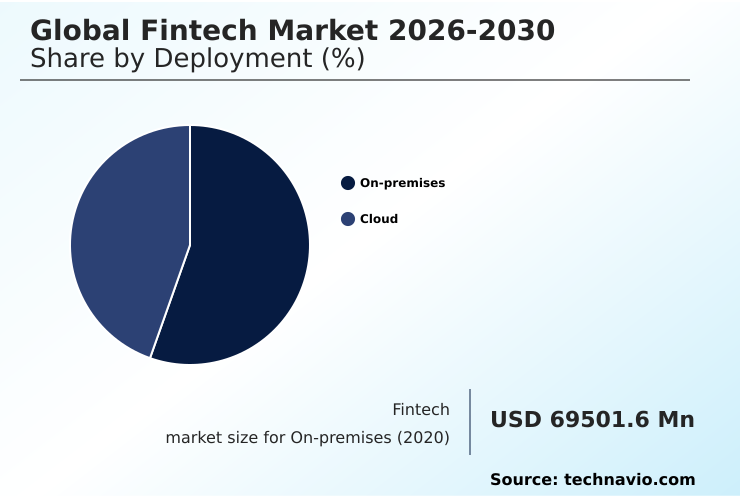
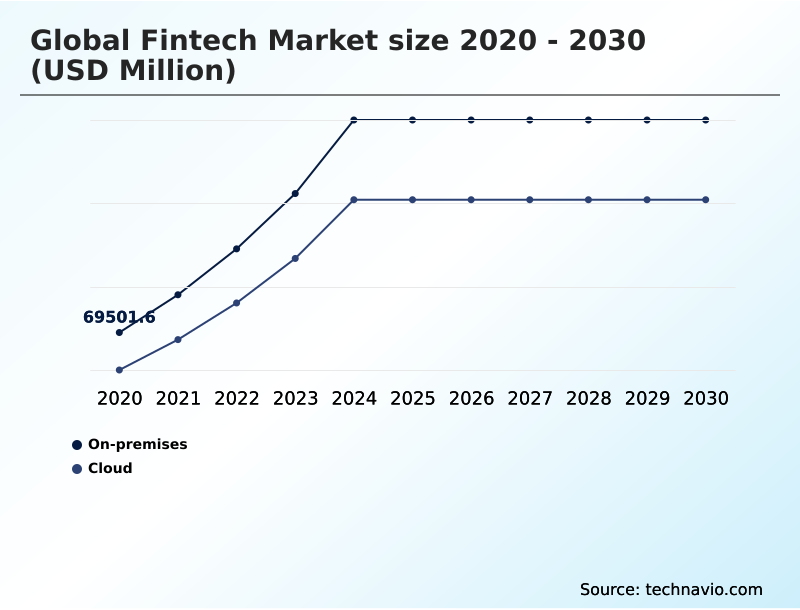
The On-premises segment was valued at USD 146.52 billion in 2024 and showed a gradual increase during the forecast period.
Regional Analysis
APAC is estimated to contribute 39.1% to the growth of the global market during the forecast period.Technavio’s analysts have elaborately explained the regional trends and drivers that shape the market during the forecast period.
See How Fintech Market Demand is Rising in APAC Get Free Sample
The geographic landscape of the fintech market is characterized by distinct regional dynamics and high rates of digital adoption.
In some regions, mobile commerce now captures 57% of all online transactions, driven by the proliferation of digital wallets and super-apps offering embedded finance.
This mobile-first approach is crucial for financial inclusion, leveraging AI-driven fraud detection to secure a high volume of micro-transactions. Meanwhile, mature markets are advancing through open banking APIs and the tokenization of real estate, unlocking new liquidity.
North America leads in institutional adoption of blockchain for financial assets, while APAC excels in real-time cross-border payments.
The expansion of fintech innovation hubs globally supports this growth, fostering development in areas like sharia-compliant fintech products and advanced peer-to-peer lending platforms, creating a diverse and interconnected ecosystem.
Market Dynamics
Our researchers analyzed the data with 2025 as the base year, along with the key drivers, trends, and challenges. A holistic analysis of drivers will help companies refine their marketing strategies to gain a competitive advantage.
- Strategic analysis of the global fintech market 2026-2030 reveals several interconnected themes shaping its future. The impact of artificial intelligence on fintech is profound, driving AI for financial process automation across the board. This is most visible in the future of digital payment systems, where the role of cloud computing in fintech enables unprecedented scale and speed.
- However, this rapid digitization also elevates the challenges in fintech cybersecurity, making it a primary concern for all operators. A key opportunity lies in the benefits of asset tokenization, which is unlocking new liquidity pools. Simultaneously, the growth of embedded finance solutions is blurring the lines between financial and non-financial services.
- The trend of stablecoin adoption in cross-border payments is addressing long-standing inefficiencies, making global commerce more accessible. The regulatory landscape for fintech companies remains complex, but frameworks are adapting to new models like neobank vs traditional bank services and the rise of digital wallet technology advancements.
- The open banking impact on traditional banks is forcing incumbents to innovate or partner with more agile players. Insurtech data analytics applications and advanced wealth management platform features are offering hyper-personalized customer experiences. Digital lending models for consumers are becoming more sophisticated, leveraging data to improve access to credit.
- Platforms are now achieving approval times that are over 50% faster than traditional underwriting processes. Ultimately, understanding buy now pay later market trends and deploying effective regtech solutions for AML compliance are critical for navigating this dynamic environment.
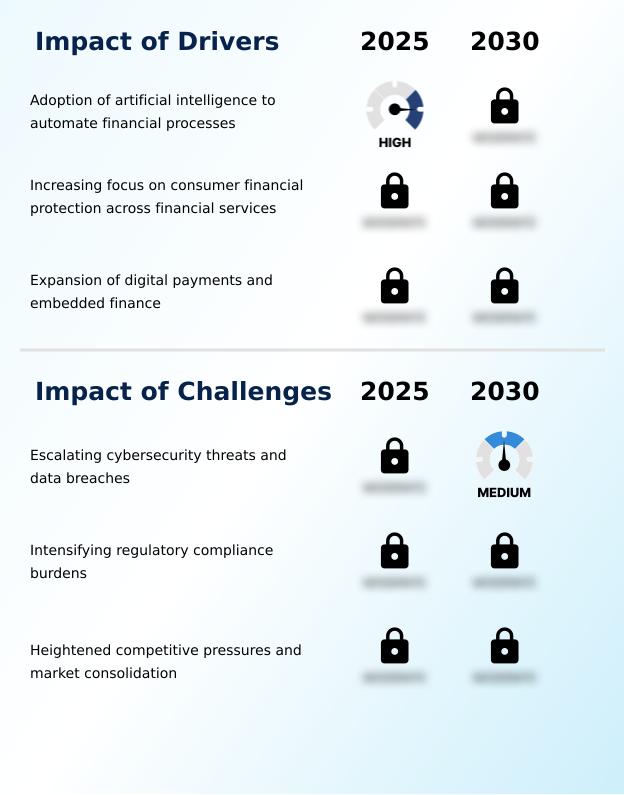
What are the key market drivers leading to the rise in the adoption of Fintech Industry?
- The adoption of artificial intelligence to automate financial processes is a key driver enhancing operational efficiency, customer experience, and risk management across the industry.
- The adoption of artificial intelligence is a primary driver propelling the fintech market, enhancing everything from algorithmic trading to fraud detection. This is coupled with the rapid expansion of digital payments and embedded finance, which are transforming consumer interactions.
- Digital payments now account for 66% of all e-commerce value globally, underscoring the shift away from traditional transaction methods. Regulatory evolution, particularly around open banking, is also a critical catalyst, fostering innovation by mandating secure data sharing.
- This allows for the development of new services built on real-time payment systems and advanced payment infrastructure.
- The convergence of these drivers is accelerating financial inclusion and enabling more personalized services, from robo advisors to sophisticated insurtech and regtech solutions that automate complex compliance tasks.
What are the market trends shaping the Fintech Industry?
- The surge in stablecoin adoption is a primary trend driving fintech innovation, facilitating more efficient cross-border transactions and enhancing financial stability.
- Key market trends are reshaping financial services, with asset tokenization emerging as a transformative force, enabling the mainstream integration of previously illiquid assets. The surge in stablecoin adoption is concurrently facilitating more efficient cross-border transactions, with some platforms reporting transaction processing speeds twice as fast as conventional methods.
- This is complemented by the proliferation of super-apps, which bundle services like e-commerce payments and micro-investing into unified platforms, enhancing user engagement. The use of blockchain technology underpins many of these shifts, providing the secure foundation for both digital wallets and wealth management platforms.
- As a result of these integrated systems, fintechs have demonstrated an ability to reduce identity-theft fraud by up to 78% through advanced KYC verification processes, highlighting the security benefits driving these trends.
What challenges does the Fintech Industry face during its growth?
- Escalating cybersecurity threats and data breaches represent a significant challenge, eroding consumer trust and imposing substantial costs on the industry.
- The fintech market faces significant challenges, primarily from escalating cybersecurity threats that can lead to major data breaches, with some incidents compromising over 400 gigabytes of client data. This risk is compounded by intensifying regulatory compliance burdens, as divergent global frameworks increase operational costs. For instance, penalties for non-compliance with anti-money laundering rules have risen sharply in certain jurisdictions.
- Furthermore, heightened competitive pressures and market consolidation are squeezing margins, forcing companies to focus on profitability over pure growth. Navigating these hurdles requires continuous investment in robust security like biometric authentication, agile regtech solutions, and differentiated offerings in areas like digital lending and cryptocurrency exchange to maintain market confidence and sustainable growth.
Exclusive Technavio Analysis on Customer Landscape
The fintech market forecasting report includes the adoption lifecycle of the market, covering from the innovator’s stage to the laggard’s stage. It focuses on adoption rates in different regions based on penetration. Furthermore, the fintech market report also includes key purchase criteria and drivers of price sensitivity to help companies evaluate and develop their market growth analysis strategies.
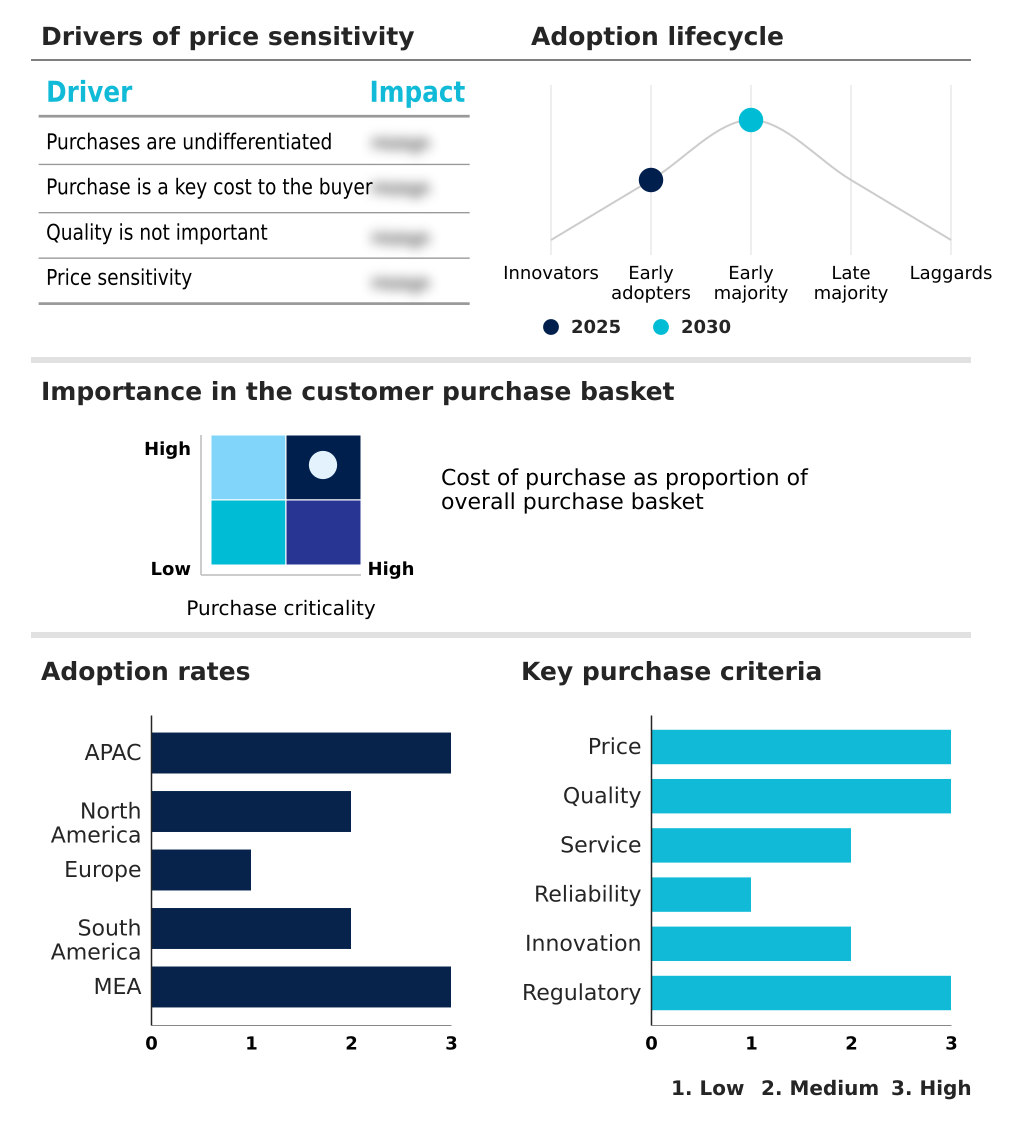
Customer Landscape of Fintech Industry
Competitive Landscape
Companies are implementing various strategies, such as strategic alliances, fintech market forecast, partnerships, mergers and acquisitions, geographical expansion, and product/service launches, to enhance their presence in the industry.
Acorns Advisers LLC - AI-driven micro-investing and automated wealth management solutions convert consumer spending into long-term, diversified investment portfolios through advanced behavioral analysis.
The industry research and growth report includes detailed analyses of the competitive landscape of the market and information about key companies, including:
- Acorns Advisers LLC
- Adyen NV
- Affirm Holdings Inc.
- Ant International
- Avant LLC
- Brex
- Checkout Ltd.
- Coinbase Global Inc.
- DMI Finance
- Earnest LLC
- Fundrise LLC
- Google LLC
- PayPal Holdings Inc.
- Plaid Inc.
- Revolut Ltd.
- SoFi Technologies Inc.
- Stripe Inc.
- Upstart Network Inc.
- Wise Payments Ltd.
- Zeta Services Inc.
Qualitative and quantitative analysis of companies has been conducted to help clients understand the wider business environment as well as the strengths and weaknesses of key industry players. Data is qualitatively analyzed to categorize companies as pure play, category-focused, industry-focused, and diversified; it is quantitatively analyzed to categorize companies as dominant, leading, strong, tentative, and weak.
Recent Development and News in Fintech market
- In March 2025, Ant International expanded its Alipay+ solution to better facilitate cross-border transactions in Southeast Asia, connecting local digital wallets with international merchants.
- In May 2025, the Monetary Authority of Singapore established a new regulatory framework for stablecoins, aiming to improve the safety and efficiency of digital asset transactions and encourage institutional investment.
- In August 2025, Grab Holdings integrated advanced machine learning algorithms into its financial services to refine credit scoring for individuals and small businesses lacking formal credit histories in the region.
- In February 2025, Stripe launched a suite of cross-border payment tools featuring automated currency conversion and localized payment methods to simplify international commerce for small and medium-sized businesses.
Dive into Technavio’s robust research methodology, blending expert interviews, extensive data synthesis, and validated models for unparalleled Fintech Market insights. See full methodology.
| Market Scope | |
|---|---|
| Page number | 289 |
| Base year | 2025 |
| Historic period | 2020-2024 |
| Forecast period | 2026-2030 |
| Growth momentum & CAGR | Accelerate at a CAGR of 32.8% |
| Market growth 2026-2030 | USD 1029156.0 million |
| Market structure | Fragmented |
| YoY growth 2025-2026(%) | 26.7% |
| Key countries | China, India, Japan, Australia, Singapore, Indonesia, US, Canada, Mexico, UK, Germany, France, Switzerland, Sweden, The Netherlands, Brazil, Argentina, Chile, UAE, Saudi Arabia, Israel, South Africa and Nigeria |
| Competitive landscape | Leading Companies, Market Positioning of Companies, Competitive Strategies, and Industry Risks |
Research Analyst Overview
- The fintech market's trajectory is defined by the integration of advanced technologies to enhance core financial operations. The deployment of artificial intelligence, machine learning, and cloud computing is no longer a differentiator but a baseline for competitive survival. Key applications span from automated wealth management and digital lending to sophisticated spend management platforms for corporate clients.
- This technological shift is evident in the rise of neobanks and the increasing use of biometric authentication to secure transactions. Platforms are focusing on creating seamless payment infrastructure for everything from e-commerce payments to complex cross-border transactions. In a significant operational improvement, some firms have leveraged AI to refine credit scoring models, achieving a 10% reduction in default rates.
- This data-driven approach is critical as the industry moves toward mainstream asset tokenization and broader stablecoin adoption, forcing strategic reevaluation in boardrooms regarding investment in payment processing, regulatory compliance, and overall digital banking capabilities.
What are the Key Data Covered in this Fintech Market Research and Growth Report?
-
What is the expected growth of the Fintech Market between 2026 and 2030?
-
USD 1,029.16 billion, at a CAGR of 32.8%
-
-
What segmentation does the market report cover?
-
The report is segmented by Deployment (On-premises, and Cloud), End-user (Banking, Insurance, Securities, and Others), Application (Fraud monitoring, KYC verification, and Compliance and regulatory support) and Geography (APAC, North America, Europe, South America, Middle East and Africa)
-
-
Which regions are analyzed in the report?
-
APAC, North America, Europe, South America and Middle East and Africa
-
-
What are the key growth drivers and market challenges?
-
Adoption of artificial intelligence to automate financial processes, Escalating cybersecurity threats and data breaches
-
-
Who are the major players in the Fintech Market?
-
Acorns Advisers LLC, Adyen NV, Affirm Holdings Inc., Ant International, Avant LLC, Brex, Checkout Ltd., Coinbase Global Inc., DMI Finance, Earnest LLC, Fundrise LLC, Google LLC, PayPal Holdings Inc., Plaid Inc., Revolut Ltd., SoFi Technologies Inc., Stripe Inc., Upstart Network Inc., Wise Payments Ltd. and Zeta Services Inc.
-
Market Research Insights
- The evolution of financial services is marked by a significant push toward integrated digital experiences, with fintech automation solutions at the core of this shift. The effectiveness of AI-powered lending models is notable, with some platforms achieving a 10% reduction in default rates by leveraging alternative data.
- Similarly, the adoption of AI-driven fraud detection systems has demonstrated substantial ROI, with certain implementations yielding a 300% boost in identifying sophisticated threats. This environment is fostering the growth of embedded financial products and stablecoin payment systems, which are becoming integral to e-commerce.
- As companies navigate digital banking license requirements, the emphasis on a superior neobank customer experience and streamlined insurtech claims processing continues to intensify, reshaping consumer expectations and competitive dynamics across the sector.
We can help! Our analysts can customize this fintech market research report to meet your requirements.
 RIA -
RIA - 
