


Food Fortifying Agents Market Analysis North America, Europe, APAC, South America, Middle East and Africa - US, China, Germany, India, Canada - Size and Forecast 2024-2028

Food Fortifying Agents Market Analysis North America, Europe, APAC, South America, Middle East and Africa - US, China, Germany, India, Canada - Size and Forecast 2024-2028

Published: Jul 2024 152 Pages SKU: IRTNTR72940

Market Overview at a Glance

$38.42 B
Market Opportunity
10.03%
CAGR
8.88
YoY growth 2023-2024(%)

Food Fortifying Agents Market Size 2024-2028

The food fortifying agents market size is forecast to increase by USD 38.42 bn at a CAGR of 10.03% between 2023 and 2028.

  • The market is experiencing significant growth due to several key trends. Rising health concerns, particularly In the US and North America, are driving the demand for fortified foods and beverages. Consumers are increasingly seeking out products that offer health benefits, leading to a surge In the consumption of vitamin-infused items. Moreover, government regulations mandating the fortification of certain foods with essential nutrients are also contributing to market growth. Additionally, the trend towards clean labeling and natural ingredients is influencing the development of new food fortifying agents. These factors are expected to continue shaping the market dynamics In the coming years.
  • What will be the Size of the Food Fortifying Agents Market during the Forecast Period?
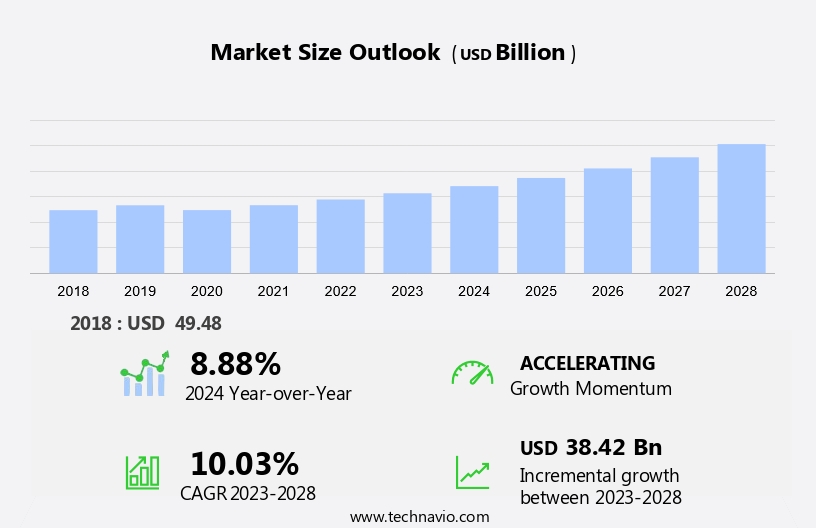
    Food Fortifying Agents Market Size

     Request Free Sample

  • The market encompasses the production and supply of vitamins, minerals, and other micronutrients used to enhance the nutritional value of food. This market is driven by the global prevalence of micronutrient deficiencies, leading to the widespread practice of food fortification. Fortified foods, including dairy products, are increasingly popular due to their ability to address chronic diseases such as obesity, diabetes, and cognitive decline. Nutraceuticals, derived from food technologies, also contribute significantly to the market's growth. Key areas of focus include omega 3 fatty acids, lipids, and various minerals for bone health, immune boosting, and prenatal health. Food authorities continue to set regulations for fortified foods to mitigate potential adverse health effects from nutrient imbalances.
  • The market's size and direction reflect the growing awareness of the importance of proper nutrition in maintaining overall health and wellbeing.
  • How is this Food Fortifying Agents Industry segmented and which is the largest segment?

    The food fortifying agents industry research report provides comprehensive data (region-wise segment analysis), with forecasts and estimates in "USD billion" for the period 2024-2028, as well as historical data from 2018-2022 for the following segments.

    • Application
      • Dietary supplements
      • Dairy and dairy products
      • Cereals and cereal-based products
      • Infant formula
      • Others
    • Geography
      • North America
        • Canada
        • US
      • Europe
        • Germany
      • APAC
        • China
        • India
      • South America
        • Middle East and Africa

        By Application Insights

        The dietary supplements segment is estimated to witness significant growth during the forecast period. The market encompasses various vitamins, minerals, and micronutrient fortifications to address nutritional deficiencies. Fortified foods, including dairy, bakery, beverages, infant nutrition, and functional foods, utilize food technologies to enhance nutritional value. Vitamins, such as Calcium and Vitamin D in dairy products, and Probiotic fortification in yogurts and cultured dairy products, contribute to bone health, cognitive function, prenatal health, and child health. Essential nutrients, like folic acid, prevent conditions like neural tube defects. Public sector intervention through fortified cereals and personalized nutrition recommendations cater to specific dietary needs and genetic testing services. Natural fortification solutions, including amino acids, essential nutrients, and probiotics, prebiotics, protein, and omega 3 fatty acids, offer functional benefits and immune boosting properties.

        Clean label products with natural ingredients and natural fortifying agents from plant sources are gaining popularity. The market growth is driven by the aging population, chronic diseases, obesity, diabetes, and malnutrition prevention.
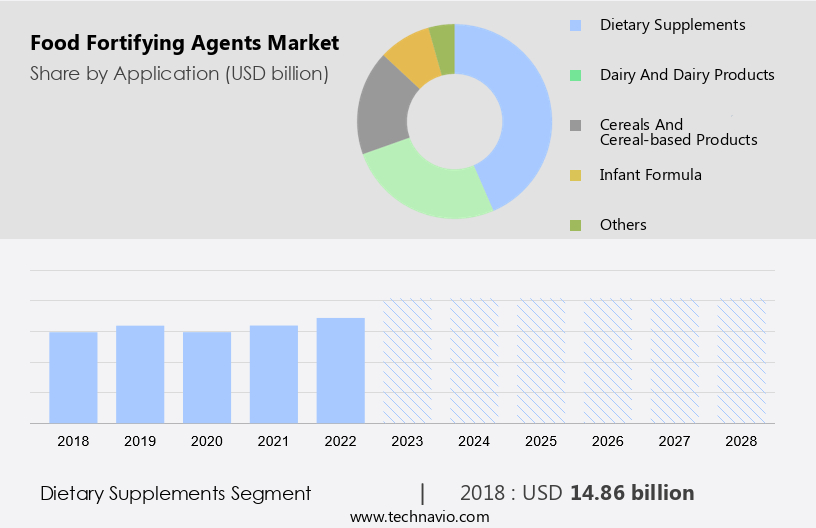
        Food Fortifying Agents Market Size

        Get a glance at the market report of various segments Request Free Sample

        The Dietary supplements segment was valued at USD 14.86 bn in 2018 and showed a gradual increase during the forecast period.

        Regional Analysis

        Europe is estimated to contribute 29% to the growth of the global market during the forecast period. Technavio’s analysts have elaborately explained the regional trends and drivers that shape the market during the forecast period.
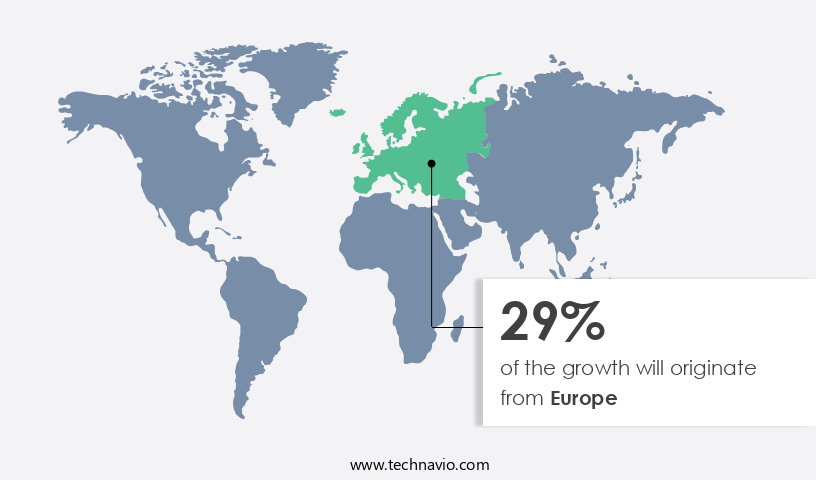
        Food Fortifying Agents Market Share by Geography

        For more insights on the market size of various regions, Request Free Sample

        The market is witnessing significant growth due to the increasing awareness of nutritional deficiencies and the resulting health concerns. In 2023, North America held the largest market share, driven by consumer health consciousness and government initiatives. For example, the US government's support for food fortification in Tajikistan. The prevalence of diseases, such as osteoporosis and rickets, due to deficiencies in vitamins like vitamin D and calcium, is another factor fueling market growth. Fortified foods, including dairy, bakery, beverages, and infant nutrition, are essential sources of essential nutrients, including vitamins, minerals, amino acids, and essential nutrients. Food technologies enable natural fortification solutions, such as probiotics and prebiotics, in various food products.

        Functional foods and nutraceuticals offer personalized nutrition recommendations based on dietary needs and genetic testing services. The aging population and the prevalence of chronic diseases, including obesity and diabetes, further drive market demand. Market players focus on developing clean label products with natural ingredients and functional benefits, such as immune boosting nutrients, cognitive enhancement, and immunity support. The food authorities regulate the use of food fortifying agents to ensure malnutrition prevention and minimize adverse health effects and interactions. Market growth is expected to continue as consumers prioritize health and wellness.

        Market Dynamics

        Our researchers analyzed the data with 2023 as the base year, along with the key drivers, trends, and challenges. A holistic analysis of drivers will help companies refine their marketing strategies to gain a competitive advantage.

        What are the key market drivers leading to the rise In the adoption of market?

        Rising concerns on ever-increasing health problems is the key driver of the market.Food fortifying agents play a crucial role in enhancing the nutritional content of food, addressing micronutrient deficiencies, and reducing the prevalence of chronic diseases. The US Food and Drug Administration (FDA) and Health Canada regulate the addition of vitamins, minerals, and essential nutrients to food. These agents fortify various food categories, including dairy, bakery, beverages, infant nutrition, and functional foods. Dairy products, such as yogurts and cultured dairy, are fortified with probiotics, calcium, and vitamin D. Fortified cereals provide essential nutrients, including amino acids, B vitamins, and iron. Functional food ingredients, like omega-3 fatty acids, B carotene, and lipids, are added to foods to improve bone health, cognitive function, prenatal health, and child health.

        Infant formulas and baby foods are fortified with essential nutrients to meet the unique dietary needs of infants. Dietary supplements, such as probiotics, prebiotics, protein, and vitamins, cater to various nutritional deficiencies and health concerns, including obesity, diabetes, and chronic diseases. The food industry employs various food technologies to develop clean label products with natural fortifying agents from plant sources. Personalized nutrition recommendations based on genetic testing services, dietary needs, and individual health conditions are gaining popularity. The aging population's increased susceptibility to malnutrition further emphasizes the importance of food fortification. Immune boosting nutrients, functional benefits, and immunity support are essential for cognitive enhancement and overall wellness.

        The market for food fortifying agents continues to grow as consumers seek natural and effective solutions for maintaining optimal health.

        What are the market trends shaping the Food Fortifying Agents market?

        Rising consumption of vitamin-infused food and beverages. is the upcoming market trend.The market for food fortifying agents has gained significance due to the increasing awareness of nutritional value and the prevalence of micronutrient deficiencies. Vitamins and minerals are essential nutrients that play a crucial role in maintaining optimal health. However, deficiencies In these nutrients can lead to various health issues, such as anemia, scurvy, beriberi, and pellagra. Fortified foods have emerged as a viable solution to address these deficiencies. Food fortification involves the addition of essential nutrients, including vitamins, minerals, amino acids, and other essential nutrients, to food products. This approach is particularly important in addressing nutritional deficiencies in populations with specific dietary needs, such as infants, the aging population, and individuals with chronic diseases like obesity and diabetes.

        Fortified foods cover a wide range of categories, including dairy, bakery, beverages, and infant nutrition. Functional foods, which provide additional health benefits beyond their basic nutritional content, are also gaining popularity. Food technologies have enabled the development of natural fortification solutions, such as the use of plant sources, probiotics, prebiotics, and nutraceuticals. The demand for clean label products, personalized nutrition, and natural ingredients has driven the market for food fortifying agents. Natural fortifying agents, such as B carotene, Omega 3 fatty acids, and lipids, are increasingly being used to enhance the functional benefits of food products. The market for fortified foods is expected to continue growing, driven by the increasing focus on health and wellness and the need to prevent malnutrition and its adverse health effects.

        The food industry is responding to this trend by developing formulations that offer immune boosting nutrients, cognitive enhancement, and personalized nutrition recommendations. The use of functional food ingredients, such as calcium, Vitamin D, and probiotics, is becoming more common in dairy products, cereals, and infant formulas. The market for fortified foods is expected to continue growing, driven by the increasing focus on health and wellness and the need to prevent malnutrition and its adverse health effects.

        What challenges does the market face during its growth?

        Government regulations related to fortified foods is a key challenge affecting the industry growth.The market faces regulatory challenges due to stringent government regulations. These regulations require companies to comply with continuous changes in food fortification standards to ensure consumer safety. For instance, the Indian government mandated that all fortified food products carry a "+F" logo and adhere to food safety standards in August 2018. Vitamins and minerals are essential nutrients that address micronutrient deficiencies. Fortified foods, including dairy, bakery, beverages, infant nutrition, and functional foods, enhance nutritional value. Food technologies enable natural fortification solutions using amino acids, essential nutrients, and probiotics. Dairy products, such as yogurts and cultured dairy, benefit from probiotic fortification.

        Calcium and Vitamin D In the dairy products segment contribute to bone health. Functional food ingredients, like B carotene and Omega 3 fatty acids, provide cognitive function and prenatal health benefits. Nutraceuticals, including lipids like margarine, address nutrient imbalances and adverse health effects. Personalized nutrition recommendations based on dietary needs, genetic testing services, and interactions influence formulations. Clean label products with natural ingredients and natural fortifying agents from plant sources are gaining popularity. Market dynamics include addressing nutritional deficiencies, chronic diseases like obesity and diabetes, and aging population concerns. Fortified cereals, infant formulas, baby foods, maternal supplements, and functional foods offer immune boosting nutrients and functional benefits.

        Prebiotics and probiotics support immunity and cognitive enhancement.

        Exclusive Customer Landscape

        The food fortifying agents market forecasting report includes the adoption lifecycle of the market, covering from the innovator’s stage to the laggard’s stage. It focuses on adoption rates in different regions based on penetration. Furthermore, the food fortifying agents market report also includes key purchase criteria and drivers of price sensitivity to help companies evaluate and develop their market growth analysis strategies.
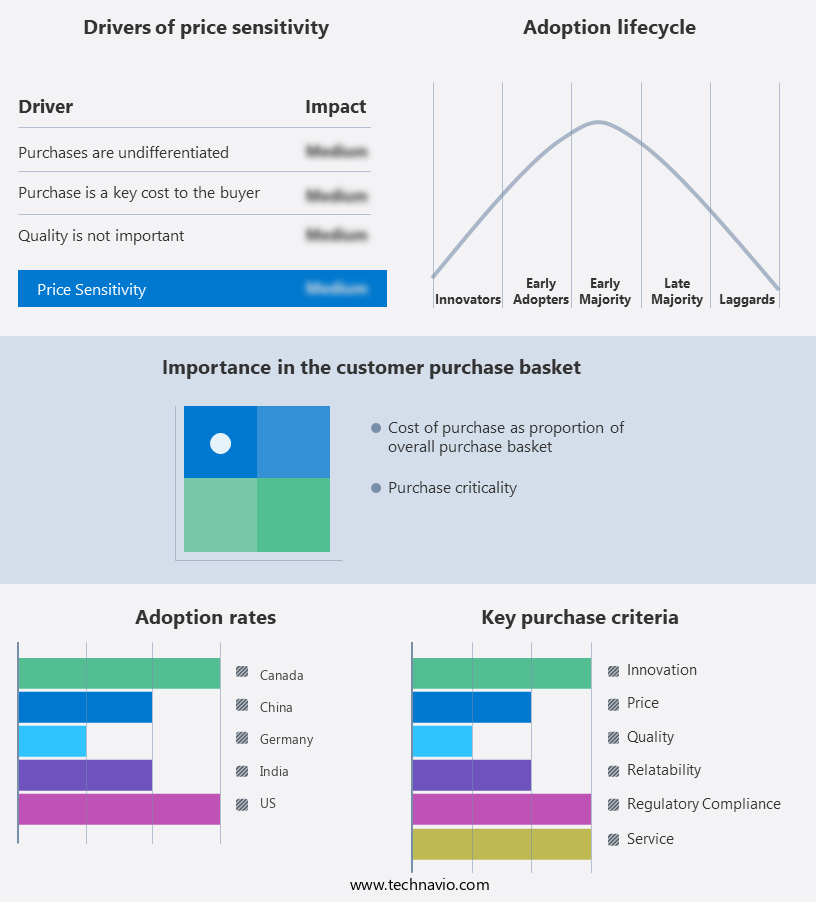
        Food Fortifying Agents Market Share by Geography

         Customer Landscape

        Key Companies & Market Insights

        Companies are implementing various strategies, such as strategic alliances, food fortifying agents market forecast, partnerships, mergers and acquisitions, geographical expansion, and product/service launches, to enhance their presence In the industry.

        Arla Foods Ingredients Group PS - The company provides a range of food fortifying agents for various applications. These include alpha-lactalbumin, hydrolysates, milk minerals, phospholipids and MFGM, whey protein concentrate, and milk proteins. These agents enhance the nutritional value of food products by adding essential nutrients and functional properties. Alpha-lactalbumin, for instance, is a protein that fortifies milk and dairy products with essential amino acids and calcium. Hydrolysates offer soluble and bioavailable forms of essential amino acids and minerals, while milk minerals provide essential micronutrients such as calcium, phosphorus, and zinc. Phospholipids and MFGM add functional properties, such as emulsification and improvement of nutrient absorption. Whey protein concentrate and milk proteins offer high-quality protein sources for fortification of various food and beverage products.

        The industry research and growth report includes detailed analyses of the competitive landscape of the market and information about key companies, including:

        • Arla Foods Ingredients Group PS
        • BASF SE
        • Chr Hansen Holding AS
        • Evonik Industries AG
        • Ingredion Inc.
        • International Flavors and Fragrances Inc.
        • Kellogg Co.
        • Koninklijke DSM NV
        • Levex
        • Nestle SA
        • Nouryon
        • Omya International AG
        • PPG Industries Inc.
        • Prime Merchantiles International Ltd.
        • Proxes GmbH
        • Spirax Sarco Engineering plc
        • Tata Sons Pvt. Ltd.
        • Tate and Lyle PLC
        • Wenda Ingredients LLC

        Qualitative and quantitative analysis of companies has been conducted to help clients understand the wider business environment as well as the strengths and weaknesses of key industry players. Data is qualitatively analyzed to categorize companies as pure play, category-focused, industry-focused, and diversified; it is quantitatively analyzed to categorize companies as dominant, leading, strong, tentative, and weak.

        Research Analyst Overview

        The market encompasses a wide range of substances added to food to enhance their nutritional value and address various nutritional deficiencies. These agents include vitamins, minerals, amino acids, essential nutrients, and other micronutrients. The global population's increasing awareness of health and wellness, coupled with the rising prevalence of nutritional deficiencies and chronic diseases, has fueled the demand for fortified foods and beverages. Food fortification is a critical strategy employed by the food industry to address nutritional gaps and improve public health. Fortified foods span various sectors, including dairy, bakery, beverages, and infant nutrition. Dairy products, such as milk, cheese, and yogurt, are commonly fortified with calcium and vitamin D to promote bone health.

        Fortified cereals and bakery products are often enriched with essential vitamins and minerals, making them a popular choice for consumers seeking to improve their nutritional intake. Functional foods, which provide additional health benefits beyond basic nutrition, have gained significant traction in recent years. These foods are often fortified with natural fortifying agents derived from plant sources. Probiotics and prebiotics, for instance, are increasingly used in yogurts and cultured dairy products to support gut health and enhance immune function. The nutraceutical industry, which focuses on providing nutritional supplements and functional food ingredients, has also experienced robust growth. Nutraceuticals offer personalized nutrition solutions for individuals with specific dietary needs or genetic predispositions.

        For instance, some individuals may require additional omega-3 fatty acids, lipids, or vitamins due to genetic factors or chronic health conditions. The food industry's shift towards clean label products, which contain natural and minimally processed ingredients, has led to the development of natural fortification solutions. These solutions enable food manufacturers to fortify their products with natural vitamins, minerals, and other nutrients without compromising their clean label status. Public sector intervention plays a crucial role In the food fortification landscape. Governments and regulatory bodies often mandate the fortification of certain foods to address widespread nutritional deficiencies. For example, iodine is commonly added to salt to prevent iodine deficiency disorders, which can lead to cognitive impairment and developmental delays.

        The market is also driven by the aging population, which is more susceptible to chronic diseases such as obesity, diabetes, and cardiovascular diseases. These conditions are often linked to nutrient imbalances and deficiencies. Fortified foods and nutritional supplements can help mitigate the adverse health effects of these conditions and improve overall health and wellbeing. In conclusion, the market is a dynamic and evolving landscape driven by consumer demand for healthier food options, the rising prevalence of nutritional deficiencies, and the increasing awareness of the role of nutrition in preventing chronic diseases. The market encompasses a diverse range of products and technologies, including fortified foods, nutraceuticals, and functional food ingredients, all aimed at enhancing the nutritional value of food and addressing various dietary needs.

        Market Scope

        Report Coverage

        Details

        Page number

        152

        Base year

        2023

        Historic period

        2018-2022

        Forecast period

        2024-2028

        Growth momentum & CAGR

        Accelerate at a CAGR of 10.03%

        Market growth 2024-2028

        USD 38.42 billion

        Market structure

        Fragmented

        YoY growth 2023-2024(%)

        8.88

        Key countries

        US, China, Germany, India, and Canada

        Competitive landscape

        Leading Companies, Market Positioning of Companies, Competitive Strategies, and Industry Risks

        Request Free Sample

        What are the Key Data Covered in this Food Fortifying Agents Market Research and Growth Report?

        • CAGR of the Food Fortifying Agents industry during the forecast period
        • Detailed information on factors that will drive the growth and forecasting between 2024 and 2028
        • Precise estimation of the size of the market and its contribution of the industry in focus to the parent market
        • Accurate predictions about upcoming growth and trends and changes in consumer behaviour
        • Growth of the market across North America, Europe, APAC, South America, and Middle East and Africa
        • Thorough analysis of the market’s competitive landscape and detailed information about companies
        • Comprehensive analysis of factors that will challenge the food fortifying agents market growth of industry companies

        We can help! Our analysts can customize this food fortifying agents market research report to meet your requirements.

        Get in touch


        1 Executive Summary

        • 1.1 Market overview
          • Executive Summary - Chart on Market Overview
          • Executive Summary - Data Table on Market Overview
          • Executive Summary - Chart on Global Market Characteristics
          • Executive Summary - Chart on Market by Geography
          • Executive Summary - Chart on Market Segmentation by Application
          • Executive Summary - Chart on Incremental Growth
          • Executive Summary - Data Table on Incremental Growth
          • Executive Summary - Chart on Company Market Positioning

        2 Market Landscape

        • 2.1 Market ecosystem
          • Parent Market
          • Data Table on - Parent Market
        • 2.2 Market characteristics
          • Market characteristics analysis
        • 2.3 Value chain analysis
          • Value Chain Analysis

        3 Market Sizing

        • 3.1 Market definition
          • Offerings of companies included in the market definition
        • 3.2 Market segment analysis
          • Market segments
        • 3.3 Market size 2023
          • 3.4 Market outlook: Forecast for 2023-2028
            • Chart on Global - Market size and forecast 2023-2028 ($ billion)
            • Data Table on Global - Market size and forecast 2023-2028 ($ billion)
            • Chart on Global Market: Year-over-year growth 2023-2028 (%)
            • Data Table on Global Market: Year-over-year growth 2023-2028 (%)

          4 Historic Market Size

          • 4.1 Global Food Fortifying Agents Market 2018 - 2022
            • Historic Market Size - Data Table on Global Food Fortifying Agents Market 2018 - 2022 ($ billion)
          • 4.2 Application segment analysis 2018 - 2022
            • Historic Market Size - Application Segment 2018 - 2022 ($ billion)
          • 4.3 Geography segment analysis 2018 - 2022
            • Historic Market Size - Geography Segment 2018 - 2022 ($ billion)
          • 4.4 Country segment analysis 2018 - 2022
            • Historic Market Size - Country Segment 2018 - 2022 ($ billion)

          5 Five Forces Analysis

          • 5.1 Five forces summary
            • Five forces analysis - Comparison between 2023 and 2028
          • 5.2 Bargaining power of buyers
            • Bargaining power of buyers - Impact of key factors 2023 and 2028
          • 5.3 Bargaining power of suppliers
            • Bargaining power of suppliers - Impact of key factors in 2023 and 2028
          • 5.4 Threat of new entrants
            • Threat of new entrants - Impact of key factors in 2023 and 2028
          • 5.5 Threat of substitutes
            • Threat of substitutes - Impact of key factors in 2023 and 2028
          • 5.6 Threat of rivalry
            • Threat of rivalry - Impact of key factors in 2023 and 2028
          • 5.7 Market condition
            • Chart on Market condition - Five forces 2023 and 2028

          6 Market Segmentation by Application

          • 6.1 Market segments
            • Chart on Application - Market share 2023-2028 (%)
            • Data Table on Application - Market share 2023-2028 (%)
          • 6.2 Comparison by Application
            • Chart on Comparison by Application
            • Data Table on Comparison by Application
          • 6.3 Dietary supplements - Market size and forecast 2023-2028
            • Chart on Dietary supplements - Market size and forecast 2023-2028 ($ billion)
            • Data Table on Dietary supplements - Market size and forecast 2023-2028 ($ billion)
            • Chart on Dietary supplements - Year-over-year growth 2023-2028 (%)
            • Data Table on Dietary supplements - Year-over-year growth 2023-2028 (%)
          • 6.4 Dairy and dairy products - Market size and forecast 2023-2028
            • Chart on Dairy and dairy products - Market size and forecast 2023-2028 ($ billion)
            • Data Table on Dairy and dairy products - Market size and forecast 2023-2028 ($ billion)
            • Chart on Dairy and dairy products - Year-over-year growth 2023-2028 (%)
            • Data Table on Dairy and dairy products - Year-over-year growth 2023-2028 (%)
          • 6.5 Cereals and cereal-based products - Market size and forecast 2023-2028
            • Chart on Cereals and cereal-based products - Market size and forecast 2023-2028 ($ billion)
            • Data Table on Cereals and cereal-based products - Market size and forecast 2023-2028 ($ billion)
            • Chart on Cereals and cereal-based products - Year-over-year growth 2023-2028 (%)
            • Data Table on Cereals and cereal-based products - Year-over-year growth 2023-2028 (%)
          • 6.6 Infant formula - Market size and forecast 2023-2028
            • Chart on Infant formula - Market size and forecast 2023-2028 ($ billion)
            • Data Table on Infant formula - Market size and forecast 2023-2028 ($ billion)
            • Chart on Infant formula - Year-over-year growth 2023-2028 (%)
            • Data Table on Infant formula - Year-over-year growth 2023-2028 (%)
          • 6.7 Others - Market size and forecast 2023-2028
            • Chart on Others - Market size and forecast 2023-2028 ($ billion)
            • Data Table on Others - Market size and forecast 2023-2028 ($ billion)
            • Chart on Others - Year-over-year growth 2023-2028 (%)
            • Data Table on Others - Year-over-year growth 2023-2028 (%)
          • 6.8 Market opportunity by Application
            • Market opportunity by Application ($ billion)
            • Data Table on Market opportunity by Application ($ billion)

          7 Customer Landscape

          • 7.1 Customer landscape overview
            • Analysis of price sensitivity, lifecycle, customer purchase basket, adoption rates, and purchase criteria

          8 Geographic Landscape

          • 8.1 Geographic segmentation
            • Chart on Market share by geography 2023-2028 (%)
            • Data Table on Market share by geography 2023-2028 (%)
          • 8.2 Geographic comparison
            • Chart on Geographic comparison
            • Data Table on Geographic comparison
          • 8.3 North America - Market size and forecast 2023-2028
            • Chart on North America - Market size and forecast 2023-2028 ($ billion)
            • Data Table on North America - Market size and forecast 2023-2028 ($ billion)
            • Chart on North America - Year-over-year growth 2023-2028 (%)
            • Data Table on North America - Year-over-year growth 2023-2028 (%)
          • 8.4 Europe - Market size and forecast 2023-2028
            • Chart on Europe - Market size and forecast 2023-2028 ($ billion)
            • Data Table on Europe - Market size and forecast 2023-2028 ($ billion)
            • Chart on Europe - Year-over-year growth 2023-2028 (%)
            • Data Table on Europe - Year-over-year growth 2023-2028 (%)
          • 8.5 APAC - Market size and forecast 2023-2028
            • Chart on APAC - Market size and forecast 2023-2028 ($ billion)
            • Data Table on APAC - Market size and forecast 2023-2028 ($ billion)
            • Chart on APAC - Year-over-year growth 2023-2028 (%)
            • Data Table on APAC - Year-over-year growth 2023-2028 (%)
          • 8.6 South America - Market size and forecast 2023-2028
            • Chart on South America - Market size and forecast 2023-2028 ($ billion)
            • Data Table on South America - Market size and forecast 2023-2028 ($ billion)
            • Chart on South America - Year-over-year growth 2023-2028 (%)
            • Data Table on South America - Year-over-year growth 2023-2028 (%)
          • 8.7 Middle East and Africa - Market size and forecast 2023-2028
            • Chart on Middle East and Africa - Market size and forecast 2023-2028 ($ billion)
            • Data Table on Middle East and Africa - Market size and forecast 2023-2028 ($ billion)
            • Chart on Middle East and Africa - Year-over-year growth 2023-2028 (%)
            • Data Table on Middle East and Africa - Year-over-year growth 2023-2028 (%)
          • 8.8 US - Market size and forecast 2023-2028
            • Chart on US - Market size and forecast 2023-2028 ($ billion)
            • Data Table on US - Market size and forecast 2023-2028 ($ billion)
            • Chart on US - Year-over-year growth 2023-2028 (%)
            • Data Table on US - Year-over-year growth 2023-2028 (%)
          • 8.9 China - Market size and forecast 2023-2028
            • Chart on China - Market size and forecast 2023-2028 ($ billion)
            • Data Table on China - Market size and forecast 2023-2028 ($ billion)
            • Chart on China - Year-over-year growth 2023-2028 (%)
            • Data Table on China - Year-over-year growth 2023-2028 (%)
          • 8.10 Germany - Market size and forecast 2023-2028
            • Chart on Germany - Market size and forecast 2023-2028 ($ billion)
            • Data Table on Germany - Market size and forecast 2023-2028 ($ billion)
            • Chart on Germany - Year-over-year growth 2023-2028 (%)
            • Data Table on Germany - Year-over-year growth 2023-2028 (%)
          • 8.11 India - Market size and forecast 2023-2028
            • Chart on India - Market size and forecast 2023-2028 ($ billion)
            • Data Table on India - Market size and forecast 2023-2028 ($ billion)
            • Chart on India - Year-over-year growth 2023-2028 (%)
            • Data Table on India - Year-over-year growth 2023-2028 (%)
          • 8.12 Canada - Market size and forecast 2023-2028
            • Chart on Canada - Market size and forecast 2023-2028 ($ billion)
            • Data Table on Canada - Market size and forecast 2023-2028 ($ billion)
            • Chart on Canada - Year-over-year growth 2023-2028 (%)
            • Data Table on Canada - Year-over-year growth 2023-2028 (%)
          • 8.13 Market opportunity by geography
            • Market opportunity by geography ($ billion)
            • Data Tables on Market opportunity by geography ($ billion)

          9 Drivers, Challenges, and Opportunity/Restraints

          • 9.1 Market drivers
            • 9.2 Market challenges
              • 9.3 Impact of drivers and challenges
                • Impact of drivers and challenges in 2023 and 2028
              • 9.4 Market opportunities/restraints

                10 Competitive Landscape

                • 10.1 Overview
                  • 10.2 Competitive Landscape
                    • Overview on criticality of inputs and factors of differentiation
                  • 10.3 Landscape disruption
                    • Overview on factors of disruption
                  • 10.4 Industry risks
                    • Impact of key risks on business

                  11 Competitive Analysis

                  • 11.1 Companies profiled
                    • Companies covered
                  • 11.2 Market positioning of companies
                    • Matrix on companies position and classification
                  • 11.3 Arla Foods Ingredients Group PS
                    • Arla Foods Ingredients Group PS - Overview
                    • Arla Foods Ingredients Group PS - Product / Service
                    • Arla Foods Ingredients Group PS - Key offerings
                  • 11.4 BASF SE
                    • BASF SE - Overview
                    • BASF SE - Business segments
                    • BASF SE - Key news
                    • BASF SE - Key offerings
                    • BASF SE - Segment focus
                  • 11.5 Chr Hansen Holding AS
                    • Chr Hansen Holding AS - Overview
                    • Chr Hansen Holding AS - Business segments
                    • Chr Hansen Holding AS - Key news
                    • Chr Hansen Holding AS - Key offerings
                    • Chr Hansen Holding AS - Segment focus
                  • 11.6 Ingredion Inc.
                    • Ingredion Inc. - Overview
                    • Ingredion Inc. - Business segments
                    • Ingredion Inc. - Key news
                    • Ingredion Inc. - Key offerings
                    • Ingredion Inc. - Segment focus
                  • 11.7 International Flavors and Fragrances Inc.
                    • International Flavors and Fragrances Inc. - Overview
                    • International Flavors and Fragrances Inc. - Business segments
                    • International Flavors and Fragrances Inc. - Key news
                    • International Flavors and Fragrances Inc. - Key offerings
                    • International Flavors and Fragrances Inc. - Segment focus
                  • 11.8 Koninklijke DSM NV
                    • Koninklijke DSM NV - Overview
                    • Koninklijke DSM NV - Business segments
                    • Koninklijke DSM NV - Key news
                    • Koninklijke DSM NV - Key offerings
                    • Koninklijke DSM NV - Segment focus
                  • 11.9 Nestle SA
                    • Nestle SA - Overview
                    • Nestle SA - Business segments
                    • Nestle SA - Key news
                    • Nestle SA - Key offerings
                    • Nestle SA - Segment focus
                  • 11.10 Spirax Sarco Engineering plc
                    • Spirax Sarco Engineering plc - Overview
                    • Spirax Sarco Engineering plc - Business segments
                    • Spirax Sarco Engineering plc - Key offerings
                    • Spirax Sarco Engineering plc - Segment focus
                  • 11.11 Tata Sons Pvt. Ltd.
                    • Tata Sons Pvt. Ltd. - Overview
                    • Tata Sons Pvt. Ltd. - Product / Service
                    • Tata Sons Pvt. Ltd. - Key news
                    • Tata Sons Pvt. Ltd. - Key offerings
                  • 11.12 Tate and Lyle PLC
                    • Tate and Lyle PLC - Overview
                    • Tate and Lyle PLC - Business segments
                    • Tate and Lyle PLC - Key news
                    • Tate and Lyle PLC - Key offerings
                    • Tate and Lyle PLC - Segment focus

                  12 Appendix

                  • 12.1 Scope of the report
                    • 12.2 Inclusions and exclusions checklist
                      • Inclusions checklist
                      • Exclusions checklist
                    • 12.3 Currency conversion rates for US$
                      • Currency conversion rates for US$
                    • 12.4 Research methodology
                      • Research methodology
                    • 12.5 Data procurement
                      • Information sources
                    • 12.6 Data validation
                      • Data validation
                    • 12.7 Validation techniques employed for market sizing
                      • Validation techniques employed for market sizing
                    • 12.8 Data synthesis
                      • Data synthesis
                    • 12.9 360 degree market analysis
                      • 360 degree market analysis
                    • 12.10 List of abbreviations
                      • List of abbreviations

                    Research Methodology

                    Technavio presents a detailed picture of the market by way of study, synthesis, and summation of data from multiple sources. The analysts have presented the various facets of the market with a particular focus on identifying the key industry influencers. The data thus presented is comprehensive, reliable, and the result of extensive research, both primary and secondary.

                    INFORMATION SOURCES

                    Primary sources

                    • Manufacturers and suppliers
                    • Channel partners
                    • Industry experts
                    • Strategic decision makers

                    Secondary sources

                    • Industry journals and periodicals
                    • Government data
                    • Financial reports of key industry players
                    • Historical data
                    • Press releases

                    DATA ANALYSIS

                    Data Synthesis

                    • Collation of data
                    • Estimation of key figures
                    • Analysis of derived insights

                    Data Validation

                    • Triangulation with data models
                    • Reference against proprietary databases
                    • Corroboration with industry experts

                    REPORT WRITING

                    Qualitative

                    • Market drivers
                    • Market challenges
                    • Market trends
                    • Five forces analysis

                    Quantitative

                    • Market size and forecast
                    • Market segmentation
                    • Geographical insights
                    • Competitive landscape

                    Interested in this report?

                    Get your sample now to see our research methodology and insights!

                    Download Now

                    Frequently Asked Questions

                    Food Fortifying Agents market growth will increase by $ 38.42 bn during 2024-2028.

                    The Food Fortifying Agents market is expected to grow at a CAGR of 10.03% during 2024-2028.

                    Food Fortifying Agents market is segmented by Application( Dietary supplements, Dairy and dairy products, Cereals and cereal-based products, Infant formula, Others)

                    Arla Foods Ingredients Group PS, BASF SE, Chr Hansen Holding AS, Evonik Industries AG, Ingredion Inc., International Flavors and Fragrances Inc., Kellogg Co., Koninklijke DSM NV, Levex, Nestle SA, Nouryon, Omya International AG, PPG Industries Inc., Prime Merchantiles International Ltd., Proxes GmbH, Spirax Sarco Engineering plc, Tata Sons Pvt. Ltd., Tate and Lyle PLC, Wenda Ingredients LLC are a few of the key vendors in the Food Fortifying Agents market.

                    Europe will register the highest growth rate of 29% among the other regions. Therefore, the Food Fortifying Agents market in Europe is expected to garner significant business opportunities for the vendors during the forecast period.

                    US, China, Germany, India, Canada

                    • Rising concerns on ever-increasing health problemsFood fortifying agents are used to enhance the nutritional value of food. They help reduce the prevalence of chronic diseases is the driving factor this market.
                    • such as high blood pressure is the driving factor this market.
                    • cardiovascular diseases is the driving factor this market.
                    • Alzheimer's disease is the driving factor this market.
                    • and many others is the driving factor this market.
                    • many of which are caused due to the lack of nutritious food. There are two types of food fortifying agents is the driving factor this market.
                    • namely mandatory food fortifying agents and discretionary food fortifying agents. For mandatory food fortifying agents is the driving factor this market.
                    • the United States Food and Drug Administration (US FDA) has established guidelines and standards. In Canada also is the driving factor this market.
                    • the addition of vitamins and minerals (micronutrients) to food is controlled under regulatory provisions first declared in 1964 (Part D Division 3 of the Food and Drug Regulations [FDRs]). These regulations list the foods to which micronutrients may be added and the levels to which they may be added (Health Canada is the driving factor this market.
                    • 2002).  Food fortifying agents are used in food manufacturing and pharmaceuticals. There are many food fortifying agents like minerals is the driving factor this market.
                    • vitamins is the driving factor this market.
                    • lipids is the driving factor this market.
                    • carbohydrates is the driving factor this market.
                    • proteins is the driving factor this market.
                    • and others. The dietary habits of people across various regions can lack nutrients due to their local soil and a deficiency in the staple diet is the driving factor this market.
                    • leading to increased demand for food fortifying agents. Food products like milk is the driving factor this market.
                    • cereals is the driving factor this market.
                    • and contain food fortifying agents. For example is the driving factor this market.
                    • vitamin C fortifying agents are used in beverages and juices to enhance their vitamin C content. Calcium and phosphorus fortification is commonly used in infant formula is the driving factor this market.
                    • while milk (dairy) products can be fortified with vitamin A. Moreover is the driving factor this market.
                    • the number of undernourished/malnourished people is also increasing globally is the driving factor this market.
                    • which further leads to an increase in the demand for food fortifying agents. is the driving factor this market.

                    The Food Fortifying Agents market vendors should focus on grabbing business opportunities from the Dietary supplements segment as it accounted for the largest market share in the base year.
                    RIA - Research AI Assistant
                    Ask RIA
