



Fragrance Ingredients Market Size 2026-2030
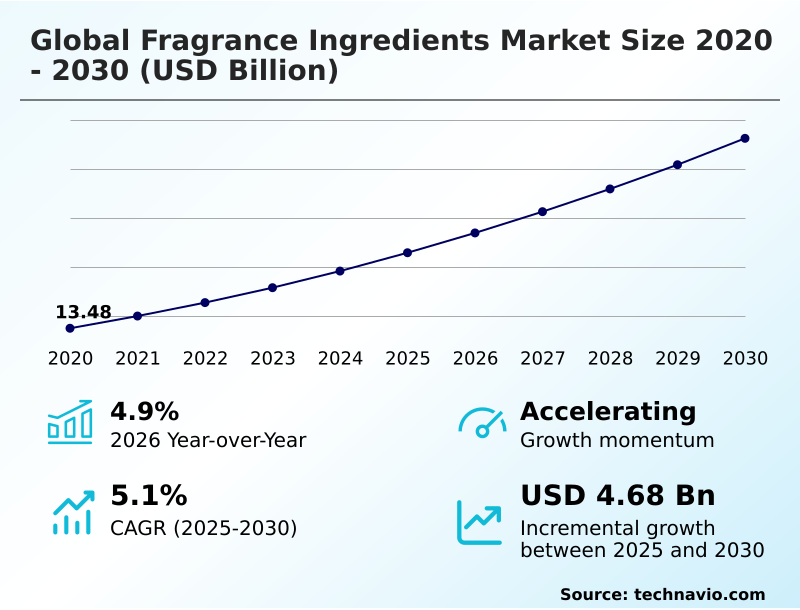
The fragrance ingredients market size is valued to increase by USD 4.68 billion, at a CAGR of 5.1% from 2025 to 2030. Accelerated adoption of green chemistry and biotechnological synthesis will drive the fragrance ingredients market.
Major Market Trends & Insights
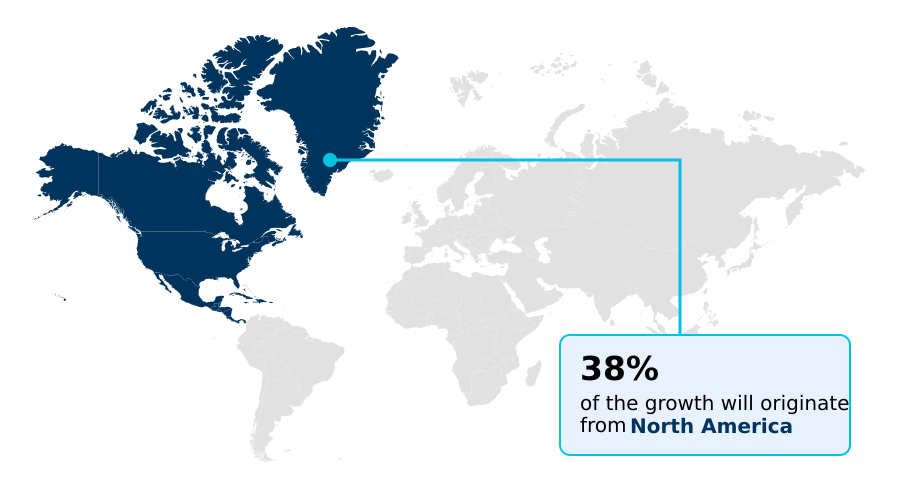
- North America dominated the market and accounted for a 37.8% growth during the forecast period.
- By Application - Personal care segment was valued at USD 6.10 billion in 2024
- By Type - Essential oils segment accounted for the largest market revenue share in 2024
Market Size & Forecast
- Market Opportunities: USD 7.77 billion
- Market Future Opportunities: USD 4.68 billion
- CAGR from 2025 to 2030 : 5.1%
Market Summary
- The fragrance ingredients market is undergoing a significant transformation, driven by a dual focus on technological innovation and ecological responsibility. A core driver is the accelerated adoption of green chemistry principles and biotechnological synthesis, which enable the creation of nature-identical molecules from renewable aromatic raw materials.
- This shift addresses both regulatory pressures concerning volatile organic compounds and consumer demand for clean label fragrance options. Advanced fragrance encapsulation technology and slow-release fragrance systems are enhancing product performance, particularly in fabric care freshness and personal care product formulation.
- In one business scenario, a manufacturer leveraged olfactory profile analysis and sensory panel testing to reformulate a flagship product line with hypoallergenic fragrance formulation, resulting in a measurable uptick in market share among consumers with sensitivities. Challenges persist around supply chain volatility mitigation for natural fragrance extracts and the high cost of captive molecule development.
- However, the industry's commitment to sustainable ingredient sourcing and ingredient portfolio diversification is paving the path for resilient growth and innovation in areas like functional fragrance benefits and malodor neutralization technology.
What will be the Size of the Fragrance Ingredients Market during the forecast period?
Get Key Insights on Market Forecast (PDF) Get Free Sample
How is the Fragrance Ingredients Market Segmented?
The fragrance ingredients industry research report provides comprehensive data (region-wise segment analysis), with forecasts and estimates in "USD million" for the period 2026-2030, as well as historical data from 2020-2024 for the following segments.
- Application
- Personal care
- Fabric care
- Hair care
- Others
- Type
- Essential oils
- Aroma chemicals
- Source
- Synthetic
- Natural
- Geography
- North America
- US
- Canada
- Mexico
- Europe
- France
- Germany
- UK
- APAC
- China
- India
- Japan
- South America
- Brazil
- Argentina
- Colombia
- Middle East and Africa
- UAE
- Saudi Arabia
- South Africa
- Rest of World (ROW)
- North America
By Application Insights
The personal care segment is estimated to witness significant growth during the forecast period.
The personal care segment is driven by the skinification of scent trend, where fragrance is integral to product function and consumer sensory perception.
Innovations in white biotechnology in perfumery are enabling the use of upcycled raw materials and the enzymatic synthesis of esters to create unique aromatic compounds.
There is a growing demand for niche perfumery ingredients that support emotional wellness through scent, featuring complex lactone scent profiles and chiral fragrance molecules.
Advanced analytical tools like gas chromatography-olfactometry ensure the quality of aldehyde scent components and phenolic aroma chemicals.
Formulations are evolving to include sophisticated ester fragrance compounds that enhance cross-modal sensory effects, with a focus on ingredients that improve user experience, leading to a 30% increase in brand loyalty metrics.
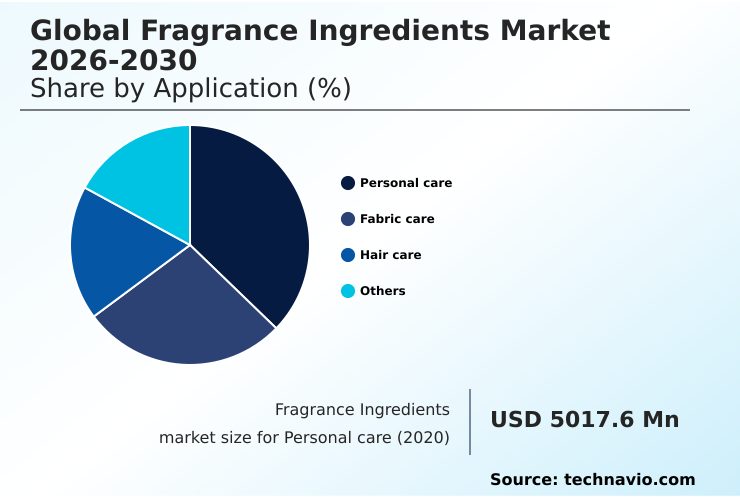
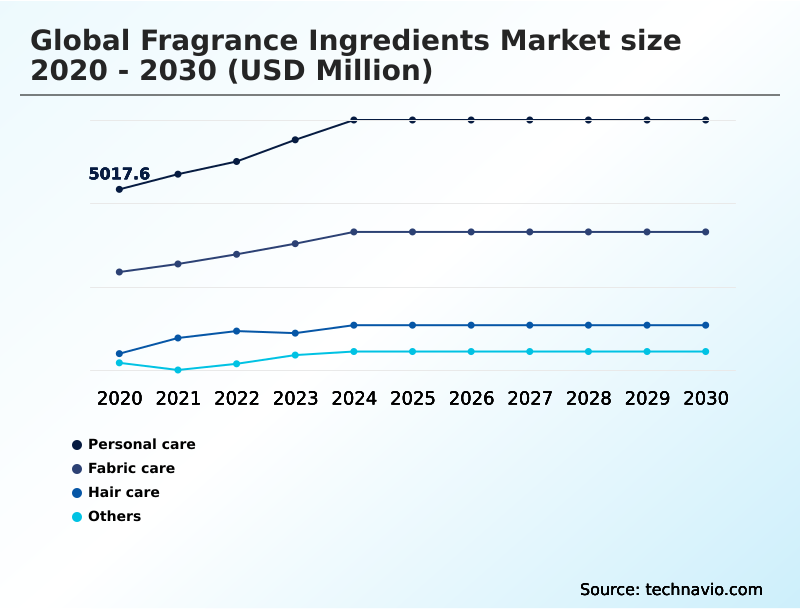
The Personal care segment was valued at USD 6.10 billion in 2024 and showed a gradual increase during the forecast period.
Regional Analysis
North America is estimated to contribute 37.8% to the growth of the global market during the forecast period.Technavio’s analysts have elaborately explained the regional trends and drivers that shape the market during the forecast period.
See How Fragrance Ingredients Market Demand is Rising in North America Get Free Sample
The geographic landscape is diversifying, with APAC emerging as a key growth region, responsible for over 24% of incremental growth. This region is advancing its capabilities in aroma molecule engineering for terpene-based aroma chemicals and musk chemical compounds.
In North America, which contributes nearly 38% of market growth, the focus is on fragrance ingredient transparency and ethically sourced botanicals. European firms continue to lead in traditional steam distillation process and solvent extraction method while innovating with probiotic-friendly fragrances.
Sensory panel testing and solid-phase microextraction are used globally to validate scent longevity on substrate for household cleaning scents and ambient scenting solutions.
Market Dynamics
Our researchers analyzed the data with 2025 as the base year, along with the key drivers, trends, and challenges. A holistic analysis of drivers will help companies refine their marketing strategies to gain a competitive advantage.
- The market is navigating complex technical and commercial questions, from the viability of synthetic vs natural aroma chemicals in cosmetics to the growing importance of biotechnology for sustainable musk chemical production. A central theme is performance, where encapsulation technology for fabric care longevity is becoming a key differentiator.
- The impact of green chemistry on fine fragrance is profound, pushing innovation in areas like solvent-free extraction of floral absolutes and the development of biodegradable alternatives to synthetic fixatives. Regulatory challenges for new aroma molecules and the complex supply chain of rare botanical extracts, especially for materials like sandalwood and oud, demand sophisticated risk management.
- Formulators face specific hurdles, such as stabilizing citrus notes in acidic formulations and ensuring the effect of ph on fragrance stability. The industry relies on advanced essential oil adulteration detection methods to ensure quality. Functionality is also expanding, with a focus on malodor control in industrial cleaning products and understanding the neuro-olfactory effects of terpene-based fragrances.
- The role of esters in fruity fragrance profiles remains fundamental, while the fermentation process for producing vanillin showcases a shift in production. A key business decision involves the cost-benefit of captive molecule development, where the investment can lead to a market advantage nearly twice as effective as relying on generic ingredients.
- Ultimately, using ai for novel scent discovery and meeting the rising consumer demand for clean label fragrances, particularly through hypoallergenic formulations for sensitive skin products, will define future success. Even niche areas like developing water-soluble fragrance ingredients for beverages are gaining traction, while the continuous need for measuring scent intensity over time drives quality control.
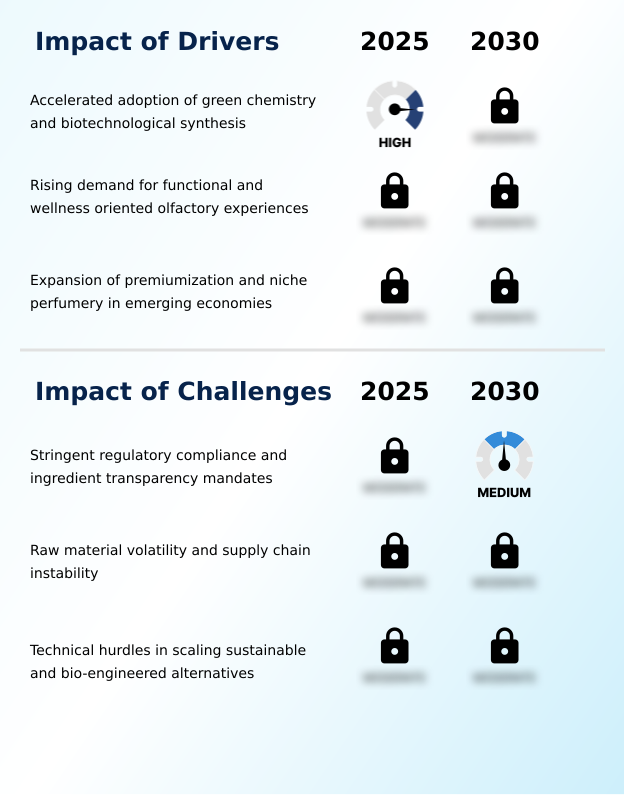
What are the key market drivers leading to the rise in the adoption of Fragrance Ingredients Industry?
- The accelerated adoption of green chemistry principles and advanced biotechnological synthesis is a paramount driver for the market's growth.
- Biotechnological synthesis is a major driver, enabling the production of nature-identical molecules and high-purity synthetic aroma compounds from sustainable aromatic raw materials.
- This innovation directly supports the premiumization of scents and enhances olfactory note stability, with some new ingredients showing a 25% improvement in heat resistance. Demand for functional fragrance benefits is fueling neuro-olfactory research, leading to specialized personal care product formulation.
- Malodor neutralization technology is critical for fabric care freshness, with new systems achieving over 90% odor reduction. Furthermore, slow-release fragrance systems and a focus on regional scent localization are expanding market applications.
What are the market trends shaping the Fragrance Ingredients Industry?
- The market is witnessing a definitive trend toward clean label transparency and the ascendancy of sustainable synthesis methods, primarily driven by innovations in biotechnology.
- A key trend is the pivot toward green chemistry principles in aroma chemical synthesis, where microbial fermentation for aromas is replacing traditional methods. This shift aligns with consumer demand for eco-certified ingredients and supports circular economy principles. Fragrance encapsulation technology is advancing, improving air care scent diffusion and scent longevity in products by up to 40%.
- Concurrently, pro-fragrance chemistry is enabling more stable fine fragrance composition. Innovations in digital scent technology now allow for rapid olfactory profile analysis, accelerating the development of natural fragrance extracts for cosmetic product scenting and reducing formulation time by 15%.
What challenges does the Fragrance Ingredients Industry face during its growth?
- Navigating stringent regulatory compliance frameworks and meeting mandates for complete ingredient transparency present a primary challenge to industry growth.
- A significant challenge is ensuring regulatory compliance for allergens, which complicates hypoallergenic fragrance formulation and demands greater investment in safety testing, increasing R&D costs by an average of 20%. Supply chain volatility mitigation for materials used in essential oil extraction remains a primary concern, pushing firms toward sustainable ingredient sourcing and ingredient portfolio diversification.
- The high capital cost of technologies like supercritical fluid extraction and captive molecule development creates barriers to entry. Stricter limits on volatile organic compounds require reformulation efforts, while consumer demand for clean label fragrance and biodegradable fragrance carriers adds pressure to maintain olfactory brand identity without compromising performance. Headspace technology helps in this by accurately analyzing scent profiles during reformulation.
Exclusive Technavio Analysis on Customer Landscape
The fragrance ingredients market forecasting report includes the adoption lifecycle of the market, covering from the innovator’s stage to the laggard’s stage. It focuses on adoption rates in different regions based on penetration. Furthermore, the fragrance ingredients market report also includes key purchase criteria and drivers of price sensitivity to help companies evaluate and develop their market growth analysis strategies.
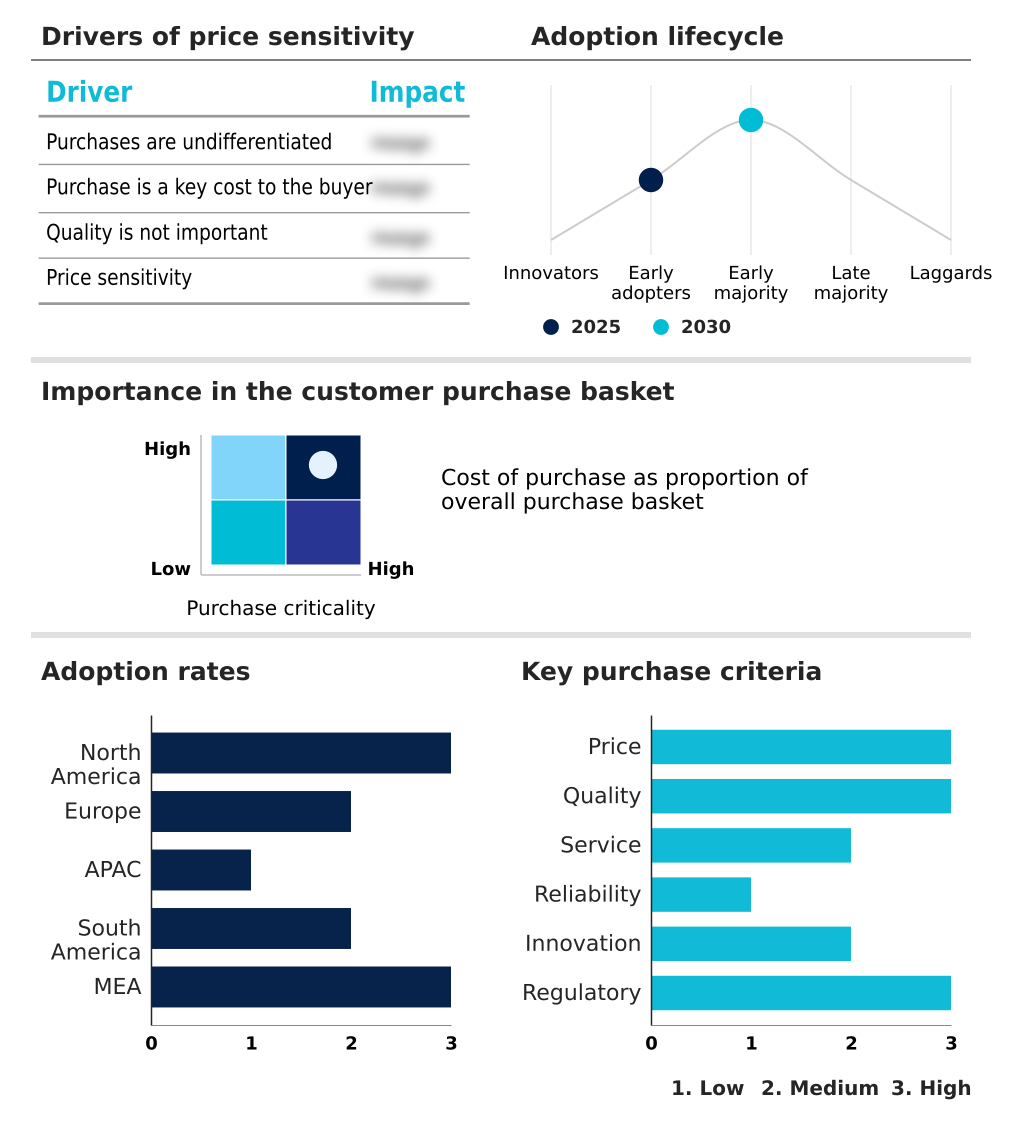
Customer Landscape of Fragrance Ingredients Industry
Competitive Landscape
Companies are implementing various strategies, such as strategic alliances, fragrance ingredients market forecast, partnerships, mergers and acquisitions, geographical expansion, and product/service launches, to enhance their presence in the industry.
Advanced Biotech - Specializes in developing custom fragrance compounds and sourcing critical aroma ingredients for diverse consumer product applications.
The industry research and growth report includes detailed analyses of the competitive landscape of the market and information about key companies, including:
- Advanced Biotech
- Alpha Aromatics Inc.
- Aurochemicals
- BASF SE
- Bell Flavors and Fragrances
- Citrus and Allied Essences Ltd.
- DSM Firmenich AG
- Eurofragance S.L.U.
- Givaudan SA
- Iberchem S.A.
- International Flavors Inc.
- Kalpsutra Chemicals Pvt. Ltd.
- Kao Corp.
- Mane Kancor Ingredients Ltd.
- Robertet SA
- Sensient Technologies Corp.
- Symrise Group
- T. Hasegawa Co. Ltd.
- Takasago International Corp.
- V Mane Fils
Qualitative and quantitative analysis of companies has been conducted to help clients understand the wider business environment as well as the strengths and weaknesses of key industry players. Data is qualitatively analyzed to categorize companies as pure play, category-focused, industry-focused, and diversified; it is quantitatively analyzed to categorize companies as dominant, leading, strong, tentative, and weak.
Recent Development and News in Fragrance ingredients market
- In August 2024, Apoena Biotech expanded its biotechnology initiatives, focusing on sustainable bioprospecting in the Brazilian Amazon to develop biodiversity-derived ingredients for the global beauty and fragrance industry through fermentation.
- In September 2024, IFF launched its new Scent Dubai Creative Center, designed to enhance fragrance innovation for Asia-Pacific and Middle Eastern markets, with a strategic focus on regional scent preferences and sustainable ingredient technologies.
- In October 2024, Symrise increased its investments in biotechnology-based fragrance ingredient manufacturing and expanded sustainable sourcing programs across Asia-Pacific to meet the growing regional demand for natural and multifunctional aromatic compounds.
- In January 2025, the International Fragrance Association broadened its engagement in global chemical regulation, advocating for science-based ingredient assessments, environmental stewardship, and greater transparency to align with North American and international sustainability standards.
Dive into Technavio’s robust research methodology, blending expert interviews, extensive data synthesis, and validated models for unparalleled Fragrance Ingredients Market insights. See full methodology.
| Market Scope | |
|---|---|
| Page number | 297 |
| Base year | 2025 |
| Historic period | 2020-2024 |
| Forecast period | 2026-2030 |
| Growth momentum & CAGR | Accelerate at a CAGR of 5.1% |
| Market growth 2026-2030 | USD 4675.8 million |
| Market structure | Fragmented |
| YoY growth 2025-2026(%) | 4.9% |
| Key countries | US, Canada, Mexico, France, Germany, UK, Italy, Spain, The Netherlands, China, India, Japan, South Korea, Indonesia, Australia, Brazil, Argentina, Colombia, UAE, Saudi Arabia, South Africa, Egypt and Turkey |
| Competitive landscape | Leading Companies, Market Positioning of Companies, Competitive Strategies, and Industry Risks |
Research Analyst Overview
- The industry is defined by a strategic pivot toward advanced biotechnological synthesis and green chemistry principles, fundamentally altering aroma chemical synthesis. This evolution is driven by the need for high-purity nature-identical molecules and sustainable synthetic aroma compounds derived from renewable aromatic raw materials.
- Innovations in white biotechnology in perfumery, such as microbial fermentation for aromas and the enzymatic synthesis of esters, are becoming standard. Companies are investing in captive molecule development to create unique chiral fragrance molecules and complex scent profiles featuring terpene-based aroma chemicals, musk chemical compounds, lactone scent profiles, aldehyde scent components, ester fragrance compounds, and phenolic aroma chemicals.
- Fragrance encapsulation technology and pro-fragrance chemistry are crucial for improving olfactory note stability and creating slow-release fragrance systems. For boardroom decisions, the adoption of these technologies is critical; for instance, implementing supercritical fluid extraction over traditional solvent extraction method can improve yield of natural fragrance extracts by 15%.
- Analytical techniques like headspace technology, solid-phase microextraction, and gas chromatography-olfactometry ensure quality, while sensory panel testing validates performance in hypoallergenic fragrance formulation. This technical progress, from the steam distillation process to aroma molecule engineering and malodor neutralization technology, is reshaping how biodegradable fragrance carriers deliver scent.
What are the Key Data Covered in this Fragrance Ingredients Market Research and Growth Report?
-
What is the expected growth of the Fragrance Ingredients Market between 2026 and 2030?
-
USD 4.68 billion, at a CAGR of 5.1%
-
-
What segmentation does the market report cover?
-
The report is segmented by Application (Personal care, Fabric care, Hair care, and Others), Type (Essential oils, and Aroma chemicals), Source (Synthetic, and Natural) and Geography (North America, Europe, APAC, South America, Middle East and Africa)
-
-
Which regions are analyzed in the report?
-
North America, Europe, APAC, South America and Middle East and Africa
-
-
What are the key growth drivers and market challenges?
-
Accelerated adoption of green chemistry and biotechnological synthesis, Stringent regulatory compliance and ingredient transparency mandates
-
-
Who are the major players in the Fragrance Ingredients Market?
-
Advanced Biotech, Alpha Aromatics Inc., Aurochemicals, BASF SE, Bell Flavors and Fragrances, Citrus and Allied Essences Ltd., DSM Firmenich AG, Eurofragance S.L.U., Givaudan SA, Iberchem S.A., International Flavors Inc., Kalpsutra Chemicals Pvt. Ltd., Kao Corp., Mane Kancor Ingredients Ltd., Robertet SA, Sensient Technologies Corp., Symrise Group, T. Hasegawa Co. Ltd., Takasago International Corp. and V Mane Fils
-
Market Research Insights
- Market dynamics are increasingly shaped by consumer sensory perception and the demand for functional fragrance benefits that support emotional wellness through scent. This has driven a strategic focus on neuro-olfactory research and ingredient portfolio diversification. The premiumization of scents trend is evident, with niche perfumery ingredients seeing adoption rates increase by over 25% in certain categories.
- Sustainable ingredient sourcing and the use of ethically sourced botanicals are now critical for maintaining olfactory brand identity, aligning with circular economy principles. For instance, a shift to upcycled raw materials has helped some firms reduce input costs by 12%.
- Regional scent localization and the creation of probiotic-friendly fragrances are expanding applications in cosmetic product scenting and ambient scenting solutions, while digital scent technology accelerates development.
We can help! Our analysts can customize this fragrance ingredients market research report to meet your requirements.
 RIA -
RIA - 
